Tag: Department of Telecommunications

  • Trai consults industry to address limitations in satellite gateway operations

    Trai consults industry to address limitations in satellite gateway operations

    Mumbai: The Telecom Regulatory Authority of India (Trai) on Monday released a consultation paper on licensing framework for establishing satellite earth station gateway. The telecom regulator is seeking inputs from stakeholders on the issues raised in the consultation paper by 13 December and counter comments by 27 December.

    The Department of Telecommunications (DoT) has asked Trai to address the limitations with respect to satellite gateway operations as there are no provisions regarding the use of gateway by service providers established by a satellite constellation operator. As per the current licensing regime in India, establishing a satellite earth station is linked with the service license, and there are no specific license/provisions for establishing earth station by satellite operators for providing satellite-based resources to the service licensee.

    The need has arisen to have a specific authorisation for establishing the satellite earth station gateway by a satellite operator or any entity having a tie-up with satellite the operator, noted Trai.

    Trai will examine all factors holistically and recommendations for a framework for satellite gateway(s) operations may be suggested including the entry fee, license fee, bank guarantee, NOCC charges, and any other issues which may be relevant for MEO/LEO/HTS systems.

    Trai has sought industry stakeholders’ responses to the following questions.

    1.     Whether there is a need for having a specific license for establishing satellite earth station gateway in India for the purpose of providing satellite-based resources to service licensees?

    2.     If yes, what kind of license/permission should be envisaged and the scope of the framework both technical and operational?

    3.     Whether such license should be made available to satellite operator or its subsidiary or any such entity having tie-up with satellite operator?

    4.     What mechanism/framework should be put in place to regulate the access to satellite transponder capacity and satellite-based resources of a satellite operator/earth station licensee by the service licensees to get the resources in a time-bound, fair, transparent, and non-discriminatory manner?

    5.     Whether Earth station licensee should be permitted to install baseband equipment also for providing satellite bandwidth to the service licensees as per need?

    6.     What amendments will be required to be made in the existing terms and conditions of the relevant service authorisations of Unified License, DTH License/Teleport permission to enable the service licensee to connect to the satellite earth station gateway established by earth station licensee/service licensee, for obtaining and using the satellite transponder bandwidth and satellite-based resources?

    7.     Whether the sharing of earth Station among the licensees (between proposed Earth station licensee and service licensee; and among service licensees) should be permitted?

    8.     What should be the methodology for the assignment of spectrum for establishing a satellite earth station?

    9.     What should be the charging mechanism for the spectrum assigned to the satellite earth Station licensee?

    10.  Comments on any related matter not covered in the consultation paper.

  • DoT permits laying of overhead fiber ahead of 5G roll out

    DoT permits laying of overhead fiber ahead of 5G roll out

    New Delhi: The Department of Telecommunications (DoT) has amended the Indian Telegraph Right of Way Rules (RoW), 2016 by way of a gazette notification permitting laying overhead optical fiber cable (OFC).

    This will be applicable to all digital infrastructure (including Digital CATV & Broadband distribution).

    Optical Fiber is a fundamental and structural part of both mobile and fixed broadband networks. Faster rollout of fiber is important for backhauling a large amount of data at high throughput, improving reliability, and reducing latency. The decision paves way for creating the necessary infrastructure to cater to forthcoming 5G rollouts in the country.

    “These amendments will ease RoW-related permission procedures for establishment and augmentation of digital communications infrastructure across the country,” a statement issued by the DoT said. “To achieve the objective of universal broadband connectivity at 50 Mbps to every citizen, fiberisation of telecommunication networks is essential.”

    The amendment prescribes a one-time compensation of Rs 1,000 per kilometer for laying overhead OFC, which will bring further uniformity in charging of fee/ levy by local authorities for grant of permissions for this critical infrastructure.

    Digital Infrastructure Providers Association (DIPA) director-general T R Dua told IANS, ” We are sure this is just the beginning and this amendment will pave the way for other major reforms in line, encouraging investments and faster deployment of critical broadband infrastructure in the country enabling rollout of 5G and various new technologies.

  • DoT amends VSAT license rules to enable infrastructure sharing

    DoT amends VSAT license rules to enable infrastructure sharing

    Mumbai: The department of telecommunications (DoT) has amended the commercial VSAT license rules to enable sharing of satellite infrastructure and backhaul connectivity for cellular mobile services and access service providers.  

    According to the new rules, the licensee may share its own active and passive infrastructure for providing other services authorized to it under any other telecom license issued by the licensor. The sharing of infrastructure will be governed by the terms and conditions of respective licenses and amendments/guidelines to be issued by the licensor from time to time. It also mentioned that an authorised gateway hub operated by the satellite provider itself is permitted to be shared with the satellite bandwidth seeker.

    DoT also amended the existing rules to allow backhaul connectivity for cellular mobile services through satellite using VSAT to the access service providers; it allowed backhaul connectivity using VSAT to access service providers to establish Wi-Fi hotspots and mandated that the VSAT terminal of the commercial VSAT CUG service provider, which is used to provide cellular mobile backhaul link or Wi-Fi mobile backhaul link, is to be located in the service area of the access provider, where the backhaul link is used.

    The VSAT hub can be located anywhere in the country. The link from the hub station to the respective network element of the cellular mobile network can be provided through the terrestrial obtained from an authorised service provider.

    The move is expected to reduce the capital and operational expenditure of telcos and is a long pending demand of the industry. Earlier, only mobile towers and some active electronic components in the network were allowed to be shared among telecom service providers.

    The amendment which allows the use of satellite service through VSAT terminals to provide backend connectivity for mobile networks is expected to boost the rollout in difficult terrain and remote areas.

  • Bharti Airtel to raise up to $3 billion

    Bharti Airtel to raise up to $3 billion

    MUMBAI: The board of directors of telecom player Bharti Airtel Ltd approved the telecom operator’s proposal to raise up to $3 billion in account of the issue of overdue fees it owes the government.

    According to a filing with the stock exchange, the company will raise funds worth $2 billion through one or more qualified institutions placement, public and/or private offerings of equity shares, compulsory convertible debentures or other convertible securities or warrants or American depositary receipts (ADR) global depositary receipts ( GDR) or a combination.

    Airtel will also raise funds through issuance of unsecured and/or secured, listed and/or unlisted, foreign currency convertible bonds (FCCBs) or other similar security denominated in foreign currency (ies) or a combination aggregating up to $1 billion.

    The board also authorised the special committee of directors for taking necessary steps for implementing the aforesaid proposals. Airtel reported a consolidated net loss of Rs 230.45 billion rupees ($3.21 billion) for the September quarter. According to media reports, Airtel owes $13 billion to the department of telecommunications (DoT).

  • “3-day India Mobile Congress 2018 concludes; showcasing the latest and the best in digital communications technologies, products, services, and applications; and establishing the future horizons for the digital communications sector in the country”: Manoj

    “3-day India Mobile Congress 2018 concludes; showcasing the latest and the best in digital communications technologies, products, services, and applications; and establishing the future horizons for the digital communications sector in the country”: Manoj

    India Mobile Congress(IMC) 2018 – a marquee event which provided a peep into the exciting future in the rapidly evolving area of digital communications – ended today, with participants and organisers promising to be back next year. This year’s event, with its’ theme of “New Digital Horizons – Connect. Create. Innovate.”, established the IMC as a regular platform for global and local stakeholders in the sector to collaborate in the cause of exploring opportunities and leveraging possibilities, with specific focus on South and South-East Asia.

    Addressing members of the press and media on the last day of IMC 2018, Minister of State (Independent Charge) for Communications, Shri Manoj Sinha said – “Having participated in the World Mobile Congress in Barcelona earlier this year, I can assure you that IMC 2018 was no less – in terms of substance, scale, and style. The IMC is just a two-year old baby, and it has already acquired a personality of its’ own. It will now be an important annual event on everyone’s calendar.”

    The mega 3-day event was inaugurated on October 25 by Shri Manoj Sinha,Minister of State (Independent Charge) for Communications, in the august presence ofShri Suresh Prabhu, Minister for Commerce & Industry and Civil Aviation; Shri Ravi Shankar Prasad, Minister for Electronics & Information Technology and Law & Justice, and Shri Hardeep Singh Puri, Minister of State (Independent Charge) for Housing & Urban Affairs. Also gracing the inaugural function were captains of the telecom industry – Shri Mukesh Ambani, Chairman, Reliance Industries; Shri Kumar Mangalam Birla, Chairman, Aditya Birla Group; and Shri Sunil Bharti Mittal, Chairman, Bharti Enterprises.

    The IMC 2018 conference and exhibition was held over a total area of more than 50,000 square-metres, with more than 5,000 delegates in attendance. Delegations from 20 countriesparticipated in the event, which saw more than 300 companies showcasing their latest and best technologies, products, services, and applications. According to the organisers, more than 50,000 curious visitors attended the various sessions and viewed the futuristic solutions on display at the exhibition stalls.

    An extremely relevant addition at this edition of the IMC was the presence of high-level ministerial delegations from several BIMSTEC and ASEAN countries. Hon’ble Ministers from the European Commission, Cambodia, Myanmar, Nepal, and Lao PDR led their respective delegations, and participated in plenary sessions which were focused on the specific needs, challenges, and opportunities applicable to member countries of these regional forums. The presence of the high-level delegations also offered them an opportunity for bilateral meetings with their Indian counterparts, where topics of mutual interest were discussed, and possibilities of strengthening cooperation were explored.

    Among the companies whose participationcontributed to the success of IMC 2018 were global and local giants such as Samsung, Intel, Ericsson, Nokia, Cisco, NEC, Accenture, KPMG, E&Y, Facebook, Huawei, Sterlite, Vodafone Idea, Reliance Jio, Airtel, and BSNL. Several exhibition stalls set up by these companies attracted crowds of interested visitors, while leaders from the companies enriched the discourse through their participation in the various plenary sessions. The exhibition stalls covered a variety of interesting possibilities, hinged around 5G, Internet of Things, Augmented and Virtual Reality,Artificial Intelligence, Robotics, Smart City Solutions, Fintech, Health-Tech, Autonomous Cars, and Cyber Security, amongst others.

    An interesting feature of this edition of the IMC was the focused attention on the critical Start-ups ecosystem. More than 200 start-ups marked their presence at the event, with their booths displaying ideas and innovations which seek to leverage the potential of digital communications to create and meet ever-changing consumer needs – in areas such as artificial intelligence, integrated services, healthcare, pharma, security, safety, food, sports, social networking, travel, education, and disaster management, among others. As Shri Manoj Sinha, while inaugurating the simultaneous release of 250 start-up applications at the IMC 2018 today, said – “The sheer volume and quality of what I see here is amazing. Who knows, we may right now be releasing the WhatsApp and Google Maps of tomorrow!”

    The event was also noteworthy for some very remarkable announcements which clearly established the direction of the Indian digital communications industry over the next several years. The Government of India announced the commitment of the industry to rollout One Million WiFiHotspots in the Country by December 2019. The National Frequency Allocation Plan (NFAP) 2018 was also unveiled at the event. NFAP 2018 frees up a total of 605 MHz spectrum in the 5-GHz band for Wi-Fi services. Several spectrum bands for Short Range Devices and Ultra WideBand Devices have been made license exempt, benefitting the public as well as industry. As Smt.Aruna Sundararajan, Secretary (Telecom) and Chairman, Telecom Commission, Government of India said – “These initiatives provide an excellent launchpad for achieving the goals such as Broadband for All, which are outlined in our recently released National Digital Communications Policy (NDCP) 2018.”

    In his concluding remarks, the Minister added – “Our Government, under the leadership of the Hon’ble Prime Minister Shri Narendra Modi, remains committed to make the digital communications sector a core part of our national infrastructure. The initiatives and reforms we have announced here will provide a strong boost to employment generation and digital economic activity – especially in the rural and semi-rural areas of the country. We are determined to succeed in our endeavours, in partnership with industry, academia, regulators, and startups.”

    Shri Sinha thanked the Department of Telecommunications and the Cellular Operators Association of India for designing and successfully organising a best-in-class event.

    Follow updates on #IMC2018

    For more information please visit us atwww.indiamobilecongress.com

    For more updates please visit:
    Twitter: @exploreIMC
    Instagram: @exploreIMC
    Facebook: http://www.facebook.com/IndiaMobileCongress
    YouTube: https://goo.gl/UcZhCP

  • TRAI chief defends broadcast tariff order, data protection suggestions

    TRAI chief defends broadcast tariff order, data protection suggestions

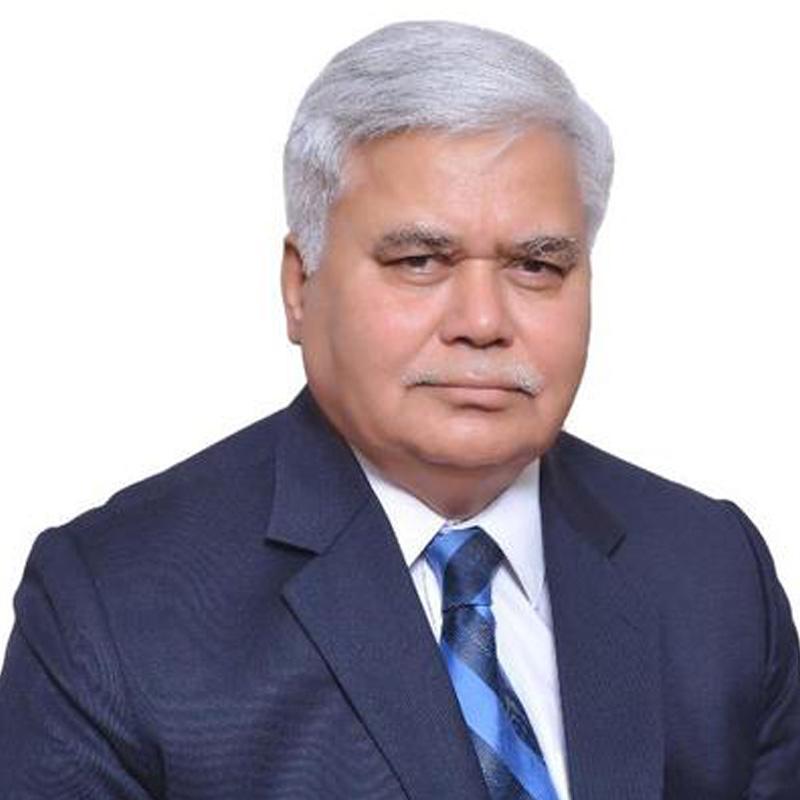
    MUMBAI: The much touted and highly anticipated live session of TRAI Chairman RS Sharma on Twitter yesterday didn’t throw up surprises. The moderator relayed more queries on the telecom sector and very few on the broadcast segment and in the few that were answered, the chief regulator defended his organisation’s stand ably.

    One such query relating to the broadcast sector revolved around whether India was a highly regulated market and then sought a status report on TRAI’s latest directives, including those relating to broadcast and cable sector tariff, inter-connect agreement amongst stakeholders and quality of service.

    Denying that India was a highly regulated market — “no case of over-regulation…,” he said — Sharma pointed out that though the present set of regulations, implemented after almost 18 months, had “seen a lot of litigation”, they were “wonderful” and aimed at ensuring “transparency” in the whole eco-system.

    “The customers [of TV services] would benefit,” Sharma emphasised.

    For the uninitiated, TRAI’s tariff guidelines, originally issued in 2016, remained mired in legal tangles till earlier this year when Madras High Court upheld the regulator’s contentions. Subsequently, on 3 July 2018 TRAI issued a statement saying as all judicial compliances were completed, its tariff order came into existence with immediate effect. However, the Supreme Court is set to hear a case filed by original petitioners Star India and Vijay TV against the high court order late August. Some confusion still prevails regarding a cap of 15 per cent on prices of TV channels offered by broadcasters as the Chennai court had frowned down on this stipulation.

    Coming back to the TRAI on Twitter session, asked about indifferent quality of service relating to mobile broadband, Sharma batted for use of satellites to also deliver broadband services. In fact, in its several recommendations, the regulatory body has pushed for an open sky policy signifying usage of Indian and foreign satellites to deliver a host of services, including television and broadband.

    According to the chief regulator, all options of delivering broadband services should be explored, including satellites, cable TV and DTH platforms. Such an approach could also result in bringing down costs, Sharma said in reply to a question on indifferent broadband services in hilly and logistics-challenged areas like the north-eastern part of India.

    Queried on the logic behind issuing recommendations on data vis-à-vis its ownership and privacy ahead of a government-mandated panel appointed to look into these issues, Sharma explained it as a necessity as the ecosystem was changing. Currently, India is consuming more data than the US and China put together, he pointed out, adding, therefore, the issue of data security, privacy and ownership had become extremely important.

    “If data is flowing, new players have emerged [and] they also have to accept the responsibility and… take care of consumer data. Hence, after the consultation process running for about a year, we came up with this recommendation saying similar kind of rules must apply to the telecom, browser, devices…” Sharma clarified. However, the Justice BN Srikrishna committee, asked by the government to look into issues relating to data, has expressed its displeasure on TRAI recommendations ahead of its own conclusions.

    “Justice Srikrishna committee is drafting an…overall data protection law and we have said while there may be general questions relating to data protection, it is important that till that time, apply more or less the same rules of data protection as applicable for telecom service providers,” Sharma defended his organisation’s stand.

    Asked about the Apple controversy that proposed strict actions against the US giant as it was not complying with TRAI request on consumer data, Sharma clarified that it had nothing to do with any particular company and termed the situation as “misconstrued” — “It is totally related to the issue of unsolicited communication,” he added.

    Interestingly, through its various apps, aimed at consumer assistance (like checking the broadband speed being provided by the telecom service provider on mobile handsets of consumers), TRAI itself collects huge amount of data, which critics have said could be exploited if leaked.

    Asked about the data that the regulator mines and ways its protection is ensured, Sharma said that the organisation has “adopted privacy” as a default mechanism, which ensures data protection of consumers.

    The 1978 batch Indian Administrative Service officer Sharma was appointed as TRAI chairman three years ago. His tenure is scheduled to end in August 2018 and the government, according to sources, has received as many as 45 applications for the post that was advertised on the website of Department of Telecoms.

  • TRAI stands up to DoT on use of foreign satellites for comms services on aircrafts

    TRAI stands up to DoT on use of foreign satellites for comms services on aircrafts

    NEW DELHI: India’s telecoms and broadcast regulator Telecom Regulatory Authority of India today stood up again for the lawful right of satellite industry stakeholders. It reiterated that the nation’s policies and guidelines for on- board aircraft communications services like broadband should also allow use of foreign satellites despite Department of Telecoms raising objections on the matter.

    “If we do not allow the foreign aircrafts to provide the MCA (mobile on-board aircraft) services using their satellite and gateways over the Indian airspace, other countries will also not allow the Indian aircrafts to provide

    MCA services while over-flying their jurisdictions,” TRAI justified its stance to DoT as part of clarifications sought by the latter on the regulator’s recommendations on in-flight connectivity services.

    TRAI pointed that though a government panel may have suggested use of Department of Space-approved satellites only with Indian gateways, the in-flight connectivity or IFC services are technically complex withservice providers handling the logistics do so in partnership with foreign mobile service providers having created on-ground facilities for provisioning of MCA.

    “Even if it is assumed that such a facility is created on Indian soil, aircrafts will need to be fitted with pico cell/equipment, which are compatible with one of the Indian TSP (telecom service provider)’s core network. There are several countries where IFC services are already operational and, accordingly, their aircrafts are equipped with pico cell which is connected to the core network of partnering foreign mobile service provider. These airlines certainly won’t be willing to carry out any modification due to the downtime and costs involved. Therefore, for such aircrafts, MCA over the Indian airspace seems feasible only with the existing arrangements in which partnering mobile service provider would be a foreign entity. It may require the use of foreign satellites and gateway, and traffic from aircraft may not be routed through gateway in Indian soil,” TRAI explained, adding that its recommendations have enough in-built safeguards to take care of concerns on India’s security.

    If that was not enough, TRAI, at present helmed by chairman RS Sharma who’s due to superannuate in a few months’ time, categorically said in its response to DoT clarifications that the government panel’s decision to use only satellites approved by DoS with Indian gateways for MCA service was “not implementable”.

    “If the use of foreign satellites and gateways are not permitted for MCA services, it would make the recommendation infructuous”, the regulator emphasized, though admitting that it’s role is recommendatory and the final decision would have to be taken by the government. “With this perspective, the Authority recommended that `use of foreign satellites and gateway would be permitted for the establishment of satellite backhaul links only for the provisioning of MCA services’,” TRAI added.

    On several other objections raised by DoT on suggestions on providing communications services on aircrafts within India airspace, TRAI has stood its ground, reiterating that such bans on foreign satellites and non-Indian gateways could be against international laws and may make the service unviable.

    The full text of TRAI reply to DoT can be found at http://www.trai.gov.in/sites/default/files/RecommendationIFC05062018_0.pdf.

    Also Read:

    TRAI clears path for broadband, voice services aboard planes

  • Comment: India’s NTP 2018 gets digital makeover but needs complimentary policies

    Comment: India’s NTP 2018 gets digital makeover but needs complimentary policies

    Criticism notwithstanding, Indian bureaucratic mandarins—babus as they are referred to in local lingo—do come up with draft policies that are contemporaneous, and at times when it’s least expected. The new digital avatar of the National Telecoms Policy 2018, slated to be operational later this year, could turn out to be just one such initiative—only if the political masters muster enough courage to push through with the proposed legislation and the will to follow up with complementary policies.

    Though surprises are the new norms with this government led by the maverick PM Modi—remember the late evening ‘Mitron’ address to the nation by the premier few years back announcing high denomination currency notes were being made illegal—it caught many napping when the Department of Telecommunications (DoT) posted on its website the draft of the much-awaited National Telecommunications Policy 2018 very late in the evening on Labour Day. So, what?

    The first surprise element was that the NTP 2018 had been rechristened National Digital Communications Policy 2018 (NDCP). The aim: put the draft in public domain to seek comments from key stakeholders and citizens, at large. But true to the government style—keeping things fluid—the deadline for comments is yet to be announced.

    The renaming of the policy was welcomed by the industry as it converges with the overarching Digital India vision of the present government; hiccups along the way to implementation, notwithstanding. However, such tweaks in the suggestions made by the telecoms and broadcast carriage regulator TRAI goes not only beyond just the nomenclature but also attempts to actualise provisions of the policy.

    What’s also important that while the government wants synergies between various organisations and ministries, it gives a thumb down to a TRAI proposal to make it—or any such other body—a converged regulator.

    A Truly Digital Communications Policy

    For quite some time, it was being felt by the government and industry alike that a specific road map is required to guide India’s successful movement into the emerging digital realm—to truly address the issue of convergence in the telecoms and broadcast services. To spark rapid all-round deployment of digital capable technologies, it is necessary all available mechanisms be looked at in a comprehensive manner; basically, shifting the focus from just wired and wireless telephony and broadband and expanding the horizons to areas such as satellite communications and broadcast carriage services.

    The industry had been demanding that already existing infrastructure assets in sectors such as broadcast and power be utilised to efficiently achieve a demanding goal of laying down high speed fibre infrastructure across India. Thus, a digital-centric telecommunications policy was required to address the crucial aspect of infrastructure sharing and integration.

    Furthermore, to firmly strengthen India’s position in the digital sphere, it is necessary that the web-hosting ecosystem, including data storage, be strengthened by implementing norms and standards that are in conformity with international best practices. This gains importance with increasing reports and instances of data breaches and leaks. Also, core principles such as separation of content/applications and infrastructure/carriage layer underlying network neutrality need to be crystallised and affirmed through statutory and policy provisions.

    The present draft NTP 2018—or isn’t it better to call it from now on NDCP 2018? —has taken into account many concerns and challenges and seems like an earnest effort on the part of the government to ensure that India’s broadband and digital sectors are backed by sound policy norms and principles.

    Has DoT Planned Well for India’s Digital Future?

    The DoT has gone ahead and staked its claim to the entire swathe of telecommunications technologies and the methodologies through which government’s digital goals can be rapidly deployed, e-governance included. Now, this could turn out to be an asset as also a weakness, given inter-departmental politics and power play.

    DoT has called for an overhaul of India’s archaic satcom policy in line with international standards and also advocated for greater participation by private players in commercial satellite operations — a vision that needs to be matched with some liberalisation at Department of Space (DoS) and India’s space agency ISRO, both of which report directly to the Prime Minister’s Office. To spearhead the contribution of private satcom industry in providing broadband to far flung districts, there’s specific mention of opening Ka-band for private use and also for utilisation of high through-put (HTS) satellites.

    With a view to reducing burden of laying down fresh wireline fibre infrastructure, there’s clear mention of recommendation for “leveraging existing assets of the broadcasting and power sector to improve connectivity, affordability and sustainability”. This could reduce the tendency of telecom industry to overbuild fibre and brings the vast amounts of broadband-capable digital cable infra created under Ministry of Information and Broadcasting (MIB)’s mandate of digitising cable networks across the country and within the purview of Digital India programme.

    DoT has also realised the need to formulate a coherent approach to reap the benefit of technological convergence. It has specifically called for statutory amendments to the vintage Telegraph Act, 1885 for “enabling infrastructure convergence of IT, telecom and broadcasting sectors”. This highlights the department wants to create a defined policy structure for seamless use of all broadband capable infrastructure, irrespective of differences amongst sectors. It also reflects clear intent of DoT to focus only on convergence of infrastructure, rather than convergence of applications/media running on this layer.

    Therefore, DoT has focused sharply (and some may say appropriately) only on enabling carriage services and the surrounding digital ecosystem rather than delve into other unrelated areas such as media.  No wonder it has called for separation of infrastructure/carriage layer from applications/content layer. Moreover, it has called for recognising the need to uphold the core principles of network neutrality by “amending the licence agreements to incorporate the principles of non-discriminatory treatment of content, along with appropriate exclusions and exceptions as necessary”.

    Furthermore, the DoT has gone a step ahead and acknowledged the primacy of principles and objectives contained in the National IPR Policy related to telecommunications and sought implementation to kick start development of indigenous IPRs.

    The Road to the Final Draft

    Though the industry, by and large, has welcomed the draft policy as it gears itself to fulfil the call for the now highly debatable “USD 100 billion” in investments, there are a few asks that still need to be fulfilled. The investment aspect itself is ambitious given the present health of the telecoms sector where a big downside of the business is the pink slips presently being handed out by telcos, big and small.

    Another important aspect would be to simplify and streamline all departmental procedures such as windowing of satellite frequencies by the WPC, a part of the DoT, which has been a bottleneck in improving ease of doing business in satcom and broadcasting sectors.

    Given that the DoT has already referred to National IPR Policy for the purpose of all IPRs, including patents, trademarks and copyrights, related to telecommunications, it is vital that it settles the debate between carriage and content industries once and for all and pursues the goal of harmonisation of telecom policy construct with the applicable domestic and international IPR regimes.

    The key would be to now take all the constructive inputs from the industry and iron out the remaining creases to create an effective implementation framework to turn India into a truly digitally empowered society.

    While we debate the National Digital Communications Policy 2018, it would be worthwhile to go back into history and attempt reading the Communications Convergence Bill that was introduced in Parliament in 2001. A real visionary piece of draft legislation, the policy was considered so futuristic at that point of time that a joint parliamentary committee red flagged it at 70-odd places, which effectively sounded the death knell for the proposed legislation that was aimed at promoting and developing the entire communications sector—encompassing the broadcasting, telecom and multimedia sectors—keeping in view emerging convergence of techs and services. Drafted by eminent jurist Fali S Nariman-headed panel, the draft still remains as one of the finest pieces of convergence regulations that never saw the light of the day.

    In the end, one cannot but agree with lawyer-researcher at India’s Centre for Internet and Society Anubha Sinha’s observations. Writing for The Wire, an online news venture, Sinha highlighted: “While the policy [NTP 2018/NDCP 2018] is broad and forward-looking, the true intent and meaning of the listed steps will only be understood when complementary legislative and granular policy actions to support these strategies are crystallised. That will make all the difference.”

    Also Read :

    DoT addresses broadband issues in policy out for public consultation

    Zee, Star, NBA oppose converged regulator for broadcast and telecoms

    TRAI releases paper on National Telecom Policy 2018
  • TRAI releases paper on National Telecom Policy 2018
    TRAI releases paper on National Telecom Policy 2018
    MUMBAI: Seeking views from stakeholders on the new telecom policy, the Telecom Regulatory Authority of India (TRAI) today released a consultation paper on inputs for formulation of the National Telecom Policy 2018.

    The Department of Telecommunications, through its letter dated 21 August 2017, requested the TRAI to suggest its policy inputs for formulation of the policy. Based on preliminary discussions with various stakeholders, including telecom service providers, telecom equipment manufacturers, industry associations, consulting firms, and cloud service providers, the regulator has prepared inputs for formulating the National Telecom Policy 2018 in line with the technological advancements in the sector and customer aspirations  for  digital services.

    The regulator is seeking views of stakeholders for formulating the policy by 19 January 2018.

    “National Telecom Policy-2018 can have twin goals viz. facilitate development of communication infrastructure and services to achieve inclusive socio-economic growth in the country,” the paper stated.

    “This policy would set the mission and objectives to be accomplished by the end of calendar year 2022, when India will be celebrating its 75 years of independence,” the paper added while underlining that the policy would also specify the strategies to accomplish such objectives as well as capacity building in general.

    The paper has set out the mission and objectives for the policy besides outlining common strategies to help India leapfrog to amongst the top-50 nations in international rankings in terms of network readiness, communications systems and services, and to attract an investment of USD 100 billion in telecommunications.

    Also Read:

    Trai to make recommendations on net neutrality today 

    TRAI tightens landing-page norms

    TRAI seeks better accessibility for persons with disabilities

  • Separate Broadcasting Policy, use last mile operator for broadband spread: TDSAT seminar

    Separate Broadcasting Policy, use last mile operator for broadband spread: TDSAT seminar

    NEW DELHI: There should be a separate Broadcasting Policy analogous to the National Telecom Policy, and the existing laws and regulations should be enforced more stringently before drafting new ones.

    This was one of the recommendations on regulatory issues in broadcasting and distribution sector at a seminar by the Telecom Disputes Settlement and Appellate Tribunal (TDSAT) held early this year.

    The last mile cable network should be leveraged to provide broadband services, according to the recommendations placed on the website of TDSAT yesterday.

    A general consensus also said the government needs to ensure that the amendments in existing regulations do not lead to confusion and ambiguity with regard to the original objectives of the legislations.

    A more effective consultation process should be designed so that the stakeholders do not need to resort to the adjudicatory system, and there should be a more pro-active approach on the implementation of recommendations of the policy makers, the recommendations relating to broadcasting said.

    The seminar on the ART (Adjudication, Regulation, Telecommunication) of Convergence on 6 and 7 February 2016 was attended by government, policy makers, adjudicatory body, and service providers to deliberate suggestions to prepare for challenges that arise with a converging digital environment.

    The seminar was inaugurated by Information and Broadcasting Minister Arun Jaitley, Supreme Court’s Justice J. Chelameswar presided over the function, and Attorney General Mukul Rohatgi was the guest of honour.

    Jaitley stressed the need for an adjudicatory mechanism for telecommunications and broadcasting which is agile and responsive to deal with emerging challenges.

    The seminar was held with the support of Department of Telecommunications (DoT), Department of Telecommunications and Information Technology (DeitY), Telecom Regulatory Authority of India (TRAI), Justices from the Supreme Court and High Court, and representatives of the industry. Ernst and Young was the knowledge partner for the seminar.

    Regulatory and Licensing Regime in a converged environment

    The conclusion was the need to frame a simplified, resilient and comprehensive convergence law and regulation encompassing all activities and sections of the industry, which are currently governed by myriad laws and regulations.

    Separate mechanisms are needed for content and carriage regulation, with independent bodies for each of them. There needs to be converged licensing regime for telecommunications and broadcasting.

    It was also stated that there needs to be a clear and well-defined separation of regulatory and adjudicatory powers, with the adjudicatory powers vested in an independent authority. Strategic spectrum should be under the control of the government, while the commercial spectrum should be under the control of the regulator.

    The governance mechanism should be digitized and the processes should be made simpler to use. The existing laws should be amended keeping in mind their compatibility with other regulations and processes. Legislations should be made technology agnostic to provide a level playing field for all the stakeholders.

    Adjudicatory mechanism — issues and way forward

    It was stated that the law needs to be amended to bring more clarity regarding jurisdictional powers of TDSAT mandated in the TRAI Act apropos writ jurisdiction of the High Courts.

    A separate mediation centre is required for resolving minor cases, both pre-trial as well as post-trial, which do not require the specialized expertise of the judges of the Supreme Court.

    The original character of the TDSAT needs to be restored; in addition whether certain types of disputes should be entrusted to TRAI for resolution in order to improve the efficacy of the overall adjudicatory mechanism.

    There should be a fully integrated electronic tribunal and innovative technologies should be used to deal with cases rapidly and efficiently, the recommendations said.

    Training should be provided to all the stakeholders in the sector to eliminate the digital divide. Regulations need to be updated in accordance with the changing technology.

    Content distribution in next generation networks

    There should be clear, defined and uniform regulations for broadband, net neutrality, advertising, patents, and competition and pricing matters.

    There was unanimity that net neutrality should be ensured to safeguard the interest of all stakeholders in the internet ecosystem.

    A suitable patents and copyright system should be developed for India keeping in mind the specific concerns of the domestic industry.

    It was felt that the industry should not be over-regulated as this would dis-incentivize stakeholders and hamper the interests of both the content creators and the consumers.

    The behaviour of the stakeholders in the industry should be regulated instead of the economics of the industry, since regulation of the latter destroys business models while the former adds to both the consumers’ and the industry’s welfare.

    “I-way of the Future”

    It was felt that the challenge of slow implementation should be overcome through enhanced co-ordination among the stakeholders and the policy makers.

    A broadband highway needs to be built that ensures accessibility of high speed internet for everyone.

    Cyber security and privacy issues that arise due to the cross sector convergence and have standardized legislations for dealing with it needs to be addressed.

    A pro-active approach needs to be followed in policy making to speed up the creation and adoption of the next generation highway infrastructure.

    There should be a conducive business environment through policies that incentivize entrepreneurs and private participation. The expertise of the private sector should be leveraged. Start-ups needs to be encouraged to develop their capabilities and help build a compact, connected and coordinated network of smart cities.