Tag: Department of Telecommunications

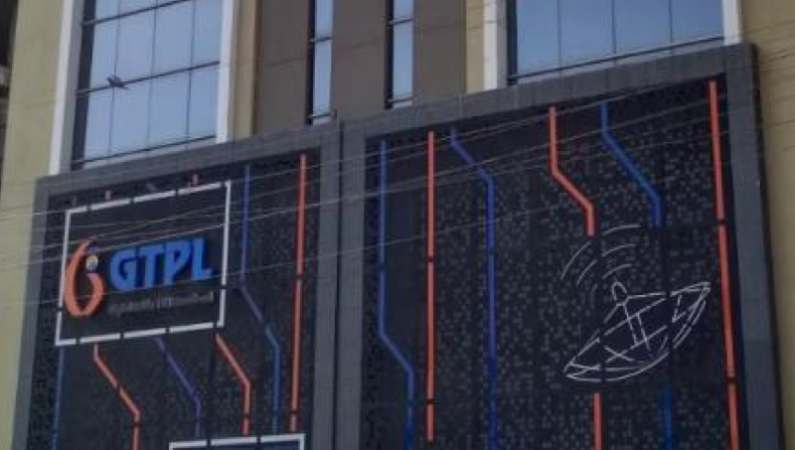
  • GTPL Hathway navigates challenging quarter, eyes future growth

    GTPL Hathway navigates challenging quarter, eyes future growth

    MUMBAI: GTPL Hathway has unveiled its unaudited financial results for the first quarter ended 30 June 2025, revealing a mixed bag for the entertainment and broadband major. While the company saw an uptick in its top line, profitability faced a squeeze during the period.

    The consolidated revenue from operations for Q1 FY26 stood at Rs 5,946.79 million, a healthy increase from Rs 5,359.94 million reported in the same quarter last year. Total income also reflected this growth, climbing to Rs 5,990.20 million from Rs 5,432.95 million year-on-year. On a consolidated basis, total income for the quarter reached Rs 9,091 million, marking a 7 per cent rise year-on-year and a 1 per cent increase quarter-on-quarter.

    However, the spotlight falls on the company’s profitability. Net profit after tax (Pat) saw a significant decline, coming in at Rs 56.25 million for Q1 FY26, a stark contrast to Rs 150.23 million in Q1 FY25. Consolidated PAT was Rs 105 million, consistent with the previous quarter but down from Rs 143 million in Q1 FY25. Consolidated earnings before interest, taxes, depreciation, and amortisation (EBITDA) was recorded at Rs 1,123 million, with an EBITDA margin of 12.4 per cent. This is a decrease from Rs 1,205 million and a 14.2 per cent margin in the corresponding quarter of the prior fiscal year.

    Operationally, GTPL Hathway continues to expand its reach. The cable television business maintained a strong subscriber base, with 9.60 million active set-top boxes and 8.90 million paying subscribers as of Q1 FY26. The broadband segment also showed progress, reaching 1.05 million active subscribers and a home-pass count of 5.95 million. Average data consumption per customer soared to 410 GB per month, a 17 per cent increase year-on-year, while average revenue per user (ARPU) held steady at Rs 465..

    In a strategic move, the board of directors approved the re-appointment of Anirudhsinh Jadeja as managing director for a further three-year term, effective from 8 December 2025.

    The company also highlighted a contingent liability related to a demand from the Department of Telecommunications (DOT) for licence fees totalling Rs 9,754.15 million. GTPL Hathway remains confident in its legal position and has not recognised any provision for this matter.

    (If you are an Anime fan and love Anime like Demon Slayer, Spy X Family, Hunter X Hunter, Tokyo Revengers, Dan Da Dan and Slime, Buy your favourite Anime merchandise on AnimeOriginals.com.)

  • Vodafone Idea misses Rs 6,090 crore spectrum payment—Now what?

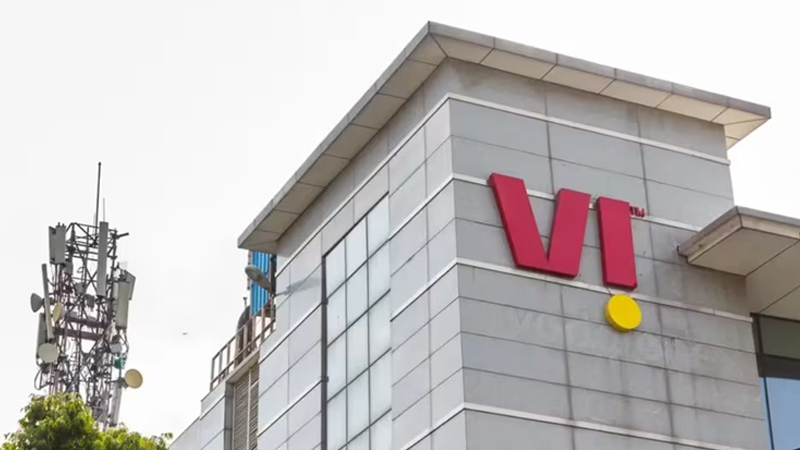
    Vodafone Idea misses Rs 6,090 crore spectrum payment—Now what?

    MUMBAI: Another day, another Vodafone Idea financial hurdle. Akshay Moondra led telco, already walking a tightrope, has failed to submit a hefty Rs 6,090.7 crore bank guarantee or make a cash payment of Rs 5,493.2 crore to the department of telecommunications (DoT) for the 2015 spectrum auction shortfall, according to a report in The Economic Times.

    The deadline? 10 March.

    The result? No payment.

    And now, the government isn’t exactly thrilled, “We will see what action can be taken in the coming couple of days,” an official privy to the matter told ET. In other words—brace for impact. The DoT has not granted any extension so far, keeping Vodafone Idea on tenterhooks.

    The government had earlier attempted to throw the financially embattled telco a lifeline by waiving off bank guarantees (BGs) worth Rs 33,000 crore for past spectrum auctions across the private telecom giants—Reliance Jio, Bharti Airtel, and Vodafone Idea (Vi). Out of this, Vi had been the biggest beneficiary, with Rs 24,800 crore in waivers. However, the fine print required Vi to still cough up cash or submit a BG for the 2015 auction, where it had a one-time partial shortfall.

    Meanwhile, competitors Bharti Airtel and Reliance Jio had no such obligations, as their payments had already exceeded the pro-rata value of their spectrum use. Vi, however, was left holding the bag.

    Now, what happens? The ball is in the government’s court.

    With no payment in sight and no extension announced, DoT may be forced to take action. Will it demand strict penalties? Will it extend the deadline in an act of mercy? No one knows just yet. But for Vi, already struggling with debt and subscriber losses, another financial setback is the last thing it needs.

    ET in their report mentioned that queries sent to Vodafone Idea remained unanswered at the time of going to press. Given the company’s track record, it’s anyone’s guess whether the telco will come up with the funds or find itself in even deeper trouble.

  • TRAI defends key recommendations on telecom service authorisations framework

    TRAI defends key recommendations on telecom service authorisations framework

    Department of Telecommunications (DoT) regarding several aspects of its September 2024 recommendations on the framework for service authorisations under the Telecommunications Act, 2023.

    The response follows a back-reference from the DoT dated 14 January 2025, in which the government indicated several of TRAI’s original recommendations from September 2024 may require modification or might not be accepted.

    The regulatory exchange began in June 2024 when the DoT requested TRAI’s input on terms, conditions and charges for telecommunications service authorisations under the new Act. After consultations with industry stakeholders, TRAI submitted its initial recommendations in September last year.

    Having examined the government’s concerns, TRAI has now finalised its reconsidered position. The complete response has been published on the TRAI website.

    In a detailed document, TRAI has stood firm on several key recommendations that the DoT had expressed reservations about, particularly regarding the structure of service authorisations.

    The regulator defended its position on introducing separate authorisations for satellite-based telecommunications and Machine-to-Machine (M2M) services, rejecting the DoT’s suggestion to integrate these within broader service categories. TRAI argued that separate authorisations would better promote investment and operational focus in these niche segments.

    “To attract business entities to enter the relatively underdeveloped satellite-based telecommunication service segment in the country, and to preserve the business focus of such entities, a separate service authorisation is necessary,” TRAI stated in its response.

    The authority also reiterated its recommendation that for any substantive changes to authorisation terms and conditions, the Central Government should seek TRAI’s recommendations, emphasising the importance of regulatory stability in a capital-intensive sector.

    Additionally, TRAI maintained its position on the need for sub-circle level authorisations to enable smaller service providers to operate efficiently within limited geographic areas.

    To read the full TRAI rebuttal please click here.


  • Vodafone Idea posts Rs 111.2 billion revenue but struggles under debt burden

    Vodafone Idea posts Rs 111.2 billion revenue but struggles under debt burden

    MUMBAI: Vodafone Idea (Vi) is ringing in revenue growth, but the static of debt remains loud. The telecom giant reported Rs 111.2 billion in revenue for Q3FY25, marking a 1.7 per cent sequential increase, and clocked its highest quarterly cash EBITDA of Rs 24.5 billion since the Vodafone-Idea merger. However, despite operational improvements, Vi remains in the red, posting a net loss of Rs 66.1 billion.

    The company’s average revenue per user (ARPU) rose to Rs 173, reflecting a 4.7 per cent QoQ jump, largely driven by tariff hikes and customer upgrades. But its financial burden remains steep. Bank debt stands at Rs 23.3 billion, while spectrum and AGR dues total a staggering Rs 2.27 trillion, payable over two decades.

    Vi is pushing forward with a massive capex plan, spending Rs 53.3 billion in the first nine months of FY25, with a full-year target of Rs 100 billion. The company added 4,000 broadband towers, its highest in a single quarter since the merger, and expanded 4G coverage to 41 million more users, reaching 1.07 billion people.

    A phased 5G rollout is now officially in motion, with Mumbai set to go live by March 2025, followed by Delhi, Bengaluru, Chandigarh, and Patna in April. The telco is banking on this expansion to sharpen its competitive edge.

    To keep its balance sheet in check, Vi has secured Rs 19.1 billion in fresh equity capital from its promoter group, pushing its total equity infusion to Rs 260 billion in the last 10 months. The company also received a bank guarantee waiver on spectrum payments, offering temporary relief.

    Vodafone Idea is also in the middle of another fresh financial hurdle as the Department of Telecommunications (DoT) has demanded a Rs 6,090 crore bank guarantee by March 10 to cover spectrum obligations since 2015, offering an alternative cash payment of Rs 5,493 crore. The telco must choose one of these options and comply with the telecom department’s requirements, adding to its existing financial woes amid intense industry competition. This development comes as a major setback for Vi, which is already grappling with Rs 2.27 trillion in spectrum and AGR dues. However, some relief arrived in January when the Supreme Court upheld the Bombay High Court’s November 2023 decision granting Vi a Rs 1,600 crore tax refund, providing a temporary financial cushion as the telco continues its struggle to stabilise operations.  

    While Vi is making strides in revenue and expansion, the question remains, can it dial up a full-fledged recovery, or will the weight of its debt drop the call?

  • Central Government appoints Atul Chaudhary as new TRAI secretary

    Central Government appoints Atul Chaudhary as new TRAI secretary

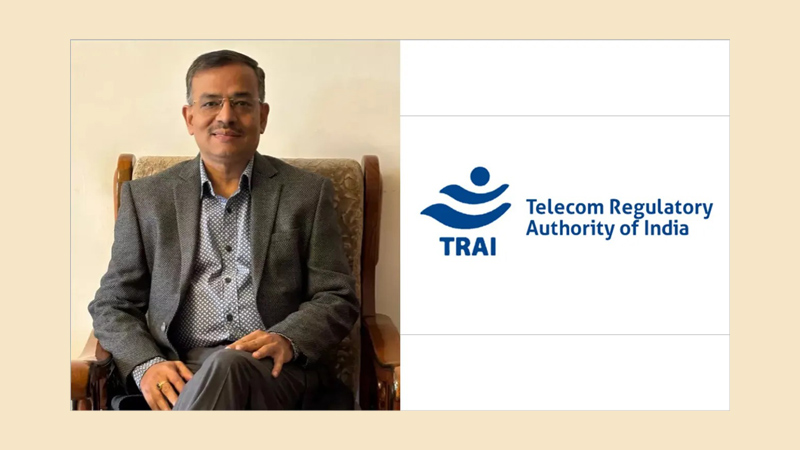
    Mumbai: The Central Government has appointed Atul Chaudhary as the new secretary of the Telecom Regulatory Authority of India (TRAI), following the retirement of V Raghunandan last month. Raghunandan’s retirement was announced on May 15 during a TRAI open house, and he officially stepped down on May 31. During his tenure, he managed telecom project implementations, ensured telecom compliance across various regions, and enforced policies.

    Atul previously served as deputy director general (DDG) at the Department of Telecommunications (DoT) and held the same position at the Unique Identification Authority of India (UIDAI) in 2021, has taken over the role. His extensive experience includes roles in personnel, human resources, administration, licensing, and vigilance divisions of BSNL and DoT. A member of the 1989 batch of Indian Telecommunication Services (ITS) officers, Chaudhary graduated from IIT Roorkee and holds a diploma in public policy and administration from the Indian Institute of Public Administration.

  • Tripartite MoU signed between USOF, Prasar Bharati and ONDC

    Tripartite MoU signed between USOF, Prasar Bharati and ONDC

    Mumbai: Universal Service Obligation Fund (USOF) under Department of Telecommunications (DoT), signed a tripartite MoU with Prasar Bharati (under the Ministry of Information & Broadcasting) and Open Network for Digital Commerce (a Digital Public Infrastructure (DPI) initiative of Department for Promotion of Industry and Internal Trade, Ministry of Commerce & Industry) to proliferate affordable and accessible digital services across the country. The objective of the MoU is to bundle broadband services with OTT and e-commerce platforms for rural India riding on BharatNet infrastructure under the USOF.

    USOF has been instrumental in enabling highspeed broadband and mobile connections across Gram Panchayats (GPs) and villages in the country. This MoU will enable the bundled Prasar Bharati OTT as a service, including linear channels, Live TV and on-demand content, among the end consumers while USOF will ensure efficient and highspeed broadband services in rural and remote areas. The national public service broadcaster, Prasar Bharati, with an unparallel legacy content, consumer reach and brand recall, will source and produce content that will run on its OTT platform. In addition, the Open Network for Digital Commerce (ONDC), a leading player in digital infrastructure, will provide the technical expertise and necessary framework in enabling digital commerce in products & services. This will be expanded to cover more services like education, health, training, credit, insurance, agriculture amongst others.

    The PM’s vision and MoC’s unwavering commitment to foster a conducive environment for digital innovation underpins this truly unique collaboration synergizing connectivity, content and commerce to empower rural India.

    The MoU was signed in the presence of Dr Neeraj Mittal, Secretary (Telecom), Sh. Niraj Verma, Administrator, USOF, Sh. T. Koshy, MD & CEO, ONDC, Sh. A.K. Jha, ADG, Platforms, Prasar Bharati and Sh. Sunil Kumar Verma, Joint Secretary, DoT.

  • Ramana Babu appointed as director of marketing by DoT

    Ramana Babu appointed as director of marketing by DoT

    Mumbai – According to the latest notification circular of DoT ( Department of Telecommunications), Ramana Babu appointed as director ( marketing) at ITI Ltd with immediate effect from 16 January 2024.

    Earlier he served as principal general manager at BSNL. Earlier Ramana Babu was appointed as Director (Marketing) of ITI Limited, a PSU under the Department of Telecommunications ( DoT).

  • TRAI releases recommendations on ‘License Fee and Policy Matters of DTH Services’

    TRAI releases recommendations on ‘License Fee and Policy Matters of DTH Services’

    Mumbai: The Telecom Regulatory Authority of India (TRAI) has issued the recommendations on “License Fee and Policy Matters of DTH Services”. The Ministry of Information and Broadcasting (MIB), vide letter No. 2/33/2021-BP&L dated 2 January 2022, sought recommendations of TRAI under Section (11)(1)(a) of the TRAI Act, 1997.

    The reference alluded to the amendments carried out by the Department of Telecommunications (DoT) in Unified License (UL) Agreement. Vide the amendments dated 25.10.2021 and 06.10.2021, DoT has rationalised the definition of Adjusted Gross Revenue (AGR) and Bank Guarantee (BG) quantum respectively under structural reforms.

    DTH operation in India is governed by the policy guidelines for obtaining license for providing DTH broadcasting services in India. These guidelines prescribe a License Fee (LF). LF is a non-tax fee levied on a service provider against the privilege of being permitted to carry out a licensed activity. As per the provisions of the guidelines, the DTH operators are required to pay a LF, which is eight per cent of Adjusted Gross Revenue (AGR) on a quarterly basis to MIB.

    Bank Guarantee (BG) is a type of financial instrument to ensure that a service provider pay their dues on time and is obligated to fulfil the terms and conditions of the license agreement. The extant DTH guidelines prescribe a BG for an amount of Rs five crore for the first two quarters, and thereafter, for an amount equivalent to LF for two quarters and other dues not otherwise securitised.

    Based on the reference, a consultation paper on “License Fee and Policy Matters of DTH Services” was issued by TRAI on 13 January 2023. Written comments and counter-comments on the Consultation Paper were invited from the stakeholders by 27 February 2023 and 13 March 2023 respectively. The Authority received seven comments and one counter-comment from various stakeholders. All these comments and counter-comment are available on TRAT website www.trai.gov.in. An Open House Discussion was also convened on the issues raised in the Consultation Paper on 20 April 2023 through video conferencing.

    The salient features of the recommendations are as follows: –

    a. Gross Revenue (GR) shall comprise revenue accruing to the licenced entity by way of all operations/ activities and inclusive of all other revenue! income on account of interest, dividend, rent, profit on sale of fixed assets, miscellaneous income etc. without any set-off for related items of expense. The recommendations also provided certain explanations with the definition.

    b. Applicable Gross Revenue (ApGR) for arriving at the revenue calculations for license fee should be equal to the total GR of the licensee as reduced by the following items:

    i. Revenue from activities under a license/permission issued by DoT;

    ii. Reimbursement, if any, from the Government;

    iii. List of other income to be excluded from GR to arrive at AGR:

          a. Income from Dividend;

          b. Income from Interest;

          c. Income from sale of fixed assets and securities;

          d. Gains from Foreign Exchange rates fluctuations;

          e. Income from property rent;

          f. Insurance claims;

          g. Bad Debts recovered;

          h. Excess Provisions written back

    *subjects to conditions given in Annexure-IJI of these recommendations

    c. Adjusted Gross Revenue (AGR) is calculated by excluding GST paid to the Government from the ApGR, if ApGR had been included as a component of GST.

    d. MIB should revise the Form-D (the Statement of Revenue and Licence Fee for DTH Licensees) and adopt the format of Form-D as prescribed in the recommendations. The process for the submission of Form-D should be Page 2 of 4 made end-to-end online with the facility to upload all the related documents in digital mode via a single window system.

    e. MIB should develop a robust mechanism for the deduction verification process through a single window portal. The Licensee is required to produce to the Licensor, all such books of accounts and documents required for reconciliation which have a bearing on the verification of revenue for the purpose of calculating License Fee.

    f. DTH Licensee should pay an annual license fee equivalent to three per cent of AGR.

    g. License Fee for DTH Licensees should be brought down to zero in the next three years. DTH Licensees should not be charged any License Fee after the end of the financial year 2026-2027.

    h. The Licensee should submit an Initial Bank Guarantee from any Scheduled Bank to the MIB for an amount of Rs five crore for the first two quarters.

    i. Thereafter, the Licensee should submit a Bank Guarantee (covering Financial and Performance Bank Guarantee) from any Scheduled Bank to the MIB for an amount equivalent to the Initial Bank Guarantee (i.e., Rs five crore) or 20 per cent of the estimated sum payable, equivalent to License Fee for two quarters and other dues not otherwise securitized, whichever is higher.

    j. Once the license fee becomes zero, the Licensee should submit a Bank Guarantee (Performance Bank Guarantee) for a fixed amount equivalent to the initial Bank Guarantee (i.e Rs five crore) from any Scheduled Bank to the MIB, which should be valid for a minimum of one year and renewed every year to ensure it remains valid for the entire currency of the license agreement.

    k. The Licensor should be at the liberty to encash the Bank Guarantee in full or part in the event of violation of any of the license conditions.

    l. Electronic Bank Guarantee should be encouraged and permitted for ease of doing business.

    m. These recommendations including the definition of Gross Revenue (GR), Applicable Gross Revenue (ApGR), Adjusted Gross Revenue (AGR) and the percentage of AGR to calculate the License Fee for the DTH Liçnse may be made applicable ‘prospectively’.

    In the highly competitive television distribution market, urgent measures are required for the DTH sector. The quick implementation of these recommendations will help the sector and enable all-round growth. 

  • Trai seeks views on Big Data & AI adoption to improve telecom services in future

    Trai seeks views on Big Data & AI adoption to improve telecom services in future

    Mumbai: The 5G spectrum auction that happened recently is a big step towards the launch of new internet and telecom experience in India. 5G will take India’s telecom services to the next level and bring it at par with countries like China, the US, and South Korea.

    A step towards fueling future innovation, the government is now trying to leverage & integrate artificial intelligence (AI) and big data (BD) in the telecommunication sector as both are inherently synergistic. To make this possible, The Telecom Regulatory Authority of India (Trai) has released a consultation paper on “Leveraging AI and BD in the telecommunication sector.” The regulatory body has asked its stakeholders to submit any consent and issues regarding the consultation paper by 16 September & 30 September will be the last date for counter comments.

    5G would bring advancement in the media & entertainment industry as the consumers soon be able to access faster internet speed and services. It will enable faster download speeds, lower latency (the response time to transfer computer information), greater flexibility and ability to support more devices.

    Through the 5G auction, a total of 51.2 GHz spectrum was sold and 71 percent of total spectrum was put up for sale. It helped the government to earn a record Rs 1.5 lakh crore recently.

    Further, the telecom regulator, in its consultation paper, sought opinions on areas where the telecom networks’ present and future capabilities could be used to leverage AI and BD. The paper also presented examples of AI and BD already deployed in telecom networks by the operators in India & other jurisdictions.

    Leveraging AI and BD in 6G era

    The regulator also looked at developments happening in the 6G and possibilities emerging in the 6G era to leverage AI and BD in the telecom sector as well as other sectors where telecom can play an important and crucial role.

    The consultation paper followed the department of telecom’s referral to Trai in June 2019, in which the department requested a recommendation on leveraging AI and BD in a synchronised and effective manner to improve the overall quality of service, spectrum management, network security, and reliability.

    The paper stated, “It has been noted that 5G and beyond networks will provide a plethora of data that may be useful for telecom as well as other sectors. Edge computing in the 5G era may offer opportunities to other sectors to train and validate their AI models in the telecom networks.”

    “In 5G and beyond, networks may also offer privacy-preserving architectures to adopt and accelerate AI and BD in other sectors,” the paper added.

    The paper covered risks associated with the adoption of AI and BD, such as unethical use, bias in data and algorithms, model instability, regulatory and legal noncompliance, and risk mitigation methods and mechanisms. Further, there is a risk of privacy among users, which includes data exploitation, the risk of identification and tracking, and individual profiling.

    It also further stated, “If privacy concerns are not addressed and trust is not instilled among the users, then it may become one of the biggest concerns in the adoption of AI.”

    The paper’s focus was on privacy concerns and their impact on developing intelligent solutions. The paper identified and presented various solutions and initiatives that may be taken to address the risks and concerns. It also suggested ways to overcome these constraints for faster adoption of AI.

    Trai mentioned in its paper that they also noted the latest developments in the field of AI, which may be useful in multi-domain, multi-vendor, and multi-AI model environments.

  • DTH players seek removal of eight per cent licence fee to stay competitive

    DTH players seek removal of eight per cent licence fee to stay competitive

    Mumbai: Direct-to-home (DTH) players have approached the government to waive the eight per cent license fee imposed on them that is in line with a similar proposal for broadband services so that they remain competitive in the market.

    According to a PTI report, the industry body DTH association has approached the ministry of information and broadcasting (MIB) following a proposal under consideration of Department of Telecommunications (DoT) to waive the licence fee for broadband services.

    In a letter dated 11 May sent to the I&B ministry, the industry body said the DTH volumes have been declining quarter on quarter for a while now and has put thousands of crores of investments and employment of over a lakh direct and indirect employees of the sector at risk.

    The number of active subscribers with pay DTH operators decreased from 69.86 million at the end of June to 68.89 million by the end of September, according to latest Telecom Regulatory Authority of India (Trai) data.

    It added that broadband is expanding very fast and is being used for content distribution as well.

    The industry body welcomed the proposal to remove licence fees to help the consumers but requested that “the same policy may be applicable to DTH, and therefore seek a waiver of licence fees in line with DoT proposed decision.”

    The Telecom Regulatory Authority of India (Trai) has recommended the DoT to waive license fees on broadband services for five years.

    “Now with the licence fee being waived for broadband, hence IPTV, OTT will become an even more formidable force and DTH will remain the only distribution platform paying an eight per cent content license fee while distributing just as cable, HITS, FreeDish, and IPTV do, making DTH the most uncompetitive in comparison to every other content distribution platform,” the association said.