Tag: Department of Space

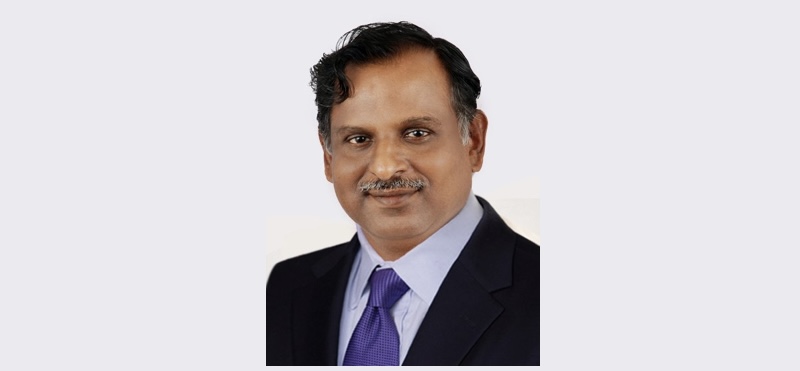
  • V. Narayan to succeed  S. Somnath;  to take over as Isro chairman

    V. Narayan to succeed S. Somnath; to take over as Isro chairman

    MUMBAI: There’s a new head at the Indian Space Research Organisation (Isro) and at the department of space (DoS). On 7 January, the  appointments committee of the cabinet sent out a notification announcing the selection of the head of the liquid propulsion systems centre (LPSC)  V Narayan in the organisation as the man for the job. He will also hold the post of chairman of the space commission. He takes over from current Isro boss S. Somnath  on 14 January when the latter’s term ends.

    Narayan was one of the key architects of India’s development of the cryogenic engine, which on the back of which India’s space program – including launch vehicles and space exploration – could move ahead at the pace it has.

    Speaking to NDTV Narayan said: “We have a clear roadmap for India and I hope to take Isro  to greater heights as we have great talent.”

    As  LPSC  director he has been providing techno-managerial leadership which is engaged in the development of liquid, semi cryogenic and cryogenic propulsion stages for launch vehicles. chemical and electric propulsion systems for satellites, control systems for launch vehicles and transducer development for propulsion system health monitoring.

    Narayanan, who is a rocket and spacecraft propulsion expert joined Isro in 1984 and functioned in various capacities before becoming director of the centre. During the initial phase, for four and a half years, he worked in the solid propulsion area of sounding rockets and augmented satellite launch vehicle (ASLV) and polar satellite launch vehicle (PSLV) in Vikram Sarabhai Space Centre (VSSC). He contributed in the process planning, process control and realisation of ablative nozzle systems, composite motor cases and composite Igniter cases.

    In 1989, Narayan completed his M.Tech in cryogenic engineering with first rank at IIT-Kharagpur and joined the cryogenic propulsion area in the LPSC. Isro’s geosynchronous launch vehicles namely GSLV Mk-II  and GSLV Mk-III capable of placing two-tonne and on four-tonne class communication satellites in geo transfer orbit have cryogenic propulsion stages as terminal stages.

    As one of the few cryogenic members, working  in this area in the initial stages, he carried out fundamental research, theoretical and experimental studies and contributed in the successful development and testing of cryogenic sub systems namely the gas generator, sub-scale cryogenic engine of one tonne thrust and thrust chamber of 12 tonne thrust. 

    Considering the long-lead time required for the development of cryogenic stage of GSLV MkII vehicle, for meeting the initial flights, few of the cryogenic stage hardware were procured from Russia. Towards this, as an expert in cryogenic propulsion,  he contributed in the development of mission management systems, contract management and the successful flights of GSLV MkII vehicle with procured cryogenic stages.

    For sustained operation of GSLV MkII, initially Isro planned for technology acquisition of cryo stage for manufacturing in India. But due to geopolitical reasons, the technology acquisition could not succeed and Isro decided to develop cryogenic upper stage (CUS) indigenously  Narayanan has played crucial role in the successful development of CUS  and contributed in making it operational for the GSLV Mk II vehicle. 

    For the GSLV MkIII experimental mission with CARE module, he conceived and realised the passive cryogenic stage and contributed for the successful experimental flight. As the project, director of the C25 cryogenic project, he provided techno-managerial leadership and conceived, designed and developed the 25 cryogenic propulsion system of GSLV Mk-III launch vehicle powered by an engine developing a thrust of 200kN. 
    He contributed in establishing the necessary infrastructure and facilities for design, analysis, realisation, testing and launching. Due to innovative approach, the C25 cryo stage was developed under his guidance in the shortest time frame with all successful tests and inducted in the GSLV MkIII vehicle. Subsequently he also made the stage operational. 

    His contribution, made India one among six countries in the world to have the complex and high performance cryogenic propulsion systems and made the country  self-reliant in this area. 
    Narayan parallely completed PhD in aerospace engineering from IIT-Kharagpur in 2001. The work carried out as part of M.Tech thesis titled Cavitating Venturies for Flow Control in Cryogenic Rocket Engines and PhD thesis titled Thrust and Mixture Ratio Regulation Systems for Cryogenic Rocket Engines were directly employed in the development of the Indian cryogenic propulsion systems. 

    Towards the GSLV Mk-III M1/Chandrayaan-2 mission, L110 liquid core stage, C25 cryogenic stage, were delivered for the vehicle under his watchful eye. Propulsion systems for orbiter and Vikram lander which include the throttleable thrusters for soft landing were also developed and delivered for the Chandrayaan-2 Mission, under his guidance. As the chairman of the national expert committee constituted to study the reasons for hard landing of the Chandrayaan-2 lander ship, contributed in pin pointing the reasons and corrective actions required to overcome the observations. Realised and delivered all the propulsion systems for Chandrayaan-3. 
    For the Indian human space flight (Gaganyan) programme, he worked on the human rating of C25 and L110 liquid stages of LVM3 vehicle and the development of propulsion modules for crew module and service module and the cabin pressure control systems. He also focused on the thermal and humidity control systems and the propulsion stage for the test vehicle. 

    For enhancing the GTO payload capability of LVM3 vehicle and meeting the future Indian heavy lift  rockets, Narayan guided the team and designed a Lox-kerosene semi cryogenic propulsion system and provided  techno-managerial leadership for its development.

    He took up the development of improving the C25 cryogenic stage performance with higher propellant (32 tonnes of LoX and LH2) loading with higher thrust (22 tonne) engine. His team is also working on developing the 100 tonne  thrust Lox-CH4 engine and electric propulsion thrusters. He has also made significant contribution in the spacecraft propulsion area. 

    Narayan contributed as the member of two failure analysis committees (FACs) of GSLV MkII D3 and GSLV MkII F02 vehicles and , member secretary of the first Indian cryogenic upper stageeEngine FAC. He  was a member of Isro’s 12th Five Year plan-drafting group and contributed in finalsing the propulsion system development during 12th five year plan. He has also finalised the propulsion road map of Isro for the next 20 years (2017 – 2037). As director of  the LPSC, during the last five  years, he has delivered 164 liquid propulsion systems for 41 launch vehicles and 31 space craft missions. 

    V Narayanan, is currently the chairman of LPSC-IPRC co-ordination committee and chairman of programme management council – space transportation systems.

  • TRAI suggestions on uplink, downlink norms under consideration, says MIB

    TRAI suggestions on uplink, downlink norms under consideration, says MIB

    NEW DELHI: The Indian government has said broadcast and telecoms regulator TRAI’s recommendations on ease of doing business and uplink/downlink norms, some of them quite radical, are under consideration.

    “Government solicited recommendation of Telecom Regulatory Authority of India (TRAI)… they are under consideration,” Minister of Information and Broadcasting Rajyavardhan Rathore told Parliament last week without giving any time frame or clarifying whether the regulator’s suggestions on both the issues would be accepted in totality or they would be tweaked as and when legislated into regulations.

    Pointing out that because the present policy guidelines for uplinking of television channels from India and those relating to landing rights came into effect in December 2011, it was felt that the government should have them re-examined by the regulator in view of the changing broadcasting environ in the country, Rathore explained.

    However, TRAI in its recommendations on uplink and downlink norms, shot down an idea proposed by MIB that had suggested whether TV channels’ frequencies too could be auctioned on the lines of FM radio stations.

    TRAI also stuck with most of the existing guidelines and norms for uplink and downlink permissions for TV channel and teleports. However, it suggested enhancing of annual permission fees from the present levels, amongst some other changes. The recommendations on uplink and downlink of TV channels and teleports had been awaited eagerly by the industry, already reeling under pressures from various sides, including economic.

    The regulator also said that mandating encryption of broadcast of FTA TV channels was not a good idea, while suggesting that various processes for government clearances should be streamlined and completed within a stipulated time-frame.

    The broadcast industry and independent observers feel that it would help the industry if Minister Rathore’s team at MIB take a quick decision on the suggestions made by TRAI on both the issues instead of keeping the matter pending.

    However, as TRAI’s role is recommendatory, it is not mandatory for government organisations, including MIB, Department of Telecoms (DoT) and Department of Space, to accept the suggestions in any form.

    There have been instances when the regulator’s suggestions have been shot down or tweaked by the government. A recent example being TRAI’s push for its role to be upgraded to that of a converged regulator for broadcast, online and telecoms sectors, which was shot down by the DoT while formulating the final version of the National Digital Communications Policy 2018.

  • Comment: TRAI uplinks progressive recommendations; now MIB, others need to downlink them

    Comment: TRAI uplinks progressive recommendations; now MIB, others need to downlink them

    The approximately Rs 1,400 billion Indian broadcasting and cable sectors, reeling under the impact of a slow economy and hemmed in by erratic policy-making, would be breathing a bit easy after TRAI’s recommendations on issues related to uplink and downlink of TV channels and teleports.

    And, why not?  When the consultation paper on uplinking and downlinking guidelines was released by TRAI in December last year, the concept paper had sent alarm bells ringing in the media industry. Reason? The consultation paper had references about auctioning of satellite spectrum and TV channel permissions, introduction of AGR (adjusted gross revenue) sharing based licence fee (the concept of licensing itself was a debatable issue) and introduction of other changes.

    Most media houses sensed that an auction and AGR-based licensing and spectrum regime could have an irreparable impact on the industry, a la telecom sector, where winding down of businesses and pink slips are becoming common. Even more worrying for the sector was the assertion by TRAI — probably egged on by the Ministry of Information and Broadcasting (MIB)’s reference letter on the issue — that the administrative permissions received by TV channels under the existing norms were licences under Section 4 of the Telegraph Act, 1885, which in itself is an antiquated piece of legislation harking back to the 19th century.

    Though TRAI may not have been directly responsible for suggesting in the consultation paper, issues that rankled the industry, it did experience a rare united and collective views of the industry. Though consensus among stakeholders is rare, on this matter there was no such hesitation. And, an open house forum organised by TRAI on the issue to get further feedback could be cited as an example of this rare unity of views.

    Most attendees to the open forum conveyed loud and clear that concepts like auctioning of TV channels’ permission and AGR-based annual revenue sharing (with the government) would do more harm to the industry than any good. What’s more, some of the industry representatives reminded TRAI of its recommendations for National Telecom Policy 2018 where it had suggested “review” of all levy and fees imposed on telecom service providers.

    In the final recommendations issued earlier this week, TRAI has categorically struck down the possibility of either auctioning of permissions and/or spectrum and steered clear of AGR altogether. Rather, it has taken a highly progressive stance, which if accepted by MIB and other government organisations can inject the much-needed fuel in the industry for it to propel forward faster over the next decade.

    By not increasing any substantial financial burden on media companies in this sector, TRAI has enabled the capex to go into creating newer ventures, innovative products and business models, and other expansionary activities, rather than simply paying fees and levies. Though the suggested framework has been left mostly untouched from the perspective of administrative fees, there are a few notable changes.

    The annual licence fee for uplinking of a TV channel has been enhanced from Rs 200,000 to Rs 300,000. Similarly, the annual fee for downlinking of a TV channel has been increased to Rs 750,000 from Rs 500,000. Also, the fee for downlinking of channels uplinked from abroad has been increased to Rs 22,50,000 per annum.

    TRAI, while exhorting the likes of MIB, Department of Space and DoT to streamline processes, has interestingly suggested transfer of permissions between two companies be permitted only in the case of mergers and acquisitions as recognised under applicable laws. However, free transfer has been recommended for permission of a TV channel to its subsidiary company or holding company or a subsidiary company of the holding company. The caveat being such a company should have a valid uplinking and downlinking permission.

    A time period of only one year has been given for operationalisation of a TV channel and a lock-in period of one year from the date of operationalisation of a channel for the transfer of permission of such a channel too has been introduced.

    As for teleports, no change in the amount of one- time non-refundable processing fee levied for seeking permission for establishing a teleport has been suggested. Similarly, it has been suggested that no entry fee is levied for granting permission for establishing a teleport. However, for each antenna, a fixed annual license fee of Rs 300,000 has been recommended.

    What will also come as a relief to the teleport industry is that TRAI has refrained from restricting the number of teleports in India.

    And, once again TRAI has nudged Department of Space and Department of Telecoms to take time-bound and liberalised policy decisions relating to satellite capacity. Though not said upfront and in so many words, the regulator has pitched in for foreign satellites too. “The issue of open sky policy for Ku band frequencies may be taken up by MIB in INSAT Coordination Committee (ICC) meeting and the open sky policy should be adopted.”

    Any regulator would vouch that it’s hard to please the core constituency and stakeholders don’t always agree with its stand, but on the uplink/downlink matter the industry would agree with most of the suggestions of TRAI — and also breathe a little easy.

    Hang on, don’t pop the champagne yet. TRAI can only make suggestions — it admitted so in an open forum — and it’s up to MIB, DoT and Department of Space to accept the suggestions and implement them. And, therein lies the catch because quite a few other sets of TRAI recommendations have been gathering dust in various corridors of power.

    Also Read :

    Uplink, downlink issue: TRAI pushes for a liberal regime keeping most existing norms unchanged

    TRAI extends dates for comments on uplinking/downlinking consultation paper

  • ISRO/DoS relent on use of foreign satellites; MIB starts processing applications

    ISRO/DoS relent on use of foreign satellites; MIB starts processing applications

    MUMBAI: India’s Department of Space, overseeing the Indian Space Research Organisation (ISRO), has eased up on its hitherto hard stance on Indian TV channels and teleports using foreign satellites’ capacity — if the Indian customer has a long-term contract.

    In a communication to Ministry of Information and Broadcasting (MIB), DoS/ISRO combine has advised that applications may be processed — for the time being — without insistence on migration to an Indian satellite or asking the time frame for doing it. 

    According to government sources, it has been suggested to MIB that it could start granting permissions to TV channels proposing to use foreign satellites for uplinking purpose if they are going in for a contract of three years or more. If an applicant company, having existing government permissions, has long-term capacity contract on foreign satellites, it too should be allowed to continue with its services.

    However, there’s a caveat to ISRO/DoS’ latest softening of stance. Any company that has existing permission from MIB to start a TV channel or communications service (like teleports) and is using foreign satellites should give the Indian space agency at least three-month notice for space on an Indian satellite when its contract with a foreign satco is ending. Same holds true for all fresh permissions for TV channels given by the government.

    The DoS/ISRO communication referred to over 35 applications that were kept pending by MIB as Department of Space had been insisting on migration to Indians satellites. MIB had also issued letters earlier this year asking companies seeking name change, for example, as to when they proposed to shift to an Indian satellite. Out of these cases highlighted by ISRO/DoS, at least 10 have long-term contracts for capacity on foreign satellites.

    Last month MIB cleared applications of three new TV channels in Indian languages under Aastha brand name. The Aastha channels are owned by a company controlled by Balkrishna, a close associate of yoga-guru-turned-entrepreneur Ramdev who’s Patanjali FMCG venture is giving even multinational companies sleepless nights, if revenues and sales growth are to be believed.

    Government nods recently were also given for name and logo change to some big broadcasting companies. Incidentally, some of the Aastha TV channels use foreign satellites for uplinking activity.

    In recent times, ISRO has been facing minor setbacks regarding launch of communications satellites, including Gsat-11, which returned to India just few days before launch from a European launchpad. 

    Still, it needs to be seen how long the government continues allowing Indian customers facilities of foreign satellites.

    MIB Expands Areas for Online Applications

    In a new advisory put out yesterday, MIB has expanded the services for which applications could be made online, something that the government has been insisting on in an effort to reduce processing time.

    The online module for submitting applications on www.broadcastseva.gov.in extends to cases relating to change in details of a company, annual permission fee for teleport companies and company-specific changes being sought to be made by teleports.

    The government has also reiterated an earlier stand of accepting online payments for various processing and annual permission fee, adding such payments should be made on time failing which action could be taken against companies concerned under existing regulations.

    Also Read :

    MIB clears TV channel applications; Rathore calls for stakeholder meets

    MIB, DoS nudge TV channel to use Indian satellites

    MIB says ISRO upping capacity to facilitate migration from foreign satellites

    Comment: 3 areas that new MIB minister Rathore needs to target

  • TRAI stands up to DoT on use of foreign satellites for comms services on aircrafts

    TRAI stands up to DoT on use of foreign satellites for comms services on aircrafts

    NEW DELHI: India’s telecoms and broadcast regulator Telecom Regulatory Authority of India today stood up again for the lawful right of satellite industry stakeholders. It reiterated that the nation’s policies and guidelines for on- board aircraft communications services like broadband should also allow use of foreign satellites despite Department of Telecoms raising objections on the matter.

    “If we do not allow the foreign aircrafts to provide the MCA (mobile on-board aircraft) services using their satellite and gateways over the Indian airspace, other countries will also not allow the Indian aircrafts to provide

    MCA services while over-flying their jurisdictions,” TRAI justified its stance to DoT as part of clarifications sought by the latter on the regulator’s recommendations on in-flight connectivity services.

    TRAI pointed that though a government panel may have suggested use of Department of Space-approved satellites only with Indian gateways, the in-flight connectivity or IFC services are technically complex withservice providers handling the logistics do so in partnership with foreign mobile service providers having created on-ground facilities for provisioning of MCA.

    “Even if it is assumed that such a facility is created on Indian soil, aircrafts will need to be fitted with pico cell/equipment, which are compatible with one of the Indian TSP (telecom service provider)’s core network. There are several countries where IFC services are already operational and, accordingly, their aircrafts are equipped with pico cell which is connected to the core network of partnering foreign mobile service provider. These airlines certainly won’t be willing to carry out any modification due to the downtime and costs involved. Therefore, for such aircrafts, MCA over the Indian airspace seems feasible only with the existing arrangements in which partnering mobile service provider would be a foreign entity. It may require the use of foreign satellites and gateway, and traffic from aircraft may not be routed through gateway in Indian soil,” TRAI explained, adding that its recommendations have enough in-built safeguards to take care of concerns on India’s security.

    If that was not enough, TRAI, at present helmed by chairman RS Sharma who’s due to superannuate in a few months’ time, categorically said in its response to DoT clarifications that the government panel’s decision to use only satellites approved by DoS with Indian gateways for MCA service was “not implementable”.

    “If the use of foreign satellites and gateways are not permitted for MCA services, it would make the recommendation infructuous”, the regulator emphasized, though admitting that it’s role is recommendatory and the final decision would have to be taken by the government. “With this perspective, the Authority recommended that `use of foreign satellites and gateway would be permitted for the establishment of satellite backhaul links only for the provisioning of MCA services’,” TRAI added.

    On several other objections raised by DoT on suggestions on providing communications services on aircrafts within India airspace, TRAI has stood its ground, reiterating that such bans on foreign satellites and non-Indian gateways could be against international laws and may make the service unviable.

    The full text of TRAI reply to DoT can be found at http://www.trai.gov.in/sites/default/files/RecommendationIFC05062018_0.pdf.

    Also Read:

    TRAI clears path for broadband, voice services aboard planes

  • Did govt pressure nudge ABS-2 to shutter Indian TV channels on FTA DTH service?

    Did govt pressure nudge ABS-2 to shutter Indian TV channels on FTA DTH service?

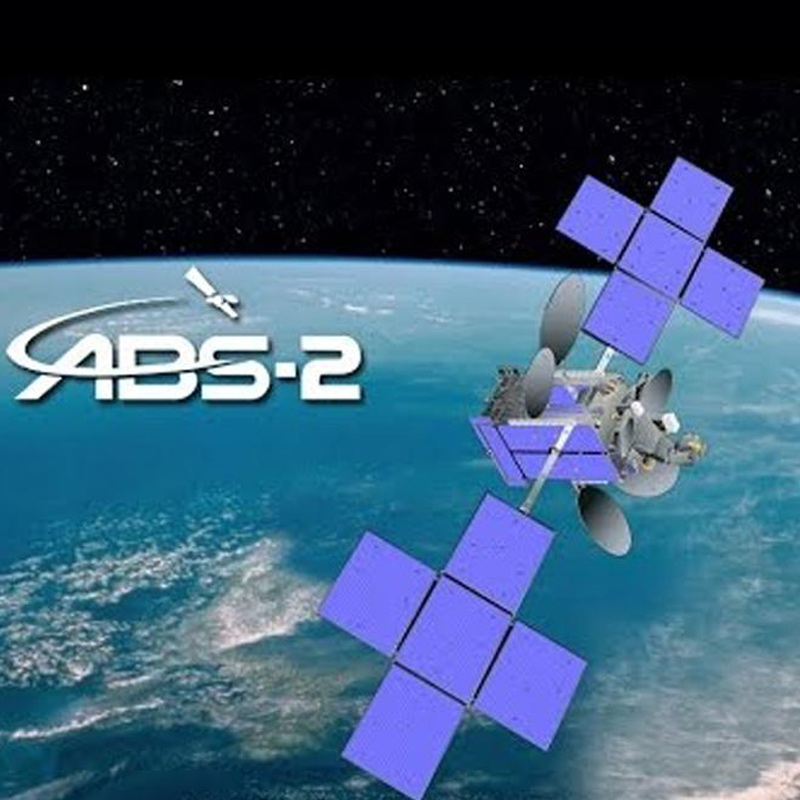
    NEW DELHI: ABS has closed the doors from 1 May 2018 on Indian TV channels that were using the ABS-2 satellite-beamed FTA Ku-band platform. Apparent reason: Indian government pressure on local TV channels to stop using the ‘unlicenced’ platform that discouraged payment of carriage fee to the satellite operator, which was the origin of the business.

    The Bermuda-registered satellite operator’s ABS-2 signals — hosting on its South Asian beam a Nepalese and a Bangladeshi DTH services licenced in their respective countries — have been spilling over into India and a mix of Indian, Nepalese and Bangladeshi TV channels were available to Indians as a FTA service that was accessed via some plain vanilla hardware (read set-top boxes and antennae) at a nominal cost.

    On being petitioned by Indian distribution platforms, Ministry of Information and Broadcasting (MIB) in 2017 had asked Department of Space (DoS) to block the “unauthorised” DTH or KU-band ABS-2 service on the grounds of possible threat to national security — an allegation that was refuted by ABS citing international laws of ITU.

    Finally, when ABS took the decision to shut the doors on the Indian TV channels, there were 90 of them, mostly beaming content in non-Hindi Indian languages. These channels were using the FTA Ku-band platform to reach not only Indian audiences in southern and eastern parts of India but, probably, also those in Nepal and Bangladesh for additional eyeballs. Eyeballs meant advertising revenue for these TV channels.

    ABS last year had refuted Indian government charges saying “natural spillover” of satellite signals into neighbouring countries, outside the service area of the countries offering licensed DTH services, but falling within the coverage area of the satellite, was in “full compliance” of ITU provisions.

    With ABS discontinuing the Indian TV channels, Reliance Big TV (sold by Anil Ambani’s Reliance Communications to new investors) FTA DTH service yet to fully bloom and Doordarshan’s FreeDish platform locked in a policy logjam, free to air platforms and low-cost television viewing for people in the Indian hinterland seem to have run into air turbulence.

    According to industry experts, Indian hardware companies had devised a way to have two LNBs (low-noise box) in one single DTH antenna that was capable of receiving both ABS-2 and DD FreeDish services, resulting in sizable popularity of these two platforms that were accessed via a low-cost hardware. This was unlike the full-fledged subscription-based DTH services made available by the likes of Tata Sky, Dish TV, Videocon d2h and Sun TV.

    Also Read :

    Block illegal DTH FTA, space dept told

    Could India blocking ABS’ FTA TV signals lead to breach of ITU norms?

    Boeing delivers ABS-2A to optimise video services, DTH

  • Comment: 3 areas that new MIB minister Rathore needs to target

    Comment: 3 areas that new MIB minister Rathore needs to target

    In a recent reshuffle of his cabinet colleagues and their portfolios initiated by PM Modi, a surprise move was not Ministry of Information and Broadcasting (MIB) minister Smriti Irani’s removal, but handing the independent charge of the portfolio to her till-now junior, Rajyavardhan Rathore.

    There is some merit in giving Rathore full responsibility of MIB, which was conceptualised by the nation’s founding fathers to be the government interface with the media and public, in general. That MIB could have lost its relevance in this digital age – an issue being debated in certain quarters – is another story altogether for some other time. Why Rathore at the helm of MIB seems just what the doctor advised?

    First, he is young and suave. Second, he comes with a good pedigree of being an army officer and an Olympic medalist. Third, he’s comparatively young and has built a youth and people-friendly image, apart from his work as independent charge holder at Ministry of Youth Affairs and Sports – his latest initiative on Twitter, #HumFitTohIndiaFit , aimed at encouraging fitness by inviting celebs is already a hit on social media.

    As Rathore has served as a junior MIB minister long enough to get to know the complex issues that come with the terrain, it is expected that he is best suited to address the challenges being faced by the media industry. But for that, he needs to aim at the following three areas and hit the bull’s eye.

    Content Regulation

    The previous MIB minister waded into controversies because of her largely perceived unpopular move to create a panel in April this year to explore regulations for online media/news portals and online content. It did not help her or the government’s cause as this announcement, though being hinted at for several months, came close on the heels of a widely protested move to cancel the accreditation of journalists if found peddling fake news, while the government did not define clearly what constituted a fake news. Though the order was rescinded at the behest of the PM’s Office, the online content committee lingers on directionless and with nobody willing to father the baby presently. That this move antagonised not just online journalists, but also social media players (many of whom are backed and funded by government’s sympathisers) and video-on- demand portals is a story in itself.

    Rathore knows media in India enjoys certain constitutional freedoms, including the right to exercise freedom of speech and expression. Therefore, any move targeted at “regulating” such content shall only be interpreted as silencing criticism. That the online committee is packed with government officials with minuscule industry representation and zero presence of online media raises questions on government’s motives.

    What’s more, doubts have also been raised on the jurisdictional propriety of MIB to create such a committee in the first place. The government allocation of business rules that determine the remit of various government agencies clearly highlights that for all “policy matters relating to information technology; electronics; and Internet” only Ministry of Electronics and IT (MeITY) is competent to make decisions. The ambit of MIB is limited only to “the enunciation and implementation of the law relating to radio and television broadcasting in India by private Indian companies or Indian nationals”.

    With multiple laws applicable on online content, there seems to be no need of any additional regulation for online content, though MeITY could think otherwise, but it’s for it to take a call. Still, a self-regulating mechanism that places uniform standards over user-generated content platforms and video-on-demand portals is the need of the day. This shall also be in line with Rathore’s views expressed after assuming full charge at MIB where he stressed upon self-regulation as the only means of regulating media.

    As the final authority at MIB now, Rathore needs to walk the talk on online content regulation and, probably, let the committee set up by his predecessor die a natural death.

    Online content aside, in the world of traditional broadcasting there is a need to strengthen the already established self-regulatory mechanisms such as the Broadcasting Content Complaints Council (BCCC) of the IBF and a similar self-regulatory set-up of the NBA India.

    Ease of Doing Business

    It would be an understatement to say that the past year has been a difficult period for the Indian media and entertainment (M&E) sector what with after-effects of demonetisation of high-value currency notes and a new tax regime of GST rolled out last year. The story remains the same for ease of doing business in the sector as well.

    On this aspect, Rathore could focus on the recommendations made by Telecom Regulatory Authority of India (TRAI) on`Ease of Doing Business in Broadcasting Sector’ and implement them in letter and spirit.

    A unilateral decision by the previous leadership of MIB to impose a processing fee of Rs 100,000 per day/channel on temporary live uplinking of events (such as sports) and the same amount for seeking minor amendments (like change in name, logo, etc) has been causing heart burns.

    What was the rationale behind such moves to review processing fees? Allegedly non-revision for several years and that such a move could bring in some revenue for the government. But, should a government use licensing/permission fee as means of revenue maximisation? Probably, no.

    Another issue that demands attention from Rathore is the denial of permissions by DoS to satellite TV channels using private satellite capacity, especially foreign. Here, the newly appointed minister shall have to display his trademark leadership and try to resolve the concerns of his constituents (TV channels, DTH operators, teleport operators, etc) vis-a-vis DoS.

    Building an Investment Friendly Environment

    In the recently held global Asia Media Summit 2018 in New Delhi, PM Narendra Modi said that Asia has emerged as a promising region for media businesses and offers opportunities for international cooperation. This statement highlights his government’s push for increasing investment inflow across sectors of the Indian economy – including creative industries such as M&E.

    In this respect, Rathore will have to hit the road running — which he has done — and look at all the factors impeding investments in the sectors under him. This could necessitate reviewing licensing conditions and guidelines, which many in the industry believe hamper investments.

    Can Rathore bite the bullet and recreate the magic that he unveiled one fine day years back to get India the first Olympic medal in an individual event? Certainly, he can. Keep tuned in for the next episode.

    Also Read :

    MIB clears TV channel applications; Rathore calls for stakeholder meets

    Comment: India’s NTP 2018 gets digital makeover but needs complimentary policies

    Comment: MIB’s botched whip on fake news akin to testing waters

    M&E to add 1 mn jobs in 5 years: Sudhanshu Vats

  • Comment: India’s NTP 2018 gets digital makeover but needs complimentary policies

    Comment: India’s NTP 2018 gets digital makeover but needs complimentary policies

    Criticism notwithstanding, Indian bureaucratic mandarins—babus as they are referred to in local lingo—do come up with draft policies that are contemporaneous, and at times when it’s least expected. The new digital avatar of the National Telecoms Policy 2018, slated to be operational later this year, could turn out to be just one such initiative—only if the political masters muster enough courage to push through with the proposed legislation and the will to follow up with complementary policies.

    Though surprises are the new norms with this government led by the maverick PM Modi—remember the late evening ‘Mitron’ address to the nation by the premier few years back announcing high denomination currency notes were being made illegal—it caught many napping when the Department of Telecommunications (DoT) posted on its website the draft of the much-awaited National Telecommunications Policy 2018 very late in the evening on Labour Day. So, what?

    The first surprise element was that the NTP 2018 had been rechristened National Digital Communications Policy 2018 (NDCP). The aim: put the draft in public domain to seek comments from key stakeholders and citizens, at large. But true to the government style—keeping things fluid—the deadline for comments is yet to be announced.

    The renaming of the policy was welcomed by the industry as it converges with the overarching Digital India vision of the present government; hiccups along the way to implementation, notwithstanding. However, such tweaks in the suggestions made by the telecoms and broadcast carriage regulator TRAI goes not only beyond just the nomenclature but also attempts to actualise provisions of the policy.

    What’s also important that while the government wants synergies between various organisations and ministries, it gives a thumb down to a TRAI proposal to make it—or any such other body—a converged regulator.

    A Truly Digital Communications Policy

    For quite some time, it was being felt by the government and industry alike that a specific road map is required to guide India’s successful movement into the emerging digital realm—to truly address the issue of convergence in the telecoms and broadcast services. To spark rapid all-round deployment of digital capable technologies, it is necessary all available mechanisms be looked at in a comprehensive manner; basically, shifting the focus from just wired and wireless telephony and broadband and expanding the horizons to areas such as satellite communications and broadcast carriage services.

    The industry had been demanding that already existing infrastructure assets in sectors such as broadcast and power be utilised to efficiently achieve a demanding goal of laying down high speed fibre infrastructure across India. Thus, a digital-centric telecommunications policy was required to address the crucial aspect of infrastructure sharing and integration.

    Furthermore, to firmly strengthen India’s position in the digital sphere, it is necessary that the web-hosting ecosystem, including data storage, be strengthened by implementing norms and standards that are in conformity with international best practices. This gains importance with increasing reports and instances of data breaches and leaks. Also, core principles such as separation of content/applications and infrastructure/carriage layer underlying network neutrality need to be crystallised and affirmed through statutory and policy provisions.

    The present draft NTP 2018—or isn’t it better to call it from now on NDCP 2018? —has taken into account many concerns and challenges and seems like an earnest effort on the part of the government to ensure that India’s broadband and digital sectors are backed by sound policy norms and principles.

    Has DoT Planned Well for India’s Digital Future?

    The DoT has gone ahead and staked its claim to the entire swathe of telecommunications technologies and the methodologies through which government’s digital goals can be rapidly deployed, e-governance included. Now, this could turn out to be an asset as also a weakness, given inter-departmental politics and power play.

    DoT has called for an overhaul of India’s archaic satcom policy in line with international standards and also advocated for greater participation by private players in commercial satellite operations — a vision that needs to be matched with some liberalisation at Department of Space (DoS) and India’s space agency ISRO, both of which report directly to the Prime Minister’s Office. To spearhead the contribution of private satcom industry in providing broadband to far flung districts, there’s specific mention of opening Ka-band for private use and also for utilisation of high through-put (HTS) satellites.

    With a view to reducing burden of laying down fresh wireline fibre infrastructure, there’s clear mention of recommendation for “leveraging existing assets of the broadcasting and power sector to improve connectivity, affordability and sustainability”. This could reduce the tendency of telecom industry to overbuild fibre and brings the vast amounts of broadband-capable digital cable infra created under Ministry of Information and Broadcasting (MIB)’s mandate of digitising cable networks across the country and within the purview of Digital India programme.

    DoT has also realised the need to formulate a coherent approach to reap the benefit of technological convergence. It has specifically called for statutory amendments to the vintage Telegraph Act, 1885 for “enabling infrastructure convergence of IT, telecom and broadcasting sectors”. This highlights the department wants to create a defined policy structure for seamless use of all broadband capable infrastructure, irrespective of differences amongst sectors. It also reflects clear intent of DoT to focus only on convergence of infrastructure, rather than convergence of applications/media running on this layer.

    Therefore, DoT has focused sharply (and some may say appropriately) only on enabling carriage services and the surrounding digital ecosystem rather than delve into other unrelated areas such as media.  No wonder it has called for separation of infrastructure/carriage layer from applications/content layer. Moreover, it has called for recognising the need to uphold the core principles of network neutrality by “amending the licence agreements to incorporate the principles of non-discriminatory treatment of content, along with appropriate exclusions and exceptions as necessary”.

    Furthermore, the DoT has gone a step ahead and acknowledged the primacy of principles and objectives contained in the National IPR Policy related to telecommunications and sought implementation to kick start development of indigenous IPRs.

    The Road to the Final Draft

    Though the industry, by and large, has welcomed the draft policy as it gears itself to fulfil the call for the now highly debatable “USD 100 billion” in investments, there are a few asks that still need to be fulfilled. The investment aspect itself is ambitious given the present health of the telecoms sector where a big downside of the business is the pink slips presently being handed out by telcos, big and small.

    Another important aspect would be to simplify and streamline all departmental procedures such as windowing of satellite frequencies by the WPC, a part of the DoT, which has been a bottleneck in improving ease of doing business in satcom and broadcasting sectors.

    Given that the DoT has already referred to National IPR Policy for the purpose of all IPRs, including patents, trademarks and copyrights, related to telecommunications, it is vital that it settles the debate between carriage and content industries once and for all and pursues the goal of harmonisation of telecom policy construct with the applicable domestic and international IPR regimes.

    The key would be to now take all the constructive inputs from the industry and iron out the remaining creases to create an effective implementation framework to turn India into a truly digitally empowered society.

    While we debate the National Digital Communications Policy 2018, it would be worthwhile to go back into history and attempt reading the Communications Convergence Bill that was introduced in Parliament in 2001. A real visionary piece of draft legislation, the policy was considered so futuristic at that point of time that a joint parliamentary committee red flagged it at 70-odd places, which effectively sounded the death knell for the proposed legislation that was aimed at promoting and developing the entire communications sector—encompassing the broadcasting, telecom and multimedia sectors—keeping in view emerging convergence of techs and services. Drafted by eminent jurist Fali S Nariman-headed panel, the draft still remains as one of the finest pieces of convergence regulations that never saw the light of the day.

    In the end, one cannot but agree with lawyer-researcher at India’s Centre for Internet and Society Anubha Sinha’s observations. Writing for The Wire, an online news venture, Sinha highlighted: “While the policy [NTP 2018/NDCP 2018] is broad and forward-looking, the true intent and meaning of the listed steps will only be understood when complementary legislative and granular policy actions to support these strategies are crystallised. That will make all the difference.”

    Also Read :

    DoT addresses broadband issues in policy out for public consultation

    Zee, Star, NBA oppose converged regulator for broadcast and telecoms

    TRAI releases paper on National Telecom Policy 2018

  • MIB nod to TV channels on hold till TRAI uplink, downlink suggestions

    MIB nod to TV channels on hold till TRAI uplink, downlink suggestions

    MUMBAI: It’s official now. The Indian government has put on hold, since January 2018, clearances of new applications for TV channels till the Telecom Regulatory Authority of India (TRAI) comes out with recommendations on issues relating to uplinking and downlinking of TV channels.

    According to government sources, in a note circulated mid-January 2018 by the Ministry of Information and Broadcasting (MIB) it was proposed to keep in “abeyance” permissions to all new TV channels till a “new policy” was put in place after studying recommendations from broadcast and telecoms regulator TRAI.

    TRAI had floated a consultation paper on issues relating to uplink and downlink of TV channels in India mid-December 2017 on receiving a reference from the MIB to study the particular aspect and come out with suggestions. This consultation was initiated even as the regulator had been discussing various other issues with stakeholders of the broadcast and cable sectors on ease of doing business and inputs for the National Telecom Policy 2018. Subsequently, it submitted its recommendations to the government on ease of doing business and the NTP.

    Even as the TRAI is yet to formulate its recommendations on uplink and downlink of TV channels, as an indirect fallout of the MIB proposal—as also certain other feedback from agencies like the Ministry of Corporate Affairs (MCA)—the government has also put on hold processing any change being sought by existing TV channels.

    The sources indicated that out of the 97-odd applications from TV channels under-process, 30 are fresh applications. Show-cause notices have also been issued by the MIB to some 100 companies on the advice of the MCA for various irregularities. Out of the companies asked to explain, three had applied for clearances for additional TV channels.

    Meanwhile, in its consultation paper on uplink and downlink of TV channels, amongst various other points, the TRAI had raised the following issues also:

    ·        Should net-worth requirement of the applicant company for granting uplinking permission, and/or downlinking permission be increased?

    ·        Should there be different net-worth requirements for uplinking of news and non-news channels?

    ·        Whether auction of satellite TV channels as a complete package, similar to FM radio channels, is feasible?

    ·        Is it technically feasible to auction individual legs of satellite TV broadcasting, that is uplinking space spectrum, satellite transponder capacity, and downlinking space spectrum?

    ·        Is it feasible to auction satellite TV channels without restricting the use of foreign satellites, and uplinking of signals of TV channels from foreign soil?

    ·        If it is decided to continue granting of licenses for satellite TV channels on administrative basis, as is the case presently, what should be the entry fee for grant of license for uplinking of TV channels from India, downlinking of TV channels uplinked from India, and downlinking of foreign TV channels?

    ·        What should be the license fees structure, that is fixed, variable, or semi-variable, for uplinking and downlinking of satellite TV channels? Please elaborate if any other license fee structure is proposed, with appropriate justification.

    ·        If the variable license fee structure is proposed, then what should be rate of license fee for TV channels uplinked from India and TV channels uplinked from abroad, and what should be the definition of AGR (annual gross revenue)?

    ·        If the semi-variable license fee structure is proposed, then what should be the minimum amount of license fee per annum for domestic channels (uplinked and downlinked in India), uplink only channels, and downlinking of foreign channels (uplinked from abroad)?

    ·        If the fixed license fee structure is proposed, then what should be the license fee per annum for domestic channels, uplink only channels, and downlinking of foreign channels?

    ·        What should be the periodicity for payment of the license fee to the government? Please support your answer with justification.

    ·        What should be the periodicity for review of the entry fee and license fee rates?

    .        Should all TV channels, i.e, pay as well as FTA satellite TV channels, be broadcasted through satellite in encrypted mode?

    Also Read :

    Regulatory hurdles prompt Star to telecast IPL’s Kannada feed on Star Suvarna Plus

    Broadcasters, DPOs oppose TV channel auction proposal

    No new channels added in December 2017

    MIB, DoS nudge TV channel to use Indian satellites

    MIB reverts to earlier norms of seeking nod from ISRO on uplink/downlink of TV channels

  • MIB, DoS nudge TV channel to use Indian satellites

    MIB, DoS nudge TV channel to use Indian satellites

    MUMBAI: In what could be interpreted as unease of doing business instead of ease of it, the Indian government is nudging TV channels to deal with Indian entities if they employ the services of foreign satellites. And, till that happens, permissions are being withheld or delayed.

    A letter, dated mid January 2018, from the Ministry of Information and Broadcasting (MIB) to a Madhya Pradesh-based company owning and operating a TV channel suggested that as the Department of Space (DoS) was refusing to entertain the company’s application for a name change since it was uplinking to a foreign satellite, a strategy review could be considered.

    Pointing out that DoS was “not considering” the application for changes as the broadcaster stated in its application it would be using a foreign satellite—in this case, an ITU co-ordinated IS-17—MIB’s letter stated that DoS had also asked it to advise the applicant to “make effort to use” either an Indian satellite or teleports operating on domestic satellites.

    The applicant broadcaster has been given 15 days’ time by the MIB to respond with an update on plans for usage of an Indian satellite instead of a foreign satellite.

    The company in question had made an application for a name and logo change of the TV channel twice in November and December last year. In its present avatar, the channel is uplinked to IS-17 satellite and its license, according to the MIB letter, is valid till June 2018.

    These developments are taking place even as broadcast carriage regulator TRAI is in the process of holding consultations with stakeholders on the issue of ease of doing business in the broadcasting sector and its final recommendations are awaited. Towards the fag end of 2017, the regulator also separately floated a consultation paper on the various issues related to uplink and downlink of TV channels in India and industry submissions are still to flow in as the deadline was extended by the TRAI.

    Over the last 10 days, TRAI has had two separate meetings—one a closed-door meeting with broadcast, cable and radio sectors’ senior representatives and the other an open house discussion on National Telecom Policy 2018 in New Delhi—with the industry, wherein various regulatory irritants were, reportedly, highlighted, including the fact that use of foreign satellites could very well give an additional fillip to PM Modi’s dream of taking broadband services to every nook and corner of India.    

    The regulator, in its recent recommendations on providing broadband and voice call services aboard airplanes in Indian airspace, had suggested that domestic and foreign satellites both be allowed to provide in-flight connectivity subject to certain security concerns being addressed. It is still to be seen whether the telecom ministry and the DoS-ISRO combine give their assent to the usage of non-Indian satellites, too.

    Also Read :

    2017 was a regulatory roller coaster and the ride continues

    MIB reverts to earlier norms of seeking nod from ISRO on uplink/downlink of TV channels

    ISRO stresses on indigenization; TRAI for Open Sky policy

    MIB, TRAI allay industry fears on sat capacity leasing & content regulations