Tag: Dentsu

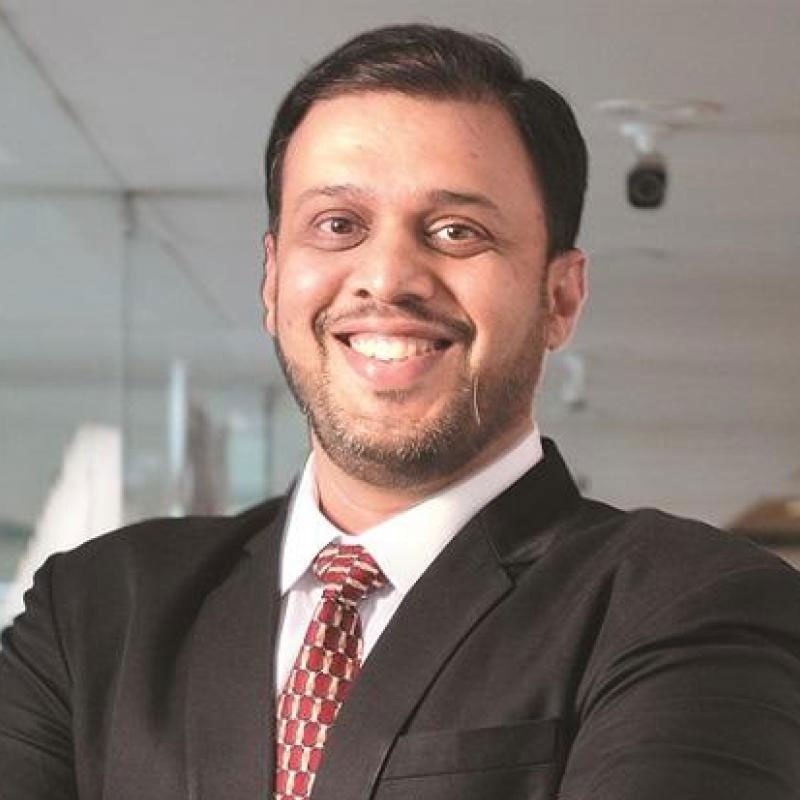
  • Focused on building a unified APAC data & product offering across dentsu network: Gautam Mehra

    Focused on building a unified APAC data & product offering across dentsu network: Gautam Mehra

    Growing at around 25-30 per cent year-on-year, digital marketing is sailing the boat of popularity and recognition for many brands these days. The investments are pouring in and the role of data and analytics is spanning beyond just digital marketing. What used to be a throwaway thought for marketers just a few years ago, is now at the core of every planning and strategy meeting.

    And leading the field in delivering data-driven marketing solutions are stalwarts like dentsu programmatic CEO & chief data officer of denstu– south Asia. Gautam Mehra. Now, as he takes on additional charge as chief data &  product officer – Asia Pacific (APAC) for the agency, he spent some time with Indiantelevision.com’s Mansi Sharma, sharing his thoughts on the industry, how it has evolved, and his plans to navigate the diverse APAC market.Excerpts from the interview:

    ·        On the evolution of digital marketing over the years.

    Digital marketing has been one of the most dynamic and vibrant components of the realm of advertising. I remember when I had started, we used to buy keywords for twenty dollars a month (back in ’99) and that was digital marketing. Then it came down to brand heads and CMOs telling us to put out say 12 Facebook posts a day and 10 tweets a day (around ’05-‘09). Next was putting the ad on Facebook ads section, which my then agency Ignitee was the first-ever agency to deliver in this country. Their only intention was to make it visible to the higher management of their organisations. I remember a period when brands would quote 2 lakh rupees for an account that we had quoted Rs20 crore for.

    Today, in a world of high-touch customer experiences driven by technology and strengthened by the volume and veracity of consumer data, digital advertising continues to dominate. There is no dearth of funds when it comes to driving improved ROIs and brands are willing to invest as much as is required. Over the years, I’ve seen digital marketing move from a “needs to be sold” to a “must-have” avenue of client investment.

    ·        On his new roles and responsibilities.

    APAC is a very unique and diverse region. There are so many cultural differences amongst the markets within the cluster. Even if you just look at south east Asia; China is a completely different market from the rest, Singapore is very different from, say, Vietnam or Indonesia, and ANZ is again distinctively placed. So, APAC is not just one big region but 15 very different markets and that is very exciting for me to dive into in my new remit.

    I would be focused on building a strong and unified APAC data and product offering across the dentsu network in the region and establishing data-led solutions to localised client challenges.

    Read more news on dentsu

    On digital marketing’s position in the APAC region.

    Digital marketing in APAC is the most vibrant and fastest-growing in the world with the largest players in bigtech heavily invested in driving their next level of growth. I suppose the common perception is that we often set Europe or the US as the benchmark when it comes to digital marketing. But as for mobile and conversational marketing, many APAC countries are leading the charge. The  Philippines and Indonesia have a vibrant conversational commerce ecosystem and WhatsApp commerce is exploding in India. As a matter of fact, a dentsu report shows a leading majority of voice searches are coming from India. So, it is a very unique time and place for APAC.

    On whether the education system in India and APAC needs to change to facilitate the development of data and analytically skilled (wo)manpower.

    Speaking specifically for a market like India, I think there is a huge gap in the Indian market when it comes to vocational training. We are still teaching the same curriculum that was meant for the German manufacturing industry. It definitely needs a wave of future-proofing and I suppose the new changes to the system is but a first step in that direction. Interestingly, when it comes to women in tech, India has 32 per cent women in engineering education, compared to just 20 per cent in the US and 28 per cent in the European Union, according to Catalyst. I’d say there is a definite drive for women to take up more leading roles in tech in India and other markets in the region.

    On how the next generation of professionals can be trained better to take up these roles.

    We need to develop a culture of learning to learn. Digital is an evolving medium and no amount of training can equip you for the changes that keep on happening. You earn a new skill today and it will be non-relevant in the next three months. Therefore, we need to develop this spirit of constantly learning and evolving and only industry leaders can drive that change.

    On his  short term and long term goals.

    With the start of every new specialisation, step one would always be to take stock and consolidate. I have already been in touch with our teams across the region via the dentsu Marketing Cloud (DMC) ecosystem that we have built and scaled across the globe. Having grown a team of in-house experts who are thinking beyond just providing data solutions or providing a dashboard, and actually creating software like dentsu Marketing Cloud, dentsu Play, denstu True Value, that solves numerous challenges uniquely. We are going to add more to the list as we discover areas of opportunity to solve client challenges in the region. There are social media platforms apart from Google, Amazon, and Facebook, that are popular in APAC markets. We want to extend our solutions for marketers to analyse their marketing performances on them as well.

    On his experience of being assigned a new responsibility during the lockdown.

    Fortunately for me, I had already been interacting with 32 global markets for our dentsu Marketing Cloud (DMC) ecosystem and have already travelled extensively within the region for numerous pitches. With the advantage of already being in touch with our teams and having known them for quite some time, it has not been a really big challenge to me in connecting with teams during this lockdown phase as we progress in creating new solutions even during the lockdown.

  • Bangla channels pin high hopes on Durga Puja

    Bangla channels pin high hopes on Durga Puja

    MUMBAI: Durga Puja, that time of the year when an entire city descends into wholesome chaos. The fervour sets in days ahead, and during the five-day celebration the streets are teeming as revellers go pandal-hopping, bhog sampling, throng anondo mela (fun fair), indulge in shopping sprees, and a dozen other fun-filled activities. But due to Covid2019, pujo festivities are a lot more toned down this year, with the risk of public gatherings looming large on people’s minds.

    With the outlook that folks will stay at home rather than jostle with crowds, Bangla entertainment channels have taken up an aggressive stance programming-wise to maximise viewership and ad revenue during the pujo period.

    How Bangla channels are wooing viewers

    Sony Aath is trying to dial up the celebrations with a slew of fresh programming. As part of Sunday Funday, the most popular slot on the channel, it will air special Durga Puja-themed episodes of hit family shows – Gopal Bhar, Nut Boltu and NIX. With the recent premiere of new show Baalveer during this festive season, the channel’s also lined up six Honey Bunny movies. A Sony Pictures Networks India Sony Aath and English cluster business head Tushar Shah said, “We are witnessing tremendous interest from the advertisers and a few of them, including Cadbury and Colgate, have already signed up.”

    Colors Bangla, too, has a treat in store for its viewers. “There will be a special morning programme titled Sree Sree Sarodiya Durga Pujo. It will provide the audience with a spiritual experience by giving an essence of the various rituals associated with pujo. Evening show Golpe Gaane Pujor Adda is a show with singers and actors entertaining our viewers with popular music and memories. Both the shows are presented by Hellman’s Mayonnaise and powered by Brooke Bond,” said Colors Bangla business head Rahul Chakravarti.


    This year a lot of devotees will be offering pujo “virtually”, a trend that had started a few years ago, wherein viewers could do darshan and pushpanjali and get pronami too. TV and digital channels can broadcast these events and let worshippers enjoy the festivities from the safety of their homes. Bangla celebrities and influencers are also being roped in to familiarise their fans with the concept of virtual celebrations along with AR/VR darshans from their apps.

    Zee Bangla and Zee Bangla Cinema cluster business head Samrat Ghosh notes that the broadcast industry has pinned its hopes on advertisers. The festival holds immense potential for all stakeholders, especially in the eastern states of West Bengal, Orissa, Assam and Bihar where the arrival of Mother Goddess Durga is celebrated with a lot of pomp and gaiety.


    Ghosh said, "The viewership is definitely soaring high and the ad-ex market has also started picking up. I am hopeful that during the festive season advertisers will also help us to revive the ad-ex market. Apart from the usual categories that advertise, we will see a lot of automobile, consumer durable brands doing promotions. The local retail brands are also reviving and have started advertising." He is optimistic about the retail market bouncing back in terms of ad spends.

    Apart from special programming on the small screen, Durga Puja is always associated with big ticket movie releases. Keeping movie lovers in mind, Colors Bangla is tapping into its wide repertoire of 200+ Bangla titles and dedicated each day of pujo to a superstar. From Saptami being devoted to fans of Jeet to Ashtami being Mithun Chakrabarty’s day, special movies of superstars will be showcased on the channel.

    Brands & advertisers shift focus to safety

    With market sentiments improving over the last few months, brands have started coming up with new and dynamic ways to connect with consumers. Advertisers across categories are looking forward to pujo. Wavemaker India managing partner Mansi Datta sees this as a wonderful opportunity for brands to capitalize on buyers’ upbeat sentiments and resonate with them. Durga Puja, traditionally a good time for channels to increase their ad revenues, will help them to make up for losses incurred during the pandemic period.

    “This is the time of year for ‘NEW’… Children are told to wait for pujo to get new things. People splurge and indulge. Retail sector claims that for West Bengal, 30-45 per cent of annual sales happen during Durga Puja. This is the reason pujo period marks the highest media activity,” said Datta.

    There’s a marked shift in consumer patterns too, and in response, brands have also adapted their seasonal messaging to showcase and promote hygiene, safety and social distancing – while remembering to have a jolly good time, of course.

    For instance, the state government has issued a 17 point guideline, with most Durga Puja associations following it strictly and even deploying more safety features. In keeping with these measures, Colors Bangla has launched a special campaign urging viewers to adhere to social distancing norms. Chakravarti shares: “While our faces may be masked, our hearts will be filled with joy and our eyes will reflect our happiness. This is a message that we are amplifying through our special pujo campaign.”

    State of the market during pujo 2020

    Estimating the size of the Durga Puja economy has mostly been a fraught prospect, although a 2013 Assocham report pegged it at Rs 25,000 crore, growing at about 35 per cent CAGR. The report projected its size to be Rs 40,000 crore by 2015. If that figure were to be extrapolated to 2018 and 2019, the size would be at Rs 1.12 lakh crore and Rs 1.5 lakh crore respectively. As per the estimate, the pujo economy contributes a little over 10 per cent to West Bengal’s GDP.

    Sujata Dwibedy, trading director for Dentsu International’s Amplifi India group, observes: “If we add up the Puja economy of Odisha, Bihar and Jharkhand – which also celebrate the festival with equal fervour, if not more splendour – the economy of each of the states get a contribution of about 7-10 per cent to the their GDP during Puja. However, 2020 is an exception and the growth will dip extensively because all the outdoor activities, pandals, melas and markets – where traditionally a huge amount of spending takes place – would be restricted.”

    She further adds though there was a huge drop in consumption of products in the April-May-June quarter, from July onwards many businesses are back to last year’s levels. Brands diversified and started producing health and hygiene-related products and survived. Media consumption was high, but advertising spends dropped and businesses other than a few categories saw a huge dip.

    Traditionally, multinational brands across industry verticals rode on the Puja sentiment through a mix of above-the-line and on-ground activation. “Since this year, the on-ground activations and pandal related events might not be possible, brands should think of innovative ways of reaching out to the consumers. Food, garments and household purchases are the themes of this festival. So, tying up with the food techs, e-commerce and gifting companies could be innovatively used,” suggests Dwibedy.

    The duration of Durga Puja to Diwali (or Kali pujo) is a jackpot for brands and consumers. Moreover, advertisers are using every medium to attract eyeballs – from newspapers, billboards, bus/local trains, activations to OTT, social, search of locations, food-spots and pandals in digital. It is a great time for payment apps and BFSI to focus on electronic payments and making things lucrative as well as simpler.

  • CMOs on road to recovery, but challenges ahead: Dentsu survey

    CMOs on road to recovery, but challenges ahead: Dentsu survey

    NEW DELHI: Today, CMOs find themselves at a critical juncture in determining the future of their brands. As they chart the course of recovery and rebuild their fortunes, they are facing a fresh set of challenges, a new survey by Dentsu has revealed.

    The survey comprising 1,361 CMOs across 12 markets analyses how, despite a period of unforeseen disruption, CMOs are reclaiming the strategic agenda with a particular focus on product development. More than 450 CMOs from Australia, China, India, and Japan were surveyed.

    The study finds that despite the general advice that brands should not ‘go dark’ during periods of economic slowdown, nearly two-thirds (62 per cent) of CMOs said that their marketing budgets are forecast to decline or remain flat over the coming 12 months. As a reference point, in Dentsu's 2019 survey 41 per cent of CMOs forecast this level of decline in their budgets.

    Pessimism is running rampant in Australia as it predicts a significant decline (36 per cent) in marketing budget. Japan anticipates that budgets will stay flat (29 per cent vs global average 22 per cent). By contrast, positive sentiments are high in China where the budget is predicted to increase 56 per cent in the coming year.

    But the number one challenge facing CMOs is not marketing spends, rather, it is understanding which consumer behaviours will change permanently and which will fall away in the post-Covid environment. CMOs report that there is the added difficulty of aligning the business around changing consumer needs quickly enough and falling consumer spend.

    The report also flags concerns that half (49 per cent) of CMOs concede they are basing their response to the coronavirus crisis on strategies that were pursued during previous recessions. Globally, just one in ten CMOs are looking at entirely new strategies. In the Asia Pacific, nearly half (46 per cent) in India are using ‘completely’ similar strategies to those pursued in previous recessions, compared to 17 per cent global average. China once again bucks the trend, with only 6 per cent doing so.

    However, exceptional times call for exceptional thinking, and a handful of resourceful individuals are staying ahead of the curve by cultivating a new brand of marketing leadership. According to findings, “Frontier CMOs” are well placed to manage the recovery and are doing so by focusing on a handful of key strategies that set them apart from the rest: 

    Hyper-empathy: Developing superior consumer intelligence
    Hyper-agility: Rapid development of new messaging, products and services
    Hyper-collaboration: Integration across all elements of the marketing mix
    Hyper-consolidation: Building resilience across brands and through M&A
    Hyper-transparency: Ensuring purpose permeates all aspects of the business
    Frontier CMOs are also significantly more likely to be accountable for digital transformation than other CMOs, proving their value and impact to company boards as they navigate the future of their business and industry.

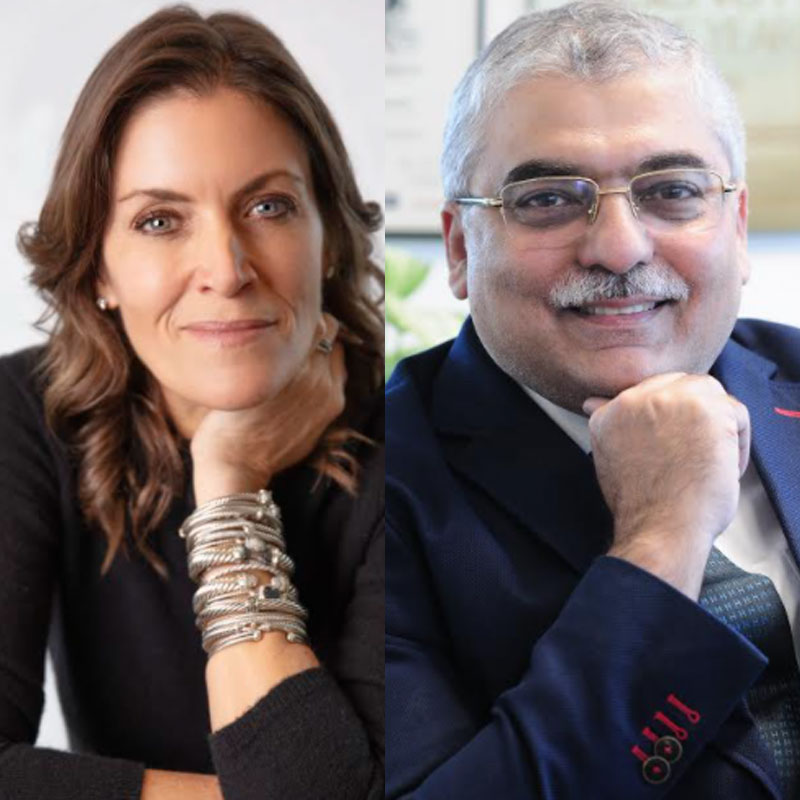
    “The Covid-2019 global health crisis has yielded an incisive economic downturn that creates an unknown and largely unpredictable environment for CMO's to navigate,” said Dentsu global CEO Wendy Clark. “However, we also see a new cadre of Frontier CMO's emerging who are leading their organizations into the unknown with confidence. These Frontier CMO's are reclaiming the strategic marketing agenda and, instead of buying into the idea that marketing’s role has somehow been denuded, they’re now leading their brands to recovery and growth.”

    Dentsu Asia Pacific CEO Ashish Bhasin added: “With every disruption comes its own sets of winners and losers. It is crucial for CMOs to keep up with the new skills required in today’s new world to ensure success in the discontinuity. We are right in the midst of a change and this is exciting.”

  • Gautam Mehra gets additional role at Dentsu International

    Gautam Mehra gets additional role at Dentsu International

    NEW DELHI: Dentsu International has now entrusted Gautam Mehra, currently CEO, dentsu Programmatic & chief data officer, dentsu – South Asia, with the additional charge of chief data and product Officer – Asia Pacific (APAC) with immediate effect. He has been assigned to this new role with the intent to build a strong and unified APAC data and product offering across the dentsu network. Based in Mumbai, Gautam will report into Merkle APAC president Zhengda Shen for his additional role.

    Over the years, Mehra has been responsible for driving the data quotient for dentsu across India and South Asia, both internally andth clients. Notably, he led the creation of dentsu’s proprietary adtech product, the dentsu marketing cloud ecosystem – a cohesive system that brings together a slew of dentsu proprietary ecosystems such as the Facebook Marketing Partner (Ad-Tech) Badged DMC Explore, dentsu Play, dentsu TrueValue and other proprietary mar-tech tools used in over 32 markets globally. He has also led the unification of the data sciences and Amnet teams to create dentsu Programmatic, the leading programmatic player in India today.

    Mehra had started his career 20 years ago with his entrepreneurial venture, which was one of the first web development firms in India. Over the years, he did several stints in digital advertising working with the top brands in the country such as Viacom, Government of India, Standard Chartered Bank and Microsoft. In 2013, he joined dentsu following the acquisition of Communicate2 and led the Social & Display businesses of iProspect, the leading performance marketing and search agency of the country. Subsequently in 2016, he took on the role of Chief Data Officer for South Asia and has driven the groups data narrative in the sub-region.

    On the appointment, dentsu Asia Pacific CEO Ashish Bhasin said, “Data is central to our business strategy and the ability to handle data well and utilize it to its full capacity is critical in fine tuning way of reaching, interacting, and causing a reaction from the consumers; it ensures advertising efforts are in the right direction.”

    “Having Gautam drive this data agenda for us is crucial in the era of data explosion. He has earned a reputation of developing and delivering highly innovative data-led initiatives while embodying the spirit of innovation and entrepreneurism. This is a well-deserved promotion and I look forward to working closely with him,” Bhasin added.

    Zhengda Shen said, “Organizations are constantly challenged to evolve with agility and speed and adapt to ever changing consumer dynamics. Providing leadership for clients by integrating data, media, content and technology to navigate through this shifting landscape is a critical function of agencies. Gautam’s track record for driving innovations and developing globally scaled solutions makes him perfectly placed to help our clients in the region and to ensure that dentsu international continues to lead through innovation.”

    Mehra said, “There are almost no limits to what we can uncover by studying consumer behavior and their interplay with brands. I’m excited to apply my leadership, knowledge, and experience in delivering globally adopted tech driven products and solutions to further the data-driven culture of dentsu international and to build the practice across APAC, further cementing our dominance in this area within the region in using cutting edge technology to solve everyday client challenges.”

  • 65% millennials and Gen Z prefer OTT over TV, report says

    65% millennials and Gen Z prefer OTT over TV, report says

    KOLKATA: Urban India’s youth has relied on OTT platforms to kill monotony. Amid other options, the streaming services have emerged as the most popular source of entertainment as 70 per cent of the youth have turned towards OTT platforms in their spare time. Along with existing subscribers, new OTT subscription purchases during the lockdown period spiked throughout the country across demographics.

    According to a report from The Data Sciences Division of Dentsu Aegis Network (DAN) India, 65 per cent of millennials (25-39 years) and Gen Z (5-25 years) prefer consuming video content on an OTT platform over TV. The younger the audience is, the habit of consuming OTT is higher. The report also shows that daily OTT content consumption among Gen Z is higher than millennials. 

    While before lockdown 95 per cent of the respondents used to consume only two-three hours of daily content, during lockdown on average each millennial has consumed 1.66 hours of additional content and GenZ is consuming two-three hours of additional content too.

    As a result of having more time at hand, binge-watching is becoming a prime trait of popular culture. While five per cent of the research universe has claimed to consume between six-twelve hours of daily content on OTT platforms in pre-pandemic period, currently 20 per cent of the sample is enjoying binge-watching. Millennials and Gen Z’ s purchased two and three additional OTT platform subscriptions respectively since the start of the lockdown. The average daily consumption hours have remained around four hours.

    The international platforms with expanding local content library are becoming popular choices. 60 per cent of the sample has a subscription to either Amazon Prime Video or Netflix. Disney+Hotstar also has been able to attract nearly 19 per cent of the urban youth. Homegrown platforms like ZEE5, Voot are creating a buzz gradually. Comedy, thriller and action-based entertainment were the top three preferences of GenZ audiences while millennials were more inclined towards consuming a lot more Sci-Fi over thrillers. Money Heist, Breaking Bad, Paatal Lok, Narcos, Riverdale, Friends were all the rage among the episodic content. 

    Another interesting trend that has come out of the study is that OTT based gaming has gained significant popularity during the lockdown period. While the curve of heavy gaming remained constant, casual gaming saw a steep increase in popularity. However, millennial audiences were significantly less likely to consume OTT based gaming when compared to their GenZ counterparts.

    OTT platforms have traditionally been more favoured by the young audience for the nature of the content it produces. Surprisingly, 11 per cent of the respondents criticised OTT platforms of imposing, glorifying and promoting “Content disgracing a religion or a caste”. These criticisms were accompanied by a majority (73 per cent) criticising the depiction of anti-national sentiment, foul language and bold as well as smutty content.  “Pop up Ads” were also criticised for harming the seamless viewing experience. Despite the growth of broadband across the country, connectivity issues are prevailing until now.

    The OTT industry is anticipated to grow 45.5 per cent during the forecast period 2019 to 2026. Along with the humongous growth, increased collaborations between OTT platforms and pay up TV, further hybridization and evolution of OTT monetization models could be more noticed going forward. India is expected to emerge as the second-largest OTT market with 500 million users by 2020 itself. 

  • Dentsu Aegis Network India CEO Anand Bhadkamkar salutes COVID warriors

    Dentsu Aegis Network India CEO Anand Bhadkamkar salutes COVID warriors

    MUMBAI: As COVID-19 disrupts everyone’s life, the essential service providers are the ones who have been working tirelessly and relentlessly so that we can be safe. The pandemic has paralyzed most countries, both economically and socially. While most of us are sitting within the comforts of our homes, there are brave hearts that are fighting from the frontline. Here, Dentsu Aegis Network India CEO Anand Bhadkamkar expresses his gratitude to those warriors: doctors, nurses, hospital staff members, food providers and cleaners who are supporting us during this crisis.  

  • Companies learn the positive side of WFH

    Companies learn the positive side of WFH

    MUMBAI: As the spread of COVID-19 is causing ripples in the economic system, companies around the globe have temporarily shifted to the work-from-home (WFH) model. They are enabling remote working to keep the business running while helping employees to follow social distancing.

    Considering the recent world crises around the COVID-19 outbreak, industry experts believe it has become more critical than ever for companies in India to be able to support remote working for their employees. They are resorting to virtual meet-ups, VPNs, Google Slack, Zoom calls, Microsoft Teams, etc., for better functioning.

    Sodexo vice president technology and operations Priya Dronadula says, "Sodexo BRS India has adopted the split – team routine for employees to work from home. Cloud video conferencing tools like Microsoft Teams and Blue Jeans have been deployed for employees to connect virtually and share presentations and have multi-party conversations, real-time. We are also encouraging our clients to adopt these safe and reliable tools for virtual meetings. Even our customer support teams have moved to this model so that there is business continuity without impacting the customer experience. VPN connection network creates a safe, encrypted network-enabled with strong authentication factors for hustle-free communication.”

    The way people work has evolved significantly. Digital offers businesses the right tools to support remote work schedules at any time and on any device that they can imagine. Logicserve Digital founder-CEO Prasad Shejale thinks that it is important for companies to evaluate and make necessary arrangements to equip remote workers at scale. Companies should check whether their workers can join virtual meetings and accomplish important tasks irrespective of their location with available devices and applications.

    “At Logicserve Digital, the health and safety of our team members and partners is our top priority. We are aligned with the government's efforts to curb this global crisis and have instituted a robust work-from-home programme as we already had the right collaboration tools in place including uKnowva," he says.

    Shejale elaborates, “Logimates have stepped up engagements with our colleagues as well as clients on emails, calls and video chats. The company has made sure that all the teammates have available resources to work from home and there is a separate ‘Emergency Response Team’ that engages with co-workers regularly to ensure everyone is safe.”

    Every morning, the live stream is led by Prasad with 350+ team members, which is another step towards social distancing and prioritising employee engagement while keeping them abreast of important updates and also motivating them during these tough times.

    Dentsu Aegis Network India has been working from home since the outbreak and teams have adapted to this efficiently and are not causing any work-related hassles. Says CEO Anand Bhadkamkar: “Availability of internet bandwidth and connectivity is definitely critical; yet, the infrastructure across the country during this period is holding up quite well thanks to our network operators. This robustness and stability will surely provide a push towards the transition to digital.”

    Surprisingly, the WFH trend has been growing around the world, but without much acceptance in India. To this, Bhadkamkar adds, “People are now getting used to this working environment, be it through choice or by force. Hence, it won’t be surprising if some companies completely switch to digital now when we come out of these challenging times.”

    “A few companies including Ogilvy have introduced partial WFH in the last year or two. But, overall in the Indian industry, very few jobs allow full WFH. In fact, this approach has been looked down upon as a 'part-time' way of working for someone who is not properly employed. The lockdown is teaching us the positive side of WFH and after the crisis is over, it will become a far more significant way of working in India than ever before,” says  82.5 Communications chairman and chief creative officer Sumanto Chattopadhyay.

    While work from home becomes the temporary norm, it will be worthwhile to check on the same a few months after this pandemic will be under control.

  • When pandemic strikes, trust keeps brands, agencies going

    When pandemic strikes, trust keeps brands, agencies going

    MUMBAI: Trust plays an important factor when you can’t see the other person, and now the whole world is running on trust, as the whole world remains engulfed by the Covid-19 pandemic. Never has trust between advertisers and agencies been more apparent than now.

    Dentsu Aegis Network India CEO Anand Bhadkamkar says that trust builds if one acts responsibly and delivers in time. “Trust, definitely, is quite critical during this time. Clients or colleagues need comfort in regular interaction, which builds trust amongst teams. Yes, the challenge remains of not being able to see the person physically but, the current phase is a passing phase. Thus, as long as the deadlines are met, commitments delivered and there is constant engagement, the trust keeps on building,” he says.

    While most of us have always seen work from home as a convenient way of working, it has its challenges and limitations, too. It comes true for the advertising industry, where agencies and brands were used to physical meetings either in offices, coffee shops, board rooms, etc., which has now been converted into virtual meetings. According to industry experts, in these difficult times, teams have adopted the new way of working quite effortlessly via virtual meetings and teleconferences, etc.

    Bhadkamkar says that DAN had already planned this out. “For the work to continue smoothly, we provided alternative sharing sites and a secured VPN line for better communications and data access. There are some small challenges but that’s all part of the teething and learning process. Efficiency has not dropped that much. Yes, the work is slow but not hampered completely. As a daily practice, teams have regular check-ins – daily/weekly as per agreed duration to plan, review and execute. The working pattern also varies from team to team. Frankly, people are responsible and all the more support each other in these times.”

    Socxo CMO and program head Ajit Narayan says, “Business friendship is one of the most powerful drivers of the business, so educate them, help them and over service them. Forget the inane content of handwashing (they are already getting bombarded by it.) They would appreciate if you stepped back on the sales pitches to them and helped in whatever you do for them. They will remember you and do more business with you once they get their side of the business going well.” 

    The Mavericks founder and CEO Chetan Mahajan think that COVID-19 has impacted every human being and every brand globally. Agencies now have become geography-agnostic and are doing everything possible to support the brand's communication needs. Trust is derived from the transparency of relationship and commitment to the outcome and during these trying times, one has to have 200 per cent commitment. “Our teams are separated by corona yet together with purpose with unprecedented resilience, commitment, camaraderie, and focus to be solution-oriented and be together in spirit as well as action. Our clients have been appreciative of our efforts so far and the show must go on.”

    Adding to this, RED FM national marketing head Rajat Uppal says that he has always considered a brand-agency relationship as a partnership based on trust and faith in each other’s abilities and alignment to a common objective of delivering work par excellence.

    One of the major challenges of working from remote locations like home is the brand-agency team co-ordination issues and delays in work. This can be addressed with advance timeline planning. If one is more considerate about the limitations of the current setup of WFH, brands can actually get more quality work out of the agencies.

    Uppal adds, “For us at RED FM, last one week has been pretty productive and we have been able to get some good work going with our creative, PR and digital agencies. Briefs have gone out on time and agencies have delivered work with greater responsibility. With most brands prioritising work effectively, work has not really got affected. In fact, being away from the workplace and not getting occupied with the routine and hygiene work only, has given our brand team the time to think strategically and take on jobs and projects which were part of the wish list and never got the time to be taken up. On the flip side, WFH has surely extended the work hours for everyone, as everyone is accessible anytime and there are no stringently scheduled work hours. The need of the hour is for the brands and agencies to collaborate well and deliver quality work till we all move back to our workplaces and I am sure we all will do it well.”

    WATConsult VP – account planning and strategy Sabiha Khan  feels that the most important thing to do to ensure trust is to communicate with each other and be honest in communication, which means – be frank about the good, the bad and the ugly.

    Agencies should proactively keep clients abreast of trends and how the situation will impact and change behaviour among the audience and for the respective sectors/ industries.  They should seek to work towards the next quarter keeping in mind the presence of consumer fears and the change in behaviour and possibly even preempt an indoor summer and work towards campaigns accordingly.

    Brands on the other hand should consider agencies as partners whom they can trust in such turbulent times. Brands can keep an agency in the loop about their ongoing situation and the business operations to enable the agency to make informed plans and suggestions that can benefit the brand not just in the immediate term but for the long run.

    Technology has been a big enabler during this time. Brands and agencies are communication via platforms like Zoom Cloud Meetings, Google Hangout, Slack, Google Duo for both internal and client meetings. If things go fine, maybe we are looking at a future where more companies will provide work from home options.

  • Dentsu Impact bags digital mandate for Tea Brands of Tata Global Beverages India

    Dentsu Impact bags digital mandate for Tea Brands of Tata Global Beverages India

    MUMBAI: Dentsu Impact’s Bangalore branch has bagged the digital mandate for Tata Global Beverages from its tea portfolio including Tata Tea Premium, Tetley, Kanan Devan, Chakra Gold to name a few. After one year of its successful operations out of Bangalore, this is another key business to be handled by the agency’s Bangalore branch.

    Tata Global Beverages India  Vice President – Marketing Puneet Das said, “At Tata Global Beverages, it is our endeavour to remain at the cutting edge of digital marketing through innovative use of the medium.  We are successfully driving the digital agenda on our brands, which is, to continuously engage with today’s audience 24×7, in the environment which is most convenient to them. As we continue forward on our digital journey, we are happy to sign up with Dentsu Impact as our digital creative partner. We believe that their strategic and creative capabilities are a good complement to our digital agenda and we look forward to creating exciting work that will resonate strongly with today’s digital consumer.”

    Speaking on the win, Dentsu Impact  President Amit Wadhwa said, “With the consumer and the media landscape changing rapidly, brands are evolving too. With this evolution, it is extremely important for agencies to re-invent through expertise and ideas and, when you win businesses through this fresh thinking, you know you are on the right path. This new partnership is a big step for Dentsu Impact, especially the Bangalore branch, in truly being the new age agency. We are extremely excited and look forward to partner TGBL in creating some interesting work together.”

    Looking forward to the association, Dentsu Impact  Chief Creative Officer Soumitra Karnik said, “‘Winning a Tata business and that too in a highly competitive region like Bangalore is not everyone’s cup of tea’ – we were told this when we were working on the pitch. We pride ourselves in being strategically and creatively very strong, especially when it comes to integrated ideas. This is what makes Dentsu Impact so successful in most of our pitches. With mega brands such as IKEA and Tata Tea, our Bangalore office has managed to acquire an enviable position in such a short span. We look forward to a great partnership with Tata Global Beverages. Watch out for what brews next.”

  • DAN Programmatic launches AI-powered audience insights engine ‘DAN Explore for Programmatic’

    DAN Programmatic launches AI-powered audience insights engine ‘DAN Explore for Programmatic’

    MUMBAI: DAN Programmatic, empowered by the data sciences division of Dentsu Aegis Network, has collaborated with AMNET, the network’s programmatic arm, to launch ‘DAN Explore for Programmatic’. It is an Artificial Intelligence-based insight engine for programmatic audience performance, which merges with its flagship insights Engine – DAN Explore.

    Despite being one of the fastest-growing components of digital media investments, the programmatic advertising ecosystem is still plagued with the common challenges – that of transparency. With a view to address these mounting concerns and to provide insight into the performance of programmatic audience segments for better buying and optimisation prospects for clients and the agency, DAN Explore for Programmatic endeavours to take cutting-edge AI algorithms and statistical modelling to the programmatic environment. It represents audience performance for programmatic cohorts in line with campaign and brand objectives.

     Commenting on the launch, Amnet India vice president Salil Shankar says, “Despite the obvious benefits of the ecosystem, when it comes to programmatic advertising, the environment is mainly opaque. With the tech still being very much of a black-box, the lack of transparency still remains a major point of concern for publishers, brands and marketers. With its unique ability to provide more understanding to audience cohort performance, DAN Explore for Programmatic will be one step closer to our vision of making this ecosystem more transparent as well as providing us with the insight to sharpen our audience buys and set new performance benchmarks.”

    Keeping true to its motto for providing actionable insights, the data sciences division of the network aims to connect DAN Explore for Programmatic with its proprietary insights engine (DAN Explore) and audience activation layer (DAN Planner).

    “Armed with the right algorithms, DAN Explore for Programmatic aims to become a translator in conversations by bringing trust between industry stakeholders in the programmatic space. With its unique access to data and proprietary logic frameworks, DAN Explore for Programmatic will help classify programmatic audiences accurately and reliably to analyse the performance of audience cohorts in line with marketing objectives based on thousands of real-time data points – forming a base for future planning and real-time optimization of programmatic campaigns,” adds DAN Programmatic CEO & Dentsu Aegis Network chief data officer- south Asia Gautam Mehra.