Tag: Dentsu

  • Flipkart, Dentsu Webchutney strive for gender equality among children

    Flipkart, Dentsu Webchutney strive for gender equality among children

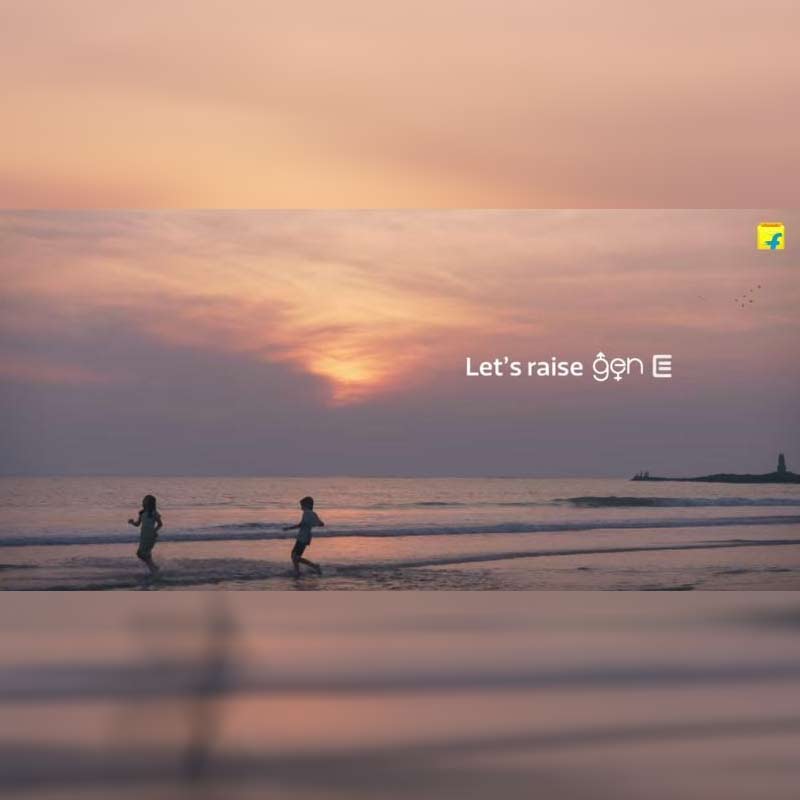
    MUMBAI: Curbing the age-old ideas of gender roles, Flipkart and Dentsu Webchutney have created an inspiring ad campaign promoting the new #GenerationEqual or “Gen-E”. The 2-minute long ad shows the new generation of kids striving for equality in all arenas—telling the parents how they would like to be raised.

    Speaking about the interesting campaign, Dentsu Webchutney senior vice-president – client services Prashant Gopalakrishnan says, “Look around you. Do you have a son, daughter, niece, nephew, or a friend’s child born a few years after the millennium? They are all part of #GenerationEqual. Real change will happen when we collectively decide to make the same rules that influence their lives. And as far as we can, let’s keep those rules the same for both boys and girls. That is the most real way to ensure our biases don’t pass on to them.”

     “As parents in 2018, we’d like to be progressive in letting our child choose for themselves in several aspects, so that they get to do what they love. Let the child experience the hobbies, passions, interests, and personality traits that come naturally to them… whether it’s a boy who wants to learn cooking, or a girl passionate about collecting superhero toys. And the other way around too,” says Flipkart director – brand marketing Apuarv Sethi.

    One of the biggest investments made by an Indian brand on the subject of gender equality among children, “Gen-E” is Flipkart’s third campaign to echo their new brand promise of ‘partnering with the progressive Indian’ via ‘Naye India ke saath’.

    In just a year of having started the new brand charter, Flipkart has campaigned on three distinctly different social subjects. With Penguin Dad, they celebrated fathers involved in child-raising; with Choose Your Age, they celebrated those defeating age with experiences; and now with Gen-E: they’re almost asking us to be what our children need us to, so that more and more of us can be celebrated. 

  • Behind the scenes of IKEA’s India marketing strategy

    Behind the scenes of IKEA’s India marketing strategy

    MUMBAI: Hej IKEA i Indien! This translates to ‘Hello IKEA in India!’ Unless you’re living under a rock, by now we’ve all heard and read about Swedish furnishing brand IKEA’s great and pompous launch in India!

    Indians alien to the concept of assembling furniture themselves lunged at IKEA’s launch in Hyderabad City. This reflects from 40,000 customers trooping in on the opening day, where the retailer rang up sales of a little over Rs 1 crore the same day.

    But what really made Hyderabad and the nation go gaga over a company that they had probably never even heard of before 2017? Well, the answer is simple – branding and marketing.

    In the global advertising world, IKEA is often cited as a master of branding, marketing and advertising. The company has consistently won the marketing game on social media and traditional mediums to carve some of the finest campaigns to reach out to the masses but India is a different animal altogether. A global campaign or a standard tone would never connect or work with the audiences here as India is an amalgamation of several cultures, traditions and beliefs.

    But how do you connect with a country that has a population of 1.35 billion, doesn’t know a thing about the brand and can’t connect with the concept of self assembling furniture? Labour is cheap here so you can just get your local carpenter to fix anything for you in a jiffy. Hire the best agency available and capture nuances in the communication. For this, the Swedish giant hired Dentsu Impact as its official creative agency to launch the brand’s maiden campaign for India. Its ‘Make Everyday Brighter’ ads resonated fantastically well with Ikea’s belief to create a better life every day and drove home a customer traction that none had ever expected.

    And now, as IKEA moves ahead aggressively to eke out a niche for itself in the country, Dentsu Impact is steadily helping the brand to discover this new culture and expand its footprint, nationwide.

    While we have all read about how the launch of IKEA is a positive step for FDI, generating local jobs and a tough fight for e-commerce players, nobody really knows what went into making IKEA’s launch in India grandiose. To understand this, Indiantelevision.com spoke exclusively to the men behind Ikea’s entry in India – Dentsu Impact president Amit Wadhwa and chief creative officer Soumitra Karnik – where they spoke about what went behind the planning, the agency’s strategy for Ikea, challenges while working for an international brand and much more. Excerpts:

    How did Dentsu Impact end up bagging the IKEA business for India?

    Amit Wadhwa: It was a long process that started way back in February 2016. They called us for the credentials sharing meeting which was more of a chemistry meeting. They shortlisted eight agencies basis the credential meeting and asked us on how they should launch IKEA in India and what should be their strategy. It was quite an elaborate pitch and they gave us three months to work on the pitch which was a little surprising considering how pitches normally happen in India. It took us a lot of time to understand the brand, how it functions and its tonality. Our creative team actually went to Hyderabad and stayed there for a few weeks to understand the Hyderabad market and the requirements for home furnishing there.

    So when did you officially get the mandate?

    Amit Wadhwa: We officially got the mandate in September 2016. But there’s a lot more that we’ve done for IKEA other than the launch campaign.

    What do you mean when you say that? Were they pre-launch initiatives?

    Amit Wadhwa: Yeah, we did an employee branding asking people to join IKEA where we used existing IKEA workers to promote the campaign rather than models. We also launched an experience centre for IKEA before the store launch where people could see the products but not buy them.

    How was it working for an international brand like IKEA? How interesting was it for you to work on a brand’s entry in a market like India?

    Soumitra Karnik: It’s been quite interesting and exciting because every adverting person around the world admires IKEA’s creative ads and it is a dream brand to work with for everyone. However, the challenge is that it’s not really easy to work for IKEA. IKEA is not only about award-winning ads and its products, it’s more than that and you realise that only after you’ve worked with them. The tonality of the brand is extremely exciting as they want to understand the local nuances of each market they enter into.

    What was the brief that team IKEA shared with you when you said they want to launch their maiden campaign in India?

    Amit Wadhwa: No two countries are exactly the same and moreover India is an amalgamation of many countries. What we have done for IKEA is take their belief and marry it with what India stands for. There are great similarities between brand IKEA and what India stands for. Family culture plays an important role for Indian and Swedish families and that’s well ingrained in IKEA as a brand and all their communications.

    How will you ensure that you maintain brand recall through creativity in your campaigns for IKEA?

    Amit Wadhwa: We have launched ad campaigns where it talks more about the products available at IKEA rather than just throwing out a good looking ad. We are creating things which are firsts in the IKEA world. The whole endeavour is to keep a balance between creating a brand language since IKEA has to be distinct and at the same time it needs to connect with the Indian consumers. They are very clear that the ads need to be locally relevant to connect with the consumers.

    What will be IKEA’s strategy for India under your agency’s guidance?

    Amit Wadhwa: It is not a typical client-agency relationship but more of a joint effort by IKEA and Dentsu to ensure we talk to many. Our focus will be on connecting with the family audiences but at the same time, they want to connect with the many.

    Who were your target consumers when you created the campaign? Also, going forward, will the campaigns be targeted at anyone and everyone?

    Amit Wadhwa: When we launched the first campaign, we wanted to target families and everyone. Now, going forward, while families will be at the core of our communication, we will look at targeting bachelors and elderly couples. You will see shades of many of them in our communication, but the core audience will always remain families with kids as IKEA wants to target families.

    What is Dentsu Impact’s plan with IKEA going forward? How will you strengthen the relationship?

    Soumitra Karnik: When we started working on the brand, we were super happy but now we are overwhelmed. It’s going to be an exciting journey with many more stories coming up. What the Mumbai store will bring to us is what we are really looking forward to!

    Are there any constraints while working for a global retailer in India? For instance, how will a person sitting in Hyderabad connect with a brand that’s Swedish unless you really break it down to their level?

    Amit Wadhwa: It’s definitely a challenge, but an interesting one! We understand that there could be challenge in terms of acceptance since it’s a Swedish brand and Indians probably had never even heard of it, but with the right communication, you can overcome that challenge. We really think we were able to overcome that but are working towards creating better communication going forward.

  • Dentsu Webchutney appoints Pravin Sutar as executive creative director

    Dentsu Webchutney appoints Pravin Sutar as executive creative director

    MUMBAI: Dentsu Webchutney, the digital agency from Dentsu Aegis Network, has appointed Pravin Sutar as executive creative director. 

    He will be based out of the agency’s Mumbai office. His last stint was with Leo Burnett, where he handled some of the biggest brands in the country including HDFC Bank, HDFC Life, Amazon and Park Avenue.

    With over 17 years of cross-category, cross-platform experience along with a diverse set of exposure spanning marketing, digital and creative, Sutar is all set to lead the charge for the agency.

    Dentsu Webchutney EVP and branch head Nishi Kant says, “It is great to have someone of Pravin’s experience onboard in the digital environment. His enthusiasm for his craft, I’m hoping will spread infectiously through the agency.”

    Commenting on his joining Sutar mentions, “We all say advertising is moving towards an integration between mainline and digital. I’ve always thought that the best way to create madness is to be a part of the method and that brings me to my switch from close to two decades in mainline to a future in digital.”

    He further adds, “There’s no denying that mainline has its own charm and I feel grateful for having carried that understanding with me. For a while now, I’ve seen a similar charm in digital as well. The scope of being relevant through content, engaging through craft and clever with innovations, is exciting to say the least. I find Dentsu Webchutney to be the most cutting edge and innovative digital agency. I look forward to being able to contribute and learn as we move forward.”

  • DAN acquires stake in Scottish creative agency

    DAN acquires stake in Scottish creative agency

    MUMBAI: Multinational media and digital marketing communications company, Dentsu Aegis Network has acquired 100 per cent stake in a Scotland based creative agency, Whitespace.

    Established in 1997, with a focus on digital and brand design, Whitespace has developed into one of Scotland’s leading and most awarded creative agencies. Currently housed with a talented team of 70 and located in Edinburgh, the agency offers specialised services in brand strategy, digital production, content and integrated campaigns spanning mobile, augmented reality and virtual reality to a diverse portfolio of clients.

    Following the acquisition, Whitespace will remain a standalone agency and will add capability infill in creative services, digital and production to DAN North, in addition to making an important contribution to the Dentsu Group’s business throughout the UK.

    The impact of this transaction on Dentsu’s consolidated financial results for the fiscal year ending 31 December 2018 is expected to be minimal.

    Dentsu Aegis Network, the Dentsu Group’s global business headquarters based in London, is expanding the group’s business worldwide through ten global network brands–Carat, Dentsu (Dentsu Brand Agencies), dentsu X, iProspect, Isobar, mcgarrybowen, Merkle, MKTG, Posterscope and Vizeum–as well as through several specialist/multi-market brands.

  • Dentsu Aegis Network launches video planning & insight tool

    Dentsu Aegis Network launches video planning & insight tool

    MUMBAI: The data sciences division of Dentsu Aegis Network (DAN) India has announced the launch of DAN Prism, a unique video planning and insights tool that provides a single audience view across television and digital.

    DAN Prism overlays the consumption pattern of the digital consumers on Facebook, YouTube and Programmatic Video with TV viewership measurement company Broadcast Audience Research Council to provide rich audience insights. These insights are then used for planning and activation through a single reach curve across all media platforms in a matter of minutes using a series of Artificial Intelligence (AI) algorithms.

    Today India boasts of 800+ TV channels watched by 780 million Indians. There are nearly 100 million subscribers to over the top (OTT) platforms and nearly 260 million online video watchers in the country. Evidently, multi-screening has become a part of the natural video consumption habit of the average Indian

    Dentsu Aegis Network South Asia chief data officer Gautam Mehra says, “In the ever-changing media landscape, we are experiencing a golden age of video consumption in India with fantastic content and platforms. The proliferation of smart devices is changing the way consumers consume content. One of Dentsu Aegis’ core objectives today is to deliver a proprietary, audience-first approach to video planning that maximises client investment across TV and digital video. The idea here is always to harness the true power of data. DAN Prism is just one more step in that direction.”

    The tool will be used for all DAN India clients. The tool is a collaboration across the TV and digital brands under the network’s umbrella in India.

    Carat India CEO Rajni Menon adds, “The TV viewing landscape of the country is swiftly changing owing to the mushrooming of a large number of OTT players, better connectivity and increased smart-phone penetration. As a country, we are now spending a lot more time watching video content. A large part of this is done on the mobile and on tablets. DAN Prism serves to be a powerful tool that reflects people’s behaviours today, enabled by convergence.”
     

  • Fountainhead Digital MKTG launches experiential tech labs

    Fountainhead Digital MKTG launches experiential tech labs

    MUMBAI: Fountainhead Digital MKTG, the digital and experiential innovation division of Dentsu Aegis Network agency Fountainhead MKTG, has launched The Texperiential Labs.

    The Texperiential Labs feature the latest technologies across virtual, augmented and mixed reality, robotics, multi-platform user experience design, web and mobile technology experiences, social experiential applications, Internet of Things and experiential analytics.

    The Labs will have a unique, cutting-edge ambassador – Pepper, the humanoid robot from Softbank Robotics. By communicating through the most intuitive interface we know: voice, touch and emotions, Pepper is uniquely positioned to enrich customer experience and transform the interface you use to interact with them. With very fluid mobility coupled with advanced cloud-based Artificial Intelligence, Pepper evolves with you and your needs – customising experiences, conducting interactive demonstrations, connecting with your CRM or sales tools and so much more. Fountainhead Digital MKTG is contributing to Pepper’s development through multiple creative applications, customising them for complete customer delight. With emotions at the heart of the robot, it will be soon be seen as a primary element at retail outlets, hospitality, financial services, brand experiences, corporate engagement events and many other customer experience touchpoints.

    The Texperiential Labs will be located in Fountainhead MKTG’s facilities and be headed by Balesh Bhatt, Vice President – Technology. It will also be a space for collaborative development and will be opened for the academic and student communities in future.

  • How iProspect’s Vivek Bhargava foresaw a digital future two decades ago

    How iProspect’s Vivek Bhargava foresaw a digital future two decades ago

    One trip to the US in 1997 was all it took for a young man’s entrepreneurial journey to begin. When this man, who was taking global trips on behalf of his family business to sell tablas and sitars, decided to sing a different tune, he was told by his father to pack his bags and get going without turning back.

    Fast forward 20 years ahead to today – 2017. This Bollywood-sounding real scene is the story of Vivek Bhargava and his successful digital agency iProspect. He actualised his idea back in 1997 when he founded Communicate 2. The company joined hands with iProspect from the Dentsu Aegis Network (DAN) in 2012 where he led iProspect Communicate 2 as the founder and managing director. The company was rebranded to iProspect India at the end of 2015 and Bhargava was made CEO. In December 2016, Rubeena Singh was made CEO and he was promoted to a larger role as CEO of DAN Performance Group.

    Indiantelevision.com spoke to the man who took a leap of faith in 1997 and the newly appointed CEO, Rubeena Singh where Bhargava speaks at length about his journey, challenges in the digital environment, talent retention and much more. Excerpts:

    How did the iProspect journey begin for you? And how did you pick digital as the medium?

    Bhargava: When one speaks of 20 years, it makes me feel really old but it has been a great journey. I come from a conventional family that sells tablas and sitars. It is called Bhargava’s Musik that was started in the year 1944. As kids, we used to go abroad for trade fairs once in every two to three months and that is where the seed of communication was sowed into our minds. What we noticed was that western countries were using technologies for marketing communication and advertising, which we didn’t see here in India. By the time I was an adult, I decided to quit my family business and start my own venture as I wanted India to make a mark in digital communication. When I gathered courage to tell my father about my decision, in an ominous tone he told me that if I quit the family business, I can never join that again. Today when I look back, I am glad I took that decision because when I went through tough times during these last 20 years, what kept me going were my father’s words.

    You decided to sell off Communicate 2 to Dentsu Aegis Network (DAN). Why did you take that route? 

    Bhargava: As an independent agency, you’re restricted in doing things. When you want to grow to a certain size to work with bigger clients and you want access to bigger technologies, you have to take the plunge and look for a bigger agency to partner with. The biggest challenge I faced in my career before joining DAN was talent attraction and that problem was solved to a great extent.

    What are the perks of working with a full service agency? 

    Bhargava: The most amazing thing about DAN is that it retains 70 per cent of entrepreneurs after the earn process (acquisition) is over, whereas that ratio is only 20 to 30 per cent in other networks. DAN gives you complete freedom, they let you have your individuality and let you run the company. They also give you the ability to approach anybody in the network to help out and we have one P&L (statement) per country and that truly creates the feeling of ‘One DAN’.

    We haven’t seen any major structural changes in your organisation which is a common practice in almost all networks and agencies today. Why is that?

    Singh: iProspect has a high-performing team and so we don’t believe in making major structural changes. We’ve just built on what we already have. We’ve launched new products and carved out new roles for people, but, on a larger level, we are trying to automate a lot of repetitive work. We are upscaling our people to spend more time thinking and looking at data in order to help clients out with their problems and offer solutions rather than doing mundane desk labour.

    How challenging is it for agencies to retain clients in today’s time? What do agencies need to do to ensure client retention?

    Bhargava: If agencies continue to deliver value and you are authentic about your capabilities, you can retain clients for a longer period. Usually, clients tend to move on because agencies are not solving the real problem, and it’s always about achieving a price or delivering a service. As my father would say to me, “Taking interest in client’s brand and taking interest in team members is the only way an agency will grow.”

    Singh: It is really important to look at both sides of the spectrum. We have been fortunate enough to work with clients that have been with us for over 10 years and we have been able to grow them and that comes from the mindset of ‘client first’. We believe in evolving our products and services in line with clients’ needs.

    Clients usually have high expectations from an agency but they keep their pockets zipped. How challenging does it become to deliver the product?

    Bhargava: We have always charged premium amount in the market. A client once refused to do business with us because he said that they couldn’t afford us. To that my reply was, ‘The problem is not that we are expensive, but that we are proud of it.’ We believe that since we charge more, we are able to deliver more value to their brand. I’ve seen a lot of agencies that started up around the same time as I did and had to wind up because they reducing rates which led to inferior talent coming on board leading to inferior output. Of course, clients left. For an agency to deliver the best output, it is very important that it prices right and does not succumb to client-satiating tactics.

    How do you ensure you meet your yearly targets? 

    Bhargava: We have always been very honest with our clients and given them honest reviews because we believe in setting realistic expectations and being on their side of the table. A lot of times agencies tend to take care of their self-interest and give different advice to clients and when numbers aren’t as promised, clients will move away.

    How different is the Indian media industry as compared to the West?

    Bhargava: Western agencies charge for every single planner. For instance, if a client is meeting an agency where six prominent people from the agencies are present in the meeting, they charge $6000 for that meeting as they believe every minute of a media planner is worth that kind of money. That is not the case in India, as here we believe in spending hours trying to solve the client’s problem and ensuring that they leave happy after the meeting. Here, it is about understanding and building a rapport with them. In India, things are less technology led but solution led. Most of the clients in the west are very precise about what they want but here it is more about solving the client’s problem where we may end up working twice as hard than what we expected but you hope that the client will take care of you.

    You’ve seen India transition and adopt technology along with digital in these 20 years. How would you say has digital evolved over the years in the Indian context? 

    Bhargava: It took 14 years for digital to come in India and as a digital agency, we have been a witness to that evolution. Earlier, no brand wanted to include digital in their marketing budget and advertising. Today, almost every brand spends around 15-20 per cent of the advertising budget on digital. Today, it is playing the role of a catalyst and it’s not limited to advertising. We are living in a digital age today as compared to doing just digital advertising. In future, people are going to stop seeing digital as digital but it will only be known as advertising just as today we don’t say, ‘cellular phone’ but we just say phone. In future, the word digital will be dropped out.

    What does the industry need to do to attract more talent and to ensure talent retention?

    Bhargava: Truth be told, the salary of a person working for a digital agency as opposed to someone working in a conventional media agency will be twice as high. Hopefully, some would be motivated by money, so if they want to earn more money, digital is the best option. It will be one of the highest paid jobs in just a few years from now.

  • Brands pick digital over TV and print for Diwali marketing

    Brands pick digital over TV and print for Diwali marketing

    MUMBAI: The festival of lights and colours is finally here! Diwali has always been an occasion to reconnect with family and our loved ones but the event is also that time of the year when brands go all out to create presence and market themselves across all channels.

    The festive season starts in September all the way till December, but Diwali continues to remain a favourite among brands and advertisers every year.

    Dentsu Aegis network chairman and CEO South Asia Ashish Bhasin projects a 15-20 per cent growth this festive season particularly because last festive season got badly affected due to demonetisation and this year with GST (Goods and Services Tax).

    The chocolate category continues to grow at 12.4 per cent this year as per a Nielsen report suggesting that there won’t be a slowdown this festive season in the chocolate category. The gifting space has considerably expanded over the past years and people are opting to gift chocolates over sweets on occasions. Mondelez India, a brand that is synonymous to celebration and festivity in India has introduced a miniature version of Cadbury chocolates this season to boost sales.

    Biscuits and confectioneries sector is also doing better this year as opposed to last year due to better monsoon and demand coming in from rural India. Rural has accounted for 10-15 per cent of Parle Products growth this year as compared to same period last year.

    But, what has changed over the years is how brands have changed their communication with the audience. Customer communication is no longer about being accessible when the brand wants to talk to the customers or vice versa but making sure the conversation is present on all media platforms. Digital is growing 3X faster than traditional advertising and is becoming more important as the younger consumer has come into purchasing power and the trend will only increase. “A few years ago, the overall digital accounted for only five per cent of the market but it accounts for 15 per cent today and is expected to grow to 85 per cent over the next couple of years,” Bhasin adds.

    Brands have decided not to invest a lot in TVC but to divert it to digital and connect with millennials.While Parle Products and Acer India will be launching a digital-only campaign for Diwali, Vodafone India and Mondelez India will not be rolling out any fresh campaign this time but will re-run its prominent ads from the past and showcase new offerings from the brand.

    Mondelez India has tied up with Amazon India to launch India’s first virtual chocolate and sweet store. Seeing a massive opportunity in the corporate gifting space, Mondelez has also launched a new website for corporate gifting options called, ‘Cadbury Joy Deliveries.’ A Mondelez India spokesperson informed us that the company will be banking on social media capabilities, over the coming months and promote the direct-to-consumer website to reach out to key corporate decision makers enabling gifting choices at the click of a button.

    Vodafone India will be using augmented reality to provide its consumers an opportunity to create their own unique Diwali greeting and eco-friendly‘phuljharis’ greetings. This personalised GIF can then be sent to friends and family through social media.

    Parle Products, the category leader, has shelled out 40-50 per cent more this year as compared to the previous year. Parle’s focus on print is down from the usual 8 per cent to just five per cent. Digital focus is up from 12 per cent to 35 per cent which has eaten into TV’s share of 80 per cent. Parle Products category head Mayank Shah says, “Digital helps us in getting our message across to consumers with our long format commercials which otherwise would cost a ton if done on television during festivals.”

    Similar is the case with Acer. The brand hasn’t invested heavily into marketing this season and allocated a mere three per cent of its advertising budget this year but is also focussing on digital. CMO and consumer business head Chandrahas Panigrahi points out, “All brands today have to do that in order to survive because just television or print won’t yield results as consumers have now moved to digital screens.” Acer India spends close to 20 per cent of its budget on digital and 10 per cent on print.

    While brands are cheering for Diwali, the industry does not seem to have overcome the impact caused by GST. While sales remained low until September, marketers have kept their fingers crossed and are hoping to make up for the loss by the end of festive season.

  • Dentsu launches Nokia’s Diwali campaign #Unitefor #Love

    Dentsu launches Nokia’s Diwali campaign #Unitefor #Love

    MUMBAI: Nokia mobile is rolling out its first big cross-platform campaign head of the festive season. It stays true to its global brand philosophy of #UniteFor, and rises to the occasion, telling a very touching story. To everyone consumed by technology, it puts human relationships above everything else on occasions when it matters.

    Nokia mobile proposes that for a day, people spend quality time with their loved ones. It doesn’t just say that, it walks the talk on this one. With a gift box in which one can place their own phone and give it to someone close or, just set it aside for a day as a gesture of committing their time—and themselves—to them. It is an integrated campaign, which goes across TV, retail, activation, social and digital.

    HMD Global (India) head of marketing Jyotsna Makkar says, “We thought it was important that a brand that showed all of us the way to connect, could also remind us that technology has the power to both unite as well as make people feel disconnected – this is a universal insight in our cultural context today.”

    Dentsu Brand Agencies (India) group executive & strategy officer Narayan Devanathan says, “People don’t like brands to ‘enable’ them anymore. They like brands to demonstrate that they understand them. What this campaign idea does best is to bridge millennials’ purposive lives with Nokia mobile’s campaign promise of uniting with their loved ones, using Diwali as the shining, happy India context.”

    Dentsu One NCD Titus Upputuru says: “We had fun creating the film and the whole gamut of ideas that explode the idea of gifting oneself. We hope ‘Main iske siwai tujhe main kya doon’ prompts people to think and unite for love.”

    Dentsu One president Harjot Narang said, “This was about breathing life into a campaign idea that the world probably sorely needs right now.”