Tag: dentsu international

  • Catch Spices seasons screens with star-studded, flavourful campaign

    Catch Spices seasons screens with star-studded, flavourful campaign

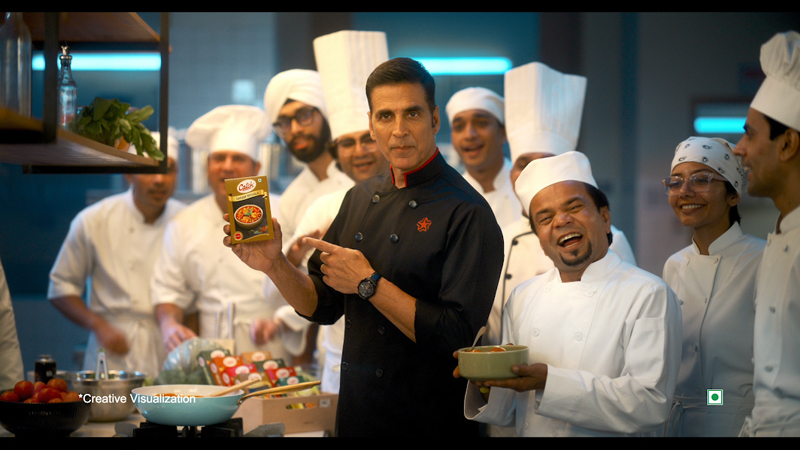
    MUMBAI: Catch Spices is turning up the heat on Indian kitchens, both on-screen and off! The DS Group’s flagship spice brand has launched two vibrant television commercials featuring Indian cinema superstars Akshay Kumar and Rajpal Yadav, reinforcing its tagline “Kyunki Khana Sirf Khana Nahi Hota” (Food is more than just food).

    Conceptualised by Dentsu International and directed by Hemant Bhandari, the ads highlight the transformative power of Catch Turmeric and Catch Garam Masala. One TVC sees a lighthearted mix-up leading to an unexpected yet heartwarming lunch, while the other cleverly plays on the word ‘thanda’ to showcase how Catch Garam Masala elevates bland meals into flavourful feasts.

    DS Group business head for spices division, Sandeep Ghosh expressed enthusiasm about the campaign stating, “These TVCs capture the essence of Catch Spices—enhancing everyday meals while creating memorable moments.”

    Kumar renewing his association with the brand said, “For Indians, food is an expression of love and celebration, and Catch truly understands this connection.”

    The TVCs will be aired across major TV channels, digital platforms, and integrated into hit shows like Laughter Chef and MasterChef. With Catch Spices recently crossing the Rs 1,000 crore feat and clocking an impressive 24 per cent annual growth, the brand continues to expand its reach across millions of Indian households, blending tradition with innovation.

  • Dentsu and Microsoft come together to build a path to the metaverse for brands and business

    Dentsu and Microsoft come together to build a path to the metaverse for brands and business

    Mumbai: dentsu International has announced its collaboration with Microsoft to build a unique collaboration space in the metaverse, designed to excite and inspire brands to innovate and experiment with web3 technologies. Using their combined expertise, the firms have partnered to showcase a range of real-world use-cases that have been reimagined in a virtual setting to drive greater engagement, productivity, and accessibility for business.

    With many brands and businesses still assessing how to take advantage of the huge opportunities presented by web3, dentsu and Microsoft have come together to showcase what can be achieved in critical business areas such as customer service, retail, and learning and development.

    The initiative is underpinned by dentsu’s recently announced Web3 Center of Excellence, which falls within the Creative pillar. This is where clients and dentsu teams have the chance to innovate, test ideas, experiment with hypotheses, and learn how evolving technologies and platforms could be used within integrated campaigns or future business models.

    The new dimension, created by a move into the virtual world, brings a wealth of exciting and engaging opportunities to transform important touch points with customers and employees. The newly built dentsu and Microsoft spaces are located on the dentsu campus, in “Moon Valley,” a digital twin of the moon created by HeadOffice.Space, the metaverse for productivity. The space was designed specifically to be more accessible by more people and through any web-enabled device, as well as VR and mobile.

    Developing a space in the metaverse required the application of some unique technologies, brought together for the very first time by the teams at dentsu and Microsoft:

        Dentsu Metaversity for Microsoft Power Skills: Powerup Power Skills with new starter inductions and employee training, enabling teams anywhere to upskill and gain new competencies through the full suite of Microsoft 365 products, text-to-speech capabilities, and forthcoming Microsoft Designer capabilities.

        Microsoft Retail Education: a space for retailers and brands to learn more about Microsoft Dynamics 365 and dentsu’s ShopNXT retail innovations.

        Lounge: A virtual “room” where brands can connect through their professional LinkedIn identities to recruit, network, and engage with prospective buyers and customers.

        Ecosia Forest: Provides overall education on Ecosia, the search engine that plants trees where they are needed most, with over 160 million trees planted to date, powered by Microsoft.

        AI-Powered Virtual Human: Our full experience will be guided by ‘Neva,’ an AI-powered virtual human created in collaboration with HeadOffice.space. Neva combines the power of Unreal Engine’s MetaHumancreator framework and Microsoft AI-powered text-to-speech, a capability within Azure Cognitive Services, part of the Azure AI platform, that converts text to lifelike speech across 400 neural voices across 140 languages and variants.

        Additional spaces on the dentsu campus include the ShopNXT Showroom, Merkle Virtual Retail Lab, and Intelligence Center.

        The co-space is built on Unreal Engine 5, the world’s most open and advanced real-time 3D creation tool, and features full-body 3D avatars with Ready Player Me Integration.

    dentsu vice president of solutions and innovation Val Vacante said, “We’ve seen a lot of activity around the Metaverse, with some businesses jumping in simply to grab headlines rather than figure out how Web3 can really change perspective on existing business challenges. At dentsu we’d say it’s ‘near but not here’ and that is exactly why we wanted to work with Microsoft to show the world how today’s business problems can be solved in the Metaverse tomorrow. Whether it is overcoming the skills-gap by making accessible and engaging training programs, or building multi-channel customer loyalty solutions using NFTs, or mapping innovation explorations through our NXT Intelligence platform, the opportunities are truly endless!”

    dentsu group vice president of growth & enablement Paul Veltman said, “Microsoft and dentsu have been partners for many years, working hard to push the boundaries of where technology, creativity, and productivity meet brands and the customers we serve. When we come together, though, we always want to do so with a clear focus – whatever we create must help our clients solve problems and stand out, but it also has to drive tangible and sustainable growth. By developing this incredible new virtual space, we’re inviting clients, their people, and partners to discover, experiment, and co-create. From connected e-commerce opportunities to engaging talent solutions and integrated CRM capabilities, we have an exciting new space to partner with you on your journey in the metaverse.”

    Microsoft managing director media & entertainment Simon Crownshaw said, “The media and advertising industries continue to be transformed by digital technology, which now includes the Metaverse. These transformations will continue to require that brands adapt their business models and strategies in real time to take advantage of new creative opportunities. As our collaboration with dentsu evolves, we’re continuing to elevate creativity with the power of the Microsoft Cloud, enabling the future of content creation and collaboration from anywhere in the world.”

  • Dentsu 2023 Media Trends: Industry trends tapping shifting consumer behaviour

    Dentsu 2023 Media Trends: Industry trends tapping shifting consumer behaviour

    Mumbai: dentsu International has compiled and released the insights and projections of all its global media agencies into the comprehensive 2023 Media Trends guide for marketers worldwide for the second year in a row.  

    The analysis released on Thursday covers the top media trends to watch out for in the upcoming year, drawing on experts and professionals from Carat, dentsu X, and iProspect.

    With over 35 pages of commentary, dentsu 2023 Media Trends examines ten industry trends that will shape how brands tap into shifting consumer behaviour and have significant implications for future campaigns and budget allocations. The unique report conveniently groups these key 2023 trends within three overarching categories reflecting the core themes of content, commerce, and community.

    Speaking about the report and the collaboration involved, dentsu International global CEO, media & global clients Peter Huijboom said, “This year we witnessed a very different geopolitical landscape and a new and challenging economic outlook, which has forced brands and people to really stop and re-evaluate many things. Through all this uncertainty, we’ve been able to see the emergence of new consumer behaviours, exciting tech innovation, and the spark of profitable new media opportunities for brands.”

    “As a leading agency network, we pride ourselves on knowing people better than anyone else and understanding what’s next. This couldn’t be made clearer than within this 2023 Media Trends report: our media specialists from around the globe have once again identified those burgeoning societal shifts impacting the industry and brought them into the spotlight,” he added.

    The key predictions for the direction of the media industry into 2023 and beyond mentioned in the new dentsu report are:

    Content:

    2023 will bring changes in the content people consume and how they do it. The speed of the shift to digital platforms shows no signs of slowing down, especially in the video-on-demand and gaming industries. The changes in the general economic landscape will lead consumers to evaluate the number of platforms and associated costs linked to subscriptions. The advance of advertising streams may not only provide an alternative to consumers, but it will also provide brands with an opportunity to attract the attention of consumers and capitalise on advertising streams.

    #1 AVoD eats SVoD – Ad-funded video platform is set to overtake subscription channels with time, as major streaming platforms are adding ad-funded tiers.

    #2 Games everywhere – Gaming is becoming mainstream. Games are becoming increasingly prominent on content sites to drive repeat users.

    #3 Attention brings back the essence of advertising – Interest in attention is growing as brands look beyond metrics of reach and viewability to assess consumer engagement and make more effective decisions.

    Commerce

    Digital commerce continues to evolve, both in importance and in the diversification of sites, apps, and platforms. Consumers are now able to shop at any time from almost anywhere, paving the way for both retail sites and apps to expand their services and offerings to cater to shifting consumer demand and flexibility. The challenge for brands is to engage directly with consumers while at the same time planning and adapting for a cookieless future and respecting data privacy.

    #1 From going shopping to always shopping – consumers can shop anywhere and anytime. As a result, retail sites are evolving into content sites, and commerce sites are changing into media sites.

    #2 Retail media shakes up adland – Retail platforms and sites are turning themselves into advertising platforms and becoming attractive propositions for brands due to retailers’ huge wealth of first-party data.

    #3 The rise of the super apps – Apps are evolving and continue to build ecosystems offering a wide range of services to anticipate and cater for users’ needs.

    #4 No way back for third-party cookies – Brands continue to navigate a cookieless future and advertisers will explore and test the solutions working best for their brands.

    Community

    Digitalised communities are a mainstay by now. They continue to change and reflect both technological and societal changes. Social media platforms are adopting their algorithms to encourage engagement, and within social media, “live” events are spilling over to other platforms, forming new communities. Consumers are now able to join global communities that align with their personal views on sustainability and responsibility. Brands should understand the motivations and formation of online communities to encourage engagement and adaptations to future campaigns to better connect with their chosen audience in the context most befitting the intended message.

    #1 ‘Going Live’ goes a long way – Brands and platforms are increasingly using the ‘go live’ functions to build a community to create interest through live events. Not only to bring consumers together but also to encourage live, active engagement.

    #2 Responsibility takes centre stage – Communities are emerging through a common emphasis on brand responsibility. Platforms are opportunities to share relevant content and increasingly measure the impacts of campaigns.

    #3 Social algorithms give users what they don’t know they want – It is not about who you follow as much as what social media platforms want you to see.

    Each trend is examined in greater depth in the report, which concludes with specific recommendations and takeaways for marketers and brands to incorporate into their plans.

  • Ugam rebrands as Merkle as part of integration strategy

    Ugam rebrands as Merkle as part of integration strategy

    Mumbai: Analytics and technology company Ugam on Friday announced that it is changing its name to Merkle as part of an integration plan following its acquisition by the performance marketing agency in 2019.

    Part of dentsu International, Merkle is a leading customer experience management company that picked up a majority stake in Ugam to bring scale to its analytics’s business, provide a platform for dentsu’s and Merkle’s shared analytics services, and offer a complete and scaled analytics-based services layer for M1, dentsu’s people-based insights, planning, activation and measurement platform.

    Ugam 1600-strong talent will now have access to Merkle’s leadership, global mobility and best-in-class learning and development programs.

    Over the next few months, the brand migration will be reflected across Ugam’s assets including its website and social media handles and will be communicated to all stakeholders.

    Ugam CEO and co-founder Sunil Mirani said. “I’m proud of Ugam’s achievements in the past 22 years. We’ve experienced year-on-year growth, driven impact for our long-tenured clients and strategic partners, grown into a family of 4,000+, and been recognised as a Great Place to Work. We’ve pushed boundaries to drive meaningful impact in society too. I’m excited about this brand migration as we will be part of a global leading company with similar values and culture.”

  • Dentsu X retains top spot for third year in a row as fastest growing agency: RECMA’s report

    Dentsu X retains top spot for third year in a row as fastest growing agency: RECMA’s report

    Mumbai: Dentsu India has once again ranked amongst the top three, continuing its record-breaking growth velocity, in the latest RECMA Media Agency Ranking Report. 

    Dentsu International is a network designed for what’s next, helping clients predict and plan for disruptive future opportunities and create new paths to growth in the sustainable economy. This is delivered through the five global leadership brands: Carat, Dentsu Creative, Dentsu X, iProspect and Merkle, each with deep specialisms.

    The recently published RECMA report calls out the stellar performance of each agency: 

    Dentsu X, as India’s fastest-growing media agency leading the chart with a 153 per cent growth rate for the past three years. It is India’s #2 agency since 2020, narrowing the gap with Mindshare in 2021. Driving experiences beyond exposures, Dentsu X engineers brand outcomes and growth.

    iProspect, accelerating brands through a performance mindset, has clocked an impressive 83 per cent growth in 2021! Growing our brands at the intersection of culture, content, data, and tech is paying a dividend to our clients and our business.

    And Carat, designing for people, has recorded a smart 60 per cent growth over the last year, delivering an unparallel capability to unlock real human understanding to connect people and brands by designing powerful and engaging experiences.

    Dentsu Media South Asia CEO Divya Karani said, “Yes, of course, our clients and people value our vision, our continuous reinvention and rigour, but scaling at this unprecedented trajectory for the past three years is a huge validation! Even more gratifying is that all our media agencies, each with their unique proposition, are performing at full throttle. Transforming by design, Densu is planning the next steps even as we continue to scale. With our deep specialisation in media, creative and CXM, we are constantly focused on stitching up integrated business transformative solutions for our clients.”

    Dentsu’s recently released global ad spend report forecasts India’s growth at 16 per cent, reaching $11 billion in 2022, well past the 2019 pre-pandemic level. Digital is expected to clock double the momentum, contributing 33 per cent of overall India’s spending. Dentsu is bullish on India and predicts India as the fastest growing market globally. 

    RECMA is the leading independent research company that reports and tracks the performance of media agencies around the globe. The report showcases the market share and growth of the media agencies based on their overall activity. The overall activity volume report, evaluating over 900 media agencies across 70 countries, is the reference quantitative ranking based on the activity volume, a metric including both traditional buying billings and non-traditional activities, which covers online paid media as well as fee-based activities in digital, data & analytics, content, marketing, and sponsorship.

  • You can be creative and edgy, without being insensitive: Dentsu Creative India CEO

    You can be creative and edgy, without being insensitive: Dentsu Creative India CEO

    Mumbai : Exactly a year back on 22 June 2021, erstwhile Dentsu Impact president Amit Wadhwa took on the mantle of chief executive officer (CEO) to lead the Dentsu India creative service line leadership team. The newly restructured creative service line in India, brought together brands from the house of Dentsu such as Dentsu Webchutney, Taproot Dentsu, WATConsult, Perfect Relations, Isobar, Dentsu One, Dentsu India and Dentsu Impact, along with their digital & PR capabilities- all under one umbrella of Dentsu Creative India.

    The past year also witnessed major upheavals, both, at the network which saw several high-profile exits, as well as in the advertising and media landscape with the pandemic rewriting the rules for the communication industry.

    The Dentsu Creative India CEO shares with Indiantelevision.com how the past year fared for the network as well as for him, amid the tumultuous new normal, and what his priorities were since taking over the creative agency mantle.

    Wadhwa also completed over a decade at the network last year, having joined Dentsu Creative Impact (now Dentsu Impact) in November 2011. With another five-year stint at JWT (J. Walter Thompson) in his kitty before that, he has literally seen the industry evolve over the past decade and a half.

    Despite challenges due to macro-economic uncertainties and global inflationary trends, Wadhwa remains buoyant and confident that the advertising and marketing industry will grow at a good pace “crossing double digits”.

    IndianTelevision.com’s Anupama Sajeet caught up with the advertising veteran and self-confessed ‘passionate brand builder’ for a free-wheeling conversation, where he also spoke about what has changed in adland and how the creative group is ensuring it keeps pace with the emerging new tech in the space.

    Edited excerpts:

    On his focus areas since taking on the helm of the Dentsu Creative Group

    Three things. Integration was the biggest objective. Secondly, making sure that we digitise everything and so we infused digital and technology in everything we do – whether it is creative, or PR- we have digitised it all- the entire system. And the third of course, was to make sure that the cornerstone of the entire offering is “creative”, and hence up the creative product. These were the three things I kept in mind as I took on the CEO mantle. Have I done that 100 per cent? Of course not. But I think we have moved leaps and bounds on all these fronts.

    On how the past year fared for the agency amid high profile exits and the uncertainty wrought on by the pandemic

    In terms of how we have fared, I think we are working in a far more unified manner for our clients. So, we have integrated to make sure the best experts come together and deliver as one single team for a client. There are many brands where earlier erstwhile different units of Dentsu Creative are now working together as one. For eg- we recently worked at Ikea where the Dentsu MB and Dentsu Webchutney worked as a single team. Then there was another instance where Isobar and Taproot Dentsu worked together as one unit. There are many such examples. That’s from the integration point of view.

    As far as creativity is concerned, one big yardstick is the awards and I think we have done fantastically well, led by the team at Dentsu Webchutney. Having said that, we have also invested in some great talent like Ajay (Gahlaut), Arjuna, Anu Gulati, along with the creative talent which is already there in-house such as Alaap, Anupama and loads of talent below them. So, I think we have upped the game on creativity. And it’s not just awards. Some of the campaigns that we rolled out I’m absolutely proud of. For instance, the campaigns we have done for Uber, Paytm, to name a few, have been great.

    And honestly, without being digital-first there’s no possibility of a business surviving. We have ensured that right from our PR to what we used to call our traditional agencies, every one of them is digitally savvy and understands the medium.

    So, on all these fronts, we are moving in the right direction and at the right pace.

    On whether the recently released ASCI guidelines on gender stereotypes (in the wake of the recent controversy over the Layer’r Shot deo ads) will lead to curbing creativity.

    We are in the business of creativity, we need to express ourselves. But at the same time, we are all living in a society and we need to be sensitive. Does that mean that we curtail creativity? No. But is that the only way to be creative?  Absolutely not. I don’t wish to comment on that ad, as enough has been said about it being in bad taste and stuff. But the point is you do not need to go that way to be creative. I don’t think to be creative, you need to be insensitive. You can be edgy without it.

    If you look at some of the works we have done recently, such as the ‘The Unfiltered History Tour’ or the Paytm creative we did on financial empowerment. These works are very edgy and creative at the same time. It also had a strong connection with people, without being insensitive. Having said that, do we put a gag on everything because of certain instances? I don’t see that happening either.

    On the evolving advertising & marketing (A&M) landscape in the past decade

    It’s absolutely true that the entire A&M landscape has changed in the last decade, from what it used to be to where we are today. I remember when I joined Dentsu (back in 2011), I was taking care of a small agency called Dentsu Creative Impact. We brought in a lot of exciting talent, and we did it at a small scale – whether it was in creative, planning or account management. And we picked up businesses like Ikea etc and made it into this exciting brand. But that was then. Digital was there, but it was a small part of mainstream media.

    Today, if I’ve to do a similar exercise for the Dentsu Creative Group (DCG), I cannot step up the game on creativity by having a good creative team alone. Of course, creativity is the key essential part of it. But what we are also trying to infuse is to ensure that we are way ahead when it comes to creative technology. And that’s the other aspect that we have invested in heavily. Led by Gurbaksh, who heads the innovation and tech team, it’s a critical part of our creative team. We also have editors and social media experts as a part of it. So, the complexity and composition of the team is very different from what it was, say, less than a decade ago.

    On any key trends or emerging category/s in the A&M industry that might dominate in the coming year

    If we talk about emerging or dominant new categories, Fintech, of course, is huge, so is gaming. Online gaming is breaking through the roof. But at the same time as all these new categories are popping up, the traditional categories like FMCG remain equally exciting. So, one can see a mix of it with everyone, including the traditional players, trying to do something different in their space, stepping away from the tried and tested.

    On how the agency is ensuring it keeps pace with the emerging new tech in the space

    There are two parts to it. One is that we need to be digitally first and technologically far ahead. But, is that good enough? Is that the only thing we need to do? Unless there’s a brilliant idea it all comes to nought. The expression of the idea could be on the digital platform or through an innovative technology but the idea is still absolutely important. We need to marry technology very strongly with creativity.

    That combination of creative and new-age tech is what gives me the confidence that we are poised for something very exciting. And that for me, honestly is the place where I always wanted to be.

  • dentsu intl consolidates creative business under Dentsu Creative; names Ajay Gahlaut group CCO

    dentsu intl consolidates creative business under Dentsu Creative; names Ajay Gahlaut group CCO

    Mumbai: dentsu international global CEO Wendy Clark and global CCO Fred Levron have announced the launch of global creative network Dentsu Creative at Cannes Lions. Ajay Gahlaut has been named group chief creative officer and will be in charge of media and CXM besides Dentsu Creative in India.

    Dentsu Creative will serve as the sole creative network for dentsu international working with clients around the globe. It will bring together the best of creative, media and CXM. dentsu international has united its creative agencies including DentsuMB, 360i and Isobar, and expanded its entertainment, earned attention and experience capabilities.

    “The launch is part of a broader strategy aimed at simplifying client engagement and injecting creativity in everything dentsu international does, all backed by a depth and breadth of creative capabilities that are unparalleled in the market,” said the statement.

    Led by Fred Levron, who joined dentsu international as chief creative officer in November 2021 and has demonstrated the transformative power of creativity throughout his acclaimed career; Dentsu Creative will be comprised of 9,000 creative experts in 46 markets connected to 37,000 media and CXM experts across dentsu international and collaborate closely with dentsu’s creative team in Japan. In the near future, further leadership announcements will be made as Dentsu Creative brings in the next generation of strategic, production, business and creative leaders.

    “If you had the chance to build a brand new global creative network designed for the modern world, what would it look like? That is what we are answering with the launch of Dentsu Creative,” said dentsu international chief creative officer Fred Levron. “Clients, talent and the industry at large are craving for a change: in the way we build brands, in the way we collaborate and, in the role, we give to creativity. If the current players have set the rules of the previous century, we have the ambition to set the rules for the decades to come.”

    “At dentsu, we’re building a modern agency network fuelled by horizontal creativity – a creativity designed to unify our people, their capabilities and our delivery for clients,” said dentsu international global CEO Wendy Clark. “We’re fortunate to draw from our Japanese heritage steeped in a relentless focus on craft, innovation and creativity. This legacy inspired our vision for modern creativity that was born in Japan and raised in a connected world. Dentsu Creative offers a simplified, modern creative proposition that answers clients’ needs for us to break down agency silos and inefficiencies and seamlessly connect our talent around the right client opportunities at the right time.”

    “Dentsu has over the years, time and again demonstrated innovation through creativity. With Dentsu Creative, we will unite our creative talent under one brand; this will further simplify client engagements and strengthen our creative prowess,” said Dentsu Creative CEO India Amit Wadhwa. “Moving with times is important and now is the time to transform brands and businesses through the lens of Modern Creativity. Dentsu Creative ensures the best output for our clients and the best opportunities for our people, which is the most exciting part for me.”

    “With Dentsu Creative, we will transform the creative face of dentsu as a network. As we add modern creativity to all the disciplines within the network and combine them, we will create a new-age powerhouse,” said Ajay Gahlaut. “Our aim is to bring profit and purpose together for our clients and our people. This is what the industry has been waiting for, and we are the forerunners of this breakthrough. Exciting times ahead!”


  • #Retrace2021: Content and advertisers return to TV, AdEx remains elusive

    #Retrace2021: Content and advertisers return to TV, AdEx remains elusive

    Mumbai: 2021 was the year of the paradox. The return of LIVE sports and original programming on TV continued to attract new and more advertisers to the medium ensuring a phenomenal growth in ad volumes over 2020 and 2019. While it seemed like the marketers catering to ‘revenge buying’ consumers were on a ‘revenge spending’ spree, the decline in ad rates that had set in as a result of the pandemic, failed to rationalise through the year except towards the end of the festive season.

    Effectively, this meant that despite the economic recovery, positive consumer sentiment, availability of fresh content, and willingness of advertisers to spend, the 2021 AdEx could not reach pre-Covid levels. The negative trend was witnessed across categories.

    Also read: New advertisers make up 19% share of TV ad volume in Nov : Barc India

    According to the third edition of Broadcast Audience Research Council (Barc) India’s yearbook titled ‘The Year After 2019’, TV viewership grew by nine per cent in India in 2020. Yet given the circumstances, advertisers reeling under economic losses used the medium either sparingly or judiciously, mainly to maintain brand recall in anticipation of the reopening. With re-runs of old shows dominating the scene, almost all of television was functioning on a second-tier channel level in the context of content as well as ad rates.

    Picking up from the previous festive, 2021 began on a positive note with some fresh programming and the IPL motivating advertisers to place bigger bets on the medium. The second wave in May-June, however, postponed this recovery to the second half. Even as the rush of new FTA channels launched in 2020-21 and regional ones were making a significant contribution to ad volumes, broadcasters were now equally focussed on achieving pre-Covid ad rates.

    In addition to leveraging their leading IPs to negotiate a ‘fair’ deal once again, channels sought to up the ante with new shows (fiction and non-fiction) and seasons, as well as with LIVE sports programming. According to media planners, AdEx recovery started from July, surpassing 2019 levels in September-October. Contingent upon the possibility and severity of the third wave, it is hoped that this momentum aided by government spending on election campaigns until March 2022, will very soon lead to a full-fledged recovery for the industry.

    Content makes a comeback

    The efficient content strategy of regional adaptations like Star Plus’ ‘Anupamaa’ and ‘Ghum Hai Kisikey Pyaar Meiin’, and reruns implemented by broadcasters to tide over the pandemic turned out to be a success. Buoyed by the TRPs of the reruns, many channels brought back their popular shows and stars with new seasons and narratives in 2021.

    While ‘Sasural Simar Ka’ and ‘Balika Vadhu’ returned on Colors, SET launched season two of its popular series ‘Kuch Rang Pyaar Ke Aise Bhi’ and ‘Bade Achhe Lagte Hain’. Star Plus came up with the new edition of ‘Sasural Genda Phool’. After premiering the second season of ‘Saath Nibhanaa Saathiya’ in October 2020, the channel also re-launched the much-loved mother and daughter-in-law duo of Giaa Manek and Rupal Patel in ‘Tera Mera Saath Rahe’ (August 2021). Star Bharat chipped in with ‘Mann Kee Awaaz Pratigya 2’ in March.

    Also read: Shark Tank to get an Indian adaptation, set to air on Sony TV

    Beginning the year with ‘Teri Meri Ikk Jindri’, Zee TV introduced six new fiction shows this year and a history-based series ‘Kashibai Bajirao Ballal’. On the non-fiction front, apart from bringing back ‘Sa Re Ga Ma Pa’, it launched the new music league championship ‘Indian Pro Music League’. ‘Dance Deewane’ on Colors TV, ‘Dance Plus’ on Star Plus, ‘Super Dancer’ on Sony TV further added to the non-fiction list. Bringing new formats to the reality TV genre were Colors’ visual-based quiz show ‘The Big Picture’ hosted by Ranveer Singh and SET’s business reality television series ‘Shark Tank’.

    Also read: Viacom18 eyes a bumper festive season, with new show ‘The Big Picture’ set for launch

    Return of LIVE sports

    The return of LIVE sports further bolstered the recovery, with a host of new advertiser categories banking on TV to build reach. Whether it was the cryptocurrency brands, gaming, ed-tech or D2C brands, Television saw the ad volume rise across channels. While the 14th edition of the Indian Premier League (IPL) was halted mid-way due to the second wave, it made a comeback in September, with the T20 cricket World Cup. It was followed by the India-New Zealand Test series.

    The year also saw other major sporting events, including the 2020 Tokyo Olympics which was held amid Covid restrictions, and set the stage for India’s spectacular performance across different sports. Not only did India win its first-ever Gold in Athletics (Neeraj Chopra), it witnessed brilliant performances in Hockey, Boxing, as well as weightlifting. Over 48 million viewers watched EURO 2020 on its official broadcaster Sony Pictures Sports Network (SPSN), as per the data shared by the network for its entire coverage of the first 36 matches of the tournament from 11 to 25 June.

    Also read: Over 48 million viewers tuned into SPSN to watch UEFA EURO 2020

    Also read: Star Sports Network logs 3.8 million AMA for 1st India vs England Test

    Then, there was the India-England Test cricket series, ICC World Test Championship Finals in June, India-Sri Lanka series, India-Australia women’s cricket series. The year ended with the return of the Pro-Kabaddi League (PKL) in Bengaluru. 

    Phenomenal recovery in ad volumes

    An analysis of Barc’s monthly data reveals that TV showed a strong recovery in ad volumes since the beginning of 2021, and a noticeable growth over 2020 and 2019 levels. In 2020, TV ad volumes contracted by three per cent over 2019. However, in 2021, ad volumes grew over the last two years for most of the months except March (data not shared), May which saw a marginal de-growth of 3.5 per cent, and December (data unavailable).

    Also read: October records highest TV ad-volume in 2021

    According to media planners, the growth in ad volumes was supported by the launch of new channels in 2020 and 2021 which led to an increase in inventory on TV. Several new channels were launched to cater to the free-to-air audience including Ishara TV (FTA), Dhinchaak TV (FTA), Enterr10 Rangeela (FTA), Sun Marathi (FTA), Zee Pichar (Pay), Zee Thirai (Pay), Shemaroo TV (FTA), DD Retro (FTA), Dum TV Kannada (FTA), Azaad TV (FTA), Colors Cineplex Bollywood (FTA), Dhinchaak 2 (FTA), Republic Bangla, Times Now Navbharat HD (Pay), ET Now Swadesh and Gubbare TV.

    Regional channels also scripted their growth story in 2021, with several Southern languages, Marathi, Punjabi, Gujarati, and Bhojpuri recording a consistent growth in ad volume, not only over 2020 but also 2019 levels. In Q3’21 (July-August-September) almost all language channels saw growth over Q3’19. 

    Also read: Regional TV channels ride the growth wave, show surge in ad volume

    Also read: Television welcomes over 850 new advertisers in July 2021: BARC India

    While the launch of new channels increased the advertising inventory on TV, their contribution to the overall spend is not significant, according to media planners.

    Another reason for growth in ad volumes on TV is the emergence new advertisers in the second half of 2021. As per Barc data, in H1’21 FMCG advertisers dominated on TV accounting for 65 per cent share of the total ad volumes (springing back to action, were also hit by the pandemic, ad spends not as before). But starting from July new categories (compared to H1’21) started advertising on TV. The data for Q3’21 shows that new advertisers comprised 54 per cent of TV ad volumes compared to 41 per cent in 2020 and 45 per cent in 2019. (Note – new advertisers: not present in previous quarter). Similarly, new advertisers had 22 per cent (not present in Jan-Sept) and 19 per cent (not present in Jan-Oct) share of total TV ad volumes in October and November, respectively. 

    Also read: #Retrace2021: The emergence of new advertiser categories in sports genre

    The AdEx paradox

    A like-for-like comparison of top channels on TV show the AdEx trend for 2021 compared to the last two years. The graph below shows that TV ad spends began recovering in July and only increased over 2020 and 2019 levels beginning in August.

    Why compare only the top channels? “The 80/20 principle applies to TV where the top 20 per cent channels get 80 per cent of the ad spends,” explained a media planner. “It was only in the second half of the year that we saw AdEx recovery starting from July, with spends matching 2019 levels during the months of September-October. Otherwise, most of the year was lagging in terms of spends compared to 2019, except in April during IPL, just before the second wave of Covid-19 struck.”

    Also read: Global cost of TV advertising up by 5%: Zenith

    According to E&Y estimates, TV advertising revenues declined by 21.5 per cent in 2020 from Rs 320 billion to Rs 251 billion. The Madison Advertising report estimates that TV AdEx was down by 11 per cent. (Note: TV advertising revenues is different from TV AdEx; TV AdEx may look only at top channels to exclusion of others)

    “The festive period this year has given the much-needed boost to businesses across sectors, including the television industry,” remarked Carat India vice president – digital media planning Megha Ahuja. “The strong growth was driven by two sporting events (IPL and ICC T20 World Cup), GECs and news.” Ahuja expects this growth in AdEx to continue for the next couple of months. “We have elections next year. The government has already started spending on ads, and will continue to do so till March 2022,” she reckoned.

    According to OMD Mudramax senior partner–client lead Sri Harsha, TV adex is expected to make a complete recovery by the end of 2021 and show slight growth over 2019 Adex levels, despite, most of the advertisers losing first-quarter advertising due to Covid second wave.

    “Advertisers still acknowledge the fact that TV is the go-to medium for mass reach. Gone are the days when FMCG, Telecom, Auto, BFSI & Consumer durables contributed the lion’s share to the overall TV Adex. This scenario has changed with the advent of new categories like E-commerce, Fintech, Online education leveraging hugely on TV leading to the growth of Adex. A lot of advertisers are still in the anticipation of current news channels ratings which are not available for over a year now. This will help advertisers apportion definite budgets to news leading to the future growth of TV AdEx,” said Harsha, adding that the average time spent by the consumers watching TV hasn’t dropped either- maintaining 3.5 -4 hrs a day as per BARC – reinstating confidence among the advertisers.”

  • dentsu International appoints Alex Hesz as global chief strategy officer

    dentsu International appoints Alex Hesz as global chief strategy officer

    Mumbai: London-based dentsu International has announced the appointment of Alex Hesz as global chief strategy officer. Partnering with global CEO Wendy Clark and the dentsu international executive team, Hesz will shape and define the strategy, priorities, and long-term direction of dentsu international, aligned to dentsu Group’s strategy.

    Hesz will spearhead dentsu International’s go-to-market strategy partnering across the business to define integrated, human-centric, world-class products, services and solutions to drive growth for clients. He will join the dentsu in 2022, the agency said.

    Hesz joins dentsu from DDB Worldwide where he has been global CSO since June 2020 and group CSO of adam&eveDDB. His clients included Google, Samsung, Unilever, Mars, Lloyds Banking Group, BlackRock, and Facebook (Meta).

    “Alex’s appointment is game-changing for dentsu. He is one of the foremost strategic leaders in the industry,” stated  dentsu International global CEO Wendy Clark. “On our journey to optimising from 160 to 6 global leadership brands, this role is critical to integrate our total offering across media, CXM and creative, delivering growth and creativity for clients at the speed and efficiency demanded by the marketplace.“

    “Alex is a massively talented, driven and proven leader who is wired to understand clients’ needs and aspirations. I couldn’t feel more confident that Alex joining at this critical juncture in our transformation will bolster our realisation of being the most integrated network in the world.”

    “dentsu is uniquely placed to provide enviable modern marketing offering to deliver the work that clients truly want in the way they truly want it to be delivered. The commitments to sustainability and diversity as drivers of that success are critical parts of that shared culture, and are values sincerely held and shared by everyone I’ve been lucky enough to meet,” said Alex Hesz.

    “I can’t wait to get going at DI, to help shape the offering that today’s largest and most progressive clients are asking for, and that DI is unique in its preparedness to deliver. These are exciting times,” he added.

  • Ashish Bhasin steps down as dentsu International CEO APAC & chairman India

    Ashish Bhasin steps down as dentsu International CEO APAC & chairman India

    Mumbai: dentsu International CEO – APAC and India chairman Ashish Bhasin has put in his papers and Friday is his last day at the company. dentsu international has confirmed the development in an official statement.

    Bhasin made the announcement in an internal email to his colleagues at dentsu where he broke the news that the company has accepted his request for early retirement.

    “I have had a wonderful 13+ years and have enjoyed leading dentsu India and dentsu APAC. In this journey I was lucky to have a brilliant team, very supportive colleagues and have made some lovely friends for life. Dentsu is a great company and I wish them the very best,” he wrote.

    He further added, “I am unable to comment on my future plans for now but in the meanwhile I am really looking forward to going to Harvard for the Advanced Management Program, for which I have secured admission for the next semester.”

    Confirming that Ashish Bhasin is seeking early retirement from dentsu after 13 years with the business, the company, in an official statement, added that a successor will be announced in due course.

    “To manage this transition, Simon Jones, CFO APAC & Belli Mathanda, COO APAC will work closely with our global CEO, Wendy Clark, who will have a greater focus on the region during this time supported by the APAC Executive team,” dentsu said.

    “This strong team is well placed to continue the positive transformation underway in the region as we simplify how we operate and bring together our leading capabilities in service of our clients in Creative, Media and CXM to realise our global ambition to be the most integrated agency network in the world,” stated the company.

    It further added that in India, Peter Huijboom will continue his interim, day-to-day leadership of the business with the India leadership team, while the company is in the final stages of its search and appointment of a new CEO in India.

    Bhasin joined dentsu in 2008 as India CEO and joined the global executive team when he was promoted to CEO, Asia Pacific in 2019.