Tag: Dentsu Aegis Network

  • Digital transformation of OOH in India

    Digital transformation of OOH in India

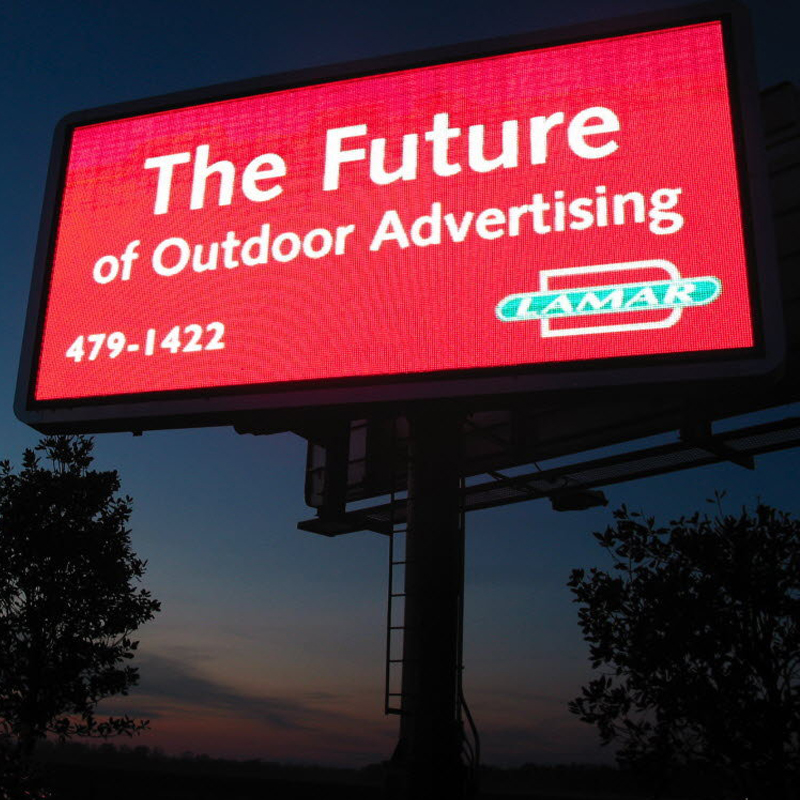
    MUMBAI: Digital billboards, synchronized messaging across hoardings, real time trading, interactive digital displays, mobile convergence, geo-tagged tracking of impressions and measurement — digital is rapidly evolving how out-of-home advertising is perceived.

    A good look around and you will be amazed to see to what extent we are surrounded by advertisements–  on moving buses, at  public places like railways, bus stops, airports, malls and theatres and of course the billboards and hoardings beside every major building and driveway. Out of Home or ‘OOH’ is a ‘traditional’ as well as one of the oldest formats of advertising.

    Though the medium has only ever evolved gradually with time in the last few decades, currently it is at the cusp of a major overhaul that is riding the digital wave.

    http://www.indiantelevision.com/sites/drupal7.indiantelevision.co.in/files/styles/large/public/ooh%20%282%29.jpg?itok=yX7kDlRF

    OOH: The late entrant to digital

    Unlike other advertising mediums, OOH was the latest to feel the impact of the digital disruption here, be it in terms of innovation or revenue loss in ad spends. Where serious concerns were being raised on how digital’s advent will split the ad revenue pie of the market, and cannibalize other media, OOH to the most part was oblivious.

    Sharing his perspective on this transition, Kinetic India CEO South Asia and Middle East Suresh Balakrishnan informs indiantelevision, “The advent of digital in our country in all its form, whether it’s digital, or display or social, mobile has eaten away the budgets of most media.  Having said that, it has happened to India at a good time, for as a market India is growing. We are probably one of the only few markets that are growing at an average of 15 to 18 per cent. Therefore we have made space for digital.”

    “As far as OOH is concerned there has been some revenue loss to digital, but I don’t think it has been significant. I don’t remember a time when OOH was growing at 20 to 30 per cent year on year. It has always lingered around 10 to 13 percent year on year, which again is moderately good growth for OOH,” he adds.

    But that doesn’t mean that ‘change’ isn’t chasing OOH.  

    “OOH can’t sit on its haunches and think that digital will not affect it. Unless, OOH marries digital and adapts what digital has to offer to enhance its services and experience for the consumer, we won’t be able to fight the battle in the long run,” Balakrishnan explains.  

    And that battle is more than about mere survival. It is the way forward for the medium to be more relevant to the consumers, more useful to the clients and more creatively enriching for the agencies.

    Digital, the perfect partner

    To say that digital will aid OOH is an understatement.

    Digital innovation in OOH has enabled the medium to achieve what it was earlier unable to attempt.

    While the idea of a dynamic digital billboard in itself is attractive and engaging for consumers, agencies are now able to explore technology that helps target and track consumers in a better manner and even give a push to point of sale campaigns in malls and other retail outlets.

    http://www.indiantelevision.com/sites/drupal7.indiantelevision.co.in/files/styles/large/public/ooh%20%284%29.jpg?itok=ExgOdzkb

    “There are a lot of innovations that are happening in this area. For example, now digital technology allows users and consumers to scan bar codes from hoardings which directly lead to any product website through their devices,” points out Havas Media Group, India and South Asia CEO Anita Nayyar.

    “Whether it is in the way of ‘blipping’ the product from the hoardings, or digitally connecting an LED screen with some data source, there are various innovations that go hand in hand with billboards that are digitally enabled,” she adds.

    Balakrishnan on the other hand takes delight from the classier messaging that is made possible with digital. He cites an example of a campaign that Kinetic had earlier done for Mondelez’s popular chocolate brand Cadbury Bubbly.

    The crowd at Palladium Mumbai witnessed the experiential and innovative activation where in a digital screen was placed at all these places with a new motion sensor technology that transformed the normal Cadbury Silk chocolate into Cadbury Silk Bubbly with each and every movement around the screen. At metro stations in Mumbai, the screen was placed in such a way that the chocolate bubbled up with the movement of the train.

    http://www.indiantelevision.com/sites/drupal7.indiantelevision.co.in/files/styles/large/public/ooh.JPG?itok=jpwP5Ri8

    The number game: Measurability

    OOH as a medium had long struggled to measure the reach of campaigns. Therefore, very less accountability was placed on the medium and most of the money spent on the medium goes into brand building.

    “With the lack of a streamlined synchronised measurement system, there has been constant pressure from client to prove the effectiveness of the campaign,” Balakrishnan reveals.  But, to many creatives in OOH, digital is a great way to achieve that sense of measurability.

    Nayyar, having seen the Indian advertising scenario evolve, admits that while one medium (digital) is accountable, the other is almost immeasurable.

    “Apart from a couple of researches done, it is very hard to measure this medium. Thus, by clubbing the two medium, outdoor as a medium can gain huge credibility and measurability from digital,” asserts Nayyar.

    http://www.indiantelevision.com/sites/drupal7.indiantelevision.co.in/files/styles/large/public/ooh%20%283%29.jpg?itok=yH00fYXz

    Kinetic has, in fact, launched a tool called SAS or Social Amplification Score worldwide that can add some numbers to even an OOH campaign. The tool has so far been released globally by the Kinetic team and is expected to hit India in the next three months.  

    “The moment an OOH campaign is released, the tool tracks the buzz it creates by using 37 or more keywords like OOH, malls, bus shelter, etc. Basically wherever it is seen and spoken about, to tool automatically puts a score to that. It gathers the information by using geo-tagging technology that most social media platforms have enabled. With this tool therefore, we can put certain reachable numbers to an OOH campaign,” Balakrishnan informs about the effectiveness of the tool.

    Milestone Brandcom founder MD and a pioneer in the OOH business Nabendu Bhattacharyya however sheds a different light on the matter.

    “It is true that all mediums have their own struggle with measurements. Amongst all of them, OOH is the least measurable and most unorganised, Bhattacharyya opines.

    Pointing out that individual agencies have their own measurement systems that help provide clients with numbers, the veteran OOH man says, “If digital billboards become more mainstream, it will help us approach clients on a better ground as digital can incorporate those numbers.”

    Digital OOH: International VS Local

    In spite of some very obvious perks of the digital transformation, India has a lot of catching up to do when it comes to innovating OOH using technology.  Travel to any western country and one can easily spot the vast gap in the digital revolution of OOH.

    http://www.indiantelevision.com/sites/drupal7.indiantelevision.co.in/files/styles/large/public/ooh%20%281%29.jpg?itok=hxnGGHXB

    “If you look at the western markets, OOH is far more advanced and digitised than in our country. It’s also a question of infrastructure as installing these billboards needs a certain aesthetic upgradation as well. Broadband and connectivity also become an issue and do not allow the proposition to be completely seamless and workable,” Nayyar explains.

    Balakrishnan concurs with Nayyar and says, “The more mature markets have gone and beautifully adapted digital with OOH. In fact, I would say the west has shown us that one of the mediums that integrate with digital is OOH.”

    However, Bhattacharyya feels that aesthetically India isn’t far behind western markets in exploiting digital options.

    “In the last few years we have seen some major infrastructural changes in India like the airports have been modernised, fantastic looking metro rails have come up in different places, the malls that are coming up are engineered to look aesthetically good. Therefore these places have immense potential to support a digitally charged OOH campaign. Within the controlled environment, the look and feel of the architectures and the interior designs are at par with what we see internationally,” Bhattacharyya says.

    Challenges: what’s holding OOH back?

    Though each industry player has its own take where Indian OOH stands from a global perspective, most agree that the primary reason that holds them back to optimise the medium’s digital potential is the slow bureaucracy of the country.

    According to the industry, less than 10 per cent of the overall OOH inventory is digital. The reason for that is two-fold: firstly agencies have a hard time securing permissions to go digital in full throttle.

    “The government is slow and the municipal authorities take time to give us those permissions and update themselves,” Balakrishnan explains while highlighting the bureaucratic hurdles.

    The initial cost of setting up digital installations for a campaign is pretty high, and hence media owners who invest in it, think ten times before putting up money.  

    “The setup costs are high when it comes to digital, so naturally the clients also look to quickly amortise it within a year or two. That pushes up the cost of the entire campaign and sometimes clients back out in the end. Balakrishnan puts it bluntly, adding high immeasurability also puts a question mark on big budgets being sanctioned.

    Bhattacharrya goes a step further explaining that ‘real problems’ start beyond the controlled environment spaces.

    “As per government laws, for the most part, digital displays are not allowed in this country. Except for one or two places like Bangalore and Kolkata, it is hard to find legitimate space for putting up an LED display. But those too are in a slideshow format and not really as big as you see in other countries,” Bhattacharrya adds.

    Industry experts point out that if Mumbai and Delhi are taken as example, one has more than ten authorities to deal with before one can even think of a draft design of a campaign. “MMRDA, Mumbai Municipal Corporation, the railway authorities, PWDs –the complications are endless, and way more compared to other countries,” Bhattacharya complains.

    Even if permissions to innovate in the controlled environment space become more lenient budget becomes a hindering factor.

    http://www.indiantelevision.com/sites/drupal7.indiantelevision.co.in/files/styles/large/public/ooh8.jpg?itok=DpHb99t5

    “Out of overall spends in the industry, the budget allotted for controlled environment advertising is close to 20 percent only while the bulk of the budget goes to the uncontrolled environment.  And that 20 percent is further split into the different mediums with digital being one. It’s a small percentage that goes into digital,” Balakrishnan shares.

    International advertisers have another advantage over their Indian counterparts, though.

    Elaborating on what Balakrishnan opined, Bhattacharya says, “In other countries the tenders are done for a 10 to 15 year contract, whereas in India it is two to three years at the maximum. From a business perspective, this dissuades media owners from actively investing in the business, as it lacks the guarantee of a prolonged period. Add to that the fact that the initial investment to digitise the OOH infrastructure is high. Thus a short term contract is disadvantageous for a media owner.”

    Nayyar, however, feels if the technology works and gets the clients the desired results, advertisers are willing to pay and go that extra mile for  really effective storytelling.

    Indian OOH’s digital ‘jugaad’

    (Jugaad (alternatively Juggaar) is a colloquial Hindi-Urdu word that can mean an innovative fix or a simple work-around, used for solutions that bend rules, or a resource that can be used as such, or a person who can solve a complicated issue).

    Creatives here are trying to work around their limitations and adopt digital tools and services in their own way.

    From putting up digital billboards for a short period of three days to digitally enable a normal billboard, the ‘jugaads’ are many.

    Balakrishnan highlights the Indian mindset.

    “For example, creatives can use a CEE app that can be embedded into anything and works on an image recognition technology. If embedded in a brand’s app, every single static piece of communication would become interactive sans the use of barcodes, QR code. Just let your phone that has the CEE enabled app of a particular brand register its visual or logo, and it will take you to a large billboard or a small screen for that matter.”

    http://www.indiantelevision.com/sites/drupal7.indiantelevision.co.in/files/styles/large/public/ooh%209.jpg?itok=5l456I4p

    As always, when presented with adversity, the Indian ‘jugaad’ mindset easily kicks in and it seems to be working wonders for the industry so far.

    But that may not sustain it for too long if the country wants to compete and be at par with other mature markets and make the most of the double digit ad spend growth it’s currently experiencing with dollops of digital help from the government, of course.

  • Dentsu Aegis Network reaches out to 2500 children on ‘One Day For Change’

    Dentsu Aegis Network reaches out to 2500 children on ‘One Day For Change’

    MUMBAI: Dentsu Aegis Network organised the third edition of its corporate social responsibility programme, ‘One Day For Change’, on June 3, 2016.

    With children playing the central role in the programme this year, the India chapter of this global initiative successfully reached out to as many as 2500 children across the country. An estimated 1,500 Dentsu Aegis Network employees across offices in Mumbai, New Delhi, Bangalore, Kolkata, Chennai, and Kochi were engaged to execute the project, “Champions For Children”.

    In India, the key focus of the ‘One Day For Change’ (ODFC) programme was held across four categories – digital, education, health and entertainment.

    As part of the digital push, the network’s Delhi office visited Kushi Rainbow Girls Home to donate laptops and conduct sessions on excel & IT skills. Meanwhile, the employees also visited the Earth Saviours Foundation and interacted with more than 300 mentally challenged children.

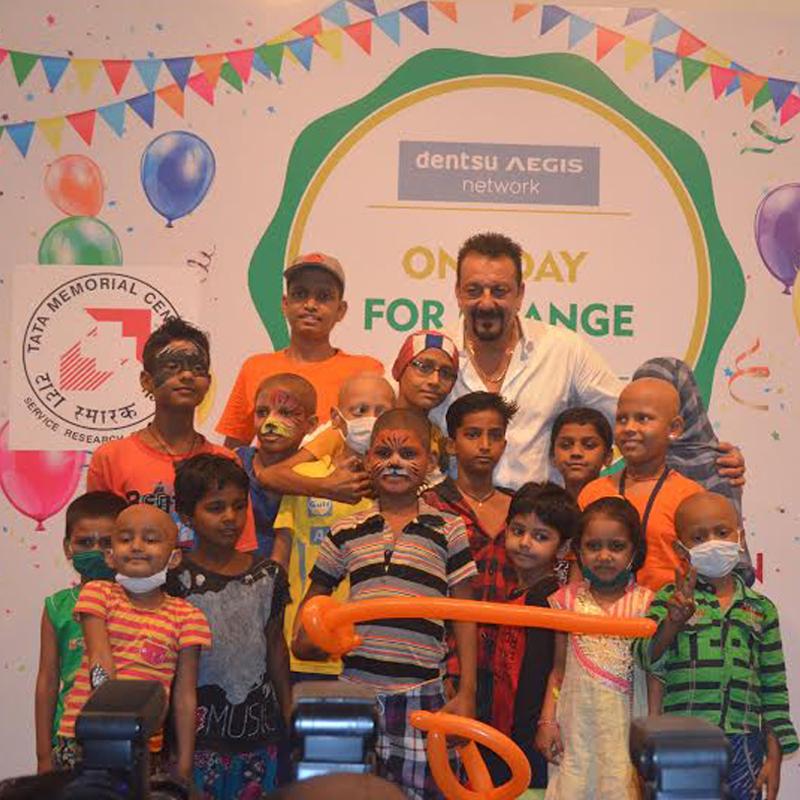
    In Mumbai, Dentsu Aegis Network touched the lives of 1100 kids across nine child welfare organisations. It is pertinent to note here that the Dentsu Aegis Network employees also created a Fun Fair for more than 200 children suffering from various forms of cancer to entertain them all through the day. The event was attended by none other than Bollywood actor Sanjay Dutt, the chief guest for the day at the Tata Memorial Hospital, Parel.

    The company also arranged an educational excursion for 100 underprivileged children, supported by Umang Foundation, to Nehru Science Centre, Worli. Additionally, the group set-up a dental health check-up camp at Madras Wadi, a slum area near Worli, where 300 children turned up for the event.

    The network was sub-divided into teams of 20-50 in Kolkata, Chennai, Bangalore and Kochi. Each team visited a particular child welfare shelter to execute a variety of creative workshops.
    Delhi, Bangalore and Mumbai also tied up with various hospitals and NGOs to organise a blood donation drive for kids with Thalassemia and Cancer. Over 250 bottles of blood were donated by Dentsu Aegis Network staff across all regions.

    Ashish Bhasin, Chairman & CEO South Asia Dentsu Aegis Network said, “One Day For Change is extremely important to us at Dentsu Aegis Network. It gives all our employees an opportunity to give back to the society, as a team. More important than what we volunteer in kind and cash is the time we all volunteer together. We hope to continue many of these activities throughout the year. It really feels good, as a team, to be able to do our bit.”

    One Day For Change is an annual social commitment by the Dentsu Aegis Network, where employees from each of the countries are encouraged to go out and volunteer on the same day.

    Last year, over 800 employees volunteered in India contributing 2,200 staff hours. While the final numbers are still trickling in, it is estimated that in 2016 in India 1,500 employees volunteered over 6000 staff hours for the One Day for Change initiative.

  • Dentsu Aegis Network reaches out to 2500 children on ‘One Day For Change’

    Dentsu Aegis Network reaches out to 2500 children on ‘One Day For Change’

    MUMBAI: Dentsu Aegis Network organised the third edition of its corporate social responsibility programme, ‘One Day For Change’, on June 3, 2016.

    With children playing the central role in the programme this year, the India chapter of this global initiative successfully reached out to as many as 2500 children across the country. An estimated 1,500 Dentsu Aegis Network employees across offices in Mumbai, New Delhi, Bangalore, Kolkata, Chennai, and Kochi were engaged to execute the project, “Champions For Children”.

    In India, the key focus of the ‘One Day For Change’ (ODFC) programme was held across four categories – digital, education, health and entertainment.

    As part of the digital push, the network’s Delhi office visited Kushi Rainbow Girls Home to donate laptops and conduct sessions on excel & IT skills. Meanwhile, the employees also visited the Earth Saviours Foundation and interacted with more than 300 mentally challenged children.

    In Mumbai, Dentsu Aegis Network touched the lives of 1100 kids across nine child welfare organisations. It is pertinent to note here that the Dentsu Aegis Network employees also created a Fun Fair for more than 200 children suffering from various forms of cancer to entertain them all through the day. The event was attended by none other than Bollywood actor Sanjay Dutt, the chief guest for the day at the Tata Memorial Hospital, Parel.

    The company also arranged an educational excursion for 100 underprivileged children, supported by Umang Foundation, to Nehru Science Centre, Worli. Additionally, the group set-up a dental health check-up camp at Madras Wadi, a slum area near Worli, where 300 children turned up for the event.

    The network was sub-divided into teams of 20-50 in Kolkata, Chennai, Bangalore and Kochi. Each team visited a particular child welfare shelter to execute a variety of creative workshops.
    Delhi, Bangalore and Mumbai also tied up with various hospitals and NGOs to organise a blood donation drive for kids with Thalassemia and Cancer. Over 250 bottles of blood were donated by Dentsu Aegis Network staff across all regions.

    Ashish Bhasin, Chairman & CEO South Asia Dentsu Aegis Network said, “One Day For Change is extremely important to us at Dentsu Aegis Network. It gives all our employees an opportunity to give back to the society, as a team. More important than what we volunteer in kind and cash is the time we all volunteer together. We hope to continue many of these activities throughout the year. It really feels good, as a team, to be able to do our bit.”

    One Day For Change is an annual social commitment by the Dentsu Aegis Network, where employees from each of the countries are encouraged to go out and volunteer on the same day.

    Last year, over 800 employees volunteered in India contributing 2,200 staff hours. While the final numbers are still trickling in, it is estimated that in 2016 in India 1,500 employees volunteered over 6000 staff hours for the One Day for Change initiative.

  • Luxury brands make the most of digital ad spends

    Luxury brands make the most of digital ad spends

    MUMBAI: Since digital advertising became mainstream, if there is one sector that saw  a sea change in its media planning, it’s the luxury brands. With social media influencers, independent makeup artists, Instagramers, Youtubers and what not becoming the the new age style icons, it is not unnatural for them to call dibs in the precious ad spends.

    Now that there are so many channels of communication at the brands’ disposal, the bifurcation of annual marketing is far beyond the straightforward split in print, OOH and television. Brands are exploring content branding and native advertising with partnerships with well known publishers, putting up content in brand owned platforms and of course, the social media. This shift from traditional to unconventional was drastic and needless to say, so was the change in planning for the brands.

    Looking at the broader picture in the market, between 2014 and 2015 the expenditure on luxury goods advertising — such as luxury automotive, fragrances & beauty, fashion & accessories, and watches & jewellery — saw a major setback dipping down to 1.9 per cent growth rate in 2015, partially due to advertisers reaction to the unrest in BRICS nations, as per ZenithOptimedia’s Luxury Adspend Forecast, which is a collaboration  Zenith’s Worldwide Publications Team and Zenith France

    “Adspend shrank by 1.4 percent in Asia and by a massive 20.3 percent in Eastern Europe, mainly as the result of the oil crisis and rouble devaluation in Russia, but the global total was buoyed by strong growth in North America (3.6 percent) and Western Europe (4.7 percent),” read the report.

    The latest 2016 report however shows a slow but positive recovery of the luxury ad spends in Asia to 2.9 percent, pulling the overall global growth in ad spends to 3 per cent.  “The decline in Eastern Europe slows to 2.8 percent. North America will stay strong, with 3.9 percent growth, but Western Europe will slip back to 1.7 percent. Overall we forecast 3.0 percent growth in luxury ad spend across our top 18 markets in 2016,” the report adds.

    The 18 markets are China, Colombia, France, Germany, Hong Kong, Italy, Malaysia, Mexico, the Netherlands, Peru, Russia, Singapore, South Africa, South Korea, Spain, Taiwan, the United Kingdom and the United States of America.
     
    The figures in the report however clearly point at the slow rate at which  luxury advertising is growing as opposed to all other categories.

    “Across our top 18 markets, luxury advertising grew by 2.9 percent in 2014, compared to 5.6 percent for advertising as a whole, and 1.9 percent in 2015 (compared to 4.1 percent). We forecast this underperformance to continue, with luxury advertising growing 3.0 percent in 2016 compared to 4.5 percent growth across all categories,” the report further pointed out.

    While many factors can be listed for the underperformance of the category, several industry experts find it unfair that luxury advertising be compared to other categories as it works on a completely different set of marketing rules.  As senior brand consultant and business strategist Harish Bijoor puts it, “True luxury is never advertised as luxury is meant to be exclusive. Therefore expect the luxury ad spends in traditional marketing mediums to grow won’t be correct. Luxury advertising is always meant to be a nano-niche of mass advertising. “

    “Most luxury brands’ marketing budget should not go in their top line advertising but in below the line work. Some brands also spend a lot on direct marketing or one is to one communication with specific clients. A fair bit of money goes into all that,” Bijoor added.

    Dentsu Aegis Network South Asia CEO and chairman Ashish Bhasin on the other hand sounds comparatively more optimistic of the category’s performance, especially in India. Quoting a study done by Carat, Bhasin shares, “Don’t know about Asia, but the growth of luxury brands’ ad spends in India was more than 15 per cent in the last one year as per Carat’s estimates. Moreover, retail is a very important aspect of luxury goods marketing, and as the retail situation in India improves and as the FDI mandate loosens up allowing international brands to open single owner stores in cities, the industry will see a boom.”

    Regardless of the difference in perspective on the performance of the category and its contribution to the overall advertising spends, all media stakeholders unanimously agree that the category has more scope to grow with digital media, albeit in different forms.

    “Digital is definitely a great medium because every consumer of luxury brand is mostly fully and completely digital; owns a smartphone, is on more than one digital device and screen, etc. Therefore targeting consumers who can afford to pay premium using digital is definitely a smart play,” shared Bhasin.

    In fact, as per the current Luxury Advertising Expenditure Forecasts by ZenithOptimedia, “Digital advertising is by far the biggest contributor to the growth in luxury advertising, growing consistently at double-digit rates. We expect digital media ad spend by luxury advertisers to increase by USD 837 millon between 2015 and 2017. Over this period, television, radio and cinema will increase by a total of USD 26m between them; outdoor will shrink by USD 10million; and print will shrink by U$150 million”

    Elaborating his point on below the line advertising, Bijoor too emphasised on the growing importance of digital for the sector. “Apart from digital advertising, below the line advertising on digital has proven helpful for luxury brands to grow their market, where bloggers and social influencers are handpicked to make oblique reference of the brand, or wear it themselves which leads to social media conversations and buzz around the internet.”

    While mix media campaigns, promotions leveraged by social media influencers are popular amongst the Christian Diors, Guccis, Tiffanys and the Pradas of the world, not all of them are commercial deals. Meaning not all promotions are paid for by the brands  and thus doesn’t require any marketing budget allotment.

    Popular online style icon Hanadi Merchant who runs the fashion blog style DesiHighstyle.com frequently gets requests from brands like Gucci, Dolce and Gabbana and more, but without any commercial deal in place. “I regularly work with Dior and Gucci, but it is not a paid thing. I do shoots for their product and talk about it in my blog and wear their accessories as well, but there is no commercial deal in place. International luxury brands don’t do such deals in India I think,” Merchant shared.

    When pointed out the fact that these brands spends millions of dollars into advertising their product for the right promotion and visibility, Merchant asserted that her international counterparts do make hefty sums of money through these native advertising efforts, although ‘those bloggers are in a different league altogether.”

    Merchant is also trying out a few Indian high end brands and if things work out well, she would consider a paid deal with the brands. While paid blog articles and social media influence is an ongoing concept in India, due to lack of regulation and monitoring it is hard to estimate how much money is going into these BTL advertisements. As the lines of advertising continue to blur in this market, digital would continue to grow as a preferred medium for communication for luxury brands.


  • Luxury brands make the most of digital ad spends

    Luxury brands make the most of digital ad spends

    MUMBAI: Since digital advertising became mainstream, if there is one sector that saw  a sea change in its media planning, it’s the luxury brands. With social media influencers, independent makeup artists, Instagramers, Youtubers and what not becoming the the new age style icons, it is not unnatural for them to call dibs in the precious ad spends.

    Now that there are so many channels of communication at the brands’ disposal, the bifurcation of annual marketing is far beyond the straightforward split in print, OOH and television. Brands are exploring content branding and native advertising with partnerships with well known publishers, putting up content in brand owned platforms and of course, the social media. This shift from traditional to unconventional was drastic and needless to say, so was the change in planning for the brands.

    Looking at the broader picture in the market, between 2014 and 2015 the expenditure on luxury goods advertising — such as luxury automotive, fragrances & beauty, fashion & accessories, and watches & jewellery — saw a major setback dipping down to 1.9 per cent growth rate in 2015, partially due to advertisers reaction to the unrest in BRICS nations, as per ZenithOptimedia’s Luxury Adspend Forecast, which is a collaboration  Zenith’s Worldwide Publications Team and Zenith France

    “Adspend shrank by 1.4 percent in Asia and by a massive 20.3 percent in Eastern Europe, mainly as the result of the oil crisis and rouble devaluation in Russia, but the global total was buoyed by strong growth in North America (3.6 percent) and Western Europe (4.7 percent),” read the report.

    The latest 2016 report however shows a slow but positive recovery of the luxury ad spends in Asia to 2.9 percent, pulling the overall global growth in ad spends to 3 per cent.  “The decline in Eastern Europe slows to 2.8 percent. North America will stay strong, with 3.9 percent growth, but Western Europe will slip back to 1.7 percent. Overall we forecast 3.0 percent growth in luxury ad spend across our top 18 markets in 2016,” the report adds.

    The 18 markets are China, Colombia, France, Germany, Hong Kong, Italy, Malaysia, Mexico, the Netherlands, Peru, Russia, Singapore, South Africa, South Korea, Spain, Taiwan, the United Kingdom and the United States of America.
     
    The figures in the report however clearly point at the slow rate at which  luxury advertising is growing as opposed to all other categories.

    “Across our top 18 markets, luxury advertising grew by 2.9 percent in 2014, compared to 5.6 percent for advertising as a whole, and 1.9 percent in 2015 (compared to 4.1 percent). We forecast this underperformance to continue, with luxury advertising growing 3.0 percent in 2016 compared to 4.5 percent growth across all categories,” the report further pointed out.

    While many factors can be listed for the underperformance of the category, several industry experts find it unfair that luxury advertising be compared to other categories as it works on a completely different set of marketing rules.  As senior brand consultant and business strategist Harish Bijoor puts it, “True luxury is never advertised as luxury is meant to be exclusive. Therefore expect the luxury ad spends in traditional marketing mediums to grow won’t be correct. Luxury advertising is always meant to be a nano-niche of mass advertising. “

    “Most luxury brands’ marketing budget should not go in their top line advertising but in below the line work. Some brands also spend a lot on direct marketing or one is to one communication with specific clients. A fair bit of money goes into all that,” Bijoor added.

    Dentsu Aegis Network South Asia CEO and chairman Ashish Bhasin on the other hand sounds comparatively more optimistic of the category’s performance, especially in India. Quoting a study done by Carat, Bhasin shares, “Don’t know about Asia, but the growth of luxury brands’ ad spends in India was more than 15 per cent in the last one year as per Carat’s estimates. Moreover, retail is a very important aspect of luxury goods marketing, and as the retail situation in India improves and as the FDI mandate loosens up allowing international brands to open single owner stores in cities, the industry will see a boom.”

    Regardless of the difference in perspective on the performance of the category and its contribution to the overall advertising spends, all media stakeholders unanimously agree that the category has more scope to grow with digital media, albeit in different forms.

    “Digital is definitely a great medium because every consumer of luxury brand is mostly fully and completely digital; owns a smartphone, is on more than one digital device and screen, etc. Therefore targeting consumers who can afford to pay premium using digital is definitely a smart play,” shared Bhasin.

    In fact, as per the current Luxury Advertising Expenditure Forecasts by ZenithOptimedia, “Digital advertising is by far the biggest contributor to the growth in luxury advertising, growing consistently at double-digit rates. We expect digital media ad spend by luxury advertisers to increase by USD 837 millon between 2015 and 2017. Over this period, television, radio and cinema will increase by a total of USD 26m between them; outdoor will shrink by USD 10million; and print will shrink by U$150 million”

    Elaborating his point on below the line advertising, Bijoor too emphasised on the growing importance of digital for the sector. “Apart from digital advertising, below the line advertising on digital has proven helpful for luxury brands to grow their market, where bloggers and social influencers are handpicked to make oblique reference of the brand, or wear it themselves which leads to social media conversations and buzz around the internet.”

    While mix media campaigns, promotions leveraged by social media influencers are popular amongst the Christian Diors, Guccis, Tiffanys and the Pradas of the world, not all of them are commercial deals. Meaning not all promotions are paid for by the brands  and thus doesn’t require any marketing budget allotment.

    Popular online style icon Hanadi Merchant who runs the fashion blog style DesiHighstyle.com frequently gets requests from brands like Gucci, Dolce and Gabbana and more, but without any commercial deal in place. “I regularly work with Dior and Gucci, but it is not a paid thing. I do shoots for their product and talk about it in my blog and wear their accessories as well, but there is no commercial deal in place. International luxury brands don’t do such deals in India I think,” Merchant shared.

    When pointed out the fact that these brands spends millions of dollars into advertising their product for the right promotion and visibility, Merchant asserted that her international counterparts do make hefty sums of money through these native advertising efforts, although ‘those bloggers are in a different league altogether.”

    Merchant is also trying out a few Indian high end brands and if things work out well, she would consider a paid deal with the brands. While paid blog articles and social media influence is an ongoing concept in India, due to lack of regulation and monitoring it is hard to estimate how much money is going into these BTL advertisements. As the lines of advertising continue to blur in this market, digital would continue to grow as a preferred medium for communication for luxury brands.


  • Dentsu Webchutney appoints Gautam Reghunath as Senior VP and Branch Head

    Dentsu Webchutney appoints Gautam Reghunath as Senior VP and Branch Head

    MUMBAI: Dentsu Webchutney, the digital agency from Dentsu Aegis Network, has appointed Gautam Reghunath as Senior Vice President and Branch Head, Bangalore. He will lead the 40-member-strong team in Bangalore, overseeing clients including Flipkart, Dailyhunt, Helpchat and Quikr.

    Reghunath, formerly Vice President, will report directly to Dentsu Webchutney CEO Sidharth Rao. Reghunath’s key role will be to further build on the Bangalore office’s business success in addition to strengthening the agency’s creative and content production capabilities.

    Confirming Reghunath’s new assignment, Rao said, “Under Gautam’s leadership, our South India business continues to evolve at tremendous speed, having grown 200% over last year. From what was a five-member office in early 2015, we are now a 40-people-strong team in Bangalore. It is imperative that we have the strongest possible leadership there to take us to new heights. Gautam has an ambitious vision for the company and is a powerful advocate of putting young talent at the forefront of our business.”

    Talking about his new role, Reghunath said, “I am Dentsu Webchutney through and through, and this is a responsibility I am proud to be tasked with. The last one year has been great, being ranked number 1, great new clients and moving into our new space in Bangalore. We have embarked on an ambitious growth path, not just from a business perspective but also as individual creative professionals. The agency is brimming with young creative and leadership talent and it will be a privilege to lead them in our endeavor to continue evolving as a new-age agency – relevant for 2017 and relevant for our clients.”

    Reghunath joined Dentsu Webchutney’s Mumbai office in 2010 at a junior servicing position and over the last two years had been tasked with building the agency’s Bangalore operations. He was recently named in Social Samosa’s ‘Top 30 under 30’ list and has previously worked with L&K Saatchi and Saatchi.

    Dentsu Webchutney’s clients include Flipkart, Airtel, TI Cycles and Redbull across areas of digital marketing, online video content, website design, mobile marketing and social media. The agency runs with a team of over 200 digital marketing professionals across New Delhi, Mumbai and Bengaluru.

  • Dentsu Webchutney appoints Gautam Reghunath as Senior VP and Branch Head

    Dentsu Webchutney appoints Gautam Reghunath as Senior VP and Branch Head

    MUMBAI: Dentsu Webchutney, the digital agency from Dentsu Aegis Network, has appointed Gautam Reghunath as Senior Vice President and Branch Head, Bangalore. He will lead the 40-member-strong team in Bangalore, overseeing clients including Flipkart, Dailyhunt, Helpchat and Quikr.

    Reghunath, formerly Vice President, will report directly to Dentsu Webchutney CEO Sidharth Rao. Reghunath’s key role will be to further build on the Bangalore office’s business success in addition to strengthening the agency’s creative and content production capabilities.

    Confirming Reghunath’s new assignment, Rao said, “Under Gautam’s leadership, our South India business continues to evolve at tremendous speed, having grown 200% over last year. From what was a five-member office in early 2015, we are now a 40-people-strong team in Bangalore. It is imperative that we have the strongest possible leadership there to take us to new heights. Gautam has an ambitious vision for the company and is a powerful advocate of putting young talent at the forefront of our business.”

    Talking about his new role, Reghunath said, “I am Dentsu Webchutney through and through, and this is a responsibility I am proud to be tasked with. The last one year has been great, being ranked number 1, great new clients and moving into our new space in Bangalore. We have embarked on an ambitious growth path, not just from a business perspective but also as individual creative professionals. The agency is brimming with young creative and leadership talent and it will be a privilege to lead them in our endeavor to continue evolving as a new-age agency – relevant for 2017 and relevant for our clients.”

    Reghunath joined Dentsu Webchutney’s Mumbai office in 2010 at a junior servicing position and over the last two years had been tasked with building the agency’s Bangalore operations. He was recently named in Social Samosa’s ‘Top 30 under 30’ list and has previously worked with L&K Saatchi and Saatchi.

    Dentsu Webchutney’s clients include Flipkart, Airtel, TI Cycles and Redbull across areas of digital marketing, online video content, website design, mobile marketing and social media. The agency runs with a team of over 200 digital marketing professionals across New Delhi, Mumbai and Bengaluru.

  • Dentsu Creative Impact ropes in Anupama Ramaswamy and Akashneel Dasgupta as ECDs

    Dentsu Creative Impact ropes in Anupama Ramaswamy and Akashneel Dasgupta as ECDs

    MUMBAI: Dentsu Creative Impact, the creative agency from Dentsu Aegis Network that went on to win 23 metals at the Goafest this year, has made two major senior appointments in an attempt to further strengthen its creative product.

    The agency has roped in Anupama Ramaswamy and Akashneel Dasgupta as Executive Creative Directors, who will report to Dentsu India Group, NCD Soumitra Karnik.

    Prior to joining Dentsu Creative Impact, Ramaswamy was Executive Creative Director at Cheil, Gurgaon and was in-charge of the Samsung Mobile account. In the recent years, Anupama has worked on the launch of the Galaxy J series, Note 4, Grand 2 and the extremely-popular “Fickle is Fun” campaign for Lavie Handbags.

    Commenting on her new role, Ramaswamy said, “I am very excited to join Dentsu Creative Impact. I have loved the vibe of the agency since the moment I walked in. Soumitra and Amit have been trying to get the best possible talent, and my mandate here is to have fun while building a vibrant and creative culture. This will involve less rhetoric and more hands-on hard work.”

    Some of the agencies that she has worked with include JWT, Lowe, Rediffusion, Havas and FCB. She has worked across a gamut of brands such as Nokia, Airtel, Woodland, Whirlpool, LG, Maruti, Lays and Boost. In her kitty are a number of  AdFest Golds, Spikes, Effies, New York Festival and a number of Abby’s. She was part of the One Show Jury in 2012 and is a regular face on the Goafest jury panel over the last few years.

    Meanwhile,  Dasgupta’s last assignment was at ADK Fortune where he was heading the creative function. Dasgupta started his career in advertising with strategic planning at Mudra. 

    Commenting on his new role, he said, “It’s an exciting time to join Dentsu Creative Impact where a young new team has taken shape and one cannot fail to notice the energy and enthusiasm. Also, it was a personal desire for some time to work with Soumitra and I am happy that an opportunity has presented itself. Hope you get to hear more from us, soon.”

    Talking about the exciting new additions to the team, Karnik too said, “Great work happens when people commit to constantly raising the bar. We are young and tremendously hungry for qualitative growth. To satiate our appetite and to help us achieve our objective, people become easily our single most valuable asset and we cherry pick each one of them. Both Anupama and Akash are just the kind of people Dentsu Creative Impact needs to write its destiny. For me, they are our fantastic acquisitions.”

    Echoing a similar sentiment Dentsu Creative Impact SVP and branch head Amit Wadhwa added, “It’s been great going for Dentsu Creative Impact, especially in the last year or so, and one way we can really continue this upward journey is by having the right people around. This holds true even more so when it comes to the creative talent, since that is where the action finally boils down to. I think in Anupama and Akash we have two extremely talented, passionate and at the same time mature heads that will take us to where we intend to go.”

  • Dentsu Creative Impact ropes in Anupama Ramaswamy and Akashneel Dasgupta as ECDs

    Dentsu Creative Impact ropes in Anupama Ramaswamy and Akashneel Dasgupta as ECDs

    MUMBAI: Dentsu Creative Impact, the creative agency from Dentsu Aegis Network that went on to win 23 metals at the Goafest this year, has made two major senior appointments in an attempt to further strengthen its creative product.

    The agency has roped in Anupama Ramaswamy and Akashneel Dasgupta as Executive Creative Directors, who will report to Dentsu India Group, NCD Soumitra Karnik.

    Prior to joining Dentsu Creative Impact, Ramaswamy was Executive Creative Director at Cheil, Gurgaon and was in-charge of the Samsung Mobile account. In the recent years, Anupama has worked on the launch of the Galaxy J series, Note 4, Grand 2 and the extremely-popular “Fickle is Fun” campaign for Lavie Handbags.

    Commenting on her new role, Ramaswamy said, “I am very excited to join Dentsu Creative Impact. I have loved the vibe of the agency since the moment I walked in. Soumitra and Amit have been trying to get the best possible talent, and my mandate here is to have fun while building a vibrant and creative culture. This will involve less rhetoric and more hands-on hard work.”

    Some of the agencies that she has worked with include JWT, Lowe, Rediffusion, Havas and FCB. She has worked across a gamut of brands such as Nokia, Airtel, Woodland, Whirlpool, LG, Maruti, Lays and Boost. In her kitty are a number of  AdFest Golds, Spikes, Effies, New York Festival and a number of Abby’s. She was part of the One Show Jury in 2012 and is a regular face on the Goafest jury panel over the last few years.

    Meanwhile,  Dasgupta’s last assignment was at ADK Fortune where he was heading the creative function. Dasgupta started his career in advertising with strategic planning at Mudra. 

    Commenting on his new role, he said, “It’s an exciting time to join Dentsu Creative Impact where a young new team has taken shape and one cannot fail to notice the energy and enthusiasm. Also, it was a personal desire for some time to work with Soumitra and I am happy that an opportunity has presented itself. Hope you get to hear more from us, soon.”

    Talking about the exciting new additions to the team, Karnik too said, “Great work happens when people commit to constantly raising the bar. We are young and tremendously hungry for qualitative growth. To satiate our appetite and to help us achieve our objective, people become easily our single most valuable asset and we cherry pick each one of them. Both Anupama and Akash are just the kind of people Dentsu Creative Impact needs to write its destiny. For me, they are our fantastic acquisitions.”

    Echoing a similar sentiment Dentsu Creative Impact SVP and branch head Amit Wadhwa added, “It’s been great going for Dentsu Creative Impact, especially in the last year or so, and one way we can really continue this upward journey is by having the right people around. This holds true even more so when it comes to the creative talent, since that is where the action finally boils down to. I think in Anupama and Akash we have two extremely talented, passionate and at the same time mature heads that will take us to where we intend to go.”