Tag: Dentsu Aegis Network

  • Posterscope goes digital for New Fresh Bottom Freezer’s OOH campaign

    Posterscope goes digital for New Fresh Bottom Freezer’s OOH campaign

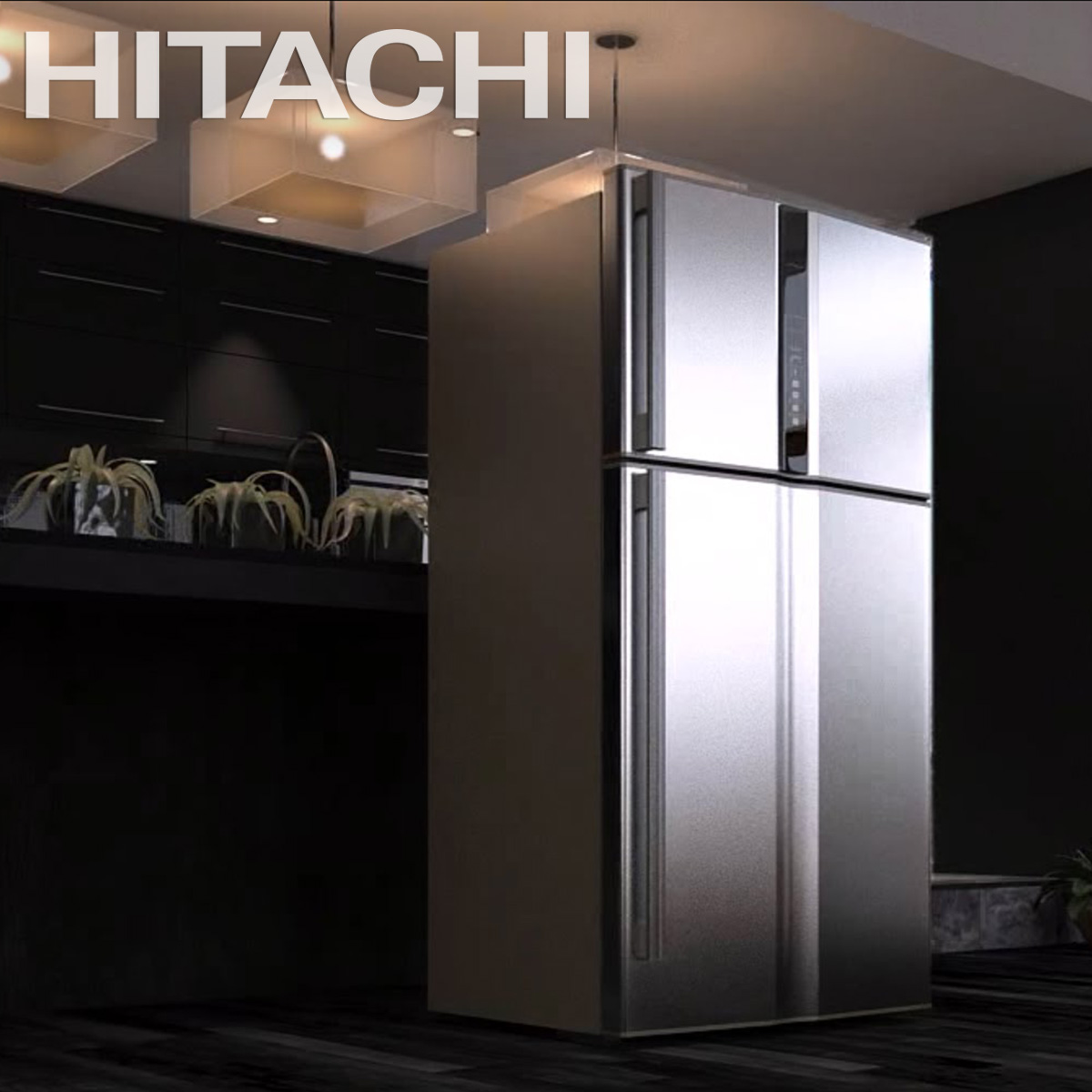
    MUMBAI: Dentsu Aegis Network’s out of home (OOH) agency Posterscope India has rolled out a technologically-advanced innovation to promote Hitachi’s latest variant New Fresh Bottom Freezer in the out-of-home space.

    The agency has crafted a campaign delivering mix of unipole, billboard, back-lit premium bus shelters, LED screen and duct panel. The campaign has been implemented across top eight cities.

    Based on the brand communication, ‘Inspire the Next’, the agency has come up with an innovative billboard integrating digital with OOH. The campaign has been designed to communicate the key brand feature of the 3-door refrigerator and to build recall at points-of-purchase to accelerate consumer-purchase decisions. The core objective of the campaign is to build awareness and thereby, increase sales. The one-month-long campaign is aimed at reaching out to the affluent population – confident urban dwellers with a modern, progressive and open-minded outlook.

    The refrigerator with side by side door has innovative features like smart open vege compartment, selectable mode compartment, LED Light, tempered glass shelves, double-deck drawer, movable twist ice tray, inverter control, dual fan cooling. The refrigerators have large door pockets which are suitably wide and enable the storage of big size bottles.

    Technology used behind this latest innovation is based on addressable pixel programming with every pixel coded and mapped on the hoarding.

    Posterscope has zeroed down on a specific location on Ring road in Delhi based on understanding of the target consumer, which was derived from their primary research (OCS), patented analytical tools (PRISM) and accumulated understanding.

  • Isobar introduces programmatic radio buying in India

    Isobar introduces programmatic radio buying in India

    MUMBAI: The face of radio and music consumption has changed with the smartphone explosion in India and so has the way advertisers look at the market. With almost all music consumers tuned into their favourite tracks through their choice of over-the-top digital music players, top media agencies too are taking note that radio as a form of mass media could catch up with the rest backed by data and analytics.

    A good example of this is the recently launched initiative from Dentsu Aegis Network’s digital arm, Isobar India, in partnership with AMNET that facilitates programmatic radio buying — a first of its kind in India as per the agency. In order to execute the first ever digital radio, Isobar and AMNET partnered with digital audio companies, Triton Digital and AdsWizz by integrating data with Appnexus.

    Online music consumption enabled by players like Guevara, Tunein, Planet Radio city, AIR Fm Gold and Music Live FM etc. have democratized the music industry in India, making it a lucrative segment for brands to capitalize on. However, until recently, media buys used to happen on these platforms on an ad hoc basis with no clear definition of the audience segment clusters.

    But with introduction of digital radio infusing intelligent targeting through programmatic solution,the new tool from Isobar will be efficient in aiding the process of acquiring new customers and delivering relevant output to existing customers via search, display, native, video and social.

    Breaking the concept down for the layman, Isobar India MD Shamsuddin Jasani AKA Shams explained, “Currently music lovers are consuming most of their music on the Gaanas and Saavns of the world as opposed to traditional radio channels. With the new tool that we are launching we are able to marry the data that we acquire from these digital players and target consumers.This will allow advertisers to programmatically buy audience targeted digital radio units based on the consumer’s’ music listening behaviour. Basically radio commercials that are targeted at digital music consumers.”

    AMNET India business head Salil Shanker said, “At AMNET, we believe in extracting the full potential of our brand offerings by using AMNET Audience Centre to profile new customers, deliver unique messaging to brand loyalists, and connect audiences across channel beats they fall into – i.e. Search, Video, Social and Native. Many brands fail to connect with relevant audiences, who consume audio content on the go (on digital radio).We have managed to bridge this gap by introducing the first ever programmatic digital radio in India. Our recent associations with brands like Microsoft, DS Group and JK Tyres have identified the potential of digital radio like never before and adopted this new-age technology.”

    Similar to how two way communication through digitally addressable system (DAS) on television allows advertisers to run different ads targeted at different audience parallely, programmatic buying of radio units will let advertisers place user specific different communications all playing at the same time.

    “We are creating different profiles for users to be categorised in based on the different campaigns. It’s not like one profile fits all consumers. We are able to target different profiles of consumers with different ad sports at different points in their purchase journey for a particular advertiser. For example at one time 30 different 15 second-er audio spots can run on one of these on demand music players.” Not to mention, being audio, the ad spots are lighter on the advertiser’s pocket as well.

    There are several perks to using audio as a medium of communication for brands. Apart from targeted messaging that saves brands from spraying and praying, and prevents wastage of precious advertising budget, tapping into a whole new market is another advantage that the new tool offers advertisers. “Most of the users who have switched to digital to listen to music are not paid users. In turn they are okay with listeing to advertisements as long as they have access to the huge music libraries players such as Saavan and Gaana.com have to offer.”
    Currently digital agency already has three major clients onboard with the new initiative namely – -DS Group, Microsoft and JK Tyres.Claiming it to be the first of its kind in Asia Pacific, the agency also hopes to get 50 to 60 clients using the service by the end of this financial year.

    Lauding the new initiative Microsoft India CMO Jyotsna Makkar shared her views saying, “We always look for innovative ways to cut-through and are happy to be amongst the first marketers to explore the potential of this format.”

    “Again,” Jasani highlights, “audio consumes less data and therefore consumers seamlessly consume the content.”

    When pointed out that only handful of such digital audio platforms are available to advertisers in India, Jasani assured that by the end of this financial year Isobar has plans allow access to ‘ 45 such apps, both Indian and global’ to its clients.

    Jasani is also optimistic that this new aspect of digital audio ads will push the envelope of digital ad spends within the country. “It’s only a matter of time before advertisers take better notice as the majority of consumers have already shifted to digital, especially when it comes to music. And it’s only going to grow as the data price becomes cheaper and cheaper in the next few months. What holds them back is a proper mechanism that will allow them to systematically use to power of digital in their campaigns and that is exactly what programmatic radio buying will allow them,” Jasani signed off.

  • Isobar introduces programmatic radio buying in India

    Isobar introduces programmatic radio buying in India

    MUMBAI: The face of radio and music consumption has changed with the smartphone explosion in India and so has the way advertisers look at the market. With almost all music consumers tuned into their favourite tracks through their choice of over-the-top digital music players, top media agencies too are taking note that radio as a form of mass media could catch up with the rest backed by data and analytics.

    A good example of this is the recently launched initiative from Dentsu Aegis Network’s digital arm, Isobar India, in partnership with AMNET that facilitates programmatic radio buying — a first of its kind in India as per the agency. In order to execute the first ever digital radio, Isobar and AMNET partnered with digital audio companies, Triton Digital and AdsWizz by integrating data with Appnexus.

    Online music consumption enabled by players like Guevara, Tunein, Planet Radio city, AIR Fm Gold and Music Live FM etc. have democratized the music industry in India, making it a lucrative segment for brands to capitalize on. However, until recently, media buys used to happen on these platforms on an ad hoc basis with no clear definition of the audience segment clusters.

    But with introduction of digital radio infusing intelligent targeting through programmatic solution,the new tool from Isobar will be efficient in aiding the process of acquiring new customers and delivering relevant output to existing customers via search, display, native, video and social.

    Breaking the concept down for the layman, Isobar India MD Shamsuddin Jasani AKA Shams explained, “Currently music lovers are consuming most of their music on the Gaanas and Saavns of the world as opposed to traditional radio channels. With the new tool that we are launching we are able to marry the data that we acquire from these digital players and target consumers.This will allow advertisers to programmatically buy audience targeted digital radio units based on the consumer’s’ music listening behaviour. Basically radio commercials that are targeted at digital music consumers.”

    AMNET India business head Salil Shanker said, “At AMNET, we believe in extracting the full potential of our brand offerings by using AMNET Audience Centre to profile new customers, deliver unique messaging to brand loyalists, and connect audiences across channel beats they fall into – i.e. Search, Video, Social and Native. Many brands fail to connect with relevant audiences, who consume audio content on the go (on digital radio).We have managed to bridge this gap by introducing the first ever programmatic digital radio in India. Our recent associations with brands like Microsoft, DS Group and JK Tyres have identified the potential of digital radio like never before and adopted this new-age technology.”

    Similar to how two way communication through digitally addressable system (DAS) on television allows advertisers to run different ads targeted at different audience parallely, programmatic buying of radio units will let advertisers place user specific different communications all playing at the same time.

    “We are creating different profiles for users to be categorised in based on the different campaigns. It’s not like one profile fits all consumers. We are able to target different profiles of consumers with different ad sports at different points in their purchase journey for a particular advertiser. For example at one time 30 different 15 second-er audio spots can run on one of these on demand music players.” Not to mention, being audio, the ad spots are lighter on the advertiser’s pocket as well.

    There are several perks to using audio as a medium of communication for brands. Apart from targeted messaging that saves brands from spraying and praying, and prevents wastage of precious advertising budget, tapping into a whole new market is another advantage that the new tool offers advertisers. “Most of the users who have switched to digital to listen to music are not paid users. In turn they are okay with listeing to advertisements as long as they have access to the huge music libraries players such as Saavan and Gaana.com have to offer.”
    Currently digital agency already has three major clients onboard with the new initiative namely – -DS Group, Microsoft and JK Tyres.Claiming it to be the first of its kind in Asia Pacific, the agency also hopes to get 50 to 60 clients using the service by the end of this financial year.

    Lauding the new initiative Microsoft India CMO Jyotsna Makkar shared her views saying, “We always look for innovative ways to cut-through and are happy to be amongst the first marketers to explore the potential of this format.”

    “Again,” Jasani highlights, “audio consumes less data and therefore consumers seamlessly consume the content.”

    When pointed out that only handful of such digital audio platforms are available to advertisers in India, Jasani assured that by the end of this financial year Isobar has plans allow access to ‘ 45 such apps, both Indian and global’ to its clients.

    Jasani is also optimistic that this new aspect of digital audio ads will push the envelope of digital ad spends within the country. “It’s only a matter of time before advertisers take better notice as the majority of consumers have already shifted to digital, especially when it comes to music. And it’s only going to grow as the data price becomes cheaper and cheaper in the next few months. What holds them back is a proper mechanism that will allow them to systematically use to power of digital in their campaigns and that is exactly what programmatic radio buying will allow them,” Jasani signed off.

  • Posterscope India takes Cadbury Bournvita Biscuits OOH

    Posterscope India takes Cadbury Bournvita Biscuits OOH

    MUMBAI: Posterscope India, the out-of-home (OOH) agency from the Dentsu Aegis Network, has rolled out a massive OOH campaign to announce the launch of Mondelez’s latest variant “Cadbury Bournvita Biscuits”.

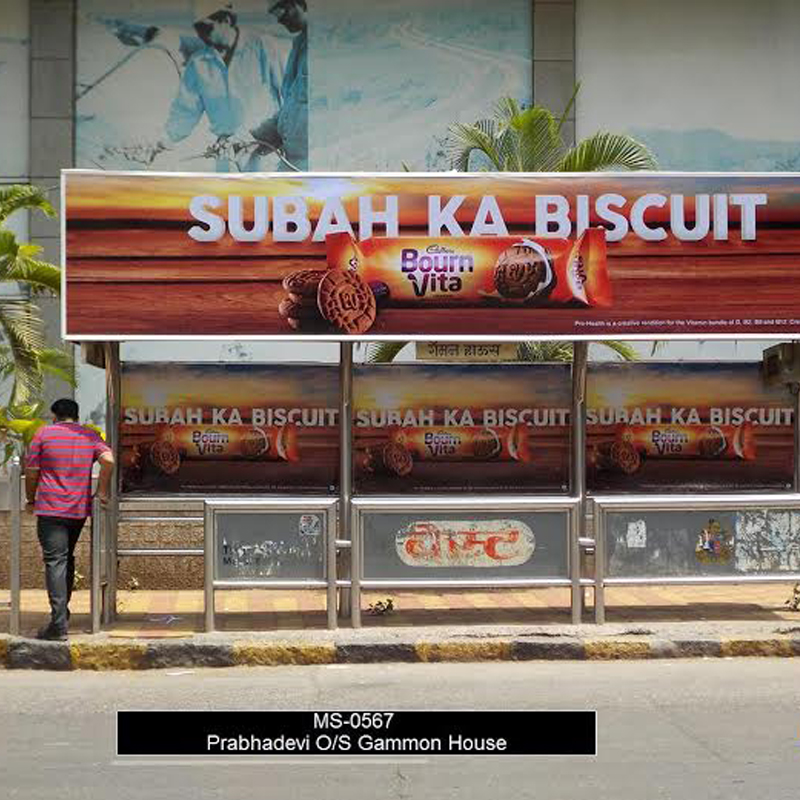
    With the core objective of the campaign centred around building awareness of the launch of this new offering, Posterscope used the product tag line ‘Subah ka Biscuit’ in its communication to showcase the product as a morning breakfast snack. The campaign aimed to reach out to the mothers of children aged five and fifteen years across Sec A & B.

    Building on the brief, Posterscope crafted a campaign that resulted in a media mix delivering both impact and reach. The media formats used for impact were billboards, unipoles, gantries, pillars, mall facades, airport, metro trains. To build reach and frequency, Posterscope deployed bus shelters, food Court table mat brandings, local and metro trains and signages across various cities.The campaign has been implemented across top 20 cities.

    Mondelez spokesperson said, “We launched a high decibel integrated marketing campaign with strong on-ground, social, digital & OOH activation plan to create awareness and drive rapid trials in the launch phase.”

    Posterscope India creative director Ashok Pillai too added, “We strategically choose a billboard that caters to the morning traffic and made sure that the site was one which had clear sky in the background in order to accentuate the innovation”.

    The innovative billboards that Posterscope installed in Mumbai added an edge to the campaign, using an LED lit “Subah ka Biscuit” on a hoarding sized 100ftx10ft along with a backlit product pack the effect was impactful. Special lighting gave the effect of a rising sun thereby creating freshness in “the morning zone”. The innovation helped the brand stand out while the LED lighting ensured long distance visibility. This gave the campaign the much required buzz.

  • Posterscope India takes Cadbury Bournvita Biscuits OOH

    Posterscope India takes Cadbury Bournvita Biscuits OOH

    MUMBAI: Posterscope India, the out-of-home (OOH) agency from the Dentsu Aegis Network, has rolled out a massive OOH campaign to announce the launch of Mondelez’s latest variant “Cadbury Bournvita Biscuits”.

    With the core objective of the campaign centred around building awareness of the launch of this new offering, Posterscope used the product tag line ‘Subah ka Biscuit’ in its communication to showcase the product as a morning breakfast snack. The campaign aimed to reach out to the mothers of children aged five and fifteen years across Sec A & B.

    Building on the brief, Posterscope crafted a campaign that resulted in a media mix delivering both impact and reach. The media formats used for impact were billboards, unipoles, gantries, pillars, mall facades, airport, metro trains. To build reach and frequency, Posterscope deployed bus shelters, food Court table mat brandings, local and metro trains and signages across various cities.The campaign has been implemented across top 20 cities.

    Mondelez spokesperson said, “We launched a high decibel integrated marketing campaign with strong on-ground, social, digital & OOH activation plan to create awareness and drive rapid trials in the launch phase.”

    Posterscope India creative director Ashok Pillai too added, “We strategically choose a billboard that caters to the morning traffic and made sure that the site was one which had clear sky in the background in order to accentuate the innovation”.

    The innovative billboards that Posterscope installed in Mumbai added an edge to the campaign, using an LED lit “Subah ka Biscuit” on a hoarding sized 100ftx10ft along with a backlit product pack the effect was impactful. Special lighting gave the effect of a rising sun thereby creating freshness in “the morning zone”. The innovation helped the brand stand out while the LED lighting ensured long distance visibility. This gave the campaign the much required buzz.

  • Digital transformation of OOH in India

    Digital transformation of OOH in India

    MUMBAI: Digital billboards, synchronized messaging across hoardings, real time trading, interactive digital displays, mobile convergence, geo-tagged tracking of impressions and measurement — digital is rapidly evolving how out-of-home advertising is perceived.

    A good look around and you will be amazed to see to what extent we are surrounded by advertisements–  on moving buses, at  public places like railways, bus stops, airports, malls and theatres and of course the billboards and hoardings beside every major building and driveway. Out of Home or ‘OOH’ is a ‘traditional’ as well as one of the oldest formats of advertising.

    Though the medium has only ever evolved gradually with time in the last few decades, currently it is at the cusp of a major overhaul that is riding the digital wave.

    http://www.indiantelevision.com/sites/drupal7.indiantelevision.co.in/files/styles/large/public/ooh%20%282%29.jpg?itok=yX7kDlRF

    OOH: The late entrant to digital

    Unlike other advertising mediums, OOH was the latest to feel the impact of the digital disruption here, be it in terms of innovation or revenue loss in ad spends. Where serious concerns were being raised on how digital’s advent will split the ad revenue pie of the market, and cannibalize other media, OOH to the most part was oblivious.

    Sharing his perspective on this transition, Kinetic India CEO South Asia and Middle East Suresh Balakrishnan informs indiantelevision, “The advent of digital in our country in all its form, whether it’s digital, or display or social, mobile has eaten away the budgets of most media.  Having said that, it has happened to India at a good time, for as a market India is growing. We are probably one of the only few markets that are growing at an average of 15 to 18 per cent. Therefore we have made space for digital.”

    “As far as OOH is concerned there has been some revenue loss to digital, but I don’t think it has been significant. I don’t remember a time when OOH was growing at 20 to 30 per cent year on year. It has always lingered around 10 to 13 percent year on year, which again is moderately good growth for OOH,” he adds.

    But that doesn’t mean that ‘change’ isn’t chasing OOH.  

    “OOH can’t sit on its haunches and think that digital will not affect it. Unless, OOH marries digital and adapts what digital has to offer to enhance its services and experience for the consumer, we won’t be able to fight the battle in the long run,” Balakrishnan explains.  

    And that battle is more than about mere survival. It is the way forward for the medium to be more relevant to the consumers, more useful to the clients and more creatively enriching for the agencies.

    Digital, the perfect partner

    To say that digital will aid OOH is an understatement.

    Digital innovation in OOH has enabled the medium to achieve what it was earlier unable to attempt.

    While the idea of a dynamic digital billboard in itself is attractive and engaging for consumers, agencies are now able to explore technology that helps target and track consumers in a better manner and even give a push to point of sale campaigns in malls and other retail outlets.

    http://www.indiantelevision.com/sites/drupal7.indiantelevision.co.in/files/styles/large/public/ooh%20%284%29.jpg?itok=ExgOdzkb

    “There are a lot of innovations that are happening in this area. For example, now digital technology allows users and consumers to scan bar codes from hoardings which directly lead to any product website through their devices,” points out Havas Media Group, India and South Asia CEO Anita Nayyar.

    “Whether it is in the way of ‘blipping’ the product from the hoardings, or digitally connecting an LED screen with some data source, there are various innovations that go hand in hand with billboards that are digitally enabled,” she adds.

    Balakrishnan on the other hand takes delight from the classier messaging that is made possible with digital. He cites an example of a campaign that Kinetic had earlier done for Mondelez’s popular chocolate brand Cadbury Bubbly.

    The crowd at Palladium Mumbai witnessed the experiential and innovative activation where in a digital screen was placed at all these places with a new motion sensor technology that transformed the normal Cadbury Silk chocolate into Cadbury Silk Bubbly with each and every movement around the screen. At metro stations in Mumbai, the screen was placed in such a way that the chocolate bubbled up with the movement of the train.

    http://www.indiantelevision.com/sites/drupal7.indiantelevision.co.in/files/styles/large/public/ooh.JPG?itok=jpwP5Ri8

    The number game: Measurability

    OOH as a medium had long struggled to measure the reach of campaigns. Therefore, very less accountability was placed on the medium and most of the money spent on the medium goes into brand building.

    “With the lack of a streamlined synchronised measurement system, there has been constant pressure from client to prove the effectiveness of the campaign,” Balakrishnan reveals.  But, to many creatives in OOH, digital is a great way to achieve that sense of measurability.

    Nayyar, having seen the Indian advertising scenario evolve, admits that while one medium (digital) is accountable, the other is almost immeasurable.

    “Apart from a couple of researches done, it is very hard to measure this medium. Thus, by clubbing the two medium, outdoor as a medium can gain huge credibility and measurability from digital,” asserts Nayyar.

    http://www.indiantelevision.com/sites/drupal7.indiantelevision.co.in/files/styles/large/public/ooh%20%283%29.jpg?itok=yH00fYXz

    Kinetic has, in fact, launched a tool called SAS or Social Amplification Score worldwide that can add some numbers to even an OOH campaign. The tool has so far been released globally by the Kinetic team and is expected to hit India in the next three months.  

    “The moment an OOH campaign is released, the tool tracks the buzz it creates by using 37 or more keywords like OOH, malls, bus shelter, etc. Basically wherever it is seen and spoken about, to tool automatically puts a score to that. It gathers the information by using geo-tagging technology that most social media platforms have enabled. With this tool therefore, we can put certain reachable numbers to an OOH campaign,” Balakrishnan informs about the effectiveness of the tool.

    Milestone Brandcom founder MD and a pioneer in the OOH business Nabendu Bhattacharyya however sheds a different light on the matter.

    “It is true that all mediums have their own struggle with measurements. Amongst all of them, OOH is the least measurable and most unorganised, Bhattacharyya opines.

    Pointing out that individual agencies have their own measurement systems that help provide clients with numbers, the veteran OOH man says, “If digital billboards become more mainstream, it will help us approach clients on a better ground as digital can incorporate those numbers.”

    Digital OOH: International VS Local

    In spite of some very obvious perks of the digital transformation, India has a lot of catching up to do when it comes to innovating OOH using technology.  Travel to any western country and one can easily spot the vast gap in the digital revolution of OOH.

    http://www.indiantelevision.com/sites/drupal7.indiantelevision.co.in/files/styles/large/public/ooh%20%281%29.jpg?itok=hxnGGHXB

    “If you look at the western markets, OOH is far more advanced and digitised than in our country. It’s also a question of infrastructure as installing these billboards needs a certain aesthetic upgradation as well. Broadband and connectivity also become an issue and do not allow the proposition to be completely seamless and workable,” Nayyar explains.

    Balakrishnan concurs with Nayyar and says, “The more mature markets have gone and beautifully adapted digital with OOH. In fact, I would say the west has shown us that one of the mediums that integrate with digital is OOH.”

    However, Bhattacharyya feels that aesthetically India isn’t far behind western markets in exploiting digital options.

    “In the last few years we have seen some major infrastructural changes in India like the airports have been modernised, fantastic looking metro rails have come up in different places, the malls that are coming up are engineered to look aesthetically good. Therefore these places have immense potential to support a digitally charged OOH campaign. Within the controlled environment, the look and feel of the architectures and the interior designs are at par with what we see internationally,” Bhattacharyya says.

    Challenges: what’s holding OOH back?

    Though each industry player has its own take where Indian OOH stands from a global perspective, most agree that the primary reason that holds them back to optimise the medium’s digital potential is the slow bureaucracy of the country.

    According to the industry, less than 10 per cent of the overall OOH inventory is digital. The reason for that is two-fold: firstly agencies have a hard time securing permissions to go digital in full throttle.

    “The government is slow and the municipal authorities take time to give us those permissions and update themselves,” Balakrishnan explains while highlighting the bureaucratic hurdles.

    The initial cost of setting up digital installations for a campaign is pretty high, and hence media owners who invest in it, think ten times before putting up money.  

    “The setup costs are high when it comes to digital, so naturally the clients also look to quickly amortise it within a year or two. That pushes up the cost of the entire campaign and sometimes clients back out in the end. Balakrishnan puts it bluntly, adding high immeasurability also puts a question mark on big budgets being sanctioned.

    Bhattacharrya goes a step further explaining that ‘real problems’ start beyond the controlled environment spaces.

    “As per government laws, for the most part, digital displays are not allowed in this country. Except for one or two places like Bangalore and Kolkata, it is hard to find legitimate space for putting up an LED display. But those too are in a slideshow format and not really as big as you see in other countries,” Bhattacharrya adds.

    Industry experts point out that if Mumbai and Delhi are taken as example, one has more than ten authorities to deal with before one can even think of a draft design of a campaign. “MMRDA, Mumbai Municipal Corporation, the railway authorities, PWDs –the complications are endless, and way more compared to other countries,” Bhattacharya complains.

    Even if permissions to innovate in the controlled environment space become more lenient budget becomes a hindering factor.

    http://www.indiantelevision.com/sites/drupal7.indiantelevision.co.in/files/styles/large/public/ooh8.jpg?itok=DpHb99t5

    “Out of overall spends in the industry, the budget allotted for controlled environment advertising is close to 20 percent only while the bulk of the budget goes to the uncontrolled environment.  And that 20 percent is further split into the different mediums with digital being one. It’s a small percentage that goes into digital,” Balakrishnan shares.

    International advertisers have another advantage over their Indian counterparts, though.

    Elaborating on what Balakrishnan opined, Bhattacharya says, “In other countries the tenders are done for a 10 to 15 year contract, whereas in India it is two to three years at the maximum. From a business perspective, this dissuades media owners from actively investing in the business, as it lacks the guarantee of a prolonged period. Add to that the fact that the initial investment to digitise the OOH infrastructure is high. Thus a short term contract is disadvantageous for a media owner.”

    Nayyar, however, feels if the technology works and gets the clients the desired results, advertisers are willing to pay and go that extra mile for  really effective storytelling.

    Indian OOH’s digital ‘jugaad’

    (Jugaad (alternatively Juggaar) is a colloquial Hindi-Urdu word that can mean an innovative fix or a simple work-around, used for solutions that bend rules, or a resource that can be used as such, or a person who can solve a complicated issue).

    Creatives here are trying to work around their limitations and adopt digital tools and services in their own way.

    From putting up digital billboards for a short period of three days to digitally enable a normal billboard, the ‘jugaads’ are many.

    Balakrishnan highlights the Indian mindset.

    “For example, creatives can use a CEE app that can be embedded into anything and works on an image recognition technology. If embedded in a brand’s app, every single static piece of communication would become interactive sans the use of barcodes, QR code. Just let your phone that has the CEE enabled app of a particular brand register its visual or logo, and it will take you to a large billboard or a small screen for that matter.”

    http://www.indiantelevision.com/sites/drupal7.indiantelevision.co.in/files/styles/large/public/ooh%209.jpg?itok=5l456I4p

    As always, when presented with adversity, the Indian ‘jugaad’ mindset easily kicks in and it seems to be working wonders for the industry so far.

    But that may not sustain it for too long if the country wants to compete and be at par with other mature markets and make the most of the double digit ad spend growth it’s currently experiencing with dollops of digital help from the government, of course.