Tag: Dentsu Aegis Network

  • MICA wins at ‘WAT’s your Big Idea’

    MICA wins at ‘WAT’s your Big Idea’

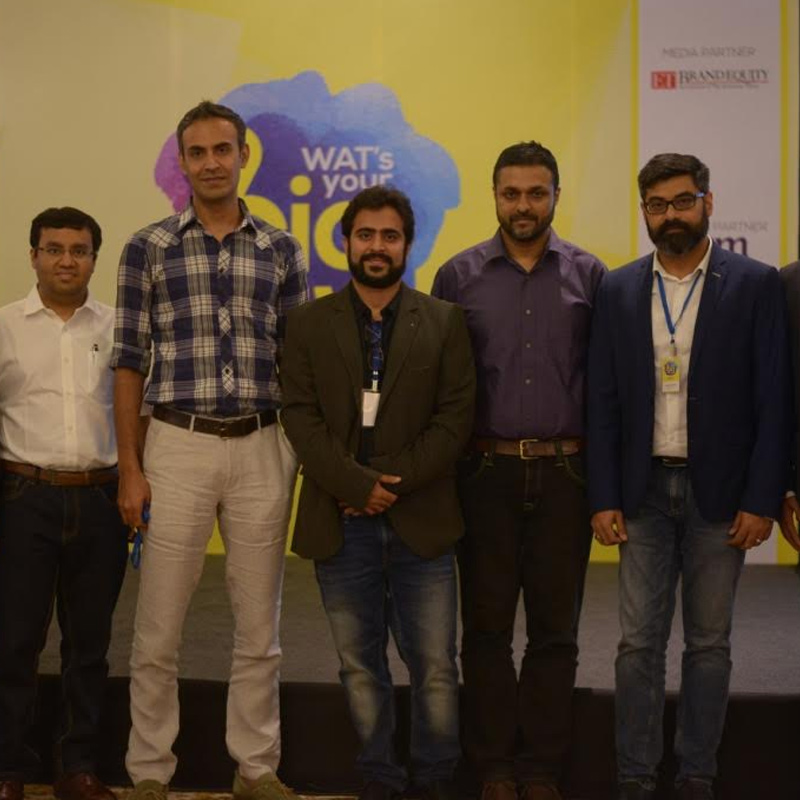
    MUMBAI: DAN’s WATConsult has wrapped up the first edition of WAT’s your Big Idea (#WYBI) at an event in Mumbai, yesterday.

    #WYBI was launched last month with the aim of providing a unique platform, offering massive opportunities to the next generation, in the field of advertising and marketing.

    The digital agency received an overwhelming response of 160 entries with more than 350 students participating across colleges. Students participated from leading educational institutes of India like MICA, SIMC, Amity University, XIC, IIMB, IIM (Indore), SP Jain, Jamnalal Bajaj NMIMS, MET, Jai Hind amongst others.

    The winning trophy was awarded to MICA, followed by Delhi School of Communications as first-runner up and JBIMS as second runner up.

    WATConsult founder and CEO Rajiv Dingra said, “It was great to see young talent present in front of a well-known jury. We received a tremendous response from all the colleges in our first edition and look forward to scale the next edition to greater heights.”

    “It has been a great experience judging WAT’s Your Big Idea. The millennial generation is truly digital savvy and we saw that in the innovative ideas presented to us today. The competition is also a great way to introduce fresh talent into our industry,” added Dentsu Aegis Network south Asia chairman and CEO Ashish Bhasin.

    Each brand associated with the competition shared a brief with the students pertaining to their target audience. While JACK and JONES wanted ideas that helped them to get more footfall and sales, Radio Mirchi looked for ideas which would increase their website traffic and HUL’s brief was for Pepsodent, wherein participants had to use ‘smile’ in their communication.

    LYF wanted applicants to uplift their conversation and take it beyond mega-pixels and price, L&T Mutual Fund looked for ideas which create high level awareness and relevance in the mutual fund category amongst the Indian population and Warner Bros. India’s brief was around increasing social media engagement and tune-ins.

    The shortlisted 28 teams from the first round got an opportunity to work with the team from WATConsult and showcased their entries in front of the jury yesterday.

  • The after-effect of Arnab Goswami’s exit

    The after-effect of Arnab Goswami’s exit

    MUMBAI: Seldom in the media industry, there are days when the newscaster becomes the breaking news. November 1 was one such day. November 1 was Arnab Goswami’s last day in office. Tuesday’s episode of The Newshour was Goswami’s last.

    The dynamic broadcast journalist who is often credited with pioneering debate-style news programming in India has called it a day as the editor-in-chief of the news channel — Times Now.

    Since the news surfaced, the media world has gone loony trying to guess ‘what is next for Arnab?’ Some speculate that Goswami plans to start his own independent media venture with digital media leanings, based on the strong hints that he had earlier dropped at a conference.

    Amid the hue and cry of ‘The nation wants to know’ what Goswami is up to post-Times Now, a question that hasn’t been entertained is — what does Arnab Goswami’s exit from Times Now mean for the channel and its network?

    While the channel hasn’t come out with an official statement (until the filing of this article) to address Goswami’s resignation, or its plans to find a replacement of Goswami, both as the face of the channel as well as the host of The Newshour, it goes without saying that the channel’s flagship prime time debate show ‘The Newshour’ that brings the channel its highest ad rates will not retain its brand identity without Goswami’s emphatic voice and pointed questions.

    Credited to most often boasting a full ad inventory, the show’s contribution to the network’s revenues is uncontested, and rumoured to be north of Rs 100 crore.

    A media expert requesting anonymity outright rejected the Rs 100-crore plus effect on Times revenue that is being bandied about in the news industry circles. According to this expert, the total revenue of Times Network was in the range of Rs 160-170 crore; how could the effect of the departure of an anchor be three-fourths of that figure?

    Although he admitted that it would definitely dent Times Network’s revenues, he was not willing to put a figure to it. He however acknowledged that The Newshour revenue commanded 8-10x the overall ‘Times Now’ channel’s ER. He sought to extrapolate a figure at the rate of Rs 20,000 per 10-second ad slot of the program.

    While other media experts shied away from commenting on the immediate monetary effect that Goswami’s decision would cost the network, most unanimously agreed that this event will definitely have significant repercussions.

    “Arnab has created a distinct identity within the English News consumers mind space. Newshour commands a premium over the channel’s operating rates to the tune of 10X, and that will have its impact on perception and pricing of the show. Having said that, organisations are larger than individuals, and Times is an entity that is a seasoned media / news group,” said Reliance Broadcast Network Limited’s chief business officer Vikas Khanchandani.

    Echoing similar sentiments was Dentsu Aegis Network south Asia chairman Ashish Bhasin. “Whenever someone as prominent and established as Arnab Goswami, who was akin to the face of Times Now the channel, leaves, it does shake up the network. I foresee a period of settling down on the part of the channel, post-Goswami’s resignation. Having said that, I believe organisations are larger than individuals and they will find an appropriate content replacement and a presenter on air.”

    Commenting on the ad rates of the show post-Goswami, Bhasin shared, “Tying it (Goswami’s resignation) to a loss in the network’s revenue and business will be making a hasty judgement. Ad rates aren’t as spontaneous as the stock exchange. The first effect, if any, will be on the viewership numbers. Only if the viewership numbers continue to drop for a prolonged period of time will there be an effect on the ad rates.”

    Whether Goswami’s goodbye will blow a hole in Times Now’s pockets or whether The Newshour will retain its glory amid loyal advertisers, or whether the network will replace the debate show with an equally engaging content are things that we can’t put a finger on for certain. What we do know for sure is that Goswami quitting Times Now is unprecedented in the industry.

    Said senior journalist in CNN-News18 is Bhupendra Chaubey: I have not worked with him for almost 10 years now but, what I remember of him as a colleague in NDTV, he is a bright companion. I wish him all the luck with whatever he plans to do.

    Similarly senior media executive and BTVi COO Monica Tata too expressed her shock upon hearing the news. “Waiting to hear more news about his future plans,” she added.

  • The after-effect of Arnab Goswami’s exit

    The after-effect of Arnab Goswami’s exit

    MUMBAI: Seldom in the media industry, there are days when the newscaster becomes the breaking news. November 1 was one such day. November 1 was Arnab Goswami’s last day in office. Tuesday’s episode of The Newshour was Goswami’s last.

    The dynamic broadcast journalist who is often credited with pioneering debate-style news programming in India has called it a day as the editor-in-chief of the news channel — Times Now.

    Since the news surfaced, the media world has gone loony trying to guess ‘what is next for Arnab?’ Some speculate that Goswami plans to start his own independent media venture with digital media leanings, based on the strong hints that he had earlier dropped at a conference.

    Amid the hue and cry of ‘The nation wants to know’ what Goswami is up to post-Times Now, a question that hasn’t been entertained is — what does Arnab Goswami’s exit from Times Now mean for the channel and its network?

    While the channel hasn’t come out with an official statement (until the filing of this article) to address Goswami’s resignation, or its plans to find a replacement of Goswami, both as the face of the channel as well as the host of The Newshour, it goes without saying that the channel’s flagship prime time debate show ‘The Newshour’ that brings the channel its highest ad rates will not retain its brand identity without Goswami’s emphatic voice and pointed questions.

    Credited to most often boasting a full ad inventory, the show’s contribution to the network’s revenues is uncontested, and rumoured to be north of Rs 100 crore.

    A media expert requesting anonymity outright rejected the Rs 100-crore plus effect on Times revenue that is being bandied about in the news industry circles. According to this expert, the total revenue of Times Network was in the range of Rs 160-170 crore; how could the effect of the departure of an anchor be three-fourths of that figure?

    Although he admitted that it would definitely dent Times Network’s revenues, he was not willing to put a figure to it. He however acknowledged that The Newshour revenue commanded 8-10x the overall ‘Times Now’ channel’s ER. He sought to extrapolate a figure at the rate of Rs 20,000 per 10-second ad slot of the program.

    While other media experts shied away from commenting on the immediate monetary effect that Goswami’s decision would cost the network, most unanimously agreed that this event will definitely have significant repercussions.

    “Arnab has created a distinct identity within the English News consumers mind space. Newshour commands a premium over the channel’s operating rates to the tune of 10X, and that will have its impact on perception and pricing of the show. Having said that, organisations are larger than individuals, and Times is an entity that is a seasoned media / news group,” said Reliance Broadcast Network Limited’s chief business officer Vikas Khanchandani.

    Echoing similar sentiments was Dentsu Aegis Network south Asia chairman Ashish Bhasin. “Whenever someone as prominent and established as Arnab Goswami, who was akin to the face of Times Now the channel, leaves, it does shake up the network. I foresee a period of settling down on the part of the channel, post-Goswami’s resignation. Having said that, I believe organisations are larger than individuals and they will find an appropriate content replacement and a presenter on air.”

    Commenting on the ad rates of the show post-Goswami, Bhasin shared, “Tying it (Goswami’s resignation) to a loss in the network’s revenue and business will be making a hasty judgement. Ad rates aren’t as spontaneous as the stock exchange. The first effect, if any, will be on the viewership numbers. Only if the viewership numbers continue to drop for a prolonged period of time will there be an effect on the ad rates.”

    Whether Goswami’s goodbye will blow a hole in Times Now’s pockets or whether The Newshour will retain its glory amid loyal advertisers, or whether the network will replace the debate show with an equally engaging content are things that we can’t put a finger on for certain. What we do know for sure is that Goswami quitting Times Now is unprecedented in the industry.

    Said senior journalist in CNN-News18 is Bhupendra Chaubey: I have not worked with him for almost 10 years now but, what I remember of him as a colleague in NDTV, he is a bright companion. I wish him all the luck with whatever he plans to do.

    Similarly senior media executive and BTVi COO Monica Tata too expressed her shock upon hearing the news. “Waiting to hear more news about his future plans,” she added.

  • TV festive ad spend to reach Rs 8000 cr; experts divided

    TV festive ad spend to reach Rs 8000 cr; experts divided

    MUMBAI: The festive months of October and November are welcome months not just for you and your family, but for most Indian brands as well. After all, they eagerly wait for this early window when consumers loosen up their purse strings and put their Diwali bonuses to good use, aka, shopping.

    Thus, it is almost a tradition in the marketing world to budget separately for the third financial quarter, and sometimes allot a majority share of their marcom budget to campaigns during this period. New trends emerge each year from consumer behaviour, which, in turn, decide how brands invest their advertising budgets. Unlike last few years, media experts have mixed opinions on what this year’s festive season means for the advertising industry as a whole.

    Many within the industry believe this Diwali isn’t lighting up as bright as they had wished. Brands aren’t spending ad dollars as enthusiastically as they had in the last few years. “The festive season itself has shortened this year. Instead of stretching out to November, this year Diwali is wrapping up by October, leaving a 15 to 20-day period for Diwali campaigns. Barring the bigger e-commerce players, we did not see many brands advertise before the 2nd week of October. Even when it comes to print, which usually commands the lion’s share of festive ad spends, there were very few jacket ads that were spotted,” pointed out Havas Media Group India CEO Anita Nayyar.

    This year’s most noticeable trend would be polarised points of view on how the e-commerce players are spending. According to several media reports, e-commerce players have cut down their media spends on television this year and are concentrating on print instead.

    “Compared to their spends last year, the spend on print has pretty much remained the same. They (the e-commerce players) have also had multiple sales promotions instead of just one major sale day and the print has dominated the promotion budget of these sales. When it comes to their spends on digital, most of them are performance related than pure innovation or advertising. It is directly tied to purchase,” observed a media planner requesting anonymity.

    The expert also correlated the category’s marketing spends strategy to the consolidation that has happened in the sector in the last one year, including major developments like Jabong being bought over by Flipkart’s Myntra.

    “In general, it wasn’t as great a year for e-commerce players as last year. The accountability is much higher on performance than it was in the previous few years. Most of their current spends are to make sure they have enough sales,” the planner adds.

    Nayyar too believes that e-commerce players have become very cautious of how they spend this year. “Not just in TV, but over all even throughout the year, e-commerce brands have toned down. Most of these companies are in their 5th and 6th year, and that is when returns have to show up.”

    What does that mean for the television industry? Have the ad revenues dropped because of this? “Not at all,” reassured another senior executive. According to him, “E-commerce spending on television has actually increased in the range of 60-65 per cent,” He acknowledges that ‘print pie is always the highest considering the tactical nature of festival communication with its local and regional role that it plays.”

    It could be because, “while the total number of players in the e-commerce have relatively reduced or opted out of spending increasingly on TV this year, the big players such as Amazon, Snapdeal, and Flipkart continue to spend a lot on TV,” shared Dentsu Aegis Network chairman Ashish Bhasin.

    With the festive season just around the corner, Droom, India’s pioneering online automobile transactional marketplace, is taking the celebrations up a few notches by allocating INR 10 crore to its marketing budget.

    Snapdeal earlier announced that it would spend Rs.200 crore on a 360-degree campaign spanning over 60 days in the run-up to the Diwali festival. eBay India marketing director Shivani Suri too recognises this period as the ‘most important time of the year, where they expect to do the most sales.” Online automobile marketplace Droom too had promised Rs 10 crore of its marketing budget to the season.

    According to Bhasin, the total festive season ad ex of the market across media is estimated to hit a whopping Rs 20,000 crore this year, which is a 10–12 per cent hike from last year. “Of this, Rs 8000 crore can come from television, is the estimate,” Bhasin shared.

    Another analyst who did not want to be named pegged this year’s TV ad-ex at Rs 3000 crore.

    When it came to analysing festive season advertising by categories, FMCG and automobile once again stole the show, especially when it comes to being the biggest spenders on the medium of television.

    “Automobile Category continues to spend the highest in festive season, followed by real estate. Then comes e-commerce. With similar contribution levels across categories, 30-50% increase in spends if you compare similar period of last year vs. vis-à-vis this year,” a planner shared.

    It should be noted that sales at the leading passenger vehicle makers, including Maruti Suzuki, Hyundai, Mahindra and Hero MotoCorp, had risen by 15 per cent this year to 253,007 units from 216,352 a year ago, as per an early September report.

    “Telecom is another important sector which has made its presence felt this festive season. With Jio’s launch acting as a catalyst for other competitors in the sectors to also up their marketing ante,” Bhasin added.

    Apart from the conventional players, categories such as electronic devices (read smartphones), home decor and accessories have also garnered could traction. As reported earlier in several leading dailies, Oppo and Vivo are spending close to Rs 80 to Rs 100 each on marketing this year, almost doubling their budget from last year. Other electronic segments aren’t far behind. As recently reported, Japanese electronics manufacturer Panasonic has raised its festive marketing budget in India to Rs 85 crore.

    Thus, while this year’s festive season may be short-lived for both, brands as well as consumers, celebration in India is definitely neither conservative nor curtailed.
  • TV festive ad spend to reach Rs 8000 cr; experts divided

    TV festive ad spend to reach Rs 8000 cr; experts divided

    MUMBAI: The festive months of October and November are welcome months not just for you and your family, but for most Indian brands as well. After all, they eagerly wait for this early window when consumers loosen up their purse strings and put their Diwali bonuses to good use, aka, shopping.

    Thus, it is almost a tradition in the marketing world to budget separately for the third financial quarter, and sometimes allot a majority share of their marcom budget to campaigns during this period. New trends emerge each year from consumer behaviour, which, in turn, decide how brands invest their advertising budgets. Unlike last few years, media experts have mixed opinions on what this year’s festive season means for the advertising industry as a whole.

    Many within the industry believe this Diwali isn’t lighting up as bright as they had wished. Brands aren’t spending ad dollars as enthusiastically as they had in the last few years. “The festive season itself has shortened this year. Instead of stretching out to November, this year Diwali is wrapping up by October, leaving a 15 to 20-day period for Diwali campaigns. Barring the bigger e-commerce players, we did not see many brands advertise before the 2nd week of October. Even when it comes to print, which usually commands the lion’s share of festive ad spends, there were very few jacket ads that were spotted,” pointed out Havas Media Group India CEO Anita Nayyar.

    This year’s most noticeable trend would be polarised points of view on how the e-commerce players are spending. According to several media reports, e-commerce players have cut down their media spends on television this year and are concentrating on print instead.

    “Compared to their spends last year, the spend on print has pretty much remained the same. They (the e-commerce players) have also had multiple sales promotions instead of just one major sale day and the print has dominated the promotion budget of these sales. When it comes to their spends on digital, most of them are performance related than pure innovation or advertising. It is directly tied to purchase,” observed a media planner requesting anonymity.

    The expert also correlated the category’s marketing spends strategy to the consolidation that has happened in the sector in the last one year, including major developments like Jabong being bought over by Flipkart’s Myntra.

    “In general, it wasn’t as great a year for e-commerce players as last year. The accountability is much higher on performance than it was in the previous few years. Most of their current spends are to make sure they have enough sales,” the planner adds.

    Nayyar too believes that e-commerce players have become very cautious of how they spend this year. “Not just in TV, but over all even throughout the year, e-commerce brands have toned down. Most of these companies are in their 5th and 6th year, and that is when returns have to show up.”

    What does that mean for the television industry? Have the ad revenues dropped because of this? “Not at all,” reassured another senior executive. According to him, “E-commerce spending on television has actually increased in the range of 60-65 per cent,” He acknowledges that ‘print pie is always the highest considering the tactical nature of festival communication with its local and regional role that it plays.”

    It could be because, “while the total number of players in the e-commerce have relatively reduced or opted out of spending increasingly on TV this year, the big players such as Amazon, Snapdeal, and Flipkart continue to spend a lot on TV,” shared Dentsu Aegis Network chairman Ashish Bhasin.

    With the festive season just around the corner, Droom, India’s pioneering online automobile transactional marketplace, is taking the celebrations up a few notches by allocating INR 10 crore to its marketing budget.

    Snapdeal earlier announced that it would spend Rs.200 crore on a 360-degree campaign spanning over 60 days in the run-up to the Diwali festival. eBay India marketing director Shivani Suri too recognises this period as the ‘most important time of the year, where they expect to do the most sales.” Online automobile marketplace Droom too had promised Rs 10 crore of its marketing budget to the season.

    According to Bhasin, the total festive season ad ex of the market across media is estimated to hit a whopping Rs 20,000 crore this year, which is a 10–12 per cent hike from last year. “Of this, Rs 8000 crore can come from television, is the estimate,” Bhasin shared.

    Another analyst who did not want to be named pegged this year’s TV ad-ex at Rs 3000 crore.

    When it came to analysing festive season advertising by categories, FMCG and automobile once again stole the show, especially when it comes to being the biggest spenders on the medium of television.

    “Automobile Category continues to spend the highest in festive season, followed by real estate. Then comes e-commerce. With similar contribution levels across categories, 30-50% increase in spends if you compare similar period of last year vs. vis-à-vis this year,” a planner shared.

    It should be noted that sales at the leading passenger vehicle makers, including Maruti Suzuki, Hyundai, Mahindra and Hero MotoCorp, had risen by 15 per cent this year to 253,007 units from 216,352 a year ago, as per an early September report.

    “Telecom is another important sector which has made its presence felt this festive season. With Jio’s launch acting as a catalyst for other competitors in the sectors to also up their marketing ante,” Bhasin added.

    Apart from the conventional players, categories such as electronic devices (read smartphones), home decor and accessories have also garnered could traction. As reported earlier in several leading dailies, Oppo and Vivo are spending close to Rs 80 to Rs 100 each on marketing this year, almost doubling their budget from last year. Other electronic segments aren’t far behind. As recently reported, Japanese electronics manufacturer Panasonic has raised its festive marketing budget in India to Rs 85 crore.

    Thus, while this year’s festive season may be short-lived for both, brands as well as consumers, celebration in India is definitely neither conservative nor curtailed.
  • Posterscope rolls out ‘Frooti’ OOH campaign

    Posterscope rolls out ‘Frooti’ OOH campaign

    MUMBAI: Posterscope India from Dentsu Aegis Network has rolled out a massive OOH campaign for Frooti to make the consumers Live #TheFrootiLife.

    The core objective of the campaign is to create high visibility and impact for Frooti in the OOH space. Targeted at audiences aged between 15-35 years, the campaign is centred on a deep understanding of the consumers, derived from primary research (OCS), patented analytical tools (PRISM) and accumulated knowledge. Posterscope zeroed down on strategic locations to reach the core TG and create maximum impact.

    Building on the brief, Posterscope India crafted a campaign that resulted in a media mix delivering both impact and reach. The media formats used for impact were billboards, bus shelters, mall media, gantries, unipoles, bus wraps, utilities, pillars, mobile vans etc.In an attempt to create impact multiple creatives are being used across cities. Every creative invariably has been highlighting the brand though # Live the Frooti life. The campaign has been executed in 160 plus cities that include the top 8 metros, the tier 1 and tier 2 cities.

    Parle Agro JMD and CMO Nadia Chauhan. said, “OOH has played an important role in delivering the communication objectives of the Live #TheFrootiLife campaign. The medium enabled us to leverage the strongest part of our creative assets; the brand’s visual identity. Posterscope has aligned with our brand strategy ensuring our campaigns achieve maximum impact.”

    Posterscope APAC regional director Haresh Nayak said “The Frooti story is built on an enormous legacy. And therefore, the crafting of any campaign for this product has to match up to that legacy that Frooti brings along.

    We have been servicing this client since 2013 and every campaign that we have built for them, has led us to rethink each and every tested strategy and create something novel, new and authentic.”

  • Posterscope rolls out ‘Frooti’ OOH campaign

    Posterscope rolls out ‘Frooti’ OOH campaign

    MUMBAI: Posterscope India from Dentsu Aegis Network has rolled out a massive OOH campaign for Frooti to make the consumers Live #TheFrootiLife.

    The core objective of the campaign is to create high visibility and impact for Frooti in the OOH space. Targeted at audiences aged between 15-35 years, the campaign is centred on a deep understanding of the consumers, derived from primary research (OCS), patented analytical tools (PRISM) and accumulated knowledge. Posterscope zeroed down on strategic locations to reach the core TG and create maximum impact.

    Building on the brief, Posterscope India crafted a campaign that resulted in a media mix delivering both impact and reach. The media formats used for impact were billboards, bus shelters, mall media, gantries, unipoles, bus wraps, utilities, pillars, mobile vans etc.In an attempt to create impact multiple creatives are being used across cities. Every creative invariably has been highlighting the brand though # Live the Frooti life. The campaign has been executed in 160 plus cities that include the top 8 metros, the tier 1 and tier 2 cities.

    Parle Agro JMD and CMO Nadia Chauhan. said, “OOH has played an important role in delivering the communication objectives of the Live #TheFrootiLife campaign. The medium enabled us to leverage the strongest part of our creative assets; the brand’s visual identity. Posterscope has aligned with our brand strategy ensuring our campaigns achieve maximum impact.”

    Posterscope APAC regional director Haresh Nayak said “The Frooti story is built on an enormous legacy. And therefore, the crafting of any campaign for this product has to match up to that legacy that Frooti brings along.

    We have been servicing this client since 2013 and every campaign that we have built for them, has led us to rethink each and every tested strategy and create something novel, new and authentic.”