Tag: Dentsu Aegis Network

  • Mother Dairy’s #ForeverIceCream on V-Day

    MUMBAI: Mother Dairy Ice Creams, the leading ice cream brand has launched a digital campaign titled #ForeverIceCream, on the occasion of Valentine’s Day.

    The campaign is based on the observation that around Valentine’s Day, people experience social pressure to find a date or fall in love. Those single are gloomy at the prospect of spending Valentine’s Day alone as their friends will be busy with their partners.

    Mother Dairy Ice Creams wanted to change these stereotypes and engage the young ones who are single at heart. The brand along with WATConsult, India’s leading and most awarded digital and social media agency, part of Dentsu Aegis Network, has launched a series of short videos that depict the perks of being single.

    Mother Dairy Fruit & Vegetable business head – dairy products Subhashis Basu said, “At Mother Dairy, it has been our constant endeavour to have a distinct approach to engage our consumers and delight them with exciting experiences. Breaking the stereotypes this Valentine season our #ForeverIceCream initiative has been specially designed for singles to share their side of fun and how our ice creams are an all-time companion. We are hopeful that consumers will like the approach, aimed to bring the sweetness in the lives of all those who are young at heart and single.”

    WATConsult founder and CEO Rajiv Dingra said, “The communication by most brands around Valentine’s Day feature couples in love. With #ForeverIceCream we wanted to break away from this conventional approach and showcase that being single is more fun through a series of videos.”

  • iProspect wins IAMAI’s ‘digital’ silver

    MUMBAI: iProspect India, the digital agency from Dentsu Aegis Network has been bestowed with the prestigious title of ‘Digital Agency of the Year’ (Silver) at the Internet & Mobile Association of India’s (IAMAI) 7th Digital India Awards.

    iProspect India won a total of 3 trophies – 1 Gold and 2 Silver. Apart from the coveted award of Digital Agency of the Year (Silver), iProspect India bagged 2 more awards, cementing its position as one of the leading digital agencies in the country – Gold for its innovative technology that integrates offline and online, iPump for Abbott Healthcare in the Omni-channel Campaign Management & Marketing Automation category and Silver for its Apollo eDoc Getting Discovered campaign for Apollo Hospitals in the Search Marketing Campaign category.

    Moreover, the company saw 3 more nominations in the following categories for its successful campaigns.

    Display campaign:

    1. The Smart Display Banner – Max life Insurance

    2. Simple Makes Sense – Aegon Life Insurance

    Search Marketing Campaign:

    1. Winning the SEO Game – Myntra

    Marking the achievement, DAN Performance Group CEO Vivek Bhargava said, “We live in a digital age today and if brands want to remain relevant, they have to embrace digital. With path-breaking digital campaigns being delivered by our team, the last year has been a good one for us. We are thrilled by the victory and this pushes us to raise the benchmark in the coming years as well. This is a result of over 300 professionals at iProspect who come to work every day and give it all they have – I congratulate each one of them on this feat. What makes this accomplishment all the more special is that it comes from a respected industry body like IAMAI and a stellar jury panel with some of the most eminent names in the trade.”

    Expressing her delight, iProspect India Rubeena Singh CEO said, “We are a 20 year old digital agency, but have consistently evolved, transformed and innovated with changing times, a dynamic industry and progressive client demands. Macro trends indicate that access and availability of technology is shifting media spends from traditional media to digital media. The last year especially has seen some great creative campaigns from iProspect, seeking to solve business problems for our clients through digital. IAMAI is the last word in the ad and marketing sector and this validation from them is extremely encouraging.”

  • Budget ’17: Encourage digital economy to make tax system globally competitive

    Budget ’17: Encourage digital economy to make tax system globally competitive

    MUMBAI: Various industry sectors are of course expecting the budget to ease stress in the business environment with tax rebates, restructuring of slabs or incentives. The advertising and communication industry is seeking some incentive announcements to further popularise the digital initiatives of the government. In the backdrop of demonetisation, every addressable transaction may be charged which may ideally move in the direction of becoming a zero-tax nation.

    Pulp Strategy Communications Founder & MD Ambika Sharma says, “The upcoming budget announcement I hope will focus on providing incentives such as better tax slabs to ‘Make in India’ companies in the technology space. A relaxation in the corporate tax rate will give a great boost to the startups in the tech sector in India, and will encourage tech companies to contribute more actively to the vision of ‘Digital India’.”

    She recommends that “Provisions must also be made for carry forwarding losses to be set off against any future income.”

    Sharma feels, “The growth in smartphone penetration and better internet connectivity means that more consumers are now leveraging the online channels of media consumption. However, players in the segment currently have to deal with different taxation slabs, leading to multi-layered problems such as effective tax rates, dual tax levies, and multiplicity of indirect taxes. This calls for a standardisation of tax and implementation on online media in the latest budget. Implementation of the tax should be standardized and made simpler with all players following a standard structure with no ambiguity.”

    Vertoz Media CEO and founder Ashish Shah says, “There is hope that there will be some incentive announcements to further popularise the digital initiatives of the government. Being a pure AdTech firm, we are very optimistic on the government’s vision of ‘Digital India’. We expect to see a growth oriented budget.”

    “The government has been encouraging entrepreneurship among the younger generation with its flagship initiative – ‘Startup India’ and keep up the momentum this time as well. More entrepreneurs in the ecosystem will drive sustainable economic growth and generate more job opportunities,” Shah added.

    Dentsu Aegis Network chairman & CEO – South Asia said, “A Union Budget that is growth oriented and puts more money in the pocket of the common man will benefit the advertising industry. Research has shown that, as a rule of thumb, every percentage point added to the GDP growth adds 1.5 – 2 per cent points to the advertising Industry growth. So, I hope that there is a growth oriented budget, which in turn spurs economic growth all around in India, particularly in the rural areas.”

    He is forthcoming on the fact that “the advertising industry doesn’t really mind paying legitimate taxes. It is actually the on-ground implementation and the complexities of the taxation system that causes huge amounts of productive time to be wasted in unproductive red-tape. In that context, any simplification of the taxation processes, both in the direct and in the indirect tax areas will be welcome. Even GST, which was supposed to simplify indirect taxation, is likely to inadvertently make it much more tedious for the services sector. The Government needs to address this urgently. Service tax on advertising is already very high at 15 per cent, including surcharges. I hope, particularly given the slowdown caused due to demonetisation, the finance minister will consider not taking it up any further and reducing it if possible.”

    Chrome Data Analytics & Media MD Pankaj Krishna says, “Post-demonetisation, the government would be looking at increasing demand, hence we can expect people-friendly measures being introduced in this budget. There will also be a focus on more spends on infra, utilizing the gains from demonetisation. The prime minister’s laudable schemes, including smart cities and digital India should stand to gain more fund allocation. Rural connectivity too will be in focus, given the govt.’s push towards cashless transactions.”

    Krishna feels, “This is an ideal time to see a cut in corporate tax, given the unprecedented collections for banks, to the tune of Rs 14 lakh crore. Personal taxes too should see a cut and a more simplified structure. The exchequer would generate it from charging a percentage per transaction, since these will be addressable transactions. Ideally, this will be a move in the direction of becoming a zero-tax nation.”

    moneycontrol editor Santosh Nairbelieves, “Due to the buoyant tax collections — both direct and indirect, the numbers for the current fiscal are likely to be healthy. Most economists expect the fiscal deficit target of 3.5 per cent to be maintained.”

    He feels, “The big challenge for the FM is going forward is to forecast revenues and spending without a clear handle on the impact of demonetisation.”

    “To help create more jobs without adding to its own wage bill,” he opines, “the government is likely to announce incentives for start-ups by way of friendly tax structures and fewer approvals to set up a business.”

    Viacom18 group CEO & CII media and entertainment committee chairman Sudhanshu Vats is expectant of a high-impact budget, as he says, “This budget will be a ‘transformational’ budget. The government has already showcased its commitment to alter the status quo by changing the classification of expenditure, subsuming the rail budget and advancing the date of the announcement.”

    He says, “I have always maintained that as an industry, we have a lot to gain from an economy that is buoyant in the aggregate sense. This year’s budget will enable just that – a revitalized economy that’s raring to go. Demonetisation is sure to expand the tax base in the medium term. I am certain that the government will use this added fire-power in a prudent manner. Hopefully, we’ll get to hear policy measures that encourage the digital economy, make India’s tax system globally competitive and put more money in the hands of Indians. As the saying goes, ‘the best is yet to come’.”

    SABGROUP CEO Manav Dhanda says, “From a media industry perspective, I feel that a change in the definition of industrial undertaking for the services industry as well as a push to define the GST roadmap would be sector-positive. There is a landmark attempt in the budget to simplify the tax administration, which should herald a friendlier tax regime.”

    “Not increasing the service tax,” he said, “is a positive, particularly for the advertising and media sector.” “The general expectation will be that service tax may go up in anticipation of higher GST rates. Controlling the fiscal deficit and several steps to invigorate the rural economy and rural consumption are positive signals. A rural consumption revival will help the economy and the advertising and media sector tremendously,” he feels.

    There will an expectation based on what the finance minister said in the past, that the corporate tax rate would come down, Dhanda said.

    In balance, there seems an expectation of a mixed bag budget with a positive bias.

    “Digitisation, in my opinion,” he said, “is the most important factor for the broadcast sector — change in excise duty changes proposed for set-top-boxes might help in the last mile infrastructure of Digital Addressable System (DAS).”

    “The proposal for a more conducive excise duty regime for STBs and other ‘entertainment-access devices’ would be welcome,” he said.

    Jack in the Box Worldwide president Kaizad Pardiwalla says,”I hope this budget is a growth-oriented budget, one that incentivises consumption. If GST comes in that will also aid India Inc. and will hopefully see an upswing in media spends. Digitalisation is and should remain a priority for the government as it is leading to an opening up of the economy and driving profitable growth.”

    Contiloe COO Anup Vijai says, “I think there will a reduction in the overall tax rate. And also, GST was supposed to be implemented come 1 April, but now they are talking about 1 July. So we are expecting a road map around that. Right now, the GST slab rates have come up.”

    “Going forward,” he said, “we are expecting the rates of movie tickets to go down say by 15 to 20 per cent in the state of Maharashtra where we have a very high entertainment tax. Moreover, high rates of entertainment tax and lack of uniformity in tax rates across different states, is adding on. A uniform taxation across product categories will benefit the entertainment sector on the whole,” he added.
  • Budget ’17: Encourage digital economy to make tax system globally competitive

    Budget ’17: Encourage digital economy to make tax system globally competitive

    MUMBAI: Various industry sectors are of course expecting the budget to ease stress in the business environment with tax rebates, restructuring of slabs or incentives. The advertising and communication industry is seeking some incentive announcements to further popularise the digital initiatives of the government. In the backdrop of demonetisation, every addressable transaction may be charged which may ideally move in the direction of becoming a zero-tax nation.

    Pulp Strategy Communications Founder & MD Ambika Sharma says, “The upcoming budget announcement I hope will focus on providing incentives such as better tax slabs to ‘Make in India’ companies in the technology space. A relaxation in the corporate tax rate will give a great boost to the startups in the tech sector in India, and will encourage tech companies to contribute more actively to the vision of ‘Digital India’.”

    She recommends that “Provisions must also be made for carry forwarding losses to be set off against any future income.”

    Sharma feels, “The growth in smartphone penetration and better internet connectivity means that more consumers are now leveraging the online channels of media consumption. However, players in the segment currently have to deal with different taxation slabs, leading to multi-layered problems such as effective tax rates, dual tax levies, and multiplicity of indirect taxes. This calls for a standardisation of tax and implementation on online media in the latest budget. Implementation of the tax should be standardized and made simpler with all players following a standard structure with no ambiguity.”

    Vertoz Media CEO and founder Ashish Shah says, “There is hope that there will be some incentive announcements to further popularise the digital initiatives of the government. Being a pure AdTech firm, we are very optimistic on the government’s vision of ‘Digital India’. We expect to see a growth oriented budget.”

    “The government has been encouraging entrepreneurship among the younger generation with its flagship initiative – ‘Startup India’ and keep up the momentum this time as well. More entrepreneurs in the ecosystem will drive sustainable economic growth and generate more job opportunities,” Shah added.

    Dentsu Aegis Network chairman & CEO – South Asia said, “A Union Budget that is growth oriented and puts more money in the pocket of the common man will benefit the advertising industry. Research has shown that, as a rule of thumb, every percentage point added to the GDP growth adds 1.5 – 2 per cent points to the advertising Industry growth. So, I hope that there is a growth oriented budget, which in turn spurs economic growth all around in India, particularly in the rural areas.”

    He is forthcoming on the fact that “the advertising industry doesn’t really mind paying legitimate taxes. It is actually the on-ground implementation and the complexities of the taxation system that causes huge amounts of productive time to be wasted in unproductive red-tape. In that context, any simplification of the taxation processes, both in the direct and in the indirect tax areas will be welcome. Even GST, which was supposed to simplify indirect taxation, is likely to inadvertently make it much more tedious for the services sector. The Government needs to address this urgently. Service tax on advertising is already very high at 15 per cent, including surcharges. I hope, particularly given the slowdown caused due to demonetisation, the finance minister will consider not taking it up any further and reducing it if possible.”

    Chrome Data Analytics & Media MD Pankaj Krishna says, “Post-demonetisation, the government would be looking at increasing demand, hence we can expect people-friendly measures being introduced in this budget. There will also be a focus on more spends on infra, utilizing the gains from demonetisation. The prime minister’s laudable schemes, including smart cities and digital India should stand to gain more fund allocation. Rural connectivity too will be in focus, given the govt.’s push towards cashless transactions.”

    Krishna feels, “This is an ideal time to see a cut in corporate tax, given the unprecedented collections for banks, to the tune of Rs 14 lakh crore. Personal taxes too should see a cut and a more simplified structure. The exchequer would generate it from charging a percentage per transaction, since these will be addressable transactions. Ideally, this will be a move in the direction of becoming a zero-tax nation.”

    moneycontrol editor Santosh Nairbelieves, “Due to the buoyant tax collections — both direct and indirect, the numbers for the current fiscal are likely to be healthy. Most economists expect the fiscal deficit target of 3.5 per cent to be maintained.”

    He feels, “The big challenge for the FM is going forward is to forecast revenues and spending without a clear handle on the impact of demonetisation.”

    “To help create more jobs without adding to its own wage bill,” he opines, “the government is likely to announce incentives for start-ups by way of friendly tax structures and fewer approvals to set up a business.”

    Viacom18 group CEO & CII media and entertainment committee chairman Sudhanshu Vats is expectant of a high-impact budget, as he says, “This budget will be a ‘transformational’ budget. The government has already showcased its commitment to alter the status quo by changing the classification of expenditure, subsuming the rail budget and advancing the date of the announcement.”

    He says, “I have always maintained that as an industry, we have a lot to gain from an economy that is buoyant in the aggregate sense. This year’s budget will enable just that – a revitalized economy that’s raring to go. Demonetisation is sure to expand the tax base in the medium term. I am certain that the government will use this added fire-power in a prudent manner. Hopefully, we’ll get to hear policy measures that encourage the digital economy, make India’s tax system globally competitive and put more money in the hands of Indians. As the saying goes, ‘the best is yet to come’.”

    SABGROUP CEO Manav Dhanda says, “From a media industry perspective, I feel that a change in the definition of industrial undertaking for the services industry as well as a push to define the GST roadmap would be sector-positive. There is a landmark attempt in the budget to simplify the tax administration, which should herald a friendlier tax regime.”

    “Not increasing the service tax,” he said, “is a positive, particularly for the advertising and media sector.” “The general expectation will be that service tax may go up in anticipation of higher GST rates. Controlling the fiscal deficit and several steps to invigorate the rural economy and rural consumption are positive signals. A rural consumption revival will help the economy and the advertising and media sector tremendously,” he feels.

    There will an expectation based on what the finance minister said in the past, that the corporate tax rate would come down, Dhanda said.

    In balance, there seems an expectation of a mixed bag budget with a positive bias.

    “Digitisation, in my opinion,” he said, “is the most important factor for the broadcast sector — change in excise duty changes proposed for set-top-boxes might help in the last mile infrastructure of Digital Addressable System (DAS).”

    “The proposal for a more conducive excise duty regime for STBs and other ‘entertainment-access devices’ would be welcome,” he said.

    Jack in the Box Worldwide president Kaizad Pardiwalla says,”I hope this budget is a growth-oriented budget, one that incentivises consumption. If GST comes in that will also aid India Inc. and will hopefully see an upswing in media spends. Digitalisation is and should remain a priority for the government as it is leading to an opening up of the economy and driving profitable growth.”

    Contiloe COO Anup Vijai says, “I think there will a reduction in the overall tax rate. And also, GST was supposed to be implemented come 1 April, but now they are talking about 1 July. So we are expecting a road map around that. Right now, the GST slab rates have come up.”

    “Going forward,” he said, “we are expecting the rates of movie tickets to go down say by 15 to 20 per cent in the state of Maharashtra where we have a very high entertainment tax. Moreover, high rates of entertainment tax and lack of uniformity in tax rates across different states, is adding on. A uniform taxation across product categories will benefit the entertainment sector on the whole,” he added.

  • APAC Effie Awards appoints Bhasin & Burge as heads of jury

    APAC Effie Awards appoints Bhasin & Burge as heads of jury

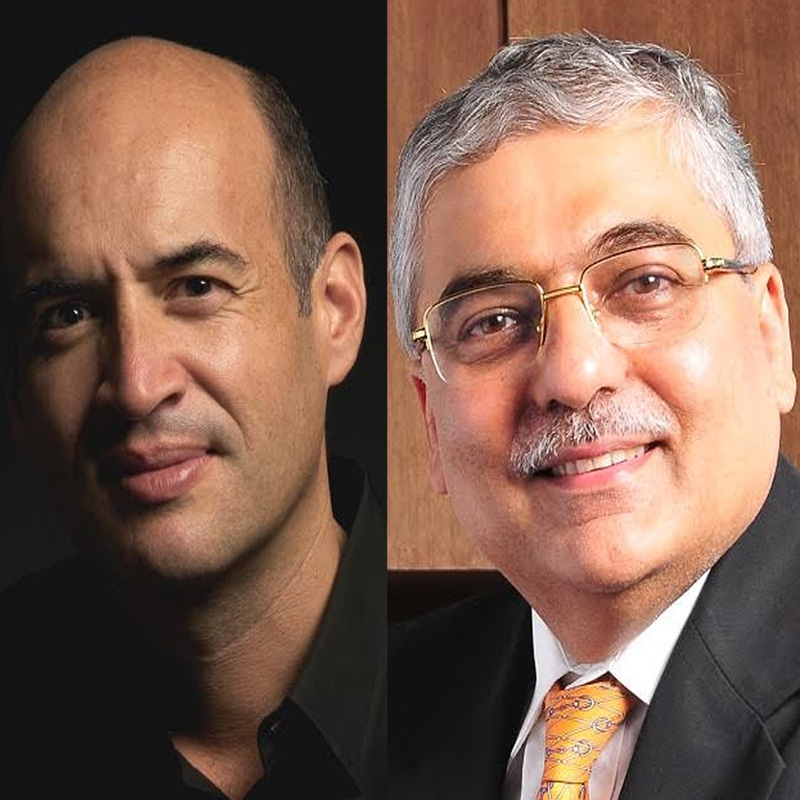
    MUMBAI: Asia Pacific Effie Awards, the region’s symbol of marketing effectiveness excellence, has named the first two heads of jury – Ashish Bhasin and Jean-Paul Burge.

    Ashish Bhasin is the chairman & CEO Dentsu Aegis Network South Asia and chairman Posterscope and MKTG – Asia Pacific. He is also a member of the Dentsu Aegis Network Asia Pacific Executive Board. A well-known personality in the Advertising & Media industry in Asia Pacific for the past 29 years, Ashish has built the Dentsu Aegis Network in India from a 50 member team to a 3000 member powerhouse.

    Prior to this, Ashish successfully led and set up several of Lintas India’s (IPG) businesses and also had the global role of Executive Vice President, Lowe Worldwide and Asia Regional Director for Integrated Marketing.

    His leadership and contributions are apparent from the multiple awards he has received, such as the Campaign Asia – South Asia Agency Head of the Year award 2016 and 2015 and MXM’s Media Person of the Year- 2016. As a veteran in the industry, Ashish has also served on global juries and trade bodies in India.

    Ashish shared “It gives me a great opportunity to see some of the best work around the region, across markets as well as to interact with some of the best minds in our business.”

    Jean-Paul Burge is the Chairman and CEO of BBDO Asia. Jean-Paul began his career at JWT London in 1998 and joined BBDO in 2004. Over the past seventeen years he has worked in London, Bangkok, Amsterdam, Hong Kong and Singapore.

    In 2007 he was appointed as the managing director of BBDO and Proximity Singapore, and was subsequently promoted to Chief Executive Officer in October 2008 and to President South East Asia in 2010. Jean-Paul has led BBDO to become the most awarded network for creativity and for effectiveness in the region, including the APAC Network of the Year in the Effie Global Index. Many of the BBDO Asia offices are also leaders in their respective markets, creating award-winning advertising and brand communications solutions for clients including HP, Exxon, FedEx, Guinness, Pepsi, Johnson & Johnson, DaimlerChrysler and Fonterra.

    “There is no part of our business that is going unchanged, more touch points, more data, less money and more scrutiny on all that can be scrutinised. What does however continue to separate success from failure is effectiveness. Creative work that is not effective is not creative and as we say at BBDO in the absence of great work nothing else matters,” Jean-Paul commented.

  • APAC Effie Awards appoints Bhasin & Burge as heads of jury

    APAC Effie Awards appoints Bhasin & Burge as heads of jury

    MUMBAI: Asia Pacific Effie Awards, the region’s symbol of marketing effectiveness excellence, has named the first two heads of jury – Ashish Bhasin and Jean-Paul Burge.

    Ashish Bhasin is the chairman & CEO Dentsu Aegis Network South Asia and chairman Posterscope and MKTG – Asia Pacific. He is also a member of the Dentsu Aegis Network Asia Pacific Executive Board. A well-known personality in the Advertising & Media industry in Asia Pacific for the past 29 years, Ashish has built the Dentsu Aegis Network in India from a 50 member team to a 3000 member powerhouse.

    Prior to this, Ashish successfully led and set up several of Lintas India’s (IPG) businesses and also had the global role of Executive Vice President, Lowe Worldwide and Asia Regional Director for Integrated Marketing.

    His leadership and contributions are apparent from the multiple awards he has received, such as the Campaign Asia – South Asia Agency Head of the Year award 2016 and 2015 and MXM’s Media Person of the Year- 2016. As a veteran in the industry, Ashish has also served on global juries and trade bodies in India.

    Ashish shared “It gives me a great opportunity to see some of the best work around the region, across markets as well as to interact with some of the best minds in our business.”

    Jean-Paul Burge is the Chairman and CEO of BBDO Asia. Jean-Paul began his career at JWT London in 1998 and joined BBDO in 2004. Over the past seventeen years he has worked in London, Bangkok, Amsterdam, Hong Kong and Singapore.

    In 2007 he was appointed as the managing director of BBDO and Proximity Singapore, and was subsequently promoted to Chief Executive Officer in October 2008 and to President South East Asia in 2010. Jean-Paul has led BBDO to become the most awarded network for creativity and for effectiveness in the region, including the APAC Network of the Year in the Effie Global Index. Many of the BBDO Asia offices are also leaders in their respective markets, creating award-winning advertising and brand communications solutions for clients including HP, Exxon, FedEx, Guinness, Pepsi, Johnson & Johnson, DaimlerChrysler and Fonterra.

    “There is no part of our business that is going unchanged, more touch points, more data, less money and more scrutiny on all that can be scrutinised. What does however continue to separate success from failure is effectiveness. Creative work that is not effective is not creative and as we say at BBDO in the absence of great work nothing else matters,” Jean-Paul commented.

  • Bhargava new DAN Performance Group CEO; Rubeena to lead iProspect

    Bhargava new DAN Performance Group CEO; Rubeena to lead iProspect

    MUMBAI: iProspect India, the digital agency from Dentsu Aegis Network, has appointed Rubeena Singh as its CEO effective this December, as its former CEO Vivek Bhargava is being elevated to a larger role of CEO of DAN Performance Group.

    Bhargava will head all the Digital Performance Agencies of Dentsu Aegis Media. In this new arrangement, Rubeena Singh will report into Vivek Bhargava.

    Prior to iProspect India, Rubeena was COO, Moneycontrol.com for over three years, wherein she spearheaded business strategy, marketing, sales, operations and P&L. In her earlier 12-year stint with Network18, she has held various senior positions across its print and TV properties including Forbes India, CNBC TV18, CNBC Awaaz, CNN News 18 and News18 India. Before joining Network 18, Rubeena spent four years at Star TV India, where she helped build recognition for Star News in the highly cluttered Hindi news space.

    Bhargava said, “Rubeena’s vast experience in all three media formats – broadcast, print and digital will give iProspect India a competitive advantage as the performance industry makes this transition. Moreover, having Rubeena lead iProspect India will allow me to launch the other performance brands of Dentsu Aegis Media into India.”

    Singh said, “To me, the macro and micro trends of India becoming a truly digitally interconnected nation of over a billion people are now converging. This will have huge ramifications for businesses and how they connect with their customers. Having spent time in both print as well as TV media, I think the shift in allocation of media spends from traditional to digital will happen faster than thought before.”

    “iProspect India will be in pole position to emerge as a trusted advisor to its clients, helping them navigate these tumultuous times and guide them on maximizing returns on their marketing and media spends,” she added