Tag: Dentsu Aegis Network

  • Sohail Khan appointed Columbus India’s business head – West

    Sohail Khan appointed Columbus India’s business head – West

    MUMBAI: Columbus India, the digital agency of Dentsu Aegis Network, has appointed Sohail Khan Qadri as business head – West. 

    Khan joins the agency to lead Columbus India’s digital agency on record (AOR) business in western India. He will report to Nitin Sabharwal, chief business officer, Columbus India.

    Khan has 18 years of experience in digital communication, digital AOR, content marketing solutions, social media optimisation and marketing, search engine marketing, digital media planning and buying, mobile media, and technology and start-ups. 

    Khan has worked with vMobo Mobile, DGM India, R K Swamy BBDO, Tribal DDB India, Lintas and Interactive Realities. He has worked across businesses into telecom, consumer electronics, retail, auto, FMCG, BFSI, sports, healthcare, public policy and governance. His last stint was at iRealities where he was appointed as business director. 

    In his current role, Khan will focus on building the digital AOR business for Columbus India. As business head for western India, he will be actively involved in crafting a roadmap for the growth of the digital AOR business across key categories such as BFSI, e-commerce, brand commerce, education and FMCG.

    Commenting on his assignment, Khan said, “The digital consumer is evolving, and so are the channels to reach them online. Traditional AOR business has been more focused on being campaign driven with digital coming at the far end of the planning process, largely implementing the strategies driven by a much larger mainline agenda. We are seeing that often the digital strategy lacks cohesion between key elements such as business objective, communication objective, campaign objective, channels of execution, consumer experience, content, technology and brand performance. Columbus is in a unique position to stitch all these pieces together to offer brands a digital AOR that blends the elements of communication, content, creative, media, social, search, performance and finally sales through a cohesively designed and executed digital strategy”

    Sabharwal added, “We have set up Columbus to continuously adapt and adopt the latest digital trends and practices and give a holistic and seamless solution to our clients. With Sohail joining us, we are sure of pushing the envelope even further with much deeper insights and solutions to deliver against the client’s objectives.”

  • Dentsu Webchutney becomes digital, mobile specialist at Goafest 2018

    Dentsu Webchutney becomes digital, mobile specialist at Goafest 2018

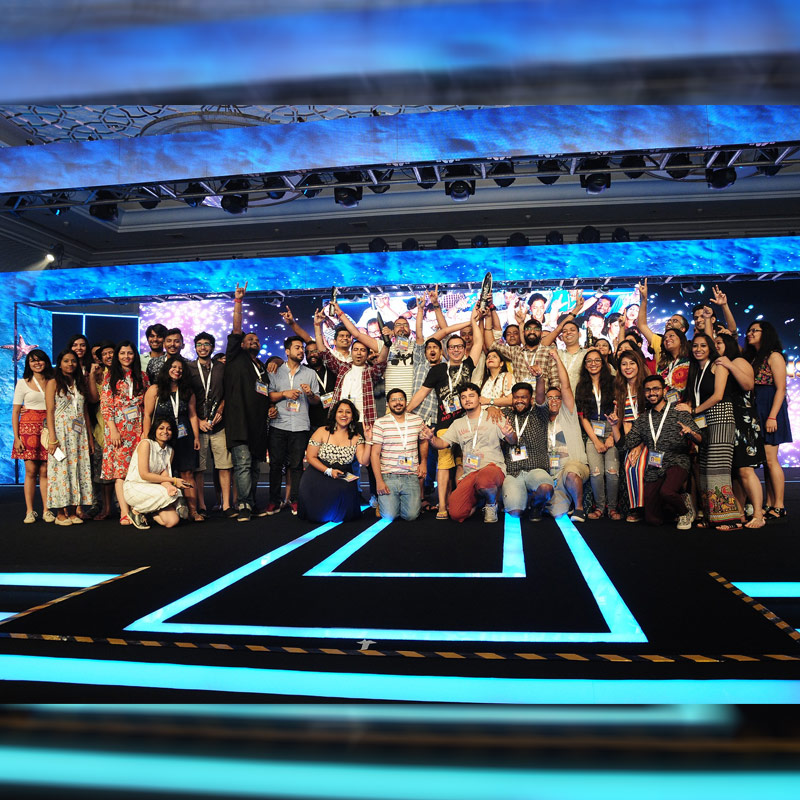
    MUMBAI: With 23 metals in its kitty, Dentsu Webchutney, the digital agency from Dentsu Aegis Network (DAN), was named the ‘Digital and Mobile Specialist of the Year’ at the Abby Awards at Goafest 2018. 

    Isobar, meanwhile, brought home three awards while WATConsult won one. With wins across an entire gamut of categories—from direct and PR to digital and mobile —DAN India showed itself to be a force to be reckoned with.

    Overall, DAN India won a significant tally of metals as a group at the Abbys at the Goafest this year. With four gold, 10 silver and 13 bronze, DAN has brought home 27 metals, demonstrating its prowess that surely matches up to the group’s business growth momentum.

    DAN South Asia chairman and CEO Ashish Bhasin says, “Goafest 2018 was bigger and better in all aspects. The whole scale and quality presentation-whether that be the stage, the screen, the ambience of the event underwent a sea change and was one notch higher. This year, the quality of the entries was better too and it is overwhelming to witness such a massive win for our digital agencies on such a grand industry platform. My special congratulations to Sidharth Rao and the entire Dentsu Webchutney team for making us so proud.”

    Agency

    Gold

    Silver

    Bronze

    Total

    Dentsu Webchutney

    4

    9

    10

    23

    Isobar


    1

    2

    3

    WATConsult


    1

    1


  • Dentsu Aegis Network launches video planning & insight tool

    Dentsu Aegis Network launches video planning & insight tool

    MUMBAI: The data sciences division of Dentsu Aegis Network (DAN) India has announced the launch of DAN Prism, a unique video planning and insights tool that provides a single audience view across television and digital.

    DAN Prism overlays the consumption pattern of the digital consumers on Facebook, YouTube and Programmatic Video with TV viewership measurement company Broadcast Audience Research Council to provide rich audience insights. These insights are then used for planning and activation through a single reach curve across all media platforms in a matter of minutes using a series of Artificial Intelligence (AI) algorithms.

    Today India boasts of 800+ TV channels watched by 780 million Indians. There are nearly 100 million subscribers to over the top (OTT) platforms and nearly 260 million online video watchers in the country. Evidently, multi-screening has become a part of the natural video consumption habit of the average Indian

    Dentsu Aegis Network South Asia chief data officer Gautam Mehra says, “In the ever-changing media landscape, we are experiencing a golden age of video consumption in India with fantastic content and platforms. The proliferation of smart devices is changing the way consumers consume content. One of Dentsu Aegis’ core objectives today is to deliver a proprietary, audience-first approach to video planning that maximises client investment across TV and digital video. The idea here is always to harness the true power of data. DAN Prism is just one more step in that direction.”

    The tool will be used for all DAN India clients. The tool is a collaboration across the TV and digital brands under the network’s umbrella in India.

    Carat India CEO Rajni Menon adds, “The TV viewing landscape of the country is swiftly changing owing to the mushrooming of a large number of OTT players, better connectivity and increased smart-phone penetration. As a country, we are now spending a lot more time watching video content. A large part of this is done on the mobile and on tablets. DAN Prism serves to be a powerful tool that reflects people’s behaviours today, enabled by convergence.”
     

  • Isobar launches commerce practice in India

    Isobar launches commerce practice in India

    MUMBAI: Isobar, part of Dentsu Aegis Network, has launched a commerce practice in India, following the launch of the global counterpart.

    The expansion of this department will lead to a commerce centre of excellence, delivering end to end experiences for clients, through integrated platforms and solutions that are informed by local insight. This addresses a growing demand for commerce solutions from clients in India, where India’s e-commerce market value is projected to grow by 30 per cent annually to a total of $200 billion by 2026 according to a Morgan Stanley report.

    Speaking on the launch, Isobar CEO Asia Pacific Jane Lin-Baden says, “Commerce is no longer about optimising the last mile, it’s now the space where people interact and experience brands. By establishing Isobar Commerce in India, Isobar can offer clients higher commercial value and customer satisfaction by leveraging our customer experience design, data intelligence, and technical commerce solutions.”

    Isobar India managing director Shamsuddin Jasani adds, “E-commerce in India has exploded. By launching Isobar commerce practice in India, we will not only be able to offer the best development capabilities but also to partner with our clients on their entire e-commerce journey and delivering solutions across the board powered by our offering across Isobar and Fractal Ink.”

    This will bolster Isobar India’s strategic capability and scale to deliver brand commerce solutions, bringing brand experience and commerce closer together. This integrated commerce offering in India will be delivered through its 150 e-commerce specialists, in addition to 450 people from design specialists (Fractal Ink-Linked by Isobar) and innovative marketing and media specialists (Isobar India).

    The Indian Isobar commerce division will join the 1,000+ commerce specialists across Isobar’s network in Americas, EMEA and Asia-Pacific. The global practice includes all commerce centres of excellence, all e-commerce, m-commerce, retail commerce experts and commerce off-shore delivery centres within the Isobar network. Isobar global commerce has strong technology credentials across all major platforms and is aplatinum Salesforce partner. Isobar is also a global alliance partner with Adobe, a SAP Hybris partner and SAP Hybris value added reseller (VAR), Microsoft managed partner, an Oracle business partner, an Apple strategicpartner, and is the Asia-Pacific leader for Magento.

    Isobar commerce practice globally combines strategic, technology, user experience (UX) and operational support to deliver rapid growth for global brands and retailers and has delivered transformational commerce work for leading brands including include Asda, Clarins, Ecco, Lacoste, Nestle, Samsonite and Pandora and more.  

    The global practice delivers commerce experiences using platforms and solutions with the biggest technology players, including Salesforce, Adobe, SAP Hybris and Magento – combining strategic, technology and operational support to multi-market and regional clients. It also covers strategy and brand commerce in third-party market-places, such as Amazon and Tmall. The end-to-end offering includes commerce strategy and consulting, customer experience design, data and technology implementation and platform management to ensure rapid growth for Isobar’s clients.


  • Has advertising finally begun to embrace AI?

    Has advertising finally begun to embrace AI?

    MUMBAI: Artificial intelligence (AI), a tool that uses logic to mimic the human brain, has been the buzzword in the advertising industry for quite some time now. 

    AI was founded as an academic discipline in the year 1956, and in the years since, the technology has experienced several waves of optimism, followed by disappointment and the loss of funding (known as an AI winter), thereafter by new approaches and success.

    People often tend to use the term AI interchangeably with machine learning (ML), but they are completely different tools. While AI is the broad concept of teaching machines with data to do things in an efficient way, ML is the technique of using algorithms to process data, learn from insights and make predictions that train AI. As Wunderman AI’s global leader Robbee Minicola rightly says, “You can have machine learning without AI, but you can’t have AI without machine learning.”

    With the implementation of AI in advertising and marketing, brands can discover the price at which networks are willing to pay for an impression and identify the optimum times of data to serve an ad for target consumers.

    public://IKEA.jpg

    AI’s potential for improving campaign effectiveness is only just being unearthed with a limited understanding of impact. AI-driven elements like image and voice recognition on smartphones, algorithm-based viewing suggestions for Netflix and Google’s real language analysis in search are now gaining mainstream status. It is believed that AI will soon become indispensable in advertising. 

    The concept of ‘technological singularity’, in which machines become better at developing themselves, is a reality but human intervention will always be required. Isobar executive vice president Gopa Kumar doesn’t believe in giving everything to automation and AI as it is an indispensable part of the future media ecosystem.

    According to Adobe’s 2018 Digital Trends report, top-performing companies globally are more than twice as likely to be using AI for marketing (28 per cent vs 12 per cent). The report also found that less than one in five global respondents said their companies are pushing forward with AI and nearly half of respondents said their organisation has inconsistent integration between technologies.

    Although advanced and matured markets like the US, UK, China and Japan have been early adopters of the technology, India is catching up at a fast pace because of its risk-taking ability. Programmatic platforms and advertising are the first kind of AI intervention in advertising and is increasingly becoming more and more pervasive. 

    It is still early days for AI in India as compared to the western world in understanding and implanting these technologies. Havas Media Group India MD Mohit Joshi believes that the adoption of technologies is already happening, however, reaching the US level of adoption will require the clients to be equally convinced and more importantly give them some ‘use case’ success stories. 

    Programmatic advertising will contribute to more than 60 per cent of advertising in the next two years in India which is the currently world average.

    Isobar India EVP Gopa Kumar thinks that AI in India is still at a very nascent stage and in media it is just being initiated. He adds that though it will take a while to be the prime choice, but once it does, its adoption will be widespread and then the usage of AI in advertising will be across platforms and mediums. 

    In India, sectors like BFSI, e-commerce and FMCG have been able to make the most of artificial intelligence, big data analysis and machine learning to have better connect with consumers and enhanced consumer experience. But there’s a lot to learn from the daddies like IKEA and Alibaba.

    public://alss.jpg

    Since AI is an expensive tool and hiring an agency for it is often expensive, advertisers today are looking at building their own in-house AI capacities. With benefits including improved consumer engagement through personalisation, leaner marketing operations and cost savings on ad serving, the return on investment (RoI) prospects are rather appealing for advertisers. What it does require is a heavy initial investment in hardware and software for data collection and processing and acquiring the right talent.

    Dentsu Aegis Network chief data officer Gautam Mehra admits that AI is not a magic sauce and it will not change the brand’s RoI overnight and clients (brands) need to understand their business challenges before they plan on investing in these technologies. “The primary challenge for any advertiser is how do you know which data to go after and how do you bring that data into your warehouse (cloud or physical) and maintain that data warehouse to give data insights. Brands need to trust data and have a data driven culture in the organisation,” he adds. 

    Not all advertisers may understand the technicality of AI and the automation of basic data processes and the implementation of integrated analytics. This is precisely where advertising agencies can help their clients, both as trusted advisers and execution partners.

    The lack of good media infrastructure is a barrier to better implementation of AI in India. Our challenge is how do we make AI actionable because our other mediums are not evolved enough and we don’t have programmatic OOH or digital OOH except at airports. Mehra asks how do we bring about a real time change in media when our media itself is not programmatic? While India’s radio is still terrestrial, a majority of set-top boxes for television are not trackable and, therefore, there is reliance on BARC data. 

    India is still a data-starved market and AI works only on data. Joshi concludes that the biggest challenge for India will be getting the right talent, as we need great data scientists and the best of them ignore the media space.

    While India is on its way to becoming AI-ready, some major players including Vodafone, Myntra, Flipkart, HSBC Bank and SBI Bank have started putting in the effort to adopt the technology.

    Also Read :

    The Glitch to leverage GroupM data to reach rural India

    2017 – The year of long-format ads

    How iProspect’s Vivek Bhargava foresaw a digital future two decades ago

    Talent retention is key, says Mindshare’s Prasanth Kumar

  • Digital industry celebrates Union Budget 2018

    Digital industry celebrates Union Budget 2018

    MUMBAI: The Union Budget for 2018 that was finally unveiled yesterday turned out to be a rather disappointing one for the industry at large but Digital India and digitisation got prime time attention. The budget focused on the middle class and rural population, guided by the mission to strengthen India’s agriculture, rural development, health, education, employment, MSME and infrastructure sectors.

    With a view to promote digitisation, the government is set to make the necessary investment in robotics, internet of things (IoT), artificial intelligence (AI), digital manufacturing and big data analysis with the NITI Aayog to establish a national programme to direct efforts in artificial intelligence. The government has committed itself to the development of technology along with concentrating on AI and its applications, a revolutionary move for the digital industry. The ministry has decided to double its Digital India budget to around Rs 3073 crore. 

    The Indian media industry seemed to have mix reactions about this year’s budget and while some were disappointed, many seemed cheerful about it and considered it to be a welcome budget. 

    public://apporva.jpg

    Like the last few years, 2018 Union Budget too saw a dry spell for the entertainment industry with no big announcements. However, the government’s Digital India push by proposing to set up 5 lakh WiFi hotspots in the rural areas will pave the way for greater consumption of entertainment and news related content. It will also provide a boost to regional content, which is already expected to grow multifold in the coming years. Overall I would say the biggest positive highlight of this year’s budget was focused on agriculture and healthcare. This initiative will definitely help the marginalised part of our country in the long run.

    Dharma Productions CEO Apoorva Mehta

    public://rahul puri.jpg

    It was an expected budget. I think that it was widely believed the government would focus on the rural economy and so it came to pass. There was not much expected for the media and entertainment industry and there was nothing specific announced. Corporate India would be slightly disappointed though as corporate taxation was not reduced except for small enterprises. Aviation and farming were the big winners.

    Mukta Arts managing director Rahul Puri

    public://Megha-TataCOO-BTVI-3.jpg

    Budget announcements signal a stronger ecosystem for media and broadcast industry. In continuation with my pre-budget expectations, I am happy that FM has kept his promise by reducing corporate tax rate to 25 per cent.

    BTVI COO Megha Tata

    public://anita.jpg

    While the budget largely focuses on the upliftment of agricultural sector, there is an equal focus on technology by introducing national programme in the area of AI & exploring ways for using the blockchain technology for digital transactions. The emphasis on sectors like healthcare, education & skill development is a good step by the govt. Reforms in the education sector encourage more & more private institutions to expand or modernise to give students a more global perspective as part of their learning process, which also helps in tackling brain drain. Overall, the budget seems like a typical socialist one, without much to take-away for the common-man.

    Havas Media Group CEO India and South Asia Anita Nayyar

    public://rajiv.jpg

    I’m glad to see that the budget for digital India has doubled and also the fact that AI and Blockchain technologies will be used by the government. But I’m disappointed that government is looking to put an end to cryptocurrencies. Globally cryptocurrencies is a phenomenon which points towards the future of currencies and maybe a more inclusive view was needed.

    WATConsult founder and CEO Rajiv Dingra 

    public://Ashish-Bhasin.jpg

    The budget has focused on the right areas, particularly the rural and agricultural sector, which is definitely going to spur rural demand in the coming months and years. The rural economy needed a boost. I also like the fact that the Finance Minister has focused on ease of living rather than just ease of doing business and has introduced healthcare benefits which will benefit nearly 50 crore Indians. It is a landmark step. The emphasis on digital, particularly higher-end digital areas like artificial intelligence and usage of blockchain shows that the government is committed to providing a further digital thrust. The steps being taken, like provision of free WiFi and other forms of internet to all parts of the country will be extremely beneficial in the long run for the digital sector. It will help agencies like ours who are partnering clients for digital transformation.

    The introduction of the long term capital gains tax on equities will soon be digested by the industry I’m sure, but in some ways, I see a missed opportunity because the simplification of GST processes for the services sector would have gone a long way to help the advertising industry. The advertising industry doesn’t mind paying the taxes but abhors non-productive, complex procedures including filing of hundreds of returns every year. Overall I think the right sectors have got the incentives and therefore it should be good for the country.  If it is good for the country, it will be good for the economy and once the economy grows, the advertising sector will benefit from it.

    Dentsu Aegis Network chairman and CEO South Asia Ashish Bhasin

    public://deepak lamba.jpg

    The ‘Digital India’ program has received a major boost with double the allocation of  Rs. 3073 Crore for the coming year. Budget 2018 has proposed the set-up of 5 lakh Wi-Fi hotspots in rural areas thereby providing broadband access to 5 crore rural citizens. Much to the delight of digital media players, this move will open extended avenues for them and give a strong push to regional and mainstream digital content in these markets. With extensive broadband penetration, affordable data prices and smartphones, the vision for digital India could well come to fruition in the coming years. Lastly, the estimated over 7% growth for the next fiscal creates a positive sentiment for India’s economic and financial ecosystem.

    Worldwide Media CEO Deepak Lamba  

    public://joy_0.jpg

    In the Union Budget 2018, there has been a significant allocation towards rural development. The proposal of setting up 5 lakh Wi-Fi hotspots in rural areas will give impetus to media penetration in Tier 3 and Tier 4 markets. Media players are increasingly looking at Tier 2, Tier 3 and Tier 4 markets since regional content has begun to drive media growth. So, the infrastructure push in these regions will accelerate media consumption and inadvertently help the advertisers and the advertising business on the whole. I would certainly say it is a good budget, and we will gradually witness the positive results unfold in the future.

    TV18 president- revenue & Forbes India CEO Joy Chakraborthy

    public://ashsisg shah.jpg

    Government’s focus on rural and agriculture development, digitisation and digital education is going be a big demand booster for our sector. The rural demand for FMCG, beverages, automobiles, education and financial products are going to increase, this would increase advertising budgets of our clients from FMCG, education, financial services sectors. Government’s focus on digitisation brings in lots of rich data for us to better targeting for our customers. This focus would make India data rich country and the targeting and conversions on digital marketing front would be much easier and more accurate.

    Vertoz fand CEO Ashish Shah

    public://vivek_1.jpg

    FM Jaitley’s budget this year focuses on investments to be placed in artificial intelligence, machine learning and the Internet of Things with the NITI Aayog establishing a national program to direct efforts in artificial intelligence. The government has committed itself to the development of technology along with concentrating on AI and its applications which is a revolutionary move for the digital industry. Initiatives on infrastructure growth and education expansion have been looked at from a digital perspective, which reflects the significance of the ‘Blackboard to digital board’ movement. Decisions benefiting rural citizens–such as 5 lakh WiFi spots, give it a further impetus. Another game changer mentioned in this budget was the government’s will to proactively explore the use of blockchain technology. The allocation of digital India has been doubled which indicates the government’s emphasis on digital, heralding a stronger digital economy. I believe this was a great budget for the digital ecosystem.

    DAN Performance Group CEO Vivek Bhargava

    public://sahil chopra.jpg

    The much-awaited announcement of Union Budget prompted a gust of anticipation & higher expectations. While the Finance Minister touts the Union Budget as primarily focused on the agricultural sector, it sure reeks of reforms beneficial for numerous other sectors as well.

    The government has always encouraged the digital sector to flourish & the budget rightfully justifies their farsighted approach. This year the allocation to Digital India Scheme has been doubled to Rs 3073 crore which is a worthwhile move for the industry as a whole. Not only that, with the onset of fast-paced technology and AI shaping the new segment of digital World, NITI Aayog will establish a national programme for it. This is a clap-worthy reform which will help organisations diversifying with AI to have a wider scope with vast awareness among everyone.  For a higher internet penetration, 5 Lakh Wi-Fi hotspots will be set up in rural areas, which again is beneficial for the rural dwellers. The need to eliminate cryptocurrencies which are funding illegitimate transactions was also mentioned. The government has proposed to revamp the system of sanctioning loans to SMEs. As per the budget reforms now the information will be linked with GSTN & will be fetched from the same. This comes across as a welcome move as not only will it streamline the process but will enable people to get accustomed to the digital ingress. Corporate companies with a turnover of up to Rs 250 crore will also be highly benefitted from the budget as the corporate tax has been further reduced to 25 per cent.

    As per my opinion, the Union Budget has surely set a benchmark & the year looks promising with excellent reforms leading to growth & development of the economy.”

    iCubesWire CEO and founder Sahil Chopra

    public://chetan.jpg

    This is an excellent budget from the digital perspective. As expected, the government has doubled its allocation to digital India initiative at Rs 3073 crore. This will grow the entire digital economy and the government has shown that this is going to be focus area. Its commitment to exploring blockchain and AI only ratifies its vision for digital India. The other game changer is enhancing rural regions with 5 lakh Wifi hotspots. This would lead to higher adoption, skills upgrade and rural citizens embracing digital quickly. This budget gives me hope that we are on our way to becoming a digital-led economy.

    Tonic Worldwide founder and CEO Chetan Asher

    Also Read :

    Industry holds bright outlook for budget 2018

    Union Budget 2018: Industry expects govt to favour consumption

    Is India ready for the impact of AI on marketing?

    A year after demonetisation: E-payment services emerged winners 

  • 2018 will be a year of video campaigns: WATConsult’s Rajiv Dhingra

    2018 will be a year of video campaigns: WATConsult’s Rajiv Dhingra

    MUMBAI: If you see an advertisement on a website or your app, you are a well defined consumer of digital advertising. Thet ads on the website you visit are primarily revenue source for internet companies.

    Digital advertising is no longer a joke. The emails were considered pointless and annoying and banner ads used to be laughed at but today, with smartphone penetration being higher than ever and decreasing low data costs, digital advertising needs to be done and done well as the market is highly saturated and consumer’s attention span is shorter than ever.

    Some twenty years ago, digital advertising was just a couple of banners placed cleverly on websites. They were considered super annoying, as if you happened to click on one of them intentionally or unintentionally, you would soon be bombarded with banners all over your website. Today, digital advertising has become extensive with different types of online ads being produced based on the website content and target audience. Online advertising is one of the fastest growing way to reach an audience which includes banner ads to social media networking, email marketing, site takeovers, online classified ads, Search Engine Optimisation (SEO) and even

    SPAM.

    With the accessibility of internet on smartphones and low data cost, companies are now spending millions of rupees trying to find a way to advertise on digital platforms without creating an unpleasant experience for the consumer.

    Digital advertising doesn’t come cheap but it is far more affordable for marketers than traditional advertising model. There are over hundreds of different digital advertising models available today and every ad we see on digital platforms today is paid by one of those models. The most popular method though are CPA (Cost Per Action), PPC (Pay Per Click) and CPM (Cost Per Mille).

    To get some insights on the changing face of digital industry in India, Indian Television Dot Com got talking to WATConsult founder and CEO Rajiv Dhingra who has seen and been a part of the digital revolution in India and recently completed 11 years in digital advertising business.

    The company which started off as a social media specialist in 2007 has expanded its reach and portfolio to become the most sought after full service digital agency in the country. WATConsult today specialises in digital marketing, social media marketing, search marketing, mobile marketing, digital analytics and digital video production.

    How has the digital ecosystem in India evolved along with WATConsult?

    When I look back to the industry’s growth in context of the past 11 years, there has been a tremendous change in the digital industry. Digital industry has become so large today in terms of advertising yet it is only 15 per cent of the overall market advertising and there is so much more growth opportunity left. While digital has been around for around 20 years, the industry has just started to become significant in terms of advertising efficiently on the platform.

    Since the market is highly competitive today, how does associating oneself with a bigger network help since WATConsult was also acquired by Dentsu Aegis Network back in 2015?

    It is the comfort of being associated with a large network that helps in getting global processes in line. That is the core level where a global network helps. Beyond that, every agency is unique and every agency has to work hard to earn its bread. I don’t think you can credit any agency or network all the accolades they achieve and if that was the case, all agencies under a network would work equally efficiently which is not the case.

    How is the Indian digital ecosystem different from the rest of the world as it sure does have its own challenges and uniqueness?

    India is still a very small market for advertising and within the small market, it has an even smaller advertising pie for digital. But what is similar is that Indian marketers are now open to new ways of leveraging digital. Execution and creative wise digital is not a very backward market as we see some amazing work happening in digital which is globally comparable as well.

    and the challenges…?

    In India, we need to up our ante when it comes to our creative and overall work level. Only that will help in bringing more clients and get them to spend more money. Digital still needs to simplify in our country as to what it is that an agency or marketer is trying to tell and achieve. Today, there are too many people selling digital in 100 different ways. We need to focus on business and brand objectives rather than focusing on 100 different t metrics that digital brings.

    How much do you project the ad spends to increase by 2020?

    There are no doubts about it that ad spends will definitely increase on digital. Ad spends will increase by 32 per cent CAGR y-o-y  and by 2020 it is going to be 24 per cent of the market which is almost 1/4 of the advertising market.

    How soon will the shift happen where digital becomes a dominant medium over television?

    I believe for digital to become dominant over television medium will take another 5-6 years in my mind and it is not going to happen by 2020. Although it is definitely going to happen by 2022-23 and that is when it will come very close to the advertising share of television.

    We have been hearing a lot about AI, Big data and Machine Leaning and the buzzwords lately. Is the Indian media ready and understands the concepts or we still have a long way to go?

    I don’t see these as buzzwords or jargons. Social media 10 years ago was considered a jargon and a buzzword but today it is an accepted reality. 10 years from today, AI, big data and machine learning will become accepted reality. Although they may not be called what they are called today and will be referred to as something else entirely. For instance, when social media was launched, it was called, Web 2.0. Similarly, 10 years from now, these new technologies will have a huge impact not only on digital adverting but on businesses in general.

    But why are marketers still reluctant on investing in these newer technologies?

    That is imply because marketers were also reluctant about social media 10 years ago. Marketers are always reluctant because they don’t want to spend their money on or betting on future technology which may or may not happen. They want results of today and hence they will always stay reluctant. Technology moves faster than marketing moves and users move even faster as far as technology adoption is concerned. Globally marketers have got there and back in India, some mature marketers have started experimenting with the technologies. Some of the large FMCG companies in India are looking to create their own data repository data lake to make sure they have detailed data analytics. One of our own automobile client has insisted that we get a data scientist on board for their brand. These are early but significant times of how data, AI and machine learning are going to be big part of digital advertising as we go forward.

    Do you believe influencer marketing is here to stay was that just a passing phase in 2017?

    Influencer marketing is becoming more and more of a professional industry and it is going to only grow. Three to four years from now, marketers will end up spending so much more on this medium and as internet grows and the frequency grows, word of mouth is going to be even more important than paid media as it has its own challenges in terms of cost and credibility.

    Facebook recently announced that it will filter the newsfeed by removing marketing ads to ensure better user experience. Will this hamper businesses in any way?

    Facebook has always focussed on user experience. I am sure they will find other ways to make sure marketers who spend money do reach their audiences. But yes, marketers who would like to use Facebook as a free tool will be hit because clearly Facebook doesn’t think that free advertising should be allowed on Facebook itself.

    What would be the game-changer in digital adverting this year ? How does 2018 look to you?

    Video has been a huge growth factor in 2017 and it is going to continue at a break next speed in 2018. With data consumption going through the roof, you wont see a digital campaign that does not have a video. 2018 looks like a year which has a lot of opportunities and it could be the best year for digital industry ever with so many interesting things happening in the industry.

    ALSO READ:

    How iProspect’s Vivek Bhargava foresaw a digital future two decades ago

    2017 – The year of long-format ads

    Going from clicks to bricks

    Martin Sorrell on how WPP is combating ad world slowdown

    BFSI’s changing communication in the digital era  

  • Is India ready for the impact of AI on marketing?

    Is India ready for the impact of AI on marketing?

    MUMBAI: From self-driving cars to voice assistants Siri and Alexa, artificial intelligence (AI) is expeditiously becoming popular. While one may think of AI only as intelligent robots or technology, it encompasses everything from Google’s search algorithm to e-commerce to geo-target and understanding consumer behaviour. 

    AI has taken a hold of the advertising and marketing industry too along with big data, analytics, machine learning (ML), and chatbots. Not one advertising or marketing conference goes by without one or more sessions on the subject. 

    It was in 2017 that marketers realised the leverage AI and ML provided. But the reality is far from the hype as marketers in India and around the world are still unacquainted with the technology and the benefit it can add to business.

    Today, companies are gathering thousands of records from each consumer touch point. They have the entire database of what their consumer is searching for, from which device and how long before they actually purchase it. Companies can also trace the consumer’s likes and dislikes by scrutinising their customer profile. This large set of data about consumer behaviour, which is also known as big data, provides definite information to brands that can help their business. This is where AI comes into the picture.

    public://kirin.jpg

    AI in marketing terms consists of machine learning, deep learning and natural language processing applications. But the hard reality is that many of the tools that are being marketed as AI are still in their primitive form and there is a long way before companies can actually begin to use AI to yield better results. Currently, a lot of brands feel the urgency to adopt the modern and new technologies to keep up with the changing marketing dynamics, but AI, just like any other technical tool, is not a magic solution and requires time, resources and money. 

    Though the name sounds fancy, it may not be essential for every brand to jump on the bandwagon. Agencies, being industry experts, first need to familiarise themselves with how best to use AI for their client before even discussing client readiness of AI in marketing strategy. Setting the record straight, The Glitch managing partner and business head Kabir Kochhar says that the first step to getting clients interested in using these tools by showing them the money. “Showing improved return on investment will get clients to take notice and giving them deeper insights into their customers will allow and inform them on their future product roadmaps,” he says. 

    public://goolge.jpg

    For instance, predictive analytics allows online players like Amazon, Netflix, Hotstar, Myntra, Flipkart and YouTube among others to surface and finesse recommendations. Putting together information from diverse datasets is a common use of AI. Even the most advanced tech firms in Silicon Valley are just beginning to unearth its possibilities. Dentsu Aegis Network chief data officer Gautam Mehra suggests that if media companies do not catch up, it’s definitely going to affect them as we do see the local OTT players and even telecoms such as Jio building significant data practices.

    In spite of all the automation and move to programmatic, there are large parts of media planning and strategy that are still being done laboriously by human intervention. While stating that currently only some really sharp media planners will come up with half a dozen hypotheses and run tests that either prove or disprove the same, Indigo Consulting national head of strategy Devang Raiyani believes that going forward, a few startups will lead this and big media players will wait till some of them acquire critical mass and acquire them. 

    The revolution of AI in marketing has been propelled by the advent of affordable and advanced data analytics tools, extensive datasets and a growing acceptance of the data-driven approach to marketing decision making by marketers. With the advent of cloud computing, it’s very easy to scale without having to make large upfront investments. Most of the cost to use an AI system is rarely the system itself, but in ensuring you have the right data in the right format prepared for the AI engine. While stating that certain AI systems require some level of initial investment in technology, Mehra points out that these, however, sustain themselves within a year and hence it’s not really a CapEx investment in that sense. And then there are AI systems that are absolutely turn-key and pay-per-use.

    It is a herculean task for agencies to convince clients unaware of AI to use the technology. In such cases, Raiyani opines that the best way is to prove the use-cases at the fringes, create a few proof of concepts before betting big as the challenge with most Indian companies is that data available is not very clean and highly fragmented across touch-points. He believes that it will be the GAFAs (Google – Apple – Facebook – Amazon) of the world who will lead this change.

    Kochhar thinks that the grasp of terms such as AI and big data are theoretical and in practice, we’re just scratching the surface on how AI can transform industries. “For now, agencies need to think of it as a tool of inspiration for the copywriter as it will essentially eliminate a bunch of A/B testing we currently do to see the effectiveness of communication,” he says.

    AI in creative advertising has been touted as a replacement to human copy although there’s still a long way to go for that since, in advertising, context is everything and the nuances of language still need to be mastered. AI will help throw up more insights based on user interaction with ads and act as a guide showcasing the types of communication routes that can have a higher impact on the end user. 

    Also Read :

    FabIndia sets aside 40% on digital advertising

    Vodafone India modernises for IoT-ready future

    How iProspect’s Vivek Bhargava foresaw a digital future two decades ago

    Talent retention is key, says Mindshare’s Prasanth Kumar

  • Duroflex launches sleep marathon with Milind Soman

    Duroflex launches sleep marathon with Milind Soman

    MUMBAI: We are living in the time of the gig culture where staying up all night to meet project deadlines is celebrated. However, long term effects of lack of sleep are hardly discussed. Keeping this in mind, Happy mcgarrybowen, the creative agency from Dentsu Aegis Network, has conceptualised the #7HourMarathon campaign for Duroflex.

    The campaign launched when Milind Soman rolled out a tweet saying how he planned on doing a 7-hour-marathon every day. But little did his followers know, the marathon he was talking about was seven hours of continuous sleep. This digital stunt was initiated to bring attention to the cycle of disrupted sleep that has taken over this generation.

    Seeing the response, a subsequent video was released a day later where Soman clarified the confusion on #7HourMarathon and discussed the importance of good sleeping habits.

    The campaign was conceptualised by Happy mcgarrybowen and executed in collaboration with Isobar, SKREEM, and Greenroom.

    Duroflex director of marketing Mathew Joseph says, “As a company, we have a strong lineage in this industry and understand the importance of sleep. We really wanted to raise awareness around the importance of sleep. In Milind Soman, we found a credible voice to drive this message across. The #7HourMaratahon initiative was a great conversation starter to get people to make a very important lifestyle change. We believe in energising India.”

    Most of the audience they spoke to consumed about 2.5-3 hours of social media on an average every day, making it evident that social media must be the activation area.

    While talking about looming sleep crisis and the need to commit to seven hours of sleep, Soman mentions, “Having been involved in sports all my life, I understand the importance of sleep. Sleep is essential for the body and mind and restful sleep is one of the foundations of good health. Recharging and rejuvenating body and mind sufficiently every night is important for better quality of life. My own health resolution this year has been to sleep more and better.”

    The tweet got picked up and shared by multiple media channels generating a range of reactions from awe to confusion. While some applauded Soman on pushing his limits, others expressed blatant confusion deeming it an unachievable task. This bag of mixed reactions instantly blew up the campaign making it trend at fifth position on Twitter nationally.

  • Digital will be core of ad budgets by 2020: DAN report

    Digital will be core of ad budgets by 2020: DAN report

    MUMBAI: The increasing penetration of digital media in India is creating huge opportunities for marketers to reach out to untapped audiences in newer ways than before. Marketers are getting innovative with the way they choose to advertise to their audience.

    As of 2017, the Indian ad industry stands at Rs 55960 crore and is estimated to grow with a CAGR of 11 per cent till 2020 to touch Rs 77623 crore. This growth will be driven by the smart phone revolution and the subsequent spends on digital advertising, according to the second edition of media and digital marketing communications company Dentsu Aegis Network’s (DAN) digital report that was launched yesterday.

    India is on the brink of transitioning into a digital economy with a big push from the government and the public private partnership model. The Indian government’s concerted endeavours to boost digitisation coupled with an array of economic reforms and policies have infused higher momentum into India’s participation in a digital economy. The telecom sector has contributed in equal measure — lower data rates, improved connectivity have put India on a path to a mobile revolution of sorts.

    The Telecom Regulatory Authority of India (TRAI) estimates the internet population in the country to hit 738 million by 2020. Currently India’s internet subscriber count stands at around 430 million. As per TRAI’s performance indicator report for July-September 2017, a total of 129 million rural subscribers and 300 million urban subscribers are connected via internet or broadband services. The tele-density in urban areas is 74 per cent whereas it is around 14 per cent in rural India.

    Ad spends have seen double digit growth rates in e-commerce, BFSI, automotive and telecom in 2017. Ad spends have seen the highest increase in e-commerce with 13 per cent and BFSI at 11 per cent. Television takes the largest share of media spends at 40 per cent (Rs 22526 crore) followed by print at 34 per cent (Rs 18981 crore) and digital media at 15 per cent (Rs 8202 crore).

    While spends on television will grow with a CAGR of eight per cent till 2020, its contribution to the advertising market has been on a decline. The digital ad industry is estimated to grow with a CAGR of 32 per cent by 2020 as advertisers are now adopting digital media as a branding medium, not merely a performance medium. The highest spender on digital is e-commerce followed by telecom and BFSI sector. The spends on digital video is expected to see the highest growth rate followed by display and social media. OTT and an engaging mobile experience will also help in driving the digital growth.

    DAN chairman and CEO South Asia Ashish Bhasin believes that digital is no longer a medium but a way of doing business. It is how consumers interact with brands. “The digital transformation is affecting every business and agencies and marketers who don’t recognise this will be left behind. Digital is a behavioural change taking place with the consumers, not just a way of building a brand. This is a critical difference many don’t understand,” he says.

    Brands are slowly shifting their marketing budgets to digital platforms as the digital medium becomes all pervasive and consumers increase time spent on this medium. Even though digital ad platforms have been instrumental in direct sales, so far they do not match up to traditional media when it comes to brand building. Brand building is largely happening through mature ad mediums such as TV rather than digital.

    Marketers are moving from purely mass-targeting platforms to a mix of traditional
    and digital platforms. This makes use of the relative advantages of both media for an optimal marketing strategy. Traditional media provides a better reach in comparison to digital media while the latter is unparalleled when it comes to measurability. When it comes to performance marketing, digital media has evolved as a powerful platform. The explosive growth of internet-enabled businesses such as e-commerce, digital wallets, etc., has also caused a shift of ad money towards this medium as businesses targeting consumers inclined to online transactions rely on digital ad platforms. Meanwhile, the smaller brands also prefer to make investments on digital platforms as compared to bigger brands it provides better return on investment (RoI).

    Automotive sector has had one of the highest growth in ad spends last year and is expected to spend a large majority of its ad budget on traditional media. Within digital, it distributes the budget across all ad formats. Growth in ad spends for e-commerce has been the highest and it spends the highest proportion of marketing budget on digital media and mostly on search and social media. Additionally, telecom also spends a high amount of its marketing budget on digital media but mostly on media and video.

    Marketing has been an ever-evolving field. It’s normally exposed to so many new technologies and is an early adopter for most of them. This happens because the consumer is nearly always a step ahead and the competition is stiff. Businesses today have to acquire and retain consumers extremely efficiently in the marketing process. There is a limit to how many line items a digital marketer can create and manage effectively at a human level. No matter how many segments our planners create, no matter how finely we slice and dice the data, it’s extremely difficult to connect all the dots. Here is where machines come in helpful.

    But the digital advertising industry is faced by several challenges like slow pace of digital transformation, lack of unified metric system, ROI on programmatic, ad frauds and the growing use of ad blocking softwares.

    Having said that, the future of digital advertising looks bright and optimistic with the rise in video content, engaging mobile experience, voice-based interaction, data science and machine learning and transformation in payment mechanism.