Tag: Dentsu Aegis Network

  • Taproot Dentsu’s campaign for Network18 CricketNext celebrates opinionated fans

    Taproot Dentsu’s campaign for Network18 CricketNext celebrates opinionated fans

    MUMBAI:  Taproot Dentsu, the creative agency from Dentsu Aegis Network, has rolled out a new campaign for Network 18’s CricketNext app. The app has standard features like live score updates and also acts as a forum for fans voice their opinion and post video comments.

    The campaign aims to celebrate the opinionated fans through two films starring former Indian cricketer, Anil Kumble.

    Speaking about the campaign, Taproot Dentsu creative director Neeraj Kanitkar said, “The all-new CricketNext app is a homage to the ultimate cricket fan who is always ready with an opinion but has nowhere to voice it. This app is a platform where this fan’s every opinion on team selection, on-field strategies etc. is not only heard but welcomed. The TVCs are a dramatic representation of this, with Anil Kumble literally breaking the fourth wall and acknowledging the ultimate fan’s opinion.”

    Network18 group brand advisor Rahul Kansal noted, “Cricket Next is a next level app for the next level fan. Beyond just giving live scores and basic commentary, it invites passionate cricket fans to offer their opinions and share their insights on the game. The film tries to dramatise this promise; that it's an app where fans rule. 

  • iProspect India strengthens creative team with two new hires

    iProspect India strengthens creative team with two new hires

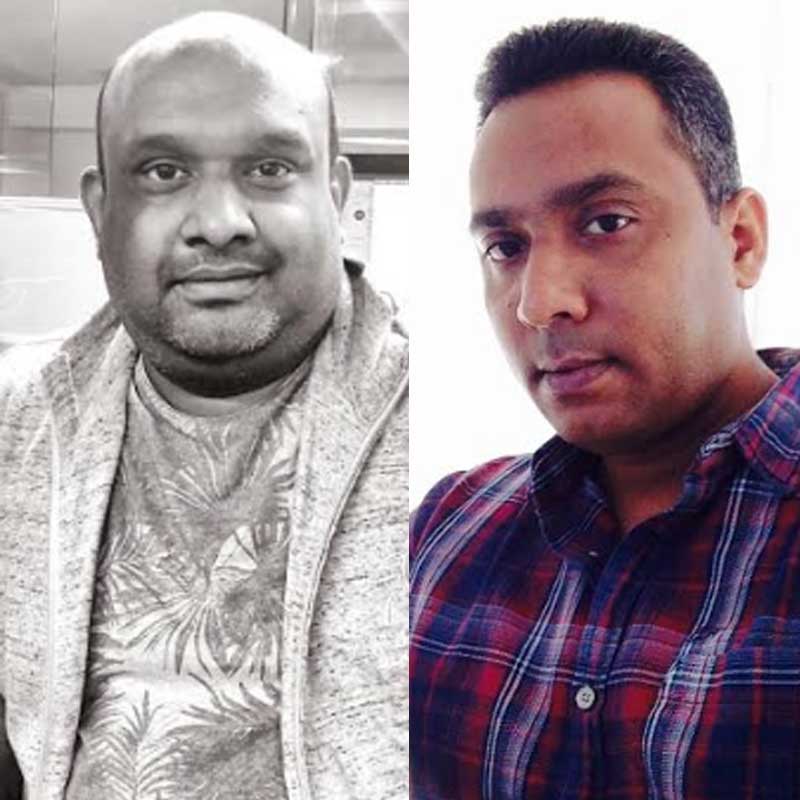
    MUMBAI: iProspect India, the digital performance agency from Dentsu Aegis Network has announced two new additions to its creative team; Bobby Thomas and Dhanesh MS, both of whom will join as creative directors.

    Based out of Bangalore, Bobby and Dhanesh will report to iProspect India VP—South Krishna Kumar Revanur.

    Bobby, who has worked with agencies such as Ogilvy and McCann Worldgroup, has over 13 years of experience in advertising. He has worked across a variety of brands including TVS, BharatBenz, Suzuki, Britannia, ITC, Indiamart, Tata Teleservices, Myntra, Jabong, Infosys, Lenovo, IBM, and Ola amongst others.

    On joining iProspect India as creative director—south, Bobby Thomas said, “iProspect is digitally evolved and it caters to market leaders in the digital space. My stint here will help me further enhance my talent in digital as I foresee a great deal of opportunities coming my way.”

    With a career spanning over 14 years, Dhanesh started his career with FCB Ulka, Cochin. He has worked with Ogilvy, Grey Worldwide, RK Swamy BBDO, Star,k and Method Advertising.

    On joining iProspect India, Dhanesh MS, creative director – south said, “The digital marketing world has evolved to a point where brands have realised that optimising customer experiences in a manner that is relevant to them with an unwavering focus on ROI is probably the only way to succeed in today’s overcrowded marketplace. I am excited to be a part of iProspect India because as an organisation, we too practice this mantra to stay ahead of the curve.”

    Commenting on the new appointments, iProspect India CEO Rubeena Singh said, “At iProspect, we are focused on building experiences through data and insights, optimised on performance. Dhanesh and Bobby will further drive iProspect’s capabilities of ‘data-driven creative’ as we want to give our clients a holistic solution.”

  • Digital suffers due to lack of common metric system: Ashish Bhasin

    Digital suffers due to lack of common metric system: Ashish Bhasin

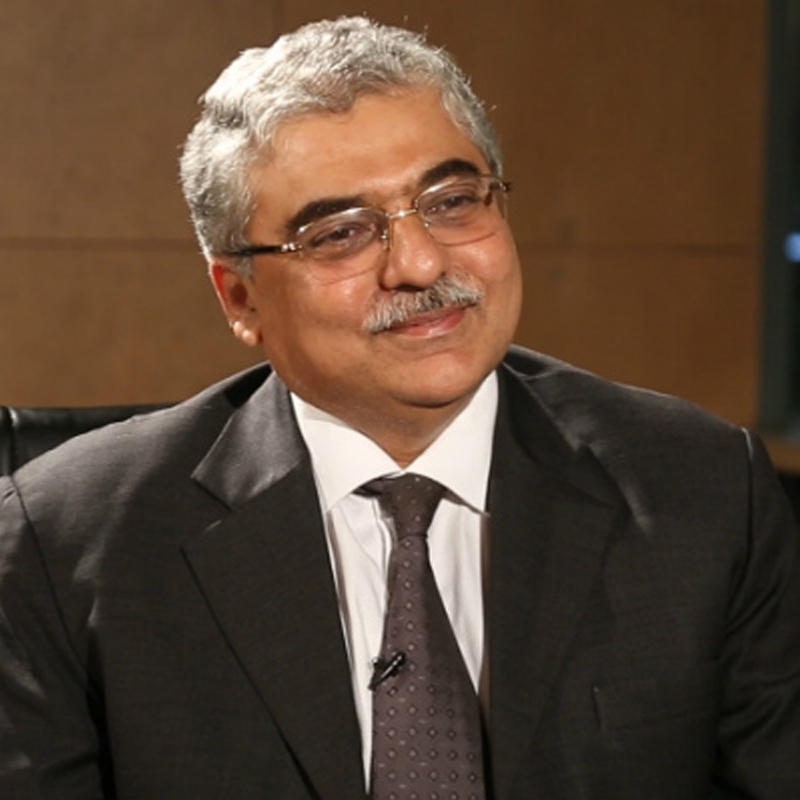
    MUMBAI: Dentsu Aegis Network, one of the biggest marketing agencies in India, released the third edition of its annual Digital Report recently predicting a wholesome 31.96 per cent CAGR growth of digital advertising in India. An exhausting and thoroughly researched report, this initiative by DAN is probably the singular attempt being made by any agency in India. Therefore, it was definitely a proud moment for Ashish Bhasin, the chairman and chief executive officer for DAN South Asia. In an exclusive conversation with Indiantelevision.com, Bhasin reveals how working on this report serves the larger goal of maintaining a leading position in the market and how other marketers can learn from the insights revealed.

    Talking about the launch, Ashish Bhasin proudly says, "We are very excited and very happy with the way the whole report has come out. What's very clear to us at DAN is that there is no business that is not going to be affected by digital. And as leaders of digital communication and advertising in India, we see it as our responsibility to make sure that authentic research on that is available, which, unfortunately, has not been revealed in India so far."

    Bhasin is of the view that creating such reports serve the dual purpose of driving the cumulative growth of the digital ecosphere as well as preparing the team within the agency for opportunities and challenges forward. He notes, "We forecast the trends and lead the markets towards those trends. Now, that we know what the market is thinking and what our clients are aspiring, we have already started building capabilities in those areas which other agencies haven't even thought of."

    The report reveals a number of key marketing trends that will rule the digital industry in the coming years. Most important of them being the three Vs – voice, vernacular, and video. As far as the voice part is concerned, DAN made a fine move by launching the report on Google's voice assistant Alexa. Video is already a stronghold for the agency as many of its campaigns have already been bringing national and international honours.

    Asserting on the need for viable vernacular content, Bhasin shares, "In the next few years, around 200 to 300 million more people are going to be on the internet. Now, from these, very few will be coming from the metropolitan cities as the penetration there is very good. The people will be joining from tier 2 and tier 3 cities, all the way down from rural areas."

    But not many agencies are creating vernacular advertisements. "At best, they take a Hindi or English ad and translate it into other languages. That might be better than putting an English ad into a vernacular setting but it is not good enough. You have to start building the ability to create advertisements in local languages because that's where your audiences are."

    Bhasin also lauds the effort of the Indian government in starting initiatives that are augmenting this influx of larger population on digital platforms. He says, "I think digital is going to be key to governance, forget anything else and thus, the infrastructure for digital needs to be created and administered by the government. At the moment, there are between 400 and 450 million Indians who are on the internet. This is a large number but the more exciting part to me is that in the next two to three years we are probably going to see something like 200 to 300 million more people coming on to the internet. And that can be possible only if the government helps put up the right infrastructure, which they have been very good at so far."

    While the pouring in of new online customers is a positive sign, the digital ecosphere still faces the absence of a unified metric system to measure and evaluate the impact of online content. Sharing his thoughts, Bhasin elaborates, "I think that is the single biggest problem that digital advertising in India faces today. For a medium that is so measurable, we don't have an agreed common metric like Broadcast Audience Research Council is for television. The medium suffers because of that. If we are to get that right, I think that will make a huge difference."

    However, he is optimistic that this challenge will eventually be solved. He says, "We need to have common industry-accepted viewership parameters and I am hopeful that these metrics in the next couple of years will be in place. I believe that in the next two years, as an industry, we collectively will evolve a common metric system as not having that is a big disadvantage."

  • Dentsu Webchutney, Swiggy help you save an hour every day

    Dentsu Webchutney, Swiggy help you save an hour every day

    MUMBAI: For its latest campaign, Swiggy has partnered with Dentsu Webchutney, the digital agency from Dentsu Aegis Network, to tell people how Swiggy can help them save one hour in the day, and what to do with it. In the campaign entitled #OneHourMore, Swiggy’s pup, Coco, shows us that on days when we want an extra hour and choose to leave the food to someone else, there is always Swiggy. 

    Swiggy AVP-marketing Ashish Lingamneni said, “With our hectic schedules and lifestyle, urban Indians are often left struggling to find the time to do the things we love. With the #OneHourMore campaign, we’re channelling a very common thought among all of us- what would I do if I could get a little more time on my hands? As everyday food ordering becomes increasingly common among Indians, Coco, the little pup gives us relatable options we can choose to spend our time on, leaving getting a meal on the table to Swiggy.”

    Dentsu Webchutney, Bangalore associate creative director Ninad Gawhankar said, “With the One Hour More films and microsite, we took a creative spin on the cliché of ‘a dog’s life’, to show that, if you really get down to it, there are ways to take an hour out in the day to do the things you love.”

    The campaign is anchored around two key assets. A film that shows a jumpy little pup that is making the most of his human’s one hour in the kitchen and a unique microsite where he gives you tons of fun suggestions on how to use that additional hour.

  • Dentsu Impact launches new campaign for Mobiistar

    Dentsu Impact launches new campaign for Mobiistar

    MUMBAI: Dentsu Impact, the creative agency from Dentsu Aegis Network, has rolled out the launch campaign for Mobiistar X1 Notch. The campaign will be rolled out pan India across multiple touch-points and with a greater digital presence. 

    The communication is set in a college and features young students who are gearing up for a selfie contest. The story is about a young guy who helps his friend shine with the help of the X1 Notch. While the Mobiistar film for C1 Shine shows our protagonist shine in the eyes of people who didn’t think much of him before, X1 Notch shows our protagonist using the phone to help his friend shine. The film tries to reach out and resonate with those who live in the small towns, making sure their dreams and aspirations are fulfilled by the X1 Notch.

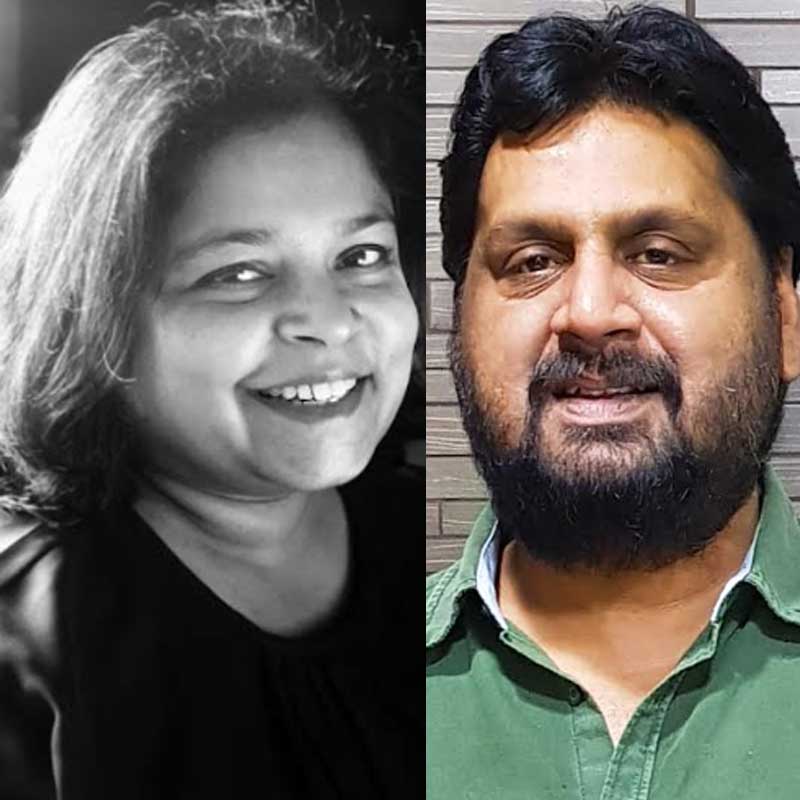
    Dentsu Impact national creative director Anupama Ramaswamy said, “In an already cluttered market, we wanted the X1 Notch to stand out. Instead of focusing only on the features, we decided to show how this phone can help people not just dream big but also fulfill them. Through the X1 Notch, our protagonist empowers his friend to shine. This insight led us to find a story that will resonate with anyone who has ever struggled to fit in. We are sure people will relate to this and welcome the phone, thanks to its super affordable price and amazing features.”

    Mobiistar India chief marketing officer Aniruddha Deb adds, “This is an interesting take on our consumer’s life since it showcases how the X1 Notch is not only adding value to lives but also enabling people to realise their dreams. Our testing results revealed that the college situation was not only relatable and likable but also was understood well by our TG. Mobiistar has always stood strong as a propeller of confidence and aspirations and this new campaign adds another dimension to our vision of ‘Shine and Enjoy More’.”

  • Honda 2Wheelers, Dentsu One wish “Happy 2009”

    Honda 2Wheelers, Dentsu One wish “Happy 2009”

    MUMBAI: Honda 2Wheelers rang in the New Year in a quirky manner as they wished the industry “Happy 2009” in January 2019. The move was a part of an interesting print ad campaign conceptualised and developed by Dentsu One – a Dentsu Aegis Network agency.

    The peg behind the innovative campaign was the government regulation making it compulsory to equip every 2-wheeler of less than 125cc engine capacity with a Combi-Brake System (CBS) from 1 April 2019 onwards. Honda  2wheelers, on the other hand, had introduced the Combi-brake system in India (with equaliser technology) way back in 2009.

    The agency revealed its approach towards creating the campaign, which has caught many eyeballs, stating, “The approach was to create a disruptive communication to grab reader’s attention and inform them about brand Honda’s technology leadership. The opportune time – first day of the year was selected strategically to make the message more clutter breaking.”

    Dentsu One national creative director Titus Upputuru said, “At Dentsu Aegis Network we try to build brands through innovative ideas. This is an example of that spirit. Salute to Honda Two Wheelers for buying into this unique creative and release it nationally. Usual shelf life of a print ad is one day however it clearly broke the trend with conversations about the advt. & creative going viral on digital medium long after the newspaper has gone into the bin. We are delighted with the response.” 

    Dentsu One executive vice president Abhinav Kaushik added, “We wanted to create a communication that had immense stop value and the power to hold the reader’s attention without any dilution. A communication is considered as really effective when people start talking about it and this is what is happening right now. The objective of the campaign to reaffirm Honda’s leadership position stands successfully achieved.”

    Honda Motorcycle & Scooter India senior vice president, sales and marketing Yadvinder Singh Guleria mentioned, “Honda has always been at the fore front of new technology introduction. We have a history of creating history in technology benchmarks adding value & convenience for our customers. While the industry is now adopting CBS aligning with regulation, we are proud to say that more than two crore happy customers are already riding CBS equipped Honda 2Wheelers. A clutter breaking simple communication to reinforce brand Honda’s technology leadership on New Year’s day was the core of this campaign.”

  • SBI Life Insurance, WATConsult launch India’s first-ever programmatic digital OOH campaign

    SBI Life Insurance, WATConsult launch India’s first-ever programmatic digital OOH campaign

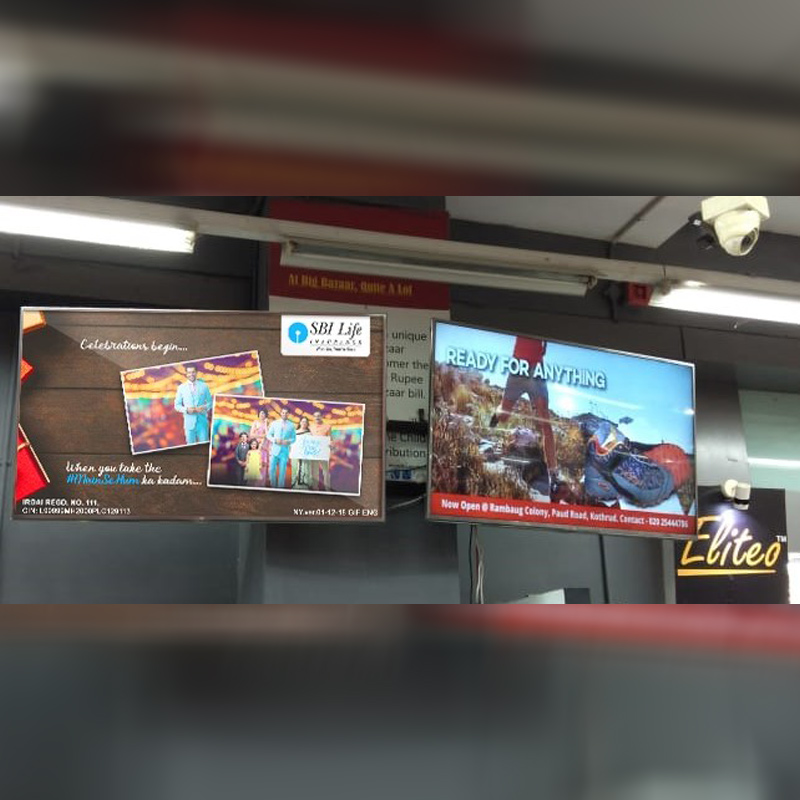
    MUMBAI: SBI Life Insurance, for its ‘Main Se Hum Campaign’, has launched the first-ever programmatic digital out-of-home (OOH) campaign in India. Planned by WATConsult, the digital and social media agency from Dentsu Aegis Network (DAN) along with DAN’s Programmatic Arm – Amnet, this innovation aims to help the brand in reaching out to newer audiences & build a programmatic connect thereafter.

    Exploring New Year as a topic, the campaign is being executed across major establishments in Maharashtra and Delhi-NCR. Google’s marketing platform in partnership with Lemma Technologies, has helped the brand serve this digital inventory across OOH touch points and also plans to re-target audiences on mobile through the beacons installed at each location.

    WATConsult founder and CEO Rajiv Dingra said, “With this activity, SBI Life adds another innovation with us with the key objective of testing Digital OOH, extend further reach for their "Main Se Hum" campaign exploring New Year as a topic to leverage and programmatically retarget with relevant brand messages. Well, this is the first-of-its-kind initiative in India and will surely open more dynamic avenues for the brand in the coming future.”

    SBI Life Insurance chief of brand and corporate communications Ravindra Sharma said, “For a long time marketers have been trying to bridge the gap between offline and online audience, to holistically target consumers. Using the existing advertising ecosystem, the programmatic digital out of home campaign (DOOH) successfully bridges the offline to online audience gap, by simple yet intelligent application of technology.” He further added, “At SBI Life we take great pride in being the early adopters of upcoming technologies and are extremely thrilled to start 2019 on an innovative note. We believe this will mark a transformation in the evolution of digital marketing.”

    AMNET in association with Lemma Technologies ran this DOOH campaign as a RTB (Real-Time Bidding) campaign on Lemma’s platform which had Google DV360 participating as demand partner. “It’s an innovation in the outdoor industry to connect outdoor media to a centralised platform based on advertisement standard & protocols. Such standardisation gives DOOH inventory more visibility to direct and programmatic demand,” says Lemma Technologies founder and CEO Gulab Patil.

    AMNET vice president Salil Shanker said, “This is a revolution in outdoor industry to connect DOOH screens to a digital advertisement ecosystem. At AMNET, we believe in driving innovations to our partners and with success of launching programmatic radio in India, now we are thriving to launch DOOH inventory through programmatic.  The new platform offers advertisers with innovative solutions to connect with the right audience with right messages at the right time along the consumer journey. While the lines are slowly blurring between digital and offline, in the short term this step will surely help SBI Life in getting that extended reach through offline impressions and a possibility to re-connect audiences in digital world to help close the loop. The standardisation gives more simplicity to manage all media channels through a single lens.”

  • Marketing in 2018: Led by revenues, ditched creativity

    Marketing in 2018: Led by revenues, ditched creativity

    MUMBAI: Long gone are the times when advertising and marketing industry in India was a small-scale business with just a few creative heads scratching their brains and churning out a minuscule number of campaigns. With the growing disposable income and aspiration to own premium goods and experience quality services, customers in India are willing to explore more, thus prompting sellers to market their products better.

    2018 was, in many ways, a cornerstone year for brands and agencies alike as they tried to peg more and more consumers to their base. The impact of demonetisation and GST gradually faded, thus allowing the brands to spend more than the previous year on marketing their products. As revealed by Zenith’s Advertising Expenditure Forecasts, the ad spends for India in the year 2018 are expected to close at Rs 62,699 crore. This number is around 10-12 per cent higher than what 2017 saw. And 2019 looks even better. The same Zenith forecast reveals that total adex for India will see an increase of 15 per cent and climb up to Rs 72,169 crore in 2019.

    As per Ethinos Digital Marketing MD Sidharth Hegde, most brands tend to spend between 7-15 per cent of their total revenue on marketing and advertising. “This percentage of spends is likely to continue, however, large brands are looking to insource a lot of the marketing and advertising that will help them save large amounts of funds that would now be going to external agencies,” he says.

    Hegde also gives a breakdown of the expenses, “In 2018, the average firm was expected to allocate 42 per cent of their marketing budget to online, and this rate is expected to grow to 45 per cent by 2020. Social media advertising investments will continue to grow, with a 17 per cent compound annual growth rate from 2016 to 2021, and is expected to represent 25 per cent of total online spending in 2018. Investment in paid search, display advertising, social media advertising, online video advertising, and email marketing is predicted to account for 46 per cent of all advertising by 2021.”

    It is clear from his predictions and is obvious otherwise as well, that digital is, in fact, seeing massive growth in India. Dentsu Aegis Network chairman and CEO – south Asia Ashish Bhasin seconds this thought and describes 2018 as the year that will be remembered as “when digital became an integral part of the marketing mix”.

    Bhasin notes, “I think this (2018) was the year in which digital came to the forefront. From being a nice-to-have part of strategy it became an integral part of the marketing mix. This was partly helped by the JIO effect as it brought down the prices of data and increased the bandwidth available. Also, the falling prices of smartphones made it happen.”

    He further adds, “And I take that by 2020, one-fourth of the advertising market will be digital. In 2022, the number of Indians reached by internet will nearly be the same as those reached by television.”

    Mirc Electronics Limited (Onida) head of marketing Pratyush Chinmoy says, “One clearly visible trend (in 2018) was companies increasing their digital pie in the overall marketing spends, in recognition of shifting consumer touchpoints. Many industry leaders also saw impressive growth in video marketing, OTT media, with the consumer from all walks of life, consuming data at a much faster pace than ever before helped by telecom price decreases.”

    But does that mean digital will overpower the other ‘traditional modes’ of advertising? Ashish Bhasin doesn’t think so. He quips, “When the tides are rising, all the boats rise along. In India, we are currently in a position where all the media are growing; be it print, TV, or digital, and it will remain so for the next 5-10 years. So, it is not digital vs print or print vs TV, or TV vs digital, it is digital and TV, and print, and OOH for India.”

    An IBEF report also supports this claim of Bhasin. According to its September 2018 report on Media and Entertainment, in FY 2018, TV advertising was the largest contributor to the country’s advertising revenue, generating Rs 223.5 billion closely followed by print that generated revenue of Rs 210.6 billion. Digital advertising generated revenues worth Rs 116.3 billion.

    Chinmoy also shares a similar brief based on some internal data, “In a period of Jan ’18 to Oct ’18, leading brands have spent around Rs 270 crore. Television has continued to gather a major pie, with print coming in second. In 2019, the spends are expected to slightly increase by a factor of 10-15 per cent.”

    He also adds, “While OTT caters to a subset of the television audience with a different offering altogether in terms of content, it has still a long way to go to catch up with television spends.”

    JHS Svendgaard Laboratories MD Nikhil Nanda adds an interesting insight, “As far as marketing trends are concerned, digital is growing fast but television and print still remain as traditional and dominant mediums. Content has been ruling the market and OTT. Disruptive marketing and radio are picking up faster than digital.”

    N Chandramouli, CEO of TRA Research has the same input. He notes, “There is no TV or OTT for the consumer. They only know the screen. None of the advertisements in such platforms are getting consumed and only the skip button catches their attention. Smart brands are focusing on consumer basis for transactions and what urges it fulfils in them, rather than present product benefits. Brands must see it as an integrated consumer experience, not as how it is delivered.”

    But Hegde differs slightly as he mentions that according to TDG Research, ad spend on OTT is projected to hit $40 billion by 2020, which is nearly half of the $85 billion in forecasted total TV ad revenue. “Also, with the influx of cheap and easily available internet, more and more users are bound to ditch the traditional TV for OTT services,” he says.

    2018 was a grand year for many agencies as many national and international honours fell upon them, the grandest being creative and impactful campaigns that were churned out in the past year; the most impressive being Piyush and Prasoon Pandey getting the prestigious Lion of St. Marks honour at the Cannes. Yet the industry feels 2018 was not a very impressive year when it comes to creativity in marketing campaigns.

    Chandramouli says, “2018 has not been an impressive year in brand creation. In the wake of a slow sales year, most of it has been attempts at selling. This, unfortunately, was based on a wrong premise because the consumer is dramatically changing.  If you sell, they don't want to buy.”

    Ashish Bhasin shows more or less the same emotion, “I think it has overall been a good year but not a great year in terms of creativity on TV because there haven’t really been any breakthrough campaigns that stood out at the national level.”

    He adds, “I think this is because the creativity in digital has significantly improved and for digital creative films from India have been getting digital identification. I think the first example that is a big name is the ‘Powerless Queen’, which was done by WatConsult, which internationally won some 15-20 awards, which we really hadn’t seen earlier for a digital campaign. We have seen print campaigns win, TV campaigns win but I guess it is a sign of coming times more creative efforts will be put in digital and we will see more of that in 2019.”

    Nikhil Nanda, however, differs in his observation. He notes, “Creatively, storytelling took the driving seat and advertisements showing the brand or products were more subtle. Whether it was an ad meant for digital/social channels or OTT alone, the more impressive the story, the better it was for the brands. Also, social causes and emotions took centre stage. Case in point: Colgate strong teeth campaign with Deepika Padukone and her mother. Campaigns in 2019 will be strongly inclined toward emotional and adopting better health habits storytelling.”  

    While 2018 was a pretty impressive year with its highs and lows, marketing agencies are now looking up to 2019 with a twinkle in their eyes. Big events like general elections and cricket world cup will be ruling the year and thus there will be a great influx of money as well.

    Bhasin believes that 2019 will see around 12 per cent growth in ad revenues. He believes that India is all set to reach the $10 billion mark in advertising in the coming year. This sentiment comes after taking into consideration some facts. Bhasin notes, “Advertising is very susceptible to sentiments. If a stable government, which is considered pro-business, is in power then the sentiments of the brands and marketers improve. They tend to spend more. Otherwise, advertising is the easiest expenditure to cut. I am hopeful that we will show good economic growth and will have a good monsoon, so we have a good performance.”

    While Bhasin is hopeful, Chandramouli sees 2019 as a difficult year for brands and marketers. He says, “2019 is a slippery year ahead, with brands not investing in new things.  So, the way to go for brands is to understand the consumer basis for trust and their innate sense of desire. Other than a few who will stand out using consumer insights and buying propensity understanding, many brands will continue to waste their money on campaigns irrelevant to the consumer. Brands that only try to sell will not get bought. Those that help the consumer buy, will be loved.”

    Another trend that might rule the advertising and marketing industry in 2019 will be of consolidations. Bhasin notes, “I think there is a process of consolidation that has started in advertising globally. We saw one of the oldest agencies JWT being merged into Wunderman this year. Even in India, there are six groups that control about 85-90 per cent of the advertising market. I see that this process of consolidation will only go bigger.”

    He further adds, “The legacy agencies will come under pressure now. The groups that have been formed in the new age and are more digital-savvy, who have more proportion of the business coming from the digital will do well. Big names that have been in the market for 100 years will suddenly now start feeling the pressure and start feeling the heat. We saw the beginning of that in 2018, we will see more of that in 2019.”

    All in all, 2019 looks like a great year for the brands and marketing agencies as it comes with its own shares of challenges and opportunities. The industry is very positive about the revenues but a little work on the creativity side is required to make 2019 a year better than the gone by.
  • iProspect India wins digital media duties for GoAir

    iProspect India wins digital media duties for GoAir

    MUMBAI: iProspect India, the digital performance agency from Dentsu Aegis Network, has bagged the digital media duties for the low cost international carrier, GoAir. As part of the mandate, the agency will service the account from its Mumbai office and will handle their entire digital media duties including SEO, SMO and analytics. The account was won following a pitch.

    Commenting on the win, Rubeena Singh, CEO, iProspect India said, “This win is a matter of pride for us. GoAir is one of the finest airlines in India and is going global. We hope iProspect’s experience in driving Business Performance for clients will help the brand strengthen its position of ‘The Smart People’s Airline’ and grow their business further.”

    Cor Vrieswijk, CEO, GoAir said, “We are happy to be associated with iProspect. We understand our consumers well and now with in-depth digital insights from iProspect we will be able to further enhance our relationship with customers and drive the business objectives upwards.”