Tag: Dentsu

  • Dentsu AMP turns up the volume on video creativity

    Dentsu AMP turns up the volume on video creativity

    MUMBAI: Move over film reels, it’s time for feel reels. Dentsu India has launched Dentsu AMP, a next-generation, video-first content engine that fuses AI innovation with human storytelling to help brands create videos faster, sharper, and smarter.

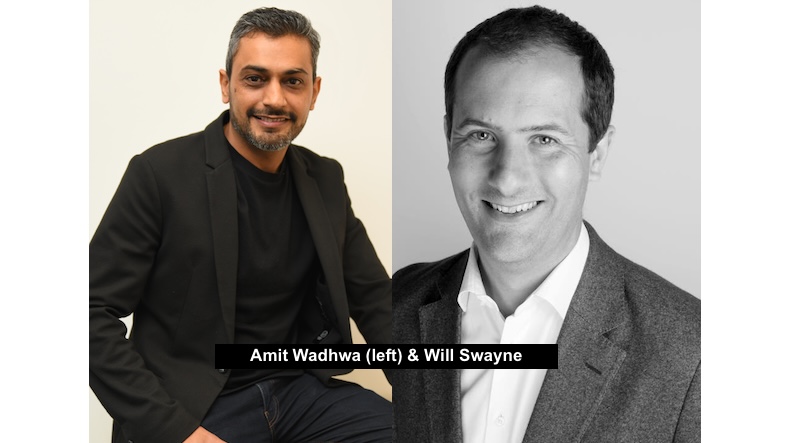
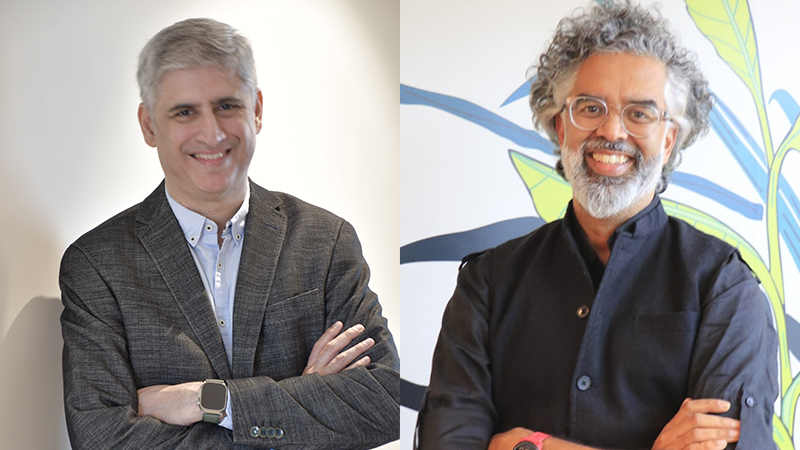
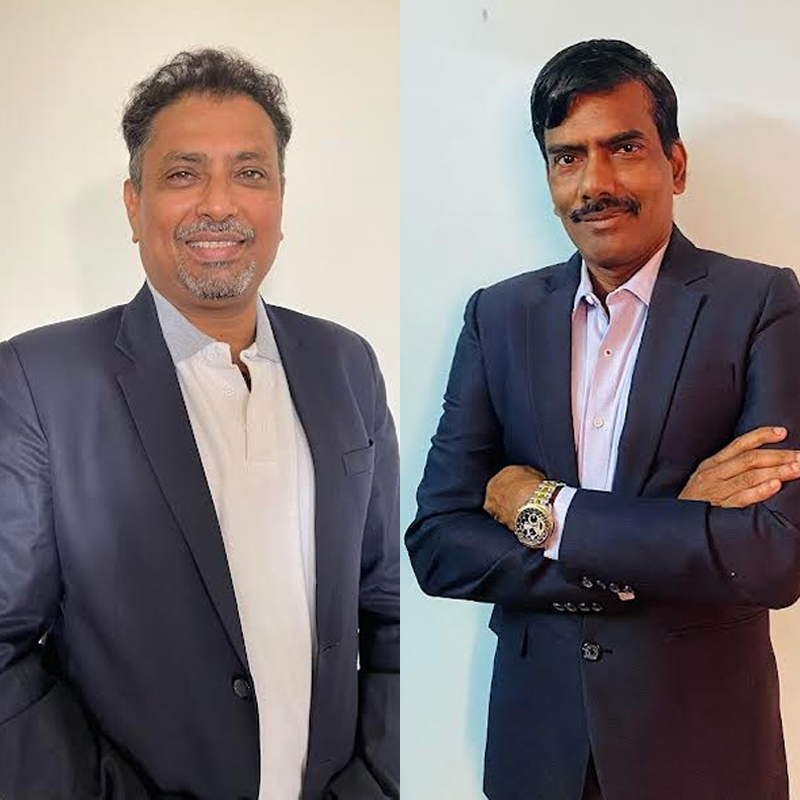
    Leading the charge are Dhruv Abrol and Tarika Gulabani, appointed as managing partners. The duo, who earlier co-led TVA, bring a mix of digital business acumen and entertainment flair from stints at Myntra, Tata Cliq, Sony, and StarPlus. They will report to Dentsu Creative & Media Brands CEO South Asia Amit Wadhwa.

    “Dentsu AMP is built for a world where stories must move as fast as audiences do,” said Wadhwa. “It unites craft, content, and technology to deliver creativity that performs.”

    With over ten in-house studios across India, Dentsu AMP covers everything from video production and motion graphics to sound and 3D design. Its AI backbone powers every stage of production, from ideation and editing to targeting, helping brands scale cinematic campaigns and snappy social content alike.

    Brands such as Aditya Birla Fashion, Flipkart, Myntra, and Groww are already onboard, banking on AMP’s ability to merge creativity, data, and speed.

    “We’re building a modern content engine,” said Abrol and Gulabani. “From high-impact films to daily social posts, AMP helps brands make more content, faster, without losing quality or consistency.”

    Sitting alongside Dentsu Lab and the Dentsu Podcast Network, AMP strengthens the agency’s innovation ecosystem. With expansion plans across major metros, Dentsu is clearly turning up the volume on creativity, where imagination scales, and every frame counts.

  • Dentsu cracks the code: three human truths that will define marketing in 2026

    Dentsu cracks the code: three human truths that will define marketing in 2026

    MUMBAI: In an era where artificial intelligence orchestrates our every click, the most valuable marketing insights remain decidedly human. Dentsu’s latest media trends report strips away the algorithmic complexity to reveal three enduring behaviours that will separate winners from also-rans in 2026: our craving for simplicity, our need to connect, and our dwindling attention spans.

    The sixteenth edition of Human Truths in the Algorithmic Era arrives as brands grapple with seismic shifts—conversational search engines that blur the line between query and oracle, agentic AI that promises to shop on our behalf, and cultural formats from Japanese anime to Chinese microdramas rewrite entertainment rule books.

    “Just a few years ago, the media landscape seemed dominated by a handful of platforms,” said dentsu global practice president of media and integrated solutions  Will Swayne. “By 2026, the foundations may crack even further. Brands must focus on what remains stable over time by rooting their strategic thinking in core, invariable human behaviours.”

    The first truth—we are simple until we are complex—captures how consumers chase convenience but rebel against algorithmic predictability. Nobody enjoys searching for parking spots or wading through bloated recipe blogs. Yet the Labubu plush toy frenzy proves the thrill of the chase still matters.

    Dentsu identifies search experience optimisation as the new battleground, encompassing everything from large language model optimisation to retail search. As zero-click searches proliferate, brands must ensure content appears everywhere consumers look—whether that’s ChatGPT, TikTok or Amazon.

    The report warns against “agent inflation”—rushing to deploy AI agents without strategy. With 80 per cent of chief marketing officers citing generative AI as a priority investment, dentsu urges building context-aware systems with governance safeguards, not chatbots slapped together for boardroom optics.

    Then there’s the friction paradox. Whilst Amazon rolls out instant-scan shopping and same-day perishable delivery, cult brands like Knitwrth announce collection drops weeks in advance with strict no-returns policies. Trader Joe’s refuses online ordering entirely. Strategic friction, dentsu argues, can spark desire and build community—if wielded deliberately.

    The second truth—we are social animals—explores how influence has decentralised. Nearly half of American adults regularly spend time with friends, and 83 per cent of consumers believe brands should facilitate human connections, not just transactions.

    Reddit threads now rival mainstream media for product reviews. Substack recently surpassed The Wall Street Journal in traffic. Dentsu’s research shows promotional content from creators holds attention longer and drives greater consideration than brand ads—but only when creators retain control.

    The report urges brands to invest in diverse smaller creators with authentic ties rather than chasing mega-influencers. Twice as many people engage most with influencers under one million followers than with mega-influencers. Gen Z favour Twitch and Discord; boomers prefer LinkedIn and Facebook.

    Live experiences remain unmatched for forging shared memories. Streaming platforms are acquiring sports rights and launching original live programming—WWE’s Raw has ranked in Netflix’s global top 10 every week in 2025. Meanwhile, Millennial nostalgia is peaking: Oasis tours, Buffy reboots, and The Devil Wears Prada sequels are minting money in 2026.

    Business messaging is finally monetising at scale. WhatsApp, WeChat and Messenger each boast over one billion monthly users, with WhatsApp reportedly opened 891 times monthly versus TikTok’s 359. New ad placements are emerging, but the real opportunity lies in unified commerce and customer experience through persistent conversations.

    The third truth—we don’t read advertising—acknowledges that nobody ever has. Howard Luck Gossage nailed it decades ago: “People read what interests them; and sometimes it’s an ad.”

    With exploding screen time and AI slop drowning feeds, advertisers are collectively spending more to reach fewer people. Dentsu’s answer: play the quality game, not the saturation game.

    AI-generated audiences offer a way forward. These synthetic consumer profiles simulate real-world attitudes and behaviours, providing immediate creative feedback and reducing research costs. Dentsu’s Generative Audiences capability combines ID-based precision with AI-driven scale, enabling brands to engage known customers accurately whilst connecting with new audiences as interests shift.

    Carat’s Brand Reset research—the world’s largest attention study on video’s long-term impact, spanning 40,000 people and ten NextGen video platforms—reveals that connected television now delivers outcomes comparable to broadcast. A single CTV exposure lifts long-term sales by 3.16 per cent over three years, approaching broadcast television’s 3.61 per cent. Even short-form vertical video in fast-scroll environments can lift sales by 6.62 per cent with proper attention.

    Entertainment presents untapped white space. Sports docuseries reach 40 per cent of global consumers monthly, capturing women, Gen Z and emerging markets where traditional sports lag. Gaming still captures less than five per cent of global media investment despite massive user bases. And 50 per cent of Gen Z watch anime at least weekly—more than any major sports league in the United States.

    dentsu creative and media brands in South Asia chief executive Amit Wadhwa frames the challenge starkly: “In a world ruled by algorithms, human truths remain our compass. Technology opens doors, but empathy, creativity and understanding people will determine who truly wins.”

    The report, developed by 30 global media experts, positions media not as a channel but as a growth engine connecting creativity, commerce and culture. Brands that anchor strategy in enduring human truths whilst embracing new formats—from agentic AI to microdramas—can move beyond mere survival.

    Because in 2026, as algorithms reshape everything from search to shopping to storytelling, the brands that win won’t be those with the most agents or the biggest ad budgets. They’ll be the ones that remember we’re still human—simple when we can be, social when we need to be, and utterly unmoved by advertising that forgets what interests us.

  • Brands take centre stage at Mipcom Cannes 2025

    Brands take centre stage at Mipcom Cannes 2025

    PARIS: Brand money is flooding into television. At Mipcom Cannes  this month, the world’s largest TV market is rolling out the red carpet for corporate storytellers with the first international edition of BrandStorytelling, a summit that has spent a decade building its reputation at Sundance.

    The two half-day event on 13 and 14 October brings together an unlikely crowd: global brands like Ancestry and Indeed, creative agencies including Dentsu and McCann, and heavyweight studios such as Banijay, Fremantle and BBC StoryWorks. Their mission is to turn corporate cash into compelling content—and to do deals that make it happen.

    Rick Parkhill, the producer and media entrepreneur who founded BrandStorytelling, reckons the sector has come of age. “Brands are increasingly behind some of the biggest stories on our screens globally,” he says. The event’s expansion from Park City to the French Riviera suggests he’s onto something.

    Among the speakers are Doug Scott, founder of Unxnown and an alumnus of Endeavour and Ogilvy, and Kim Miller Olko, global chief marketing officer at Toys”R”Us and president of its in-house studio. Representatives from over 20 organisations will take the stage, from the Branded Content Marketing Association to entertainment giants like UTA.

    Mipcom Cannes director Lucy Smith says the “overwhelming response” from the industry confirmed the appetite for a dedicated brand-content forum. The summit promises to unlock new funding streams and co-production opportunities at a time when traditional television budgets are under pressure and brands are hunting for more sophisticated ways to reach audiences.

    The event, sponsored by Fell + Co., Storybones Media and IPG Mediabrands Entertainment is part of Mipcom’s broader embrace of the creator economy. Last year’s market drew over 10,500 delegates from more than 100 countries—a captive audience for anyone peddling the promise of brand-funded programming.

  • Ranbir Kapoor tells men to skip the copy and show their original with Vi-John

    Ranbir Kapoor tells men to skip the copy and show their original with Vi-John

    MUMBAI: No more copy-paste looks, it is time to hit refresh. Vi-John, India’s number 1 shaving cream brand, has launched its bold new campaign with Ranbir Kapoor at the helm, urging men to stop being a “photocopy” and instead showcase their authentic selves.

    Titled “Photocopy nahi, original dikho”, the campaign shifts grooming from a chore to a statement of individuality. For a brand trusted in Indian homes for over six decades, this marks a sharp step into the world of today’s confident, self-expressive men.

    “Today’s generation doesn’t want to blend in, they want to stand out,” said Ranbir Kapoor. “Grooming plays a big role in that. Vi-John’s message is simple but strong: don’t be a photocopy, own your vibe.”

    Conceptualised by Havas Creative India with media handled by Dentsu, the campaign cuts across TV, print, digital, and social platforms. With its witty, clutter-breaking narrative, it repositions Vi-John not just as a shaving brand, but as a confidence partner for men everywhere.

    Vi-John Group, managing director, Harshit Kochar said, “With this campaign, we are celebrating individuality. Vi-John has always stood for trust and accessibility, but we also want to stay relevant to the aspirations of today’s youth.”

    The campaign also highlights Vi-John’s new premium shaving line, featuring sulphate-free, dermatologically tested creams and razors, designed to blend care with performance.

    As Havas Creative’s Anupama Ramaswamy put it, “Trends are easy to follow, but originality is what sets you apart. This campaign pushes men to embrace their unique style, with Ranbir delivering that message in his trademark charm.”

    With “Photocopy nahi, original dikho”, Vi-John sharpens its edge for a new generation, reminding men that true style begins with originality.

  • Rakesh Jha steps in as Eyeota’s unit sales head for North

    Rakesh Jha steps in as Eyeota’s unit sales head for North

    NEW DELHI: Eyeota has tapped Rakesh Jha to lead sales across northern India, a hire aimed at bulking up the Dun & Bradstreet subsidiary’s reach in the country’s fastest-growing advertising corridor.

    Jha spent more than seven years at Times Internet, climbing from senior officer to senior manager of ad sales. He managed headline clients including CoinDCX, Atomberg Technologies, The Sleep Company and Optimum Nutrition, and cut deals with agencies such as Dentsu, Mindshare, Havas Media and Edelman. His remit covered everything from native and programmatic media buys to content-marketing projects on platforms such as Spotlight and Colombia Ads.

    Before Times Internet, Jha worked on publisher alliances at LocoVida, helping more than 120 publishers across 11 languages drive audience engagement and programmatic revenues. Known for a forensic eye on CPM, CPC and CPL models, he has a record of negotiating high-yield contracts, running multichannel campaigns and squeezing extra performance from digital budgets.

    At Eyeota, Jha will marshal revenue growth and data partnerships across Delhi and neighbouring states, marrying his pitch-perfect sales craft with Eyeota’s audience-enrichment and targeting tools. The company sees India’s northern belt—home to the country’s biggest advertisers—as a critical frontier for its global expansion

  • Sanchayeeta Verma bows out of Carat India after a high-octane two-year stint

    Sanchayeeta Verma bows out of Carat India after a high-octane two-year stint

    BENGALURU:  Sanchayeeta Verma has stepped down as chief executive of Carat India, closing a chapter that transformed the dentsu agency’s standing in the country’s crowded media market.

    Verma, who took the helm in July 2023, leaves after what she calls “a marquee period of bold pivots and meaningful impact”. During her tenure Carat almost doubled business performance, integrated creative and customer-experience units under the One-dentsu model, and pushed the network into what she dubbed the “algorithmic era.”

    Her leadership brought a flurry of firsts. Carat popularised “attention economy” as a core media metric, built the Brand EQ Index to measure emotional connection, and unveiled the Media++ operating system to give clients data-rich, AI-powered planning tools. She also struck new alliances with e-commerce platforms to unlock what she described as “triple value” for clients, partners and the agency.

    “None of us can exist in isolation,” Verma said, quoting her mentor, the philosopher Daisaku Ikeda, as she thanked her teams, media partners and clients. “To be aware of these connections, to feel appreciation for them, and to give back to society in a spirit of gratitude is the proper way for human beings to live.”

    A recognised thought-leader and champion of women in leadership, Verma has spent more than 25 years shaping India’s advertising and media landscape. Before joining Carat she logged an 11-year run at Wavemaker, where she turned its south India operations from a loss-maker into a multi-city profit engine—growing media billings 15-fold and revenues six-fold—while later heading the ITC India strategic business unit.

    Earlier, she built national communication-planning frameworks at Mindshare, managed key accounts such as GSK and Motorola, and led planning teams at Lowe Lintas and J. Walter Thompson. She began her career in the mid-1990s in product marketing at Kiwi TTK.

    Verma, who has also served on advisory boards in education and civic-tech start-ups, has not yet disclosed her next professional move but remains a sought-after mentor and strategist. Dentsu, for its part, praised her “bold vision and collaborative leadership” and wished her well as Carat readies a successor.

  • CMOs court AI but still swear by human touch in Dentsu’s 2025 report

    CMOs court AI but still swear by human touch in Dentsu’s 2025 report

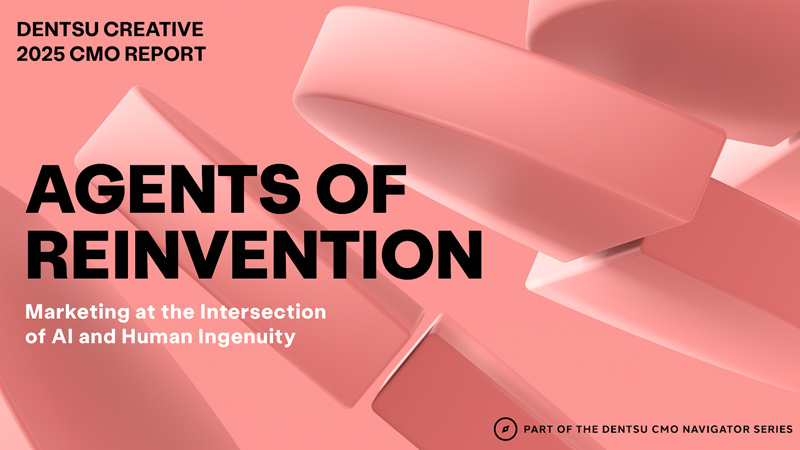
    MUMBAI: In the age of algorithms, it seems imagination still has the final word. Dentsu Creative’s freshly released CMO Report 2025 reveals that while artificial intelligence is now deeply woven into marketing practice, senior marketers insist human creativity, empathy and cultural intelligence remain irreplaceable.

    The study, titled Agents of Reinvention: Marketing at the Intersection of AI and Human Ingenuity, draws insights from 1,950 plus CMOs across 14 markets from India and the US to Japan and Brazil. Its central paradox? In a world governed by AI, humanity becomes the most valuable differentiator.

    Key findings highlight the balancing act CMOs face:

    . 30 per cent plus use AI daily, but 78 per cent agree AI can never replace human imagination, up 13 points from 2024.

    .  87 per cent say strategy now demands more empathy and creativity, not less.

    . 71 per cent fear invisibility without “winning the algorithm”, yet 79 per cent worry optimisation breeds sameness.

    .  84 per cent believe brands must win share of culture, not just share of voice.

    .  90 per cent see social and influencer content as outperforming traditional ads, while 91 per cent believe brands are built through creator collaborations (though 82 per cent fret about losing control).

       Innovation budgets are rising too 70 per cent plus plan to allocate over 20 per cent of spend to innovation in 2026 and beyond.

    The report also flags a striking shift in Connected AI adoption: 89 per cent expect “agentic AI” where digital agents curate travel, shopping and more to reshape business, but the same proportion say trust and taste will matter more than ever.

    Global dentsu leaders underscored this duality. Global CCO Yasu Sasaki noted that AI “is exceptional at prediction, but creativity is unpredictable by nature,” while CSO Patricia McDonald warned that “if every brand chases the same signals with the same tools, we’re just running harder to stand still.”

    For India Dentsu CEO of creative & media brands Amit Wadhwa summed it up neatly: “Algorithms may shape what we see, but imagination, empathy and culture shape what we remember.”

    In other words, CMOs in 2025 aren’t just coding for clicks, they’re betting that the brands which out-human the algorithm will be the ones that endure.

  • AI storm brews as Studio Blo films fashion in a whole new dimension

    AI storm brews as Studio Blo films fashion in a whole new dimension

    MUMBAI: When fashion meets philosophy in the middle of a sandstorm, you know something otherworldly is at play. Studio Blo, the next-gen content studio pushing the limits of AI-driven filmmaking, has dropped a 100 per cent AI-generated film for the Almost Gods × Fila collection blurring lines between fantasy, sport, and storytelling.

    The high-concept short, live on Youtube and Instagram, unfolds during a rare celestial event where three cloaked figures summon a sweeping sandstorm. Each figure wears pieces from the new collection, which reimagines Fila’s clay-court tennis heritage through Almost Gods’ brutalist aesthetic, laced with mysticism and elemental power.

    In a striking industry first, real fashion models were digitally cloned, with every garment and accessory rendered entirely in AI, no physical shoot, no stitched seams, just crafted pixels with the gravitas of a full-scale cinematic production. Months of prep went into the project, with seasoned cinematographers, creative directors, and AI artists at the helm.

    Studio Blo co-founder & CEO Dipankar Mukherjee set the record straight: “AI films aren’t quick and cheap. This took months, not minutes, because pedigree demands time, talent, and vision. Almost Gods treated us as true creative partners, and that made all the difference.”

    Studio Blo Co-Founder & CCO Rishabh Suri added: “AI gave us the canvas to make a metaphysical thriller in fashion form. Traditional production would’ve struggled with the sheer scale and spectacle. Here, we created something immersive and emotionally resonant, where philosophy and symbolism flow seamlessly into couture.”

    Studio Blo, staffed by veterans from VFX giants like Dneg and MPC, has already delivered showstoppers for Warner Music, YRF Films, Dentsu, and Nykaa. This film cements its mission: AI is not a shortcut, but a collaborator expanding fashion’s stage into realms once thought impossible.

    With the Almost Gods × Fila collection, sport-luxury isn’t just walking the runway; it’s conjuring storms.

  • Dentsu Creative names John Mescall global chief creative partner

    Dentsu Creative names John Mescall global chief creative partner

    MUMBAI: Dentsu Creative has appointed John Mescall as its global chief creative partner, a move designed to sharpen the agency’s creative edge and align standards across markets.

    Based in New York, Mescall will work closely with Yasu Sasaki, Dentsu’s global chief creative officer, to strengthen creative craft, foster collaboration and integrate emerging technologies like AI into workflows. He will also focus on talent development across the network.

    “What drew me to Dentsu Creative is its deep belief in the power of creativity to drive meaningful impact,” said Mescall. “It’s rare to find a global organisation so aligned in purpose yet so attuned to the strengths of its local teams.”

    Mescall is one of advertising’s most decorated creative leaders. At Mccann Worldgroup, where he served as global executive creative director and president of its global creative council, he helped steer the network to Cannes Lions and Effie global network of the year titles. His career haul includes more than 100 Cannes Lions, eight of them Grand Prix, along with top honours at D&AD, One Show, Clio and beyond. Adweek has named him to its creativity 50, while Business Insider ranked him among the world’s top 10 most creative people in advertising.

    Dentsu Creative, global president, Abbey Klaassen said Mescall’s “ability to unite teams around a shared vision” will be key to scaling the agency’s creative impact. Sasaki added that his appointment reflects the network’s “commitment to transformative creativity that delivers cultural and business impact.”


  • Dentsu weighs retreat from global stage after $5 billion gamble falters

    Dentsu weighs retreat from global stage after $5 billion gamble falters

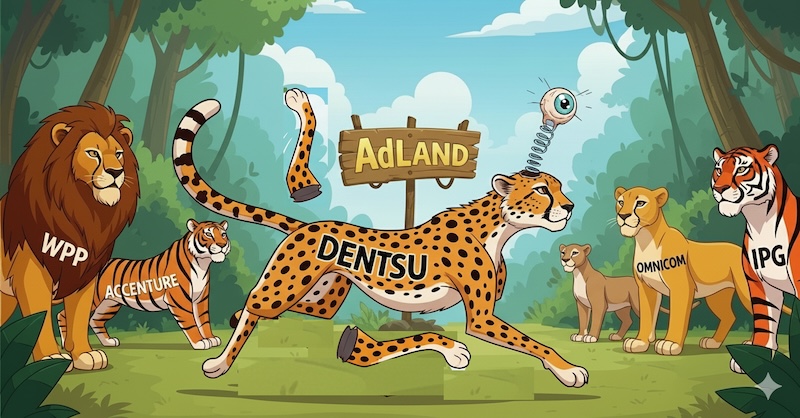
    TOKYO: It was once viewed as a cheetah making a smooth and speedy dash to the finish  tape as it went about muscling itself with acquisitions. But, hardly a decade later,  in 2025, Dentsu, Japan’s largest advertising group and one of the industry’s oldest names, is considering pulling the plug on its international ambitions after more than a decade of struggle abroad. The Tokyo-listed company has hired Mitsubishi UFJ Morgan Stanley and Nomura Securities to approach potential buyers for its overseas creative and media arm — a sprawling business that includes the former Aegis Group, US consultancy Merkle and digital production house Tag — according to a report in the Financial Times on Thursday.

    The move could culminate in a deal worth several billion dollars, insiders told the paper, and would mark a dramatic retreat for a group that only a decade ago sought to rival WPP, Publicis and Omnicom on the global stage. Options on the table range from the sale of a minority stake to an outright divestment of the entire overseas division, which generated $4.5bn in revenues last year but remains chronically underperforming.
    The potential sale underscores the failure of Dentsu’s boldest bet — the £3.2bn ($5bn) purchase of Aegis Group in 2012, then one of Britain’s largest media-buying companies. The deal was meant to be Dentsu’s passport to the global top tier. With Aegis, the Japanese powerhouse — already near-hegemonic at home — vaulted into the ranks of the world’s top five ad holding groups.

    But integration proved difficult. Dentsu’s Japanese arm remained culturally and operationally distinct from its international business. The London- and New York-led operations frequently clashed with Tokyo headquarters, leaving the business fragmented. Over time, larger rivals poached key clients, while the promise of scale failed to materialise.

    Even subsequent purchases, such as the $1.5 billion acquisition of US-based Merkle in 2016, could not reverse the trend. Instead, the group accumulated goodwill impairments and rising restructuring costs. Earlier this year Dentsu wrote down $1.38 billion on its American and EMEA units and earmarked $327 million for further restructuring, including IT upgrades and headcount cuts.

    The pressure has intensified this year. In February, Dentsu unveiled weak 2024 results and suspended dividends. In August, it reported a 0.2 per cent drop in organic revenues in the first half, cut 3,400 jobs — about 8 per cent of its global workforce — and downgraded full-year guidance from 1 per cent growth to flat. It now expects an operating loss of ¥3.5bn ($24 million) for the year, compared with a previous forecast of ¥66 billion profit.

    Hiroshi Igarashi, the group’s president and global chief executive, offered a rare public apology: “I deeply regret this situation and offer my sincere apologies on behalf of the company.” In a call with analysts, he admitted that the international unit “continues to face negative growth across all regions”. Japan, by contrast, delivered record revenues and profits.

    Industry analysts say the bifurcation of Dentsu’s fortunes reflects a deeper problem: a business structurally divided between a dominant home base and underperforming overseas assets.

    “Dentsu’s ownership of the international business was somewhat unusual because of the complete separation between it and the domestic business,” said a media observer. “Japan’s idiosyncratic isolation within the global agency industry meant the leadership in Tokyo was not plugged in to the rest of the world.”

    That disconnect became even clearer after Wendy Clark, then global CEO, quit in 2022, triggering an internal restructuring aimed at closer integration. Yet the changes failed to stem the tide.

    According to people close to the discussions, potential suitors include Accenture Song, large independent networks, and private equity funds that have circled the sector in recent years.

    IPG and Omnicom, however, are seen as unlikely contenders. The two American giants are preoccupied with completing their own merger — a blockbuster deal set to close by year-end, creating a North American behemoth. Meanwhile, Havas has been spun out of Vivendi into a standalone public company, and WPP has fended off repeated speculation about being a takeover target itself.

    That leaves Accenture — which has aggressively expanded into creative services — as perhaps the most credible buyer. Private equity funds could also be tempted by the chance to carve up the business, but the declining revenue outlook, heavy job cuts and uncertain future of traditional agency models may weigh on valuations.

    Any sale would also take place against the backdrop of an industry in flux. Artificial intelligence, once seen as a tool to aid campaign targeting, is now automating functions from media planning to creative production. Rivals such as WPP and Publicis are pouring hundreds of millions into AI platforms that promise cheaper, faster and more personalised ads.

    “Revenues are already shrinking,” one person familiar with the sale process told the FT. “It’s been bad and could get worse as no one knows what AI will do to the industry.” For Dentsu’s global unit, which has struggled even in the best of times, the disruption could prove 

    For Dentsu, a sale would be nothing short of a reset. At home, the company remains unrivalled, commanding more than 25 per cent of Japan’s advertising market. Its domestic operations continue to churn out record profits and steady growth. By contrast, its international adventure has been a costly distraction.

    Back in 2023, Igarashi insisted that selling was “totally not part of my mindset”. Today, facing mounting losses and a fragmenting industry, he has softened his stance, saying only that “strategic alternatives” are under review.

    A sale of the international arm — once Dentsu’s vehicle for global expansion — would symbolise a retreat from ambition to pragmatism. It would also leave the advertising world reshaped yet again, in a year already marked by consolidation, divestments and upheaval.

    Whether buyers emerge — and at what price — may be the truest test of how investors now value traditional ad agencies in an AI age.