Tag: Denmark

  • Should sports betting be made legal?

    Should sports betting be made legal?

    NEW DELHI: This year’s Indian Premier League proved to be an expose of the kind of rot that has set into what was once touted as the gentleman’s game. With the who’s who of cricket and entertainment dragged into the murky world of betting and spot-fixing, not to mention two cricketers banned for life, the focus has shifted to the possibility of legalising and regulating sports betting.

    At the two-day ‘Conference on Regulating Sports Betting and Sports Law’ organised by FICCI recently, experts from different walks of life, through a consensus resolution, called for stringent laws to curb fraud and doping in sports.

    Inaugurating the meet, former Punjab and Haryana Chief Justice and Chairman of the Supreme Court Probe Panel into the IPL 2013 Betting and Spot Fixing Scandal, Mukul Mudgal, said the time had come to stop debating whether there was a need to regulate sports betting or not. Justice Mudgal said that besides doping, one of the biggest threats to the integrity of sports was sporting fraud, which includes match fixing, spot fixing, tanking and point shaving among others.

    His reasons for favouring regulation included: the government would earn substantial revenue from taxing sports betting, the unauthorised manner in which betting was currently taking place was a threat to the integrity of sports and sportspersons, some grass root sports programs could very well use the money generated, unauthorised betting was a source of revenue for hardened criminals, and law-abiding citizens were getting unnecessarily exposed to such anti-social elements.

    Justice Mudgal opined that the rate at which winnings from betting were to be taxed could be decided by the government and that 20 per cent would not be high, considering that in some jurisdictions like Austria and UK, the taxation rate is up to 28 per cent and 25 per cent, respectively.

    olicitor General of India N Viswanathan added: “There are pros and cons involved in legalising and regulating betting but before that, the Government should set up an Independent Regulatory Commission to study the various aspects in depth and come out with a solution, keeping in mind the elimination of book makers.”

    Alex Ward, Vice President Commonwealth Lawyers Association said: “The concern in Australia about the results of gambling and betting isn’t as much as the concern about corruption, doping and match fixing. India should legalise and regulate rather than prevent betting. By regulating like in Australia, the central and state government can get more revenue for development of sports. In India, there are some social and ethical problems unlike in Australia.”

    Carl Rohsler, Partner in Squire Sanders (UK), LLP, and International Gambling Laws Expert said that India had a choice about whether to regulate certain forms of gambling or not. “One thing that I would like to see is a survey of gambling in India – to try to gain some understanding of the numbers involved. I would also recommend the creation of some kind of committee to formally address issues related to gambling – in order to be a repository of information and knowledge not only about gambling in India but gambling all around the world. FICCI has done a great deal to start the debate – but it cannot be expected to shoulder the whole burden. The time has come for more formal support. I stress that this is not support of gambling, but support of finding out about gambling,” he said. Among the reasons he gave for regulating gambling: the first was to protect society from harm; second to facilitate movement of money from the illegitimate to legitimate sector; third, the government was responsible for operating gambling in an honest, appropriate and transparent manner; fourth, match fixers and money launderers would find it difficult to operate in a regulated market; and finally, illegitimate operators would be kept out of such a market.

    Dr A Didar Singh, Secretary General, FICCI, pointed out that with an estimated $600 million betting market in India and a possible 20 per cent tax rate on profit from betting, it would rake in revenue to the tune of $ 120-190 million for the exchequer. He said the moot question of course was whether sports betting could be regulated in India like in other countries in order to aid sports development. Singh gave the example of lottery as a regulated business in India. “While there are no authentic figures about all the states in India because of the different methods adopted for accounting of lottery receipts, it is reliably learnt that a state like Kerala is getting net revenue of Rs 682 crores (FY 2012-13) through the medium of lotteries. It has been estimated that the potential revenue for all the states from lotteries would not be less than Rs10000 to Rs12000 crore a year,” he said.

    Meanwhile, Solicitor General of India Mohan Parasaran, in his key note speech during the session on ‘Threat to Integrity of Sports: Match Fixing and Doping’ said there had been extensive discussions between the ministries of sports, and law and youth affairs, regarding drafting modern laws on sports betting with a proposal to bring in stand-alone legislation on the subject. He said ‘The Prevention of Sporting Fraud Bill 2013’ was a step in that direction and had been drafted only after studying the laws of different countries including Denmark, Finland and Germany among others.

    Senior criminal advocate K T S Tulsi, in his key note address during the session on International efforts to curb sporting fraud:  Information gathering, Regulatory structure, Criminal Law and Courts said: “After the Indian Premier League fiasco, there is a big hue and cry regarding the amendments in sports law and inclusion of issues such as criminalization of sports, invoking criminal law for match fixing and betting, and strengthening of anti-doping laws but, in an effort to clean up sports, sportsmen should not be made scapegoats. Criminal law should be invoked only where a guilty intent is proved and players should not be liable of match fixing and doping on mere presumption. There should be strong evidence to prove a player’s involvement as once an allegation is made in the media, it has a tendency to stick even in the absence of any proof and the player becomes victim to a media trial even before being declared guilty by the courts. At the same time, legalizing betting would be a step in the right direction as this will ensure transparency and lead to removal of corruption from sports, which is the need of the hour.”

    Former Attorney General of India Soli Sorabjee said during the same session: “Betting is a natural human instinct, which is inherent to human beings – it should not be denied and time demands that it should be discussed seriously to come out with the solutions to match fixing.”

    Expectedly, former Sri Lankan Cricket Team Captain Arjuna Ranatunga, spoke on behalf of players: “There is a need for creating awareness and sensitising players on the consequences of doping and other sports frauds,” he said.  

    According to him, match fixers often do not catch top players but look out for smaller fish in top teams. On the subject of doping, he said that players coming from rural areas are not aware about the ill effects of doping and are innocent. So they need to be sensitised about various drugs and their consequences.

  • 80% people globally have TV access

    80% people globally have TV access

    NEW DELHI: Almost 80 per cent of households globally had access to television at the beginning of 2013, compared to 41 per cent of households with a computer and 37 per cent with internet access.


    The report shows that the number of households with internet access is increasing in all regions, but large differences persist, with penetration rates at the end of this year set to reach almost 80 per cent in the developed world, compared with 28 per cent in the developing world.


    An estimated 1.1 billion households worldwide are not yet connected to the internet, 90 per cent of which are in the developing world, according to the International Telegraphic Union’s flagship annual report Measuring the Information Society 2013.


    Internet users as a percentage of the population have been growing on average at double-digit rates over the past ten years. The percentage of the population online in the developed world will reach almost 77 per cent by end 2013, compared with 31 per cent in the developing world.


    Mobile broadband connections over 3G and 3G+ networks are growing at an average annual rate of 40 per cent, equating to 2.1 billion mobile-broadband subscriptions and a global penetration rate of almost 30 per cent.


    Almost 50 per cent of all people worldwide are now covered by a 3G network, the report said.


    By end of 2013 there will be 6.8 billion total mobile-cellular subscriptions – almost as many as there are people on the planet.


    An estimated 2.7 billion people will also be connected to the internet – though speeds and prices vary widely, both across and within regions.


    The Republic of Korea leads the world in terms of overall ICT development for the third consecutive year, followed closely by Sweden, Iceland, Denmark, Finland and Norway. The Netherlands, United Kingdom, Luxembourg and Hong Kong (China) also rank in the top 10, with the United Kingdom at the 11th position last year.


    The report identifies a group of most dynamic countries, which have recorded above-average improvements in their IDI rank or value over the past 12 months. These include (in order of most improved): United Arab Emirates, Lebanon, Barbados, Seychelles, Belarus, Costa Rica, Mongolia, Zambia, Australia, Bangladesh, Oman and Zimbabwe.


    In the four years between 2008-2012 fixed-broadband prices fell by 82 per cent from 115.1 per cent of average monthly income per capita (GNI p.c.) in 2008 to 22.1 per cent in 2012.


    The biggest drop occurred in developing countries, where fixed-broadband prices fell by 30 per cent year on year between 2008 and 2011.


    The average price per unit of speed (Mbps) also decreased significantly between 2008 and 2012, with a global median price of $19.50 per Mbps in 2012, almost a quarter of the price that was being charged in 2008.


    Austria has the world’s most affordable mobile broadband, while Sao Tomé and Principe, Zimbabwe and the Democratic Republic of the Congo have the least affordable, with service cost equal to or higher than average monthly gross national income (GNI) per capita. Other countries that rank well for mobile broadband affordability include Qatar, the United Kingdom, Germany, Kuwait and France.

  • Be a part of MLTR’s 25th. Anniversary concert in Denmark and the SubCell streaming World Premiere !

    Be a part of MLTR’s 25th. Anniversary concert in Denmark and the SubCell streaming World Premiere !

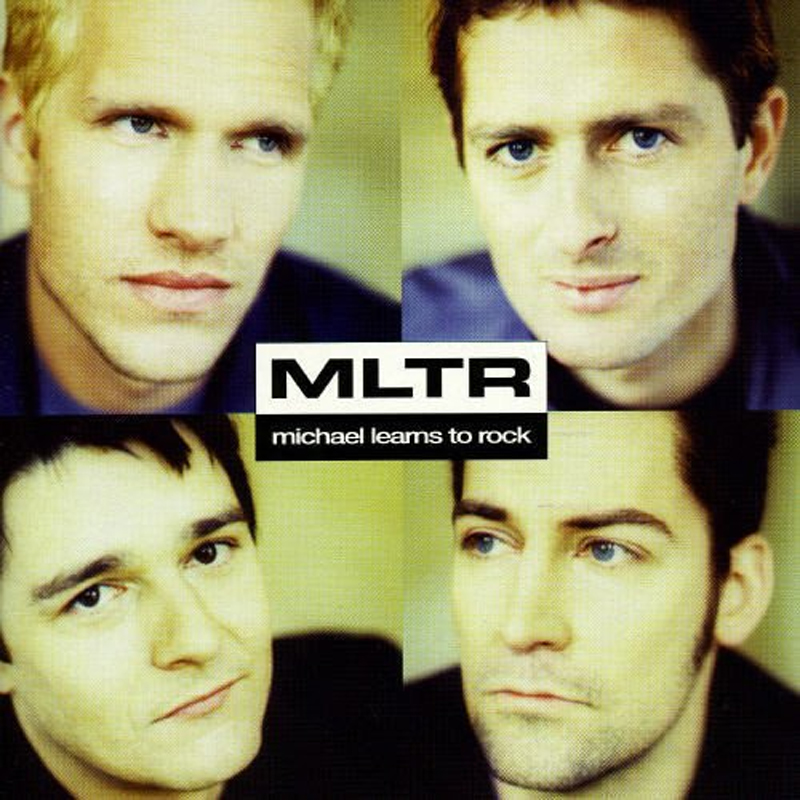
    Mumbai: MLTR celebrate their 25th. Year Anniversary on the international music scene, by coming back to The Most Beautiful Festival in Denmark (www.smukfest.dk) in the city of Skanderborg, Denmark. In cooperation with SubCell and their excellent new streaming concept, you can be a part of this concert LIVE as it happen. Do not hesitate! The first 10.000 users are for free. From there it costs USD 2,00 to participate. 

    The concert is on the 11th. August at 21:45 CET (Central European Time). 

    MLTR are looking forward to play this concert LIVE to all of their fans worldwide !

    World Premiere:
    Audio/visual live streaming service for smartphones
    Now fans and musicians can be closer than ever – live and via smartphone. You can follow all the concerts that you'd like to see but can't visit personally, directly on your smartphone – in real time, the very moment they are taking place.

    By using the SubCell App you can stream sound and video of the concert, starting on Sunday, 11th of August at the "Smukfest" festival in Skanderborg (Denmark), when MLTR (Michael Learns To Rock) will celebrate their 25th anniversary on the international music scene.

    You can download SubCell at Apple's and Google's app-store. After installing the app, you open it and choose your concert from the list of events. In case you don't have the necessary number of e-tickets on your SubCell account, you can purchase them via your Apple or Google account.
    With this newly developed app it's possible for the first time to watch a live concert in full length and in real time – and by paying only a small fee for the treat.

    The first 10,000 subscriptions to this world premiere are free of charge, all further subscribers pay 2 US Dollars for the concert.

    SubCell is the option for those who couldn't make it to the concert or for those of you who can do without sore feet, beer haze and being squeezed in a crowd of people.
    Music lovers can keep a clear conscience, too, as this is a 100 % artist-friendly set up ! Musicians and composers get the lion's share of the earnings, event hosts and property rights organizations get a small share.

    The artist and bands offer access to their concerts via SubCell and they define the price for the "tickets" themselves.

    The app was developed by AUDUX, a company in Nibe near Aalborg in Denmark. AUDUX ensures that the earnings are distributed to all concerned partners, that the musicians get the largest part of the total and that royalties are duly paid.

    We look forward to presenting you this innovative development at its world premiere on 11th of August at 9:45 p.m. C.E.T. with MLTR (Michael Learns To Rock) at the "Smukfest" Festival !

  • Un Certain regard unveiled its President of the Jury and Opening film

    Un Certain regard unveiled its President of the Jury and Opening film

    THOMAS VINTERBERG, PRESIDENT OH THE JURY

    Thomas Vinterberg, Danish director, scriptwriter and producer, will be this year’s President of the Jury for Un Certain Regard, Festival de Cannes Official Selection.

    Born in Copenhagen in May 1969, Thomas Vinterberg received his training at the National Film School of Denmark, graduating in 1993 as the school’s youngest student.

    His first short films Last Round (Sidste Omgang, 1993) and Drengen der gik bagl?ns (Le garçon qui marchait ? reculons, 1995) won awards at a number of festivals.

    In 1995, he partnered with Lars Von Trier and other artists to create Dogme95, a cinematographic movement that aimed to return to formal austerity in film making.

    In 1998, when he was discovered by the public at large with his feature film The Celebration (Festen), he received the Festival de Cannes Jury Prize from the President of the Jury, Martin Scorsese. One year later, he returned to the Croisette to preside over the Short Film Jury.

    In 2012, for the 65th edition of the Festival, he presented Jagten (The Hunt), which created a stir and for which lead actor Mads Mikkelsen won the Best Actor Award.

    Considered as a young prodigy by the profession as a whole, the artistic range of Thomas Vinterberg is not limited only to film. He also made the video clip of the song "The Day That Never Comes" from the album Death Magnetic by the group Metallica.

    He will succeed Tim Roth, last year’s President of the jury that awarded the top prize to the Mexican film After Lucia (Despues de Lucia), directed by Michel Franco.

    The Prix Un Certain Regard will be awarded on Saturday 25 May, the day before the Closing Ceremony of the Festival.

    THE BLING RING BY SOFIA COPPOLA : OPENING FILM

    The screening of The Bling Ring by Sofia Coppola, with Emma Watson in the title role, Ta?ssa Farmiga, Leslie Mann and Kirsten Dunst, will open Un Certain Regard on Thursday 16 May.

    Inspired by a true story, The Bling Ring recounts a group of adolescents who are fascinated by “beautiful people” and the world of brands, tracking the whereabouts and activities of celebrities online so that they can rob their homes. They steal over three million dollars of luxury items: jewellery, clothing, shoes, etc. Among their victims are Paris Hilton, Orlando Bloom and Rachel Bilson. The media nicknamed this gang the “Bling Ring”.

    An American director, actress, producer and screenwriter, Sofia Coppola lives in Paris.

    Her first films Lick The Star (1996), Virgin Suicides (1999) and Lost in Translation (2003), were very well received by critics and audiences, who recognized the authentic character of an auteur from her very first works. In 2005 she received the César for best foreign film for Lost in translation, which had already won an Oscar for best original script.

    Sofia Coppola said, "I am happy to come back to the Festival de Cannes. Marie-Antoinette was in competition in 2006, I presented my first film Virgin Suicides at the Directors’ Fortnight and I am very proud now to open Un Certain Regard with my new film that will be screened for the first time before an audience. I can’t wait to be there…"

    The Bling Ring will open in cinemas in France and around the world in June 2013.

  • India-based British documentary wins second prize in Audience Awards at Berlinale

    India-based British documentary wins second prize in Audience Awards at Berlinale

    NEW DELHI: Salma, an India-based documentary by British filmmaker Kim Longinotto, has received the second place in Panorama Audience awards at Berlinale.

    Salma chronicles the life of a woman from south India who was locked by her parents on reaching puberty and decided to fight her way back to the outside world twenty-five years later. She is now a well-known poet.

    The Panorama Audience Award has been given since 1999. During the Berlinale, movie-goers were asked to rate the films shown in the Panorama section and over 28,000 votes were cast and counted altogether. This year the Panorama presented 52 productions from 33 countries, of which 20 were documentaries.

    The 63rd Berlin International Film Festival will come to a close on February 16 with the presentation of the awards.

    The first prize for documentaries went to The Act of Killing by Joshua Oppenheimer which is a Denmark/Norway/Great Britain collaboration. The third prize went to A World Not Ours by Mahdi Fleifel (Lebanon/Great Britain/Denmark).

    In fiction, the prizes went to: The Broken Circle Breakdown by Felix van Groeningen (Belgium/Netherlands); Reaching for the Moon by Bruno Barreto (Brazil) and Inch‘Allah by Ana?s Barbeau-Lavalette (Canada/France).

  • France 24 expands distribution in key markets

    France 24 expands distribution in key markets

    MUMBAI: International news network France 24 has concluded a series of new distribution agreements, allowing the channel to strengthen its worldwide distribution in Denmark, Burma, Singapore, Thailand and Australia.

    In Denmark, the French and the Arabic versions of France 24 have joined the English version on the Digital terrestrial network (DTT) operated by Open Channel in Copenhagen. This new agreement allows France 24 to be available in three languages to 700,000 households throughout the Danish capital city.

    In Burma, France 24 English version has just launched on the new IPTV network Skynet (channel 45), allowing the channel to be available to 50 000 subscribers across the country.

    The news broadcaster has also signed an agreement with Telkom Vision in Indonesia which will ensure France 24 English version‘s availability on the operator‘s cable, IPTV and DTH offers. France 24 is now accessible to an additional 100,000 subscribers in major Indonesian cities, such as Jakarta, Bandung, Semarang and Denpasar.

    France 24 has extended its agreement with Singtel, the largest telecommunications company in Singapore, allowing its English version to be available on the operator mobile offer to 90 000 subscribers (Mobile TV subscribers).

    In Thailand, France 24 is now available on major IPTV operator ME TV. France 24 English version is now available 24/7 in the basic offer, while the French version will be available "?-la-carte" for 220 Bahts (5,5 Euros) per month.

    In Australia, France 24 has partnered with SBS, allowing its English version to be broadcast 30mn per day at 3pm on SBS ONE. This 30-minute news segment is also available for free on the Australian network website.

  • ‘Water’ to finally make it to Indian theatres

    ‘Water’ to finally make it to Indian theatres

    NEW DELHI: After bagging an Oscar nomination in the Best Foreign Language category and being theatrically released in 57 countries, including the United Kingdom and Denmark, and having already brought in $ 5.6 million at the North American box office where it played in 150 theatres, Deepa Mehta’s Water will finally be seen in Indian theatres early next month.

    The renowned director told a press conference in the Capital yesterday that the John Abraham-Lisa Ray-Seema Biswas starrer was being released on 9 March all over the country.
    The film figured among the final five nominees for the ‘Best Foreign Language Film Category’ for the Oscars beating Indian entry Rang De Basanti. It went to the Oscars as a Canadian entry. The Oscars are being presented on 25 February and will air live on Star Movies.

    The film is the third in the trilogy of films by Deepa Mehta after Fire and 1947 Earth, and deals with the plight of widows in the India of the 1930s. Fire tackled lesbianism while Earth dealt with the subject of India’s partition.

    Set against Mahatma Gandhi’s Civil Disobedience movement of 1938, Water is a deeply moving tale of three women and their uprising against gender injustice and servitude in the ‘widow houses’ of India. The film’s release in India has been made possible by BR Films, a distribution firm owned by filmmaker Ravi Chopra.

    Speaking at the press meet, Chopra said his decision to take up the release of the film in India was not impelled by the film winning an Oscar nomination. “The decision to release the film in India was made before the film bagged the Oscar nomination,” Chopra said. He added: ”It is a very cute film, a beautiful love story. It is a film which has won accolades and box office success galore in the US and in this sense made India proud in the West. This is all the more reason why I felt people in India should see this film.”

    The theatrical release for the film in India comes almost seven years after protests by fundamentalists forced the filmmaker to suspend its shooting in Varanasi and abandon the project. The protestors alleged that the film was “anti-Hindu” and the sets of the film were set on fire by radical Hindu protesters who also burned Mehta’s effigy in the streets and threatened the director. Hundreds of army troops were deployed to protect the cast and crew but the production was finally forced to shut down.

    The film was revived four years later with a different cast. John Abraham replaced Bollywood star Akshay Kumar while model-turned-actor Lisa Ray took the place of Nandita Das. The shooting of the film was undertaken in Sri lanka in 2005 though the locale is shown as Varanasi.

    Asked about the controversy surrounding the film, Chopra said, ”In the film, Deepa Mehta is talking about something that happened in India in the 1930s. One can differ with the director’s take on the hapennings, but nobody can deny that it happened. As an Indian I, after watching the film, did not feel that the film hurts Indian sensibilities in any way.”

    Initially, the film will be released with about 100 prints all over India, including nine in Delhi. ”The film will initially be released in theatres in metros like New Delhi, Mumbai, Hyderabad and Kolkata. Later, depending on the response, we will take it to smaller centers,” Chopra said.

    Mehta said “winning a nomination at the Oscars is itself a matter of pride. from hereon it does not matter whether the film eventually wins an Oscar.” The film has been shortlisted along with Pan’s Labyrinth (Mexico), After The Wedding (Denmark), Days of Glory and the German Cold War drama The Lives of Others.

    John Abraham said, “Deepa Mehta is an actor’s director. She understands her actors’ sensibilities and projects her characters very well. In fact, I am proud to say that finally I have a Deepa Mehta’s film on my CV.”

    Released by Fox Searchlight in the US in April last year, Water went on to become one of the best reviewed films of the year, and the highest grossing Hindi-language drama
    ever released in North America. It received the Freedom of Expression award from the National Board of Review, was named one of the top ten best pictures by the New York Film Critics online and received their humanitarian award.

    Besides the Oscars nominations for Best Foreign Language film, Water has earlier recieved nine nominations and three awards at the 26th annual Genie awards (Canada’s Oscars), including an award for Seema Biswas for ‘Outstanding Actress in a leading Role’, ‘Achievement in Music-Original Score’ award for Mychael Danna and ‘Achievement in Cinematography’ award for Giles Nuttgens.

    The film also won for Deepa Mehta the Best Director and Lisa Ray the Best Actress award in the 2005 Vancouver Film Critics awards and recieved a nomination for Best Canadian Film.

  • The History Channel to hit Scandinavia on 1 February

    The History Channel to hit Scandinavia on 1 February

    MUMBAI: The History Channel UK, a joint venture between A&E Television Networks (AETN) and British Sky Broadcasting (BSkyB), has announced an agreement to distribute The History Channel to Scandinavia, including Norway, Sweden, Denmark and Finland.

    Through an agreement with Norway’s Canal Digital, the channel will debut in Scandinavia on 1 February 2007. Available to approximately one million households across the region at launch, the channel will be broadcast in English with local subtitles for each of the four countries.
    The channel in Scandinavia will be programmed by The History Channel UK, but will offer a separate schedule from the UK service. The network will air on channel 27 in Norway, Denmark and Finland, and on channel 28 in Sweden, informs an official release.

    The History Channel features award-winning programming that covers a variety of topics, including ancient history, contemporary history, military history and conflict, and technology and transport. Among the original series that air on the channel are Battle Stations, Engineering an Empire, MegaDisasters, and Digging for the Truth; specials include The Crusades: Crescent and The Cross, Titanic, French Revolution and Egypt: Beyond the Pyramids.

    The History Channel UK commercial director Ian McDonough said, “Scandinavia is a hugely important market for us and we are excited to be launching The History Channel with a partner as strong as Canal Digital. The Scandinavian people have a keen interest in history and the channel’s programmes offer the highest production value together with topics ranging from the Ice Age to the Digital Age.”

    “We are very pleased to launch The History Channel Scandinavia, and expand significantly our European footprint,” said International AETN Vice President Sean Cohan. “As the brand’s visibility in the region grows, we plan to offer viewers our award-winning content across platforms – via mobile, broadband and VOD. We also look forward to introducing our other channels, The History Channel HD, The Biography Channel, Crime and Investigation Network in Scandinavia in the near future.”

  • CNBC Asia Pacific appoints director, news and programming

    CNBC Asia Pacific appoints director, news and programming

    MUMBAI: CNBC announced the appointment of John Casey to its Asia Pacific team, as the Director, news and programming. Casey reports to Jeremy Pink, president and managing director of CNBC Asia Pacific. Casey, based in Singapore, heads the news and programming division of the network in this region.

    In his capacity, Casey will oversee CNBC’s efforts to enhance the network’s programming. His responsi-bilities include supervising the development of content, talent and program schedule for CNBC Asia Pacific, ensuring the high quality of CNBC’s daily output, and developing new, compelling content for CNBC’s broadcast, mobile and broadband platforms.

    Casey joins CNBC in Asia Pacific, from CNBC Europe, based in London. He was the deputy head of news and the executive producer, Worldwide Exchange and Power Lunch. Casey has had more than a decade of experience in the production of business and financial news programs, and the management of news networks.

    He was instrumental in launching Worldwide Exchange, the world’s first global, tri-anchored, live newscast, simultaneously broadcast from Asia, Europe and the United States. He had also developed CNBC Europe’s rolling, volume-driven ticker, and the FTSE CNBC Global 300 Index, in collaboration with FTSE. He helped establish CNBC Nordic, in Denmark, and CNBCe in Turkey. He had also designed and built the CNBC Europe newsroom system.

    “John’s tremendous experience in the production of business and financial news content, his superior ability in managing a news room and his keen instinct for stories, coupled with his unwavering sense of editorial integrity, makes him a valuable member of our editorial and management team,” Pink said. “We’re delighted to have John head our news and programming division in Asia Pacific.”

  • Global survey predicts strong future for mobile TV

    Global survey predicts strong future for mobile TV

    MUMBAI: A new report European mobile phone users in early 2006, ‘New Mobile Services – Europe 2006’, from Portio Research, gives a resounding ‘thumbs up’ for mobile TV. Significantly over 50 per cent of those interviewed were interested in mobile TV and were prepared to pay for it, at an average price of €10 Euro per month.

    The key findings:

    • As many as 50 per cent of mobile users are interested in mobile TV and are prepared to pay on average €10 for ‘all you can eat TV’ – the potential market is huge even when based on conservative uptake.

    • Video calling is in its infancy with only 6 per cent of the survey sample having used it already, however over 60% of those interviewed expressed both an interest in using the service and a willingness to pay for it.

    • Mobile advertising is a big turn off for most with over 65 per cent of survey respondents expressing a zero tolerance attitude to what many consider to be spam, or advertising that you have pay for when ‘snacking’ on TV.

    It is clear that mobile TV will create a market for more TV viewing in addition to that at home, delivering the notion of ‘TV snacking’ whilst on the move. News and weather for professionals commuting to work, celebrity gossip and game show updates for the young professional and music videos for teenage fans. Sports aficionados also appear to be keen to grab the latest action whenever they can. All the evidence suggests that even at conservative estimates the market potential is huge, states an official release.

    Video calling whilst still in its infancy obviously holds an attraction for many users particularly the teen market 85 per cent of whom expressed a desire to use video calling in the future. Interestingly pre-paid subscribers were willing to pay more than post paid subscribers per call. Once again the research indicates a very attractive market with the potential for perhaps as many as 400 million Europeans using the service.

    One of the most interesting findings of the survey is consumer attitudes to mobile advertising, with over 65 per cent of those questioned expressing zero tolerance to what many consider to be an unwelcome intrusion into their mobile world. As well as being likened to e-mail spam, advertising was considered particularly unacceptable if it intruded on paid for time watching mobile TV, the release adds.

    The survey undertaken by Portio provides many different insights into mobile user attitudes and trends across all major European markets. Italy and Spain for example turn out to be the mobile content hotspots whilst users in Denmark, France and Russia prefer to use content and services pre-installed on their phones. Men continue to prefer buying online while women prefer to go shopping for real. There is plenty of good news in this report for mobile network operators.