Tag: Den Networks

  • Den Networks’ Q4 subscription revenue down 15% to Rs 190 crore

    Den Networks’ Q4 subscription revenue down 15% to Rs 190 crore

    KOLKATA: Multi-system operator Den Networks has reported consolidated net profit at Rs 33.89 crore for the fourth quarter of financial year 2021 (FY21), a 50.56 per cent rise year-on-year basis. 

    Revenue from the operations stood at Rs 320.79 crore from the quarter, sharply declining from Rs 1195.48 crore in the same quarter a year ago. Total income also declined, down 3.49 per cent at Rs 355.52 crore during the quarter under review as against Rs 368.39 crore in the same period a year ago.

    The company’s consolidated EBITDA was at Rs 65 crore at the end of Q4, a marginal increase from Rs 64 crore during the corresponding period of FY20.

    Den’s cable operations cover over 500+ cities/towns across 13 key states in India. While the cable business was incorporated in 2007, Den Broadband Ltd was incorporated in 2011. The company has its registered office in New Delhi. At present, it has enabled fixed broadband services across 41 cities or towns in India.

    However, the operator has seen a huge decline in subscription revenue tumbling to Rs 190 crore, a 15 per cent degrowth year-on-year from Rs 222 crore. Activation revenues have grown by 24 per cent to reach Rs 34 crore compared to Rs 21 crore in the same quarter last year.

  • AIDCF elects Anirudhsinh Jadeja as new president

    AIDCF elects Anirudhsinh Jadeja as new president

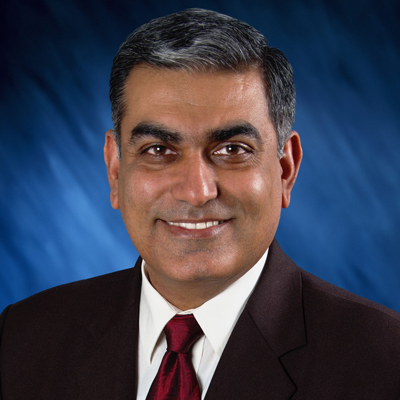
    KOLKATA: All India Digital Cable Federation (AIDCF) has appointed GTPL Hathway MD Anirudhsinh Jadeja as the new president of the apex body of digital cable television players. The change has been made as the tenure of DEN Networks CEO SN Sharma as AIDCF president ended on 31 March 2021.

    Jadeja is a veteran in the cable industry and founded GTPL Hathway in 2006. His strategic vision and hands-on leadership shaped the cable business over decades.

    While giving his farewell address, Sharma welcomed Jadeja as the next AIDCF president and said, “Cable industry has witnessed many challenges in the last two years, including huge operational challenges from Covid2019 pandemic, however, due to its strong roots with the public at large, it managed to sail through. We hope the coming time will be interesting and conducive for the growth of the industry.”

    In his first statement as AIDCF president, Jadeja said the apex body will continue to focus on the inclusiveness of all industry players, growth of the cable industry and its stakeholders, and representing the relevant issues and requirements of the industry in different forums. “The broadcasting and cable industry is witnessing the transformation in technology and delivery and we, at AIDCF, will continue to work towards benefitting the end consumers through technological advancements,” he added.

    Noting that the next two years will be a period of technological upheaval in the cable industry, AIDCF secretary general Manoj P Chhangani said the federation and its members under Jadeja’s leadership will chalk out a robust path in providing advanced services to the end consumers.

    All India Digital Cable Federation (AIDCF) is India’s apex body for digital Multi System Operators (MSOs). The federation works towards the overall growth of the sector and creates an environment for not only complete digitisation of cable TV under regulatory guidelines but also delivers the benefits of digital services including broadband and other value added services to the people of India thus fulfilling the dream of ‘True Digital India.’

  • TRAI’s consultation: DPOs favour defined CAS/SMS framework; Tata Sky, Airtel, IMCL differ

    TRAI’s consultation: DPOs favour defined CAS/SMS framework; Tata Sky, Airtel, IMCL differ

    MUMBAI: Conditional access system (CAS) and subscriber management systems (SMS) are two key pillars of delivering broadcast services in a secured and encrypted manner to authorised subscribers. However, existing technical requirements for CAS and SMS are generic in nature allowing all type of CAS and SMS systems to exist in the eco-system. Piracy in the distribution of signals occurs due to the deployment of CAS or SMS that do not comply with security protocols as per extant standards. Hence, the Telecom Regulatory Authority of India (TRAI) issued a consultation paper seeking comments on CAS and SMS.

    In response to the consultation paper, most major distribution platform operators (DPOs) have agreed that there is a need to define a framework for CAS/SMS systems to benchmark the minimum requirements of the system before these can be deployed by any DPO.

    Siti Networks has strongly agreed to the need of a framework commenting, “It has been observed that SMS and CAS vendors demand exorbitant amount for upgradation of their CAS/SMS according to the mandatory requirements of the regulations and the service providers does not have any option other than agree to their blackmailing due to the compliance requirement. Any such statutory upgradation in the system should not be burdened on the service providers.”

    Another major MSO, DEN Networks, also thinks that defining the framework for benchmarking the CAS or SMS will help DPOs to choose the right solution. There are various factors in CAS which differs from vendor to vendor as they use proprietary solutions to address the content security.

    GTPL Hathway also reflects the same tone as it says there is certainly an urgent need to define a framework for CAS/SMS systems. It adds that currently all CAS/SMS systems largely vary in terms of both security features and performance features.

    “Under the appliable regulations, DPOs are mandated to grant their customers a free choice to make their own package(s). However, it is pertinent to mention that most CAS available in the market have an upper limit to the number of packages in which the same service/channel can be repeated. Therefore, it is necessary that CAS should be able to be upgraded for offering all services and combinations thereof, available on such platform. Availability of full technical local support in India. Almost all CAS vendors have their experts based out-of-India which may affect DPO’s QoS as the availability of off-shore resources may sometime take time as they help remotely,” it adds.

    Among the DTH platforms, Dish TV also voiced for a comprehensive framework for CAS/SMS system especially for the requirement of end-to-end content protection and transparency in business for the CAS side and an end-to-end business enablement from the SMS side. It has also recommended an operating model wherein the DPO should have direct contract with each stack-holder viz. CAS service provider, SoC/Chipset maker, middleware, security element provider and STB maker wherein the CAS vendor will be as one of stack holder in entire echo system like others. 

    However, Tata Sky holds a different view. According to the operator, it may be premature to assume that the CAS or SMS systems require benchmarking right now. It adds that existing audits could be successful in identifying the systematic gaps which would force those specific DPOs to upgrade their systems to continue to receive signals from the broadcasters. 

    “We would need to be careful that a new and stringent regulation does not get misused to disenfranchise a large number of DPOs thus leading to another round of subscriber shock and dissatisfaction. If it is still concluded that a framework for benchmarking of the system needs to be created, then it should be arrived at by a multi stake holder consensus approach,” it adds.

    Airtel, which also runs a sizable DTH business, states that the basic and minimum requirements of CAS/SMS are well captured in Schedule III of TRAI regulation. It adds that CAS /SMS being a globally deployed technology, innovations are a constant feature. 

    "To start with, Airtel believes that TRAI can continue to use Schedule III requirements for the CAS /SMS while adding more features to it at regular intervals to make it more robust and to accommodate new innovations in the technology. Hence, there is no need for defining or introducing a new CAS /SMS framework. The requirements listed in Schedule III should be benchmarked as the minimum qualifying requirements for all CAS /SMS solutions operating in India as well as for all future deployment of CAS/SMS by a new DPO,” it states.

    While most MSOs are in favour of a framework, IMCL holds same opinion as Tata Sky and Airtel. “We believe that subject to the CAS/SMS/STB meeting the requirements specified in Schedule III, there is no need for any further assessment or benchmarking of products required in order for DPOs to deploy them within their networks. At most the regulator can “recommend” some preferred products, but there should not be any limit to DPOs being able to purchase or even build their own solutions subject to the requirements specified in Schedule III being met,” it comments. 

    IMCL also highlights that migrating to a new SMS platform as selected by TRAI would result in heavy costs being incurred, customisations having to be re-built into any new platform and large migration exercises to move customers to the new platform. Hence, its portals or mobile applications that are built to support LCOs, MSOs, subscribers and engineering staff would all need to be re-built in order to work with a new SMS platform. This change will result in essentially re-building the business from scratch taking away the business from other revenue-generating activities. 

  • Den Networks turns around biz, reports consolidated PAT of Rs 22.52 crore

    Den Networks turns around biz, reports consolidated PAT of Rs 22.52 crore

    MUMBAI: Major multi system operator (MSO) Den Networks  reported a consolidated profit after tax of Rs 22.52 crore in the fourth quarter ending 31 March 2020.

    The MSO reported consolidated net loss of Rs 212.82 crore in the corresponding period of previous fiscal. Revenue from operations in the fourth quarter stood at Rs 327.79 crore as compared with Rs 273.1 crore in the year-ago period.

    While its revenue from cable distribution network stood at Rs 310.18 crore in the January-March quarter as compared with Rs 255.11 crore in the corresponding period of previous fiscal, the broadband vertical had a revenue of Rs 17.62 crore as compared to Rs 17.99 crore in the fourth quarter of last FY.

    For FY20, the MSO’s consolidated profit after tax stood at Rs 58.64 crore while it had posted a consolidated loss of Rs 300.55 crore in 2018-19. Its consolidated revenue from operations in FY20 stood at Rs 1291.45 crore compared to  Rs 1206.07 crore in the previous fiscal.

  • DEN Networks appoints Rajendra Hingwala as additional independent director

    DEN Networks appoints Rajendra Hingwala as additional independent director

    MUMBAI: As per the recommendations of nomination and remuneration committee, the board of directors of DEN Networks has approved the appointment of Rajendra Dwarkadas Hingwala as an additional independent director of the company.

    According to the company's BSE filing, Hingwala has been named as a director for a period of three consecutive years with effect from 21 December 2019 to 20 December 2022.

    Hingwala is a chartered accountant and fellow member of the Institute of Chartered Accountants of India (ICAI). He worked as director/ partner with PricewaterhouseCoopers Pvt Ltd (PWC) and retired therefrom after 38 years of service.

    “Hingwala is neither related to any director of the company, nor debarred from holding the office of director by virtue of any Securities and Exchange Board of India (SEBI) order or any other such authority,” the press statement published on the bourses mentioned.

    Hingwala’s area of work included advising. He has an expertise on various provisions of double taxation avoidance agreements, direct and indirect tax implications of acquiring undertakings/ companies, structuring of business transactions, compliance of tax laws including litigation support and structuring of investment by foreign entities in India through various investment routes.

  • DPOs say broadcasters misusing TRAI tariff order with heavy discounts

    DPOs say broadcasters misusing TRAI tariff order with heavy discounts

    MUMBAI: Distribution platform operators (DPOs) believe that broadcasters have misused the flexibility available to them to give a discount on the sum of a-la-carte as high as 90 per cent. The operators have shared their views on Telecom Regulatory Authority of India's (TRAI) consultation paper (CP) on ‘Tariff related issues for Broadcasters and Cable services. The industry has also given mixed views over the implementation of the 15 per cent cap on discount for a-la-carte by broadcasters.

    TRAI had released the consultation paper seeking responses from stakeholders to review the new tariff regime on 16 August 2019. In its consultation paper, the authority informed that it has observed that broadcasters are offering bouquets at a discount of up to 70 per cent of the sum of a-la-carte rates of pay channels constituting those bouquets. “It indicates that in absence of any restriction on the discount on the offering of bouquets, broadcasters are making prices of a-la-carte channels illusory thereby impacting the a-la-carte choice of channels by consumers and giving huge discounts on bouquets to push even those channels which are not the choice of subscribers,” said TRAI.

    Tata Sky in its responses to TRAI expressed disappointment of not revisiting the entire new regime. It said, “We are glad that TRAI has finally acknowledged these misgivings, however, to our  disappointment, TRAI, instead  of conducting a  holistic exercise of revisiting the new regime in entirety has chosen to selectively focus only on  few issues thereby limiting the scope of the exercise.”

    “Having acknowledged the serious misgivings in the regulations, the current consultation is a piece-meal and isolated effort and not the appropriate way forward,” opined Tata Sky.

    It also suggested that TRAI should allow the price forbearance models at the wholesale and the retail level. Further, the channel pricing framework and methodologies should be left to the parties involved, allowing the market forces and negotiation between the parties to decide the same.

    Tata Sky also informed the authority that it is against implementation of any kind of cap overpricing. It suggested, “The DPO bouquet is much more subscriber-friendly as it caters to the needs of the subscriber for availing channels from multiple broadcasters within a pack rather than having to subscribe to multiple bouquets/ or channels.”

    However Bharati Telemedia, in its responses, said, “We are of the view that at this stage, no changes should be made to any of the provisions of the tariff order including the provision w.r.t discount on sum of a-la-carte channels forming part of bouquets offered either by the broadcaster or the DPOs. Any changes at this stage will be equivalent to migration and this may not be the ideal time to cause any interference as it will also lead to unnecessary disturbances and customer dissatisfaction.”

    DEN Networks said that some broadcasters are indulging in heavy discounting of bouquets by taking advantage of non-implementation of 15 per cent cap on discount which has created a non-level field vis-à-vis other broadcasters.

    DEN Networks also expressed that popular channels are being unnecessarily clubbed with non-popular channels to push their uptake. It said, “The broadcasters who have large number of channels in their repertoire, are engaging in a practice of forming large number of heavily discounted bouquets (with minor changes) to push popular channels with non-driver channels. It can be seen that the channels which were FTA before the implementation of the new regulatory framework have been converted into pay channels with the price range of Rs 0.10-0.50/- just to push them with in a bouquet with popular channels of the broadcaster.”

    The operator believes that the non-implementation of 15 per cent cap on discount clubbed with the ceiling of Rs 19/- on the price of MRP of a-la-carte channels forming part of such bouquets is responsible for pushing unwanted channels along with popular channels.

    All India Digital Cable Federation (AIDCF) in its responses to TRAI said, “The non-implementation of the said proviso has given leverage to the broadcasters to offer their bouquets at discount which is as high as 70 per cent of the sum of a-la-carte channels forming part of such bouquets. This flexibility of giving discounts without a cap, created a non-level playing field for the distributors because the bouquets were priced on a discriminatory basis.”

    Sharing similar views, AIDCF and GTPL Hathway said, “The flexibility available to broadcasters to give discount on sum of a-la-carte channels forming part of bouquets has been grossly misused by the broadcasters. The same has also been acknowledged by the authority. It is pertinent to mention that the broadcasters have not only offered huge discounts as high as 90 per cent on their bouquets but have also created confusion in the minds of consumers, by offering  numerous bouquet(s) comprising of few popular  and bulk of non-popular channel(s) with a clear intent to push their non-popular channels.”

  • TRAI sends directive to 5 major MSOs for non-compliance of NTO provisions

    TRAI sends directive to 5 major MSOs for non-compliance of NTO provisions

    MUMBAI: The Telecom Regulatory Authority of India (TRAI) has directed five major multi system operators to comply with all provisions of its the new tariff order (NTO). After receiving scrutiny of the reply of earlier notice from the MSOs, TRAI found violation of rules of NTO.

    Following issues were found by the regulator for Induslnd Media and Communications Ltd   :

    ·         LCOs are not  providing  the itemised invoices to  the  consumers.  Some LCOs  are providing their  own  Cash memo bills.

    ·         Consumer portal provided by IMCL is not  working

    ·         IVRS facility of IMCL does not  have  any  provision for complaint registration.

    ·         LCOs without GST Registration are collecting tax  amount from  the  subscribers but not  depositing it.

    Following issues were found by the regulator for Hathway Digital:

    • Facility of Bill generation is available in LCO portal, but the customers are  not able  to get itemised billing in most cases even  after the request of the  subscriber,

    •LCOs without GST Registration are collecting tax  amount from  the  subscribers but  not  depositing it.

    Following issues were found by the regulator for GTPL Hathway:

    •IVRS facility of M/s GTPL Hathway Ltd.  does not  have provision for  complaint registration

    •The consumer portal of GTPL KCBPL has very  limited facilities. The facility ofupgradation and modifications in  subscription is  not  available on  consumer portal.

    •LCOs without GST Registration are  collecting tax  amount from  the  subscribers but not  depositing it.

    Following issues were found by the regulator for SITI Networks:

    •LCOs can  provide itemized invoices to consumers but most of the  LCOs are  not providing the  same. Some LCOs are  providing their own  cash memo bills;

    •IVRS facility of Siti  Networks Ltd.  does  not   have any  provision for  complaint registration.

    Following issues were found by the regulator for DEN networks:

    • LCO are  providing their own  cash memo bills  using card system for  payment receipts, while  the  subscribers are  not  able to get itemized bills

    • Facility of  upgradation  and  modification in  subscription is not   available on consumer portal.

    •LCOs without GST registration are  collecting tax  amount from  the  subscribers but  not  depositing it.

    All the MSOs have been directed to report compliance as per the new regulatory framework within seven days from the date of issue of this direction.

  • RIL plans to acquire additional 26% stake in Hathway Cable and Datacom

    RIL plans to acquire additional 26% stake in Hathway Cable and Datacom

    MUMBAI: Reliance Industries (RIL) and its group companies have announced an open offer to acquire an additional 26 per cent stake in Hathway Cable and Datacom, after receiving the approval from Competition Commission of India (CCI), according to a new article in the Press Trust of India.

    Reliance Industries along with Jio Content Distribution, Jio Internet Distribution Holdings and a clutch of group companies "have announced an open offer for acquisition of up to 46,02,27,170 fully paid up equity shares…from public shareholders of Hathway Cable and Datacom, representing 26 per cent of the expanded voting share capital, at a price of Rs 32.35 per equity share aggregating to total consideration of Rs 1,488.83 crore, payable in cash," Hathway informed in a regulatory filing.

    In October 2018, Reliance Industries had acquired majority stakes in Den Networks Ltd and Hathway Cable and Datacom Ltd for Rs 5,230 crore.

    In DEN, Reliance made a primary investment of Rs 2,045 crore through a preferential issue and secondary purchase of Rs 245 crore from existing promoters. In Hathway, RIL made a primary investment of Rs 2,940 crore through a preferential issue.

  • Reliance Jio adds 27.9 mn subs in Q3; GigaFiber marks entry in 1400 cities

    Reliance Jio adds 27.9 mn subs in Q3; GigaFiber marks entry in 1400 cities

    BENGALURU: Mukesh Dhirubhai Ambani’s juggernaut Reliance Industries Ltd (RIL) reported 50.7 percent growth in gross revenue for the quarter ended 31 December 2018 (Q3 2019, quarter or period under review) as compared to the corresponding year ago quarter. The company’s operating result was 25.4 percent higher during the quarter under review as compared to the year ago quarter. Organised retail under Reliance Retail Ltd and Digital Services segment under Jio have been adding a larger and larger share to the company’s topline and operating results over time. 

    Q3-2019 was no different. Revenue for RIL’s Reliance Retail almost doubled (grew 89.3 percent) y-o-y in Q3 2019 to Rs 35,577 crore (16.7 percent of gross revenue) as compared to Rs 18,798 crore (13.3 percent of gross revenue) in Q3 2018. The segment’s operating result grew 210.5 percent y-o-y to Rs 1,512 crore (0.71 percent of gross revenue) during the period under review from Rs 487 crore (0.34 percent of gross revenue). The segment’s contribution to operating results grew to 8.7 percent in Q3 2019 from 3.5 percent in Q3 2018.

    RIL’s digital segment revenue in Q3 2019 grew 51.2 percent y-o-y to Rs 12,302 crore (5.8 percent of gross revenue) from Rs 8,136 crore (5.8 percent of gross revenue). Operating results for the digital segment grew 64 percent y-o-y to Rs 2,362 crore (1.1 percent of gross revenue) in Q3 2019 from Rs 1,440 crore. (1 percent of gross revenue). The segment’s contribution to operating results grew to 13.6 percent in Q3 2019 from 10.4 percent in Q3 2018.

    RIL reported gross revenue of Rs 2,12,752 crore for Q3 2019 as compared to Rs 1,41,182 crore for the corresponding year ago quarter. Operating result for the period under review was Rs 17,341 crore as compared to Rs 13,830 crore for Q3 2018. The company reported profit for the period as Rs 10,376 crore which was 10 percent higher as compared to Rs 9,437 crore in Q3 2018. Total Comprehensive income for Q3 2019 was 28.8 percent higher y-o-y at Rs 11,052 crore as compared to Rs 8,582 crore.

    FTTH JioGigaFiber services, Den Networks and Hathway Cable & Datacom Investments

    In its earnings release, RIL said that JioGigaFiber services for home broadband, entertainment, smart home solutions, wireline and enterprise has witnessed overwhelming customer interest across 1,400 cities. Trial services are being rolled out across several cities to optimise service offerings.

    The company said that Jio’s customer engagement stayed healthy with average data consumption per user per month of 10.8 GB and average voice consumption of 794 minutes per user per month. Video consumption drove most of the usage, increasing to 460 crore hours per month.

    RIL said further that it awaits regulatory approvals to complete the recently announced investment in Den Networks Ltd and Hathway Cable and Datacom Ltd. Post completion of the transaction, Reliance and Jio will be strengthening the business model of 27,000 LCOs that are aligned with DEN and Hathway across 750 cities, by creating multiple future opportunities with new services and platforms.

    RIL says that Jio added 2.79 crore subscribers in Q3 2019 and its net subscriber base grew to 28 crore. The company says that Jio has had the lowest monthly churn in the industry of 0.61 percent during the quarter. Jio’s ARPU for Q3 2019 was Rs 130 as compared to Rs 131.70 in the immediate trailing quarter.

    Company speak

    RIL chairman and managing director Ambani said, “In our endeavour to consistently create more value for our country and stakeholders, our company has become the first Indian private sector corporate to cross Rs 10,000

    crore quarterly profits milestone. I am proud to be part of the committed and talented team at Reliance that has helped achieve many milestones in our continuing growth journey.

    “In an oil price environment that witnessed heightened volatility through the quarter, RIL has delivered strong quarterly results on a consolidated basis. Competitive cost positions and integration benefits is core to our oil to chemicals (refining and petrochemicals) business, driving sustained performance even in challenging global business environment. In our new-age consumer businesses, we maintained robust growth momentum across Retail and Jio platforms and the share of consumer businesses is steadily increasing its contribution to the overall profitability of the Company. In our wireless business, our customer-centric offerings and strong ubiquitous network are helping to digitalise India at an unprecedented rate. As we execute on our strategies to deliver superior products and services to Indian consumers, I am confident, Reliance is well-positioned for the future and for the next cycle of growth,” concluded Ambani.

  • Airtel’s fixed line broadband biz under pressure as Jio enters the fray

    Airtel’s fixed line broadband biz under pressure as Jio enters the fray

    MUMBAI: More than a tenth of Airtel’s India revenue is generated through its cable business, through broadband and digital TV. And now with Reliance Jio’s entry in the cable market through its acquisition of controlling stakes in DEN Networks and Hathway cables, Airtel is very certain to face pressure in the cable industry.

    According to ET, investment banking company Credit Suisse in a note said, “The buyout of DEN Networks and Hathway Cables will give Reliance Jio Infocomm “a headstart” in the ultra-fast fibre-to-home service turf, which “we see as a real threat to Bharti’s non-mobile businesses —namely, home broadband and digital TV — which garner as much as 12 per cent of Bharti’s India revenues, excluding Bharti Infratel revenues”.

    Airtel generates as much as 17 per cent of its India operating income through home broadband and digital TV business.

    Reliance acquired a 66 per cent stake in DEN Networks and a 51.3 per cent stake in Hathway Cables last week. The deals are said to be aggregating around Rs 5,230 crore.

    As per the Swiss brokerage, Mukesh Ambani-led Reliance will gain access to 24 million cable homes and leapfrog Bharti’s modest 2.1 million fixed-line homes, very few of which have fibre connectivity. Nearly out of 24 million cable homes, 16 million reside in the top 100 cities.

    Analysts believe that Reliance Jio will have more bargaining power regarding content negotiations with broadcasters as they have access to a combination of 24 million cable homes and 252 million 4G mobile broadband customers.

    However, Japan-based financial services company; Nomura Holdings does not expect Jio’s evaluated home broadband spending of $120-140 per home to reduce drastically as “the last-mile network infrastructure of DEN and Hathway will need to be upgraded.”