Tag: Den Networks

  • MediaPro issues notice against DEN Networks

    MediaPro issues notice against DEN Networks

    MUMBAI: Public notices seem to have become a norm in the present time. Facing the ire this time is the multi system-operator – DEN Networks, which has got a public notice from the content aggregator – MediaPro. MediaPro, in its notice published in newspapers, has informed the consumers that the 74 channels in the bouquet of the aggregator will go off air in three weeks from today.

    The reasons cited for deactivation of channels is: non-payment of subscription fee and/or outstanding arrears and non-submission of subscriber reports. “All the areas serviced by the cable operator(s) and its franchisees in the DAS areas will be affected,” states the notice.

    The channels that can go off air in case the requirements are not met include: Zee 24 Gantalu, 24 Ghanta, Zee 24 Taas, Cartoon Network, CNN, ETC, Zee ETC Punjabi, HBO, Pogo, Warner Brothers, Zee Action, Zee Bangla, Zee Business, Zee Café, Zee Cinema, Zee Classic, Zee Jagran, Zee Kannada, Zee Marathi, Zing, Zee News, Zee UP UK, Zee Premier, Zee Punjabi Haryana Himachal Pradesh, Zee Salaam, Zee Smile, Zee Studio, Zee Talkies, Zee Tamil, Zee Telugu, Zee Trendz, Zee TV, Star Movies, Star Plus, Star World, Star World, Star Gold, National Geographic Channel, Fox Traveller, Life OK, Star Vijay, Channel V, MGM, ABP Ananda, Star Jalsa, FX, Fox Crime, Nat Geo Wild, Nat Geo Adventure, Nat Geo Music, Baby TV, NDTV 24X7, NDTV Profit, NDTV Good Times, NDTV India, Suvarna, Star Utsav, ABP News, Zee Khana Khazana, Movies OK, Star Pravah, ABP Majha, Asianet, Asianet Plus, Star Movies Action, Zee Bangla Cinema, ZeeQ, Star Jalsa Movies, 9X, Asianet Movies, Zee Madhya Pradesh Chhatisgarh, Suvarna Plus, Zee Marudhara, & Pictures and Zee Anmol.

    However, the two parties will be meeting for resolving the issues. “I am still to collect the details for the public notice. These things keep happening between the broadcaster and the distributor. We will resolve the issue. We have invested heavily in digitisation. Once we collect the money from the ground, we will clear the payments,” says a DEN Networks official.

    MediaPro is a joint venture between Zee Turner and Star DEN.


  • Cricket Packs could become universal

    Cricket Packs could become universal

    MUMBAI: Digitisation is set to change the way television channels are packaged. In addition to the subscriber getting the option to pick and choose channels, multi-system operators too are finding newer opportunities.


    MSOs have found a good business prospect in cricket, the most-watched sport in India.


    With digitisation of cable TV services in 42 major cities, MSOs are increasingly shifting to per subscriber deals with broadcasters instead of making bulk payments.


    Hathway Cable  & Datacom, like direct-to-home television service provider Dish TV, has carved out a Cricket Pack for its subscribers.


    In the case of Dish TV’s India cricket pack, the channel on which live telecast of a match involving Indian men’s cricket team is switched on.


    “Sports channels, by the nature of its programming are event driven. We have an Indian Cricket Pack, which is a cost per subscriber deal with broadcasters,” says Hathway Cable  CEO Jagdish Kumar.


    More MSOs are likely to follow suit and offer Cricket Packs to their customers.


    “Though right now we have entered into a per set top box deal with the sports channel broadcasters, we may also look at Indian Cricket Pack going forward,” informs SitiCable COO Anil Malhotra.


    There are three types of commercial arrangements entered between broadcasters and operators. These are: Fixed deal, in which the operator pays a lump sum amount to the broadcaster; Reference Interconnect Offer, in which operator takes channels based on the choice of the subscribers; and on a per set top box deal, in which the operator shares details of the number of STBs installed with the broadcaster and the number of the subscribers subscribing to a sports channel.


    DEN Networks is currently on a fixed deal with the sports broadcasters. “We are still asking for lump sum because of cash flow issues,” informs DEN Networks CEO SN Sharma.


    While till last year, broadcasters were entering into fixed deals with operators, “now everybody is moving towards cost per subscriber,” adds Sharma.


    When questioned if DEN would also offer Indian Cricket Pack, Sharma says, “Let’s see. Different experiments are happening. With time everything will evolve.”


    According to GTPL Hathway COO Shaji Mathews, broadcasters are entering into fixed deals or negotiate a per subscriber rate.


    “The per subscriber deal has clauses which say that the operator needs to show a minimum number of subscribers who subscribe to the channels,” he says.


    Currently, GTPL Hathway has a fixed fee deal with the sports broadcasters.


    “The moment we get into a la carte, the rates are really high and if we get into cost per subscriber, unless we guarantee a certain number of subscribers for the channel, the cost per subscriber is also high. So, in fact on fixed deal, we land up paying less because of the fee structuring,” he says.


    GTPL Hathway may also move to Indian Cricket Pack. “We are looking at that as well,” he says.


    It makes business sense for channel distributors to create cricket packs. But Increasing inclination towards cricket packs would mean predominantly cricket channels would gain at the cost of those with less or absolutely no cricket content.

  • MSO Alliance condemns attack on Hathway senior executive

    MSO Alliance condemns attack on Hathway senior executive

    MUMBAI: The MSO Alliance comprising Hathway Cable & Datacom, SitiCable, DEN Networks and IndusInd Media and Communication Limited (IMCL) has condemned the attack on Delhi-based senior executive of Hathway.


    The executive was attacked in Gurgaon on 25 February, while he was on his way home and is currently recuperating in the hospital.


    A statement issued by MSO Alliance secretary SN Sharma reads, “All national MSOs are implementing DAS as per rules and regulations defined by TRAI and are implementing the law passed by the Parliament to bring greater transparency in the entire value chain of the cable TV industry.  This is being done to enhance consumer viewing by delivering world class digital experience to them. However, there are certain persons who are trying to derail the entire process of digitisation and have even used illegitimate and criminal means to stall the process.”


    All the leading MSOs have strongly deplored and condemned the criminal and nefarious activities “and persons who have done such reprehensible act against an employee who had no fault and was simply involved in implementing the law of land,” the MSO Alliance says.


    The MSO Alliance has reiterated its commitment to DAS. “We would like to emphasise once again that such activities would not deter us in implementing the process of digitising the country and we urge the authorities to take strict action against such criminals immediately,” reads the note.


  • Den Networks reports higher revenue, lower PAT in Q3-2014

    Den Networks reports higher revenue, lower PAT in Q3-2014

    BENGALURU: Indian cable TV distribution company Den Networks Limited (Den Networks) reported 22.9 per cent consolidated revenue growth to Rs 297.24 crore in Q3-2014 as compared to the Rs 241.83 crore in Q3-2013 and a 7.5 per cent growth from Rs 276.58 crore in the immediate trailing quarter. YTD, Den Networks reported consolidated revenue of Rs 849.25 crore during nine months – 2014 which was 29 per cent more as compared to the Rs 658.54 crore during nine months (9M) – 2013. During FY 2013, Den Network’s Operating revenue was Rs 934.65 crore. 


    PAT (after minority interest) for the current quarter was down (59.1) per cent to Rs 7.02 crore in Q3-2014 as compared to the Rs 17.17 crore in Q3-2013 and was (37.2) per cent lower than the Rs 11.18 crore in the immediate trailing quarter. During 9M-2014, the company’s PAT at Rs 28.35 crore was down (37) per cent as compared to the Rs 44.94 crore in the corresponding nine month period of last year. 


    Let us look at the other Q3-2014 figures reported by Den Networks 


    Cable revenue for Q3 -2014 was Rs 281.00 crore as compared to Rs 229.66 crore in Q3 FY’13, up 22 per cent y-o-y and 7 per cent more than the Rs 263.32 crore in Q2-2014. Over 9M-2014, cable revenue was up 31 per cent to Rs 807.16 crore as compared to the Rs 617.18 crore in 9M-2013. 


    Cable EBIDTA in Q3-2014 was up 44 per cent to Rs 91.95 crore  from Rs 63.63 crore in Q3-2013 and was up 3 per cent from Rs 89.43 crore in Q2-2014.During 9M-2014 EBIDTA was 80 per cent higher at Rs 267.21 crore than the Rs 148.64 crore in 9M-2013. 


    Den Networks Total expense for Q3-2014 at Rs 238.63 crore was up 17.19 per cent as compared to the Rs 203.63 crore in Q3-2013 and 6.3 per cent more than the Rs 224.43 crore in Q2-2014. YTD, the company’s Total expense during 9M-2014 at Rs 692.75 crore was 23.7 per cent more than the Rs 560.20 crore in 9M-2013. The company reported Total expense of Rs 777 crore in FY 2013. 


    The networks content cost in Q3-2014 at Rs 95.33 crore was 15 per cent higher than the Rs 82.93 crore in Q3-2013 and was 5.3 per cent more than the Rs 90.54 crore in the immediate trailing quarter. During 9M-2014, Den Networks paid Rs 270.88 crore towards content cost, which was  19.3 per cent more than the Rs 227.03 crore in 9M-2013. During FY 2013, the company paid Rs 298.8 crore towards this cost head.


    Den Networks finance cost more than doubled (up 2.08 times) in Q3-2014 to Rs 24.40 crore from Rs 11.69 crore in Q3-2013 and was up 0.5 per cent from Q2-2014’s Rs 24.28 crore. YTD, in 9M-2014, the company paid Rs 696.94 crore which was 2.28 times the Rs 30.72 crore in 9M-2013. During FY 2013, finance cost was Rs 40.78 crore. 


    The company says that out of a total subscriber base of 1.3 crore homes, approximately 0.57 crore homes have been converted to digital. It claims to be present in 27 out of a total of 41 Phase 1 and 2 cities and approximately 0.5 crore set top boxes have been deployed in these markets.


    Den Networks further says that it has an estimated analog base of 0.8 crore homes in its Phase 3 and 4 markets. The company says that is well capitalised to meet the deployment requirements of its existing subscriber base in these cities. More than 0.07 crore set top boxes have already been installed and the pace of deployment is expected to pick up rapidly as the deadline approaches. The company says that it has also launched digital services in several major cities and towns of Uttar Pradesh, Maharashtra, Bihar, Rajasthan and West Bengal over the last few months.


    Click here for financial

  • Bengaluru MSOs to start gross billing, packaging from April

    Bengaluru MSOs to start gross billing, packaging from April

    MUMBAI: The multi-system operators (MSOs) in Bengaluru are determined to do all that is needed to be in the good books of the Telecom Regulatory Authority of India (TRAI). The latest is that 12 MSOs met today in Bengaluru to discuss the status of consumer application forms (CAFs), gross billing, local cable operators (LCO) agreements and packaging to ensure compliance with TRAI regulations on digitisation.


    “This was a coordination meeting where we discussed about gross billing and also packaging,” informs a highly placed MSO who was present at the meeting.


    The group of 12 MSO will soon come out with a joint advertisement that will be published in Bengaluru newspapers and will inform the consumers about gross billing and packaging.


    The same was done in Delhi when the MSO Alliance jointly came out with an advertisement in local newspapers on the issue of gross billing.


    “We are looking at forming a joint committee in order to ensure that the guidelines set by TRAI can be followed,” informs the source.


    The timeline to start gross billing was also discussed in the meeting. “Gross billing in Bengaluru will start not later than April 2014,” informs Hathway Cable & Datacom MD & CEO Jagdish Kumar Pillai. Another important issue raised was that of the LCO-MSO agreement. “There were discussions on the revenue share for LCOs, the package rates etc,” adds Pillai.


    A Bengaluru-based MSO on the condition of anonymity informs, “The MSOs discussed on getting into a truce so that none of the MSOs infringe on each other’s subscribers. No decision has been taken on this though. The MSOs have asked for a couple of days to come to a final decision.”


    Another point discussed was that each LCO has to pay Rs 90 per subscriber per month to the MSO for using its services. “Discussions on packaging took place, which should be in place by April,” adds the Bengaluru based MSO.


    Earlier this week, Hathway, which has around eight lakh subscribers in the city, had switched off set top boxes of close to two lakh subscribers as they had not filled CAFs. “We had switched off 2.5 lakh STBs. This was to ensure that we comply with the TRAI guidelines,” concludes Pillai. 

  • TRAI: Phase I and II CAF collection nearing completion

    TRAI: Phase I and II CAF collection nearing completion

    MUMBAI: When the entire process of digitisation started in the country, nobody would have thought it would be such a tough nut to crack and there would be a slippage of so many deadlines. Recently, the Telecom Regulatory Authority of India (TRAI) warned the multi-system operators (MSOs) and subscribers in the digital addressable system (DAS) Phase I and II towns that enough was enough and that they had better get going on finishing the task of submitting the Customer Application Forms (CAFs) with two deadlines – on 27 January for 23 cities and on 31 January for eight cities – once again proving elusive.

    The caning seems to have worked well as everything is getting back on track now. A TRAI official informs that the work in the Phase I and II of Digital Addressable System (DAS) is near completion. Cities with 27 January as the deadline – Rajkot, Surat, Vadodara, Faridabad, Mysore, Aurangabad, Nasik, Pimpri-Chinchwad, Pune, Sholapur, Amritsar, Ludhiana, Jaipur, Jodhpur, Agra, Allahabad, Ghaziabad, Kanpur, Lucknow, Meerut, Varanasi, Chandigarh and Howrah – have almost been  100 per cent  penetrated with active set top boxes (STBs). Almost 85 per cent work has been done (as of 29 January) in areas with 31 January as the deadline that includes cities such as Patna, Ahmedabad, Ranchi, Bengaluru, Kalyan-Dombivali, Nagpur, Navi Mumbai and Thane.

    MSOs have been given two to three additional days post the deadline to submit their compliance reports to TRAI.


    “We are in touch with the MSOs on a daily basis and nearly 99.7 per cent has been completed as per the deadlines. If subscribers have failed to fill the forms, MSOs have cut off connections, saving TRAI’s time and also saving themselves from any action against them,” informs a TRAI official.

    However, Maharashtra Cable Operators Federation (MCOF) president Arvind Prabhoo says that only 70 to 75 per cent work has been completed in the second deadline areas, while in Navi Mumbai hardly 30- 40 per cent work is done.

    A cable operator from Airoli says, “We had got CAF forms in the beginning till about June last year. After that it stopped coming to us.”


    But Siti Cable COO Anil Malhotra says that almost 90 per cent work has been completed and the subscribers who fail to fill the forms by tonight will have to face a TV blackout. “Scrolls have already been running to make them aware about it and thus we are sure that we will reach 100 per cent compliance soon,” he remarks.


    Hathway Cable and Datacom CEO Jagdish Kumar claims that in these areas Hathway has reached near about 100 per cent. “By 27 December, almost 90 per cent work was done, while the rest had to face a disconnection. Few customers came back to fill the forms and others switched to DTH,” he says. In the next eight cities, about 80 per cent of forms have been collected and fed into the system.


    Another leading MSO, Den Networks is also claiming to have achieved 100 per cent compliance for the two dates. Says Den Networks CEO S N Sharma, “In these cities we have complied fully and sent the report to TRAI. We have data of all subscribers and for those who haven’t sent them, their cable connections have been cut off.”


    A bright day for digitisation doesn’t look far if the above numbers are to be believed. While few exceptions are always there, most of the stakeholders are taking it seriously. And if the MSOs continue at the same pace and work towards achieving the goal diligently, by February, the work for phase III and IV will kick off.

  • The LMO-MSO relationship will get clarified within six months: Sameer Manchanda

    The LMO-MSO relationship will get clarified within six months: Sameer Manchanda

    NEW DELHI: Digitisation has given an opportunity for cable to compete with direct-to-home (DTH). There was a time when digital meant DTH and cable was largely analogue. But now, there is competition between digital and digital. While world over, cable is supposed to provide premium products, here in India, DTH was and is considered as a premium product. Digitisation has given cable an opportunity to show its might to DTH, compete with it, and provide customers television without interruption and with broadband internet and Value Added Services (VAS).


    We are in a highly competitive work environment. For smaller players to emerge, they will need scale, pure execution and vision of where they want to see themselves. They should be thinking big and along with that, should have the patience to wait for at least 5-10 years. There will be hiccups and ups and downs, but as long as they manage and maintain the course, they will achieve their goal. Cable has a unique proposition. It has scale, is a mass product, has mass appeal, is bigger than DTH, and every home has been watching cable since 1991. So just believe in the vision.


    Cable is a technology; we just have to leap frog from analogue to a complete different pipe, and that will happen in the next 5-10 years. As we saw in the case of mobile, even cable will go the same way as the world has gone.


    I know that there is a lot of pain, and in the beginning years, we have all faced it and will probably face it for a little longer too. But in the next 10 years, everyone will benefit. And every stakeholder, be it small Multi System Operators (MSOs), Last Mile Owners (LMO) or national MSOs, each one will gain. The industry can only be as vibrant and strong as each of its players. So, one player cannot remain vibrant while the other isn’t. The whole industry has to be vibrant and so, we all have to take a step forward in unifying the cable industry and making it vibrant.


    The LMOs and MSOs have to think that they are partners. Right now, there is a turf war of economics. But it will wear off once they realise that the customer will go wherever he/she wants to. He will go to DTH or the IPTV platform or 4G or any other platform where he/she gets better service. So, the LMOs and MSOs have to understand that they have to be together.


    If you see, the MSOs are ploughing in a lot of investment; they are dealing with broadcasters and are taking risks. They are also the ones who are making the pipe much stronger, so if you look at that, there is a role that the MSO plays and then there is a role that the LMO plays.


    Today, the turf war is on economics. But in six to nine months, each player will understand the strengths and weaknesses of each party. And if they play to the strengths, the customer will get a better product and then he/she will pay much more than what he/she earlier paid. Because if you see that from 70 channels, they will have 300-400 channels, then there will be VAS and much more. So you will see that the LMOs will be making much more than what they are making today.


    The revenue share needs to be sorted and these are things that need discussion. The MSO is also in a tight position. He has to deal with broadcasters and also ensure that the customer management is better than DTH. There are investments that need to be made. So I think that both parties need to understand each other.


    The first effect of digitisation has already been felt and that has happened from the customers’ end. The customer today has moved from some 70 channels to 300 channels and all this with no interference. He/she has been given a box for a reasonable sum and in a few minutes, with no wire and antenna, he has started getting the digital experience. This has been the real effect of digitisation, which has unfortunately gone unnoticed. And this was the reason that 21 million homes, which could have chosen DTH, chose digital cable instead. So the effect of digitisation has been felt, but now because of switch offs, the LMO issue, and under investment by some players, the impact is marred. So there will be good and bad times for cable, but then in a couple of years, it will all be sorted.


    The entire chain of media will become vibrant. The broadcaster, LMO and MSO will gain. Currently, since everybody is looking at getting the most, there are wars, but this will get resolved in six months, it can’t take longer. I want to see the industry getting stronger, more vibrant. Customers should be so happy with cable that they start moving from other players to cable. We all want cable to be strong and the whole chain to be very vibrant.


    I am an optimist. Media has a great future in the next 5-10 years. No one part can say that he will gain while others don’t. All stakeholders will benefit. Even the customers will have the option of close to 1,000 channels. Yes, they will have to pay more for that, but at least, they will have the option to pay for what they want to watch, which was not there earlier. But unfortunately, this will need them to cough up a lot of money. There will be pain, but eventually, every stakeholder will have to think about 5-10 years later.


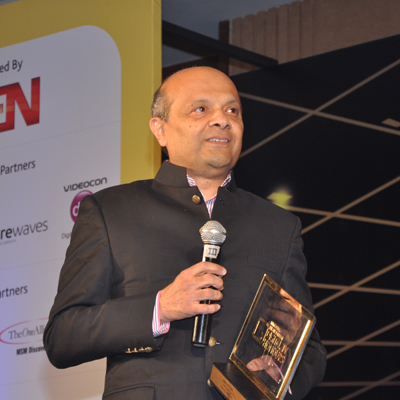
    (The remarks above are a part of the acceptance speech by DEN Networks Chairman & Managing Director Sameer Manchanda during indiantelevision.com’s The First Indian Digital TV Honours held in New Delhi on 28 January 2014)

  • National and local MSOs meet in Kolkata to discuss billing process

    National and local MSOs meet in Kolkata to discuss billing process

    KOLKATA: The multi system operators (MSOs) seem to be in full swing to bring the gross billing system in place. This time, to discuss the smooth rollout of gross billing in the Kolkata Municipal Area (KMA), the national representatives of MSOs that included SitiCable Network and Den Networks, along with the local players like Manthan and AMBC among few others met and signed a deal to expedite the process. 


    Kolkata has 30 lakh cable homes and most of them still get ad hoc bills from the MSOs. Thus, to implement the gross (consumer) billing for January, and bring transparency in the entire process, the MSOs have requested cable TV subscribers to ask for bills from the local cable operators (LCOs) before paying the monthly subscription charges.


    In fact, in order to ensure that the gross billing process is smooth in the KMA area, the MSOs from national and eastern regions meet regularly, especially after West Bengal and the central government authorities have asked them to speed up the process.


    “Today’s meeting was on the smooth rollout of the billing. Customers should ask for a bill from the LCOs before paying their bills every month,” said AMBC managing director Sujit Das.


    Siticable Kolkata director Suresh Sethia also brought to notice that the MSOs have conducted a check on the overall implementation of digital addressable system (DAS) including the billing and collection process.  


    According to the regulations set by the Telecom Regulatory Authority of India (TRAI), subscribers will get 15 days from the date of the bill to make the payment. “In case the subscriber fails to make the payment till the due date, we may charge interest on the outstanding amount,” said Sethia, also adding that in the recent meeting the MSOs have decided to be firm on these agendas.


    The seriousness of the MSOs is evident as most of them have uploaded the bills on the server, and some have even given the print outs to the LCOs so that bill collection can be done, remarked a city based analyst.

  • First Indian Digital TV Honours celebrates digitisation’s leading practices

    First Indian Digital TV Honours celebrates digitisation’s leading practices

    NEW DELHI: It was a day when the stalwarts of the Indian cable, broadcast and direct to home television industry converged to witness the best or leading practices of the industry being recognised at indiantelevision.com’s first ever Indian Digital TV Honors (IDTH).  The event, held at the Lalit  Hotel in Delhi late last eveing saw 15 professional/initiatives/organisations getting a citation for evolving best practices during phase I and phase II of digitisation over the past 18-24 months, ever since digital addressable system (DAS) was mandated by the government.


    An advisory panel comprising 13 professionals from broadcast, cable TV, consulting and technology , along with the editorial team of indiantelevision.com, helped finalise the honoraries after a tough round of discussion for over a month on the merits and demerits of those being sought to be honoured for their great work and innovations.


    The  event was attended by close to 200 professionals from the cable, DTH and broadcast industry and the regulatory body.


    The evening was anchored by Indian Television Dot Com Founder, CEO and editor-in-chief Anil Wanvari along with TV actor Prerna Wanvari  who hosted the two hour long proceedings.


    The First Indian Digital TV Honours, which were powered by leading Indian MSO DEN Networks began with Tata Sky being honoured for its obsessive focus on consumer service and product quality. The direct to home operator (DTH) has for long being spoken of excelling in the area of customer services, and this honour  only further supported that perception.


    India’s oldest DTH operator Dish TV  was honoured for its dervish like focus on its financial health and for protecting and creating shareholder value. The citation was received by CEO RC Venkateish, who shared the fact that he has to answer to public and other shareholders regularly, making  it imperative for the company to be bottom line focused. 


    “We have been generating free cash flow for quite sometime, and probably are the only Indian DTH company to do so,” said  Venkateish. “Things could be better if we could rationalise content costs which are still way too high.”


    Videocon d2h was recognised for its technological innovations and for the use of indigenous set top boxes which the group’s sister organisation manufactures indiegenously


    Additionally MSO Hathway Cable & Datacom was honoured for its pioneering push into broadband internet services, way before anyone else in the business. “With over 400,000 users we have gained a lot of experience which will only further help us as we move forward. Consumers are demanding a lot more bandwidth as they are guzzling a lot more online content,”  said  Hathway CFO G. Subramaniam. “We will be the best company providing  the broadband internet service in the future.”


    Tata Sky was also recognised for its its Value Added Services (VAS)  which it says is helping lure subscribers to them.


    DEN Networks, which had in 2013 attracted an investment of $160 million from Goldman Sachs at a time when every other MSO was being turned away, was honoured for becoming a beacon for the cable TV sector in the area of raising capital. Elated with the honour, DEN Network CFO Rajesh Kaushal said, “This is a very cash guzzling business and so there is a lot of investment and infrastructure that is needed. We have enough capital with us to see us through Phase I, II  and III  of DAS.”


    The Indian Broadcasting Foundation (IBF) was recognised for its marketing and promotional campaign to encourage the smooth spread of digitisation.  Almost every channel aired the commercial several times a day to push the message and educate consumers about digitisation and set top boxes. The same was recognised by the Indian Digital TV Honours advisory committee.


    “We wanted to incite consumers through the ad campaign. We had aired the promos for at least eight times a day on 150 channels,” said IBF secretary Shailesh Shah while receiving the honour.  Leading broadcaster Star India was also recognised  for its strategy to invest big money in sports. Sports TV worldwide is a big driver of pay TV and Star India’s early initiative to invest big money is only going to see a similar play being played out here.  And this in turn will likely encourage the process of digitsation.


    SitiCable Network was honoured for fostering Local Cable Operator (LCO) partnerships and being the first ones to give carriage fee revenue share to the LCOs. “We believe that LCOs are an integral part of the cable TV ecosystem and that is the reason we have given them the access to our subscriber management system and also are sharing the carriage fee revenue with them,” informed SitiCable COO Anil Malhotra.


    It was in 2013 that Doordarshan owned DTH service DD Direct Plus was rechristened as Freedish. The DTH player which introduced several innovations for its consumers in the year was recognised for catering to the needs of Indian consumers through Freedish. “Freedish is the most profitable venture of Prasar Bharti. Broadcasters are changing their business model for us, which is welcome change,” said Doordarshan additional director general Ranjan Thakur while receiving the honour.


    Two industry leaders have put their shoulder to the wheel and have played a major role in promoting digitsation over the past 18-24 months and have themselves invested heavily in it: Hathway Cable’s Raheja family led by Viren Raheja and DEN Networks’ founder Sameer Manchanda. “If you have patience, scale and execution one can excel in this field which holds a lot of scope. Cable will grow exactly how mobile grew in India, but you will have to wait minimum for five years to see results,” opined Manchanda. “You have to have the passion to see your belief in cable TV come true.”


    The evening also saw Seven Star Digital Network being honoured for effectively managing digitisation as an independent operator. Honours were also given to Ministry of Information and Broadcasting and Telecom Regulatory Authority of India for their push in making India a digitised nation. Most of industry has begun hearing of the Maharashtra Cable Operators Federation (MCOF), which represents the interests of the last mile owner.  In time, if it does manage to facilitate a feasible formula on revenues and shares with MSOs, then it stands a strong chance to be honoured  in next year’s Indian Digital TV Honours.


    More power to the industry’s elbow!  

  • DEN, Hathway and InCable get interim relief  on ent tax

    DEN, Hathway and InCable get interim relief on ent tax

    MUMBAI: The big four  of Indian cable TV – DEN Networks, Hathway Cable and Datacom, InCable and Siti Cable – heaved a sigh of relief as 21 January ended. The reason: the Delhi High Court – which was hearing their appeal seeking to restrain the state government’s entertainment tax authorities from taking any coercive action against them for not paying entertainment tax – gave them relief, if at least for some time. The  HC passed an interim order, forbidding the tax folks  from taking any steps  against  three of the MSOs – Den, Hathway and InCable.


    The cases that were heard in one day saw the appeals of  DEN and Hathway being joined  together while InCable and Siti Cable presented its case separately.  With the order coming into effect, MSOs have been relieved of the duty of collecting entertainment tax from the LCOs and submitting it to the government till the judgment on the case is passed. The next hearing will be on 13 March.


    The respondent (the entertainment tax collection authorities) have been given four weeks to file its reply to the case. In the meanwhile, its hands are tied. However, what was not clear at the time of writing whether  the onus is back on the LCOs to pay the tax to the government.


    Although the MSOs are receiving the tax from LCOs, they claim they aren’t getting the full amount. Hence, the balance amount normally has to be coughed up by the MSO whether it is paid the same or not by the LCO. This is pretty unfair, they have stated.


    The  MSOs approached the Delhi HC as  the inexplicable  pressure was being thrust on them to cough up taxes.