Tag: Den Networks

  • TV home shopping market to generate Rs 45-50 billion in FYE March 2015: MPA

    TV home shopping market to generate Rs 45-50 billion in FYE March 2015: MPA

    MUMBAI: India’s retail landscape has changed rapidly in recent years. Owing to increasing disposable incomes and a growing number of nuclear families with evolving lifestyles, the country is experiencing a shift towards organised retail.


    Organised players accounted for nine per cent of India’s overall retail trade in 2013. However, the year saw sales from modern retail formats growing slowly.


    Rising costs, combined with India’s infrastructure hurdles have prompted retailers to reconsider their expansion plans. This scenario has forced brands to look for newer mediums to distribute their products, especially in areas where modern retail penetration continues to be low. Backed by domestic as well as international investors, e-tailers such as Flipkart and Snapdeal have taken advantage and created a Rs140 billion ($2.3 billion) online retail industry.


    In the midst of this marketing blitzkrieg by e-tailers, TV home shopping, an established distribution platform with a much wider reach, has also taken giant strides.


    Although much smaller in comparison to the e-tailing industry, the TV home shopping industry has started to effectively leverage the reach of cable and satellite in India, estimated at 140 million households or 650 million people as of December 2014. In comparison, the number of internet users is estimated at 302 million.


    The HomeShop18 and Star CJ Revolution

    According to a report released by Media Partners Asia (MPA), although the industry has been in existence since the 1990s, most of the earlier TV home shopping companies were restricted to selling religious or unbranded beauty products by purchasing commercial airtime to run infomercials on TV channels. The pre-digitisation era also saw an attempt to launch a dedicated TV home shopping channel – TVC Online. However, it stopped airing within one year of its launch in 2003. Majority of these products failed to meet quality expectations. As a result, consumers grew skeptical of TV home shopping. “Logistical challenges and infrastructural constraints added to the woes of the industry as they resulted in delayed product delivery to customers,” says the MPA report. 


    However, following the arrival of 24-hour dedicated TV home shopping channels, there has been a turnaround.


    HomeShop18 and Star CJ launched in 2008 and 2009 respectively, focusing on building customer trust by: 


    · Ensuring high quality products;


    · Creating technology enabled delivery and logistics networks; 


    · Establishing 24/7 multi-lingual customer service support centers.


    As the industry’s credibility rose, brands such as Samsung and Videocon started utilising the services of TV shopping players. In addition, leading service brands such as Bajaj Allianz and ICICI Lombard have also experimented with the platform. Since its inception, HomeShop18 has fulfilled over 20 million orders, having served more than 11 million customers, while Star CJ has catered to six million customers since launch.


    Industry Dynamics and Business Models

    The success of these two channels has encouraged more players to enter the market. Naaptol, which started as an e-commerce platform, has recently launched Blue, a 24-hour dedicated TV channel. In addition, the company has partnered with multi system operator (MSO) Hathway Cable & Datacom to launch Hathway Shopee, which is exclusively available on the MSO’s digital platform. 


    Similarly, another MSO Den Networks has entered into a 50:50 JV with Snapdeal to launch Den-Snapdeal TV Shop, the pilot for which launched in September 2014. Other key players include Planet M Shopping, HBN Telebrands and TVC Retail.


    Growing at 40-50 per cent year on year, the industry, as per MPA, has generated gross merchandise volume (GMV) sales of Rs 32 billion in FYE March 2014. MPA analysis also indicates that the TV home shopping market could generate between Rs 45-50 billion in FYE March 2015. The top three players: HomeShop18, Star CJ and Naaptol, hold the lion share with 85 per cent market share.


    Comprising both 24-hour dedicated channels and small and medium-sized firms, which buy independent airtime slots from multiple channels, gross commission revenues are estimated to range between Rs 10-12 billion for FYE March 2014. 


    On the cost side, while TV home shopping companies pay carriage fees to DTH and cable operators, they also incur airtime charges for slots on TV channels. MPA estimates that while a one-hour midnight slot on GECs costs Rs100,000, news channels charge between Rs 25,000-Rs 50,000.


    Overcoming the hurdles

     As is the case with e-tailers, India’s low credit card penetration and poor logistics infrastructure are proving to be the main challenges for TV home shopping players. As consumers in smaller towns are used to a “touch and feel” approach to the product before making payment, about 80 – 95 per cent of TV home shopping sales are driven by cash on delivery (COD). However, logistical difficulties often result in delayed deliveries and consumers refusing to accept delivery. Return rates are as high as 10-20 per cent of total transactions and adversely impact the business economics of TV home shopping companies, according to the MPA report. 


    To counter last mile delivery challenges, players such as Naaptol and TVC use the services of India Post, which has over 155,000 post offices of which more than 139,000 are in rural areas.


    TV home shopping versus e-tailers

    Although e-tailers function on a similar business model, the strategies adopted by TV home shopping players are in stark contrast to their online counterparts. 


    On an annual basis, TV home shopping players advertise between 3,000-4,000 products with a high majority being private labels and small to mid-scale brands. In comparison, Flipkart and Snapdeal stock over 15 million and five million products, respectively, points out MPA. 


    “This strategy enables TV home shopping players to command commissions in the range of 30-40 per cent of the sale price, compared to 5-20 per cent for e-tailers,” says the report.


    The consumer demographic is also different. With over 80 per cent of TV households having access to pay-TV, majority of the orders originate from smaller towns. In contrast, sales of e-tailers are driven by markets with high English language proficiency and internet penetration. 


    Comparison with e-tailers on financials and value creation

    The MPA report highlights that despite incurring significant losses, most e-tailers are focused on driving valuations through exponential top-line growth. In contrast, TV home shopping firms have delivered balanced growth with profitability. In FYE March 2014, net revenue growth for HomeShop18 was similar to players such as Amazon India and ebay India. Moreover the TV segment for HomeShop18 was also profitable at Rs 150 million for 9M FY 2014.


    For the similar period, TVC Retail, which enjoys superior margins for its product profile, reported a net profit growth of 42 per cent year on year. While Star CJ and Naaptol are on the cusp of profitability, even newer players are exhibiting robust growth. 


    Den-Snapdeal JV has been growing at 200 per cent month-on month and is clocking a GMV of Rs 1 billion. The network expects to cross the Rs 5 billion mark by the end of the first year of operations. 


    Similarly, Hathway-Naaptol, primarily offering semi-branded products at high margins, is already enjoying an average monthly run-rate of Rs 15 million, since its launch in June 2014.


    E-tailer valuations seem justifiable only as a multiple of GMV. However, it is worth noting that their long-tail strategy is highly dependent on a substantial rise in India’s internet penetration. 


    “Partnering with MSO platforms or TV home shopping players can enable e-tailers to mitigate the risk of slower than expected internet growth. Hence, going forward, more JV deals such as Den-Snapdeal are likely to occur. This will mutually benefit both partners by drawing synergies from their existing businesses,” says the report. 


    Becoming future ready

    On the back of rising smartphone penetration, global TV home shopping giants such as QVC and HSN have streamlined their m-commerce operations to maximise revenue and profitability.


    “Realising that mobile internet, which accounts for 57 per cent of India’s internet users, could drive the next leg of growth, Indian players have followed suit. Although TV continues to account for 70 per cent of its transactions, HomeShop18 has witnessed 100 per cent Q/Q traffic growth on mobile platforms. Similarly, Star CJ expects its mobile website to account for 20 per cent of its transactions in the near future versus 6 per cent at present,” says MPA. 


    In the meantime, the industry continues to record impressive numbers. Naaptol expects its revenues to increase from Rs 1.65 billion in FYE March 2014 to Rs 3.45 billion in FYE March 2015. “Given that TV home shopping is still in its infancy in India, such trends are likely to continue for the next three – five years,” highlights the report. 


    The India Today group, recently launched Bag It Today. Business entrepreneur Raj Kundra in partnership with Bollywood actor Akshay Kumar has launched Best Deal TV, a celebrity driven venture. Targeting a reach of 35-40 million households, the channel will tie-up with celebrities such as Ekta Kapoor, Sonakshi Sinha and Yuvraj Singh. The celebrities will be signed on a profit sharing model. The channel will start by advertising 30 products from select categories such as lifestyle, home, health, fashion and beauty. Subsequently, it also plans to tap regional markets by roping in local celebrities in Tamil and Telugu markets.


    Apart from these, a few regional players are already working towards setting up TV home shopping channels. It might not be long before global home shopping giants and other strategic and financial investors start to enter the market.

  • DEN Networks hikes foreign investment limit to 74 per cent

    DEN Networks hikes foreign investment limit to 74 per cent

    MUMBAI: Close on the heels of multi system operator (MSO)  Hathway Cable and Datacom’s decision to increase the foreign investment limit in its company, DEN Networks has now followed suit.


    It may be recalled that in January this year Hathway decided to increase the foreign investment limit from 49 per cent to 74 per cent. 


    DEN Networks, which is currently building its broadband base and also working towards digitisation in phase III and IV, is looking at attracting overseas capital into the company.


    DEN Networks has got the approval from the board of directors to increase the foreign investment limit in the company by Foreign Institutional Investors (FII) and Foreign Portfolio Investors etc. from the current 49 per cent to 74 per cent. This, subject to approval of the shareholders, Foreign Investment Promotion Board of India, Ministry of Finance (FIPB) among others.


    In an announcement to the BSE, DEN Networks said, “The board of directors of the company has approved through circulation, increase in foreign investment limit in the company by Foreign Institutional Investors, Foreign Portfolio Investors etc., under the Portfolio Investment Scheme in accordance with Schedules 2 and 2A of Foreign Exchange Management Act (Transfer or Issue of Security by a person Resident Outside India) Regulations, 2000 (FEMA 20) from existing 49 per cent to 74 per cent of the issued and fully paid-up share capital of the company, subject to the approval of the Shareholders, Foreign Investment Promotion Board of India, Ministry of Finance (FIPB) and all other applicable acts, laws, rules, regulations, circulars, directions, notifications, press notes guidelines and statutory approvals, if any.”

    The approval of shareholders for aforesaid resolution will be taken through Postal Ballot in accordance with section 110 of the Companies Act, 2013 read with Rule 22 of the Companies (Management and Administration) Rules, 2014, the release further added.

  • SN Sharma joins Reliance Jio

    SN Sharma joins Reliance Jio

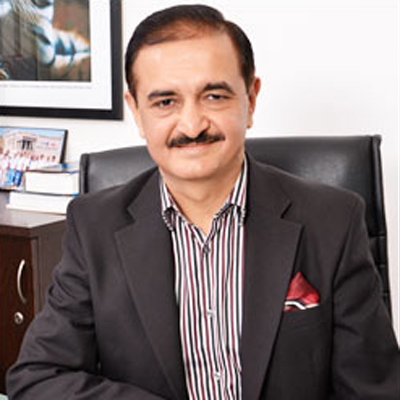
    MUMBAI: It was a shocker when the news of multi system operator (MSO) Den Networks CEO SN Sharma quitting the company broke. Now, after months of speculation about his next move, Sharma has made the decision.


    The man credited with creating one of the biggest MSO network, Den Networks, will now be looking into the day to day operations of Reliance Jio. Confirming the news to Indiantelevision.com, Sharma said, “Yes, I have joined Reliance Jio.”


    Reporting into Reliance Jio CEO K. Jayaraman, Sharma will be an integral part of the top management. 


    Sharma joined office starting 23 February but whether he will continue operating from Delhi, will be decided at a later stage.


    With Reliance Jio awaiting approvals for the pan India MSO licence, the company is rapidly strengthening its team. 


    During his stint at Den Networks, Sharma’s vision of growth through consolidation and digitisation had laid the foundation for the company. He also spearheaded Den Networks’ rapid growth with his visionary leadership and execution abilities. He was also the driving force behind taking the company into the digital era.


    He has nearly three decades of experience during which he has been associated with the electronic media industry for over 20 years.

  • Den Networks appoints Manish Dawar as Group CFO

    Den Networks appoints Manish Dawar as Group CFO

    MUMBAI: Multi system operator (MSO) Den Networks has appointed Manish Dawar as its group chief financial officer (CFO) as the company steps up its transformation into a diversified B2C enterprise.


    Dawar joins Den from the Vedanta Group where he served as CFO for Konkola Copper Mines since September 2012.


    He has occupied board level positions since 1997 and has extensive experience ranging from start-ups to turnaround environments, listed and private companies, change management, dealing with regulators and corporate governance amongst others areas.


    Den chairman and managing director Sameer Manchanda said, “It is our pleasure to welcome a veteran professional like Manish in our fold. His rich experience with some of the world’s largest consumer goods companies will be invaluable as Den embarks on a trajectory of rapid growth in digital cable, broadband internet and new initiatives and transforms itself into a B2C brand.”


    He is a qualified Chartered Accountant and Company Secretary with over two decades’ experience in various senior level finance and business roles primarily in consumer oriented companies. He has served across geographies covering both India and global markets.


    Dawar has spent over 10 years at Reckitt Benckiser, a diversified multinational consumer goods company operating in the health, hygiene and home products segments, where he was the senior vice president – group controller based out of the company’s corporate headquarters in the UK. Prior to this, he served as the regional finance director for Reckitt’s South Asia business and the CFO and company secretary for its Indian operations.


    Before this, he spent nearly seven years at Reebok where he served as country manager and was responsible for the launch of the Rockport brand in India and South Asia. He also served as the CFO and company secretary for Reebok in India following a stint as regional controller for Reebok’s New Markets region. He started his career at Hindustan Unilever where he spent over five years in various roles.

  • Sangram Committee to support Patna LMOs

    Sangram Committee to support Patna LMOs

    KOLKATA: Kolkata-based Cable Operators Sangram Committee – has extended its helping hand to last mile owners (LMOs) in Patna. The city boasts of approximately 2.5 – 3 lakh digitised cable TV homes in the DAS II area. However, the LMOs are a ‘unhappy lot’ as they neither get proper bills and receipts nor full payment from customers.


    Going forward Sangram Committee, which currently is active in Kolkata, aims to spread its operation in the eastern region including Assam, Tripura and Jharkhand and plans to address the grievances of all the LMOs in the eastern region to the authorities jointly.


    More than 450 LMOs in Patna met with the Sangram Committee affiliated LMOs and discussed the ground problems faced by the LMOs while operating in their respective zones.


    Speaking to Indiantelevision.com, Cable Operators Sangram Committee general secretary Apurba Bhattacharya said, “We will place our demand to all the MSOs operating in Patna and request them to operate as per the Telecom Regulatory Authority of India (TRAI) guidelines. LMOs are neither getting the bills nor the receipts.”


    It should be noted that Patna has around eight lakh cable TV homes, of which 2.5-3 lakh that fall under DAS II area are all digitised. While another five lakh homes are expected to be digitised in the later phases.


    Multi-system operators like Siti Cable, GTPL, Patna-based Darsh and DEN Networks mostly operate here.


    “Since customers are not getting the bills, they are not ready to do full payment. Apart from this we are also not getting any receipt from the MSO,” said Kumar Nilesh, a LMO affiliated to GTPL.


    While Rakesh Kumar Singh, a LMO affiliated to Siti Cable said, “Most cable operators have not yet signed revenue-sharing agreements with their MSOs.”


    Another LMO when asked about the popular package, said that people mostly go for packages below Rs 300 here.


    Explaining further, an LMO said that if a customer has chosen a package of Rs 240, he will have to pay Rs 240+Rs 15 (amusement tax) plus an additional 12.36 per cent service tax. “But some customers are just paying Rs 240, so do we pay their service tax and amusement tax?” he questioned.


    “Customers were expecting to get bills and now when they don’t get their bills, they are upset. Some are not willing to pay the monthly rental also,” he further added.


    On other hand, MSOs have a different picture to present.


    Darsh Digital Network director Sushil Kumar said that the MSOs can see that even after collecting payment from the consumers, LMOs are not paying the respective MSOs. “If there is a backlog of three to four months in payment, how can we survive?” Kumar avers.


    “Television has become an inseparable part of our lives. So not only MSOs and LMOs but consumers too have to think in a mature way and all other stakeholders should act as per the norms, for the smooth rollout of DAS,” concluded an expert.

  • Den Networks & Snapdeal ink 50:50 JV for TV Commerce channel

    Den Networks & Snapdeal ink 50:50 JV for TV Commerce channel

    MUMBAI: After inking a joint-venture with Jasper Infotech, the entity that owns and operates the digital commerce platform – Snapdeal.com, multi system operator (MSO) Den Networks has now launched a ‘TV Commerce’ channel with an aim to create a multi-nodal electronic shopping avenue for customers.


    The channel is currently available for viewers on channel number 132 on Den and will be extended to other cable and DTH networks over the next six months.


    With Den Networks’ reach into about 13 million households in over 200 cities across 13 states in the country, Snapdeal.com can leverage the robust distribution to provide customers easy access to products across home, lifestyle and electronics categories.


    Snapdeal.com co-founder and CEO Kunal Bahl said, “Innovation lies at the heart of Snapdeal.com and with this initiative we are taking yet another step to fulfill our promise of providing accessibility to the best products at best prices to consumers across India. We are delighted to partner with a likeminded brand like Den Networks, which enjoys massive reach and brand loyalty across the entire country and especially in smaller towns of India. India is a country with many heterogeneous segments of consumers, and we believe that by reaching 150 million households with 600 million people that have a TV, we can create another revolution through 7V Commerce.”


    Den Snapdeal TV shop will benefit customers who have limited access to internet services particularly in tier 2 and 3 cities. 


    Den Networks CMD Sameer Manchanda added, “We are extremely thrilled to partner with Snapdeal.com on this game-changing initiative. By leveraging Snapdeal and Den’s nationwide distribution network will now be able to engage with a much larger audience, which is still not exposed to the benefits of online shopping and internet access. Together, we aim to offer the customers a wide assortment of products and provide them with a hassle free buying experience. The response to the pilot has been extremely encouraging and we are sure Den-Snapdeal TV Shop will be well received by our viewers.”


  • Goldman Sachs picks shares in Hathway worth Rs 52.6 crore

    Goldman Sachs picks shares in Hathway worth Rs 52.6 crore

    MUMBAI: The new year has started on a good note for multi system operator (MSO) Hathway Cable and Datacom. Hathway, which became the first MSO to have crossed the $1 billion mark in terms of enterprise valuation, has now attracted Goldman Sachs, which picked up 4.8 per cent stake in the company.


    After investing Rs 600 crore in DEN Networks in 2013, this is Goldman Sachs second investment in Indian cable TV industry.


    The company bought 80,93,268 shares of Hathway at Rs 65, amounting to Rs 52.6 crore on the National Stock Exchange (NSE).


    The highest shareholder in the MSO is Macquarie Bank with 9.11 per cent stake. Other shareholders in the company include Reliance Capital (5.23 per cent), P6 Asia (Providence Equity Partners) (10.85 per cent) and CLSA Global (4.02 per cent) among others.


    The news comes at the back of the MSO seeking shareholder’s approval for increasing its total foreign investment by Foreign Institutional Investors (FII) and Foreign Portfolio Investors (FPI) to 74 per cent from the current 49 per cent.


    While Hathway had on 8 January got Board approval for increasing the foreign investment limit, subject to approval from the Foreign Investment Promotion Board of India, Ministry of Finance and/or the Reserve Bank of India, the MSO is now seeking the shareholders nod.


    The Hathway Board has appointed Rathi and Associates Himanshu S Kamdar as scrutiniser for conducting the voting process through postal ballot. The company has also offered e-voting facility as an alternative. The last date for the ballots to reach Kamdar is 5 pm on 13 February.


  • Reliance Jio Media applies for pan-India license, over 200 others in queue for phase III of DAS

    Reliance Jio Media applies for pan-India license, over 200 others in queue for phase III of DAS

    NEW DELHI: Reliance Jio Media, a subsidiary of Reliance Jio Infocomm, has applied for a pan India cable television multi system operator (MSO) license as part of its step to enter the broadcast distribution sector.
     

    Confirming this to indiantelevision.com, an Information and Broadcasting Ministry official said that around 200 MSOs are in the queue for phase III of digital addressable system (DAS) license at present. Following the recent extension in date for registration of MSOs for phase III, the official said it was expected that this number may go up by another 70-80 MSO applicants.
     

    At least 50 per cent of these applicants including Reliance Jio are expected to get clearances by March 2015.
     

    Reliance Jio, the telecom arm of Mukesh Ambani led Reliance Industries, is the only company to have pan-India Broadband Wireless Access spectrum that can be used for 4G services. Reliance Jio has plans to start 4G services across most of the telecom circles by March 2015.
     

    Reliance Industries has already announced that it will launch commercial 4G telecom service of Reliance Jio in 2015 entailing investment of Rs 70,000 crore. It will initially cover about 5,000 towns and cities accounting for over 90 per cent of urban India, as well as over 215,000 villages in India.
     

    The company is focusing on convergence space and has bagged Broadband Wireless Access spectrum in 2010 and Internet Service Provider license was bagged through acquisition of Infotel Broadband Services in 2010.
     

    The company has also showcased a ‘Jio Television’ that can be delivered through 4G network.
     

    All these services will help Reliance Jio to offer broadband services through wireless media, wireline media and cable TV media thereby focusing on all types of broadband services pan-India.
     

    Reliance Jio in February 2014 acquired airwaves in 1800 MHz band across 14 out of 22 service area in the country. The spectrum in this band can also be used for providing 4G services. The company already holds Unified Licence (UL), which allows it to use any technology to provide telecom services.

    Under UL, sources said, Reliance Jio can offer Fiber-To-The-Home services and high speed broadband services to home and enterprise users.

    An MSO license will help Reliance Jio to offer cable TV services through optical fiber thereby providing triple play service as done by large MSOs in the country say Hathway, Siti Cable, IN cable, DEN and others.

  • DEN Networks gets new CEO in Pradeep Parameswaran

    DEN Networks gets new CEO in Pradeep Parameswaran

    MUMBAI: Multi system operator (MSO) DEN Networks has roped in Pradeep Parameswaran as its new chief executive officer (CEO). The position was left vacant after SN Sharma, one of the founding members of DEN Networks quit in September 2014.


    Parameswaran   joins   DEN  from McKinsey  and  Co  where  he  was  a partner  and  was  leading  the telecoms,  media  and  technology practice  in  India  and  of  the  operations  and  technology  function  within  telecoms,  media  and technology in Asia.


    He holds an engineering   degree from   Mumbai   University   with a Masters in Management Studies from Jamnalal Bajaj and an MBA from Vanderbilt University in the US. Besides McKinsey, he has also worked with Hindustan Unilever and AT Kearney.

  • Den Networks receives shareholder nod for borrowings and issue of ESOPS

    Den Networks receives shareholder nod for borrowings and issue of ESOPS

    BENGALURU: Scrutinizers NKJ & Associates have informed the Den Networks Limited (Den Networks) board that its shareholders have approved by a very healthy majority the nine special resolutions by it for borrowing against hypothecation of its assets and issuance of employee stock options (ESOP) to the employees of Den Networks and directors of its associates and subsidiary companies


    13,22,09310 valid votes were received by ballot paper and through e-voting. In the two resolutions pertaining to Den Networks to borrow against hypothecation of its assets, 13,21,89,110 votes or 99.98 per cent valid votes were received in favour, with only 20,200 or 0.2 per cent of the votes against. 97.54 per cent (12,89,44,699 votes) voted in favour of a resolution for change in Den Networks Memorandum of Articles, with 2.46 per cent (3464611 votes) voting against this resolution.


    Over 95 per cent of the votes were in favour of the six resolutions proposed by Den Networks board pertaining to issuance of more than 1 per cent ESOPS to the employees of the multi system operator (MSO) and directors of associate and subsidiary companies through new shares as well as by procurement of shares from the secondary market.


    Refer to the attached notice filed by Den Networks on the bourses.