Tag: DEN Networks Ltd

  • INVIDI Technologies partners with Hathway and DEN

    INVIDI Technologies partners with Hathway and DEN

    Mumbai: INVIDI Technologies has announced a partnership with Hathway Digital Ltd. (Hathway Digital), a wholly owned Subsidiary of Hathway Cable and Datacom Ltd (Hathway) and DEN Networks Ltd. (DEN). This collaboration marks a significant step in transforming the digital cable TV advertising landscape by introducing, for the first time, digital cable TV markets advanced targeted advertisement solutions to Hathway Digital and DEN’s extensive distribution network. This partnership will help in addressing the pressing need of the current day and age of reaching the right audience in the right markets in the most economical way.

    Both Hathway Digital and DEN will leverage INVIDI Technologies’ cutting-edge ad tech through this strategic alliance to deliver highly targeted and personalised advertisements to its diverse audience. This solution will ensure anomalies of linear TV advertisements is addressed and advertisements are delivered to the customers with required advertiser’s cohorts of customer profile. This innovative approach will open new avenues, improve media buying efficiencies and allow brands to reach specific viewer segments with tailored messages, enhancing the relevance and effectiveness of their money spent on advertising campaigns.

    INVIDI Technologies COO Prasad Sanagavarapu stated, “Our collaboration with both Hathway and DEN represents a major advancement for content owners, viewers, and advertisers alike. By deploying INVIDI’s Addressable TV solutions, Hathway and DEN will enable brands to optimize their marketing spend by delivering relevant ads directly to their target audiences. This partnership underscores our commitment to enhancing the Indian advertising ecosystem with state-of-the-art technology.”

    A representative of DEN said, “We’re excited to integrate INVIDI’s technology into our operations. This partnership is a game-changer for our advertising partners, giving them the ability to target their audiences with unprecedented precision. For our subscribers, it means receiving more relevant and engaging content, which enhances their overall viewing experience. By bringing INVIDI’s advanced solutions to the Indian market, we’re not just improving our advertising offerings but also providing our subscribers with more relevant content and less ad clutter.”

    “We are delighted to bring first time in Digital Cable TV, targeted advertisement solution and partnering with INVIDI Technologies represents a major milestone in our commitment to delivering cutting-edge solutions to our advertisers,” said a representative of Hathway Digital. “This partnership will redefine the advertisement on Digital Cable TV and enable us to offer a new level of precision in Linear TV advertising. With this, brands can connect with their audiences more meaningfully.”

  • MSOs on distribution challenges post NTO

    MSOs on distribution challenges post NTO

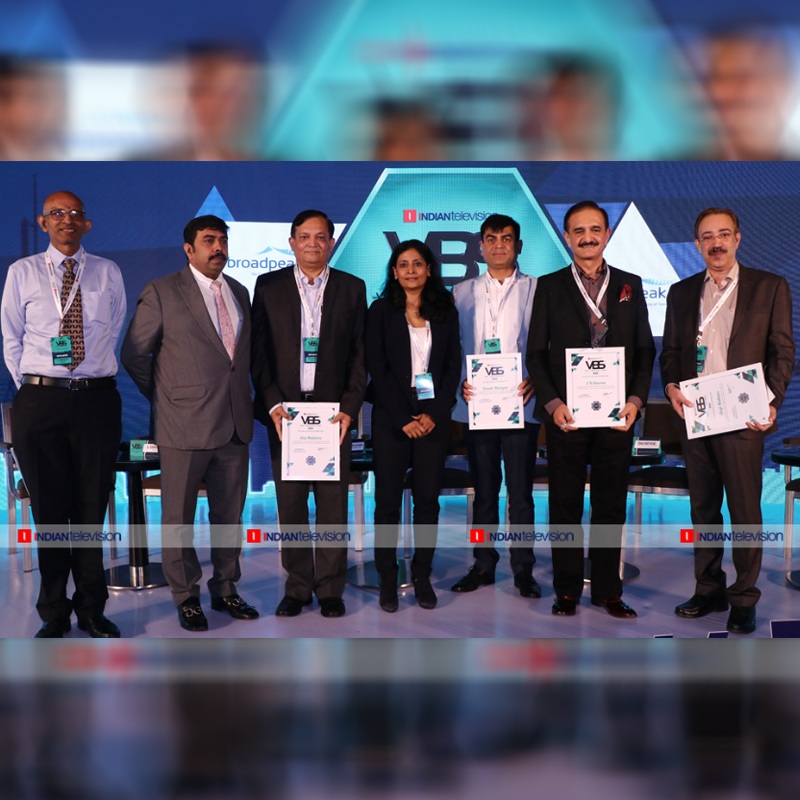
    MUMBAI: The internet has given choice to consumers to select packages and watch content of their choice. A rapid increase in the viewership on mobile and OTT platforms on a daily basis has become a threat to the DTH and cable distribution ecosystem. Apart from the internet, competing with broadband services and OTT is another challenge post NTO. The experts from the broadband and cable industry gathered at Video and Broadband Summit (VBS) 2019 in December, organised by Indiantelevision.com to discuss innovative measures taken by companies to stay ahead of the curve. 

    The Remediation Company founder & partner Shyamala Venkatachalam, moderated the panel discussion on 'The Distribution Challenge' at VBS 2019. The panelists Den Networks Ltd CEO SN Sharma, Kerala Communicators Cable Ltd. (KCCL) ex-CEO and SCTE India GC member Shaji Mathews, Metro Cast Network India Pvt Ltd promoter Nagesh Narayandas Chhabria, Tata Sky Ltd chief financial officer G Sambasivan, SITI Networks Ltd chief executive officer Anil Malhotra and Fastway Transmissions Pvt Ltd consultant (strategic planning) Peeush Mahajan shared their views on how distribution companies are innovating to stay ahead of the curve. They also briefed the audiences on the measures adopted to counter relentless disruption.  

    "Technology is unstoppable and customer is the king. As lot of innovations keep on happening, the business has to adapt the changes and has to focus on two things – customer viewing experience and customer service. For making viewing experience the best, we are investing very heavily on our backend and the distribution pipeline and will be increasing the bandwidth capacity manifold,” said Sharma.

    He further continued, “In India, after a lot of HD channels were launched, still only 20 per cent of subscribers are using the HD platform. As we have taken a conscious decision to only deal with HD boxes from the new year, we will ensure that HD content will be available for every subscriber. Even if consumers are not willing to subscribe for HD channels because of the higher subscription amount, we will ensure that the consumer gets the SD service which will be as good as HD experience.”

    "The movement from SD to HD has been much below the consumer’s expectations. The movement to OTT and hybrid boxes has happened over a period of time. As today the content is produced in HD or even higher than that in 4K, lot of MSOs are setting up HEVC transmission and they will also be introducing boxes with capacity of higher than higher definition. The process has to be gradual, which also depends on the willingness of the players to invest in the business," said Mathews. 

    On the issue of interoperability of STB, he said that the concept of comparing the STP with a mobile phone is not right, as the STB is a sim card and not the mobile phone. So, the whole concept needs to be overlooked.

    The challenge for MSOs is that it is not viable for them to go to village areas and give connections to around 200 – 300 houses. “The main concern now is that 15 – 20 per cent of our existing customers are not coming back to us post NTO. This is because of the communication gap between the LCO and the customers. To bridge this gap we have to educate the LCO by training them. Also communicating through social media, direct marketing or door to door marketing is an option to convince customers,"  said Chhabria.

    He also said, “MSOs should get their existing customer base back, which is around 15 – 20 per cent. The NTO model has been stabilised and people can now invest. Two years ago it was a non-viable business, but now we can show the investors that it is a viable business and ask them to invest as there is an opportunity to earn money.”

    Sambasivan shared his view on distribution challenges. He said that as per the India projection report, OTT is growing very fast and the number of hours of video consumption is going up. DTH and cable industry need to be worried as 90 per cent consumption is on mobile. But OTT is not an immediate threat to the DTH and the cable industry because along with OTT, consumers are also watching television. The viewership on television in the last five years has not decreased. OTT may be a threat after around ten years.

    Throwing some light on the post NTO challenges faced by the industry, Malhotra said that we are facing two challenges, first is two competitions. The first competition we are facing from broadband services, which is a linear way of giving signals compared to STBs. To provide SD, HD or 4K content we need to provide STBs which will decode the signal and provide content in the respective definitions. The second competition from OTT is device agnostic because in the broadband, whether it’s 4K, HD or SD, all signals are distributed similarly. The quality bandwidth decides what kind of viewership experience a customer has.

    “The second challenge is that suddenly there are internet users in the country. As per TRAI’s published data, 64 crore is half of the population of India. This population buys smartphones and we do not know how much of this population has moved away from linear TV to internet. From a content perspective, the kind of content which is popular is the adult site and is popular on OTT platform and not allowed to be beamed on the linear TV. The unfair competition will be that if the customer demands a personalised content, which is viewable on the OTT platform, but not viewable on the linear video platform despite having user enabled features on the device. Also the password sharing piracy is a challenge as more than one person can view the same content on different devices. So, overall technological aspects have to be considered,” he said.

    Sharma added that the message for MIB is that piracy is one of the issues which need to be addressed as lot of investments have been done at the state level for implementing NTO. DOT, few years back had addressed the issue by appointing state level cells. The other issue is the linkage of a la carte price with the bouquet price.

    Mahajan thanked TRAI for implementing a la carte and said that TRAI has given a choice to the customers. In 2018, 98-99 per cent of the customers were on suggestive bouquets offered MSOs and DPOs. In last 8-9 months, a big migration has happened from 2-22 per cent from bouquet to a la carte and it keeps on happening on a daily basis. We have to put in more efforts to educate the subscribers and train the LCOs, as LCOs are the key people who can generate a need for a la carte. DPOs have put in a lot of effort and will continue in future also. By the end of 2020, 35-40 per cent consumers should move on a la carte.

    Malhotra said that as per the regulations, TRAI has done a perfect thing by giving a choice to the customers. Unfortunately, the customer needs a la carte along with a package of their suitability. It is very difficult for a customer to choose between 800 channels and make a package of its own. But packaging is important and there are three ways of doing it. Packaging happens at a broadcaster level and if the customer wants the broadcaster package, then the distributor cannot dismantle the package.

  • Entertainment tax: MSOs & LCOs must collect & pay, HC halts Delhi ‘action’

    MUMBAI: The Delhi High Court has held that MSOs (multi-system operators) and LCOs (local cable operators) distributing television signals to subscribers directly are liable to collect and pay entertainment to the government.

    The court’s decision came on pleas filed by four MSOs – Hathway Cable and Datacom Ltd, DEN Networks Ltd, IndusInd Media and Communications and SITI Cable Network Ltd. They had moved the court challenging the levy of entertainment tax and vires of the Delhi Entertainment and Betting Tax Rules.

    The four had sought quashing of the Delhi government’s 17 December, 2012, circular and show cause notices issued in January 2014 directing them to deposit tax beginning April 2013. Delhi had threatened to halt cable TV transmission of the MSOs by closing their headends. The government had stated that the assessment of the MSOs bared that they had been indulging in tax fraud in crore since April 2013.

    A bench of justices Sanjeev Sachdeva and Badar Durrez Ahemed, however, quashed the Delhi government’s December 2012 circular and show-cause notices served by its Department of Entertainment Tax asking the MSOs to to pay entertainment tax or face action.

    Terming the circular as “without any authority of law”, the bench said, “To be clear, MSOs to the extent that they directly provide cable service to the subscribers without the intervention of any LCO (local cable operator), would be regarded as the proprietors under Section 7(1) and would be liable to collect and pay the entertainment tax to the government,” PTI reported.

    “However, where the MSOs provide the service through the LCOs, the individual LCOs having its own subscriber networks, would be regarded as the proprietors in respect of their individual networks and would be liable to collect the entertainment tax and pay the same to the government.”

    The court made it clear that as far as the assessments related to deposition to tax to the department are concerned, the MSOs “would have to take their own remedies against the assessment orders and/or appellate orders in view of the decision arrived at in this case”.

  • DEN is focused on upping subscription revenue & be future-ready: SN Sharma

    In the Indian broadcast and cable industry, SN Sharma is regarded as a sharp planner, quick on the uptake and a `yaron ka yaar’ (a true friend). However, as with any successful corporate exec, Sharma too has had his share of critics throwing allegations; most of them have not stuck, though. Otherwise, DEN Networks Ltd promoter Sameer Manchanda, known for his sharp understanding of human nature and a tough taskmaster, wouldn’t have got Sharma back for a second stint as a CEO to spruce up a company that had been performing below expectations on various counts.

    At the helm at DEN at an exciting phase of evolution of Indian cable sector, Sharma has got his work cut out — reduce the losses, wherever they are, and use his wide influence and network amongst the cable operators to sign up with the MSO. No wonder, his return to DEN from Reliance Jio last year, reportedly, convinced various cable operators to host few parties as they think `acche din’ (good days) are finally here. However, a small slip on Sharma’s part can shatter these high expectations of his employers and cable fraternity.  

    In a conversation with Indiantelevision.com’s Consulting Editor Anjan Mitra, Sharma holds forth on an array of subjects from reasons behind renewed focus on core business of the company, shedding loss-making investments, the way Indian landscape is changing with digitization, company’s insistence on cable subscription collections and getting future-ready. Edited excerpts from the interview.

    How would you view the cable industry at present in India?

    The cable industry in India has evolved over the years, but I would say it took some definite shape 2012 onwards in two ways. Till 2012 it was all analog though there were some attempts to bring about CAS (conditional access system) in the past, which just did not take off. So the analog regime continued till 2012 without any subscription revenue being captured by MSOs before that.  If at all something was being collected, it was in the range of Rs. 5 per subscriber. Various constituents of distribution networks — MSOs, LCOs, broadcasters and subscribers — were playing their own games. MSOs managed to survive those turbulent days because of the carriage fee charged from broadcasters. Part of that carriage money went back to broadcasters as subscription charges of their TV channels and, in the end, a broadcaster kept majority of the subscription revenue collected from subscribers. To add to the industry’s woes, the technology available was basic and there were no ways available, or being deployed, to get a count of the subscriber base or churn.

    Come 2012 and three metros matured quite ably into digital markets. People saw some change happening as the legacy businesses signaled evolution. With the sunset dates being announced by the government and regulator, there was a new hope that change is ultimately here and the industry will have to adapt itself.

    Q: What did this great hope for change bring about and what were the failures?

    Based on the hope that the Indian broadcast and cable industry was finally undergoing a major change towards digital that would bring about transparency in the whole eco-system, investors supported MSOs with their investments. The MSOs, in turn, invested in the digital cable infrastructure, building it up from the scratch literally, along with deployment of digital set-top-boxes. But in their hurry to capture subscribers, which was based on the presumption that subscription revenue will flow in, majority of the boxes were subsidized that ultimately went to add to the losses for MSOs.

    MSOs simply failed to monetize the digital structure despite investing in it, while monetization of the analog areas too dipped. Reason being legacy business models pushed back at changes that were sought to be brought about. Broadcasters, though, were smarter. Sensing that subscription revenues will be upped that can get them a bigger share of the revenue pie, excel sheets were spruced and changed accordingly to hike channel tariffs. However, the change being hoped for was not adequate. It’s difficult to change an existing system, especially so in India. It’s a human tendency. It took even the MSOs and LCOs some time to fully comprehend the new digital structure,including things like SMS, CAS and other technologies employed. Making the LCOs understand that a new structure will benefit them also and they too needed to change was a bigger challenge. Still, things started to look up by early to middle of 2016 when we at DEN took the initiative to start pushing the subscription (collection) process.

    Q: You mean though green shoots of changes were seen since 2012, things on the ground changed faster from last year?

    The period 2013-2016 did see some changes on the ground too and it would be wrong on my part not to admit them. For example, efforts made in Phase I cities yielded dividends. In some parts of these cities, MSOs did manage to get a share of Rs. 100/subscriber/month. However, phase 2 and 3 were struggling and we could only manage Rs. 35 and Rs. 20 per subscriber, per month, respectively.

    What’s the big attitudinal change that DEN undertook when it realized subscription collection could be upped?

    I don’t know whether it’s an attitudinal change or not, but our new resolve made more business sense. We took the initiative of announcing that whosoever wanted to do business with us had to adhere to our applicable subscription charges. When I rejoined DEN mid 2016, mandate given to me was simple: push for hike in subscription revenue collection from the ground. I had open sessions with all our business associates in a transparent manner and conveyed to them clearly where and what we have invested and what were our expectations from associates. We got support from our associates on the concept that we were selling them.

    Apart from the requirements of the organization, there were compelling reasons too for getting in place a structure quickly and focus on subscription revenue. Delivery technologies were changing fast and there were pressures from DTH operators. These platforms were aggressively selling to consumers their services at rates that were very competitive.  Broadcasters, on the other hand, were demanding a bigger share of the revenue pie. Now, all these pressures were not only visible on the ground, but were being felt by LCOs too. All these factors put together, along with support coming in from TRAI that helped with small tweaks in regulations (like swapping of boxes) in 2016, also made the LCOs understand the importance of getting a proper structure in place. When I re-joined, I ensured that all agreements with LCOs and our business associates were put in place in a transparent and orderly manner.

    If you were asked to encapsulate DEN’s message to all business associates, what would that be?

    We gave a message to business associates, distributors, LCOs and JV partners that had four components. First, the need of the hour was to survive and catch up with companies’ bottomlines. Second, there was a present and clear competition from newer technologies. Third,  DTH players were certainly making concerted efforts to snare more subscribers as they had the advantage of starting from a digital base, unlike cable TV that is trying to make the switchover from analog to digital. And last, there was a need to upgrade technology and infrastructure and, for doing that, financial investments were necessary.

    Not that these factors were invisible to our business associates. It’s a basic lethargy to change and lack of proper understanding of the importance of the change needed that kept LCOs from undertaking business restructuring. Unless transparency is brought about in the eco-system, future investments will not be available and unless that happens to grow the business in a modern world, LCOs and MSOs would find it difficult to survive. As an MSO, we have got the boxes seeded and it won’t be out of place to demand a fair share of the revenues collected.

    How successful has been DEN in these new initiatives aimed at business restructuring?

    In a six-month journey, in phase 1 areas where ARPU is Rs 100, DEN is able to capture Rs. 125 per subscriber; phase II ARPU has increased from Rs. 45-65 to between Rs. 90-100; phase 3 subscription has risen from Rs. 30-40 to Rs. 65-75. In phase IV where the digitisation process started this year, we have crossed an ARPU of Rs.35-40 per subscriber per month already. Future path is now chalked out as TRAI and broadcasters too are not distinguishing whether the content is being shown in urban centres or semi-urban areas as far as tariff structures are concerned. LCOs and subscribers in all phases have realised that MSOs cannot keep on subsidising the content for LCOs and consumers.

    Earlier, MSOs was getting close to 10 per cent of subscription revenue collected from the ground. But then TRAI in a fair manner handed out a formula based on which every stakeholder was to get a share from the subscription revenue pie. I believe if you follow regulations, life would be simpler. DEN signs inter-connect agreements with all its partners and if there are defaults, then signals are switched off. The seriousness of our intent is loud and clear — if you sign up, we’d do business; if you don’t sign up with us, we would switch off DEN’s signals. Such a stand has resulted in DEN collecting close to 40-45 per cent of the consumer subscription revenue now.

    If LCOs, associates and consumers understand the gravity of the change taking place, why differences amongst stakeholders persist and there’s a resistance to TRAI’s tariff guidelines?

    The biggest change is the consumer who has realized that if good services are to be had, then there’s a price attached to availing those. Kudos to the regulator too that it has kept modifying its regulations from time to time as per the need of the day. In an analog regime, it set out guidelines suited for that phase. When digitization rollout started happening, TRAI was aware there would be phases of overlap of analog and digital during transition. After completion of three phases of DAS, the regulator came out with a comprehensive tariff and inter-connect structures for a digital era, which was challenged in the court. I would say the regulator has done a great job. Sooner or later stakeholders will adjust to each other’s needs because a clear road map has been etched out by the regulator.

    (This interview was taken before Supreme Court recently allowed TRAI to announce its tariff, interconnect and QoS guidelines, even while a case questioning TRAI’s power to regulate tariff issues relating to copyrights and IPR is pending final disposal at Madras High Court)

    As a big MSOs, what are DEN’s views on TRAI’s suggested regulations on tariff, inter connections and quality of services?

    We are very much excited with this revised proposed tariffs and I would say the guidelines are well drafted.  Some stakeholders may ask for some tweaks, but on a broader perspective the guidelines point to the right directions. For example, for the first time TRAI has not only given importance and value to distribution pipes that MSOs own, but has clearly spelt out what needs to be paid for using these distribution pipes. This is a big transformation as, till now, MSOs were the only ones making investments and attempting to bring about transparency in the eco-system. As increasing value-added services (VAS) are delivered via this pipe, the importance of it would be further highlighted.

    What would be the areas of push for DEN in phase 3 and 4 of digitisation?

    In phase I and II areas, DEN has five million boxes seeded in the market, while our share in phase III areas is another five million boxes. Our total universe is approximately 13 million, including some phase IV areas. But out of that total universe, a portion is still analog, while the total number of digital boxes is a shade over 10 million. So our present focus would be to take care of the analog boxes that are already in our kitty as subscribers, while aggressively adding more in the remaining period of last phase.  

    Apart from the boxes, I reiterate, overall focus of DEN is increasing subscription revenue collection from the ground in a transparent manner, taking the share that’s due to us. This focus has resulted in LCOs too hiking their subscription rates within the regulatory framework. This is also a change as LCOs earlier in a monopolistic regime, never had to market their services, which they are doing now after regulatory pushes and visible changes in consumer consumption pattern. Today’s consumer of video is savvy, both from the point of regulations and technology available to them like mobile devises at affordable prices. Today, a customer even from smaller towns and cities is willing to pay for the experience as he values the experience. If the experience and service is good, a customer doesn’t mind paying. Adoption of new technology of cable TV will be faster if consumers are properly and extensively educated, along with effective marketing of services.

    Would MSOs be able to charge consumers Rs. 500 per month, at par with OTT services, after digitization is complete; at least in phase I and II areas?

    Consumers in phase I and II areas definitely have higher purchasing power than others, but you have to appreciate that the increase in ARPUs in these two phase-areas is also because work has been continuing over several years. Still, to answer your question, I don’t see MSOs charging Rs. 500 per month for their services immediately. However, with HD services, over a period of one year the charges may rise to Rs. 400 per month. But then LCOs too need to bring in more HD boxes.

    Q: Would you agree with visionary Subhash Chandra when he recently told cable ops they were not keeping pace with consumer behavioural changes globally and the boxes presently being deployed were very basic and tech is changing faster than business models are made?

    Of course yes. Subhashji sees the future much before others do and he’s correct in highlighting such global trends. At DEN, we are very conscious of technological changes coming in to our life and are ensuring that we keep pace with the times. Keeping these global trends in mind, we recently announced a new HD service subscription. It is consumer and LCO friendly and in next six months, DEN will push HD boxes extensively. The HD box is feature-rich and would help us in increasing subscription too.

    Our HD box features include HDTV /SDTV MPEG-4 H.264 AVC & MPEG 2 decoding; SD video up scaling to HD resolution via HDMI port, improving picture quality; SPDIF output to connect external HI-FI system or home theater for Dolby pass-through; USB 2.0 for external PVR/recording function by connecting USB pen drive as low as 4GB or USB HDD up to 1 TB and audio, video and photo play back via USB drive. Additional features (Wi-Fi and Bluetooth) related to two- way functionality are under development and would be available in a month’s time. This will help to use mobile handset as STB remote with an application and enabling interactive applications like You Tube, etc.

    Then DEN is also working on a hybrid open STB where the features likely to include STB acting as home gateway for video services in the homes with an Android Open Service Platform (AOSP) and DVB-C support; enhanced 2D & 3D graphics support with latest open GL ES 2.0 / 3.0 to support high quality games; USB 3.0 to connect external HDD to enable high speed data transfer for recording and playback and integrated Bluetooth and Wi-Fi to support two-way communication.

    We aim to seed in the market at least one million HD boxes over the next 12 months. I was surprised to get feedbacks from consumers and partner LCOs after touring small towns. There’s a fairly good demand for HD boxes in such places too. And, sitting in metros, we used to think consumers in small towns of India would not be able to afford HD boxes, which are certainly costlier than the normal boxes given to them earlier.

    Any plans for 4K boxes?

    We do plan to launch 4k boxes over the next six months as per evolving technologies and global trends very much visible in markets like the US and Europe. Such boxes would be rich in features like digital video recorder, in-built apps and go a long way in changing consumer experience. Though, we do foresee inadequate supply of 4K programming, consumer behaviour is changing and, according to our assessment, there would be a sizable number of buyers for high-end boxes, including HD, if properly marketed to consumers.

    DEN launched its broadband services with much fanfare, but losses have increased. Would you continue with it?

    We have already broken even in our broadband business as of Q3 of FY 2017. Our YTD Q3 losses are at Rs. 110 million vs. Rs. 650 million in the previous full year. We have done some experimentation in Delhi and Kanpur and not only do we plan to continue with the service, but expand it too. We plan to launch our broadband services in 15 to 20 new small towns over the next six to nine months as overall capex on rollout and subscribers is dropping. With an ARPU of Rs. 750 per month per subscriber in Delhi, we see that there would be demand for such a quality service. We plan to target smaller towns in phase II and III areas of digitization. The broadband EBITDA broke even for Q3 FY’17 despite the freebie blitz unveiled by some telcos.

    (According to data available, DEN added 20k broadband subscribers in Q3 FY’17 with the total subscriber base being 159,000; the figure for homes-passed standing at 864,000. While the year-on-year growth for broadband business was 82 per cent as on Q3, the total revenue and ARPU for the quarter were Rs 210 million and Rs 752, respectively.)

    Does DEN own OFC or leases it from associates?

    Our ownership of optic fiber is a combination of several methods. DEN itself owns several thousand kms of fiber, while we also lease from others in an attempt to future-ready our delivery pipes. Then we also use telcos’ fiber to deliver our services employing an IP technology. Our and our associates’ fiber pipes are now almost 300 to 500 meters away from each home of our direct and indirect subscriber.  That is how close we are to our consumer and, with time, we’d like to move closer. As technology marches on, a cost-value analysis will permit us to be as near as 200 meters of the last mile, which can be coax cable too. But I must insist that Indian cable distribution after digital rollout started is undergoing a huge transformation and is, exceptions notwithstanding, now ready to adopt all the future technologies, including providing high-speed broadband and other VAS, which are now surfacing globally.

    Another of DEN’s new initiative is to join the already crowding space of OTT services.  What are the reasons for doing so when bigger players are searching for revenue models?

    OTT is an additional service that can be delivered over the delivery pipe that also will supply hi-speed broadband. We are not looking at OTT space from the perspective of additional revenue. This service is to give comprehensive experience to our existing consumers as of now and highlight the fact that DEN is available to them on the go, apart from at home and work place. We currently have almost 130-140 live channels, 10,000 hours of quality video content and approximately 2,000 movie titles. Our overall approach is to be future-ready and establish consumer loyalty for DEN services. The OTT service and the app can be upgraded with new features and TV channels. However, we are not looking at getting into production of original content for the OTT service.

    How is DEN utilizing the funds from investors, both foreign and domestic?

    A major part of the investments have been in the cable business. As monetization of the company’s businesses happen, especially with digital rollout, there has been a reinforcement of confidence of investors. In the last couple of quarters, the increase in subscription revenue has not only made our investors look positive, but we also see movements in investment community that is looking at this sector in a positive way.

    Is DEN looking to raise additional funding to fund growth in areas like media and sports?

    DEN has invested in media and non-media ventures, but we are evaluating some of the investments at this point of time. Let me first clarify, DEN as a corporate entity has not made any investment in (Arnab Goswami’s) Republic TV. We invested in domestic football league and in a JV with Snapdeal for a home shopping channel. However, our experiences now tell us that we should focus on our core business, which is cable TV distribution. We have conveyed to the Board of Directors that we are actively exploring suitable exit modes involving both these investments. As we are left with only 20 per cent stake in the football venture, no cost accrues to us.

    How would you describe DEN’s bottomline?

    It is a healthy and growing bottomline.  Our consolidated 9-month EBITDA for the current financial year stands at Rs 870 million positive vs. the EBITDA loss of Rs. 1070 million during the same period in the previous year. As of now, cable business has grown well and turned around.  Last year, the losses were heavy because of our other loss-making businesses like broadband and investments in ventures like football and TV shopping channel. With football (investments) been dribbled away and broadband segment stabilizing, I would hope to close the FY 2016-17 (ending March 31,2017) on a high, though it may not be big. The journey from here should be smooth — minor negatives because of initial losses earlier, notwithstanding — and our renewed focus on core business of cable TV distribution with an agenda to correcting the subscription revenues should help.

    (According to figures available with investors, DEN’s digital subscribers contributed Rs. 10.2 crore or Rs 102 million in Q3 of FY 2016-17 to the overall quarterly revenue kitty. Cable subscriptions registered a growth of 15 per cent quarter-on-quarter. Not only DAS phase 1 EBITDA stood at 30+ per cent, DAS phase 3’s monetisation was Rs. 65, inclusive of taxes, as on December ’16.)

    Q: What is your medium to long to term vision for DEN?

    I would like to convert 50 per cent of my SD box consumers into HD subs in five years’ time, while I would like to convert at least 10 per cent of the SD boxes into HD over the next 12-15 months. These conversions will also help in upping subscription revenue collections.  In five years’ time, I would also like to have one million 4K boxes seeded in consumer homes and be elated to have a total subscriber base of 20 million.


  • DEN to launch 4k, ‘open’ STBs, give a leg-up to HD, b’band services

    NEW DELHI: The Sameer Manchanda-promoted DEN Networks Ltd is planning to launch feature-rich 4k and `open’ set-top-boxes in the near future, apart from continuing to push its HD STBs. The reason: enrich consumer experience and keep pace with evolving global trends, which have started reflecting in a price-sensitive Indian market too.

    As digitisation of Indian cable TV services rolls on with the final analog sunset date of 31 March 2017 not far off, DEN is also aiming to push its broadband service in approximately 20 more towns and cities over an year.

    Speaking to Indiantelevision.com, DEN CEO SN Sharma said, “We do plan to launch 4k boxes over the next six months and are also working on an ‘open’ box to keep pace with evolving technologies and global trends very much visible in markets like the US and Europe. Such boxes would be rich in features like digital video recorder, in-built apps and go a long way in changing consumer experience.”

    Would the strategy to launch 4k and feature-rich boxes work in a price sensitive market like India? While admitting limitations to such boxes in terms of gaining mass popularity, especially as supply of 4K programming is still scarce, Sharma added, “As consumer behaviour has changed and is still changing, we feel there would be a sizable number of buyers for high-end boxes, including HD, if properly marketed to consumers.”

    Further explaining the reason behind this renewed push for HD and other consumer-enriching boxes, though comparatively costlier than the present ones, he said DEN is attempting to “keep pace” with DTH services, which had an advantage of starting off as a digital service unlike analog cable trying to convert to digital and other technologies like OTT.

    “We aim to seed in the market at least one million HD boxes over the next 12 months,” Sharma elaborated, adding, “I was surprised to get feedbacks from consumers and partner LCOs after touring small towns. There’s a fairly good demand for HD boxes in such places too. And, sitting in metros, we used to think consumers in small places of India would not be able to afford HD boxes, which are certainly costlier than the normal boxes given to them earlier. Our HD initiative has started.”

    According to figures available with the government and some investors, DEN has deployed 200,000 boxes in digitisation’s phase 3 and 4 with digital subscribers of the company contributing Rs. 10.2 crore or Rs 102 million in Q3 of FY 2016-17 to the overall quarterly revenue kitty. Overall subscriber base is 10+ million.

    The vigour with which cable services, especially digital, are being pushed is not without reason too. Apart from evolving with times, financial results too have shown concentration on the company’s core business (cable TV services) yields dividends. For example, amongst the few other highlights of FY17Q3, cable subscriptions registered a strong growth of 15 per cent quarter-on-quarter. Not only digital addressable system (DAS) phase 1 EBITDA stood at 30+ per cent, DAS phase 3’s monetisation was Rs. 65 (inclusive of taxes) as on December ’16.
    Expanding cable business also throws up other options at revenue generation. Sharma’s remit from the company board and investors is also to focus on increasing the broadband business of DEN bringing hi-speed broadband network to consumers’ homes, which is perfectly in line with PM Modi’s vision of `Digital India’.

    DEN plans to launch its broadband services in 15 to 20 new towns over the next six to nine months. And the confidence to give this segment of the business a leg up has come from the fact that broadband EBITDA got even for Q3 FY’17 despite the freebie blitz unveiled by Reliance Jio and other telcos during that time.

    According to data available, DEN added 20k broadband subscribers in Q3 FY’17 with the total subscriber base being 159,000; the figure for homes-passed standing at 864,000. While the year-on-year growth for broadband business was 82 per cent as on Q3, the total revenue and ARPU for the quarter were Rs 210 million and Rs 752, respectively.

    Keep tuned in for Sharma’s full-length interview coming soon on Indiantelevision.com where he speaks on an array of subjects from reasons behind renewed focus on core business of the company, shedding loss-making investments, the way Indian landscape has changed with digitisation, DEN’s insistence on cable subscription collections, getting future-ready to whether M&A is an option to fuel company’s growth.

  • Q3-2016: Den activation revenue boost revenue 31 percent; adds 9 lakh digital subscribers in a quarter

    Q3-2016: Den activation revenue boost revenue 31 percent; adds 9 lakh digital subscribers in a quarter

    BENGALURU: As mentioned earlier, Den Networks Ltd had reported 31 per cent YoY growth in consolidated Total Income from operations (TIO) in the quarter ended 31 December, 2015 (Q3-2016, current quarter) at Rs 352.18 crore as compared to Rs 268.81 crore. TIO increased 29.8 per cent QoQ as compared to Rs 271.29 crore.


    Note: 100,00,000 = 100 lakh = 10 million = 1 crore


    The company has reported activation revenue of Rs 86 crore in Q3-2016, more than fivefold YoY as compared to the Rs 15 crore in Q3-2015 and more the than three times the Rs 27 crore in the immediate trailing quarter. The company says that it has added 9 lakh digital subscribers in the current quarter, taking its digital subscriber base to 85 lakhs as compared to the 76 lakhs in the previous quarter. The company had reported a digital subscriber base of 68 lakh for the Q3-2015, hence the share of its digital subscriber base has gone up from 58 percent in Q3-2015 to 65 percent in the current quarter. The company says that its Cable DAS ARPU has increased 3.8 percent to Rs 80 in the current quarter as compared to Rs 77 in the immediate trailing quarter.


    The company reported EBIDTA of Rs 42.99 crore (12.2 per cent margin) in the current quarter as compared to an operating profit of Rs 0.28 crore (0.1 per cent margin) in Q3-2015 and an operating loss of Rs 11.27 crore in the immediate trailing quarter. The company’s pre-Activation Cable EBIDTA in the current quarter was Rs 6 crore as compared to the Rs 34 crore in Q3-2015 and a negative Cable EBIDTA of Rs 5 crore in Q2-2016.


    The company has also ramped up its broadband subscribers by 33.3 percent to 76,000 in the current quarter to 57,000 in the immediate trailing quarter. As had been reported earlier, the company’s broadband segment revenue increased by over five times YoY (5.5 times) at Rs 11.96 crore (3.4 per cent of TIO) as compared to Rs 2.17 crore (0.8 per cent of TIO) and increased 58 per cent QoQ as compared to Rs 8.23 crore (three per cent of TIO). The segment’s YoY operating loss increased to Rs 19.57 crore as compared to Rs 12.37 crore, but reduced QoQ as compared to Rs 23.07 crore. The company says that broadband ARPU has declined by Rs 10 in the current quarter to Rs 760 from Rs 770 in the previous quarter.


    Broadband Post Activation EBIDTA in Q3-2016 was negative Rs 16 crore as compared to the negative Rs 11 crore in Q3-2015 and negative Rs 20 crore in Q3-2016.


    The company says that its TV Shop has achieved a GMV of Rs20 crore per month with a reach of 5.2 crore homes and a conversion ratio of calls received of 38 percent and 30 percent repeat customers.

  • Q3-2016: Den activation revenue boost revenue 31 percent; adds 9 lakh digital subscribers in a quarter

    Q3-2016: Den activation revenue boost revenue 31 percent; adds 9 lakh digital subscribers in a quarter

    BENGALURU: As mentioned earlier, Den Networks Ltd had reported 31 per cent YoY growth in consolidated Total Income from operations (TIO) in the quarter ended 31 December, 2015 (Q3-2016, current quarter) at Rs 352.18 crore as compared to Rs 268.81 crore. TIO increased 29.8 per cent QoQ as compared to Rs 271.29 crore.


    Note: 100,00,000 = 100 lakh = 10 million = 1 crore


    The company has reported activation revenue of Rs 86 crore in Q3-2016, more than fivefold YoY as compared to the Rs 15 crore in Q3-2015 and more the than three times the Rs 27 crore in the immediate trailing quarter. The company says that it has added 9 lakh digital subscribers in the current quarter, taking its digital subscriber base to 85 lakhs as compared to the 76 lakhs in the previous quarter. The company had reported a digital subscriber base of 68 lakh for the Q3-2015, hence the share of its digital subscriber base has gone up from 58 percent in Q3-2015 to 65 percent in the current quarter. The company says that its Cable DAS ARPU has increased 3.8 percent to Rs 80 in the current quarter as compared to Rs 77 in the immediate trailing quarter.


    The company reported EBIDTA of Rs 42.99 crore (12.2 per cent margin) in the current quarter as compared to an operating profit of Rs 0.28 crore (0.1 per cent margin) in Q3-2015 and an operating loss of Rs 11.27 crore in the immediate trailing quarter. The company’s pre-Activation Cable EBIDTA in the current quarter was Rs 6 crore as compared to the Rs 34 crore in Q3-2015 and a negative Cable EBIDTA of Rs 5 crore in Q2-2016.


    The company has also ramped up its broadband subscribers by 33.3 percent to 76,000 in the current quarter to 57,000 in the immediate trailing quarter. As had been reported earlier, the company’s broadband segment revenue increased by over five times YoY (5.5 times) at Rs 11.96 crore (3.4 per cent of TIO) as compared to Rs 2.17 crore (0.8 per cent of TIO) and increased 58 per cent QoQ as compared to Rs 8.23 crore (three per cent of TIO). The segment’s YoY operating loss increased to Rs 19.57 crore as compared to Rs 12.37 crore, but reduced QoQ as compared to Rs 23.07 crore. The company says that broadband ARPU has declined by Rs 10 in the current quarter to Rs 760 from Rs 770 in the previous quarter.


    Broadband Post Activation EBIDTA in Q3-2016 was negative Rs 16 crore as compared to the negative Rs 11 crore in Q3-2015 and negative Rs 20 crore in Q3-2016.


    The company says that its TV Shop has achieved a GMV of Rs20 crore per month with a reach of 5.2 crore homes and a conversion ratio of calls received of 38 percent and 30 percent repeat customers.

  • Q3-2016: Den revenue up 31%, reports operating profit of Rs 43 crore

    Q3-2016: Den revenue up 31%, reports operating profit of Rs 43 crore

    BENGALURU: Den Networks Ltd reported 31 per cent YoY growth in consolidated Total Income from operations (TIO) in the quarter ended 31 December, 2015 (Q3-2016, current quarter) at Rs 352.18 crore as compared to Rs 268.81 crore. TIO increased 29.8 per cent QoQ as compared to Rs 271.29 crore. The company reported EBIDTA of Rs 42.99 crore (12.2 per cent margin) in the current quarter as compared to an operating profit of Rs 0.28 crore (0.1 per cent margin) in Q3-2015 and an operating loss of Rs 11.27 crore in the immediate trailing quarter.


    Note: 100,00,000 = 100 lakh = 10 million = 1 crore


    Den reported a lower YoY and QoQ consolidated loss of Rs 48.37 crore in the current quarter as compared to a loss of Rs 62.60 crore in Q3-2015 and a loss of Rs 75.23 crore in the immediate trailing quarter.


    Segment Revenue


    Three segments contribute to Den’s revenue: Cable distribution network segment (Cable); Broadband segment and Soccer segment


    Cable segment reported 26.3 per cent YoY revenue growth at Rs 326.43 crore as compared to Rs 258.55 crore and 24.1 per cent QoQ growth as compared to Rs 263.06 crore. The cable segment reported an operating profit of Rs 32.64 crore, an operating loss of Rs 0.35 crore in Q3-2015 and an operating loss of Rs 32.11 crore in the immediate trailing quarter.


    The company’s broadband segment revenue increased by over five times YoY (5.5 times) at Rs 11.96 crore (3.4 per cent of TIO) as compared to Rs 2.17 crore (0.8 per cent of TIO) and increased 58 per cent QoQ as compared to Rs 8.23 crore (three per cent of TIO). The segment’s YoY operating loss increased to Rs 19.57 crore as compared to Rs 12.37 crore, but reduced QoQ as compared to Rs 23.07 crore.


    Den’s Soccer segment reported revenue of Rs 13.97 crore as compared to Rs 8.09 crore in Q3-2015 and nil revenue in Q2-2016. Soccer segment reported lower YoY operating loss of Rs 26.11 crore as compared to Rs 35.21 crore, but higher QoQ than the Rs 8.57 crore.


    Den’s Total Expenditure in the current quarter increased 15.3 per cent YoY to Rs 365.23 crore (103.7 per cent of TIO) as compared to Rs 316.74 crore (117.8 per cent of TIO) and increased nine per cent QoQ as compared to Rs 335.04 crore (123.5 per cent).


    Content cost in Q3-2016 increased 19.9 per cent YoY to Rs 131.94 crore (37.5 per cent of TIO) as compared to Rs 110.06 crore (40.9 per cent of TIO), but reduced 3.5 per cent YoY as compared to Rs 136.77 crore (50.4 per cent of TIO).


    Finance costs in the current quarter reduced 15.7 per cent YoY to Rs 19.73 crore (5.6 per cent of TIO) as compared to Rs 23.41 crore (8.7 per cent of TIO) and reduced 7.2 per cent QoQ as compared to Rs 21.25 crore (7.8 per cent of TIO).

  • Q3-2016: Den revenue up 31%, reports operating profit of Rs 43 crore

    Q3-2016: Den revenue up 31%, reports operating profit of Rs 43 crore

    BENGALURU: Den Networks Ltd reported 31 per cent YoY growth in consolidated Total Income from operations (TIO) in the quarter ended 31 December, 2015 (Q3-2016, current quarter) at Rs 352.18 crore as compared to Rs 268.81 crore. TIO increased 29.8 per cent QoQ as compared to Rs 271.29 crore. The company reported EBIDTA of Rs 42.99 crore (12.2 per cent margin) in the current quarter as compared to an operating profit of Rs 0.28 crore (0.1 per cent margin) in Q3-2015 and an operating loss of Rs 11.27 crore in the immediate trailing quarter.


    Note: 100,00,000 = 100 lakh = 10 million = 1 crore


    Den reported a lower YoY and QoQ consolidated loss of Rs 48.37 crore in the current quarter as compared to a loss of Rs 62.60 crore in Q3-2015 and a loss of Rs 75.23 crore in the immediate trailing quarter.


    Segment Revenue


    Three segments contribute to Den’s revenue: Cable distribution network segment (Cable); Broadband segment and Soccer segment


    Cable segment reported 26.3 per cent YoY revenue growth at Rs 326.43 crore as compared to Rs 258.55 crore and 24.1 per cent QoQ growth as compared to Rs 263.06 crore. The cable segment reported an operating profit of Rs 32.64 crore, an operating loss of Rs 0.35 crore in Q3-2015 and an operating loss of Rs 32.11 crore in the immediate trailing quarter.


    The company’s broadband segment revenue increased by over five times YoY (5.5 times) at Rs 11.96 crore (3.4 per cent of TIO) as compared to Rs 2.17 crore (0.8 per cent of TIO) and increased 58 per cent QoQ as compared to Rs 8.23 crore (three per cent of TIO). The segment’s YoY operating loss increased to Rs 19.57 crore as compared to Rs 12.37 crore, but reduced QoQ as compared to Rs 23.07 crore.


    Den’s Soccer segment reported revenue of Rs 13.97 crore as compared to Rs 8.09 crore in Q3-2015 and nil revenue in Q2-2016. Soccer segment reported lower YoY operating loss of Rs 26.11 crore as compared to Rs 35.21 crore, but higher QoQ than the Rs 8.57 crore.


    Den’s Total Expenditure in the current quarter increased 15.3 per cent YoY to Rs 365.23 crore (103.7 per cent of TIO) as compared to Rs 316.74 crore (117.8 per cent of TIO) and increased nine per cent QoQ as compared to Rs 335.04 crore (123.5 per cent).


    Content cost in Q3-2016 increased 19.9 per cent YoY to Rs 131.94 crore (37.5 per cent of TIO) as compared to Rs 110.06 crore (40.9 per cent of TIO), but reduced 3.5 per cent YoY as compared to Rs 136.77 crore (50.4 per cent of TIO).


    Finance costs in the current quarter reduced 15.7 per cent YoY to Rs 19.73 crore (5.6 per cent of TIO) as compared to Rs 23.41 crore (8.7 per cent of TIO) and reduced 7.2 per cent QoQ as compared to Rs 21.25 crore (7.8 per cent of TIO).