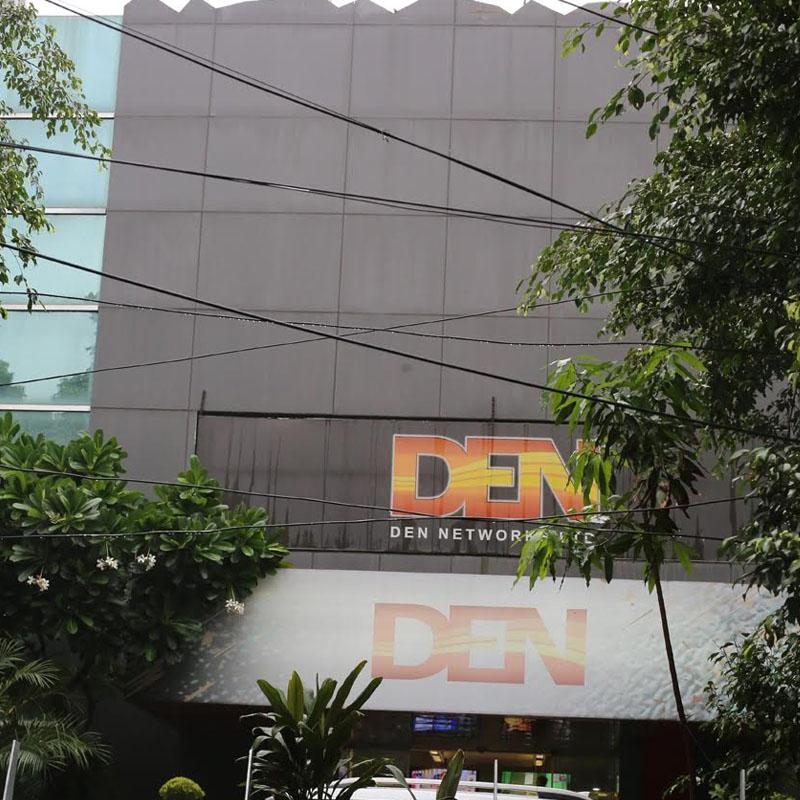
Tag: Den Network

  • Den reports lower numbers for third quarter

    Den reports lower numbers for third quarter

    BENGALURU: Indian cable distribution network and broadband internet services (broadband) provider Den Networks Ltd reported 6 per cent drop in consolidated operating revenue numbers for the quarter ended 31 December 2018 (Q3 2019, quarter or period under review) as compared to the corresponding year ago quarter (y-o-y, Q3 2018).

    Den Network’s operating profit (EBITDA) declined 39 per cent y-o-y during the period under review to Rs 48.10 crore (15.6 percent of operating revenue) from Rs 78.83 crore (24 per cent of operating revenue) in Q3 2018.

    Den reported a net loss of Rs 31.21 crore in Q3 2019 as compared to a profit after tax of Rs 1.73 crore in Q3 2018.The company reported total comprehensive loss (TCL) of Rs 31.06 crore as compared to total comprehensive income of Rs 1.31 crore in Q3 2018.

    Segment numbers

    Den has two segments – cable distribution networks (Cable) and broadband. Both segments reported lower y-o-y revenues and operating loss for the quarter under review.

    Cable segment revenue reduced 6.1 per cent y-o-y in Q3 2019 to Rs 291.59 crore from Rs 310.50 crore in Q3 2018. Den reported that the segment had an operating loss of Rs 8.95 crore as compared to an operating profit of Rs 25.20 crore in Q3 2018.

    Den Networks reported 5.1 per cent y-o-y decline in operating revenue for its broadband segment in Q3 2019 at Rs 16.82 crore as compared to Rs 17.72 crore in Q2 2018. The segment’s operating loss reduced to Rs 6.60 crore in Q3 2019 from an operating loss of Rs 7.29 crore.

    Let us look at the numbers reported by Den Networks for Q1 2019

    Den Networks consolidated revenue from operations in Q3 2019 was Rs 308.41 crore, 6 per cent lower than the Rs 328.22 crore in Q3 2018. Consolidated total revenue including consolidated other income declined 6.4 per cent y-o-y in Q3 2019 to Rs 313.32 crore from Rs 334.92 crore in Q3 2018.

    Consolidated total expenditure for the quarter under review increased 3.9 per cent y-o-y in Q3 2019 to Rs 337.84 crore (109.5 percent of operating revenue) from Rs 325.20 crore (99.1 per cent of operating revenue) in the corresponding quarter of the previous year.

    Consolidated content cost increased 10.5 per cent y-o-y in Q3 2019 to Rs 148.65 crore (48.2 per cent of operating revenue) as compared to Rs 134.56 crore (41 per cent of operating revenue) in Q3 2018. Consolidated placement fees reduced 9.3 per cent y-o-y in Q3 2019 to Rs 9.99 crore (3.2 per cent of operating revenue) from Rs 12.48 crore (3.4 per cent of operating revenue) in Q3 2018.

    Den Networks consolidated employee benefits expense during the period under review declined 7.5 per cent y-o-y to Rs 23.80 crore (7.7 per cent of operating revenue) from Rs 25.73 crore (7.8 per cent of operating revenue) in Q3 2018. Consolidated other expenses in Q3 2019 increased 1.6 per cent y-o-y to Rs 77.87 crore (25.2 per cent of operating revenue) in Q3 2019 from Rs 76.62 crore (23.3 per cent of operating revenue) in the corresponding quarter of the previous year.

    Company speak

    Den CEO SN Sharma said, “Cable subscription ARPU is consistent with respect to the previous quarter which stood at Rs 96 per box (including tax).

    "TRAI tariff order implementation, a potential gamechanger in the cable industry, is underway wherein we have taken host of initiatives and strengthened our internal processes including IT systems. In order to migrate to the new tariff order, consumer has various options to exercise his choice of channels through our consumer / LCO mobile applications and web portal.

    "Extensive LCO/distributor awareness programme are under progress wherein the partners are explained in clear terms the benefits they would get in the overall value chain. Prepaid system for cable subscription partners, the most preferred billingoption under the new tariff order, has been successfully rolled out during the quarter in select markets.”  

    Strategic investments in Den by Reliance Industries

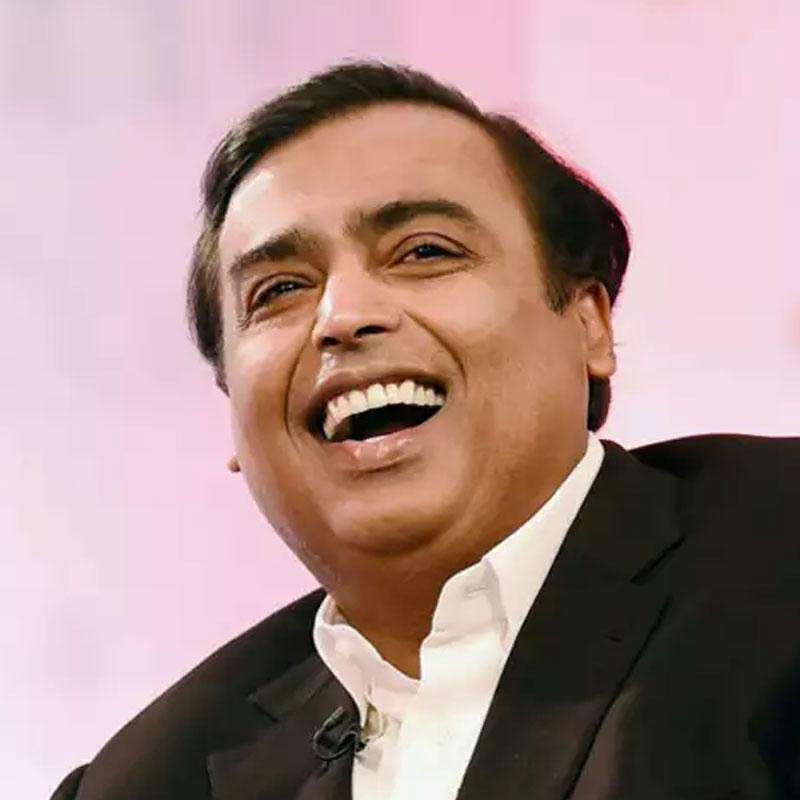
    On 17 October 2018, the Mukesh Ambani led Reliance Industries Ltd reported to the bourses that it has decided to make strategic investments thought a primary investment of Rs 2,045 crore through a preferential issue under SEBI regulations and secondary purchase of Rs 245 crore from the existing promoters for a 66 percent stake in Den. Reliance also said that it would make a primary investment of Rs 2,940 crore through a preferential issue under SEBI regulations for a 51.3 per cent stake in Hathway Cable and Datacom Ltd (Hathway) of the Rajan Raheja group.

  • RIL close to buying majority stakes in DEN, Hathway

    RIL close to buying majority stakes in DEN, Hathway

    MUMBAI: Reliance Industries is expected to buy controlling stakes in two of India’s largest cable TV and broadband service providers, DEN Networks and Hathway Cable & Datacom, according to a report by the Times of India (TOI). The plan mostly is to increase the reach in particular regions of the country for its Gigafiber, Fiber-to-the-Home (FTTH) service.

    In May 2017, Reliance Jio had begun rolling out beta trials of the FTTH service at select locations in six cities- Mumbai, Delhi-NCR, Ahmedabad, Jamnagar, Surat and Vadodara.

    RIL is likely to own more than 25 per cent each in the two companies which will enable it to control developments and get a seat on the board. The deal is expected to be announced in the next few days. Both companies have told the stock exchanges that the respective boards are meeting on 17 October to discuss and approve a proposal for raising funds.

    “RIL wants to create a platform which will accelerate home broadband penetration in India, which is currently in a low single-digit. The aim is to push home broadband penetration to around 60 per cent in the coming years,” TOI quoted a source.

    Last September, RIL was in advanced talks to acquire DEN but could not reach an agreement. Some months ago, it began talks with Hathway as well.

    Industry experts told TOI that a stake in Hathway and DEN will be a major boost to Jio. Both operators have 7.2 million digital cable subscribers each, with operations across 350 and 200 cities, respectively.

  • Broadband on cable fibre declining?

    Broadband on cable fibre declining?

    BENGALURU: Is broadband on cable fibre on the decline in India? Results over the past few quarters of some of the multisystem operators or MSOs seem to indicate just that. Mukesh Dhirubhai Ambani’s largest start up in the world Reliance Jio Infocom Ltd (JIO) is the one of the biggest upheavals that has happened in the Indian telecommunications ecosystem ever. With its operations of scale and low cost services, there just does not seem to be a better bet for the prudent Indian internet user. What is missing is quality of services, but, then that is the case also with all the major mobile  and internet service providers in India, be it an Airtel or a Jio or a Vodafone or the public sector BSNL and MTNL.

    Wired broadband internet subscriber numbers have been declining, while wireless broadband internet subscribers have been growing according to Telecom Regulatory Authority of India (Trai) data. Among the top five wired internet services providers in India, BSNL and MTNL have been slowly and steadily losing subscribers. However, the overall loss of wired broadband subscribers is higher than the numbers bled by these two public sector behemoths. Subscription numbers of the other three players in Trai’s top five wired broadband internet service providers list such as Bharti Airtel, ACT and Hathway have been either increasing slowly or have been steady month-on-month in calendar year 2018 according to Trai data. MSOs and LCOs are among the other wired internet service providers in the country. Financial numbers released by major and other MSO and wired internet service providers such as Siti Networks, Den or Ortel indicate lower revenues from their respective broadband segments, implying either loss of subscribers or lower ARPU due to competitive pricing or both.

    Is the laying of fibre cable or FTTH (fibre to the home) that Jio has planned to provide broadband internet services to the doorstep out the right way forward? Anything that Reliance does will be on a huge scale. However, why not pause and limit the size of Jio’s FTTH plans and then leapfrog and start offering 5G services? 5G is a wireless service to the user’s door and needs no messy holes or wires for access into the user’s home. All that is needed by the user is a modem that works like a wireless modem.

    Affordable 5G services could effectively change how a user receives internet and related services. It’s not going to be easy and will require a huge amount of capital for the infrastructure for line of sight transmission in crowded cities, etc. But, already players such as AT&T and Verizon in the US have planned a slow but steady rollout of 5G services in the US. One the US majors will roll 5G services first in four cities by the end of 2018 and then across the US over time. Players in the US are planning to bundle 5G services with offers such as free Youtube.com TV and Apple TV 4K for a limited period of time. Jio has the resources, the wherewithal to do so.

    Of course 5G could be even more bad news for the current Indian cable TV ecosystem’s wired broadband offerings, maybe even the current Indian media and entertainment ecosystem, but could be a huge beneficial and cost effective game changer for the user. Using the cliché, change is the only constant, well maybe the entire ecosystem that brings entertainment to the common Indian does need a huge shakeup?

  • DEN Network fixed-line b’band biz plan hinges on partnerships & leveraging present infra

    DEN Network fixed-line b’band biz plan hinges on partnerships & leveraging present infra

    MUMBAI: With telcos handing out data at cheap rates in various package sizes under innovative schemes, mobile data consumption has increased rapidly in India in the last few years, while the growth of fixed-line broadband (FLBB) users has been tepid, if not completely static. MSO DEN Networks now wants to tap the hitherto unexplored opportunities of FLBB as a business proposition. So, what’s the plan?

    Not only DEN wants to use its own and partners’ customer bases in 100 small cities of India, but is also, probably, eyeing the huge FLBB market that will open up as the Indian government ramps up its BharatNet project to provide Internet and broadband services to approximately 250,000 gram panchayats or local village administrations through state-run telcos and third-party service providers, including cable operators. 

    The reason for hi-speed broadband in 100 cities in 10 Indian states is to try overcome the low returns in big cities and metros. “We have also seen a lot of stress in the fixed line broadband ARPUs of all the major metros, be it Mumbai, Delhi, Bangalore [and] Kolkata,” DEN Networks CEO SN Sharma said during a recent analyst call, going onto add that the ARPUS were low in the “top 10 towns of the country”.

    public://graph_1.jpg

    In April, DEN Broadband Pvt. Ltd, a subsidiary of DEN Networks, had announced expansion of its hi-speed internet services to 100 cities across India.  After completion, DEN Broadband aims to enable 1.1 crore (11 million) Indian households with high-speed broadband services by 2020 with 20 MB speeds on an average under different sets of packaging and schemes — in contrast to average lower offerings from various telcos.

    And, to back its claims, DEN Networks quotes data from international and domestic sources. In a presentation made to investors, the Sameer Manchanda-founded company justified its focus on FLBB by saying that if regulator TRAI’s December 2017 data was to be believed, there were 425 million wireless Internet subscribers, while there were only 18 million FLBB subs. Over the years, Indian FLBB growth has remained static compared to its APAC peers like Australia, China, Vietnam and Thailand.

    So, how is DEN going to go about its FLBB plans in 100 cities? The company plans to leverage its existing cable universe and tie-ups with last mile operators by going the franchisee model, leveraging present infrastructure (80 per cent already fibre-enabled), and lower capex and operational costs. Affordable technology like Metro Ethernet and GPON, coupled with standardized technical solutions, customer support from DEN and a pre-paid collect model on B2C basis, according to the company, would make good business sense.

    “We have a plan to enable 15 towns in the first quarter. Overall, 100 towns have to be enabled, and you will be surprised that LCOs themselves are approaching us,” Sharma informed an analyst, adding that it was not just a one-way traffic as company execs too were tapping LCOs informing them of the benefits as the infrastructure is already in place and the project could have additional revenue spin-offs for the LCOs. DEN has earmarked Rs. 100 crore (Rs.1 billion) as capex for the FLBB project over the three-year period.

    What is fueling DEN’s aspirations? Quoting Singapore-based Media Partners Asia figures, the company presentation told investors that there had been 

    15X rise year-on-year in Internet data traffic in 2017 with video content contributing 65 per cent of total mobile data traffic apart from the fact that India’s FLBB penetration was expected to increase to 10.3 per cent from the present single digit share by year 2022. Moreover, as content and applications keep getting heavier and denser in size, FLBB high speed broadband solutions could be ideal for offices and homes.

    “Our fiber is just 100 meters away from each of the subscriber that is being served by us,” Sharma explained to analysts, adding with broadband ARPUs low in metros and bigger cities it was decided to target the rest of the country that is not only a “virgin area” but has “equally good” demand.

    Asked about Reliance Jio’s ambitious plans to rollout broadband services in the country, which can disrupt this segment too, Sharma refused to comment, saying, “I am nobody to comment on others business.” 

    Also Read :

    DEN expands broadband services; plans Rs 100 cr capex

    Aim to take phase 3 ARPU to phase 1 value: Den Networks’ SN Sharma

    DEN readies Android-based STB for Feb launch

    TDSAT rules in favor of DEN Networks, directs ZEE entertainment to provide channels on RIO basis

  • IDOS 2017: Cable TV sector needs more collaborative broadcasters, say MSOs

    IDOS 2017: Cable TV sector needs more collaborative broadcasters, say MSOs

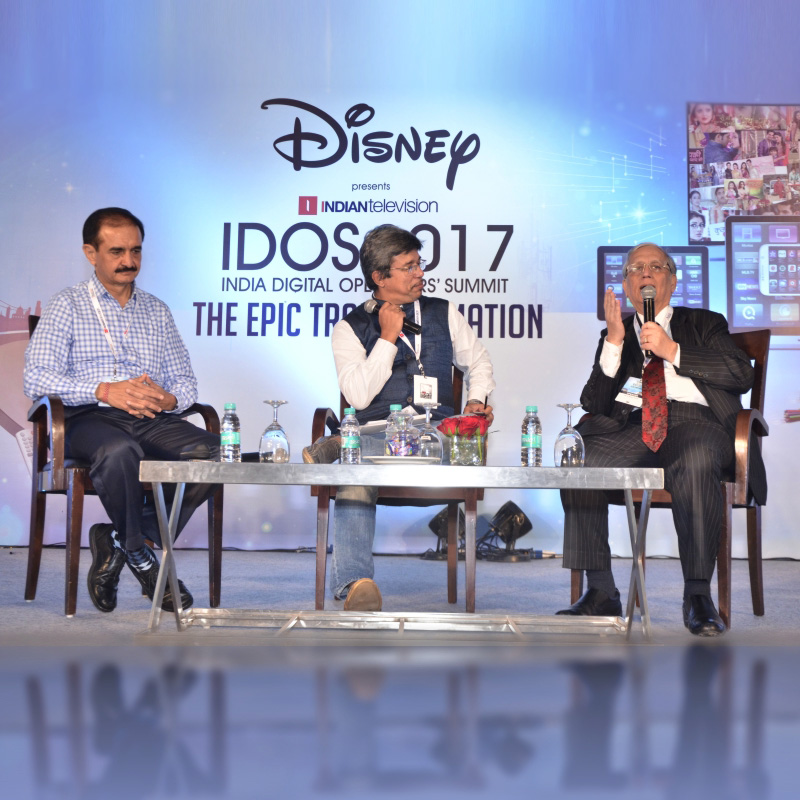
    NEW DELHI: Even as the multi-system operators and cable operator are doing their bit to aid digitisation, broadcasters need to participate more in the process which officially has been completed. They need to be more transparent and supportive of the distribution platform operator — in this case the MSO and cable TV operator — and not be like a tax collector always asking for more.

    This was the general view of both, S N Sharma of Den and Ashok Mansukhani of Incable in a discussion in ‘The Indian MSO: Redefining the raison’etre’, who also said it was only now that the MSO was beginning to monetise almost five years after digital addressable system was first launched.

    Furthermore, the broadcasters were still free to fund the business as they wanted, and, as Sharma put it, there are only two laws that control the broadcaster – the Programme and Advertising Codes and the Cable Television Networks (Regulation) Act 1995. Thus, there is virtually no regulation for the broadcaster, Sharma said.

    Both, Sharma and Mansukhani agreed that MSOs and even LCOs had put in a lot of effort to get DAS off the ground — that too in a period of four to five years, which is unprecedented globally.

    “The DAS regulation was brought in for transparency and to allow everyone to have a fair share of the huge subscription revenues that viewers were paying to watch cable TV,” said Sharma. “But, the sad part is that broadcasters are constantly asking for rate increases of 24 per cent or so without even asking if it were possible,” added Mansukhani.

    They said that it would be better if the broadcasters were to communicate rate increases to viewers and invest in promoting that, rather than expecting MSOs who are just about recovering from the hangover of the huge investments they have put into DAS as well as getting robust systems and processes in place. “Also, we are not equipped or have the creative mindset to communicate this effectively for all channels,” agreed both Sharma and Mansukhani.

    Rather than going to courts to stall the TRAI tariff order, they said, broadcasters could collaboratively work with the DPOs to take DAS on to the next level. “Neither the government nor the regulator has been able to do anything,” they said.

    “We have our own troubles, recouping our investments to bring back profitability into the cable TV sector, as well as dealing with piracy and leakages which broadcasters take time to check and stop because they have procedures to follow,” said Sharma.

    Mansukhani disagreed with Indiantelevision.com founder, CEO and editor-in-chief Anil Wanvari that the cable TV sector will not be in a position to manage complicated skinny a la carte bundles for the millions of customers that it serves. “Our backends are ready,” he said. “Our SMS, billing and KYC of the customers is in place,” he said. “We are just waiting for the (court) order to come through.”

    He opined that the industry would ultimately survive the changes, and he was also confident that the cable industry was ready to adapt to any new technology.
    To a question about monetisation, Sharma said the MSOs were not beginning to reap the monetary benefits of Phase I. Even the DTH industry was beginning to break even only now, more than a decade after it was launched.
    Mansukhani said he was happy that the Hinduja’s headend in the sky (HITS) NXTDigital was reaching 1.5 million consumers. But, the need was to break even as early as possible and “giving a dividend to my shareholders.”

    But, he stressed the need to keep the dialogue open with the LCOs who are the ones dealing with the consumer. Consumer connect has to continue. He regretted that the level playing field that he had hoped to get from the government has never came.

    Both Mansukhani and Sharma agreed that, though the government had not made a difference between the urban and rural viewers, this was necessary if there has to be penetration in rural areas. Otherwise, they would go to Doordarshan’s FreeDish.

    Sharma said his company was soon launching a device that would not be internet-based and could be used for all gadgets including mobiles, TV, tabs, and so on.

    Mansukhani said that it was clear that the MSO will have to graduate from being a TV MSO to a multi-screen MSO.

  • Den demerger from Skynet approved, saving on AGR

    MUMBAI: Cable television service-provider MSO Den Networks has stated that it has received shareholders’ nod to demerge its broadband/internet service provider arm Skynet Cable Network. Den Networks, on 11 March 2017, wrote to the National Stock Exchange and the Bombay Stock Exchange Limited about the conclusion of court-convened meeting.

    According to a source among Den shareholders, the demerger had been prompted because of adjusted gross revenue (AGR) of eight per cent levied on the broadband business Skynet. Prior to the demerger, this AGR was being levied on Den as a whole whereas it is not applicable to cable TV.

    The company had convened a meeting of its shareholders following the orders of the National Company Law Tribunal for this purpose. “The scheme of arrangement has been approved by members of the company,” said Den Network in a regulatory filing signed by company secretary Jatin Mahajan.

    In September last year, Den Networks’ board had approved to demerge Skynet Cable Network. It was done to “enhance competitiveness and greater accountability”, “achieve structural and operational efficiency”, and to have “a focused attention in the ISP business,” it had said. Its broadband/ISP arm had a turnover of Rs 40.63 crore in FY 2015-16 and contributed 3.53 per cent shares in its total revenue.

    In the 11 March 2017 meeting, it stated thus: “This is to inform you that, pursuant to an Order by the Principal Bench of the National Company Law Tribunal (“NCLT”), New Delhi, a Meeting of the Equity Shareholders/Secured Creditors and Unsecured Creditors of DEN Networks Limited (“DEN”) has been conducted at PHD Chamber of Commerce, No. 4/2, Sin Institutional Area, August Kranti Marg, New Delhi- 110016 on Saturday, 11th March, 2017, for the purpose of considering and, if thought fit, approving with or without modification(s), the arrangement embodied in the Scheme of Arrangement of DEN or Transferor Company and Skynet Cable Network Private Limited (“SYKNET” or “Resulting Company”), through which Internet Service Provider (ISP) Business / Broadband Undertaking of DEN will demerge into SKYNET, a wholly owned subsidiary of DEN.”

  • Arnab Goswami: Best time to enter news market when there’s no leader

    MUMBAI: Whether off screen or on screen Arnab Goswami is a passionate and animated speaker, though some would say he’s given to histrionics. “The best time to enter the (news) market is when there is no leader,” Goswami said with his trademark flourish, barely few months after leaving Times TV Network as group editor where he often claimed Times NOW was the No. 1 news channel in the country.

    He delivered this almost knockout punch against his previous news platform in a sotto voice dressed casually in a jeans with a jacket draped over it. Hopefully without batting an eyelid (his eyes were hidden behind dark shades, though), he delivered his next punchline: “English news market has flattened out. There was a gap of about 15-20 per cent between Times NOW and other channels when I was leading it, but now there is no clear leader.”

    Gearing up for the launch of his entrepreneurial venture Republic TV, an English News channel, and Republic World, a digital platform, Goswami, in an exclusive conversation with indiantelevision.com on the sidelines of FICCI Frames 2017 here, noted that flattening of the news market was good for his venture

    Though Goswami sounds confident about his venture, but, probably, his previous employers do still rile him still. Remember the story of David and Goliath?

    “One TV channel constantly says that we are not going to let Republic crush us. Every morning they wake up talking about us, giving interviews. I would tell that channel to stop being paranoid,” he drops his voice — may be for effect — and goes on to add loudly, “Your paranoia about us will make you fail.” Full marks for being candid!!

    Well, even when we thought Goswami was through with rubbing it in and we could move over to other topics for discussion, he holds the line, if we use cricket’s bowling analogy: “Unhealthy practices in the TV industry have started. One news channel, which has lost considerable amount of viewership, is going around telling distributors that they would be willing to pay more money if they (distributing platforms) could stop broadcasting Republic for a month. I am horrified.

    “It reveals a sense of deep insecurity (in Republic’s competitors). They say things like ‘some small channel that has not stopped, has been renamed twice and would be renamed the third time just around the time of launch’. These are all signs of growing paranoia and nervousness. I want to tell these channels to not be worried and do something innovative and prepare for our launch. It’s a more healthy way of being in the business. ”

    So which are these TV channels that are maligning Republic and are “nervous” and “insecure”? We urge him to come clean on this name game. This time Goswami ducks the bouncer and counter-questions, “Well, everybody knows who they are. Don’t you people know the facts?”

    According to the media buzz, Goswami will launch both his digital platform and the news channel in two months’ time. Though Goswami refrained from divulging more programming and other details of his ventures, buzz says the TV news anchor, who grew bigger than the company that employed him till few months, will return to the TV screen by anchoring a show on the channel in his trademark style —- critics claim he would continue to be the prosecutor and judge making mincemeat of his panelists. “It will happen soon, much before what is been speculated,” is all that Goswami is willing to state.

    But, just as he cannot let go of a chance to add to the suspense, Goswami pulls back his long-ish hairs and noted with a flourish: “Starting with news in English, the channel (and the whole venture) will expand wherever the audiences exist.”

    The two platforms have received an array of supporters from the advertising and sponsorship worlds. “Loads of people have been lining up to advertise with us. There has been a fantastic reception from the market. There has been a tremendous response from the advertisers from all categories — those who are advertising on news and those who are working with us. They are all excited about the venture,” Goswami boasts, adding bashfully, “This is going to be the most exciting media launch in 2017.”

    For him, viewership is not just limited to market share, but is based on the total number of people watching a product. Strongly believing that unless a TV channel starts engaging with the audience, it would rapidly loose viewership, Goswami explains: “There has been a fall in viewership (of news channels), but that is because there is lack of innovation. Copycats don’t work. You must evolve your own style. I wish people in the English news business start doing different formats on their own. It will be good for them. But, they don’t have much time for that because we are coming with Republic. They just have a few weeks.”

    Is he looking for additional funding for his venture after BJP-backed MP of Rajya Sabha Rajeev Chandrashekhar put in reported over Rs. 3,000 million, apart from several other high networth individuals in their personal capacity? Goswami refused to speak on funding. But he was overheard telling a person, after delivering a keynote address at FICCI Frames 2017 here, that funding for the TV venture is over, though he is actively looking to raise additional investments for the digital platform.

    While delivering his keynote address, reeled out in his usual style with emphasis on anecdotes, theatrics and requests for support from “you all”, Goswami highlighted the changing landscape of new business in India. Some of the highlights are as follows:

    – Plain vanilla is boring. It is overused and dead.

    – Opinion is the future. Having an opinion as a journalist is necessary. Opinions are sacred.

    – Encourage speaking of English the Indian way. ‘Hinglish’ is the way ahead.

    – Content will remain the king (where does that leave distribution platforms, the vehicle on which content will ride, we wonder. More specifically, where would that leave one of his many investors, Sameer Manchanda, who also is founder-promoter of MSO DEN Networks?)

    – Television will outlive all news genres. There will be a collaboration and not competition of TV and digital.

    – Technology will be the democratic enabler for media.

    – Delivering news is what matters to India.

  • Bhojpuri Cinema now available on Tata Sky and Den Network

    Bhojpuri Cinema now available on Tata Sky and Den Network

    The No.1 Bhojpuri Movie Channel – Bhojpuri Cinema,hasstrengthened its distribution with India’s leading Direct to air platform – Tata sky. With Tata Sky,Bhojpuri Cinema will now benefit with deep penetration across the regions of the country. This move will gradually fortify the channel’s position in other markets also, making it easily available for discerning viewers throughout the country.

    Bhojpuri Cinema is now available on Tata sky Channel No. 1115.

    Apart from the new DTH entry, the channel is also now available on Den network in the state of UP/Uttarakhand,Bihar & Jharkhand on channel number 827.

    With these associations, Bhojpuri Cinema will mark the beginning of new prospects for the channel in terms of increased viewership, new audience base, robust expansion plan, etc. The channel will engage with viewers and trade partners locally and nationally through a multimedia campaign across multiple platforms.

    Amongst the Bhojpuri regional channel in Bihar & Jharkhand, Bhojpuri cinema derives a 26 percent of market share in 4 plus TG.

    Bhojpuri Cinema is the only Bhojpuri channel that delivers round the clock entertainment with the scheduling of 42 fresh Bhojpuri movies every week including world television premiers. Its library of over 350 Bhojpuri movies is the biggest Bhojpuri movie library of the world.

    Bhojpuri Cinema is available across DTH platforms such as Tata Sky,Airtel, DD Free Dish, Dish TV along with all cable operators of the region.

    Speaking on the occasion, Enter 10 Television Pvt. Ltd, Founder and Managing Director, Mr. Manish Singhal said, “We are happy to announce our availability on Tata Sky and Den Network, which allows the channel to immediately grow its reach across the geography. We are confident that our content will be thoroughly enjoyed by the new audiences, further enhancing our reach and position. Strengthening our distribution is a strategic move which will not only widen our audience base and popularity but will also give better value to our advertisers.”

    Enter 10 Television Pvt. Ltd. (ETPL) is an Indian media and entertainment company based in Indore, Madhya Pradesh, India. The company’s founder and managing director is Mr. Manish Singhal. The Company has 4 channels serving Indian content across India. Enter 10 Television Pvt. Ltd. was incorporated 11 March 2004. Enterr10 Television, the flagship channel of Enter10 Television Pvt. Ltd. was launched in October 2006. Then it came out with three channels namely Dangal, which is a General Entertainment channel, Bhojpuri Cinema, which is a 24 hours Bhojpuri Movie channel &Fakt Marathi , which is a 24 hours Marathi Movie channel.

  • Bhojpuri Cinema now available on Tata Sky and Den Network

    Bhojpuri Cinema now available on Tata Sky and Den Network

    The No.1 Bhojpuri Movie Channel – Bhojpuri Cinema,hasstrengthened its distribution with India’s leading Direct to air platform – Tata sky. With Tata Sky,Bhojpuri Cinema will now benefit with deep penetration across the regions of the country. This move will gradually fortify the channel’s position in other markets also, making it easily available for discerning viewers throughout the country.

    Bhojpuri Cinema is now available on Tata sky Channel No. 1115.

    Apart from the new DTH entry, the channel is also now available on Den network in the state of UP/Uttarakhand,Bihar & Jharkhand on channel number 827.

    With these associations, Bhojpuri Cinema will mark the beginning of new prospects for the channel in terms of increased viewership, new audience base, robust expansion plan, etc. The channel will engage with viewers and trade partners locally and nationally through a multimedia campaign across multiple platforms.

    Amongst the Bhojpuri regional channel in Bihar & Jharkhand, Bhojpuri cinema derives a 26 percent of market share in 4 plus TG.

    Bhojpuri Cinema is the only Bhojpuri channel that delivers round the clock entertainment with the scheduling of 42 fresh Bhojpuri movies every week including world television premiers. Its library of over 350 Bhojpuri movies is the biggest Bhojpuri movie library of the world.

    Bhojpuri Cinema is available across DTH platforms such as Tata Sky,Airtel, DD Free Dish, Dish TV along with all cable operators of the region.

    Speaking on the occasion, Enter 10 Television Pvt. Ltd, Founder and Managing Director, Mr. Manish Singhal said, “We are happy to announce our availability on Tata Sky and Den Network, which allows the channel to immediately grow its reach across the geography. We are confident that our content will be thoroughly enjoyed by the new audiences, further enhancing our reach and position. Strengthening our distribution is a strategic move which will not only widen our audience base and popularity but will also give better value to our advertisers.”

    Enter 10 Television Pvt. Ltd. (ETPL) is an Indian media and entertainment company based in Indore, Madhya Pradesh, India. The company’s founder and managing director is Mr. Manish Singhal. The Company has 4 channels serving Indian content across India. Enter 10 Television Pvt. Ltd. was incorporated 11 March 2004. Enterr10 Television, the flagship channel of Enter10 Television Pvt. Ltd. was launched in October 2006. Then it came out with three channels namely Dangal, which is a General Entertainment channel, Bhojpuri Cinema, which is a 24 hours Bhojpuri Movie channel &Fakt Marathi , which is a 24 hours Marathi Movie channel.

  • Disney plays Fun Indiagames with Den

    Disney plays Fun Indiagames with Den

    MUMBAI: Indian Cable Television Distribution Company Den Network Limited and Disney India’s gaming arm Indiagames have launched ‘Fun Games,’ a subscription based gaming service. The service will offer a range of exciting games from the catalogue of Indiagames branded titles.

    Den Networks CEO SN Sharma said, “Disney India is to launch exciting games for kids under the name of Den Fun Games.’’

    Further, he emphasized, “At Den, we give the best value for money by using the most advanced technology.”

    “Today, MSOs reach out to major population in India and, by collaborating with Den, we are able to popularize our gaming content amongst them,” said Disney India – interactive, VP and head, Sameer Ganapathy.

    Den’s Fun Games offers three games which will be refreshed regularly for players to acquire new skills. The games include Egg Jump, Mailbox and Tower of Hanoi and are available for monthly Rs 45 and quarterly Rs 90 subscriptions.