Tag: Demonetisation

  • Demonetisation impacts ZEEL ad revenue for Q3-17

    Demonetisation impacts ZEEL ad revenue for Q3-17

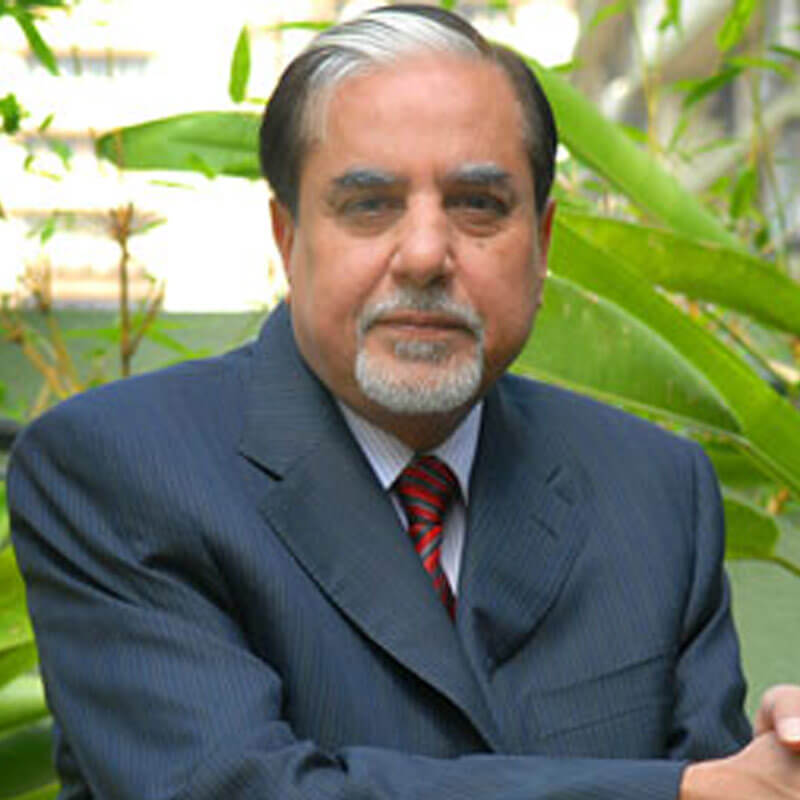
    BENGALURU: The Subhash Chandra led content and broadcast player Zee Entertainment Enterprises Limited (ZEEL) reported a small hike of 3.1 percent in advertisement revenue in the quarter ended 31 December 2016 (Q3-17, current quarter) as compared to the corresponding quarter of the previous year (Q3-16). Consolidated revenue from operations (Total Income from Operations or TIO) increased 3.2 percent year-over-year. Though subscription revenue increased 13.7 percent y-o-y, other sales and services declined 35.5 percent and hence pulled down TIO. ZEEL reported consolidated TIO of Rs 1,639.12 crore in Q3-17 as compared to Rs 1,588.12 crore in Q2-16.

    Ad revenue in the current quarter was Rs 945.45 crore (58.3 percent of TIO) as compared to Rs 926.39 crore (58.3 percent of TIO) in Q316. Subscription Income in Q3-17 was Rs 593.46 crore (36.2 percent of TIO) and in Q3-16, it was Rs 521.79 crore (32.8 percent of TIO) Other Sales and Services Income in the current quarter was Rs 90.21 crore (5.5 percent of TIO) as compared to Rs 139.94 crore (8.8 percent of TIO) in Q3-16.

    ZEEL chairman Chandra said, “Government’s decision to demonetise high value currency had an impact on businesses across sectors. Notwithstanding the short term disruption caused by demonetisation, we believe that it is a step in the right direction. Demonetisation along with implementation of GST and push towards cashless economy would help country’s long term growth.”

    ZEEL’s Profit After Tax (PAT) in Q3-17 increased 8.6 percent y-o-y to Rs 250.81 crore (15.3 percent of TIO or margin) from Rs 230.86 crore (14.5 percent margin). Operating Profit (EBIDTA) in the current quarter also increased 19.4 percent y-o-y to Rs 515.79 crore (31.5 percent margin) from Rs 432.16 crore (27/2 percent margin).

    Total Expenditure in Q3-17 reduced 2.4 percent to Rs 1,148.23 crore (70.1 percent of TIO) from Rs 1,176.31 crore (74.1 percent of TIO) in Q3-16.

    Finance costs in the current quarter reduced 14.7 percent y-o-y to Rs 9.02 crore (0.6 percent of TIO) from Rs 10.57 crore (0.7 percent of TIO) in the corresponding year ago quarter.

    Employee benefit expense in Q3-17 increased 13.2 percent to Rs 141.88 crore (8/7 percent of TIO) from Rs 125.34 crore (7.9 percent of TIO) in Q3-16.

    The company spent 12.4 percent less towards Advertising and Publicity expense in the current quarter at Rs 104.90 crore (6.4 percent of TIO) as compared to Rs 119.75 crore (7.5 percent of TIO) in Q3-16.

    Company speak

    Chandra said further, “The result once again demonstrates our commitment towards profitable growth and enhancing shareholders’ wealth. Despite the impact of demonetisation, we have delivered growth in advertising revenues and growth in subscription revenues remained strong. We believe the adverse impact of demonetisation is transient and with a strong portfolio of national and regional channels we are confident of delivering sustainable growth.”

    ZEEL managing director and CEO Punit Goenka said, “We are happy to deliver another quarter of strong profit growth in a challenging environment. Despite the impact of demonetisation on our advertising revenues, we have improved our EBITDA margins. This highlights our ability to manage costs to drive profitable growth on a consistent basis.”

    Gonka revealed, “Acquisition of broadcasting business of RBNL is in line with our strategy to expand our offering in key genres and focus on regional space. BIG Magic, a comedy channel, will complement our Hindi GEC portfolio. BIG Ganga, the leading Bhojpuri channel, will give us entry into the attractive Bhojpuri market. We are confident that these two channels will benefit immensely from the strength of our network.”

    Goenka informed, “The deceleration in our advertising revenue growth during the quarter is largely attributable to demonetisation. Advertisers’ willingness to invest in their brands remains intact. However, the timing of spends has been re-calibrated to an extent to suit the change in dynamics due to demonetisation. As economic situation is normalizing, ad spends have already started moving up from December levels.”

    International Business

    In its earnings release, ZEEL said that its international business continues to perform strongly driven by global demand for our products. For Q3-17 the international business had total revenue of Rs 253 crore which included Advertisement Revenue of Rs 81.70 crore; subscription Revenue of Rs 111.7 core and  other Sales and Services of Rs 59.6 crore.

    Note: (1) The unit of currency in this report is the Indian rupee – Rs (also conventionally represented by INR). The Indian numbering system or the Vedic numbering system has been used to denote money values. The basic conversion to the international norm would be:

    (a) 100,00,000 = 100 lakh = 10,000,000 = 10 million = 1 crore.

    (b) 10,000 lakh = 100 crore = 1 arab = 1 billion.

    (2) All numbers in this report are consolidated unless stated otherwise.

    (3) Some of the numbers have been rounded off

  • MAM 2016: When marketing, advertising hopped on to Digital India

    MAM 2016: When marketing, advertising hopped on to Digital India

    ‘Live streaming’, ‘Video on demand’, ‘data crunching’, ‘branded content’, ‘geo-targeting’, ‘digital measurement’, ‘native advertising’, ‘programmatic’, ‘digitisation’, ‘demonetisation’….2016 has generated enough buzzwords for the Indian marketer. So much so that it is hard to place one’s finger on that one thing that defined 2016’s marketing trends. Whatever be that theme, 2016 was definitely a year of disruption.

    Certainly it was disruptions galore. Disruption in how the audience consumes content (Hotstar, Netflix anyone?); disruption in how TV is viewed with major push towards digitisation; disruption in what content advertisers pay for (HUL’s Brooke Bond Red Label and the Six Pack Band, Tata Tiago driving TVF’s Tripling); disruption in media planning and buying (Amagi’s Mix); disruption in how we use money (payment banks and e-wallets) and finally disruption in pricing.

    One prime differentiator for brands this year was pricing or even no- pricing! The year started with the popular debate on Net Neutrality sparked by Airtel Zero and Facebook’s internet.org. Both had ambitious plans to provide internet across India at zero cost to preferential consumers. These projects couldn’t take off without blessings from TRAI, but differential pricing was also a major weapon used by OTT players in their race to be India’s primary SVOD service.

    Not to mention Baba Ramdev-pioneered Patanjali Ayurveda that gave global and incumbent Indian FMCG giants sleepless nights with its highly competitive pricing, even taking over other major advertiser by setting aside Rs 300 crore or Rs. 3 billion in ad spends. The nationalistic flavour that dominated the year further added to the brand’s marketing success.

    Patanjali wasn’t the only brand that cashed in on India’s new found nationalism in 2016. Another good example is Bajaj V, Bajaj Automobile’s latest launch in the 150 cc category, a part of steel used in which came from the now-decommissioned Indian navy’s warship INS Vikrant. The long-running and innovative marketing campaign, conceptualised and experimented with long-form content by Leo Burnett, picked up several medals in this year’s awards season.

    Nationalism aside, one of the major disruptors that the Indian marketers had to keep up with in 2016 was the Indian government itself. With some 60-odd policy changes throughout the year across various sectors, with remarkable execution time, the government kept the nation — and the markers — on their toes. Demonetisation of high value currency notes being the latest. While one would expect government and its departments to take several months to act on a single policy change, the PM Modi-led government remained exceptionally pro- active throughout 2016 — some critics dubbed it extremely destructive, but that’s another story — including the Star-Up India initiative that would further pump out a new breed of digital brands by 2017.

    ‘Marketing isn’t magic. There is science to it.’ This famous quote by Hubspot’s social media scientist and award winning marketer Dan Zarrella was felt strongly in 2016. Marketing in India saw a major facelift with increasing stress on technology. Whether it was the rise of messenger apps over social media, FB opening its door to easy and convenient live streaming, chat bots fronting the direct marketing initiatives by new age services, drones becoming the messengers of communication, media agencies putting more emphasis on data procurement and trend mapping through new tools, or AR/VR changing the ball game altogether…. ‘martech’ has taken a leap of faith worth a few decades in just a year. And for once, India wasn’t lagging at the tail end of this disruption. In some cases it was actually in the eye of the storm.

    Social media and technology giant Facebook recently announced India as its second most important market after the US and has in fact invested heavily in several India- only initiatives for both its users and brands. The result is that several brands, which were solely dependent on YouTube for the ‘digital video’ aspect of their marketing mix are now taking Facebook seriously. Although YouTube remains the market leader in digital video ad spends, 2016 Facebook has drawn significant attention from brands thanks to the advanced targeting options and different format options it offers with its video service (360 degree, live video, etc). Given the major setbacks that Facebook faced in this market, first with internet.org and then its mistake with measurement figures, this positive acceptance by brands was a major plus.

    2016 also saw several major Indian brands dabbling in Virtual Reality. Tata Motor’s virtual desk drive through mass distributed Google cardboards is a classic example. While innovations brought freshness in the sector, it has only set the stage for a more substantial use of VR/AR for marketing in 2017.

    When it comes to the start-ups and e-commerce world, the general trend was that of austerity. With cash crunch in the investment world and investors asking to recheck acquisition costs and several start-ups nearing their re-evaluation period, many companies saw themselves moving from GMVs to NPS to measure their value. With their burn rates going down, ecommerce giants couldn’t continue their marketing blitzkrieg as they did in 2015.

    While 2016 remained loyal to the ad spend estimates, third quarter saw a major fall in advertising spends across mediums following marketing budget cuts in major FMCG brands in the aftermath of demonetisation. Advertising was the first sector to be impacted due to this government move. Though the effect was felt across the whole medium, cut in television advertising spends accounted to almost Rs 600 crore (Rs. 6 billion) — some estimates put it as high as 2500 crore or Rs 250 billion. Print and out of home were the second most impacted segments. At the cost of over-generalising, the industry has seen a drop of almost 25 per cent in advertising spends in the current quarter. Advertising is also likely to be the last sector to return to normalcy as long as brands continue to treat it as expenditure and not an investment.

    Though comparatively digital advertising suffered less due to demonetisation, the digital video saw a major setback, while SEO and other forms of digital advertising managed to stay afloat. Nonetheless, it is imperative that most major agencies would revise their advertising forecast for 2016- 2017 estimates factoring in demonetisation.

    It goes without saying that digital became one of the primary mediums of advertising for brands in 2016 with traditional agencies planning major account with the ‘digital first’ as a concept. The rapidly growing digital advertising spends got a major boost as social media planning became a buzzword. Industry experts and senior planners are hopeful that this trend will continue through 2017 with the availability of cheaper and faster data across India. The ongoing dialogue of a cashless economy saw digital brands such as payment banks and e-wallets emerge as a major spender. The government’s push towards cashless transaction of money is most likely to give rise to a new breed of digital brands, which is good news for the digital advertising world.

    However, television continued to be the most preferred medium; especially with brands going after maximum reach and engagement. Television in India proved its efficiency as an advertising medium, thus ruling ad spends. But, major media management agencies such as GroupM and Dentsu Aegis Network are moving towards ‘video planning and buying’. Being platform-agnostic is the way forward.

    Overall, 2016 started with a good pace but slowed down for the advertising world towards the second quarter. The industry took a major hit in the third quarter and is yet to recover from the demon(etisation) bit. While media gurus are bullish on long-term effects of demonetisation, they don’t have high hopes of the industry returning to normalcy anytime before the end of the financial year.

    While the advertising world awaits ‘achhe din’ (a period of prosperity) in 2017, it bid adieu to 2016, the year when marketing and advertising leap-frogged into ‘Digital India’.

  • MAM 2016: When marketing, advertising hopped on to Digital India

    MAM 2016: When marketing, advertising hopped on to Digital India

    ‘Live streaming’, ‘Video on demand’, ‘data crunching’, ‘branded content’, ‘geo-targeting’, ‘digital measurement’, ‘native advertising’, ‘programmatic’, ‘digitisation’, ‘demonetisation’….2016 has generated enough buzzwords for the Indian marketer. So much so that it is hard to place one’s finger on that one thing that defined 2016’s marketing trends. Whatever be that theme, 2016 was definitely a year of disruption.

    Certainly it was disruptions galore. Disruption in how the audience consumes content (Hotstar, Netflix anyone?); disruption in how TV is viewed with major push towards digitisation; disruption in what content advertisers pay for (HUL’s Brooke Bond Red Label and the Six Pack Band, Tata Tiago driving TVF’s Tripling); disruption in media planning and buying (Amagi’s Mix); disruption in how we use money (payment banks and e-wallets) and finally disruption in pricing.

    One prime differentiator for brands this year was pricing or even no- pricing! The year started with the popular debate on Net Neutrality sparked by Airtel Zero and Facebook’s internet.org. Both had ambitious plans to provide internet across India at zero cost to preferential consumers. These projects couldn’t take off without blessings from TRAI, but differential pricing was also a major weapon used by OTT players in their race to be India’s primary SVOD service.

    Not to mention Baba Ramdev-pioneered Patanjali Ayurveda that gave global and incumbent Indian FMCG giants sleepless nights with its highly competitive pricing, even taking over other major advertiser by setting aside Rs 300 crore or Rs. 3 billion in ad spends. The nationalistic flavour that dominated the year further added to the brand’s marketing success.

    Patanjali wasn’t the only brand that cashed in on India’s new found nationalism in 2016. Another good example is Bajaj V, Bajaj Automobile’s latest launch in the 150 cc category, a part of steel used in which came from the now-decommissioned Indian navy’s warship INS Vikrant. The long-running and innovative marketing campaign, conceptualised and experimented with long-form content by Leo Burnett, picked up several medals in this year’s awards season.

    Nationalism aside, one of the major disruptors that the Indian marketers had to keep up with in 2016 was the Indian government itself. With some 60-odd policy changes throughout the year across various sectors, with remarkable execution time, the government kept the nation — and the markers — on their toes. Demonetisation of high value currency notes being the latest. While one would expect government and its departments to take several months to act on a single policy change, the PM Modi-led government remained exceptionally pro- active throughout 2016 — some critics dubbed it extremely destructive, but that’s another story — including the Star-Up India initiative that would further pump out a new breed of digital brands by 2017.

    ‘Marketing isn’t magic. There is science to it.’ This famous quote by Hubspot’s social media scientist and award winning marketer Dan Zarrella was felt strongly in 2016. Marketing in India saw a major facelift with increasing stress on technology. Whether it was the rise of messenger apps over social media, FB opening its door to easy and convenient live streaming, chat bots fronting the direct marketing initiatives by new age services, drones becoming the messengers of communication, media agencies putting more emphasis on data procurement and trend mapping through new tools, or AR/VR changing the ball game altogether…. ‘martech’ has taken a leap of faith worth a few decades in just a year. And for once, India wasn’t lagging at the tail end of this disruption. In some cases it was actually in the eye of the storm.

    Social media and technology giant Facebook recently announced India as its second most important market after the US and has in fact invested heavily in several India- only initiatives for both its users and brands. The result is that several brands, which were solely dependent on YouTube for the ‘digital video’ aspect of their marketing mix are now taking Facebook seriously. Although YouTube remains the market leader in digital video ad spends, 2016 Facebook has drawn significant attention from brands thanks to the advanced targeting options and different format options it offers with its video service (360 degree, live video, etc). Given the major setbacks that Facebook faced in this market, first with internet.org and then its mistake with measurement figures, this positive acceptance by brands was a major plus.

    2016 also saw several major Indian brands dabbling in Virtual Reality. Tata Motor’s virtual desk drive through mass distributed Google cardboards is a classic example. While innovations brought freshness in the sector, it has only set the stage for a more substantial use of VR/AR for marketing in 2017.

    When it comes to the start-ups and e-commerce world, the general trend was that of austerity. With cash crunch in the investment world and investors asking to recheck acquisition costs and several start-ups nearing their re-evaluation period, many companies saw themselves moving from GMVs to NPS to measure their value. With their burn rates going down, ecommerce giants couldn’t continue their marketing blitzkrieg as they did in 2015.

    While 2016 remained loyal to the ad spend estimates, third quarter saw a major fall in advertising spends across mediums following marketing budget cuts in major FMCG brands in the aftermath of demonetisation. Advertising was the first sector to be impacted due to this government move. Though the effect was felt across the whole medium, cut in television advertising spends accounted to almost Rs 600 crore (Rs. 6 billion) — some estimates put it as high as 2500 crore or Rs 250 billion. Print and out of home were the second most impacted segments. At the cost of over-generalising, the industry has seen a drop of almost 25 per cent in advertising spends in the current quarter. Advertising is also likely to be the last sector to return to normalcy as long as brands continue to treat it as expenditure and not an investment.

    Though comparatively digital advertising suffered less due to demonetisation, the digital video saw a major setback, while SEO and other forms of digital advertising managed to stay afloat. Nonetheless, it is imperative that most major agencies would revise their advertising forecast for 2016- 2017 estimates factoring in demonetisation.

    It goes without saying that digital became one of the primary mediums of advertising for brands in 2016 with traditional agencies planning major account with the ‘digital first’ as a concept. The rapidly growing digital advertising spends got a major boost as social media planning became a buzzword. Industry experts and senior planners are hopeful that this trend will continue through 2017 with the availability of cheaper and faster data across India. The ongoing dialogue of a cashless economy saw digital brands such as payment banks and e-wallets emerge as a major spender. The government’s push towards cashless transaction of money is most likely to give rise to a new breed of digital brands, which is good news for the digital advertising world.

    However, television continued to be the most preferred medium; especially with brands going after maximum reach and engagement. Television in India proved its efficiency as an advertising medium, thus ruling ad spends. But, major media management agencies such as GroupM and Dentsu Aegis Network are moving towards ‘video planning and buying’. Being platform-agnostic is the way forward.

    Overall, 2016 started with a good pace but slowed down for the advertising world towards the second quarter. The industry took a major hit in the third quarter and is yet to recover from the demon(etisation) bit. While media gurus are bullish on long-term effects of demonetisation, they don’t have high hopes of the industry returning to normalcy anytime before the end of the financial year.

    While the advertising world awaits ‘achhe din’ (a period of prosperity) in 2017, it bid adieu to 2016, the year when marketing and advertising leap-frogged into ‘Digital India’.

  • Hoarded cash is flowing back into financial system, asserts Modi

    Hoarded cash is flowing back into financial system, asserts Modi

    MUMBAI: Economists, and not the government, had floated estimates that Rs 3 lakh crore black money was in circulation and would be extinguished as a result of demonetisation, the prime minister Narendra Modi said commenting on the dichotomy between the fact that almost 90 per cent of the demonetised currency returned to the banks and the perception that the above-stated figure of black money was in circulation.

    In his first interview after the 8 November demonetisation move, Modi has said that the exercise has achieved the goals it had set out, in an interview to India Today.

    In fact the government wanted the black money, which was “hoarded and kept out of the regular transactional economy, by people storing them in suitcases and cupboards or under the mattress” to flow back to the banking system. “This has left behind a permanent financial trail. This changes the game as the black money that did not have an address till now, has been tagged with one.”

    Modi has said that the exercise has achieved the goals it had set out—to attack corruption, black money, counterfeit notes, financing of terrorism and other activities threatening national security. “Decisive outcomes are clearly visible on all these fronts,” said the prime minister in an exclusive interaction with Raj Chengappa.

    “I was well aware of the magnitude and complexity of the challenge we faced in implementation. And I believe we have lived up to the same. It is no small thing that no significant incident of unrest has taken place in the country.”

    The prime minister defended frequent and multiple changes in the notifications regarding the implementation of demonetisation saying that there was a distinction between the government’s Niti (policy) and Ran-niti (execution strategy and tactics) and the two must not be put in the same basket. “The decision of demonetisation which reflects our Niti,is unequivocally clear, unwavering and categorical. Our Ran-niti however, needed to be different, aptly summarized by the age old saying of Tu Daal-Daal, Main Paat-Paat.”

    Modi also came candid about the rationale and timing of this historic yet controversial decision to render nearly 86 per cent of the country’s currency invalid. “We took the decision not for some short-term windfall gain, but for a long-term structural transformation. Our objective was to clean our economy and society of the menace of black money, purging the distrust, artificial pressures and other ills that came with it,” he said.

    Quoting global economists such as James Henry, Kenneth Rogoff and Larry Summers and recommendations of the 1971 Wanchoo Committee, the prime minister averred that the decision to demonetise high value currencies was taken 40 years late. “This step was in fact a critical crisis avoidance measure, as, if we had delayed it any further, the problem and its corresponding correction would have magnified exponentially in size and complexity,” he said.

    Countering the criticism that such a move was unwarranted when the economy was in good shape Modi said that the timing of it was a matter of common sense. “If India’s economy was weak, this decision could not have been made. It was consciously taken when the economy is in good shape, as such a sharp correction could have only been made then to fortify its foundations and give it a further boost.”

    The prime minister also sought to allay fears that country was staring at a cash crisis, which was unlikely to end, even after 30 December deadline. “Regarding printing of notes, the planning and strategy was based on India’s usage and requirements of currency. Very few people know that as per RBI’s evaluation, a substantial part of the Rs 1,000 and Rs 500 notes printed never make it into everyday circulation, and are instead hoarded and stocked away. Furthermore, the common man now has access to a wide variety of alternate digital payment mechanisms ranging from Rupay cards to online wallets and USSD payments,” he said.

    Modi also dismissed the Opposition’s allegation that the decision was a political move keeping an eye on the Assembly election in Uttar Pradesh. “On one hand they say I took this decision for political dividend, and on the other they say the people have been troubled and are deeply unhappy. How can the two go together?”

    The prime minister indicated that the government would carry forward tax reforms reducing the scope of discretion for income tax department officials. “The Revenue Department is already building a system where the entire process of assessment is done on-line without any need for the assesse to appear before the officer… selection of cases for scrutiny will be based on objective evidence rather than the whims and fancies of officers. The aim is to ensure that the honest tax-payer is not harassed or inconvenienced, while the tax-evader is efficiently caught and punished.”

    As the BJP-led NDA government has completed half of its five-year tenure, Modi envisaged his vision for India: “An India where the farmer is happy, the trader is prosperous, every woman is empowered and the youth gainfully employed. An India where every family has a house, and every household has access to the basic amenities of electricity, water and a toilet. An India which is Swachh from all forms of filth.”

  • Hoarded cash is flowing back into financial system, asserts Modi

    Hoarded cash is flowing back into financial system, asserts Modi

    MUMBAI: Economists, and not the government, had floated estimates that Rs 3 lakh crore black money was in circulation and would be extinguished as a result of demonetisation, the prime minister Narendra Modi said commenting on the dichotomy between the fact that almost 90 per cent of the demonetised currency returned to the banks and the perception that the above-stated figure of black money was in circulation.

    In his first interview after the 8 November demonetisation move, Modi has said that the exercise has achieved the goals it had set out, in an interview to India Today.

    In fact the government wanted the black money, which was “hoarded and kept out of the regular transactional economy, by people storing them in suitcases and cupboards or under the mattress” to flow back to the banking system. “This has left behind a permanent financial trail. This changes the game as the black money that did not have an address till now, has been tagged with one.”

    Modi has said that the exercise has achieved the goals it had set out—to attack corruption, black money, counterfeit notes, financing of terrorism and other activities threatening national security. “Decisive outcomes are clearly visible on all these fronts,” said the prime minister in an exclusive interaction with Raj Chengappa.

    “I was well aware of the magnitude and complexity of the challenge we faced in implementation. And I believe we have lived up to the same. It is no small thing that no significant incident of unrest has taken place in the country.”

    The prime minister defended frequent and multiple changes in the notifications regarding the implementation of demonetisation saying that there was a distinction between the government’s Niti (policy) and Ran-niti (execution strategy and tactics) and the two must not be put in the same basket. “The decision of demonetisation which reflects our Niti,is unequivocally clear, unwavering and categorical. Our Ran-niti however, needed to be different, aptly summarized by the age old saying of Tu Daal-Daal, Main Paat-Paat.”

    Modi also came candid about the rationale and timing of this historic yet controversial decision to render nearly 86 per cent of the country’s currency invalid. “We took the decision not for some short-term windfall gain, but for a long-term structural transformation. Our objective was to clean our economy and society of the menace of black money, purging the distrust, artificial pressures and other ills that came with it,” he said.

    Quoting global economists such as James Henry, Kenneth Rogoff and Larry Summers and recommendations of the 1971 Wanchoo Committee, the prime minister averred that the decision to demonetise high value currencies was taken 40 years late. “This step was in fact a critical crisis avoidance measure, as, if we had delayed it any further, the problem and its corresponding correction would have magnified exponentially in size and complexity,” he said.

    Countering the criticism that such a move was unwarranted when the economy was in good shape Modi said that the timing of it was a matter of common sense. “If India’s economy was weak, this decision could not have been made. It was consciously taken when the economy is in good shape, as such a sharp correction could have only been made then to fortify its foundations and give it a further boost.”

    The prime minister also sought to allay fears that country was staring at a cash crisis, which was unlikely to end, even after 30 December deadline. “Regarding printing of notes, the planning and strategy was based on India’s usage and requirements of currency. Very few people know that as per RBI’s evaluation, a substantial part of the Rs 1,000 and Rs 500 notes printed never make it into everyday circulation, and are instead hoarded and stocked away. Furthermore, the common man now has access to a wide variety of alternate digital payment mechanisms ranging from Rupay cards to online wallets and USSD payments,” he said.

    Modi also dismissed the Opposition’s allegation that the decision was a political move keeping an eye on the Assembly election in Uttar Pradesh. “On one hand they say I took this decision for political dividend, and on the other they say the people have been troubled and are deeply unhappy. How can the two go together?”

    The prime minister indicated that the government would carry forward tax reforms reducing the scope of discretion for income tax department officials. “The Revenue Department is already building a system where the entire process of assessment is done on-line without any need for the assesse to appear before the officer… selection of cases for scrutiny will be based on objective evidence rather than the whims and fancies of officers. The aim is to ensure that the honest tax-payer is not harassed or inconvenienced, while the tax-evader is efficiently caught and punished.”

    As the BJP-led NDA government has completed half of its five-year tenure, Modi envisaged his vision for India: “An India where the farmer is happy, the trader is prosperous, every woman is empowered and the youth gainfully employed. An India where every family has a house, and every household has access to the basic amenities of electricity, water and a toilet. An India which is Swachh from all forms of filth.”

  • Demonetisation: Naidu claims there’s no slump in TV/film industry

    Demonetisation: Naidu claims there’s no slump in TV/film industry

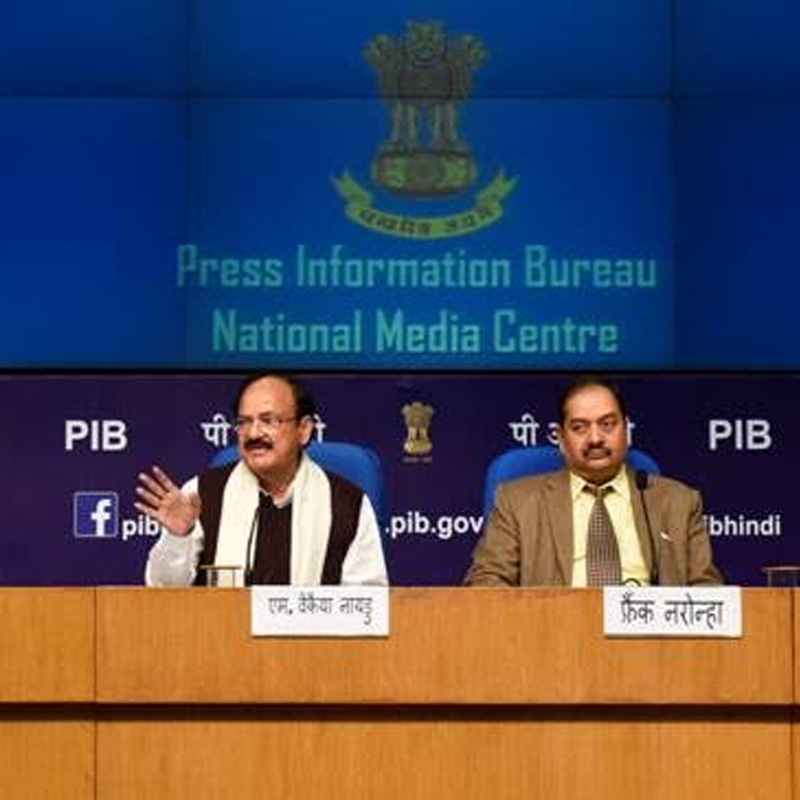
    NEW DELHI: Information and broadcasting minister M Venkaiah Naidu has denied reports of any slump in the entertainment industry because of demonetisation. Naidu said he had seen reports in the media but had not received any representations from any section of the television or film industry to the effect that it had suffered because of the demonetisation.

    Addressing an end-of-year press meet, he said that there was no delay in the clearances of registration of multi-system operators and that was being done in accordance with the laid-down procedures, he said answering a question on security clearances being obtained “whenever needed’ for television channels or MSOs.

    At the press meet which was largely about demonetisation and the stand of the opposition to it, Naidu said that the country was digitising at a pace that was unexpected. Young people who constituted the majority of the population were taking to mobile modes of payment and encouraging cashless banking. He denied any ‘policy paralysis’ and said digitisation was taking place in every sphere of public life.

    Over ten million people had switched over to digital modes of payment in just 20 days after demonetisation. Even media analysts who had predicted negatively will have to admit the transformation and the fact that the present government was a scandal-free government.

    Speaking later to indiantelevision.com, Naidu said it was for the MSOs to ensure that subscribers were not forced to buy cheap set-top boxes that did not meet the standards of the Bureau of Indian Standards.

  • Demonetisation: Naidu claims there’s no slump in TV/film industry

    Demonetisation: Naidu claims there’s no slump in TV/film industry

    NEW DELHI: Information and broadcasting minister M Venkaiah Naidu has denied reports of any slump in the entertainment industry because of demonetisation. Naidu said he had seen reports in the media but had not received any representations from any section of the television or film industry to the effect that it had suffered because of the demonetisation.

    Addressing an end-of-year press meet, he said that there was no delay in the clearances of registration of multi-system operators and that was being done in accordance with the laid-down procedures, he said answering a question on security clearances being obtained “whenever needed’ for television channels or MSOs.

    At the press meet which was largely about demonetisation and the stand of the opposition to it, Naidu said that the country was digitising at a pace that was unexpected. Young people who constituted the majority of the population were taking to mobile modes of payment and encouraging cashless banking. He denied any ‘policy paralysis’ and said digitisation was taking place in every sphere of public life.

    Over ten million people had switched over to digital modes of payment in just 20 days after demonetisation. Even media analysts who had predicted negatively will have to admit the transformation and the fact that the present government was a scandal-free government.

    Speaking later to indiantelevision.com, Naidu said it was for the MSOs to ensure that subscribers were not forced to buy cheap set-top boxes that did not meet the standards of the Bureau of Indian Standards.

  • #SantaIsStuck: MTV beats demonetisation blues

    #SantaIsStuck: MTV beats demonetisation blues

    MUMBAI: It is that time of the year when the smell of cakes fill the air, carols are sung and gifts are exchanged! As the country celebrated Christmas, MTV helped Santa Claus break free from the shackles of demonetization. With everyone’s going through a cash crunch (including Santa), MTV decided to help him out in getting the gifts delivered to little ones out there with its new campaign, #SantaIsStuck.

    The channel has joined hands with Akanksha Foundation to help get the gifts delivered to little ones with its cheeky campaign.

    With this campaign, the channels requested the people to step in and play Santa for all those little kids out there. MTV wants to help connect the Santas with little ones where Santas can donate books, toys, clothes and make this Christmas a happy one for them.

    Link to the video: https://www.facebook.com/mtvindia/videos/10154758556225102/

    Moreover, taking its legacy forward and sticking to its motto, Music is for everyone, MTV has come up with a video for the deaf and the dumb this Christmas. Beautifully encapsulating the message through a girl, lip- syncing and enacting the Christmas carol.

    Link to the video: https://www.facebook.com/mtvindia/videos/10154760608615102/

  • #SantaIsStuck: MTV beats demonetisation blues

    #SantaIsStuck: MTV beats demonetisation blues

    MUMBAI: It is that time of the year when the smell of cakes fill the air, carols are sung and gifts are exchanged! As the country celebrated Christmas, MTV helped Santa Claus break free from the shackles of demonetization. With everyone’s going through a cash crunch (including Santa), MTV decided to help him out in getting the gifts delivered to little ones out there with its new campaign, #SantaIsStuck.

    The channel has joined hands with Akanksha Foundation to help get the gifts delivered to little ones with its cheeky campaign.

    With this campaign, the channels requested the people to step in and play Santa for all those little kids out there. MTV wants to help connect the Santas with little ones where Santas can donate books, toys, clothes and make this Christmas a happy one for them.

    Link to the video: https://www.facebook.com/mtvindia/videos/10154758556225102/

    Moreover, taking its legacy forward and sticking to its motto, Music is for everyone, MTV has come up with a video for the deaf and the dumb this Christmas. Beautifully encapsulating the message through a girl, lip- syncing and enacting the Christmas carol.

    Link to the video: https://www.facebook.com/mtvindia/videos/10154760608615102/

  • TRAI: DAS-Bharatnet Digital India’s ‘Aadhaar’

    TRAI: DAS-Bharatnet Digital India’s ‘Aadhaar’

    NEW DELHI: Telecom Regulatory Authority of India chairman R S Sharma said that the country would gradually shift to a payment system using Aadhaar card instead of the various private pay systems or wallets.

    He also mentioned that the implementation of Bharatnet will be faster and effective with PPP model, and further combined with Digital Cable Television System, India will reach a new level of digital connectivity.

    At a seminar on “Demonetisation to Digital Remonetisation”, Sharma said that “Cost, Convenience, and Confidence are crucial factors for a successful Digital Payment System implementation in India.

    In the meet organzed by FICCI, he said 1.1 billion people already have Aadhaar cards and the number was going up everyday.

    Sharma said one of the nine pillars of TRAI in a report given early this year was to go cashless. This report which also refers to Unified Payment Interface (UPI) and Unstructured Supplementary Service Data (USSD) was already being implemented by banks.

    The regulator was now working on a system of Aadhaar KYC (Know Your Customer) whereby any consumer could directly be able to use his Aadhaar identification to make payments. Electronic KYC is also in place.

    He said that TRAI had given a paper about Aadhaar authentication system to UIDAI as early as October 2010 and said this is vital.

    This involved three elements: What I know (my finger print or Iris), what I have (Credit or Debit Cards) and What I am (Biometrics).

    Aadhaar interoperability was also suggested in 2010. Thus, the software for going cashless is in place but has to be implemented as both software and infrastructure are in place.

    It was important for the finance sector to get integrated into the telecom sector in this regard.

    Answering a question, he said that the systems have to be made simple so that everyone is able to understand and implement them.

    Sharma highlighted the pillars of Digital India and mentioned the need of an effective Digital Infrastructure, and how availability and affordability of digital solutions formulates the base of Digital Remonetisation. The TRAI chairman highlighted how JAM Trinity creates a robust system within India, which further creates a digital inclusion with Aadhaar users across India.

    Sharma recommended that in order to create a well operational and sustainable digital and cashless economy, it is vital to eliminate convenience charge by the banks. He firmly suggested that interoperable or interlinked digital wallets can additionally support the digital payment systems of India.

    The meet was part of an ICT policy dialogue with the agenda to discuss the challenges and opportunities that lie before the ICT sector, government and the regulators following the demonetisation move.