Tag: Demonetisation

  • Demystifying news television viewership in 2017

    Demystifying news television viewership in 2017

    BENGALURU: On 9 November 2016, a day after Prime Minister Narendra Modi announced demonetisation, the share of news television viewership shot up to 21 percent as compared to the 11 percent during the previous eight weeks. This unscheduled event made news the second most watched genre on television after GECs on that day as stunned Indians grappled to understand the new and unknown tomorrow suddenly thrust upon them by the powers that be. Over the long term, news has grabbed about 8 percent of eyeballs glued to television and is generally the third most watched genre after GECs and movies.

    This and other data was shared by the Broadcast Audience Research Council of India (BARC) in a newsletter titled ‘Breaking the News Story.’ Divided into three parts, the newsletter delves into the contribution of the news landscape to television viewership; viewership analysis of a scheduled event; and viewership analysis of an unscheduled event.

    BARC has used its own and BMW data from week 8 to week 48 of 2017, the target group being all India. It says that it has considered all the news channels in India.

    The news landscape

    News in India is a dynamic and an extremely diversified genre. It has witnessed a 15 percent increase in the number of channels from 142 channels in 2017 to 163 channels in 2017.

    In terms of the number of news channels, viewership numbers are skewed in favour of Hindi news–36 percent of the news channels are in Hindi whereas news in the language attracts 47 percent of the eyeballs (total impressions) that watch the news genre. Regional channels, of which there were 93 regional news channels in 2017 spread across multiple regional languages, (eight percent more than in 2016) or 57 percent of the total, had a 52 percent share of the total impressions in the genre. English news channels made up 7 percent of the total number of 163 news channels in the country in 2017. Their combined viewership share of the genre was, however, a measly 1 percent. Despite this, the number of English news channels have grown by 33 percent to 12 active channels in 2017 as compared with 2016.

    People like to know of events and incidents happening around them that have a direct impact on their lives. BARC says that this is probably why the largest share of the viewership takes place on regional channels. BARC explains the large consumption of Hindi language news to the large number of Hindi-speaking markets in the country with 58 news channels catering to them currently versus 47 channels in 2016.

    Viewership by state markets

    Across zones in the country, consumption of news was highest in South India–its share of viewership was 36 percent, followed by the North with 26 percent, the West with 23 percent and the East with 15 percent.

    Among states, Uttar Pradesh, Uttarakhand and Delhi had the highest relative market share for the news genre. The Punjab, Haryana, Chandigarh, Himachal Pradesh, Jammu & Kashmir, Assam, North East, Sikkim and Kerala markets also showed a higher preference towards the news genre.

    Two states–Maharashtra and Goa–accounted for more than 50 percent of the news viewership in the West but contributed a relatively less share of eyeballs for news content as compared to total television.

    Audience profile

    Looking at the audience profile of the news genre, the gender ratio is skewed towards males–54 percent male to 46 percent female as against an even split of 50 percent for both males and females for total
    TV consumption.

    News viewership is quite fragmented between all age groups. The share of viewership at 14 percent for news is far higher for kids between 2 to 14 years as compared to that of mature people between 51 and 60 years at 12 percent and seniors who are 61 years or older at 9 percent. BARC attributes this anomaly to the fact that most households own a single TV set and hence there is co-viewing and also because kids form the largest age group in India.

    NCCS A and B show a marginally higher preference for news channels as compared to total TV while the preference among NCCS C, D and E is relatively lower.

    On an all-India level, the news genre audience is skewed towards males, age group of 22+ and NCCS A and B as compared to total TV viewership. Hence, further analysis in BARC’s newsletter has been done on the target group of males 22+ years of age.

    Viewership trends in the context of events

    BARC has looked at viewership trends from October 2015 to October 2017. Over the two-year period, BARC concludes that news is a dynamic genre with viewers moving in and out depending upon the stories and events being covered with some events leading to a higher spike in viewership than others. The biggest spike in viewership during the period under consideration took place at the time of the demise of Tamil Nadu’s chief minister Jayalalitha on 5 December 2016. The next bigger spike was demonetisation as stated earlier. Politically significant events such as elections also lead to spikes in viewership.

    Viewership analysis of a scheduled event–state elections

    BARC has considered state elections from 2016 and 2017 and shared all-day time-band trends for viewership data for pre-election week versus election-day versus results day for West Bengal, Kerala, Tamil Nadu/Pondicherry and Uttar Pradesh/Uttarakhand.

    According to BARC data, election results day received significantly high viewership throughout the day across all markets as compared to election day as well as the days leading up to the event.

    The importance of election day and result day varied across markets. Growth was highest for Kerala on result day as compared to the pre-election days and least for Uttar Pradesh/Uttarakhand. The difference in viewership in pre-election day and election day was the maximum in the case of Tamil Nadu/Pondicherry indicating the importance of election day for this market, while the other markets were predominantly results oriented. Viewership in the Tamil Nadu/Pondicherry market had a more fluctuating trend through the day with viewership peaking in the morning and then again in the afternoon between 1400 and 1430 hours.

    The viewership trendline for pre-election weeks and election-day was similar for Uttar Pradesh/Uttarakhand with very minor deviations indicating that election did not hold too much significance for this market.

    West Bengal/Kerala registered high viewership in the morning hours between 0730 and 1030 hours on results day. After this time period, viewership in case of Kerala dropped down steeply, while in the case of West Bengal the decline was gradual.

    On election day, viewership on regional channels was significantly higher for each of the state markets. It may be noted that BARC has considered the respective news channel for each market as the regional channel. This means that Bangla news channels in the West Bengal market, Malayalam news for Kerala, Tamil for Tamil Nadu and Hindi for Uttar Pradesh/Uttarakhand have been considered regional channels for each market respectively. The two southern markets of Kerala and Tamil Nadu did not register any viewership on Hindi language news. The viewership on national news channels (English news channels) also remained negligible because the event was very local and state specific in nature.

    BARC says that its data reveals that news bulletins were the most popular formats of news consumption on election result day for various markets. The next most popular format was interviews and discussions. The share of news viewing was comparable for West Bengal and Tamil Nadu/Pondicherry. While audiences in West Bengal also had some preferences for talk shows/chat shows, in Tamil Nadu/Pondicherry, the viewership was only split between the bulletins and interview formats.

    Reviews/reports were popular in only market–Kerala while Uttar Pradesh/Uttarakhand had a preference for only one story format–news bulletins—and other formats accounted for very little viewership there.

    On election result day, the break duration on the channels on average went down and the programming increased. In all likelihood, the channels were trying to ensure viewer stickiness by covering the results from various perspectives and angles and, hence, taking fewer breaks.

    Viewership analysis of unscheduled events

    Unscheduled events cannot be predicted and can happen at any time and, hence, are very immediate and sudden in nature and are covered by channels as the story breaks.

    BARC analysed trends on 8 November 2016, the day the Prime Minister announced demonetisation. Television viewership did not vary significantly from previous weeks until 2000 hours as this was when Narendra Modi announced demonetisation. In the aftermath of the announcement, on 9 November 2016, viewership of the news genre remained substantially higher through the day than the previous weeks’ average as people tuned in for updates and implications of the situation. While the overall viewership trend of news channels across various hours was the same across various day parts in line with the regular viewership pattern, a lot more people watched the news on 9 November 2016.

    On 9 November 2016, though GEC remained the most preferred genre, its viewership impressions declined by 5 percent to 49 percent from the previous 8-week average of 54 percent. Movie genre viewership impressions declined by 4 percent and brought the genre down to third place from second with a viewership share of 18 percent on that day as compared to the previous 8-week average of 22 percent. As mentioned above, viewership impressions of the news genre climbed up to second place from the third place to 21 percent from the previous 8-week average of 11 percent. Viewership impressions of the music genre declined by a percentage point to 3 percent from the previous 8-week average of 4 percent. The kids, sports, infotainment, business news and other genres retained their 8-week average viewership shares of 4 percent, 2 percent,1 percent, 0 percent and 1 percent, respectively.

    News bulletins were the most popular formats of news consumption on 9 November with 78 percent viewership, followed by interviews and discussion, while the other story formats seeing a relative decline in share.

    BARC has surmised that in the case of unscheduled events, viewers preferred quick takeaways while viewers were also interested in more detailed formats in the case of scheduled events.

    BARC has analysed the impact of demonetisation on advertisement by considering the 15-day periods before and after demonetisation. It says that the difference between total advertising FCT pre and post demonetisation was a staggering decline–10 percent down in the case of total television and an even higher 13 percent decline in the case of news television.

    Post demonetisation, ad insertions for anywhere banking, ATM services/debit cards went up significantly as compared to pre-demonetisation.

    Also read:

    BARC ratings: BBC World, News Nation enter top 5 in news genre

    Star Bharat leads Hindi GEC (U+R) in BARC week 52

  • The year of hiccups for marketers

    The year of hiccups for marketers

    MUMBAI: The year 2017 was when brands were unwillingly thrown into a roller-coaster ride only to emerge dizzy and faint. The highs weren’t enough to ride out the lows.

    2017 will be seen as a year of turmoil for brands. Just when the effects of last year’s demonetisation were ebbing away, the government threw another spanner in the works in the form of the goods and services tax (GST).

    Much before its implementation, marketers and consumers cheered on the GST to be a saviour for the industry, touted to solve multiple tax complications. But its launch timing, months after demonetisation, crippled the Indian economy even further primarily due to faulty implementation.

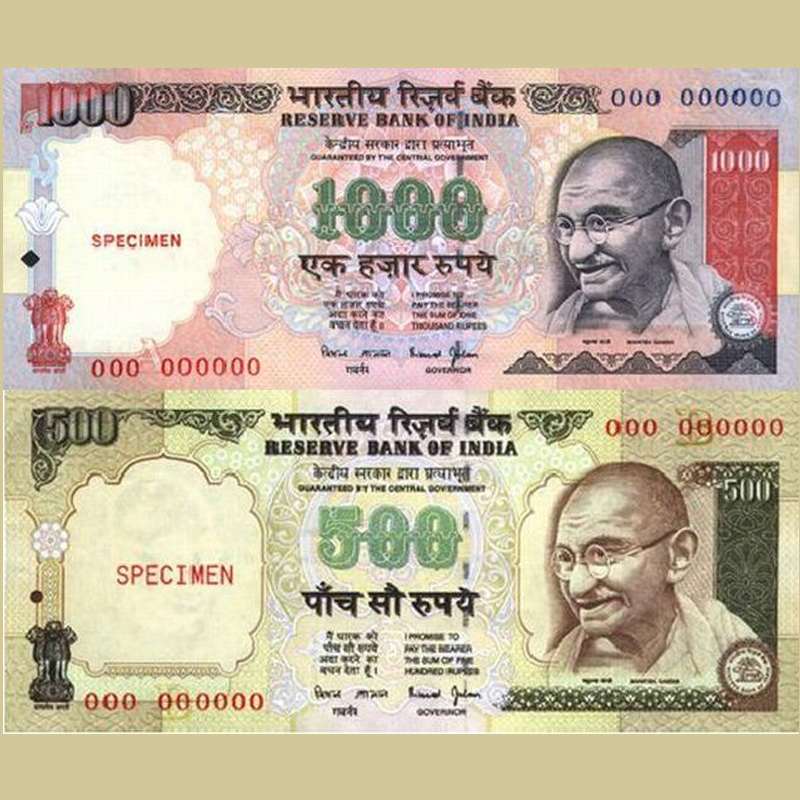
    The year began with the economy regaining its composure after the ban on bills of Rs 500 and Rs 1000, which led to troubled times for businesses across the country, especially in the cash-dependent sectors. No one was spared from the effects, be it kirana stores, big FMCG players or media and advertising agencies. As physical money became dear, online payment apps were the saving grace. Paytm, Mobikwik, Zappr and the likes became a must-have app for a majority of Indians and their profits grew four fold by March 2017. 

    In the months after GST was passed, sales crashed, margins dropped and marketers became extra cautious before investing in new products and advertisements. Brands steered away from marketing and advertising post August, which otherwise is considered as the ideal period for creating new campaigns as the festive season in India commences from September and goes up all the way till the new year.  

    The crashing economy brought down infrastructure, including real estate, to its knees and crushed consumer demand with the implementation of the new Real Estate Regulation and Development Act (RERA) in May. Slow implementation of the new real estate regulation across the country as well as uncertainty over the impact of GST on home prices pulled down consumer sentiment this year. According to a report by the Centre for Monitoring Indian Economy (CMIE), home loan growth in April-October fell by 32.7 per cent from a year ago, one of the biggest declines in the last five years.

    It was not only the FMCG and real estate sectors that had a nightmarish 2017. The USD35 billion liquor industry was subjected to one of the worst hangovers not only because of GST but also because of a Supreme Court ban on all alcohol sales within 500 meters of highways across India from 1 April 2017. Although the ban was implemented to curb drunken driving on highways, it dried up the hospitality industry, state government and liquor companies who ended up losing Rs 50,000 – Rs 70,000 crore. The market fell nearly 30 per cent in the immediate quarter after the highway ban and at least 1,500 retail outlets closed down.

    After all the bad news, 2017 also saw some strong revenue figures and new entrants in the market. Patanjali recently became India’s most trusted FMCG brand as per The Brand Trust Report India Study 2017. Valued at over Rs 30 billion, Patanjali estimated its annual turnover of the year 2016-17 to be Rs 10,216 crore. In November this year, the company also signed a memorandum of understanding (MoU) of Rs 10,000 crore with the Government of India at the World Food India 2017. To buck up against the Baba Ramdev-led ayurvedic company, top FMCG players went the whole nine yards in their bids to recapture the markets they lost. While Hindustan Unilever Limited (HUL) launched its version of ayurvedic products under brand Ayush, homegrown FMCG major Dabur is in the process of modernising its ayurveda portfolio and introducing new products. The multimillion-dollar company also launched a traditional ayurvedic product Dashmularishta and menstrual pain relief tonic Ashokarishta. 

    Lever Ayush, in its first campaign, took a potshot at Patanjali by pointing out the naive ways in which we categorise ayurvedic products like skincare creams, soaps and toothpaste. It went on to say that not every product with green packaging or leaves on the cover essentially fit ayurvedic ingredients. The company has managed to create its dominance in the southern market by aggressive marketing and advertising. 

    According to a Nielsen Report, herbal segment in India accounts for 41 per cent of the Rs 45,000 crore personal care market. Hence, sectoral leader HUL has come out all guns blazing in a field so far ruled by Patanjali, while Colgate-Palmolive has placed its own natural products to take back its market in the toothpaste segment and Dabur India now has a major share in the honey segment as opposed to Patanjali. 

    Television remained the strongest sector for advertisers this year despite depressed economic conditions while digital continued to ride on a high growth trajectory. Advancement in infrastructure, evolving audience measurement technology leading to better content and lowering data costs induced viewers to greater digital consumption. Television advertising is expected to grow at over 10.3 per cent with free to air channels gaining significance, localised content and high-definition experience boosting regional channels’ viewership and sporting leagues outside of cricket becoming increasingly popular.

    public://Untitled-2_18_0.jpg

    public://Untitled-3_22_0.jpg
    Source: Group M

    Print media continued to witness a slowdown in 2017 where while English newspapers remained under pressure, regional language papers demonstrated strong growth.

    The out of home (OOH) industry registered a slowdown in growth rate at seven per cent majorly due to adverse impact of demonetisation and GST but is projected to grow at a CAGR of 11.8 per cent primarily driven by development of regional airports, privatisation of railway stations, growth in smart cities, setting up of business and industrial centres, and growing focus on digital OOH.

    The year also saw a rise in influencer marketing and brands sent out messaging by using ‘internet celebrities’ to put in a good word for the product on social media. According to Business Insider Affiliate Marketing Report, approximately 15 per cent of the digital media industry’s revenue is achieved through affiliate (influencer) marketing. A recent report suggested that 40 per cent consumers are sold on a product or idea if an influencer they followed were to recommend it. 

    The turmoil in the Indian telecom industry can be attributed to several things. Smartphone penetration in the country increased this year by three folds and today India has over 300 million smartphone users which is projected to grow by more than 50 per cent in the next few years. According to Counterpoint research, 300 million people out of 650 million phone users own a smartphone, making India a big market for brands and telcos. Indian tycoon Mukesh Ambani sparked a price war in 2016 with the launch of Reliance Jio with other telecom giants scattering to acquire market share. Vodafone and Airtel lured customers with data at cheap prices and unlimited calls. But Reliance Jio clearly won that war. Within the first month of commercial operations, Jio announced that it had acquired 16 million subscribers. This was the fastest ramp-up by any mobile network operator anywhere in the world. Jio crossed the 50 million subscriber mark in 83 days since its launch subsequently crossing 100 million subscribers on 22 February 2017. By October 2017 it had about 130 million subscribers. 

    On 21 July 2017, Jio introduced its first affordable 4G feature phone, powered by KaiOS, named as JioPhone. The price announced for it was Rs 0 with a security deposit of Rs 1500 which could be withdrawn back by the user by returning the JioPhone only after 3 years. This phone was released for beta users on 15 August 2017 and pre-booking for regular users started on 24 August 2017. 

    In order to strengthen its presence in the ongoing battle of the telecom sector, Sunil Bharti Mittal-led Bharti Airtel launched Android powered 4G smartphones in partnership with Indian mobile company, Karbonn Mobiles. Airtel will partner with multiple mobile handset manufacturers to create an ‘open ecosystem’ of affordable 4G smartphones and bring them to market for virtually the price of a feature phone. It is also in talks with Intex mobiles for similar offerings. Domestic handset maker Micromax and Vodafone came together to offer a smartphone, effectively at a price of Rs 999 if the buyer retains the device for three years.

    With data becoming much cheaper this year and mobile manufacturers selling handsets at throwaway prices, mobile handsets became much affordable and smartphone penetration increased three folds. A lot of this has to be credited to Chinese players who took the Indian smartphone market by storm. While Vivo and Oppo were aggressive in marketing their products, both invested heavily in OOH advertising in 2017. We saw a lot of hoardings and static banners with Deepika Padukone (Oppo), Ranveer Singh (Vivo) and Virat Kohli (Gionee) promoting their respective brands (as brand ambassadors). While Vivo came on board as the title sponsor for India’s premier cricketing league IPL, rival Oppo became team India’s official jersey sponsor for all its matches for five years. 

    According to various reports, today Chinese brands such as Lenovo, Oppo, Vivo, Gionee and Xiaomi have captured over 50 per cent share of India’s smartphone market even as Apple and Samsung fought a tough battle to hold on to their reigns.

    Amidst all this, the biggest highlight of the year in the space was the launch of Apple 8 and Apple X. The company launched its flagship phones in much fanfare in September this year on its 10th anniversary.

    Still recouping from the setbacks of 2017, marketers are pinning hopes on 2018 that improved market sentiment will bring them back to a steady growth path. The prospects of good economic growth, coupled with a revival in demand and consumption, will help them overcome the hit they took in volumes and profits in 2017.

  • Republic TV continues lead as genre ratings rise

    Republic TV continues lead as genre ratings rise

    BENGALURU:Two of weeks earlier, we had mentioned that the English News genre’s four week average ratings and weekly ratings have been falling since weeks 29 to 32 of 2017. The fall continued until week 47 of 2017 when the combined Broadcast Audience Research Council of India (BARC) weekly ratings of the top-five English News genre channels (All India (U+R) : NCCS AB : Males 22+ Individuals) fell to 1.877 million weekly impressions. The leader of the pack right from the week it launched–the Arnab Goswami-headed Republic TV–recorded the lowest ever ratings of 0.511 million weekly impressions in week 47 of 2017. The fortunes of the genre seem to have turned in week 48 of 2017 (Saturday, 25 November 2017 to Friday, 1 December 2017). The combined ratings of the top-five English News genre channels smartly increased to 2.116 million weekly impressions. However, this increase was not enough to avert the genre’s lowest four-week average ratings–1.893 million for weeks 45 to 48 of 2017 since the launch of Republic TV in week 19 of 2017.

    Refer to the chart below showing the four-week average of the top-five English News channels between weeks 1 to 48 of 2017. It may be noted that that the data for week 21 has not been considered in this report and, hence, the four-week average weekly impressions of 2.6327 million for the W22-24 period is actually a three-week average.

    f1_7.jpg

    Revisiting what we had said earlier—with addition of data for weeks 47 and 48 of 2017—the combined ratings of the top-five English News channels for weeks 1 to 48 of 2017 increased from the lowest viewership to date of 1.179 million weekly impressions in week 2 to the highest viewership in week 11 of 4.987 million weekly impressions. The ratings then started to decline until week 19 of 2017 which saw the launch of Republic TV.

    In week 19 of 2017, the genre witnessed its second highest combined weekly ratings of the top-five channels to date of 4.282 million weekly impressions. Republic TV has topped the genre right from the first week of its launch to date in 2017. Goswami’s channel helped increase the genre’s overall ratings but its eyeballs pull could only retard the slow decline that the genre has seen since then as can be seen from the chart above.

    Since news is event driven, the above statements also are evident if one were to go by the four-week average weekly impressions of the combined ratings of the top-five English News genre rather than weekly numbers. As mentioned above, the data for week 21 has not been considered in this report and, hence, the four-week average weekly impressions of 2.6327 million for the W22-24 period is actually a three-week average.

    In week 11 of 2017 (Weeks 9 to 12), elections results in five states of the country were announced and hence the ratings of news channels peaked. Weeks 13 to 16 saw a decline in the genre’s ratings, because week 14 of 2017 saw the launch of the Indian Premier League, which adversely affected the News genre’s ratings. Weeks 17 to 20 were Republic TV’s launch period and everyone wanted to see how Goswami would perform on his new English News channel, the genre’s ratings climbed to a four week average of 2.972 million. The four weeks (or rather 3 weeks’ average in this specific case) of weeks 22-24 was a small blip, and since the other English News channels withdrew themselves from BARC ratings, the data will not be discussed any further here.

    Weeks 25 to 28 numbers for the top-five channels saw the four-week average ratings climb to 2.9155 million weekly impressions, followed by the highest four-week average of the genre in 2017 until now of 3.2695 million weekly impressions in weeks 29 to 32. As is evident from the figure above, the genre’s four-week average ratings have only declined since then.

    Will the genre be able to garner improved ratings for the rest of weeks of 2017? Or will they slide, or remain stagnant? This is something that time will tell.

    Data for week 48 of 2017

    The top-five channels for week 48 of 2017 were the same as week 47 of 2017. The channels retained the same ranks during the week under review as compared to the trailing week, but at the cost of lower viewership.

    As mentioned above, Republic TV held the top rank in the genre during week 48 of2017 with 0.709 million weekly impressions, followed by Times Now with 0.621 million weekly impressions at second place. India Today Television came in at third place with 0.294 million weekly impressions, lower than the 0.340 million weekly impressions it had garnered for week 47 of 2017. NDTV 24×7 was ranked fourth with 0.263 million impressions in week 48, slightly lower than the 0.289 million weekly impressions in week 47. At fifth place was CNN News 18 with 0.229 million weekly impressions in week 48 of 2017 as compared to the 0.25 million weekly impressions in week 47 of 2017.


  • Republic TV, Times Now viewership moves up as genre ratings fall

    Republic TV, Times Now viewership moves up as genre ratings fall

    BENGALURU: The two top-ranked channels of the Indian English news genre saw small increases in their weekly viewership in week 46 of 2017 (Saturday, 11 November 2017 to Friday, 17 November 2017, period, week under consideration) as compared to the nadir of the previous week. Data from the Broadcast Audience Research Council (BARC) show that the genre topper from the time of its launch 28 weeks ago Republic TV saw its ratings increase to 0.566 million weekly impressions in week 46 from 0.524 million weekly impressions in week 45. The second-ranked Times Now saw its ratings increase to 0.502 million weekly impressions during the week under consideration from 0.489 million weekly impressions in the previous week.

    The other three channels from the top five English saw no change in ranks, but decline in viewership in the period as compared to week 45. They were: NDTV 24×7 at third place with 0.260 million weekly impressions (0.299 million weekly impressions in week 45); India Today Television with 0.250 million weekly impressions (0.295 million weekly impressions in week 45); and CNN News18 with 0.185 million weekly impressions (0.205 million weekly impressions in week 45).

    Genre ratings continue declining

    The English news genre has seen a decline in ratings over the past few weeks. Analysis of BARC data for the combined ratings of the top five English news channels for weeks 1 to 46 of 2017 increased from the lowest viewership to date of 1.179 million weekly impressions in week 2, to the highest viewership in week 11 to date of 4.987 million weekly impressions. The ratings then started to decline until week 19 of 2017 which saw the launch of the Arnab Goswami-led Republic TV.

    In week 19 of 2017, the genre witnessed its second-highest combined weekly ratings of top five channels to date of 4.282 million weekly impressions. Republic TV has topped the genre right from the first week of its launch to date in 2017. Goswami’s channel helped increase the genre’s overall ratings, but its eyeball pull could only retard the slow decline that the genre has seen since then as can be seen from the chart below.

    public://englsih.jpg

    Since news is event-driven, the above statements also are evident if one were to go by the four week average weekly impressions of the combined ratings of the top five English news genre, rather than weekly numbers. It may be noted that the data for week 21 has not been considered in this paper and hence the four week average weekly impressions of 2.6327 million for the W22-24 period is a three-week average. Further, the number for the last point on the graph (W45-46) of 1.7895 weekly impressions is a 2-week average.

    In week 11 of 2017 (Weeks 9 to 12), elections results in five states of the country were announced and hence the ratings of news channels peaked. Weeks 13 to 16 saw a decline in the genre’s ratings because week 14 of 2017 saw the launch of the Indian Premier League. Weeks 17 to 20 were Republic TV’s launch period and as everyone wanted to see how Goswami would perform, the genre’s ratings climbed to a four week average of 2.972 million. The average of weeks 22-24 was a small blip, and since the other English News channels withdrew themselves from BARC ratings, the data will not be discussed any further here.

    Weeks 25 to 28 numbers for the top five channels saw the 4-week average ratings climb smartly to 2.9155 million weekly impressions, followed by the highest four week average of the genre in 2017 until now of 3.2695 million weekly impressions in weeks 29 to 32. As is evident from the figure below, the genre’s 4-week average ratings have only declined since then.

    Ratings for the same period of the previous year can’t truly be compared to see if decline is a periodic trend because news is generally event driven as mentioned above. For example, in 2016, demonetisation was announced on November 8; in week 28 of 2017, ratings of the Hindi news genre peaked because the Supreme Court’s Ram Rahim verdict was announced in that week.

  • A year after demonetisation: E-payment services emerged winners

    A year after demonetisation: E-payment services emerged winners

    MUMBAI: 8 November 2016 was a day that took the world by storm. While the world was stunned with Donald Trump’s victory as the new US president, Indian prime minister Narendra Modi decided to give the country a shocker of its own- demonetisation.

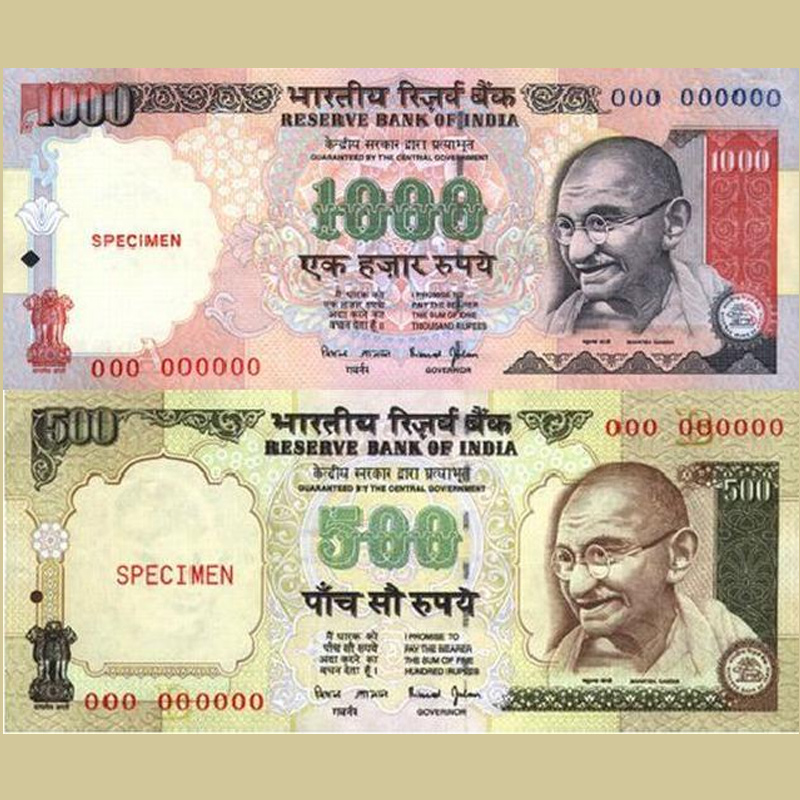
    An ordinary Tuesday evening saw all news channels and radio stations halt their programmes to listen to Modi, assuming it as another Mann Ki Baat. Instead, what followed was the shocking revelation that all the Rs 500 and Rs 1000 notes in the country will be invalid post midnight. As people scrambled to get rid of their notes and lined up for new ones, they were restricted to just Rs 10,000 a day and Rs 20,000 a week for the next 4 days (10-13 November).

    A severe cash shortage in the hands of the public forced them to seek alternative modes of payment. Companies too weren’t spared. By the second week of demonitisation, cigarette sales had dropped by 30-40 per cent and cash on delivery (COD) orders fell by 30 per cent for e-commerce companies. Dabur India corrected its advertising spends for November by almost 50 per cent and many prominent brands decided to hold the rolling out of new campaigns for a few months. The festive October-December quarter, this year, ended up draining out over Rs 2000 crore.

    Amidst this confusion and loss, if there was a clear winner, it was the class of startups offering online wallets and digital payments. Brands offering online payment ‘cashed’ out the most from the prime minister’s move. It was time for overlooked and unrecognised players like Paytm, Freecharge, Mobikwik, Swiggy, Zomato, Foodpanda and others to make optimum utilisation of the situation. These brands had found people’s Achilles heel and created campaigns, tweaking their communication, to show people that you don’t need to worry about less cash.

    public://F1_20.jpg

    With this, digital payments became India’s new currency and debit card transactions surged to over 1 billion in January this year from 817 million last year.

    public://1_5.jpg

    Foodpanda India co-founder and CEO Saurabh Kochhar says that there were positive implications of demonetisation on its platform. “Before demonetisation, on a regular day, our platform would receive close to 70,000 orders. While that shot up by 40-50 per cent, around 92 per cent of payments were made online after demonetisation. As our order value ranges between Rs 400-500, consumers did not mind paying online,” he reveals.

    As consumers were forced to get acquainted with digital payment modes, they got comfortable with the idea of paying for their orders online. Brands ensured their technology backend could support the surge in payments so that no glitches would leave people harassed or with bad experiences.

    One of the biggest beneficiaries of demonetisation was online wallet app Paytm. Within only 12 days after the move was announced, Paytm witnessed over Rs 7 million transactions worth Rs 120 crore a day and Rs 5,000 crore worth of transactions in the month of January 2017.

    Even though India was cutting down on spending, online travel grew between November 2016 and June 2017. Indians spent $246.6 million in overseas travel-related payments in November 2016, up 581 per cent as compared to $36.2 million spent in the same month in 2015. Arrivals from India to Australia since the demonetisation period (Nov 2016 – Aug 2017) grew at an average of 15 per cent.

    A year on, are people still transacting online at the same pace or was it just the momentary fluster? Kochhar optimistically says, “As valid currency got into a normalised flow in the country, there was an increase in COD orders. However, we have seen more uptake in users paying online for their orders. It is more about the change in the mindset of the users and demonetisation pushed them in that direction for sure.”

    While demonetisation opened people’s eyes to digital avenues, adex was briefly hampered. Overall brand revenues fell and there was a clear dip in sale, but all of that is now in the past. The advertising and marketing industry revved up but was assured that India’s suspicious view towards digital had surely been changed.


  • Lower deferred tax asset & demonetisation lower Dish TV numbers

    BENGALURU: The largest DTH operator in India in terms of subscriber numbers – Dish TV Limited (Dish TV) reported less than one-sixth profit after tax (PAT) for the year ended 31 March 2017 (FY-17, current year) as compared to the previous year. The company reported PAT of Rs 1,092.8 million for FY-17 as compared to PAT of Rs 6,924.2 million in fiscal 2016. Dish TV has shown deferred tax asset for FY-17 at Rs 740.3 million as compared to Rs 4,360 million in FY-17. The company’s assets and liabilities statement for FY-17 shows deferred tax asset of Rs 5,100.3 million – the sum of the deferred tax asset for both years.

    In its earnings release, Dish TV says that demonetisation outdid a good monsoon as well as thriving economic conditions of the last year. Consumer spending remained a challenge from the latter half to the fourth quarter. The initial growth momentum that could have catapulted the DTH industry to the next level in terms of subscriber additions, took a temporary but prolonged hit. The DTH industry slightly de-grew in terms of new acquisitions during the fiscal despite coming closer to the implementation of digitisation. Dish TV saw subscribers conserving cash for bigger necessities right from the time demonetisation was announced in November up to the end of the fiscal.

    Dish TV managing director Jawahar Goel said, “Fiscal 2017 threw up unprecedented challenges but the Dish TV team took things in its stride. We minimized the impact of demonetisation while focusing on a long-term advantage in the form of recharges through online modes. Despite the odds, Dish TV managed to increase its reach and subscriber base.”

    The company reported 1,029 thousand net subscriber additions during the year to take its subscriber base to 15.5 million.

    Dish TV reported operating revenues of Rs. 30,144 million in FY-17, up 4.2 percent as compared to Rs 28,941 million in the previous year. Subscription revenues of Rs. 27,696 million in the current year were 4.1 per higher than the Rs 26,617 million in the previous year.

    Dish TV EBITDA declined 5.1 percent in the current year to Rs. 9,728 million (margin at 32.3 percent) from Rs 10,249 million (38.5 percent margin) in FY-16.

    Dish TV’s total expenditure in FY-17 increased 9.2 percent to Rs 20,415 million from Rs  18,692 million in the previous year. Cost of goods and services in fiscal 2017 increased 9.5 percent to Rs 14,371 million from Rs `13,122 million in FY-16. Employee Benefit Expense in FY-17 increased 9.5 percent to Rs 1,465 million from Rs 1,229 million. Sales & Distribution Expenses increased 9.6 percent in FY-17 to Rs 3,108 million from Rs 2,836 million in the previous year. Other expenses declined 2.3 percent to Rs 1,470 million from Rs 1,505 million. Finance costs increased 7.3 percent in FY-17 to Rs 2,239 million from Rs 2,087 million.

    Company speak:

    Goel, said, “Revenue growth in the current fiscal is largely going to be a function of subscriber additions and Phase 4 of digitisation should have a material role to play in that. The proposed amalgamation (with Videocon d2h) will further help create scale in the highly-fragmented TV distribution landscape in India while creating significant synergies through the combination.”

    On technological developments, Goel, revealed, “We understand that digital will be an important part of our growth in the future and we are excited about our portfolio of products lined up for launch in the coming quarters. Dish TV’s new HTML 5 based middleware with a card less box and a new chip set is already in advanced stages of testing and would hit the market soon.”

    DTH services will be subject to 18 percent GST rate as soon as the new indirect tax regime is implemented in the country. On the new GST regime, Goel said, “What should be significant in addition to our ability to pass on the uniform tax to subscribers would be the ease of doing day-to-day business and the associated savings in administration, litigation as well as compliance costs that should result from a simpler tax regime. Unlike the current Entertainment Tax and VAT regime, where different rules are used to determine tax in different regions, GST would be a single tax that should be practical and convenient to pass-on to the consumer.”

  • 21st Century Fox outlook on Star bullish despite $30m DeMon hit

    MUMBAI: Though India’s currency demonetisation late last year with ripple effects of currency shortage spilling over in 2017 hit businesses all round, including the likes of Star, its parent 21 Century Fox has pinned high hopes on the OTT platform Hotstar and the overall ability of Star to overcome short-term hiccups because of market dominance.

    Terming the demonisation move of PM Modi-led government in New Delhi a “crazy speed bump” that hit businesses all round, 21st Century Fox  CFO John Nallen, in a conversation with investment analysts at a conference last month, admitted that Star too got “affected” from last quarter 2016 to first quarter 2017 calendar year. He revealed at that time that Star India took a hit of almost $30 million, and the company expects that things would start looking up mid-March 2017 onwards.

    According to Nallen, India would prove to be a major revenue earner for Star and Hotstar in the long term.

    Pointing out that, in the last two years, 20 million TV households were added to the eco-system, which brought the total number of TV households to 180 million (a recent BARC broadcast survey put the total number of Indian TV HHs at 183 million with rural leading the growth), Nallen said, “We are in the middle of a five-year cycle where pay TV households doubled and advertising nearly doubled during that period of time…so when advertising lifts, we get a little more of what the advertising lift and it is because of the company’s (Star) market share and dominance in the market.”

    Nallen was also confident that Star, with its bouquet of regional and sports channels delivered via cable and satellite and complimented by OTT platform Hotstar, will continue to be the jewel in the News Corp crown (a description of Star by 21st Century Fox chairman Rupert Murdoch).

    “The plans of Star TV are still intact. I am assuming that there is no geo-political issue(s) and no economic disruptions…that no one wakes up with some other rule in India that will disrupt the business,” the seasoned CFO observed, adding that Star an important clog in Murdoch’s media empire as it was one of the “biggest growth driver(s)” and the objectives and targets with which the business was set up and operationalised in India were achievable.

    Also Read :

    Star Plus & Sony Pal retain respective leadership, Naagin 2 maintains lead

    How Hindi GEC channels fared in first quarter of 2017

    Star India shows now travel to West Asia, tripling ratings

  • B’wood supports Times’ ‘Remonetise India’

    B’wood supports Times’ ‘Remonetise India’

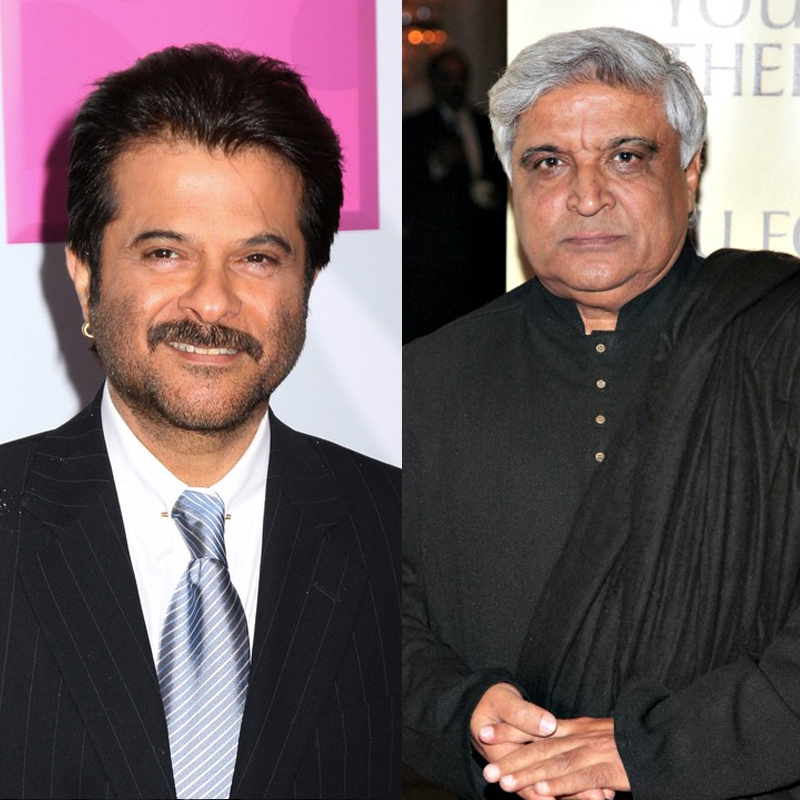
    MUMBAI: The demonetisation drive has taken the nation by storm and Bollywood is not less impacted. In an act of solidarity, B-town celebrities such as — Anil Kapoor, R Madhavan, Shilpa Shetty, Kabir Bedi, Javed Akhtar, Shabana Azmi and Manoj Bajpayee have come together to be the agents of change to help bring India’s economy back on track.

    Today, when our economy needs us more than ever, ‘Remonetise India – A Citizen’s Pledge’, Times Network’s nationwide campaign, is a call to rise and protect the world’s fastest growing economy. In a pledge to spend more in order to revive demand, aid the needy and help farmers sell their produce, the celebrities promote going cashless to make it available for those in need.

    The celebrities pledge as the soldiers of the economy to help the economy grow, to help fellow citizens participate in our new economy and to teach and educate people about digitization.

    Also participating in this nationwide movement are actors Sonam Kapoor, Sonu Sood, Raveen Tandon, Manoj Bajpayee, Neha Dhupia, Tisca Chopra, and Sonali Bendre along with socialite Shaina NC, ace photographer Atul Kasbekar and Bollywood’s favourite designer Manish Malhotra.

  • B’wood supports Times’ ‘Remonetise India’

    B’wood supports Times’ ‘Remonetise India’

    MUMBAI: The demonetisation drive has taken the nation by storm and Bollywood is not less impacted. In an act of solidarity, B-town celebrities such as — Anil Kapoor, R Madhavan, Shilpa Shetty, Kabir Bedi, Javed Akhtar, Shabana Azmi and Manoj Bajpayee have come together to be the agents of change to help bring India’s economy back on track.

    Today, when our economy needs us more than ever, ‘Remonetise India – A Citizen’s Pledge’, Times Network’s nationwide campaign, is a call to rise and protect the world’s fastest growing economy. In a pledge to spend more in order to revive demand, aid the needy and help farmers sell their produce, the celebrities promote going cashless to make it available for those in need.

    The celebrities pledge as the soldiers of the economy to help the economy grow, to help fellow citizens participate in our new economy and to teach and educate people about digitization.

    Also participating in this nationwide movement are actors Sonam Kapoor, Sonu Sood, Raveen Tandon, Manoj Bajpayee, Neha Dhupia, Tisca Chopra, and Sonali Bendre along with socialite Shaina NC, ace photographer Atul Kasbekar and Bollywood’s favourite designer Manish Malhotra.

  • Demonetisation impacts ZEEL ad revenue for Q3-17

    Demonetisation impacts ZEEL ad revenue for Q3-17

    BENGALURU: The Subhash Chandra led content and broadcast player Zee Entertainment Enterprises Limited (ZEEL) reported a small hike of 3.1 percent in advertisement revenue in the quarter ended 31 December 2016 (Q3-17, current quarter) as compared to the corresponding quarter of the previous year (Q3-16). Consolidated revenue from operations (Total Income from Operations or TIO) increased 3.2 percent year-over-year. Though subscription revenue increased 13.7 percent y-o-y, other sales and services declined 35.5 percent and hence pulled down TIO. ZEEL reported consolidated TIO of Rs 1,639.12 crore in Q3-17 as compared to Rs 1,588.12 crore in Q2-16.

    Ad revenue in the current quarter was Rs 945.45 crore (58.3 percent of TIO) as compared to Rs 926.39 crore (58.3 percent of TIO) in Q316. Subscription Income in Q3-17 was Rs 593.46 crore (36.2 percent of TIO) and in Q3-16, it was Rs 521.79 crore (32.8 percent of TIO) Other Sales and Services Income in the current quarter was Rs 90.21 crore (5.5 percent of TIO) as compared to Rs 139.94 crore (8.8 percent of TIO) in Q3-16.

    ZEEL chairman Chandra said, “Government’s decision to demonetise high value currency had an impact on businesses across sectors. Notwithstanding the short term disruption caused by demonetisation, we believe that it is a step in the right direction. Demonetisation along with implementation of GST and push towards cashless economy would help country’s long term growth.”

    ZEEL’s Profit After Tax (PAT) in Q3-17 increased 8.6 percent y-o-y to Rs 250.81 crore (15.3 percent of TIO or margin) from Rs 230.86 crore (14.5 percent margin). Operating Profit (EBIDTA) in the current quarter also increased 19.4 percent y-o-y to Rs 515.79 crore (31.5 percent margin) from Rs 432.16 crore (27/2 percent margin).

    Total Expenditure in Q3-17 reduced 2.4 percent to Rs 1,148.23 crore (70.1 percent of TIO) from Rs 1,176.31 crore (74.1 percent of TIO) in Q3-16.

    Finance costs in the current quarter reduced 14.7 percent y-o-y to Rs 9.02 crore (0.6 percent of TIO) from Rs 10.57 crore (0.7 percent of TIO) in the corresponding year ago quarter.

    Employee benefit expense in Q3-17 increased 13.2 percent to Rs 141.88 crore (8/7 percent of TIO) from Rs 125.34 crore (7.9 percent of TIO) in Q3-16.

    The company spent 12.4 percent less towards Advertising and Publicity expense in the current quarter at Rs 104.90 crore (6.4 percent of TIO) as compared to Rs 119.75 crore (7.5 percent of TIO) in Q3-16.

    Company speak

    Chandra said further, “The result once again demonstrates our commitment towards profitable growth and enhancing shareholders’ wealth. Despite the impact of demonetisation, we have delivered growth in advertising revenues and growth in subscription revenues remained strong. We believe the adverse impact of demonetisation is transient and with a strong portfolio of national and regional channels we are confident of delivering sustainable growth.”

    ZEEL managing director and CEO Punit Goenka said, “We are happy to deliver another quarter of strong profit growth in a challenging environment. Despite the impact of demonetisation on our advertising revenues, we have improved our EBITDA margins. This highlights our ability to manage costs to drive profitable growth on a consistent basis.”

    Gonka revealed, “Acquisition of broadcasting business of RBNL is in line with our strategy to expand our offering in key genres and focus on regional space. BIG Magic, a comedy channel, will complement our Hindi GEC portfolio. BIG Ganga, the leading Bhojpuri channel, will give us entry into the attractive Bhojpuri market. We are confident that these two channels will benefit immensely from the strength of our network.”

    Goenka informed, “The deceleration in our advertising revenue growth during the quarter is largely attributable to demonetisation. Advertisers’ willingness to invest in their brands remains intact. However, the timing of spends has been re-calibrated to an extent to suit the change in dynamics due to demonetisation. As economic situation is normalizing, ad spends have already started moving up from December levels.”

    International Business

    In its earnings release, ZEEL said that its international business continues to perform strongly driven by global demand for our products. For Q3-17 the international business had total revenue of Rs 253 crore which included Advertisement Revenue of Rs 81.70 crore; subscription Revenue of Rs 111.7 core and  other Sales and Services of Rs 59.6 crore.

    Note: (1) The unit of currency in this report is the Indian rupee – Rs (also conventionally represented by INR). The Indian numbering system or the Vedic numbering system has been used to denote money values. The basic conversion to the international norm would be:

    (a) 100,00,000 = 100 lakh = 10,000,000 = 10 million = 1 crore.

    (b) 10,000 lakh = 100 crore = 1 arab = 1 billion.

    (2) All numbers in this report are consolidated unless stated otherwise.

    (3) Some of the numbers have been rounded off