Tag: Deloitte

  • Devi Shankar bids farewell to Anarock after building India’s data-centre juggernaut

    Devi Shankar bids farewell to Anarock after building India’s data-centre juggernaut

    MUMBAI: Five years, $2.7bn in closed deals, and two of India’s largest data-centre platforms later, Devi Shankar is leaving Anarock.

    The managing director of investment banking built the firm’s data-centre business from nothing into a powerhouse. Her crowning achievements: EverYondr ($1 bIllion) and Colt-RMZ ($1.7 billion), two landmark transactions that helped establish India as a serious player in digital infrastructure. Advising global investors and private-equity funds on market entry became her signature move.

    “This wasn’t just a job; it was home,” Shankar wrote in her farewell message, referencing her early-morning arrivals and her notorious “Devi Standard Time” departures to beat Mumbai’s traffic. She gave special thanks to Ankita Sahu, whom she described as her “backbone for the last five years”.

    The move caps a 20-year career spanning KPMG, Deloitte, Jones Lang LaSalle and Ask Property Fund. Shankar’s expertise in structuring complex transactions—from introductions through to commercial negotiations, term sheets and due diligence—has made her one of India’s most respected dealmakers in alternative real estate.

    Alongside her corporate work, Shankar has been pursuing a parallel venture since January 2023: Irea Life, a private fashion label where she serves as creative lead and business adviser. The brand focuses on AI-driven solutions for customer experience and marketing automation.

    Shankar hinted that an announcement about her next move is imminent, though she declined to share details. Industry watchers will be watching closely to see where one of India’s leading investment bankers lands next.

  • Airbnb teams up with FIFA for three World Cups and global fan stays

    Airbnb teams up with FIFA for three World Cups and global fan stays

    MUMBAI: Fans won’t just be travelling for the beautiful game, they’ll be checking in for it too. In a landmark move that blends football fever with hospitality hustle, Airbnb and FIFA have announced a three-year global partnership across three blockbuster tournaments: the FIFA Club World Cup 2025, FIFA World Cup 26, and FIFA Women’s World Cup 2027. Airbnb will serve as Official Fan Accommodation across all events with perks that include booking fan experiences, stadium adventures, and even one-on-one training with football legends like Tim Howard.

    From Dolby Atmos goal celebrations in Miami to melt-in-your-mouth brisket tacos in Houston, this tie-up isn’t just about beds, it’s about bringing the soul of the Host City to the fan’s front door.

    “The World Cup brings the world together and so do we,” said Airbnb co-founder and CEO Brian Chesky, adding that the partnership will help create “once-in-a-lifetime experiences” for fans while fuelling local economies.

    With fans expected to flood the 16 host cities of the FIFA World Cup 26, a Deloitte study estimates that over 380,000 Airbnb guests will contribute nearly 3.6 billion dollars to local economies. Hosts alone could rake in up to 210 million dollars, with Airbnb’s stays projected to support the equivalent of 34,000 full-time jobs through 2026.

    The collaboration will also see Airbnb roll out a 5 million dollars Host City Impact Fund, supporting local initiatives and enhancing the visitor experience through targeted investments in community infrastructure.

    Football meets fandom in a more literal way too Airbnb is offering original fan experiences like watching matches with Cobi Jones, dissecting tactics with FIFA’s Technical Study Group, or suiting up for a private goalkeeping session with Tim Howard. All these are bookable during the Club World Cup 2025, kicking off 14 June at Hard Rock Stadium, Miami.

    With 89 per cent of fans worldwide planning to travel for matches, Airbnb’s bet on blending the love of sport with the love of stay is shaping up to be a golden goal.

    Or in this case, maybe a golden guest room.

  • Anubhav Roda joins PinDrop as partnership director

    Anubhav Roda joins PinDrop as partnership director

    MUMBAI: Anubhav Roda, a seasoned veteran in the sports sponsorship game, has made a power play, joining PinDrop as its new partnership director. Roda, known for his knack for nailing lucrative deals, brings a wealth of experience, having previously juggled partnerships at SportQuake, the International League T20, and even a stint at Deloitte, where he strategised sporting success.

    “From the get-go, Sean and Menino’s data-driven approach hooked me,” Roda quipped, clearly chuffed with his new gig. “. Their vision of empowering brands and rights holders to create measurable, impactful sponsorships aligns perfectly with my own passion for leveraging analytics to drive success.”

    He’s diving headfirst into PinDrop’s impressive roster, which includes the likes of Newcastle United, Rangers FC, and the International Tennis Federation, not to mention forays into the wild west of Web3.

    PinDrop, a rising star in the sports marketing arena, prides itself on its “insights-led” strategy, a fancy way of saying the company actually knows what its team is up to. PinDrop’s  focus on quantifying sponsorship performance has clearly struck a chord with Roda, who sees “tremendous potential” in blockchain’s ability to shake up fan engagement.

    Roda’s CV reads like a sports fan’s dream, with pit stops at the FIFA U-17 World Cup, PwC, and even a stint writing for sports outlets like SportsKeeda and Scroll. He’s clearly not afraid to get his hands dirty, having also managed the commercial side of Minerva Punjab Football Club and Delhi Dynamos FC.

  • India’s sports tech market to hit Rs 49,500 crore by 2029, fantasy sports growth slows

    India’s sports tech market to hit Rs 49,500 crore by 2029, fantasy sports growth slows

    MUMBAI: India’s sports technology market, currently valued at Rs 26,700 crore, is projected to grow at 13 per cent annually to reach Rs 49,500 crore by 2029, according to a new report by the Federation of Indian Fantasy Sports (FIFS) and Deloitte.

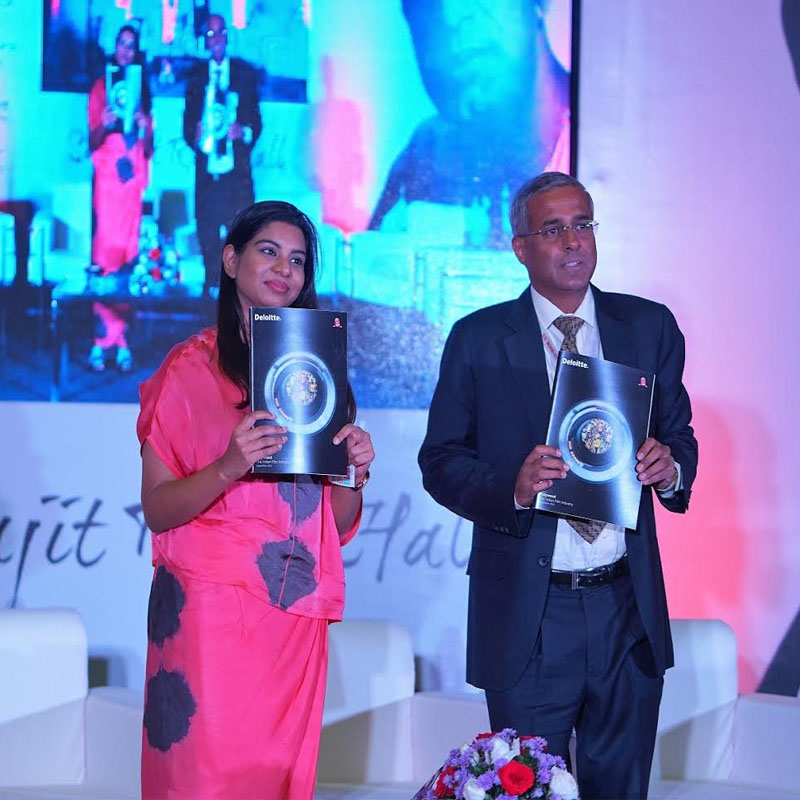
    The report, Beyond the Field: India’s Sports Tech Revolution, unveiled in New Delhi yesterday by minister of state for youth affairs and sports Raksha Khadse, reveals that fantasy sports, the largest segment, faces headwinds due to recent GST changes.

    “The fantasy sports industry has seen revenues touch Rs 9,100 crore in FY24 but is expected to decline by 10 per cent in FY25,” said FIFS director general Joy Bhattacharjya. 

    The sector’s growth forecast has been revised down to seven per cent CAGR through FY29, from an earlier projection of 30 per cent.

    “Technology is creating immersive fan experiences and opening newer business avenues,” said Deloitte India partner Prashanth Rao. However, he noted that investments in fantasy sports dropped 90 per cent in 2023, with no new investments in 2024, primarily due to GST impacts and retrospective taxation concerns.

    The report identifies three key subsectors: fan engagement, sports data and analytics, and foundational technologies. Despite current challenges, the industry’s GST contribution is expected to more than double to Rs 3,520 crore in FY24 from Rs 1,480 crore in FY23..

    The report highlights significant consumer adoption, with 89 per cent of Indian sports fans reporting that emerging technologies have enhanced their viewing experience. Between 2018 and 2023, the sector attracted cumulative investments of Rs 27,500 crore, with fantasy sports securing Rs 10,800 crore of this funding.

    India’s current one per cent share of the global sports technology market and four per cent of the APAC region suggests substantial growth potential. However, industry leaders elaborate that realising this potential requires a supportive regulatory framework, stable tax policies, and industry-wide standards for responsible gaming.
    Minister Khadse emphasised the government’s commitment to the sector, stating, “The integration of technology with sports is crucial as we enter the era of AI. Sports technology will be particularly important in analysing and developing our athletes for the future.”

    The sector is expected to create 17,500 direct and indirect new jobs by FY27, marking its growing importance in India’s digital economy.

  • India’s sports industry races ahead with digital-first advertising focus

    India’s sports industry races ahead with digital-first advertising focus

    MUMBAI: Sports isn’t just a pastime anymore – it’s a roaring phenomenon that fuels India’s collective heartbeat, more electrifying than a stadium under floodlights during a last-ball thriller. From the thunderous cheers of cricket fans to the passionate chants of football aficionados, the adrenaline rush sports delivers has become the ultimate high – stronger, they say, than the purest Colombian cut.

    And why not?

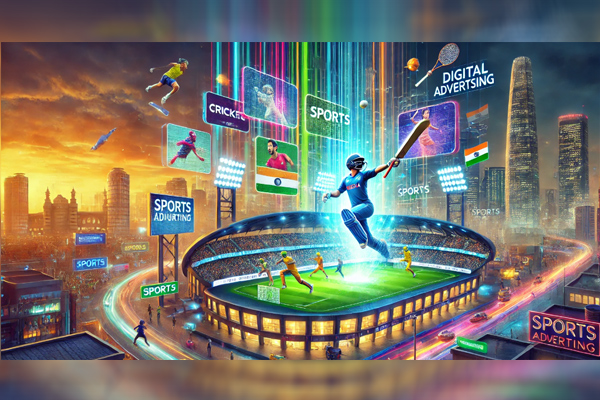
    The glitzy ads, the digital frenzy, and the unstoppable growth of India’s sports industry have turned it into a $52 billion juggernaut, overtaking several traditional sectors like telecom. Now, poised to shatter records with a jaw-dropping trajectory to $130 billion, according to the Deloitte-Google report, sports in India isn’t just entertainment; it’s an economic revolution with a pace that could leave even the fastest sprinters in awe. With a projected compound annual growth rate (CAGR) of 14 per cent, the sector is rapidly outpacing established industries, including automotive and tourism, and redefining its role in the Indian economy.

    This remarkable growth reflects India’s rising stature in global sports, bolstered by robust government initiatives such as the ministry of youth Affairs & sports’ (MYAS) record 2024 budget allocation. Programs like Khelo India and Target Olympic Podium Scheme (TOPS) are driving systemic changes, ensuring long-term development of sports infrastructure and talent in the country.

    The report underscores the paradigm shift in advertising, with brands prioritising digital platforms over traditional TV broadcasting. Over the past two years, digital sports advertising surged by 63 per cent, while TV sports advertising declined by 10 per cent. Platforms like JioCinema and Disney+ Hotstar are now rivaling linear broadcasting, capitalising on subscription-based revenue models.

    An overwhelming 90 per cent of Indian sports fans engage digitally, with cricket-related videos amassing 50 billion views on YouTube in one year alone. Personalised ad campaigns, such as Mondelez’s AI-powered cricket ads, showcased the immense potential of targeting sports enthusiasts digitally, delivering 92,000 creative variations and doubling ad recall.

    Sponsorship deals in India’s sports sector are expanding at thrice the pace of global benchmarks. Franchise fees grew by 60 per cent in 2023, and campaigns integrated with live sports events, like Swiggy’s IPL drive, saw active user engagement spike by 59 per cent.

    The shift to regional strategies has been pivotal, with 77 per cent of fans preferring sports commentary and content in local languages. Regionalised advertising has tapped into previously untapped rural and semi-urban markets, further solidifying sports’ mass appeal.

    For the first time in Indian sports broadcasting history, the valuation of digital media rights for IPL 2022 equaled that of TV rights. This milestone reflects the industry’s digital-first pivot, as brands and advertisers increasingly gravitate toward the flexibility and reach of OTT platforms.

    As the industry continues to expand, the report highlights that India’s sports sector contributes approximately one per cent to the national GDP, on par with major sporting nations. With significant headroom for growth and increasing digital penetration, India is poised to emerge as a global sports powerhouse.

  • Tech Mahindra ropes in Sumit Kumar Popli as TME head

    Tech Mahindra ropes in Sumit Kumar Popli as TME head

    MUMBAI: There’s a new leader at the top of the technology, media & entertainment (TME) vertical in Tech Mahindra. The global technology solutions and digital solutions firm has appointed Sumit Kumar Popli as the president and strategic business unit head for TME from 19 October. He will be based in the Bay area, according to his Linkedin profile.

    With over a score and five years of global experience in driving enterepreneurial success and transforming large businesses across various industries, including TMT, retail & CPG, life sciences & healthcare, travel & transportation, and manufacturing, his charter at Tech Mahindra  includes fostering partnerships and leveraging its service offerings to deliver cutting-edge solutions that address the evolving needs of clients in the TME business.

    Prior to his latest elevation, Popli spent over 22 years at TCS and served as the vice-president and global head of the hardware & consumer technology industry (computer platforms) where he played a pivotal role in the exponential growth of the business unit. In 2022,  Sumit became a managing director at Deloitte in the TMT Industry, where he dedicated over two years to expanding its operate and technology services offerings within the TMT and private equity industry.

    Tech Mahindra has been in pursuit of developing and providing AI solutions to the media industry globally.  The company’s digital solutions for the sector includes  include performance marketing, campaign analytics, SEO, email marketing, content management, and creative services. Its video engineering services span the entire content supply chain from planning and pre-production through to distribution and monetisation across platforms like OTT, satellite, cable, and terrestrial, including ATSC 3.0 and IPTV.  TechMahindra’s cloud gaming platform allows users to play games across all devices –  mobile, desktop, consoles, STBs and smart TVs. This is a strategic solution for OTT,  payTV and telecom operators managing subscriber churn and low engagement.
     

  • 600 plus attendees to attend Unstop’s Talent Meet 2024

    600 plus attendees to attend Unstop’s Talent Meet 2024

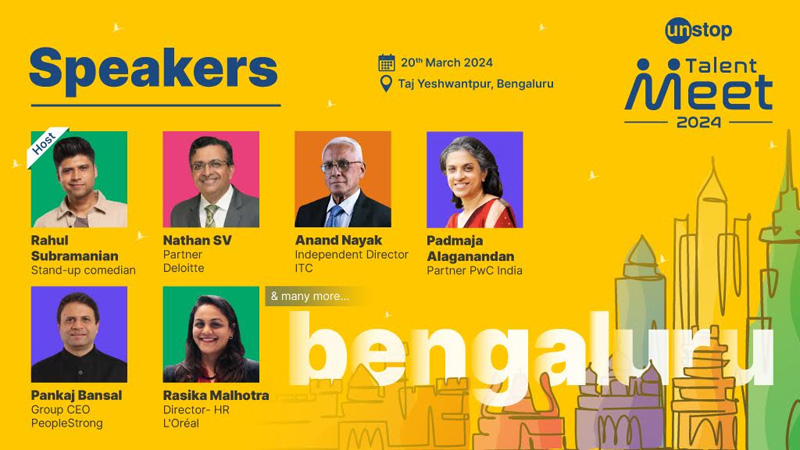
    Mumbai: Unstop, the talent discovery, engagement, and hiring platform for students and graduates, is conducting the Unstop Talent Meet 2024 on 20th March at Taj Yeshwantpur, Bengaluru. The event shall bring together HR leaders, university partners, and students to address the one thought driving the ever-evolving HR landscape – what’s the future of talent hiring?

    Unstop Talent Meet 2024 is expected to have 600 plus attendees, 300 plus organisations, 25 panel speakers, and seven plus speaker sessions. Rahul Subramanian is set to host the event in his unique engaging style. Industry leaders including Deloitte partner Nathan SV; People Strong group CEO Pankaj Bansal; PwC partner Padmaja Alaganandan; Adani Group global chief human resource officer Vikram Tandon will be present at the event. A unique series of discussions titled Talent Talks will provide insights into employer branding, talent assessment and share secrets to hire ‘right’. Speakers from brands such as Marico, Air India, ITC, Mondelēz, L’Oreal, Lenovo, Ather, and many more, shall participate in the Talent Talks.

    The event will see the release of the much awaited Unstop Talent Report 2024 based on the views shared by students, HR leaders and university partners. The report will reveal insights into Talent Discovery, Engagement and assessments. Burning questions such as who is hiring now and how to bridge the skill gap to help students land their dream jobs shall be answered in the report.

    The Unstop employer branding tracker will be released with the dream employers list in various categories as voted and curated by students. Alongside this, students will be recognized for their performance and participation in competitions all year long through the Unstop Talent Awards 2024.

    Unstop founder and CEO Ankit Aggarwal said, “We are pleased to announce Unstop Talent Meet 2024, formerly called the Unstop Campus Hiring Meet. It is the biggest platform of its kind for students, graduates, HR leaders, and industry experts to come together, share insights, and explore opportunities. We invite HR leaders, university partners and students to come together and unlock possibilities on the playground of opportunities.”

    The event saw 300 plus HR leaders, 180 plus organisations, 50 plus universities, 20 plus panellists last year.
     

  • Khimji Jewellers wins big at the Retail Jeweller MD & CEO awards 2024!

    Khimji Jewellers wins big at the Retail Jeweller MD & CEO awards 2024!

    Bhubaneswar: The jewel of Odisha’s business community, legacy jewellery brand Khimji Jewellers has been awarded the prestigious Regional Retail Chain of the Year (East) award by the Retail Jeweller, MD & CEO Awards for outstanding work in the jewellery industry from the Eastern region of India.

    The prestigious award was accepted by Khimji Jewellers director Mitesh Khimji by the hands of celebrated Bollywood actress Sanya Malhotra and Miss India International 2021 winner and actress Zoya Afroz.

    The august gathering In Mumbai included MDs and CEOs of the largest jewellery brands in India who are considered to be the drivers of growth for the industry and whose notable contributions have ensured that the jewellery industry continues to be one of the strongest pillars of the economy of India.

    The official knowledge partner and auditor for the event was consulting firm Deloitte adding an increased sense of recognition, victory as well as responsibility for Khimji Jewellers to carry on with larger gumption and continue to be the flagbearer of business success for the brand in East India.

    Khimji Jewellers currently has nine stores in Odisha and is the largest retail chain jeweller in the state. Delighted with the win, Mitesh Khimji said, “We are honoured to have been recognized by such an elite gathering of the jewellery industry. Being recognized amongst our peers is a testament to our commitment towards our values, our hard work, our sincerity, our products and our customer friendly policies. These values and actions separate us from everyone else in the market and the entire credit goes to our team of over 1100 people!”

    The brand is geared up to achieve more milestones in this new year and potential expansion deeper into Odisha.

  • GUEST ARTICLE: What are the advantages of the advertising industry with the new 5G technology

    GUEST ARTICLE: What are the advantages of the advertising industry with the new 5G technology

    Mumbai: In the recently ended spectrum sale, India auctioned 51,236 MHz of spectrum to incumbent operators for Rs 1,50,173 crore across several 5G networks. This implies a speedier experience for customers, with mobile devices interacting with wireless networks significantly faster and users seeing enhanced download and upload speeds. According to a Deloitte analysis, India’s digital economy is expected to reach one trillion dollars by 2025 as a result of growing smartphone use, fast internet penetration, and the acceleration of mobile broadband and data connectivity. However, 5G is expected to be the primary driver of this expansion.

    5G, like the radio, the internet, and other disruptive technologies before it, will allow advertisers to better engage customers by sending enormous amounts of data at speeds significantly quicker than current 4G technologies allow. Although 78 per cent believe 5G technology will be superior to 4G, 95 per cent are unaware of which 4G features are currently available on their devices. More than 70 per cent are prepared to pay for new technologies (with payment used as a proxy for perceived value). Faster downloads are significant for 71 per cent of 5G users. Respondents do not grasp the phrases “connectivity,” “capacity,” and “latency” and place a low value on these benefits. Here are the advantages for the advertising industry with the new 5G technology:

        Making your creatives suitable for 5G users.

    5G users interact with gadgets in a unique way, which can assist in personalising advertisements to what they’re most interested in. 5G has several concrete benefits, such as downloading a two-hour HD movie in roughly 18 minutes, live streaming a concert or live event to friends or family in HD, and low-latency gaming with 30-50 millisecond ping. However, tailoring your ads to fit consumers’ preferences is extremely critical for 5G over 4G. Users that have a strong interest in gaming, entertainment, and live streaming are more likely (92 per cent) to pay for 5G technology and purchase a 5G enabled phone early on, compared to the overall average (81 per cent). With all of the new 5G updates, there is also a huge opportunity to get creative with brand advertisements and innovate with new benefits.

        5G technology unlocks AR/VR advertising

    Because of 5G’s low latency and rapid download rates, advertisers and publishers will have more options to build new streaming media formats with better capabilities. As customers spend more time on 5G phones, they want new experiences to justify the higher cost. Therefore, advertising must capitalise on this. AR and VR have several applications. Over the next year, it is predicted that 100 million consumers will utilise augmented reality for purchasing. Creating increasingly meaningful, immersive experiences is the future of online engagement, and 5G will usher in those capabilities more naturally.

        Analytics will go real-time

    Already, a fraction of the data we can handle and analyse is considered real-time data. 5G will enable the integration of a broader variety of activities and impressions in real time. If a consumer makes a purchase in the future, they may no longer get any advertising connected to that product or product category. Fundamentally, this will improve targeting, segmentation, customer experience, and customer journey, as well as brand and consumer efficiencies.

        Serve advertisements that leverage 5G advantages

    Users may interact with adverts in novel ways thanks to the ability of 5G for advertisers to create more creative and original immersive content. Real, realistic on-device advertising experiences may be made possible in various ways with minimal latency. Advertisers may display full-screen commercials that let viewers see how a character or product appears in various settings that they can design and modify right from the creative. Additionally, brands may employ VR to present a 360-degree image of the gaming or social environment. Greater capacity also allows for the production of advertisements in a wide variety of audio and video formats. 5G technology has a tonne of unrealized potential, so businesses should be committed to coming up with fresh approaches to interacting with consumers through advertising.

    As with previous technological breakthroughs, advertisers will need to have their fingers on the pulse in order to fully capitalise on the new opportunities presented by 5G and avoid falling behind. Fundamentally, it’s fantastic for innovation that our most imaginative ideas may now confront fewer technological constraints. However, adapting our strategy to the new digital context will be a problem.

    The author of this article is Hotstuff Medialabs founder and CEO Arun Fernandes.

  • Indian film, TV, online video services garnered $49.8 billion in 2019

    Indian film, TV, online video services garnered $49.8 billion in 2019

    KOLKATA: The film, television and online video services industry in India generated a total economic contribution of $49.8 billion (Rs 348,972 crore) in 2019, indicating a total growth of 61 per cent from a similar report in 2017, according to new research by Deloitte. The report also found that the industry supported a total of 2.6 million jobs. 

    Commissioned by the Motion Picture Association (MPA), with the support of FICCI, the Producers Guild of India (PGI) and Creative First, the report was launched on 10 July, during FICCI’s E-Frames virtual event, Future Tech or Future Tense.

    PGI president Siddharth Roy Kapur said, “Our dynamic industry not only provides high-quality jobs and powers the creative digital economy, but is also a huge proponent of India’s soft power around the world. This research highlights how film, television online video production and distribution directly stimulates a range of other industries and businesses, wielding an impact far beyond the direct economic activities of the sector. For that reason, it is crucially important that all stakeholders from the industry and the government play their part in creating an ecosystem that incentivises growth, encourages creativity and rewards innovation. This industry has a tremendous amount to offer, both in economic activity to help us regain a solid footing in response to Covid2019 and to telling the stories of India around the world.”

    FICCI Media and Entertainment chairman Sanjay Gupta said, “M&E is designated by the government as a champion service sector. The Covid2019 pandemic is a setback for the M&E industry – and it will require a huge effort from both industry and government to put the foot to the accelerator, incentivise production and all forms of distribution and transport our industry to the heights we all know it can achieve. The creativity and will are there; let’s hope the policymakers and regulators match our entrepreneurial drive.”

    Deloitte India Media and Entertainment partner and leader Jehil Thakkar said, “The report illuminates for us the broader trends of the film, television, and online video services sectors. Unsurprisingly, online video services made a statement, generating a total economic contribution of $2.1 billion (Rs 15,374 crore) in 2019, up from $230 million (Rs 1,612 crore) in 2017 – an increase of 854 per cent in local currency. India has developed a dynamic video on-demand ecosystem that is satisfying the huge appetite for quality content, especially during the Covid2019 pandemic. Perhaps the biggest threats to continued growth and more job opportunities is rampant piracy and the imposition of artificial barriers that impact on the quality of a customer’s experience. Addressing these challenges is the task of the day.”

    PVR Pictures CEO and PVR Ltd chief business planning and strategy Kamal Gianchandani said, “Exhibition is a beloved form of entertainment for Indian audiences, and will continue to offer an essential means of social engagement and enjoyment for hundreds of millions of people. Right now, movie-going is an entertainment experience that is greatly missed. Once it is safe to do so, I am confident that audiences will return to patronise theatres with a passion and in greater numbers than before. That said, India’s screen density of 6.5 screens per one million remains too low. Just think of the positive effect on the industry and economy if we could double it?” 

    MPA APAC president and managing director Belinda Lui said, “India’s film, television and video on demand market is fuelled by talent, innovation and unrivalled entrepreneurship. Industry stakeholders have developed a reputation for working with the government to identify challenges and find effective solutions. This creative, indomitable spirit is likely to be called upon in the current times to overcome a range of hurdles and ultimately, continue to deliver great quality content through a variety of channels to audiences both at home and across the globe.”