Tag: Delhi

  • Telecom spectrum auction further delayed

    Telecom spectrum auction further delayed

    NEW DELHI: The spectrum auction which has been put off from time to time will begin on 3 February 2014. The Department of Telecom (DoT) had been asked to give clarifications to a number of questions from mobile phone companies like Bharti Airtel and Vodafone India on spectrum usage charges, option of withdrawing from auction and availability of contiguous spectrum but there is still no clarity on these issues.

    According to a notice issued today, the DoT will now give clarifications on the concerns raised by service providers on 2 January. The department has also extended the last date for operators to submit their applications to bid in the auction to 15 January.

    While DoT will announce the pre-qualification of bidders by 25 January, bidders will also be given an option to withdraw their applications, according to the changes in the auction schedule. Service providers had objected to DoT’s move to remove the option of withdrawing their bids, as was allowed in the last auction.

    Operators will now be allowed to withdraw their bids by 27 January and the final list of bidders will be announced on 29 January. A mock auction will be conducted over 30 and 31 January.

    Leading operators like Bharti Airtel and Vodafone India had warned DoT in a pre-bid conference held last week that they could stay away from the upcoming bandwidth auctions if the government continued with the present cascading spectrum usage charge (SUC) regime, instead of moving to a flat fee structure of 3 per cent.

    The government levies SUC between 3-8 per cent of revenue earned by telecom companies from telecom services, depending on the quantum of airwaves held.

    The telecom department is set to auction 403 Mhz in 1800 Mhz and 46 Mhz in the 900 Mhz bands in the next round of auctions, beginning 23 January. The government aims to raise Rs 40,874.5 crore from spectrum revenue this fiscal year ending 31 March 2014, including one-time spectrum fee, and has its hopes pinned on this round to raise funds to limit its budget deficit.

    Operators stayed away from the last two rounds held in November 2012 and March 2013 citing very high reserve prices and low spectrum availability. The government has set the reserve price in 1800 Mhz at Rs 1,765 per unit for pan-India airwaves, 25 per cent lower than the last auctions.

    DoT also lowered the reserve price for Delhi, Mumbai and Kolkata circles in 900 Mhz band by 53 per cent from last auctions to Rs 360 crore, Rs 328 crore and Rs 125 crore respectively.

  • Akshay Kumar & Ashvini Yardi to release Fugly on 16 May 2014

    Akshay Kumar & Ashvini Yardi to release Fugly on 16 May 2014

    NEW DELHI: After the success of their first venture OMG: Oh My God!, actor Akshay Kumar and Ashvini Yardi are all set to release Fugly, a coming-of-age drama set in the by lanes of Delhi.


    The film’s release date has just been announced as 16 May 2014.


    Produced by the Grazing Goat Pictures and directed by Kabir Sadanand, Fugly is shot extensively in Delhi and the breathtaking locations of Leh. It is the story of four friends – Dev, Devi, Gaurav and Aditya and how this carefree bunch, at the threshold of their lives, get caught in a Fugly incident, which sucks them slowly into the big bad world of corruption, politics and the real society in the capital.


    The central characters are played by an ensemble of some of the freshest faces to emerge from India: Anil Kapoor’s nephew Mohit Marwah, Olympic medalist Boxer Vijender Singh, grand niece of Sayed Jaffery Kiara Advani and Slumdog Millionaire actor Arti Lamba will make their Bollywood debuts in the film. The film also sees the fondly remembered Anjali, from the 1998 blockbuster, Kuch Kuch Hota Hai, Sana Saeed, in a special song and Jimmy Shergill who returns to the big screen after Bullet Raja.


    With Fugly, Akshay and Ashvini have followed up the huge success of their first film venture, OMG: Oh My God, and their regional successes, the critically acclaimed Marathi film 72 Miles Ek Pravas, and the Punjabi comic-caper ‘Bhaji in Problem’.


    Spearheading investment into quality, subject-driven film-making, Grazing Goat Pictures is taking Hindi and regional cinema to new heights with a range of innovative and fresh projects.

  • TRAI ad cap: Broadcasters move Delhi High Court

    TRAI ad cap: Broadcasters move Delhi High Court

    MUMBAI: The 12 minute ad cap case has had a change in venue – from the Telecom Disputes Settlement Appellate Tribunal (TDSAT) to the Delhi High Court (HC). With the Supreme Court’s recent ruling that TDSAT does not have authority to hear cases challenging the Telecom Regulatory Authority of India (TRAI) regulations, broadcasters had filed a writ petition in the HC last Friday.

    The case is set to be heard on 17 December in the Delhi HC by Justice Manmohan. The appellants include the News Broadcasters Association (NBA), 9X Media, B4U, TV Vision, Sun TV, E24 and Pioneer Channel. The hearing for the case is set to begin afresh but the priority of the lawyers representing the broadcasters will be to get a stay order from the HC to disallow the TRAI from taking any coercive action against channels which are reportedly not following the 12 minute ad cap. Under the TRAI mandate, it can persecute channels who do not toe the line that it has set.

    “We will ask for a stay order on TRAI taking any punitive actions against broadcasters. Since the TDSAT had given a stay order earlier and the bench was headed by a SC judge Justice Aftab Alam, we hope we get it from the HC too,” says a senior executive.

    The case will by and large remain the same with the focus on the fact that the ad cap is not a regulation at all. However, since it is now the HC, the crux of the arguments will be on constitutional grounds such as Article 14 and Article 19 that talks about the right to equality and freedom of speech respectively.

    The channels will now have to go through the long drawn process of the hearing proceeding in the HC and getting the stay order against the regulator taking them to the cleaners for violation of the ad cao reglation. They have been fortunate not to have got the stick so far from the TRAI which could have prosecuted them as it was within its rights to do so.

  • Close Trai Ad cap: Broadcasters get respite from Delhi High Court

    Close Trai Ad cap: Broadcasters get respite from Delhi High Court

    MUMBAI: The Indian broadcasting community has got a respite on the Telecom Regulatory Authority of India (TRAI) ad cap case. The Delhi High Court today granted an interim order preventing the regulator from carrying out any coercive action against broadcasters violating the mandated 12 minute ad cap set by it.

    Broadcasters are heaving a sigh of relief as there were fears that the regulator would prosecute them for the same. Last week’s Supreme Court judgment had struck down the Telecom Dispute Settlement Appellate Tribunal’s (TDSAT) powers to adjudicate against TRAI regulations. This had nullified the efforts by the broadcasters to get a reversal in the ad cap case by TDSAT.

    The date of the next hearing is 13 March 2014. Broadcasters have to continue the weekly submission of ad duration data to the TRAI.

    The case is surely set to drag on for quite some months as compared to its briskness in TDSAT.  The broadcasters include the NBA, 9X Media, Sun TV, B4U, TV Vision, Sun TV, E24 and Pioneer Channel that had approached the HC after the case was dismissed by the TDSAT last week.

  • TRAI gives MSOs another CAF extension till December end

    TRAI gives MSOs another CAF extension till December end

    MUMBAI: The Telecom Regulatory Authority of India (TRAI) has again shown forbearance towards multi-system operators (MSOs). The regulator has given another extension to the MSOs and asked them to submit 100 per cent consumer application forms (CAFs) by December end along with the compliance report. The regulator met the five national MSOs and a few state players today in New Delhi to get an update on the situation of DAS phase I and II cities.

    “TRAI has given us the extension looking at our performance since the last meeting held on 29 November. While we had achieved only 45 per cent CAF in DAS phase II areas when we met last, this time the figure stands at 65-70 per cent,” says one of the MSO who attended the meeting.

     The MSOs are confident of achieving the figure by the month end. “If TRAI continues its pressure and resolves to take some action against those not complying, I am sure we can achieve 100 per cent figure,” he says.

    Acknowledging the issues in Hyderabad, TRAI has shown leniency towards the city. “The 100 per cent CAF doesn’t include Hyderabad,” says the MSO.

    Apart from representatives of the five national MSOs, the others that attended the meeting chaired by TRAI principal advisor N. Parameswaran included: Manthan from Kolkata and Ranchi, UCN from Nagpur and MSOs from Vishakapatnam and Gujarat among others.

    The TRAI also reviewed the gross billing status in the DAS phase I cities. The MSOs had to start billing from December. “The subscribers need to get the bills as per their package plan from December.  The regulator has said that either the local cable operators (LCOs) or MSOs can bill the subscribers and has asked us to send the compliance report by 31 December,” informs the MSO.
    That apart, the MSOs in Kolkata and Delhi have decided to join hands and educate the consumers on gross billing. “While seven players in Kolkata will publish ads in leading newspapers in Kolkata, approximately three MSOs in Delhi have decided to come together for the print campaign,” he adds.

  • Reserve price for the auction of telecom spectrum in 1800 MHz and 900 MHz bands finalised

    Reserve price for the auction of telecom spectrum in 1800 MHz and 900 MHz bands finalised

    NEW DELHI: The reserve price for 1800 MHz band has been fixed for Rs 1,765 crore per MHz Pan India, which works out to be Rs 8,825 crore for 5 MHz Pan India.

    The Union Cabinet has approved the finalisation of the reserve price for auction of spectrum in 1800 MHz band for all service areas and for 900 MHz band in Metro service areas of Delhi, Mumbai and Kolkata.

    According to the recommendation of the Empowered Group of Ministers, the reserve price for 900 MHz band of Rs 360 crore, Rs 328 crore and Rs. 125 crore per MHz in Metro service areas of Delhi, Mumbai and Kolkata respectively.

    The decisions will result in further efficient utilisation of the scarce natural resource of spectrum facilitating expansion of telecom services in the country.

  • Arvind Lifestyle Brands partners with Shoppers Stop for launch of Next

    Arvind Lifestyle Brands partners with Shoppers Stop for launch of Next

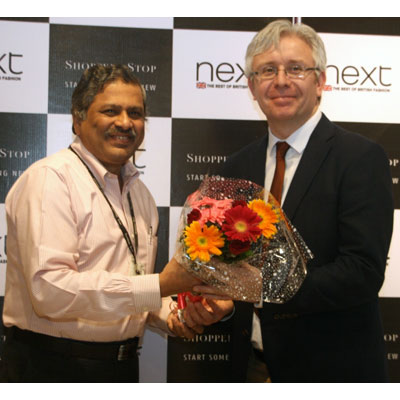
    MUMBAI: Arvind Lifestyle Brands partners with Shoppers Stop for the launch of a shop-in-shop format of British brand next, in Mumbai. Spread over 600 sq. ft., at the Shoppers Stop store in Juhu, the NEXT shop in shop will retail kids clothing for ages from 2 years to 12 years for girls and boys. The kidswear range also includes hosiery, shoes and socks, underwear, and nightwear. The shop in shop format at Shoppers Stop is the first of its kind for next in India.

    Mr. Govind Shrikhande, Customer Care Associate & Managing Director, Shoppers Stop Ltd. added, “We believe in offering our customers a world-class shopping experience and an unparalleled product assortment. Our partnership with Arvind Lifestyle Brands to bring British speciality retail brand NEXT is a great addition to our existing portfolio of kidwear brands. With next, our customers now have an added choice in aspirational kidswear brands to choose from. We are well poised for a successful journey with next.”

    On the opening, J Suresh, MD & CEO, Arvind Lifestyle Brands Ltd. said, “We are extremely pleased with our collaboration with Shoppers Stop and for the first time in India we will bringing speciality retail inside a Department store. Next provides Shopper Stop consumers best of British kids fashion wear offering . On the other hand, Next can take advantage of the ready consumer base of Shoppers Stop. We expect this collaboration setting a new trend of win win collaboration between speciality retailers and Department stores.”

    next offers quality clothing at reasonable prices for kids and women. Through a series of stories each season, next retails the best of British fashion. With a five city presence, in Forum Mall, Koramangala, Elante Mall, Chandigarh, Select Citywalk, Saket, Delhi, Ambience Mall, Gurgaon, and Koregaon Mall Plaza, Pune, the brand has gathered a loyal fan base who’re fashion savvy and looking for current styles.

    Next kidswear is now available at Shoppers Stop, Juhu.

  • Marketing lessons a la AAP

    Marketing lessons a la AAP

    MUMBAI: The recent-concluded Delhi elections, took everyone by surprise when Aam Admi Party won 28 seats. We take a look at what one can learn from the new entrant.

    When it was formed less than a year ago on 26 November, 2012, little did the Aam Aadmi Party imagine it would make such a big splash at the polls.   

    Winning 28 out of 70 seats in the Delhi Assembly elections on 8 December, the AAP came a close second to the BJP which won 31 seats, pushing the ruling Congress to an irrelevant third position. What’s more, three-time Congress CM Sheila Dixit suffered defeat at the hands of AAP chief Arvind Kejriwal. Before the elections, the now ex-CM of the national capital, didn’t think before making statements like, “Arvind isn’t even on our radar.” Dixit probably forgot the legend of David Vs Goliath.

    For a fledgling party which emerged as an offshoot of the larger ‘India against Corruption’ movement launched by activist Anna Hazare -where people took to the streets to protest the many ills plaguing the current administration – this is no mean feat.

    And neither is the fact that AAP – registered as a political party with the Election Commission (EC) only in March this year – has successfully met the EC’s criteria to become a state party.

    So what did the AAP do right to banish all the scepticism its broom-wielding members met with from seasoned politicians who dismissed the party, at least initially, as ‘chillar’ or worse, a group that made a lot of noise but had no real impact.

    Looking at the AAP’s historic win from a marketing perspective, we at indiantelevision.com believe brands may do well to take a few lessons from the party’s promotional strategy:

    * Strong USP
    Each brand need to have a very strong USP which helps position it in the minds of the target audience. AAP’s USP is that it gives the common man a belief, a hope, that there is going to be a better tomorrow, and that it has been created by the common man who is fed up of the politics of politics, and will hence deliver on its promise.

    *Be consistent
    At the heart of the AAP’s party manifesto is its stand against corruption – which cuts through classes. And it has not deviated from that. It has refused to ally with either the Congress (I) or the BJP, despite there being a possibility of it occupying the seats of power in Delhi.

    Brands need to stick to their core premise and promise and not try to ride fads.
     
    * Marry your brand USP with the brand mnemonics
    The AAP has always had one agenda – the aam aadmi, and it has stayed true to it ever since inception. Party members are common people who have volunteered and are unpaid. They come across as common people; they dress up like common people; they move around like common people. Even though many of them are well educated.
    And during this election campaign there was none of the largesse distribution or ostentation that the general political parties generally resort.

    The choice of name and the symbol in the case of the AAP was also crucial. The name says it all -Aam  Aadmi Party. Then the symbol was the killer: what is the one thing that is still common across all homes in India, even in middle-class and upper class homes and hutments – it is the broom. Using the broom as the mnemonic meant many things: it will be used to sweep clean all the dirt in the political system, while it helped identify the common man with a tool that is used in his/her home every day.

    * Know your customer; make him your network and your ambassador
    The AAP needed to connect with its customer: the electorate of New Delhi. Almost 130,000 volunteers all over the world, some of whom descended on Delhi before the election campaign became both the best focus group and research agency anyone could ask for.

    Some executives even took leave from their high paying jobs in India and overseas, housewives found time from their day to day chores, young college students, technicians, labourers, cable TV operators – everyone pitched to connect with the consumer and pass on what troubled the common Delhi-ite – crucial information to the central headquarters of the AAP. And they then propagated that further themselves to the electorate.

    With millions of products overflowing on shop shelves and online, brands need to know what their customers really want, when they want it and how they want it, and in the process make them your ambassadors and messengers.

    * Choose the correct medium at the correct time
    AAP had little financial resources at its disposal; some say less than Rs 20 crore. That’s probably what’s spent by politicians on a couple of constituencies. Once again volunteers stepped in to build the buzz.

    Twitter, facebook, online, print, and television. AAP went the whole hog on all the mediums. But not to splurge; just to have its message heard. The media were relatively complying: did not the common man also work in media? It hooked the middle class and the upper middle class through social media.

    And what about the man on the street?  Well it used direct selling: volunteers went door to door to the electorate in Delhi, connected with the common man. In trains, in buses, on auto rickshaws, in jhuggis, in bastis – there was the huge poster campaign, and it was the educated folks who went where they normally would not.

    Brands have to be careful about the medium they choose and utilise it to maximise impact. Brands too have to keep themselves in people’s mind through various activations/campaigns especially in today’s market where the sharks are ready to rip apart any competition.

  • Modeselektor gets Delhi on the dance floor at Lap The Club

    Modeselektor gets Delhi on the dance floor at Lap The Club

    MUMBAI: One of the hottest electronic acts across the globe, Berlin based Modeselektor, gave Delhi some serious music love as a part of their two city tour presented by Red Bull Music Academy.

    Earlier in the day, the Red Bull Music Academy session brought under one roof about 50 independent artists, producers and members of the industry. The Indian indie scene was well represented by the likes of Jivraj Singh, an RBMA alumni and member of the newly formed Dualist Inquiry Band, Nucleya and Arsh Sharma from Fuzz Culture among others.

    Modeselektor took the audience through their history, their experiences and the distinct brand of music that they alone can lay claim to.

    Formed in 1996 by childhood friends Gernot Bronsert and Sebastian Szary a.k.a Modeselektor described their own sound as ‘wildly diverse, infused with exuberance and inspired by a ‘slap of the absurd’.

    In an informal chat, Modeselektor spoke about their genesis in the chaos of a newly united Germany, trans-genre by design and named after a function on an audio analog device.

    Modeselektor has three acclaimed studio albums to their name, multiple compilations, EPs and remixes, apart from also working with acclaimed recording artists over the years including Radiohead’s Thom Yorke.

    Talking about their future plans they said, “We love being around people! And one idea that we want to bring to life is to create a camp, where musicians and aficionados, both adults and children, can come together and explore different genres of music.”

    Later in the evening, the duo performed a high-energy DJ set to a raging crowd at The Lap! They spun some of their most popular numbers like “Evil Twin “and “German Clap” making sure everyone was on their feet!

    Red Bull Music Academy is an international platform for those who shape the musical future around the globe. The Academy has brought legendary drummer Bernard Purdie, electronic music maverick Dorian Concept and producer Justin Blaze to India in the past.

  • DAS & the LCO fightback for survival

    DAS & the LCO fightback for survival

    It’s the festival of lights. And for many the festival of noise courtesy exploding fireworks. In the hope of reducing the number of those belonging to the latter tribe, we, at indiantelevision.com, decided to put a display of firecracker articles for visitors this Diwali. We have had many top journalists reporting, analysing, over the many years of indiantelevision.com’s existence. The articles we are presenting are representative of some of the best writing on the business of cable and satellite television and media for which we have gained renown. Read on to get a flavour and taste of indiantelevision.com over the years from some of its finest writers. And have a happy and safe Diwali!

    Written By Seema Singh


    (Seema today is senior manager – PR & Communication at the Broadcast Audience Research Council. She wrote this article in 2013.)


    Posted on : 05 Dec 2013 09:45 pm


    MUMBAI: With no one giving them any guarantees about their long term survival under the government-mandated DAS regime, small time local cable operators (LCOs) are banding together as cooperatives in pockets nationally, agglomerating funds, and setting up their own headends. From Bengaluru to Kolkata to smaller towns, this is being mirrored across the country.  Digitisation has spurred a new wave of entrepreneurialism in the cable TV business.

    “Analogue cable TV spread like wildfire in the 80s and early 90s thanks to small time business men who invested and toiled away to deliver satellite TV via cable to homes,” says a cable TV industry observer.

     “Now digitisation in its current form is designed to kill those very last mile operators, big or small,” points out  Maharashtra Cable Operators Federation (MCOF) president Arvind Prabhoo.

    “Some have given up and have joined hands with the MSOs, fearing the huge investments needed for digitisation and the backlash from the national MSO,” says the cable TV industry observer. “But don’t expect all the guys who have built the cable TV industry to what it is today to yield without a fight; hence the new wave of entrepreneurialism.”

    Take the case of the Bengaluru boys.  70 independent cable TV operators got together to set up their own cable TV headend and distribution infrastructure in March 2013.

    Explains one of the members – Sagar E Technologies’ executive director Sudhish Kumar: “There were two reasons: digitisation and revenue share. We had at several instances raised voice against the MSOs with regards to billing, ownership of set top boxes (STBs) and ownership of consumers. The TRAI suggested revenue share model showed that the revenue shared between the LCOs and MSOs will be 35:65 or 40:60. We were being given a small pie. The same was the case as far as cable TV carriage, placement fees or value added fees. We were to get nothing.”

    Branded as Mirai Communication, the consortium is registered as a private limited company and has 10 directors. Its headend is located in Electronics City, Bengaluru. It is through this that the operator provides feeds across Bengaluru. “In Bengaluru we cover areas like: Central Bengaluru, Central Railway Station, Whitefield and ITPL among others,” informs Kumar.

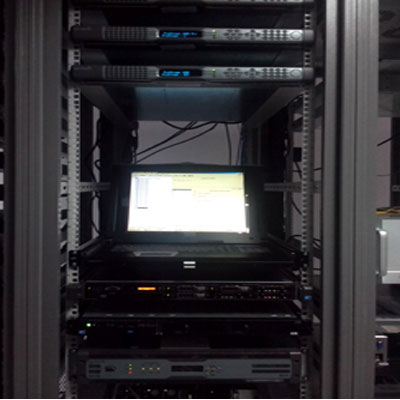
    And Kumar says its headend is future-ready technologically. “We have a Harmonic headend, costing Rs 3 crore, with a carrying capacity of 500 channels.” 

    Some 50,000 STBs imported from DTM, China with CAS from NSTV and SMS from Magnquest, have been seeded amongst its subscribers and the plan is to take the number to one lakh soon. Since some of the LCOs in the joint venture were link operators for the major MSOs in Bengaluru, their boxes have been replaced with the Mirai Communication STBs.

    “These are standard definition high quality MPEG4 boxes with one GB of DVR,” informs chief technology officer Sriram. The price tag of each box is between $16 and $19 (around Rs 1200). The final cost works out to Rs 2000- 2500. This includes CAS, cost of headend, import duty and the cost of STB.” 

    Issues with DAS implementation and revenue share got us together to setup our own headend says Sudhish Kumar

    The company has spent close to Rs 30 crore on the whole setup, which includes infrastructural help from Tata Teleservices, using the optical fibre it has laid across the garden city. “Though we have our own hybrid fiber-coax (HFC), we are using almost 400 km of Tata Teleservices underground OFC, since maintaining the network across the city is a huge task. It has given us drops at several points across the city through which the signal is made available to homes,” says Kumar.

    So what are the challenges the group has faced? “Well, the current 10 directors got along to form a team. We then proposed what we were planning to do to others in the city. It was a challenge to bring everyone to come together, but it has worked out well since,” he informs.

    Each of them was asked to choose between acting as a collection agent by becoming a link operator for a national MSO  becoming an owner by becoming a part of Mirai Communication. “Though it earlier seemed like a herculean task, with 70 operators coming together, we realised that we had to pay only Rs 2000-2500 per box. We were anyways paying Rs 1000-1500 to the MSOs for seeding boxes. So, now by paying extra Rs 1000-1500, we could own the STB and also keep our consumers intact,” explains Kumar.

    It was the Hyderabad based Fibre Optics that offered a one-stop solution and the challenge has not yet ended.  “It is an ongoing task. We have managed to get feeds from all broadcasters.  We are paying them for one lakh subscribers, when currently we have 50,000 subscribers. But, we hope to seed more boxes soon,” adds Kumar.

    What is the revenue share between the 70 cable ops who have formed the consortium? “Well! It is simple. The operator gets a share against the active boxes which are part of his own subscriber network,” he informs. Mirai Communication has started generating bills. “The revenue has started rolling out now,” he informs.

    Bengaluru’s operators are not the only ones, who have come together to setup their own headend. Following their footsteps are the 100 cable operators from Kolkata that recently announced the setting up of ‘Bengal Broadband’. As reported by Indiantelevision.com, the new entrant will be functional from FY2015 (LCO’s form ‘Bengal Broadband’ to be effective from FY15).

    Says Prabhoo, “LMOs all over India like in Bengaluru and Kolkata must group together and form a co-operative model in such a way that even the smallest LMO can survive and sustain. LMOs must register under small scale industry so that they can avail of collateral free bank loan up to Rs 1 crore.”

    We have seeded standard definition high quality MPEG4 boxes with one GB of DVR, informs Sriram
    While the State Bank of India already is providing such facilities, MCOF is also in talks with IDBI Bank and Canara Bank to offer the same. 

    “Time is running out for the MSOs and if they do not learn to act fairly soon enough then many co-operative headends will come up in most cities of India. One may find another 100-200 headends coming up with 200-300 different cooperatives formed and that will continue for a year or two and then there will be consolidation. And I see it happening. These are large cooperatives with a 500,000 or million universe,” adds Prabhoo.

    Kumar points out that they are already in talks with both independent MSOs across India and also LCOs in Mumbai, Delhi, Nasik, Kerala, Chennai, Hyderabad and Gujarat for setting up more such co-operative headends. “We are in talks with independent MSOs and asking them to collectively set up one headend for the entire country,” he concludes. 

    Change as we say is the only constant. Even in cable TV land.