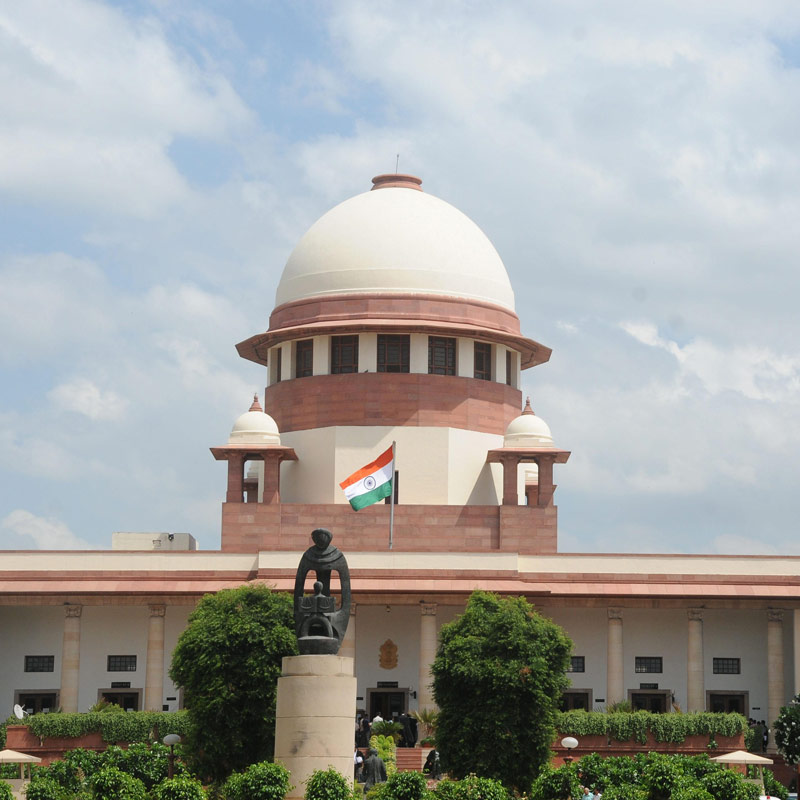
Tag: Delhi High Court

  • Delhi High Court stays the broadcast of Sudarshan News’ communal show

    Delhi High Court stays the broadcast of Sudarshan News’ communal show

    A major controversy erupted when Sudarshan News CMD & editor-in-chief Suresh Chavanke released a promo of his forthcoming episode UPSC Jihad of his television show Bindas Bol on Aug 25.

    The promo clearly used disturbing and communal words and was themed on the exposé of Muslims who have infiltrated the highest working body in the government, our executive branch. The show was supposed to be aired on Aug 28 at 8 pm.

    The promo, once released, immediately attracted outrage from journalists, police professionals, and IPS & IAS officers. IPS Association even issued a statement condemning the ‘communal and irresponsible piece of journalism’.

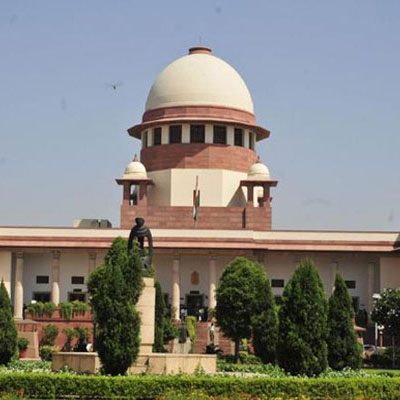
    On Aug 28, the Delhi High Court stayed the proposed broadcast of the show after former and current students of Jamia Milia Islamia, filed a plea seeking a ban on the telecast. This came even as the Supreme Court on Friday declined to impose a pre-broadcast ban on the channel from airing the programme.

    The plea alleged the show was an attempt to “defame, attack and incite hatred” against Jamia Milia Islamia, its alumni and the Muslim community at large. The HC stayed the broadcast until September 7.

    The court also directed Sudarshan News to file a reply before September 1 on the notice issued by the ministry of information & broadcasting on the complaints it received against the show.

    Justice Navin Chawla also issued a notice to the I&B ministry on the plea filed through advocate Shadan Farasat contending that the trailer of the show has “openly engaged” in hate speech.

    Appearing for the I&B ministry, advocate Anurag Alhuwalia, the central government’s standing counsel, accepted the notice, following which the matter was posted for hearing on September 7.

    The petition said the proposed broadcast along with the trailer violates the programme code set out under the Cable Television Networks (Regulation) Act, read with the Cable Television Networks Rules 1994.

    “The proposed broadcast and trailer also constitute hate speech and criminal defamation and is an offense under Sections 153A (1), 153B(1), 295A and 499 of the Indian Penal Code,” the plea read.

    After the order was passed, the show that was supposed to be telecast was not aired. Instead, Chavanke conducted another show where he accused Jamia Milia Islamia students and alumni of using the court to get the show stopped.

    The Delhi High Court on Saturday further refused to lift its stay order. This came a day after the High Court stayed the broadcast of the show.

  • Discovery files petition against TRAI’s tariff-related consultation paper in Delhi High Court

    Discovery files petition against TRAI’s tariff-related consultation paper in Delhi High Court

    MUMBAI: Major broadcaster Discovery Communications India has filed a petition against Telecom Regulatory Authority of India’s (TRAI) recent consultation paper floated on 16 August. The broadcaster has prayed for quashing the consultation paper terming it “illegal and arbitrary”.

    TRAI issued a consultation paper on tariff-related issues for broadcasting and cable services, seeking stakeholders’ responses to 27 questions which covered different aspects related to the new tariff order (NTO), which came into force from 1 February 2019.

    The petition by Discovery also asks to prohibit TRAI from proceeding or taking any further steps pursuant to the paper without following the due process of law. According to sources, the petitioner has served a copy to TRAI on Wednesday and hopes to get a listing on Thursday, 29 August 2019, before the Delhi High Court.

    Amid several ongoing speculations on the change in NTO, TRAI chairman RS Sharma recently clarified that the regulatory body does not have any plan to revise the pricing framework. He also added that it is only trying to fine-tune it due to certain issues consumers are facing.

  • Dish TV vs Prasar Bharati: DD Free Dish cannot use word ‘Dish’, says Delhi High Court

    Dish TV vs Prasar Bharati: DD Free Dish cannot use word ‘Dish’, says Delhi High Court

    MUMBAI: The Delhi High Court on Tuesday granted an injunction to direct-to-home (DTH) operator Dish TV (plaintiff) against Prasar Bharati (defendant), preventing the public broadcaster from using the word 'Dish' for its free-to-air DTH platform DD Free Dish. The defendant was handed three months’ time to inform its subscribers of the new name, so as to not cause any confusion.

    Terming it as prima facie case of infringement, the single bench of Justice Sahay Endlaw refused to accept the pubcaster’s claim of publici juris.

    The plaintiff had instituted this suit for permanent injunction restraining the defendant from infringing the trade mark “Dish TV‟ of the plaintiff and from passing off the defendant’s services as that of the plaintiff by adoption of the name/mark “Free Dish‟ and for ancillary reliefs.

    The plaintiff had argued that the world ‘Dish’ was first appropriated by them and is a key component of its trademark. The defended opted for a logo similar in nature, even containing the dish that was a central to the Dish TV logo.

    The defendant refuted the charge of similarities in the logo and argued that the exclusive right to the Dish logo cannot be claimed by anyone.

    The court was not in agreement with the defendant’s argument of the word “Dish‟ being generic to DTH service or publici juris and/or common to the trade of DTH service for it to be said that adoption thereof by plaintiff for its DTH services cannot prevent others providing same service from using the same for the reason of its being essential for them for describing their service.

    “As far as the contention of the counsel for the defendant regarding public interest is concerned, it cannot be lost sight of that the defendant, after ten years changed the name of its service from DD Direct+ to DD Free Dish. It is not the case of the defendant that in doing so, any such consequence followed. The defendant has also not disclosed the need for such change. There is no reason for the defendant to now, upon being asked to make the change instead of affecting the same voluntarily, suspect any such harm to the public. Moreover, the said aspect can be taken care of by providing sufficient time to the defendant to make its customers / subscribers aware of the change including on its own telecast,” the order read.

    “Rather, I am dismayed that the defendant, a public sector enterprise, indulged in using another’s trade mark and in spite of the plaintiff objecting thereto, refused to act reasonably. The same is not expected of a public sector enterprise which according to the proclaimed litigation policy of the government is not to be indulged in. It is at least now expected that the officials responsible for conduct of the business of the defendant will bestow attention thereto and take a call, whether it is worthwhile to contest this litigation, obviously at the cost of the exchequer,” Justice Sahay Endlaw further stated.

  • Tata Sky’s final arguments in TRAI tariff order matter listed for 19 July by Delhi HC

    Tata Sky’s final arguments in TRAI tariff order matter listed for 19 July by Delhi HC

    MUMBAI: The Delhi High Court on Thursday adjourned the hearing of the petition of top DTH operators Tata Sky, Airtel Digital TV and Sun Direct, and broadcaster Discovery India Communication challenging Telecom Regulatory Authority of India (TRAI) and its new tariff regime to 19 July. according to sources close to the development, he DTH player Tata sky will conclude its argument on the same day. 

    During the hearing on 2 May, the regulatory body argued partly in the court. Before that, the last two hearings held on 11 April and 25 April were adjourned without any significant development.

    In the beginning of April, Discovery India concluded its arguments. The matter is being heard by Chief Justice Rajendra Menon and Justice V Kameswar Rao.

    Notably, the extended deadline for consumer migration under the new regime expired on 31 March. While TRAI has repeatedly said most consumers have moved to the new regulatory framework with a reduction in cable bills, several reports have claimed otherwise. In the last two weeks, TRAI also sent directives to several distribution platform operators across the country for not complying with tariff order rules properly.

    Earlier in February, the regulatory body extended the deadline to pick channels under the new regime till 31 March as well as gave a directive of Best Fit Plans. The subscribers that don’t opt for new channels would be moved to ‘Best Fit Plans’, which would be developed as per usage pattern, language and channel popularity, the sector regulator said in its statement.

    Chief Justice of Delhi High Court Rajendra Menon on 13 February questioned TRAI for altering the implementation process of its new tariff regime without informing the court. The chairperson of the sector regulator had also been directed to file an affidavit within a week explaining these changes.

    While the regulatory body has continuously declined that cable bills would go up under the new regime, several reports, as well as surveys, have indicated the hike in the monthly bill. Due to the change in pricing, many experts predicted that consumers would shift to OTT platforms eventually. To decrease the churn rate, some of the DTH players have removed network capacity fee for long duration packs.

    In 2017, Bharti Telemedia, Tata Sky and Discovery Communications India had filed petitions against TRAI, challenging its tariff order and the interconnect regulations. Unlike the position adopted by Star India wherein it questioned the regulatory powers of TRAI, the matter in the Delhi HC questions the regulator’s power to wipe out deals that operators enter into to fix commissions and rates for customers.

  • Delhi HC sends notice to TRAI over money collection through tariff amendment orders

    Delhi HC sends notice to TRAI over money collection through tariff amendment orders

    MUMBAI: The Delhi High Court has issued a notice to the Telecom Regulatory Authority of India (TRAI) asking it to explain how broadcasters collected crores of rupees from consumers on the basis of the 11th and 13th TRAI tariff amendment orders, as per a report by news agency ANI.

    The court was responding to a plea by an NGO which said that the Telecom Disputes Settlement and Appellate Tribunal (TDSAT) had set aside the case and remanded it to TRAI. TRAI has to file its reply by 11 September, the next date of the hearing.

    According to the petitioners, the collection of money by broadcasters was illegal after a Supreme Court order of 2015 was applied. They also had to maintain a separate account for this money collected from customers.

    Post the implementation of the framework, the money was to be returned to customers but the TRAI transferred the matter to the I&B Ministry.

  • Tata Sky vs TRAI: Discovery concludes arguments, Delhi High Court lists matter for 11 April

    Tata Sky vs TRAI: Discovery concludes arguments, Delhi High Court lists matter for 11 April

    MUMBAI: The Delhi High Court has adjourned the petition of top DTH operators Tata Sky, Discovery India Communication, Airtel Digital TV and Sun Direct challenging Telecom Regulatory Authority of India (TRAI) and its new tariff regime to 11 April. According to a source close to the development, Discovery India concluded its arguments, which commenced on 4 February, on Thursday. The long-running court battle is likely to conclude by the end of this month, as TRAI and all interveners in support of the regulatory body will commence their arguments during the next hearing. The matter is being heard by Chief Justice Rajendra Menon and Justice V Kameswar Rao.

    Notably, the extended deadline for consumer migration under the new regime expired on 31 March. While the TRAI has repeatedly said most consumers have moved to the new regulatory framework, with a reduction in cable bills, several reports have claimed otherwise.

    Earlier, the regulatory body in February extended the deadline to pick new channels under new regime till 31 March as well as gave a directive of Best Fit Plans. The subscribers that don’t opt for new channels would be moved to ‘Best Fit Plans’, which would be developed as per usage pattern, language and channel popularity, the sector regulator said in its statement.

    Chief Justice of Delhi High Court Rajendra Menon on 13 February questioned TRAI for altering the implementation process of its new tariff regime without informing the court. The chairperson of the sector regulator had also been directed to file an affidavit within a week explaining these changes.

    While the regulatory body has continuously declined that cable bills would go up under the new regime, several reports, as well as surveys, have indicated the hike in the monthly bill. Due to the change in pricing, many experts predicted that consumers would shift to OTT platforms eventually. To decrease the churn rate, some of the DTH players have removed network capacity fee for long duration packs.

    In 2017, Bharti Telemedia, Tata Sky and Discovery Communication India had filed petitions against TRAI, challenging its tariff order and the interconnect regulations. Unlike the position adopted by Star India wherein it questioned the regulatory powers of TRAI, the matter in the Delhi HC questions the regulator’s power to wipe out deals that operators enter into to fix commissions and rates for customers.

  • Arguments in DTH operators’ petition against TRAI tariff order to resume on 4 April

    Arguments in DTH operators’ petition against TRAI tariff order to resume on 4 April

    MUMBAI: The Delhi High Court on Thursday adjourned the petition of Tata Sky Discovery India Communication, Airtel Digital TV and Sun Direct challenging Telecom Regulatory Authority of India (TRAI) and its new tariff regime to 4 April. According to sources close to the development, the next date of hearing was granted after the matter was partly argued by Discovery counsel Gopal Jain. The next hearing will commenced with arguements from the broadcaster's counsel.

    It must be noted that the extended deadline for consumer migration under the new regime will expire on 31 March.

    While the TRAI has repeatedly said most consumers have moved to the new regulatory framework, with a reduction in cable bills, several reports have claimed otherwise.

    Earlier, the regulatory body in February extended the deadline to pick new channels under new regime till 31 March as well as gave a directive of Best Fit Plans. The subscribers that don’t opt for new channels would be moved to ‘Best Fit Plans’, which would be developed as per usage pattern, language and channel popularity, the sector regulator said in its statement.

    Chief Justice of Delhi High Court Rajendra Menon on 13 February questioned TRAI for altering the implementation process of its new tariff regime without informing the court. The chairperson of the sector regulator had also been directed to file an affidavit within a week explaining these changes.

    On 4 February, after senior lawyer Kapil Sibal, representing Tata Sky, concluded his arguments including legal submissions, Jain laid the foundation for his arguments.

    While the regulatory body has continuously declined that cable bills would go up under the new regime, several reports, as well as surveys, have indicated the hike in the monthly bill. Due to the change in pricing, many experts predicted that consumers would shift to OTT platforms eventually. To decrease the churn rate, some of the DTH players have removed network capacity fee for long duration packs.

    TRAI chairman RS Sharma claimed on Wednesday that almost all TV customers have been migrated to the new tariff regime. “Most of them have subscribed to the new regime or some of them have been put to a ‘best fit’ package. As the deadline of 31st March approaches, everybody will come onto the new platform,” he said as quoted by news agency IANS.

    In 2017, Bharti Telemedia, Tata Sky and Discovery Communication India had filed petitions against TRAI, challenging its tariff order and the interconnect regulations.

    Unlike the position adopted by Star India wherein it questioned the regulatory powers of TRAI, the matter in the Delhi HC questions the regulator’s power to wipe out deals that operators enter into to fix commissions and rates for customers.

  • Delhi High Court orders release of all seized Tata Sky STBs

    Delhi High Court orders release of all seized Tata Sky STBs

    MUMBAI: The Delhi High Court directed the centre on Monday to release all the Tata Sky set-top boxes, barring five pieces, which were seized by the government for not displaying the maximum retail price.

    A bench of Chief Justice Rajendra Menon and Justice AJ Bhambani, in an interim order, directed the Ministry of Consumer Affairs to release the over six lakh STBs it had seized in January but allowed it to keep five of those for continuing with its probe.

    Issuing the direction, the bench said the government's decision was "prima facie arbitrary" and resulted not only in a financial loss to the direct broadcast satellite television provider, but also affected consumers who could not shift to the new STBs.

    "Here, the arbitrariness is writ large on the face of it," the bench added.

    It said the proceedings initiated by the government might go on in accordance with law and the company would participate in it.

    With the directions, the bench listed the matter for further hearing on 27 July.

    According to PTI reports the interim order came on Tata Sky's plea challenging the seizure of its STBs for not displaying the MRP.

    The company, in its petition, has also challenged the constitutional validity of a rule, which makes it mandatory to display the MRP on STBs.

    Besides seeking setting aside of the 17 January seizure report, Tata Sky has also requested that Rule 4 of the Legal Metrology Rules, which makes declaring the MRP on STBs mandatory, be quashed.

    It has also sought quashing of a 9 August 2018 circular by which the rule was made applicable to STBs.

    The company has contended that it is not required to declare the MRP on STBs as those fall under the definition of "industrial-consumer" according to the Legal Metrology (Packaged Commodities) Rules 2011.

    It has also said that since the STBs are not for sale, there is no need to indicate the MRP on those.

  • TRAI vs Tata Sky: Delhi High Court adjourns case to 21 February

    TRAI vs Tata Sky: Delhi High Court adjourns case to 21 February

    MUMBAI: The Delhi High Court on Wednesday adjourned Tata Sky’s ongoing legal battle, in which Discovery,  Bharti Telemedia-owned Airtel Digital TV and Sun Direct are a part, with the Telecom Regulatory Authority of India(TRAI) and its new tariff regime to 21 February.

    The regulator on Tuesday extended the deadline for consumers to select television channels under its new tariff regime till 31 March The subscribers that don’t opt for new channels would be moved to ‘Best Fit Plans’, which would be developed as per usage pattern, language and channel popularity, the sector regulator said in its statement.

    TRAI chairman RS Sharma last week addressed a press conference in the national capital, rubbishing a Crisil report that claimed cable and DTH bills were bound to increase after the implementation of the tariff order.

    Earlier, Indian Society of Advertisers' (ISA) executive council also advised its members to not use the BARC data for media buying, planning and evaluation perspective during the transition period, which it feels will stretch up to six weeks.

    On 4 February, after senior lawyer Kapil Sibal, representing Tata Sky, concluded his arguments including legal submissions, Discovery India Communication’s counsel Gopal Jain laid the foundation for his arguments.

    The regulator informed the court that the new tariff order has already been implemented from 1 February.

    Earlier the TRAI had offered an extension till 31 January to the distribution platform operators (DPOs) for implementation.

    On 24 January, the Harit Nagpal-led company finally unveiled the new pricing of channels and packs after it was served a show-cause notice by the TRAI.

    TRAI's show-cause notice said, "Tata Sky has failed to provide options to its 17.7 million subscribers in compliance with the new framework to exercise their choices for TV channels. Tata Sky has put its subscribers in a situation of great difficulty despite no fault of theirs by not complying with the provisions of the new regulations and the tariff order.”

    Despite the delay in announcing channel prices, Tata Sky MD and CEO Nagpal is confident that his team can complete the tricky task of implementing the new norms within a relatively short span of time.

    “Tata Sky has always been compliant to regulatory requirements. We have gone live with our modes of communication across the Tata Sky website, Tata Sky mobile app and also equipped the dealers that subscribers can reach out to. We were confident that we would be able to complete the task in 1 week’s time. Hence we used this time to a seamless and smooth transition for all our subscribers. We have ensured that choosing channels and packs is as easy as 1, 2, 3 for any subscriber,” the veteran executive said.

    On 29 January, Calcutta High Court stayed the cable switchover till 18 February. The court’s directive was a result of 80 cable operators from the city filing a petition against the TRAI mandate. However, the high court later vacated the stay.

    The petitioners’ lawyer Debabrata Saha Roy argued that the revenue-sharing model under the new regime will significantly reduce the cable operators’ share to just nine per cent. With 80% will go into the broadcasters’ kitty, MSOs stand to get just 11 per cent, thus making it an unsustainable business proposition for operators.

    In 2017, Bharti Telemedia, Tata Sky and Discovery Communication India had filed petitions against TRAI, challenging its tariff order and the interconnect regulations.

    Unlike the position adopted by Star India wherein it questioned the regulatory powers of TRAI, the matter in the Delhi HC questions the regulator’s power to wipe out deals that operators enter into to fix commissions and rates for customers.

  • Delhi HC dismisses 9X Media, B4U Broadband, TV Vision petition challenging DD Free Dish e-auction

    Delhi HC dismisses 9X Media, B4U Broadband, TV Vision petition challenging DD Free Dish e-auction

    MUMBAI: The Delhi High Court has dismissed the petition filed by 9X Media, B4U and MASTiii against the DD Free Dish e-auction. Within a few days of the e-auction recommencement notice, the broadcasters approached the court as they felt the base prices are very high for small players.

    Senior lawyer Amit Sibal appearing for the petitioner 9XM argued that the music channels were free to air channels and they were not collecting any subscription amount. Hence, those channels could not be classified in the same bucket as general entertainment channels (GECs), and other channels.

    The revised guidelines of DD Free Dish auction says that differential pricing for genre (language) will be based on principle of higher reserve price for genre (language) with greater commercial potential. Sibal argued that the guiding norm has not been followed as the music channels have been placed in the same bucket as sports and GECs. He contended that the commercial potential of sports channels is greater than music channels.

    Sibal also argued that the commercial potential of music channels was much lower than news channels and yet the reserve price for news channels has been fixed at Rs 7 crore and music channels have been fixed at Rs 10 crore. He also referred to the financial statement of the petitioners to contend that they were loss making while the news channels were making profits.

    Earlier 9X Media mentioned in the petition that it is a loss-making entity with losses of Rs 7.81 crore and negative earnings per share and such a decision could adversely impact its business. Rajeev Sharma on behalf of Prasar Bharati pointed out the total revenue of 9XM for the financial year 2018 was around Rs 146.12 crore including Rs 138.71 crore as revenue from operations. He submitted that the reserve price of a slot was a very small fraction of the revenue. Sharma also added that the petitioners were already paying Rs 8 crore and the reserve price was only 25 per cent more than the existing price.

    Talking note of the argument, Justice Vibhu Bakhru said that the court does not agree to the argument that the reserve price fixed there under would amount to disabling an entrepreneur from carrying on the business of broadcasting a music channel. He also added that DD Free Dish is not the only platform to air the channels.

    Justice Bakhru also asserted that it will not be appropriate to enter into a controversy as to the assessment of the commercial potential of various genres or channels. The court also added that the question of fixing a reserve price is a matter of commercial discretion of the public broadcaster Prasar Bharati.

    “Prasar Bharti’s commercial decision to fix the prices is not amenable to judicial review under Article 226 of the Constitution of India, unless it is established that the same is so arbitrary or so unreasonable that no reasonable person could possibly take such a decision,” the judgement also said.

    Justice Bakhru also found Sibal’s contention that that petitioners are not challenging the policy but the implementation is unpersuasive as the petitioners are seeking to challenge the fixation of reserve price which itself is a matter of policy.

    The new policy guidelines has kept five buckets for e-auction of MPEG2 slots. Bucket A+ has been kept for Hindi GECs and teleshopping channels with a reserve price of Rs 15 crore, and Bucket A has been dedicated to Hindi movie channels with a reserve price of Rs 12 crore.

    Hindi music, sports, and Bhojpuri GEC and movie come under Bucket B which has a reserve price of Rs 10 crore. All news & current affairs (Hindi), news & current affairs (English) and news & current affairs (Punjabi) channels fall under the category of Bucket C which with a reserve price of Rs 7 crore. The Bucket D with lowest reserve price of Rs 6 crore will comprise of all other remaining genres/language channels.