Tag: Delhi High Court

  • Two Big CBS channels face penalty by BCCC for violation of programme code

    Two Big CBS channels face penalty by BCCC for violation of programme code

    NEW DELHI: Two separate channels of the Big CBS bouquet have been levied financial penalties by the Broadcast Content Complaints Council (BCCC) for “transgression of programming codes and ethics”.


    The action was taken against Big CBS Love and Big CBS Spark following a complaint by the Information and Broadcasting Ministry.


    The industry regulator headed by former Delhi High Court Chief Justice A.P. Shah said the rap song ‘No lie’ by rappers Drake and No Change on Big CBS Spark contains ‘highly inappropriate language and are grossly offensive to good taste and decency.’


    After issuing a show-cause notice and hearing the channel, the BCCC decided to impose a financial penalty of Rs 2,50,000 on the Channel. The Channel had been directed to deposit the amount of financial penalty with the Indian Broadcasting Foundation (IBF) on or before 15 September.


    The Council also directed the channel to run an apology scroll in English, in large and legible bold fonts at normal speed, every two hours over a period of three days from 12 p.m. on 25 August 2013 to 10 a.m. on Wednesday 28 August 2003. The scroll will read: “In compliance with BCCC’s Order passed on 14 August 2013, Big CBS Spark apologises for the telecast of rap song ‘No Lie’ by rappers No Chainz and Drake on 2 May 2013. This programme was found to be in violation of Indian Broadcasting Foundation’s (IBF) Self-Regulatory Guidelines.”


    The song had been telecast on 2 May this year and the channel was issued a show cause notice and heard on 10 July and 12 August. BCCC found the defence of the channel about it being a niche channel or restructuring its Standards and Practices Department were untenable.


    The Council found that the programme in question is violating Clauses (a), (d) and (k) of the ‘Programme Code’. In addition to this, the programmes are also violating Guidelines 1 and 2 of ‘Theme 2: Sex, Obscenity and Nudity’ of the IBF Self-Regulatory Guidelines. Furthermore, the Programme is also violating Clause a) of Category ‘G’ Programmes for unrestricted viewing and/or under parental guidance as well as Clause a) of Category ‘R’ Programmes.


    In the complaint relating to Big CBS Love, the BCCC considered a series of complaints against Big CBS Love Channel for its three Programmes ‘Sex and the City’ (7, 9, 10, 11, 17, 21, 23 & 29 April 2013), ‘America’s Next Top Model’ (20 March 2013) and ‘Britain’s Next Top Model’ (15 April 2013).


    The BCCC after hearing the channel in reply to the show cause notice decided to impose a consolidated financial penalty of Rs 10,00,000. The Channel was directed to deposit the mount of Financial Penalty with the Indian Broadcasting Foundation on or before 15 September 2013.


    The Council also directed the channel to run an Apology Scroll, in English, in large and legible bold fonts at normal speed, every Two hours, over a period of seven days, from 12 Noon on 24 August 2013 to 10 AM on 31 August 2013. The scroll will read:


    “In compliance with BCCC’s Order passed on 14 August 2013, Big CBS Love apologizes for the telecast of its Programmes ‘Sex and the City’, ‘America’s Next Top Model’ and ‘Britain’s Next Top Model’ in March-April 2013. These programmes were found to be in violation of Indian Broadcasting Foundation’s (IBF) Self-Regulatory Guidelines.”


    The Council found that the shows in question are violative of Clauses (a), (d) and (k) of the ‘Programme Code’. In addition to this, the shows are also violative of ‘Theme 2: Sex, Obscenity and Nudity’ of IBF’s Self-Regulatory Guidelines. Furthermore, the shows are also violative of Clauses a) to e) of Category ‘G’ Programmes for unrestricted viewing and/or under parental guidance as well as Clauses a) to e) of Category ‘R’ Programmes. Repeated complaints have been received about the gross contents of these shows in the past.


    It was brought to the Council’s notice that on 19 July 2013, the IBF Board of Directors has conferred powers on BCCC to levy Financial Penalty on a Channel, subject to a maximum of Rs 30 lakh.

  • ‘Yeh Jawaani hai Deewani’ cannot be released on TV or home video

    ‘Yeh Jawaani hai Deewani’ cannot be released on TV or home video

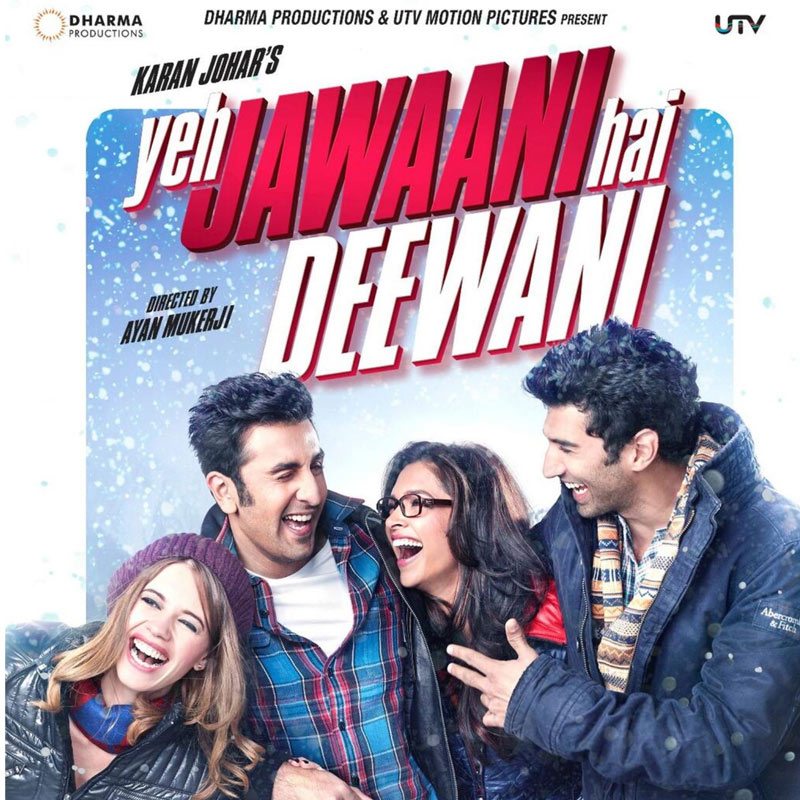
    NEW DELHI: The Ranbir Kapoor starrer Yeh Jawaani hai deewani cannot be telecast on television until further orders of the Delhi High Court.

    This follows a petition by the manufacturer of ‘Roohafza’, which says the film contains the "objectionable" dialogues against the squash.

    However, the film has already been released in theatres and so the order will not affect the theatrical screenings.

    Issuing notices to the director, producer and dialogue writers of the Ranbir Kapoor- Deepika Padukone starrer, Justice Manmohan Singh fixed the matter for hearing on 16 July.

    "The defendants (film makers), their agents, representatives, assignees or any other persons acting on their behalf are restrained from releasing the home video version of the movie", or "of any other version of the movie on cable television or television which contains the objectionable dialogues as complained in the suit."

    "However, it is made clear that this order is not applicable to the theatre version of the movie which has already released and the defendants are at liberty to omit the objectionable content from the film and proceed to release the home video version or any television version of the movie."

    The court order came on an injunction suit filed by Hamdard National Foundation, the manufacturer of Roohafza, claimed the product is a household name in and outside India and the film Yeh Jawaani Hai Deewani contained some "objectionable" dialogues about the Unani recipe.

    The petitioner said: "the defendants (filmmakers) have recently released the movie…which has hit the cinema halls and the said movie contains some dialogues which somehow shows the well-known product Roohafza in the manner which is detrimental to the interests of the plaintiffs (manufacturer) as a proprietor.

    "The dialogues in the movie would definitely damage the goodwill and reputation of the plaintiffs and is an actionable wrong in common law as well as statute…," the plea said.

  • Movies OK says it did not go off air

    Movies OK says it did not go off air

    NEW DELHI: As the Delhi high court ordered a stay on the order of the inter-ministerial committee relating to suspending telecast for 24 hours from midnight of 2 May, Movies OK has clarified that the channel was never taken off the air as reported earlier by indiantelevision.com (based on the ministry of information and broadcasting’s website).


    The ministry had directed the punitive action on the channel for allegedly showing a film ‘Dil Jale’ on 18 June last year with an ‘Adult’ certificate at 6.12 pm, refusing to accept the argument that the certificate was shown by human error as the version shown had been issued a U/V certificate.


    However, the channel got the order stayed on the ground that it was issued the ministry directive only at 5.30 pm on 1 May. The court also heard counsel for the government had listed the case for further hearing on 26 July. Justice Rajiv Shakhder said “I am of the view that since enough time was not available to the petitioner to collect the relevant material in order to challenge the findings to which I have made a reference to above, I am inclined to stay the impinged order till the next date of hearing. It is ordered accordingly.”
    In a statement following a story by this website, the channel said: “Star India would like to clarify that it is factually incorrect to state that the channel faced closure for 24-hours as no such action was taken. Contrary to what the article suggests, the channel wasn’t taken off air at all.”

  • Delhi High Court directs MSM to reconnect signals of Kanpur MSO

    Delhi High Court directs MSM to reconnect signals of Kanpur MSO

    New Delhi: The Delhi high court today directed Multi Screen Media to reconnect the signals of a multi-system operator in Kanpur after it was argued that Broadcast Engineering Consultants (India) Ltd (Becil) was the only authority to certify the genuineness of a digitized set up for cable television. Justice Rajiv Shakdher directed that Becil should give its report by 17 May when the case will be heard.

    Vishal Mishra of Vishal Cable Network of Kanpur had filed the case after MSM cut off the signals without any notice on the ground that the MSO had not digitized his operations.

    Vikram Singh, counsel for the MSO argued in Court that Becil was the only authority to take a decision on such issues. In any case, he said that notice should have been issued to the MSO.

  • Court passes landmark judgement to protect digital sports rights holders against telcos

    Court passes landmark judgement to protect digital sports rights holders against telcos

    NEW DELHI: In a landmark judgment that will have long term effects on revenue sharing and monetisation, the Delhi High Court has said mobile phone companies cannot provide to their subscribers live match updates for sporting content for which Star India has the rights.

    Mobile operates can offer updates of cricket scores with a lag of 15 minutes or by obtaining a license from Star.

    The Court upheld the petition by Star India against Crickbuzz, On Mobile and Idea Cellular.

    “We had moved the court against these companies and the verdict could be a harbinger of change in monetising digitised content,” Star India CEO Uday Shankar said.

    Star India paid Rs.38.51 billion in 2012 for exclusive media rights to cricket matches organised by the Board of Cricket Control in India (BCCI) between 2012 and 2018. This included all international cricket matches in India and domestic competitions including the Ranji Trophy and the Irani Cup. The Star deal also includes Internet and mobile rights and covers 96 matches.

    Shankar said this was the first time that such an order had come and it would lay the foundation on how the rights can be exploited and monetised on mobile platforms.

    “When we bid for the cricket rights last year, our idea was to create a homogenous high quality consumer experience. We had bid for all rights, including mobile and digital, where there was no monetisation. We pay Rs 5 million per match for the digital rights, but have not monetised so far”.

    Shankar added that the lack of clarity on this was severely compromising the ability of rights owners to invest to create great experiences for sports fans. “This decisive verdict finally creates clarity on who owns the rights and a mechanism for monetisation and fair revenue share. For me, this is a huge boost to the entire digital and mobile space.”

    In his judgment, Justice M L Mehta issued a limited interim injunction restraining the defendants from disseminating contemporaneous match information in the form of ball-by-ball or minute-by-minute score updates/match alerts for a premium without obtaining a license from the plaintiff.

    At the same time, the Judge said: “There shall be no restriction upon the defendants to report ‘noteworthy information’ or ‘news’ from cricket matches, as and when they arise, because ‘stale news is no news’.”

    Furthermore, there will be no requirement for the license if the telecom operators ‘do it gratuitously or after a time lag of 15 minutes’, he added.

    The Court reiterated that ‘there is a difference between contemporaneous dissemination of match information in the form of ball-by-ball or minute-by-minute score updates/match alerts and reporting noteworthy information or news.’

    While hearing Star India’s petition, the High Court also observed that providing live score updates prevents Star India from effectively monetising its exclusive rights.

    “It would be just and reasonable for the defendants to either obtain a license and gain equal rights to their subscribers, or make them wait for some time, in order to not prejudice the right of the plaintiff (Star India) to earn revenue from the match information,” the court said in its order.

    “Those who do not obtain a license from the plaintiff, may not disseminate the score update or match alert before 15 minutes from the moment such score update or match alert is telecasted or broadcasted by the plaintiff (Star India).”

    The Court rejected the argument that the moment the match goes live on television, it is in the public domain. “I find that match information has not entered ‘public domain’ that is, it is not readily available to the class of persons who do not have access to TV/radio, who also happen to be the target consumers.”

    However, he said there was ‘considerable merit’ in the argument that the operators had a fundamental right to disseminate such information as demanded by the public.

    But he said that “it is imperative for this Court to balance the right of the organiser of an event to monetize his own event as against the right of the public to receive information regarding such event and the right of the media to provide access to such information demanded”.

  • Delhi HC issues notice on petition for action against social networking sites

    Delhi HC issues notice on petition for action against social networking sites

    NEW DELHI: The Delhi High Court has issued notice to the Finance and Home Ministries among others for recovery of taxes from social networking sites and action against them for not stopping fake users.

    On a petition filed by former Bharatiya Janata Party ideologue K N Govindacharya, currently patron of ‘Rashtriya Swabhimaan Aandolan‘, justices B D Ahmad and R V Easwar also issued notices to the ministries of Law and Justice, Information and Broadcasting and the Department of Personnel and Training and asked them to file their responses within six weeks.

    The court, which has now fixed the matter for hearing on 9 April, had earlier issued notices to the Information and Technology Ministry, Facebook India and Google India on the PIL seeking recovery of tax from social networking sites, arising out of their Internet-based business in the country.

    In his plea, Govindacharya also sought directions to the Centre and two websites to “ensure proper accounting compliances as per RBI guidelines”.

    The petition wanted a direction to ensure safety of data of 50 million Indian users, which were transferred “to the US and being used for commercial gains in violation of right to privacy”.

    “Issue a writ of mandamus … To ensure verification of all existing users and future new members of social networking websites with instructions not to do agreements with children below 13 years,” the PIL, filed through lawyer Virag Gupta, said.

    A national register of persons indulging in sexual offences and heinous crimes be maintained and such persons be “refrained” from joining social networking websites, it said.

    The petition, which chronicles violations of various terms by the websites, also sought a direction to the Centre to ensure that government officers do “not use social networking websites through office computers” as they may pose threat to sensitive data and national computer network.

    “As per Telecommunication Minister‘s statement before Parliament, government lost $4 billion every year due to cyber crimes and approximately 90 million government websites hacked in last 3 years,” the petition said.

    Govindacharya said, “Facebook gross revenue for previous year approximately $ 37 billion but they are not paying due taxes on their Indian operations as per provisions of Double Tax Avoidance Agreement and government is not taking any action to safeguard the national interest and sovereignty of India.”

    It has also sought directions to the Centre to impose penalty on social networking sites and other Internet companies “for non-verification of users and to recover damages for causing huge loss to government and Indian economy due to anonymous users illegal operations through such sites”.

    Referring to a report of Mumbai ATS, the PIL said the accused of the 13 July blast in Mumbai last year were in touch with each other and the Indian Mujahideen operatives through Facebook since 2008.

    “Facebook is one of prominent social networking website with more than 50 million Indian users and as per their own records approximately 5-6 per cent of their accounts are fake or being operated by anonymous users due to non-authentication of details by the company before opening of accounts as required by their terms of agreement,” it said.

    The Centre‘s KYC (know your customer) guidelines, applicable to telecom companies are not being followed by the social sites which is “causing the biggest security risk to nation”, it said.

    “As per reports, Facebook has further allowed account opening by children below 13 years of age who may be 1/3rd of their registered users just to exploit on line gaming market and increase advertisement revenue,” it said.

    According to Govindacharya, the plea is being filed to protect the interest of more than 1.5 crore Indian children who have joined Facebook against the terms of agreement and public policy.

    The children are being exposed to “easy, free, convenient and anonymous” pornographic and objectionable materials which may lead to their exploitation, he said.

  • Vodafone moves HC against DoT order of auction of its 900 MHz

    Vodafone moves HC against DoT order of auction of its 900 MHz

    NEW DELHI: Even as the government is preparing to auction the remaining 2G spectrum, Vodafone has filed a petition in the Delhi High Court challenging the Telecommunication Department‘s action of putting its 900 MHz spectrum to auction.

    The petition has opposed the auction as it had applied for licence extension which is pending with the Department. Vodafone said that it had in December 2012 sought extension of its licence period for Delhi, Mumbai, and Kolkata circles which are coming up for renewal in November 2014.

    Even when these applications for renewal were pending, the DoT went ahead to announce the auction of 900 MHz spectrum, Vodafone said. The extension of auction was sought under clause 4.1 of the licence agreement under which government can extend the period of licence for further 10 years, Vodafone said. It sought a fair and reasonable extension as per the rules.
     
    Vodafone contended that the action of DoT to auction its existing licenses is arbitrary and against the provisions of policy and licence and also disruptive against public interest.

  • Petition against Hindi film ‘Delhi 6’ quashed by Delhi High Court

    Petition against Hindi film ‘Delhi 6’ quashed by Delhi High Court

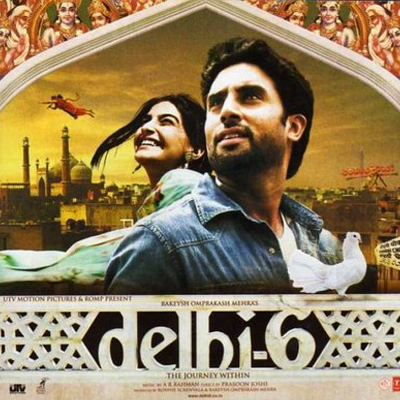
    NEW DELHI: The Delhi High Court has quashed a first information report against the Hindi film’Delhi 6’ which had alleged that a character in the film enacting the role of a lady sweeper (played by Divya Dutta) had been insulted and thereby the entire Balmiki Samaj had been insulted.


    The Court observed that the film seen in its entirety generates empathy for the Scheduled Castes and Scheduled Tribes,


    The FIR had been filed by Delhi MLA Jai Kishan against film director Rakeysh Omprakash Mehra and others. It had been lodged under The Scheduled Castes and The Scheduled Tribes (Prevention of Atrocities) Act and The Protection of Civil Rights Act at the Mandir Marg police station in New Delhi in 2009.


    In its judgment on a petition by Mehra and others, Justice Manmohan said: “The present film seen in its entirety generates empathy for Scheduled Castes and Scheduled Tribes. No intention to insult the members of Scheduled Castes or Scheduled Tribes community can be attributed to the petitioners in the present case.”


    “The present film in no manner supports the practice of untouchability in any manner. The acts attributed to the petitioners do not amount to preaching and practicing untouchability….” Justice Manmohan stated.


    Allowing the plea, Justice Manmohan observed in his 37-page judgment that “in fact, a film is an expression of an idea which is protected by Article 19(1) (a) of the Constitution of India. Freedom of expression is of inestimable value in a democratic society based on the rule of law. Our written Constitution guarantees not only freedom of speech but also freedom after speech”.


    Justice Manmohan also dismissed the plea by the complainant that an FIR could not be quashed when the investigation was on, saying that “this Court has the power to quash an FIR under investigation at the initial stage itself”.


    Seeking quashing of the FIR, counsel for the petitioners submitted that the film conveyed a strong message to the public at large against the caste system and was not intended to hurt the sentiments of any section or society.


    Petitioners’ counsel further submitted that the impugned FIR had been lodged by the MLA only to gain cheap popularity and with an ulterior motive for wreaking vengeance on the petitioners who were attempting to create awareness about the condition of the Scheduled Castes community.


    The film starring Abhishek Bachchan with Sonam Kapoor and Waheeda Rehman among others, had been inspired by a real-life incident that had occurred some years earlier in the walled city

  • UTV wins case against Percept Pictures

    UTV wins case against Percept Pictures

    MUMBAI: UTV has won a case against Percept Pictures regarding the copyright dispute of its film Shoebite.

    The latter filed a case against Shoojit Sircar, the director of the film, and UTV Motion Pictures asking them to desist from infringing their copyrights in the script and dialogue of their film Johnny Walker.

    On July 16 2008, an order was passed in favour of Percept restraining UTV from proceeding with the shooting of the film. However, even after UTV filing an appeal against the order, the suit was pending for hearing.

    On May 2 last year, the matter finally came up for hearing before the mediator appointed by the Delhi High Court Mediation Cell. Finally in March this year, the Honorable Court dismissed the suit filed by Percept and upheld UTV‘s stand on the issue.

  • Delhi High Court grants copyright protection for Speedy Singhs

    Delhi High Court grants copyright protection for Speedy Singhs

    MUMBAI: Following that of Singham and Bodyguard, the Delhi High Court has given the much-needed relief to Hari Om Productions, producer of Speedy Singhs, towards its copyright protection a day before its release on 22 September.

    The production house had moved the HC against a few cable operators and against unknown defendants for a temporary and permanent injunction for any copyright infringement.

    After hearing the producer‘s lawyers, the Delhi HC passed the ‘John Doe Order‘ against all the defendants, including unknown persons, restraining them from, in any way displaying, releasing, showing, uploading, downloading, exhibiting, playing, defraying the movie Speedy Singhs, without a proper licence from its producers.

    The order also restrains those who may wish to release or distribute the film without permission through CD, DVD, Blu-ray, VCD, Cable TV, DTH, internet, MMS, tapes, conditional access system or other media. The order is valid till December 19, 2011.

    The term ‘John Doe Order‘ is used to describe an injunction sought against someone whose identity is not known at the time it is issued.

    While the makers of Singham got the order from the Delhi High Court in July, Reliance Entertainment got the same in August for Bodyguard.