Tag: Delhi High Court

  • Jindal vs Zee Media: Jindal denied permission by NBSA

    Jindal vs Zee Media: Jindal denied permission by NBSA

    NEW DELHI: The News Broadcasting Standards Authority (NBSA) today denied the plea of steel magnate Naveen Jindal to amend the relief sought since the matters raised by him against Zee Media Corporation. The reason being that the matter was already pending before the Delhi High Court and the Election Commission of India.


    It also said it would not be able to entertain the complaint.


    NBSA chairperson justice R V Raveendran said, “It will not be appropriate to permit the complainant to amend the relief sought, to get over the bar contained under second provision to Regulation 7.2.”


    However, the NBSA said, “If Jindal wants to file a complaint under the regulations, independent of the subject matter of the suit, it is open to him to take action as is permissible in law/in accordance with the regulations.”


    The second proviso to Regulation 7.2 of the NBSA Regulations reads, “Provided that nothing in these regulations shall be deemed to empower the authority to hold an enquiry into any matter in respect of which any proceeding is pending in a court of law or other tribunal or statutory authority.”


    Jindal, then Member of Parliament, had filed a complaint on 18 March 2014 to the Election Commission of India against Zee News, Zee Business and Zee News (UP) channels with regard to the contents of certain news broadcasts on 7 March, 10 March and 16 March. It sought a direction to Zee News and its associated channels not to air what he termed “false, defamatory, misleading news items against him and his company.”


    The Election Commission of India forwarded the complaint to NBA on 20 March so that NBSA could consider the complaint and take such action as it deems appropriate. NBSA considered the complaint at its meeting on 21 March and decided to issue a notice to the broadcaster calling upon them to file its response. Both parties were also called for a hearing today. While Jindal was represented by lawyers, Zee Media (legal) vice president Sanjay Jain was present along with his lawyers at the hearing.


    In its response of 8 April, Zee Media Corporation alleged that Jindal had filed a suit before the Delhi High Court on the very same allegations, seeking permanent and mandatory injunctions as also damages; that Jindal also moved for an application for temporary injunction; and that the application had been rejected on 1 April.


    The broadcaster also contended that in view of Regulation 7.2, Jindal cannot pursue any remedy before NBSA when a suit is pending on the same issue.


    The matter was heard on 1 May and the NBSA found that both the complaint and the suit are based on the same facts and grievances and the reliefs sought are also the same.


    Jindal’s counsel submitted that the complaint was to the Commission and not to NBSA and he may be permitted to pursue it before the Commission. 

     

  • Delhi HC directs India News over copyright case

    Delhi HC directs India News over copyright case

    MUMBAI: India TV and India News- two News channels with glaringly similar names. That is what India TV appealed to the Delhi HC way back in 2008 when India News was launched. The case on identity usage of the umbrella brand ‘India’ was contended by the Rajat Sharma led channel.


    An order was passed last year directing India News to run communication either as a tickr or scroll stating that it is not associated with India TV. The latter states that recently it noticed the channel not complying with the order and filed a contempt petition in the HC.


    The order that was passed last week has directed the channel to run a continuous scroll on their channel till the judgement on the case is passed. Another hearing on the case is to happen in the coming few months.


    India TV had also stated in its petition that its revenues were being impacted due to the similarity of name. The court has also ordered India News to submit its revenue accounts with the court.

  • Disney takes Antipiracy Action against Mark Labels

    Disney takes Antipiracy Action against Mark Labels

    MUMBAI: The Walt Disney Company, together with its subsidiaries and affiliates, is a leading diversified international family entertainment and media enterprise with five business segments: media networks, parks and resorts, studio entertainment, consumer products and interactive media.  Disney is now a household word in most countries, including India.  The Disney brand extends to virtually all types of merchandise including toys, apparel, home décor, books and magazines, foods and beverages, stationery, electronics and fine art. Across the globe, the Disney name is synonymous with quality and compliance with safety standards. To ensure this, Disney works closely with multiple agencies around the world to protect our Intellectual Property and Brand.  These agencies identify piracy at all levels and then take the appropriate action to stem it.

    As part of its ongoing enforcement campaign, Disney India this week cooperated with the  officers  of  Shivari Police Station  (Mumbai) in their raid against the target  Mark Labels, wholesale dealers of stationery and other products operating out of its office and godown on Raey Road in Mumbai.  Over 1673 units of counterfeit goods were seized. The owner/proprietor of the stores, Mr. Hitesh Jain was arrested on charges of criminal counterfeiting. Investigations are ongoing to identify the source and/ or locations of the manufacturers of these seized goods, who will also be prosecuted as appropriate.

    Disney already has a temporary injunction against Mark Labels from the Delhi High Court restraining them from infringing Disney’s intellectual property rights. The civil suit against Mark Label for injunction and damages is pending before the Delhi High Court.

    “We see this as a good first step to protect the integrity of the products that consumers buy from a trusted brand.  Disney’s consumer products in India span across multiple lines fashion apparel, home, toys, consumer electronics, stationery, food, health and beauty and publishing. We applaud the efforts of the Police Officers of Shivari Police Station in not only protecting the rights of trusted brand owners, but also protecting Indian consumers from purchasing falsely branded and inferior products”, said Roshini Bakshi, VP and Head of Consumer Products, Retail, Publishing & Franchise Marketing, DCP Shared Services, India

    Disney has renewed its focus on counterfeiting within India.  Disney’s efforts include working with government agencies and local police.  To assist in these efforts, Disney asks that the public report any suspected infringements through an email account Tips@DisneyAntipiracy.com, which it has set up for this purpose.  Disney takes a serious note of any suspected violation of its intellectual property rights and cooperates with the appropriate agencies to pursue violators.   

  • Ad cap case adjourned till 15 July

    Ad cap case adjourned till 15 July

    Updated: 05:04 pm


    NEW DELHI: The Delhi High Court today adjourned to 15 July the final hearing of a bunch of petitions challenging the ad cap sort to be imposed by the Telecom Regulatory Authority of India (TRAI), even as it said the regulator will not take any coercive action under the ad-cap regulations.
     

    The adjournment by Chief Justice G Rohini and Justice Rajiv Sahai Endlaw was allowed after counsel Neeraj Krishna Kaul representing the News Broadcasters Association (NBA) sought more time to file a rejoinder.


    The bar on coercive action by TRAI had been given in an earlier hearing and remains in force. However, the Court had said the petitioners have to submit a weekly report on the consumption of commercial airtime in a clock hour.


    TRAI Counsel Saket Singh opposed the adjournment noting that the matter had come up earlier before the Telecom Disputes Settlement and Appellate Tribunal (TDSAT) but has been transferred to the High Court after the Supreme Court ruled that TRAI regulations could not be adjudicated upon by the Tribunal.


    He said a lot of time had been, and in any case the Cable TV Networks (Regulations) Rules of 1994 were clear about the ad cap and TRAI had only sought to implement that.
     
    However, Kaul argued that the case involved important constitutional issues as they were cases where the freedom of the press and freedom of speech and expression are involved and the case cannot be decided without having all facts on record.
     
    Earlier in the hearing on 13 March, TRAI sought early hearing in the case on the ground that it had filed its affidavit and the court gave time to NBA to file its rejoinder.


    The NBA had challenged the ad cap rule, contending that TRAI does not have jurisdiction to regulate commercial airtime on television channels.


    Apart from the NBA, the petition have been filed by Sarthak Entertainment, Pioneer Channel Factory, E24 Glamoru, Sun TV Network, TV Vision, B4U Broadband, 9X Media, Kalaignar, Celebrities Management, Eanadu Television and Raj Television.


    The news and regional broadcasters fear that the capping of commercial airtime will curtail their ad revenues. They also argue that the ad cap must be brought only after the benefits of cable TV digitisation start kicking in.


    Earlier, the Court had also granted interim relief to Hyderabad-based MAA Television Network against the ad cap regulation. However, the court had also observed that the cap on advertisements is a ‘reasonable exercise’.


    The broadcasters had on 17 December challenged the ad cap rule in the Court after TDSAT had dismissed their appeal in the wake of the apex Court judgment that the tribunal does not have jurisdiction over TRAI regulations.


    Four major broadcast networks—Star India, Zee Entertainment Enterprises, Multi Screen Media and TV18 Group—are following the regulation. 

  • Indian copyright law is one of the strongest in the world: USTR report

    Indian copyright law is one of the strongest in the world: USTR report

    NEW DELHI: Despite vehement and exhaustive submissions arraying the strength of the Indian IP regime, India continues to be on the watch list in the United States Trade Representative (USTR) 2014 Special 301 Report.


    Others in the list are China, Russia, Algeria, Argentina, Chile, Indonesia, Pakistan, Thailand and Venezuela.


    The report, however, commends India for its achievements like digitisation and upgradation of IP offices and active copyright enforcement by the Delhi High Court through injunctive relief, to name a few. In the report, the US has also recognised the role of bilateral engagements between US and India to resolve concerns relating to Intellectual Property.


    “FICCI in its response to Hearing Testimony of India before USTR had strongly asserted that India has a well-established legislative, administrative and judicial framework to safeguard IPRs which meets its obligations under TRIPS, and has withheld the test of severe international scrutiny. We are glad to note that India has not been given the Priority Country status as this could have had serious ramification on economic, political and trade sanctions”, according to FICCI secretary general Dr A Didar Singh.


    “Indian IP law is TRIPS Compliant and more. Indian copyright law is one of the strongest and best in the world. India protected computer programmes by copyright much earlier than the US. The Indian Copyright Act 2012 law is in full conformity with international treaties of WIPO. The legislative and statutory measures are supplemented by appropriate administrative measures by the Governments both at the Centre and in the States for enforcement of IPRs; this includes Inter-Ministerial Committee on Enforcement of IPR laws, Copyright Enforcement Advisory Council (CEAC), Enforcement Cells, Intellectual Property Appellate Board (IPAB) and Automated Recording and Targeting System (ARTS) portal of Central Board of Excise and Customs (CBEC).”


     The national IP strategy gives utmost importance to IPR Portfolios. Recent upgradation of the Intellectual Property Offices in accordance with the international standards has been one of the significant steps taken by the Indian government to make it more service oriented and user friendly.


    With effect from 15 October 2013, Intellectual Property Office (IPO) has also started functioning as International Search Authority (ISA) and International Preliminary Examining Authority under PCT.

  • Case by MSOs challenging Entertainment Tax to be heard on 27 May by DHC

    Case by MSOs challenging Entertainment Tax to be heard on 27 May by DHC

    NEW DELHI: Three multi-system operators were given interim relief in January in the entertainment case issue. In January, the case was adjourned to 13 March and today has further been adjourned to 27 May by the Delhi High Court. However, the HC said that the stay order issued earlier in January to multi-system operators in entertainment tax issue will continue.


    DEN Networks, Hathway Cable & Datacom, and Siticable had moved the court seeking protection against the Entertainment Tax Officer’s order to pay entertainment tax.


    Acting Chief Justice B D Ahmed and Mr Justice Siddharth Mridul gave the order on a plea by counsel for the petitioners.


    DEN Networks, Hathway Cable & Datacom, Siti Cable and InCable were ordered to pay entertainment tax due since April 2013.


    Orders were issued directing the four MSOs to file returns and deposit the pending tax amount with interest under the Delhi Entertainment and Betting Tax Act and Rules, 1996.


    The MSOs argued that it was the local cable operator who should pay the entertainment tax. They had moved the Court to prevent any coercive action.


    DEN and Hathway argued in the last hearing that they are not liable to pay entertainment tax from April since they have started consumer billing only from November. DEN also argued that the entertainment tax must be collected only on actual collections. The MSO also sought clarity from the tax department whether entertainment tax is paid on per subscriber or per set-top box (STB) basis. While Siti Cable adhered to pay entertainment tax, it challenged the quantum of the tax. IMCL 

  • Hearing on Kantar petition adjourned till 11 July

    Hearing on Kantar petition adjourned till 11 July

    MUMBAI: The Delhi High Court today adjourned hearing on a petition by Kantar Market Research Services challenging the government’s cross-shareholding norm for television rating agencies till 11 July.


    The court had earlier stayed operation of the cross-shareholding norm till the case is disposed of. And in accordance with the court’s directive, TAM Media Research, which is jointly owned by Kantar and Nielsen, last month applied to the Ministry of Information & Broadcasting for its registration as a television ratings service.


    The cross-shareholding norm, which came into effect from 15 February, debars shareholders owning more than 10 per cent of a television rating agency from having stakes in broadcasters and advertising agencies.


    TAM has also been allowed to continue publishing its television ratings till the court decides on the Kantar petition.


    Kantar had today sought adjournment of the case to April but the court decided to have the next hearing only in July.


    The election commission on Wednesday announced the dates for the 9-phase polling for Lok Sabha elections and the results would be announced on May 16.


    With the announcement of the election schedule, the election code of conduct came into effect which bars governments from taking any policy decisions.

  • Disclaimer ends the PepsiCo vs. MSM dispute

    Disclaimer ends the PepsiCo vs. MSM dispute

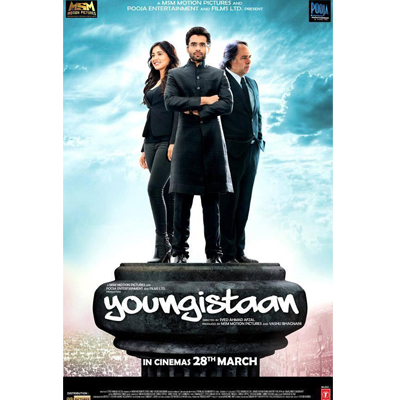
    MUMBAI: The case filed by cola giant PepsiCo against MSM Motion Pictures and Vashu Bhagnani-owned Pooja Pictures over use of the title ‘Youngistaan’ for their upcoming movie starring Jackky Bhagnani, Neha Sharma, Boman Irani and late Farooq Sheikh, has been dissolved with both parties agreeing to a settlement.


    Following a hearing at the Delhi High Court by Justice A K Pathak, it was agreed upon by both parties that a disclaimer will be displayed not only at the beginning of the movie when it releases in theatres on 28 March but also in non-theatrical trailers, the official website of the film, the official twitter account, official facebook account and the official YouTube page. The disclaimer reads: “This movie is not related to or associated with, sponsored or promoted in any manner by Pepsi or Pepsi’s Youngistaan Campaign” and will be effective 15 March onwards.


    Apparently, there was talk of the disclaimer even yesterday but PepsiCo finally relented only today. Asked about the same, a spokesperson for Singh & Singh, the law firm representing the cola company, simply said, “The defendants (MSM Motion Pictures and Pooja Pictures) worded the disclaimer the way we wanted it to be. Hence, we agreed to it.”


     It was in January this year that Singh & Singh sent legal notice to MSM Motion Pictures and Pooja Pictures, alleging that the title of their upcoming film, Youngistaan, was an infringement of their client’s (PepsiCo’s) registered trademark.  


    The objections raised by PepsiCo notwithstanding, MSM Motion Pictures and Pooja Pictures went ahead and announced the launch of their film on 6 February. PepsiCo then moved the Delhi High Court on 12 February, and its plea said, “Restraining them (the producers) from launching their movie under the impugned title ‘Youngistaan’ which is nothing but a blatant imitation of the plaintiff’s (PepsiCo) registered trademark.”


    The hearing was earlier slated for 24 February however, it was postponed to 3 March as the judge was on leave. On 3 March, the case was adjourned as MSM Motion Pictures and Pooja Pictures had sought more time.

  • TRAI’s ad cap regulation is reasonable: Delhi HC

    TRAI’s ad cap regulation is reasonable: Delhi HC

    MUMBAI: Another challenger to the ad cap petition has got relief from the Delhi HC regarding a Telecom Regulatory Authority of India (TRAI) regulation on restricting advertisement duration in an hour to just 12 minutes. Maa Television, a leading Telugu GEC, has been asked to tag along with other petitioners such as the News Broadcasters Association (NBA), Sun TV, E24, Pioneer Channel Factory on 13 March.


    During the course of the hearing, the bench of acting chief justice B D Ahmed and justice S Mridul observed that “Twelve minutes of advertisement in 60 minutes of a programme is ridiculous. The content becomes an advertisement and the ads become the content.”


    The bench also supported TRAI’s decision of bringing in ad cap amongst broadcasters. “What TRAI is doing is reasonable. Take an opinion poll. Everyone will say no to advertisements,” remarked the bench.


    However, it also gave the channel an interim relief till the next hearing while asking it to submit its weekly advertising data to TRAI. It has restrained the regulator from taking any coercive measures against the channel.


    The NBA is leading the case. The case was initially with the Telecom Disputes Settlement Appellate Tribunal (TDSAT) and later shifted to the Delhi HC after the Supreme Court in a separate case stated that challenges to TRAI regulations cannot be heard at TDSAT.


    However, the lawyers, who are part of the case, think that the observation won’t have any significant impact on the hearing on 13 March.


    With less than a month, all parties involved are gearing up to submit their pleas to the court.

  • Kantar gets stay on cross-shareholding norms; TAM can continue publishing viewership ratings

    Kantar gets stay on cross-shareholding norms; TAM can continue publishing viewership ratings

    NEW DELHI: While declining to stay Policy Guidelines for Television Rating Agencies in India, the Delhi High Court today directed that the sections relating to cross-holding will not come into force till the conclusion of the petition by Kantar Market Research Services, a shareholder of TAM Media Research, the only television viewership rating agency in India.


    Fixing the next date of hearing for 6 March, Justice Manmohan also stayed sections 16.1 and 16.2 of the Guidelines, thus giving freedom to TAM to continue offering its ratings to its clients.


    Taking note of the undertaking by Mr Mukul Rohatgi, senior counsel for Kantar, the Court said TAM would get another two weeks to get registered as required by the Policy Guidelines.

    The Court also took note of the undertaking by Rohatgi that the full list of companies that are associated with TAM and their clients will be placed on the website within two weeks.


    The sections relating to cross-holding which state that the same company cannot hold shares in both TRP companies and the media are 1.7a and 1.7d.


    The earlier deadline for TAM Media Research to get registered under the Policy Guidelines was 15 February.


    When Rohatgi insisted on a stay of the policy guidelines till conclusion of this case, Justice Manmohan and Additional Solicitor General Rajeev Mehra said senior counsel Harish Salve who had argued on behalf of Kantar yesterday had made it clear that he was only fighting the issue of cross-shareholding. In fact, Justice Manmohan said Salve repeated this point at least five times.


    Rohatgi had sought to reiterate the point made by Salve that the policy guidelines had been issued through an executive action without any statutory authority of law.


    While Rohatgi filed an affidavit today listing companies that have a holding in Kantar, he assured the Judge that the list of clients would also be place shortly on the website and filed in the court.


    In his order, the Judge took note of the fact that both Salve and Rohatgi have argued that the guidelines are without the sanction of any statutory body.

    Kantar had argued yesterday that any action relating to fundamental rights had to be done through an act of Parliament and not by an executive order.

    Salve had said any attempt to regulate television rating agencies was tantamount to interfering with the freedom of speech and expression under Article 19(1)(a).


    The provisions of Policy Guidelines for Television Rating Agencies in India that have been stayed are:
     
    1.7 The company shall comply with the following cross holdings requirements.
     
     (a) No single company/ legal entity, either directly or through its associates or inter-connected undertakings, shall have substantial equity holding in rating agencies and broadcasters/advertisers/ advertising agencies.
     
     (d) A promoter company/member of the board of directors of the rating agency cannot have stakes in any broadcaster/ advertiser/advertising agency either directly or through its associates or inter-connected undertakings.
     
    16. PROVISIONS WITH RESPECT TO EXISTING RATING AGENCIES
     
    16.1 These guidelines shall also be applicable to the existing rating agencies.
     
    16.2 No rating agency shall generate and publish ratings till such time that they comply with the provisions of these guidelines.