Tag: Delhi High Court

  • Early hearing on ‘India’s Daughter’ ban refused; HC to hear case on 11 March

    Early hearing on ‘India’s Daughter’ ban refused; HC to hear case on 11 March

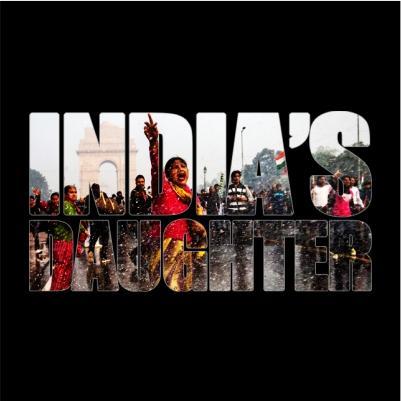
    NEW DELHI: Even as the film continues to be available on internet, the Delhi High Court refused to give urgent hearing to a public interest litigation (PIL) seeking lifting of the ban on telecast of a controversial documentary India’s Daughter featuring an interview of one of the four convicts in the 16 December gang rape case.  


    A bench of justices B.D. Ahmed and Vibhu Bakhru said there is no such urgency in the matter and it will be heard on Wednesday (11 March). 


    The court’s response came after two law students — Arun Menon and Kritika Padode — sought urgent hearing in their PIL, saying the ban on the documentary is a clear violation of their fundamental rights under Article 19 of the Indian Constitution.  


    The Information and Broadcasting Ministry also issued an advisory to all television channels to not broadcast the documentary.


    The government has sought an explanation from Tihar jail authorities over how the convict was interviewed while being in judicial custody.  


    A similar petition was filed last week, by a law student, who sought lifting of the ban on the ground that it is “nothing but an honest look at the mind and mindset of one of the convicted rapists of the young woman.”


    Today’s plea also sought direction to the Bar Council of India to expedite action against the two lawyer — advocate A.P. Singh and M.L. Sharma — who had allegedly made derogatory anti-women remarks in the documentary. 


    The plea also said that a direction be issued to the Supreme Court registry to constitute a three judge special bench to hear the appeals of the four death row convicts, which is pending since 25 August, 2014. The apex court in July had stayed the execution of the four convicts in the gang-rape and murder case.


    The other petition prepared by Vibhor Anand said that the public at large wanted to see the documentary as within 24 hours of its being put up on YouTube, it was viewed by more 2.86 lakh people. 


    Meanwhile, another bench of the High Court hearing another case relating to rape pulled up the Central and Delhi government for failing to make even a single documentary or use the visual medium in any manner to educate people about the nature of sexual offences and the stringent punishments involved.


    It also noted the ‘disgusting’ trend of people in high positions to make ‘vile’ statements while voicing their tasteless anti-women opinions. “What is in bad taste are the irresponsible and vile statements made very often by erudite people who hold reputable positions and place in diverse fields, and show no signs of shame while voicing their warped and misogynistic ideals,” said the court. 


    “We express our disgust and displeasure at the apathy and insensitivity of the Union of India and Delhi Government for having failed to take steps to produce even a single documentary or for that matter take the help of any other visual media to educate the people of Delhi, about the nature of sexual offences concerning women and child and create awareness amongst them about the existing laws and stringent punishments provided against such offences despite several directions having been given by this Court,” observed the division bench consisting of Justice Kailash Gambhir and Sunita Gupta, while also comparing this apathy to the efforts of a foreigner.


    “In contrast, one individual, a British filmmaker, could make a documentary film on the brutal gang rape that has managed to kick up a storm and trigger a furore in India,” said the court while hearing an appeal against a judgement sentencing a rape accused.


    The court further noted that the freedom of expression guaranteed under the Constitution was not absolute. “Clause (2) of Article 19 of the Indian Constitution enables the legislature to impose certain restrictions on free speech. And, these reasonable restrictions should be kept in mind by one and all before giving vent to their opinions and views.”


    Meanwhile, the news channel NDTV on International Women’s Day (8 March) showed a  blank screen at the time slated for the telecast with only a visual of a lamp, the words ‘India’s Daughters’ and a scroll running beneath it putting out statements issued by the Editors Guild of India and others. 


    The Guild slammed the government’s move to ban the film, calling the ban wholly unwarranted and based on misunderstanding of the power and the message behind the film.

  • India’s Daughter: Country takes a step towards judicial dictatorship

    India’s Daughter: Country takes a step towards judicial dictatorship

    MUMBAI: Nirbhaya, a name that garners sympathy whenever it is pronounced, but is sympathy enough for the daughter of the nation, who was brutally raped and murdered? What has changed after her sad demise? The answer is NOTHING.


    After the fatal incident that took place on 16 December, 2012, politicians used the name Nirbhaya to seek sympathetic affection. In other words, the name Nirbhaya became a part of dirty vote bank politics. What started as a revolt to abolish rape ended up becoming an empowerment scheme in the Indian government. And today the name is making headlines again. But for what? Have the rapists, who were responsible for her fatal death, been hung? No. There’s no cause to be so optimistic because such is not the case.


    A British film enthusiast Leslee Udwin has made a documentary titled “India’s Daughter” focusing on the brutal incident that took place in Delhi, three years back.  The documentary, which was aired by the BBC in the UK, features conversations with Mukesh Singh and fellow convicts who raped and tortured a 23-year-old woman on a moving bus in December 2012. Excerpts from the documentary irked lawmakers. The government of the world’s largest democracy has banned the telecast of the documentary in the country. The problem with the documentary is the interview given by the convicted Mukesh Singh. It is alleged that Singh used abusive content against women in India, which may hurt national sentiments. Was rape of Nirbhaya not enough to hurt national sentiments? How does a rapist’s reaction cause ban to a piece that was documented after two years of professional research?


    The other controversial point that emerged from the documentary is the interview that was scheduled in Tihar Jail. Let’s do a reality check, Tihar Jail in Delhi is the largest jail in South Asia and it is quite obvious that no one can interview a prisoner without the jailor’s permission. So if we put everything in perspective, two years ago a British film enthusiast, who has experience of acting in movies like Merchant Of Venice and producing 1999 British cult comedy East is East and its sequel, teamed up with a group of Indian, which includes a journalist, to make a documentary. After two years of research, analysis and interviews the documentary was scheduled to be premiered on International Women’s Day i.e. 8 March.


    NDTV, in a press release announced that its English news channel will telecast the interview-based documentary in India on International Women’s Day at 9 pm. However, the Delhi High Court spelled a verdict to hold the screening in India till further notice and hence the channel will not be airing the documentary as per schedule.


    Speaking to Indiantelevision.com, NDTV editorial director Sonia Singh says, “As there is a court order, we won’t be airing the documentary as of now.”


    “We are shocked at the ban and censorship. There will be no further comments,” adds a spokesperson from the channel.


    Now let’s scan through a few opinions that came from prominent personalities after the excerpts of interview were out on public platforms.


    Director and producer of the documentary Leslee Udwin told Indiatelevision.com that the film’s message conveyed that the time had come to respect women and not just treat them well. She was hoping for a sea-change.


    “An interview, which will defame India internationally is totally unacceptable,” said India’s Parliamentary Affairs Minister Venkaiah Naidu, on the Nirbhaya documentary.


    The honourable Minister, is no doubt aware of what happened to Draupadi in Mahabharata. Will he impose a ban on screening of the Mahabharata too, as it defames the integrity of a WOMAN?


    Home Minister Rajnath Singh went a step further. His tweet read, “The producers of documentary on Nirbhaya were required to take approval from the Jail authorities before telecast but they did not do so.”


    It is utterly surprising how a foreigner enters the largest jail in South Asia and conducts an interview, which is certainly not shot by a hidden camera without taking the necessary permissions. The incident signifies that there are no consensus in the lawmaking fraternity as someone might have allowed the developments which others had a problem with. Sharing his emotions the Home Minister tweeted, “I was personally hurt by this, spoke to authorities, made sure all steps were taken to stop the broadcast.”


    One wonders why, with all the power, doesn’t he increase the pace of judicial proceedings to ensure justice to Nirbhaya?


    Ex-cop woman-turned politician and BJP’s Delhi head Kiren Bedi’s opinion differs from other party leaders and was seconded by veteran journalist Rajdeep Sardesai. He opined, “@thekiranbedi strongly defends the telecast of the Nirbhaya documentary. I support her view!”


    Rajya Sabha member and famous scriptwriter and lyricist Javed Akhtar said, “It’s good that this documentary has been made. If anyone finds it objectionable, they should change their mindset.”


    Author Chetan Bhagat’s tweet read, “Lack of consent and banning free speech comes in the same category – violation of individual rights.” After watching the documentary online, Bhagat once again tweeted, “Documentary #IndiasDaughter is extraordinary. Moving, thought provoking. Makers have Nirbhaya’s parents consent. Available on YouTube for now.”


    India should not forget that filmmakers like Satyajit Ray and Ritwik Ghatak hail from the same country where every second thing is getting banned. The first Asian to win a Nobel Prize for literature was also an Indian and with all this censorship, we are not only demeaning the stalwarts but defaming our Motherland internationally. We compare ourselves with western countries and while they rejoice Argoand Zero Dark Thirty, we ban the screening of India’s Daughter.


    The rape itself is demeaning and there cannot be anything more defamatory than the brutal act. If India is so concerned about pride and integrity, the judiciary should put efforts in prohibiting such fatal and irrational acts instead of banning a fact-based documentary. Mukesh Singh’s interview makes my blood boil as it should every Indian’s. The fact that all men do not subscribe to the same thought can only be proved by action and not by words, by respecting woman and not demeaning them. The day all men in India take an oath of not raping, rape will be abolished and that will be the biggest manly act in independent India.

  • Delhi HC stays telecast of film on Nirbhaya; MIB asks channels not to show excerpts

    Delhi HC stays telecast of film on Nirbhaya; MIB asks channels not to show excerpts

    NEW DELHI: In a day of speedy action, the Delhi High Court today upheld the stay on telecast of a documentary based on interviews including one with a convict in the 16 December, 2012 Delhi gang-rape case. 

    The court also banned telecast of the documentary on the internet too. “Cops can act if the film is aired,” the Delhi high court said on Wednesday. 

    Earlier in the day, in statements in both the Lok Sabha and Rajya Sabha, Home Minister Rajnath Singh said the government will be moving the court, and also informed members that a police complaint was filed against the film, India’s Daughter produced and directed by British filmmaker Leslee Udwin and co-produced by Indian TV journalist Dibang. He said stay orders had been taken from a local court last night itself after he had learnt about the film. (The Rajya Sabha was adjourned for some time in the morning following an uproar by the opposition on the issue.)


    The Information and Broadcasting Ministry also posted an advisory on its website asking private television channels not to air excerpts from the film as this was violative of the Cable TV Networks (Regulation) Act 1995 and the Downlinking Guidelines and was also sub judice as an appeal by the main convicted Mukesh Singh was pending. Mukesh Singh along with three others was convicted and sentenced to death last year.


    In Parliament, the Home Minister admitted that the no-objection certificate to shoot the documentary featuring interview of convicted inmates in Tihar jail of cases related to atrocities against women was given by the ministry of home affairs on 24 July, 2013, adding that “in future, no one will be given permission to interview rapists.”


    “The government has taken necessary legal action and obtained restraining order from the court on disseminating the contents of the film,” he said. 

    “Our government condemns the incident of 16 December, 2012, in the strongest possible terms and will not allow any attempt by any individual group or organisation to leverage such unfortunate incidents for commercial benefits,” he said. 

    “The respect and dignity of women constitute a core value of our culture and tradition… our government remains fully committed to ensuring safety and dignity of women.” 

    The minister added that he had sought information regarding the conditions under which permission was given for the interview. “If needed, responsibility will be fixed (for granting permission),” Singh said while making the statement in the Lok Sabha. 

    He said permission was given by jail authorities to shoot the documentary, with condition of taking prior approval of jail authorities before publishing the research paper or for releasing documentary film which “is being made for totally social purposes without any commercial interest, as conveyed.”

    Other conditions included that only those inmates will be interviewed who give written consent, and that the complete unedited footage of the shoot in Tihar jail premises will be shown to jail authorities to ensure there was no breach of prison security. 

    “This documentary features one of the accused of the Nirbhaya case. It came to the notice of jail authorities that conditions have been violated. Hence a legal notice was issued to them on April 7, 2014,” the Home Minister said. The minister said the documentary makers were asked to return the unedited footage and also not to show the film as it violates the permission condition.

    “The documentary film was shown to jail authorities where it was noticed that the documentary film depicts the comments of the convict which are highly derogatory to dignity of women,” he said. 

    A physiotherapy student was raped and assaulted with an iron rod after she was tricked into boarding an unregistered private bus to go home after watching a movie with a male friend on December 16, 2013. The girl later died in a hospital in Singapore.

    Mukesh Singh, one of the convicts in the gang-rape case, justified the action in the documentary, saying women who go out at night had only themselves to blame if they attracted the attention of molesters. 


    Reacting to the Delhi High Court’s order, producer-dorector Leslee Udwin told indiantelevision.com that she was confident that the film would ultimately be telecast in India after a senior government official sees the film. She also said that due permissions had been obtained and the film has even been shown to the jail authorities. She said that this film however will be shown in other countries. She wondered how anyone could go to court and file a PIL without seeing the film in its entirety and merely based on media reports. 

  • IBF asked to file affidavit in Kantar case; matter put off to 12 May

    IBF asked to file affidavit in Kantar case; matter put off to 12 May

    NEW DELHI: The Indian Broadcasting Foundation (IBF) was today formally impleaded in the Kantar case in Delhi High Court and asked to file its affidavit in the matter.


    Thereafter, Kantar Market Research will file its rejoinder and the matter has been fixed by Justice Rajiv Shakder to 12 May.


    The case had been filed by Kantar Market Research challenging the Policy Guidelines for Television Rating Agencies in India, and in particular on the clause relating to cross-media ownership. The matter had come up last in September 2014.


    Meanwhile, the interim order on the case will continue that will allow Kantar’s subsidiary TAM Media Research to publish ratings till the verdict on the case is out.


    Although TAM and Broadcast Audience Research Council (BARC) were the only two applicants under the guidelines as of December 2013, TAM has still not received any response from the Information and Broadcasting Ministry on its application.


    The News Broadcasters Association (NBA) has been impleaded early in the case in favour of the guidelines.


    While declining to stay the Guidelines in February last year, Justice Manmohan had stayed sections 16.1 and 16.2 of the Guidelines, thus giving freedom to TAM to offer ratings to its clients.


    The sections relating to cross-holding, which state that the same company cannot hold shares in both TRP companies and the media are 1.7a and 1.7d.


    Kantar had argued that any action relating to Fundamental Rights had to be done through an act of Parliament and not by an executive order. Any attempt to regulate television rating agencies was tantamount to interfering with the freedom of speech and expression under Article 19(1)(a), it had argued. 

  • Sony files copyright infringement case against ‘Badmashiyaan’; Delhi HC restraints release

    Sony files copyright infringement case against ‘Badmashiyaan’; Delhi HC restraints release

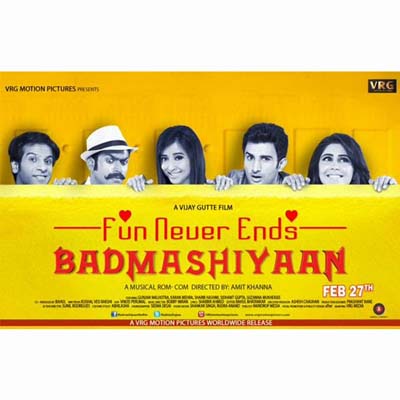
    MUMBAI: The Delhi High Court today has put on hold the release of the Bollywood film Badmashiyaan on a plea filed by Multi Screen Media (MSM), which is the Indian subsidiary of Sony Entertainment Television, alleging copyright infringement by the movie’s producers.


    Justice Indermeet Kaur has restrained the producers of the film from airing trailers of the movie, which according to MSM, is a copy of a Korean film titled Couples as well as its own production Mango, which is yet to be released.


    The court, in its interim ex-parte order, also issued notice to VRG Motion Pictures, which has produced the film as well as Sidus FNH Corporation, the producer and copyright owner of the Korean film, and has sought their replies by 22 May, 2015.


    MSM, in its petition has also sought damages of Rs 25 lakh from VRG for infringing its copyright. It has contended that rights to make a Hindi remake of Couples was obtained by co-producer Kaleidoscope Entertainment (KEPL) from Sidus FNH in March 2013. Thereafter, MSM and KEPL entered into a film production agreement, before commencement of production of the film, and “hence MSM is the first owner of copyright in and to the said film,” the petition claimed.


    Mango, was produced in 2013-2014 while its trailers were exhibited in February-March 2014. In January this year MSM and KEPL had come across trailers of Badmashiyaan on YouTube and found that the movie was an adaptation of the Korean movie as well as that of Mango.


    It was also alleged that the producer of Badmashiyaan copied the plot, treatment and screenplay of Couples as well as Mango. Badmashiyaan, starring Suzanna Mukherjee, Sharib Hashmi, Siddhant Gupta, Gunjan Malhotra and Karan Mehra, was slated for release on 27 February.

  • Prasar Bharati moves SC against Delhi HC judgment on World Cup telecasts

    Prasar Bharati moves SC against Delhi HC judgment on World Cup telecasts

    NEW DELHI: Prasar Bharati today filed a special leave petition in the Supreme Court (SC) to appeal against the judgment of the Delhi High Court (HC) barring it from sharing signals of the ICC World Cup Cricket 2015 with cable operators.


    The leave petition presented by Attorney General Mukul Rohatgi is expected to come up for hearing on 10 February.


    In its judgment, the HC had refused to strike down the must carry clause under which cable operators have to carry signals of Doordarshan.


    A bench of Justices Badar Durrez Ahmed and Sanjeev Sachdeva passed the order on the plea of Board of Control for Cricket in India (BCCI), ESPN and Star who had contended that cable TV operators were getting live feeds through DD channels free of cost, resulting in loss of revenue for them.


    In its order, the Court refused to strike down a 2000 notification issued by Prasar Bharati, which made it mandatory for cable operators to carry DD National and DD News channels. Simultaneously, the court also rejected the additional prayers by ESPN Star to strike down Section 3 of the Sports Act, which makes it mandatory for them to share with Prasar Bharati the live feed of sporting events of national importance.


    DD officials said the Mandatory Sharing Act was clear that matches would have to be shared with DD on its terrestrial network and via its direct-to-home Freedish. An official said the directive by the Court appeared to be a precautionary measure aimed at warning cable operators who pirate the signals and not Doordarshan.


    In the order, the Court had said, “The appeal as well as writ petition (civil) 8458/2007 are allowed to the extent that the live broadcasting signal shared by ESPN/Star by virtue of the Sports Act with Prasar Bharati, shall not be carried in the designated Doordarshan channels under the must carry obligation cast by the Cable TV Network Act on cable operators. This shall operate prospectively.”


    In its directive, the Court had observed that while the advertisement revenue received by DD in respect of the shared content of the sports channels was to be shared in the ratio of not less than 75:25, “it still does not cater to the loss of subscription revenue” by ESPN and Star.


    BCCI, Nimbus Communications and the two sports channels (ESPN and Star) had challenged the high court’s single judge November 2007 order rejecting their pleas that no cable television network, Direct-to-Home (DTH) Network, multi-system network or local cable operator could broadcast such sports events without a licence from the content owners.

  • DD to appeal against Delhi HC’s order barring sharing of 2015 WC feed with cable ops

    DD to appeal against Delhi HC’s order barring sharing of 2015 WC feed with cable ops

    NEW DELHI: The countdown to the 2015 Cricket World Cup has begun, and even as teams gear to battle it out on ground, back home, public broadcaster Doordarshan is up for another challenge. This, after the Delhi High Court on 4 February came out with its order which barred Doordarshan from sharing the live feed of the 2015 Cricket World Cup, of which ESPN and Star have the exclusive broadcasting rights, with cable operators.


    While this seems like a good news for broadcaster Star India, which could now be hoping for renewing all its distribution deals with multi system operators (MSOs) for its sports channels after its decision of moving to Reference Interconnect Offer (RIO) deals; the pubcaster is all set to appeal against this order in the Supreme Court.


    As per DD legal experts, an appeal will be filed in the Supreme Court since the directive of the High Court militates against the must-carry clause and the Sports Broadcasting Signals (Mandatory Sharing with Prasar Bharati) Act 2007.


    A Prasar Bharati official confirmed that the matter had been discussed with the legal consultant Rajeev Sharma this morning and the appeal would be filed shortly.  


    Several MSOs in the capital also confirmed to indiantelevision.com that they were planning to either file an independent appeal or intervene in the appeal to be filed by Doordarshan or Prasar Bharati.    


    A MSO on condition of anonymity said, “The order has come out only yesterday, we are yet to get a copy of the order. Once that happens, we will read it thoroughly and decide on our next move.”


    He further added, “As per the law, we have to carry 24 Doordarshan channels, but we do not control the content that is being aired on its channels. We will meet the Ministry to get a clear understanding of what the next move should be.”


    A bench of Justices Badar Durrez Ahmed and Sanjeev Sachdeva passed the order on the plea of Board of Control for Cricket in India (BCCI), ESPN and Star who had contended that cable TV operators were getting live feeds through DD channels free of cost, resulting in loss of revenue for them.


    Another MSO said, “Since we are under a mandatory obligation of must- carry of DD channels, it is surprising that the Information and Broadcasting Ministry did not intervene in the matter in the Delhi High Court.”


    MSOs and LCOs said that this also violated their fundamental right to do business. MSO and LCO representatives told indiantelevision.com that they feared that they may be forced to shut DD channels at the time of the matches on the ground of technical fault as had often been done previously.


    In its order, the Court refused to strike down a 2000 notification issued by Prasar Bharati which made it mandatory for cable operators to carry DD National and DD News channels. Simultaneously, the court also rejected the additional prayers by ESPN Star to strike down section 3 of the Sports Act, which makes it mandatory for them to share with Prasar Bharati the live feed of sporting events of national importance.


    DD officials said the Mandatory Sharing Act was clear that matches would have to be shared with DD on its terrestrial network and via its direct-to-home Freedish. An official said the directive by the Court appeared to be a precautionary measure aimed at warning cable operators who pirate the signals and not Doordarshan.


    In the order, the Court had said, “The appeal as well as writ petition (civil) 8458/2007 are allowed to the extent that the live broadcasting signal shared by ESPN/STAR by virtue of the Sports Act with Prasar Bharati, shall not be carried in the designated Doordarshan channels under the must carry obligation cast by the Cable TV Network Act on cable operators. This shall operate prospectively.”


    In its directive, the Court had observed that while the advertisement revenue received by DD in respect of the shared content of the sports channels was to be shared in the ratio of not less than 75:25, “it still does not cater to the loss of subscription revenue” by ESPN and Star.


    BCCI, Nimbus Communications and the two sports channels (ESPN and Star) had challenged the High Court’s single judge November 2007 order rejecting their pleas that no cable television network, Direct-to-Home (DTH) Network, multi-system network or local cable operator could broadcast such sports events without a licence from the content owners.


    Broadcaster Star on its part is currently reading the judgment in detail and internal discussions are on. “We need to understand the nuances of the High Court order and then come up with a strategy which is both under law and our business practices,” said a source from Star.

  • Delhi HC bars DD from sharing 2015 World Cup feed with cable ops

    Delhi HC bars DD from sharing 2015 World Cup feed with cable ops

    NEW DELHI: Delhi High Court has barred public broadcaster Doordarshan from sharing the live feed of the 2015 Cricket World Cup, of which ESPN and Star have the exclusive broadcasting rights, with cable operators.


    A bench of Justice Badar Durrez Ahmed and Sanjeev Sachdeva passed the order on the plea of Board of Control for Cricket in India (BCCI), ESPN and Star who had contended that cable TV operators were getting live feeds through DD channels free of cost, resulting in loss of revenue for them.


    The Court however refused to grant relief of striking down a 2000 notification issued by Prasar Bharati which made it mandatory for cable operators to carry DD National and DD News channels. Simultaneously, the Court also rejected the additional prayers by ESPN Star to strike down section 3 of the Sports Act, which makes it mandatory for them to share with Prasar Bharati the live feed of sporting events of national importance.


    A DD official who did not want to be named told indiantelevision.com that under the Sports Broadcasting Signals (Mandatory Sharing with Prasar Bharati) Act 2007, DD could show the matches only on its terrestrial network and via its direct-to-home platform, Freedish. “The directive by the Court appeared to be a precautionary measure aimed at warning cable operators who pirate the signals and not Doordarshan,” the official said.


    A legal expert dealing with broadcasting laws told indiantelevision.com that since the ‘must-carry clause’ had not been struck down, it would be very difficult to prevent the local cable operators from showing the matches. The expert indicated that DD may need to approach the Court to seek clarity on the order.


    In the order, the Court said: “The appeal as well as writ petition (civil) 8458/2007 are allowed to the extent that the live broadcasting signal shared by ESPN/STAR by virtue of the Sports Act with Prasar Bharati, shall not be carried in the designated Doordarshan channels under the must carry obligation cast by the Cable TV Network Act on cable operators. This shall operate prospectively.”


    In its directive, the Court observed that while the advertisement revenue received by DD in respect of the shared content of the sports channels was to be shared in the ratio of not less than 75:25, “it still does not cater to the loss of subscription revenue” by ESPN and Star.

    BCCI, Nimbus Communications and the two sports channels (ESPN and Star) had challenged the High Court’s single judge November 2007 order rejecting their pleas that no cable television network, Direct-to-Home (DTH) Network, multi-system network or local cable operator could broadcast such sports events without a licence from the content owners.

  • Ad cap case adjourned to 24 March

    Ad cap case adjourned to 24 March

    NEW DELHI: The Delhi High Court today adjourned the petition by the News Broadcasters Association (NBA) and others challenging the advertising cap of 12 minutes per hour sought to be imposed by the government to 24 March.


    The bench was unable to hear the case today in view of the pendency of large number of part-heard matters.


    The assurance given by TRAI to not take any action against any channel pending the petition, will continue and the Court has, at the regulator’s instance, directed that all channels to keep a record of the advertisements run by them. It can be noted that the ad cap case was adjourned to 21 January, 2015 when it last came up for hearing on 20 November, 2014.


    During the hearing on 25 September, NBA counsel Nisha Bhambani had sought adjournment in view of the senior counsel S Ganesh not being in Delhi.


    Earlier on 15 July, the Court had adjourned the case as the final hearing of the bunch of petitions challenging the ad cap sort to be imposed by TRAI as the authority had not finalised its rejoinder.


    The case had been previously heard in the High Court on 17 December, 2013 and 13 March, 2014.


    The NBA had challenged the ad cap rule, contending that TRAI does not have jurisdiction to regulate commercial airtime on television channels.


    Apart from the NBA, the petition have been filed by Sarthak Entertainment, Pioneer Channel Factory, E24 Glamoru, Sun TV Network, TV Vision, B4U Broadband, 9X Media, Kalaignar, Celebrities Management, Eanadu Television and Raj Television.


    The news and regional broadcasters fear that the capping of commercial airtime will curtail their ad revenues. They also argue that the ad cap must be brought only after the benefits of cable TV digitisation start kicking in.

  • Delhi HC wants to know if DTH players can run FM channels and VAS

    Delhi HC wants to know if DTH players can run FM channels and VAS

    NEW DELHI: The Delhi High Court has sought a response of the Information and Broadcasting Ministry and six direct-to-home (DTH) operators on a public interest litigation seeking to restrain DTH service providers from carrying any channel or value added service (VAS) which are not registered with or permitted by the government.

    The court passed the order on the plea of Hyderabad-based NGO Media Watch-India (MWI) which alleged that DTH service providers carry self-promotion advertisements in violation of uplinking and downlinking guidelines.

    Listing the matter for 4 March next year, a bench of Chief Justice G Rohini and Justice P S Teji issued notice to the Ministry as well as six DTH providers – Bharti Telemedia, Tata Sky, Dish TV, Sun Direct TV, Reliance Big TV and Bharat Business channel.

    Counsel Gaurav Kumar Bansal said that value added services like ‘movie on demand’ or games are provided without specific licence from the Ministry. The NGO has said that even FM radio channels are being illegally provided and has sought orders restraining the DTH operators from providing these services.

    The petitioner contended that the Ministry instead of taking action against these entities has been playing the role of a spectator while “statutory guidelines are being flouted with impunity by the private DTH operators”.

    Meanwhile, the Telecom Regulatory Authority of India (TRAI) had recently issued a consultation on regulating platform services of service provider including MSOs cable operators and DTH operators and has also given the recommendation on 19 November which are under consideration of the Ministry.