NEW DELHI: If the cable operators of Delhi have their way, then conditional access system (CAS) would be rolled out by them tomorrow.
So upbeat are they with yesterday’s Delhi high court order, quashing denotification of the Capital from the addressability map, that they conveyed today to the I&B ministry that they would go ahead with a tentative date of 15 December for implementation.
However, a government official, who met a delegation of representatives from various multi-system operators (MSOs) today, was cautious in his approach and, reportedly, told the delegation that the ministry would have to study the court order properly.
A copy of the certified court order was handed over to the official today by the enthusiastic cable industry delegation.
That the government was not exactly happy with the turn of events was clear when some officials told indiantelevision.com later this evening that the law ministry had been instructed to examine the High Court order for loopholes, if any.
Meanwhile, even if the path in Delhi seemed to have been smoothened out, Mumbai remains a thorn in the CAS crown for cable ops and the government.
“I don’t think the high court order would make any difference to the stand of the Shiv Sena on CAS in Mumbai,” party Member of Parliament Sanjay Nirupam told indiantelevision.com.
Meanwhile, when contacted, a ministry official said that it is highly unlikely that the government would go in for an appeal against the high court order. “But the court order has to be studied properly before we can spell out a future course of action,” the official added.
Still, an upbeat Zee Telefilms vice-chairman Jawahar Goel and head of Siti Cable said, “The Delhi cable ops have decided in principle to start implementing routing all pay channels through boxes from 15 December to slowly educate the cable subscriber about CAS.”
Though he indicated that the set-top boxes, needed to access pay channels, would cost a bit more (slightly over Rs. 3,000) than what they did, say, four months back, Goel said, “A final picture would emerge after another round of meeting of MSOs is held tomorrow.”
According to a senior executive of Hathway Datacom, the government also wanted to know from the cable industry about their preparedness and opinion on CAS. “We conveyed to the government the situation of boxes, especially those which are lying in godowns,” the Hathway executive added.
If the cable industry is to be believed, then all the MSOs put together, there would be about 700,000 boxes in the country.
If CAS is to be rolled out in the south zone of Delhi, as had been mandated earlier, then ideally approximately 350,000 boxes would be need if the demand is 100 per cent. But the cable ops feel that in the first six months or so, only 50 per cent of the cable homes are likely to go in for set-top boxes in the designated area in Delhi.
Those who attended today’s meeting with the I&B ministry include Ashok Mansukhani from HTMT (INCablenet), Hathway Datacom CEO K. Jayaraman and the vice-president (north) S.N. Sharma, Vittal from Sumangli, Roop Sharma, independent cable operator and Cable Network Association’s Rakesh Dutta and a representative from RPG, amongst others.
Still, what is interesting is that the Delhi cable ops and MSOs here are not clear what would be the pricing for pay channels if CAS is to be rolled out. While Goel said negotiations with broadcasters would be held over the next few days, National Cable & Telecom association president Vickky Chowdhry said that he’d go by the rates put out by pay broadcasters in July.
What happens if cable subscribers don’t go in for CAS and would still like to get all the pay channels? Emboldened by the court order, the cable ops are in no mood to give anything free.
Is this the turn of some consumer interest group to move the court? A possibility that cannot be ruled out, some resident welfare associations of South Delhi said.
Tag: Delhi cable
-
Delhi cable ops upbeat with HC order, may implement CAS by 15 Dec.
-
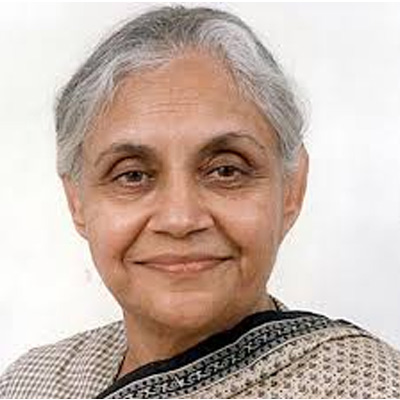
Delhi cable ops urge chief minister Sheila Dikshit to back CAS
MUMBAI: A delegation of cable operators of Delhi met chief minister Mrs Sheila Dikshit yesterday and urged her to support the implementation of conditional access system in the country.
The operators told Dikshit that CAS should be implemented on a “first-priority” basis if the government was serious in its claims of being consumer-friendly. CAS will not only bring in transparency in the whole system, thereby making the subscriber the king, but it will also help the poor cable operators to come out of the clutches of the pay channel broadcasters, the operators told Dikshit.
The operators alleged that the channel broadcasters, who are in some cases the MSOs also, have been trying to create a monopoly over the industry by bouquetising their channels. And now they are trying to capture ground networking also, thereby leaving no choice for the operator but to quit.
The delegation listed their demands as under:
*The cable operators are not able to collect their due fees from the consumers. Therefore the government should intervene into the matter and make the subscription amount collected from the subscribers one time (annual payment?). How this is supposed to help the consumer only a cable op can answer. This in effect would mean that if the consumer has a complaint of any sort due to non delivery of channels he has to chase his service provider to collect a refund. And what does he do if he he were to change his mind as to are the channels he wishes to subscribe to? The second part of the demand is even more strange. The government should make payments direct it says. The demand certainly goes against the grain of any consumer interest-based payment system.
*The government should also keep an eye on the entertainment tax Inspectors, who have been harassing the cable operators for long.
*The service tax on Set Top Boxes should be waived, in the interest of the consumers.
*Cable television should be relieved of the entertainment tax, as the services provided through cable TV are for whole family entertainment, comprising of information, news, knowledge programmes etc.
-
Delhi cable ops charge vested interests at work against CAS
NEW DELHI: Stung by various politicians coming out against CAS, it is the turn of the cable operators to issue warnings.
Reacting to Delhi chief minister Sheila Dikshit rushing off a missive to information and broadcasting minister Ravi Shankar Prasad asking the CAS implementation date be reviewed as it was an anti-consumer move, the NCTA has also alleged that the Congress party that rules in Delhi has a political agenda.
“All this seems to be another effort by the Congress party to play at the hands of the powerful pay channel broadcasters lobby and sacrifice the interest of the Indian consumers,” a statement from NCTA states.
But in poor taste is the threat given to the consumer in whose name the whole battle of CAS is being fought. “Pay by the 7th of each month, failing which connection will be disconnected (and) reconnection charges would be Rs. 100,” a National Cable & Telecom Asoociation release warns the cable consumers of Delhi.
The release, which takes on the Delhi government for its reported stand on CAS, goes on to add that the Entertainment Tax as levied by the state government on the Cable TV subscribers was doubled by this very same Congress Government in Delhi without keeping in mind any consideration for the middle class and the lower middle class section of the society.
“The same when the Cable Service Provider started to collect from their customers money, it is termed as an arbitrary increase in subscription. Unaware and innocent of the functioning of the cable industry our Hon’ble Chief Minister still wants the deferment in the implementation of CAS,” the NCTA statement, quoted its preisdent Vickky Chowdhry, as saying.
However, the release has a threatening note that directs consumers that if then monthly payments are not made within a specified date, the cable service would be discontinued.
In a related development, the Cable Operators’ federation of India has today written to the PM saying that a “section of the media and politicians with vested interest” are politicising the government’s policy on CAS.