Tag: DeITY

  • India enters niche STB global market with indigenously designed CAS system, funded by DeiTY

    India enters niche STB global market with indigenously designed CAS system, funded by DeiTY

    New Delhi: ByDesign India Pvt Ltd of Bangalore has successfully completed development of Conditional Access System (CAS) for Set Top Boxes (STBs) and enabled India to enter a niche market hitherto dominated by five big global companies.

    The Communications and Information Technology Ministry said in a note today that the CAS had been developed under a project funded by the Department of Electronics and Information Technology (DeitY) for promotion of Electronics design and manufacturing in the country.

    Prasar Bharati sources told indiantelevision.com that Doordarshan’s free-to-air DTH Freedish has also adopted a version of this design for raising the number of channel slots on the platform from 64 to 112.

    The global STB market is estimated to be about 250 Million (25 crore) STBs per annum and the CAS market is expected to be nearly $2 billion ($200 crore) per annum. The projected demand in India for completing the digitization of broadcasting network is nearly 100 Million (10 crore) STBs, thereby signifying an attractive domestic market. 

    ByDesign India Pvt Ltd, Bangalore, was selected and awarded the task for development and implementation of Indian Conditional Access System (iCASTM) in association with Centre for Development of Advanced Computing (C-DAC) in November 2014 with technical specifications that were the best in the world.

    C-DAC was responsible for design review, code review, monitoring, testing and validation of the entire project. The Development Stage of iCASTM was successfully completed on 14.11.2015 within the specified time. 

    The developed iCASTM already supports seven Indian Languages and will support fifteen more languages in the near future. The iCASTM has been tested at the Cryptography Verification Labs, accredited by NIST in the United States and has also been widely field tested under Indian conditions. 

    ByDesign is required to tie up with at least five Operators and install STB with iCASTM in atleast 2,50,000 STBs. The implementation of iCASTM in the cable networks has already started.

    More than 25,000 STBs with iCASTM have already been deployed across the country in the last two months, from Haldwani in the North to Madurai in the South and Durgapur in the East to Satara District in the West. 

    iCASTM exemplifies successful collaboration between industry and Government for R&D and IPR generation in Electronics design and manufacturing. The iCASTM is also beneficial to domestic STB manufacturers because it is available to them at a price of $ 0.5 license for a period of three years as against market price of $ 4 to 5 license for other competing products. 

  • Budget allocations for Digital India, northeast go up for Communication and Information Technology Ministry

    Budget allocations for Digital India, northeast go up for Communication and Information Technology Ministry

    New Delhi: The allocation for capital outlay on telecommunication and electronic industries is Rs 125 crore for the Departments of Telecommunications Communications and Information Technology (DeiTY), according to the Union Budget presented by Finance Minister Arun Jaitley on February 29.

    While the capital outlay on telecommunication and electronic Industries has been sharply increased for the telecommunications department from Rs 16 crore in the revised budget of 2015-16 to Rs 80 crore for 2016-17, it had been cut from Rs 69 crore in the revised estimates of the DeiTY for 2015-16 to Rs 45 crore for 2016-17.

    Interestingly, this works against the interests of the broadcasting industry, since set top boxes, antennae, headends and other equipment would fall under the DeiTY’ help to public or private industry under the head of  ‘capital outlay on telecommunication and electronic Industries.’

    The total budgetary outlay for the Telecommunication Department is Rs 21214.66 crore, while it is Rs 3328.82 crore for DeiTY for 2016-17

    Under Digital India programme, there are separate allocations for the Manpower Development Programme to ensure availability of trained human resources; Electronics Governance to deliver all Government services electronically to the citizens in his/her locality through integrated and inter-operable systems via multiple modes, while ensuring efficiency, transparency and reliability of such services at affordable costs; the National Knowledge Network with multiple gigabit bandwidth to connect Knowledge Institutions across the country; Promotion of Electronics/IT Hardware Manufacturing;  R&D in IT/Electronics/CCBT; and Foreign Trade and Export Promotion to reimburse Central Sales Tax to Electronics Hardware Technology Parks (EHTP) and Software Technology Park (STP) units.

  • Budget allocations for Digital India, northeast go up for Communication and Information Technology Ministry

    Budget allocations for Digital India, northeast go up for Communication and Information Technology Ministry

    New Delhi: The allocation for capital outlay on telecommunication and electronic industries is Rs 125 crore for the Departments of Telecommunications Communications and Information Technology (DeiTY), according to the Union Budget presented by Finance Minister Arun Jaitley on February 29.

    While the capital outlay on telecommunication and electronic Industries has been sharply increased for the telecommunications department from Rs 16 crore in the revised budget of 2015-16 to Rs 80 crore for 2016-17, it had been cut from Rs 69 crore in the revised estimates of the DeiTY for 2015-16 to Rs 45 crore for 2016-17.

    Interestingly, this works against the interests of the broadcasting industry, since set top boxes, antennae, headends and other equipment would fall under the DeiTY’ help to public or private industry under the head of  ‘capital outlay on telecommunication and electronic Industries.’

    The total budgetary outlay for the Telecommunication Department is Rs 21214.66 crore, while it is Rs 3328.82 crore for DeiTY for 2016-17

    Under Digital India programme, there are separate allocations for the Manpower Development Programme to ensure availability of trained human resources; Electronics Governance to deliver all Government services electronically to the citizens in his/her locality through integrated and inter-operable systems via multiple modes, while ensuring efficiency, transparency and reliability of such services at affordable costs; the National Knowledge Network with multiple gigabit bandwidth to connect Knowledge Institutions across the country; Promotion of Electronics/IT Hardware Manufacturing;  R&D in IT/Electronics/CCBT; and Foreign Trade and Export Promotion to reimburse Central Sales Tax to Electronics Hardware Technology Parks (EHTP) and Software Technology Park (STP) units.

  • DeitY celebrates Good Governance Day

    DeitY celebrates Good Governance Day

    KOLKATA: The Department of Electronics and Information Technology (DeitY) organised a mega event and an exhibition at the Manekshaw Centre, New Delhi on 25 December to celebrate Good Governance Day.

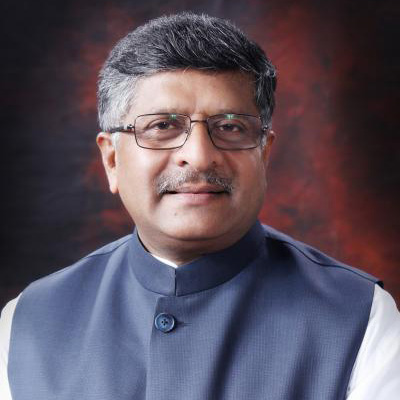
    The event was inaugurated by Union Minister of Communications & Information Technology Ravi Shankar Prasad, and attended by officials of central government and its agencies, industry partners, interested netizens, and electronic and print media.

    In his keynote address at the event, the Minister said, “Based on the pillars of participation, accountability, transparency, responsiveness and efficiency, Good Governance can be effectively achieved through the vision of Digital India of Digital Infrastructure as a utility to every citizen, Governance and services on demand and digital empowerment of citizens.”

    The Minister further emphasised that simple and inclusive technology has transformative power and is the source of good governance.

    “In the last six months, the government has taken a number of landmark initiatives. The Digital India programme, unveiled by Prime Minister Narendra Modi, is committed to take the cause of Good Governance forward in letter and spirit,” the Minister added.

    He in his concluding remarks directed all the officials of the ministry of communications and IT that we must ensure that the vision of Digital India becomes a reality!

    The Minister launched a number of Good Governance projects initiated by Department of Electronics and Information Technology, Department of Telecommunication, Department of Posts and their organisations.

    On the other hand DeitY secretary RS Sharma said, “The department has taken a number of initiatives like MyGov (Citizen participation platform), Aadhaar Enabled Biometric Attendance System, Jeevan Pramaan, e-Greetings, e-Sampark, National Digital Literacy Mission, e-Governance Competency Framework etc to promote good governance in the country.”


  • Govt. may soon ban Google, Yahoo to protect official data

    Govt. may soon ban Google, Yahoo to protect official data

    NEW DELHI: The government is set to ban e-mail services such as Gmail, Yahoo, Hotmail, etc for official communications by December this year to safeguard its critical and sensitive data.


    The Department of Electronics and Information Technology (DEITY) is drafting a policy on e-mail usage for government offices and departments and the policy is almost ready. The department is now taking views from other ministries on it, according to Secretary J Satyanarayana.


    The government is expected to route all its official communication through the official website NIC’s email service, according to a report.


    Google and Yahoo are the prominent email tools used by government officials.


    “The e-mail policy of the government of India, as this policy will be called, is almost ready and we are taking views from other ministries on this. Our effort will be to bring it in to effect by mid or end-December,” said Satyanarayana.


    The proposed policy aims to make it mandatory for government offices to communicate only on the nic.in platform rather than commercial email services.


    The policy is expected to cover about five to six lakh Central and State government employees for using the email service provided by National Informatics Centre (NIC).


    The Indian government needs about Rs four to five crore to ramp up the NIC infrastructure. But, the total investment needed for the full operation of the e-mail policy could be around Rs 50 to Rs 100 crore.


    This will also include integrating the e-mails with cloud so that official data can be saved on a cloud platform, which can then be easily shared with the concerned government ministries and departments.


    The development is learnt to be related to concerns being raised by a section in the government, especially intelligence agencies, over use of email services, provided by foreign firms (mostly US-based), which have their servers located in overseas locations, making it difficult to track if sensitive government data is being snooped upon. In addition, the Snowden saga contended that US intelligence agencies used a secret data-mining programme to monitor worldwide internet data to spy on various countries, including India.

  • Directive for making electronic goods comply with Indian safety requirements

    Directive for making electronic goods comply with Indian safety requirements

    NEW DELHI: Even as contradictory reports keep appearing on whether the digital set top boxes comply with Indian standards, the government today announced that its order for making several electronic items adhere to Indian safety standards will come into effect from 3 July.

    The “Electronics and Information Technology Goods (Requirements for Compulsory Registration) Order, 2012” mandates compliance to Indian Safety Standards for 15 notified categories of electronic goods. These electronic goods are STBs, Video Games, Laptop/Notebook/Tablets, Plasma/LCD/LED TVs, Optical Disc Players, Visual Display Units, Printers/Plotters, Scanners, Wireless Keyboards, Telephonic Answering Machines, Amplifiers, Electronic Musical Systems, Electronic Clocks, and Automatic Data Processing Machines and Microwave Ovens.

    Keeping in view the fact that some manufacturers and importers have yet not received registration numbers from Bureau of Indian Standards, the Department of Electronics and IT (DeitY) has put in place an interim mechanism from 22 March this year.

    According to this notification, DeitY shall provide provisional clearance to the manufacturers and importers to sell goods and to obtain registration for a period of three months beyond 3 July. A copy of this extension order is available on website www.deity.gov.in/esdm.

    The Department has accordingly put in place a system for granting provisional clearances for units which have not obtained their registration. The application forms and related documents for seeking provisional clearance are available at www.deity.gov.in/esdm. The applications have to be made to Nodal Officer (Standards – Extension), in the Department of Electronics and IT in terms of the aforesaid notification. All manufacturers and importers are requested to make their applications at the earliest to avoid any difficulty in getting their products sold in the market.