Tag: Deewar

  • “Govt. doesn’t recognise the importance of cinema”: Subhash Ghai

    “Govt. doesn’t recognise the importance of cinema”: Subhash Ghai

    Born to a dentist father in Delhi, Subhash Ghai entered the film industry in 1970 after attaining his diploma from Film and Television Institute of India (FTII). The film director, producer and screenwriter, known for his works predominantly in Bollywood has given notable films like Kalicharan (1976), Karz (1980), Hero (1983), Meri Jung (1985), Karma (1986), Ram Lakhan (1989), Saudagar (1991), Khalnayak (1993), Pardes (1997), Taal (1999) and Black & White (2008).


    In 2006, he set up his own film institute Whistling Woods International in Mumbai. The institute trains students in filmmaking: production, direction, cinematography, acting, animation. Ghai has done brief cameos in his directorial ventures.


    Mukta Arts managing director Rahul Puri spoke to Ghai to know about changing times, new vertical of the business, the market scenario and much more.


    Excerpts:


    Tell us about the differences in the film industry today from when you joined? How has the influence of branding and other media (like television and digital) changed the way that the film industry is perceived now?


    The main difference in the film industry is that now it has become broad in terms of media, technology, and communication from what it was in 1970s. Earlier in 70s, films were the only mass media to entertain people whereas today there is a huge growth in terms of content and reach in television, radio, digital and social media, which has taken entertainment to a different level. Nowadays, branding has become ‘THE’ thing for today’s generation. A sports man, a fashion designer or a chef, everyone has turned themselves into brands and tell me who hasn’t? Film industry might be only one dimension of the entertainment world, but it still holds a major importance and impact in media.


    The film industry continues to be iconic yet the size and scale of the industry is comparatively smaller than many others. Is the mindspace the industry occupies today in terms of influence and marketing justified? 


    No. The film business is a showmanship and a business we term as ‘Showbiz’, which influences all other industries like television, digital, music, events, fashion, and festivals with a big dividend. So, if you have a look at the film business in the theaters, it is very discouraging. But on the other hand, we are also involved in other aspects of media business such as satellite rights, music, events, branding, franchising that brings more money than theater business. Henceforth, marketing has become a bigger gamble to attract initial draw towards theaters and even to other aspects of media. 


    Where do you see the film industry reaching in the next decade? Will this growth/change come from new content or new delivery platforms (digital/theatres/mobile)? Where is the best hedge for risk in the industry today?


    Film industry always survived because of its bigger frame images in cinema halls. Cinema experience is a social bonding for people, it is a collective gathering, it is an event, a festivity! It can cover many weekends if the movie is really brilliant, and to create its presence such films run in maximum theaters. And now with the changing technology and improving higher standards, we will see a drastic change in theaters with 180/360 angle big screens to draw audiences from their homes. 3D, 4D and 5D theaters, mobiles, big watches and so on, the digitisation will bring Rs 100 crore to Rs 200 crore on first day of release in theater and television screens simultaneously. Content will be improvised accordingly, and more fantasies genre will be touched upon as I firmly believe that ‘a child in a man will never die’.


    People talk about a new type of content coming into to Indian films. Is this a hype? Are we actually telling newer stories or is the format of our storytelling changing but the core remains the same?


    Content keeps developing with time. Film content will soon adapt the following and some of which are already taking place such as:

    1.     Real life issues/biopics
    2.     Super star fantasies in mainstream style treatment
    3.     Science fiction
    4.     Animation – mythology/kids fantasies


    India has a lot of rich content in terms of stories in its heritage; soon, maybe by 2015, it would dominate internationally with its content. Though, it is said that there are only 36 plots in human drama, Shakespeare and Mahabharta says it all.


    There is a trend today about remakes. Some of your own films are being remade. How do you feel about that and do you think the remake trend is causing original content to suffer?


    Honestly, if you ask me I think nothing is original. Art itself is an imitation of universal existence and its various versions thereafter. A film like Aurat in 1940 was made Mother India in 1957 which was remade as Dewaar in 1975. We all should look at remake as an adaptation, transformation, inspirations of same plot which touched millions of hearts and souls… and the adaptation from a different filmmaker’s perspective makes the content looks fresh. Every remake comes with new packaging as ‘old wine in a new bottle’, but only classic stories will be repeated like our epics which are evergreen.

    What is the key to being successful in the content creation business? There are so few people who are able to sustain it. What do you attribute your success to?


    According to me the key factors are – develop your skill for the business, do market research, have a talent for ideation and innovation! My quest is to observe life and to present current and old dishes in new plate and that is my strength.


    You are very active on social media platforms. What do you feel is the benefit of this media and is it really something that will revolutionise marketing of entertainment?


    My only personal factor in being active in social media is to connect with the people I do not know as it widens my horizon and I can express directly to them. So we talk about our work to people and take feedback from strangers too, it develops your skill to improve as well. Such open platforms are good ways to communicate.


    What are your hopes from the new government, both at the centre as well as in Maharashtra. The film industry, as mentioned, is iconic in brand and has a lot of brand value but this doesn’t always deliver incentives to the industry from the government. Do you think this will change?


    Unfortunately, the government at the center or state level has never recognised film industry what it deserves, they don’t share the vision as it can be powerful media to influence people. It’s a major device to develop a culture in children of tomorrow. With the government, it’s not only the financial issue; it’s the issue of recognition of ‘importance of cinema’ that the government needs to look into. Please study what American cinema has done to its own country and how it has influenced other major countries and India is nowhere close to it, yet. Cinema speaks about your country, culture and brings tourism and business.


    The government has set up a new Skills Ministry. Given your involvement with education at Whistling Woods, what do you think will be the benefit of this to the film industry?


    This is the first positive step taken by the new government, which brings big hope to fulfill my dream to see India to be known as the ‘Big Think Tank’, an ‘ideator’ rather than just a doer. Whistling Woods has been doing this since its inception in 2003. If you look at most of our alumni, they all are actively working towards bringing a new change in cinema and media industry.  They are doing brilliant in their respective cinema and media jobs. I only hope and wish that government should be able to recognise this soon.

  • The Angry Young Man of Bollywood turns 72

    The Angry Young Man of Bollywood turns 72

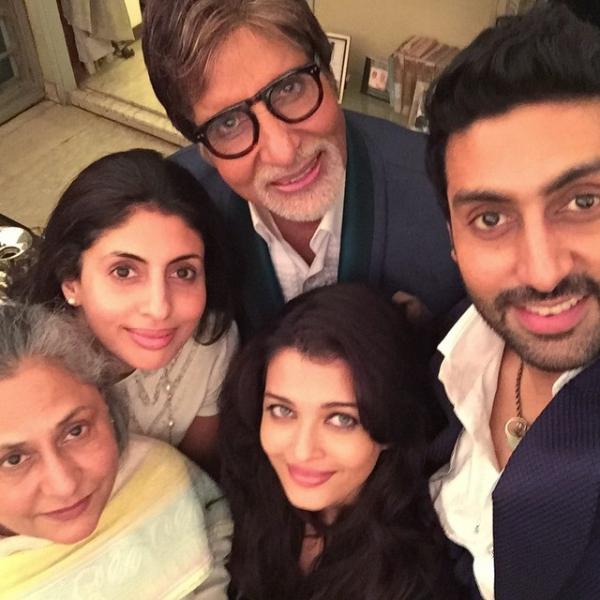
    MUMBAI: Megastar Amitabh Bachchan, who turns 72 today, feels there’s no gift greater than spending time with family. The actor, who feels ‘luckiest today’ thanked all who have been in his life.

    “To them that wish for me for my 72nd moving into 73rd…I have just few words…I am blessed to have you with me still! Thank you all for your affectionate greetings and love..they shall ever remain with me…I feel today the luckiest,” he tweeted early Saturday.

    “It is that time of life when the next year in celebration of the birth is never one that needs celebration….I have none answer to the why, but so it is…I do not feel any different from this and never shall,” added the entertainer, who has been part of the Indian showbiz for over four decades now.

    Born on 1942, he started his career with Saat Hindustani. His early works were not appreciated. His rise to stardom started when Director Prakash Mehra cast him in the leading role for the film Zanjeer (1973) as Inspector Vijay Khanna. The film was a sharp contrast to the romantically themed films that had generally preceded it and established Amitabh in a new persona—the ‘angry young man’ of Bollywood cinema.

    He has appeared in more than 180 movies in his whole life span and created his own heights of success. His career started with Saat Hindustani in which he also made a debut as a narrator.

    Besides a number of Filmfare awards, he has been honoured by the Government of India with the Padma Shri award in 1984 and Padma Bhushan in 2001 for his utmost contributions to the film industry. He has also received National Film award, France’s highest civilian honour, the Knight of the Legion of Honour, among other recognitions.

    His notable works include Kabhie Kabhie,  Deewar, Chupke Chupke, Mr. Natwarlal, Kaala Patthar and The Great Gambler, Satte Pe Satta, Lawaris, Sarkar, KAbhi Khushi Kabhi Gam, Sholay, Anand among others.

     “…it is not a day to contemplate…it is a time to deliver thanks and gratefulness to all those that have been responsible for my 72 in completion and my 73 to begin,” posted Big B.

    Every year, Amitabh Bachchan’s birthday is celebrated with much fervour by fans who gather outside his residence Jalsa to wish the superstar and if possible meet him. Big B too obliges the fans by stepping among them.


  • Veteran actor Jagdish Raj leaves for heavenly abode

    Veteran actor Jagdish Raj leaves for heavenly abode

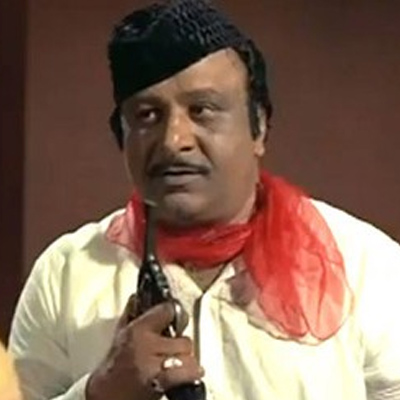
    MUMBAI: A mainstay of Bollywood for 21 years, the man who reportedly earned his recognition in the Guinness World Records as the film industry’s most typecast actor Jagdish Raj is no more. He is known for his role as a police inspector in at least 144 films.


    Back in the 1960s, a big Hollywood casting director called Harvey Wood came and selected him for a police inspector’s role. Although he had done many films before as hero and villain, but he found popularity reprising the role of police inspector time and again.


    Twenty years later, he bumped into Harvey Wood again. He looked at him and said, “Bloody hell! You’re still in the same uniform.” He asked Raj to mail him the details of all his films as he was onto a world record for the most occupational role. Later the Guinness book people sent a team to Bombay to verify facts before they entered his name in their book.


    Born in Pakistan, Raj was featured in releases including Deewar, Don, Shakti, Mazdoor, and Imaan Dharam before he retired in 1992. He’s also known as the father of Bollywood star Anita Raj.


    Raj had been in and out of hospital for the past two years and had respiratory problems. He died in Mumbai at 84 due to a respiratory arrest on 28 July, according to his son-in-law Rakesh Malhotra.

  • Iconic film maker Yash Chopra passes away

    Iconic film maker Yash Chopra passes away

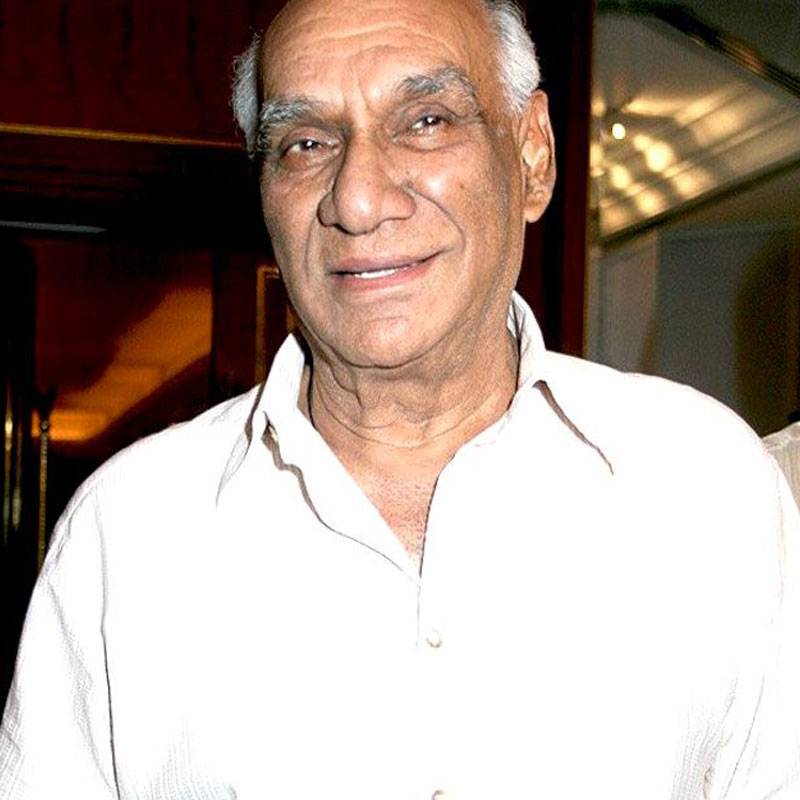
    MUMBAI: On 21 October, one of the most respected and iconic film makers from Bollywood, Yash Chopra, breathed his last, leaving behind a legacy of some of the best made films in Indian cinema. Chopra was being treated for dengue at Lilavati Hospital where he was admitted on 13 October after complaining of weakness and difficulty in breathing.

    According to media reports, Chopra was not responding to treatment well and given his age, battling a disease like dengue was always an uphill task. He celebrated his 80th birthday on 27 September when he announced that the upcoming Shah Rukh Khan romantic drama Jab Tak Hai Jaan will be his last movie as a director. Chopra is survived by wife Pamela Chopra and sons Aditya and Uday Chopra.

    The illustrious film maker was born in pre-independence Lahore in 1932 and is the younger brother to noted film maker B R Chopra. He came to Mumbai with Rs 200 on him and began his career by assisting I S Johar. He debuted as a director with Dhool ke Phool, a social drama starring Mala Sinha and Rajendra Kumar and dealt with the trials of a single unwed mother. He went on to make 22 films as a director across genres like social dramas, romance, action and suspense thrillers.

    Waqt, Silsila, Kabhi Kabhi, Daag, Deewar, Trishul, Chandni, Lamhe, Darr and Veer Zaara are among his most remembered and successful directorial ventures. Chopra has also been credited for moulding the screen images of Amitabh Bachchan as the ‘angry young man‘ (with Deewar) and Shah Rukh Khan as the quintessential romantic leading man (Dil Toh Paagal Hai and Veer Zaara).

    Chopra is the force behind one of the biggest production houses in the country – Yash Raj Films (YRF) which he started in 1971. Till then his movies were produced by elder brother B R Chopra and movie mogul of that time Gulshan Rai. Rajesh Khanna starrer Daag was the first movie produced under the banner. YRF is perhaps the most successful privately held studio in the country and has also been instrumental in changing the overseas distribution business in India.

    The production house has produced some of the highest grossing movies of their times like Chak De India! (Rs 1.04 billion worldwide in 2007), Ek Tha Tiger (Rs 3.07 billion in 2012), Rab Ne Bana Di Jodi (Rs 1.58 billion worldwide in 2008) and Dhoom and its sequel Dhoom 2 (in 2004 and 2006 respectively; combined worldwide collection of Rs 2.23 billion).