Tag: Deepshikha Surendran

  • Tata Trusts and Chef Sanjeev Kapoor team up for inspiring breast cancer awareness film

    Tata Trusts and Chef Sanjeev Kapoor team up for inspiring breast cancer awareness film

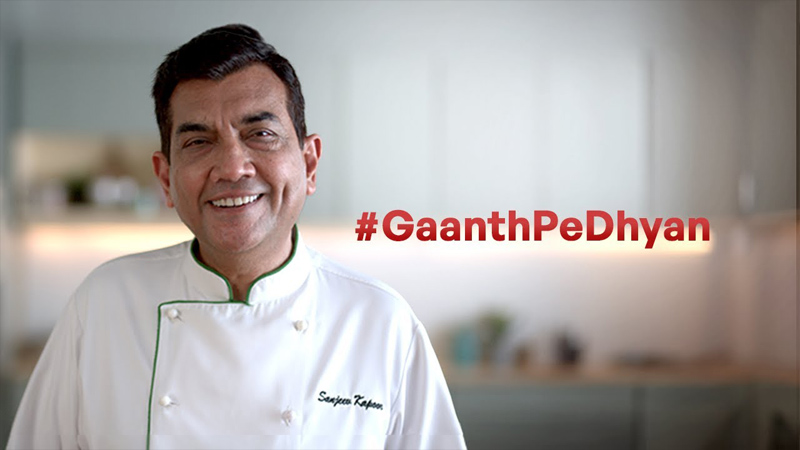
    Mumbai: Tata Trusts have launched a film using a refreshing new insight that links cooking to self-care in an attempt to nudge women to reimagine their priorities and make breast cancer screening a part of their routine. Drawing inspiration from the meticulous care that women put into addressing lumps in the food they prepare, the film encourages women to check their breast for lumps with the same attentiveness and if found, to seek medical attention. Featuring renowned chef and Padma Shri recipient Sanjeev Kapoor, the social awareness film seamlessly transitions from a cooking lesson to a meaningful conversation on embracing self-care and raising awareness on the early detection of breast cancer.

    Through a social experiment, the film takes the audience on an unexpected journey, with ‘gaanths’ (lumps) in special dishes disrupting the cooking experience and serving as a surprising metaphor. It prompts women to understand the need for conducting regular breast self-examinations and checking for any lumps or abnormalities that could potentially be cancerous. By showcasing breast screening as a form of self-care that should come naturally to women, the film inspires and empowers them to take proactive steps for early detection of breast cancer that can save lives.  

    Through the film ‘Gaanth Pe Dhyan’ (‘Focus on the Lump’), the Trusts hope to spark meaningful, important conversations on breast cancer awareness. Discussing the idea behind the campaign, Tata Trusts head of brand and marketing communications Deepshikha Surendran said, “There is a need to promote health consciousness amongst women and when it comes to breast cancer, one can flip the ratio by encouraging the simple act of breast self-examination, potentially saving lives. By building our narrative around women and their love for cooking, we hope to nudge a deep behaviour change. The insight is universal and the creative execution simple and engaging. We do hope that this public health awareness film encourages women across the country to include self-checks and screenings as a regular part of their routines.”

    The film uniquely showcases a social experiment unfolded, inspired by on-ground culinary demonstrations that Tata Trusts organized across several Indian states, which deeply resonated with women across socio-economic segments. These events offered a creative visualization of the central metaphor, using ‘lumps’, a frequent, bothersome part of food preparation, to draw attention to women’s health and breast self-examination.

    Chef Sanjeev Kapoor added, “Cooking for loved ones is an act of care and love – and women often prepare dishes with great attention to detail, particularly to get rid of unwanted lumps. Unfortunately, most women don’t extend such love and care to their own bodies and tend to overlook lumps in their breast. It’s incredibly important to encourage them to embrace self-examinations and check-ups – and it was interesting to shed light on this conversation by bringing two fundamental aspects of life, food and health, together.”

    As one of India’s most eminent chefs and a custodian of India’s culinary landscape, Chef Sanjeev Kapoor with his remarkable ability to reach and engage an audience of women viewers across Indian households, was the natural choice for driving this important message and rallying call to action.

    The film was conceptualized and executed by Basta Films for the Tata Trusts. The producer Mahima Sharma added, “As a breast cancer survivor myself, Gaanth Pe Dhyan allowed me to champion the cause of early detection, which has played a crucial role in my life. The intent of this film is to address the ignorance among women, and the analogy of ‘lumps in food’ hits the bull’s eye. The film communicates that early detection is the first big win in the fight against cancer. It not only raises awareness but also generates feelings of hope, positivity, and strength.”

    This social awareness film can be seen across the Tata Trusts’ social media platforms, including LinkedIn, Instagram, X, Sharechat, and Facebook. ‘Gaanth Pe Dhyan’ is a part of a broader ‘Kaise Ka Cancer’ campaign by the Tata Trusts, to raise awareness, close the care gap, unite voices, and encourage action. The ‘Kaise Ka Cancer’ campaign involved a three-film series exploring the overwhelming questions and emotions that cancer patients and their families experience post-diagnosis. Tata Trusts are committed to reducing the cancer burden in the country by offering compassionate and quality cancer care in India.

  • Tata Trusts launches  film on quitting tobacco

    Tata Trusts launches film on quitting tobacco

    Mumbai: Tata Trusts have unveiled a meaningful cause-driven awareness film, #DontQuitQuitting, that captures the challenging journey of people trying to quit tobacco. While nearly 34 per cent of tobacco users in India have tried to quit, many tend to relapse. The film offers a fresh, unique, and nuanced perspective to the conversation on tobacco consumption – instead of simply highlighting risks and asking people to quit, it portrays a raw and honest story of the setbacks and personal struggles that people experience along the path to tobacco cessation. By compassionately shedding light on the issue, the campaign motivates people to stay persistent in their efforts to quit tobacco.

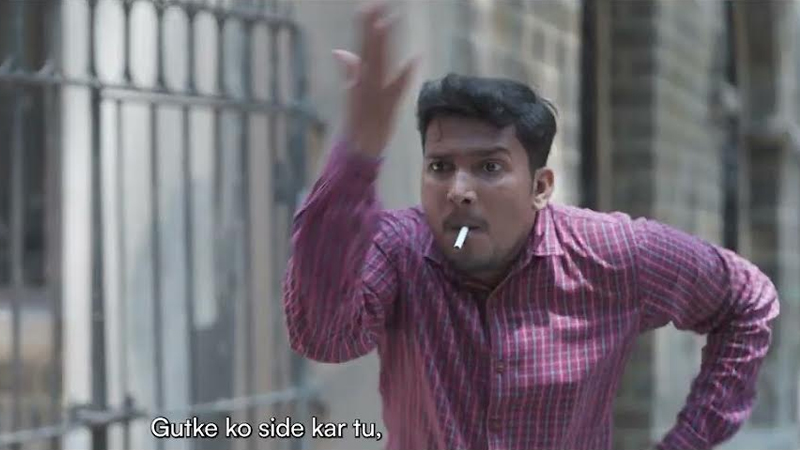
    The film follows the journey of a tobacco user as he navigates his own unique experience, using a powerful and evocative visual metaphor of a ‘gutka’ pack and a cigarette sticking persistently to his body, representing people’s hidden struggles to break free of this addiction. The film’s catchy lyrics, ‘Chipak Chipak,’ bring to focus the ‘sticky’, pervasive nature of people’s tobacco consumption habit and the relentless struggle to fight the constant urge and quit it.

    Tata Trusts head of brand and marketing communications Deepshikha Surendran said, “When encouraging people to quit tobacco, we found that few uncover the struggles and emotional turbulence of de-addiction. At the Tata Trusts, we have been consistently raising awareness on the risks of tobacco use and its link to various types of cancer. This film with its unique execution and catchy lyrics is a powerful way to highlight the invisible and courageous struggles of those trying to quit tobacco. We recognize that quitting tobacco is a journey, and we hope that this campaign offers people encouragement and motivation to continue along this path till they succeed.”

    RepIndia senior creative director Neelanjan Dasgupta added, “In this world of constant conversations, we often forget the power of silence, and that actions are so much louder than words. This is why we wanted to use a visual analogy in the form of mime, as a mode to communicate a simple fact – quitting tobacco might be difficult but is not impossible. The brief from the Trusts clearly indicated that we should not be preachy. Instead, we aimed to create an interesting narrative using the power of action in a format most suitable for the digital audience.”

    It has also been amplified across Tata Trusts’ social media platforms, including LinkedIn, Instagram, X, Sharechat, and Facebook. Through a digital-first launch, India’s leading philanthropic organization intends to spark meaningful conversations about the realities of quitting tobacco and offer motivation to the people undertaking this endeavour. Tata Trusts will also amplify three powerful real and lived experiences of people’s paths to de-addiction in the form of video testimonials, reminding people that they are not alone in this struggle and offering them hope for a tobacco-free life. This builds on the Trusts’ long-standing commitment to increasing awareness and advancing affordable, high-quality cancer care to millions of Indians, through the efforts of the Tata Cancer Care Foundation. So, start your journey today and Don’t Quit Quitting.

  • Tata Trusts shows that change is noble

    Tata Trusts shows that change is noble

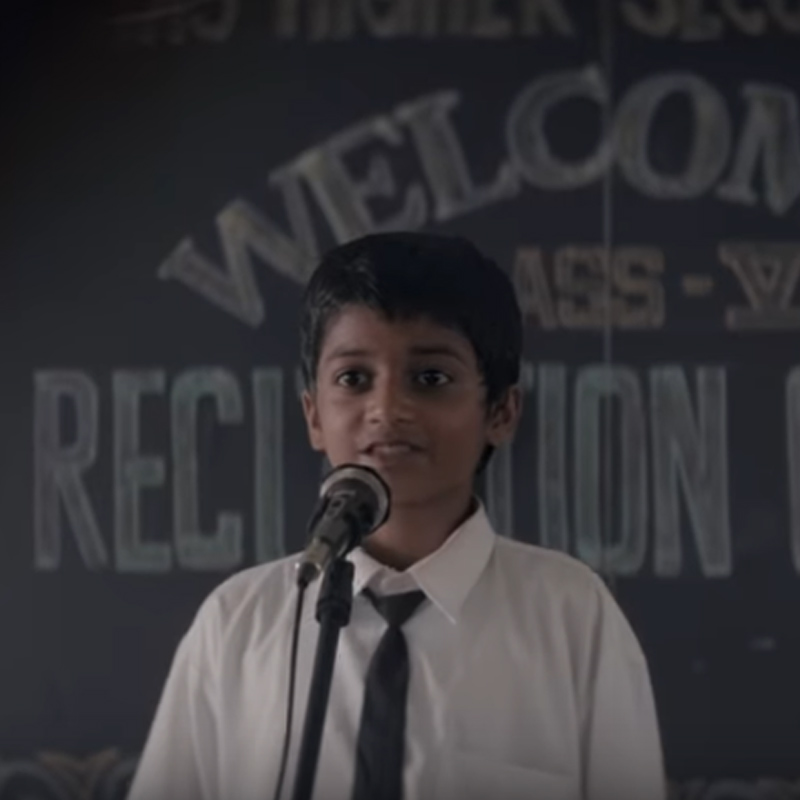
    MUMBAI: It’s a heart-moving video of a young boy on stage describing the everyday ordeal his sanitation worker-father goes through. As a spellbound audience watches, the boy sings the poem ‘Mera baba desh chalata hai’, even as the sanitation worker is shown toiling in the ghetto, cleaning the filth. What a compelling way to describe the oppressive conditions in which India’s sanitation workers toil. And it goes on to make the desired result of making a lasting impact on us. That is precisely what Tata Trusts seeks to achieve through his recent campaign ‘Mission Garima’.

    The video stresses the need to provide humane working conditions to sanitation workers who keep our cities clean. The campaign, under the initiative called #TwoBinsLifeWins, urges citizens to segregate biodegradable and non-biodegradable waste to make sanitation workers life much easier.

    On the inspiration behind launching this campaign, Tata Trusts head, brand and marketing communications Deepshikha Surendran says: “Research with both consumers and the sanitation workers showed that there is a realisation that our lives can be better, our behaviour can impact other people’s lives. The inspiration came from the insight that the invisible man – the worker – needs as much respect and dignity as any other.”

    In a multi-agency pitch held by Tata Trust two years ago which included the likes of Lowe Lintas and Mudra, FCB Ulka won the mandate for this campaign. The campaign was initiated a year ago with 15 people working from client servicing, creative’s department and close to 20 people from the production side including the crew, main cast and the DOP. After auditioning 150 people, the main protagonist for the video was finalised.

    “Different creative agencies shared their thinking and approach. FCB Ulka had some sharp, emotional triggers to addressing the issue. Finally, the child’s worldview captured through a poem; it was totally on the brief. Basta films, then, worked with the FCB team to bring it to life,” says Surendran.

    According to Surendran, the recent campaigns that engage citizens to further brand purpose have shown positive results. The mission of segregating waste too can only be successful if the citizens are conscious and sensitive to driving change. Research reaffirmed the belief that consumers want to participate in social good, and that small but powerful nudges of communication can change behaviour. Hence, the campaign ‘kyunki desh ko desh ka har aadmi chalata hai.’

    FCB Ulka national creative director Keegan Pinto believes that there is a need to make people realise that everybody has the right to live with dignity. And when the narrative comes from a kid’s point of view, it makes it even more realistic.

    He says: “I don’t think people in India and the world at large know the effects of this job. This is clearly the worst job on the planet. They also die early because they get infested by waste, filth and a whole galaxy of microorganism. The campaign #TwoBinsLifeWins is about the plight of sanitation workers. When the life expectancy of average Indians is 65, the same for the sanitation workers is around 50 to 52. They die early as compared to the rest of the Indians. We thought it will be more impactful if a child makes a plea and say ‘save my father from dying’. While we are giving the message of doing the right thing, we also have been conscious of not just showing his plight, but telling them that we are ashamed of not doing our share of work. What you do is a matter of pride because you are special. We cannot even think of doing what you do.”

    Basta Films constructed the entire set as it was difficult to shoot in an actual surrounding considering the dangerous gases present in the sewer. The initial part of the film was shot at Mumbai’s Dharavi region. The classroom shot where the young boy is narrating the story of his father is filmed at Xavier’s College.

    Basta Films director Divyansh Ganjoo says: “When you handle such a sensitive issue, conceptualisation is the biggest challenge because you have a huge responsibility while making such content. It required a lot of research because you cannot go and shoot just like that. Taking permission from BMC was difficult at times. We met sanitation workers to understand what they go through in their daily lives. This is the first visual imagery of what actually happens inside it. There were no references to it; we have to actually research to know how to make it more realistic.”

    The campaign is promoted by Ratan Tata himself on his official social media handles. Under this initiation, Tata Trusts will provide free personal protective equipment or PPE set up at Kurla in Mumbai.

    Surendran adds, “Tata Trusts, with support from the Municipal Corporation of Greater Mumbai (MCGM), has developed a model ‘Garima Chowki’ at L-ward, Kurla, to provide suitable workplace amenities to the sanitation workers. The first-of-its-kind Chowki was launched in Kurla, on the same day as the campaign, in the presence of the Joint Municipal Commissioner Ashok Marathe. Chowkis are facilities in every ward where sanitation workers assemble to begin their day and come back to change and rest. The model Chowki at Kurla will serve 70 to 100 workers on a day-to-day basis and comprises office space, separate rooms for men and women staff with improved water and sanitation services, storage, and a functional open space. It is equipped with amenities like a water purification system, microwave oven and a gym, among other, recreational activities.”

    Tata Trusts is also working with NGO partners and corporate houses to address health issues of the workers. This multi-pronged strategy will hopefully provide a holistic solution in the years to come.

    On the upcoming marketing campaigns for Mission Garima, Surendran mentions: “The campaign has just begun and has already gone viral. Organic reach of this film is already in excess of 2 million views only from our platforms. We intend to boost the campaign with radio and cinema and complement the awareness drive with special housing society activation to help the adoption of waste segregation on a large scale. The teams are also extending the campaign to certain under-serviced pockets of the city where segregation is a challenge both from the perspective of a citizen and the worker. Below- the-line communication strategy with partners like Dialogue Factory has been piloted, and will soon be rolled out.”

    Tata Trust believes the campaign and message is a critical pillar of ‘Mission Garima’ programme, and the role the citizen’s play in bringing dignity and eradicating the practice is huge.