Tag: Deepinder Goyal

  • Zomato’s ‘Fuel Your Hustle’ campaign serves a hot tribute to India’s silent strivers

    Zomato’s ‘Fuel Your Hustle’ campaign serves a hot tribute to India’s silent strivers

    MUMBAI: Zomato is dishing out a power-packed ode to perseverance with its latest campaign, ‘Fuel Your Hustle’, starring a heavyweight cast of Indian icons: Shah Rukh Khan, Mary Kom, AR Rahman, and Jasprit Bumrah.

    The emotionally charged campaign spotlights the sweat behind the stardom, tracing each personality’s journey through rare archival footage — some of it never seen before — and gritty behind-the-scenes moments from iconic matches, studios, and film sets. The film is underscored by a stirring track from Kalmi (Nikhil Kalimireddy), the voice behind the viral anthem “Big Dawgs”.

    In a world chasing instant wins, ‘Fuel Your Hustle’ flips the script. It’s a celebration of those long, unglamorous hours of hustle — whether it’s SRK’s early theatre days, Mary Kom’s fight against the odds as a mother and champion, Rahman’s studio grind, or Bumrah’s rise from the nets to global cricketing glory.


    A post shared by Zomato (@zomato)


    Commenting on the campaign, Zomato marketing Sahibjeet Singh Sawhney said, “This campaign is for a new generation of doers, a reminder that even the stars they look up to started small, stumbled, and kept going. It’s a cheer for the millions of Indians building something, following dreams, caring for loved ones and for themselves, even when it’s hard and no one’s clapping.”

    “We’re rooting for those chasing what they care deeply about and showing up for it consistently. Food is just their fuel and we’re glad to be a small part of their journey,” he added.

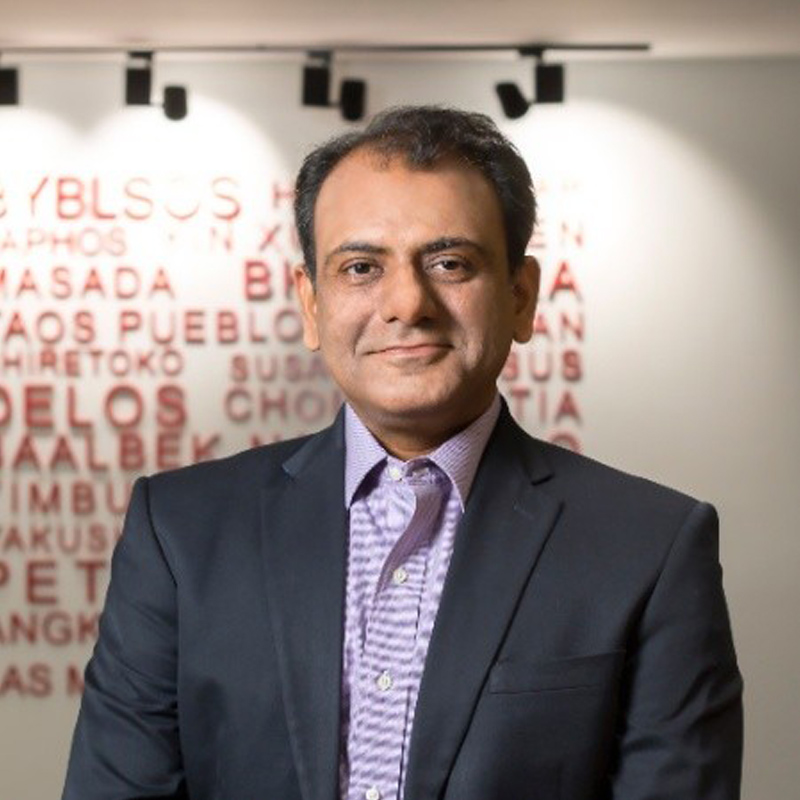
    Posted by Deepinder Goyal, Zomato’s CEO, and live across YouTube, Instagram, and outdoor touchpoints, the campaign rolls out as a full-throttle 360-degree blitz across digital, print, and social media.

    (If you are an Anime fan and love Anime like Demon Slayer, Spy X Family, Hunter X Hunter, Tokyo Revengers, Dan Da Dan and Slime, Buy your favourite Anime merchandise on AnimeOriginals.com.)

  • Deepinder Goyal’s Zomato levels up to its final form: Eternal Ltd.

    Deepinder Goyal’s Zomato levels up to its final form: Eternal Ltd.

    MUMBAI: It’s official! Zomato, the brand that revolutionised food delivery in India, is stepping into a new era under the corporate name Eternal Ltd. Founder & CEO Deepinder Goyal has revealed this strategic transformation, marking a significant shift in the company’s vision beyond food delivery and into a broader, more enduring business ecosystem.

    Why the change? Well, when you’ve built a brand that’s synonymous with convenience, innovation, and sheer hustle, the next step is to future-proof it. Eternal Ltd. isn’t just a name—it’s a mindset. It represents a company that is built to last, a powerhouse that goes beyond Zomato’s food delivery dominance to encompass Blinkit, District, and Hyperpure.

    Revealing the motivation behind the rebrand, Goyal shared that Eternal isn’t about claiming invincibility—it’s about acknowledging the journey, the challenges, and the constant evolution required to stay relevant. “True permanence isn’t built on bold claims. It is forged in self-doubt, hunger, and the relentless pursuit of being better than yesterday,” he wrote in his letter to shareholders. Talk about poetic business moves!

    Beyond food, this marks the birth of a new age conglomerate. This shift signifies a larger play— Our beloved Zomato is no longer just about food. Eternal Ltd. will house four key businesses:

    Zomato (Food delivery and dining services)

     Blinkit (Quick-commerce champion)

     District (A yet-to-be-revealed exciting venture)

     Hyperpure (B2B food supply for restaurants)

    The company has already received Board approval for the name change, and once shareholders give the green light, Zomato Ltd. will officially become Eternal Ltd. The stock ticker will change from ZOMATO to ETERNAL, and the corporate website will transition from zomato.com to eternal.com.

    Seventeen years ago, Goyal started Zomato—then Foodiebay—by simply uploading restaurant menus online. Fast forward to today, and the company has become India’s first tech startup to enter the BSE Sensex, creating significant wealth for employees, investors, and shareholders alike. The journey from a menu aggregator to a top-30 listed Indian company has been nothing short of legendary.

    Eternal Ltd. aims to be bigger, bolder, and broader in its impact. With Blinkit’s meteoric rise in quick-commerce, the food-tech giant is looking at new growth engines that will keep it relevant for decades to come. This isn’t just a name change-it’s a statement of intent.

    For customers, nothing changes-Zomato will remain your favourite go-to for food cravings. But as a company, Eternal Ltd. is setting its sights on an even grander future, one where it plays a bigger role in shaping India’s digital commerce landscape.

    Final bite – A food delivery empire turning into a multi-industry conglomerate? That’s one eternal glow-up! Now, the only question that remains-what’s next on the menu?

  • Zomato revenue hits Rs 5,657 million in Q3 while PAT shrinks to Rs 59 million

    Zomato revenue hits Rs 5,657 million in Q3 while PAT shrinks to Rs 59 million

    MUMBAI: Zomato, the poster child of India’s food-tech revolution, has released its Q3 FY25 results, revealing a fascinating mix of growth and persistent challenges. Founded by Deepinder Goyal, a man who turned his restaurant review dream into a billion-dollar reality, Zomato’s journey from a niche startup to a household name is nothing short of inspiring. Today, the company boasts a market valuation of over Rs 50,000 crore, but the path has been far from smooth.

    In a bid to outpace competitors like Swiggy and Zepto, Zomato has aggressively expanded its portfolio. From acquiring Blinkit, which revolutionised its quick commerce game, to launching ‘Zomato District,’ an experimental dining experience platform, the company is firing on all cylinders. However, this rapid growth hasn’t come without its challenges. The acquisition spree and investments in new verticals have added significant strain to its financials. And let’s not forget the Rs 803.4 crore GST-related setback from Maharashtra —talk about an unexpected delivery charge!

    With consolidated revenue hitting Rs 5,657 million, up from Rs 3,507 million a year ago, the numbers tell a story of resilience and reinvention. But as profitability continues to slip through its grasp, the burning question remains: can Zomato strike the elusive balance between growth and financial sustainability? Or is it simply running faster on a treadmill of rising costs? Buckle up, because this food-tech giant’s journey is far from over.

    Consolidated Results

    In Q3 FY25, Zomato’s consolidated revenue from operations surged by 54 per cent year-over-year to Rs 5,405 million, with additional income of Rs 252 million pushing total income to Rs 5,657 million. While these numbers showcase growth, they come with a hefty price tag—rising costs that seem as persistent as your favourite food app’s notifications.

    Employee benefits expenses climbed to Rs 689 million, which makes one wonder: are delivery executives being given gold-plated scooters? Advertising and sales promotion costs held steady at Rs 421 million, showing Zomato’s relentless pursuit of eyeballs and appetites. Meanwhile, delivery-related charges hit a whopping Rs 1,450 million—proof that staying ahead in the food-tech race isn’t a cheap sport.

    But here’s where the humour fades. Despite revenue growth, Zomato’s profit before tax tumbled to Rs 124 million, a notable dip from Rs 237 million in the previous quarter. The consolidated profit after tax (PAT) followed suit, shrinking to Rs 59 million, down from Rs 176 million last quarter. Even EBITDA, the trusty metric of operational health, showed only marginal improvement. Is this growth, or are we just running on a treadmill of expenses?

    Adding spice to the financial mix, Zomato’s segment performance revealed contrasting flavours: Hyperpure, its B2B vertical, grew a sizzling 94.5 per cent YoY, while Quick Commerce revenue rocketed 117 per cent YoY, contributing Rs 1,399 million to the top line. But profitability? It’s still playing hard to get—a romance worthy of a Netflix drama.

    So, what’s the takeaway here? Is Zomato on a path to future dominance, or is it stuck in a never-ending balancing act between growth and margin woes? Investors, grab your popcorn, because this plot just keeps thickening!

    Standalone Results

    The standalone results painted a slightly brighter picture—a rare dessert in a financial menu filled with rising costs. Revenue from operations for Q3 FY25 climbed to Rs 2,226 crore, up from Rs 1,782 crore in the same period last year. Including Rs 311 crore in other income, total income reached Rs 2,537 crore, offering some much-needed cheer to investors. Who doesn’t love a surprise topping?

    But let’s not pop the champagne just yet. Employee benefits expenses rose to Rs 333 crore—are we paying delivery riders in Bitcoin now? Meanwhile, delivery-related costs surged to Rs 941 crore, showing that keeping up with a booming market comes at a steep price. Despite these headwinds, Zomato managed to serve up a standalone profit before tax of Rs 574 crore, a healthy increase from Rs 385 crore in Q3 FY24. The standalone PAT came in at Rs 494 crore, proving that even amidst turbulence, there’s room for optimism.

    So, can Zomato keep delivering these sweet surprises, or are rising costs about to steal dessert off the table? Investors, stay tuned!

    Operational Highlights

    1.  Segment Growth:

    Food delivery revenue grew by 21.6 per cent YoY to Rs 2,072 million.

    Hyperpure, Zomato’s B2B vertical, surged by 94.5 per cent YoY to Rs 1,671 million.

    Quick commerce, a new darling, contributed Rs 1,399 million, up from Rs 644 million last year.

    2. Acquisitions: Zomato’s acquisition spree continues to bear fruit. The recent addition of Wasteland Entertainment Private Limited (WEPL) and Orbgen Technologies Private Limited (OTPL) underscores its focus on diversification.

    3. Regulatory Challenges: The company faced a GST-related setback, with demands totalling Rs 420 crore from Maharashtra and West Bengal authorities. While management remains optimistic, these disputes add another layer of complexity to its financial landscape.

    Zomato’s results reflect the growing pains of a company caught between scaling operations and achieving profitability. While the rapid growth in Hyperpure and Quick Commerce shows plenty of promise, the company’s ballooning costs and pesky regulatory hurdles resemble hurdles in a marathon where the finish line keeps moving.

    So, what’s the final verdict? Is Zomato writing the next big food-tech success story, or is it cooking up a recipe for endless spending? As India’s food-tech landscape becomes more cutthroat, the stakes for Zomato couldn’t be higher. The question isn’t just whether they can deliver food on time but whether they can finally deliver profits to investors. One thing’s for sure: this is a journey worth watching—and it’s bound to be as spicy as a midnight biryani craving!

    Key Financial Highlights

    . Consolidated Revenue: Rs 5,405 million for Q3 FY25; Rs 14,410 million for nine months.

    Standalone Revenue: Rs 2,226 million for Q3 FY25; Rs 6,425 million for nine months.

    PAT (Consolidated): Rs 59 million for Q3 FY25; Rs 488 million for nine months.

    EBITDA Margin: Improved slightly but remains constrained by rising costs.

    Segment Growth: Hyperpure surged by 94.5 per cent YoY, Quick Commerce up by 117 per cent YoY.

  • Zomato’s Q2 revenue climbs amid investments, profit margins narrow

    Zomato’s Q2 revenue climbs amid investments, profit margins narrow

    Mumbai: Picture this: you eagerly await the daily notification from your go-to food delivery app, its tempting offers making it hard to resist ordering your next meal. But imagine the silence when those notifications cease because the company behind them is grappling with shrinking profits.

    In a crucial board meeting on 22 October 2024, Zomato revealed a blend of progress and setbacks in its unaudited second-quarter FY25 results. Revenue soared to Rs 4,799 crores, a leap from Rs 2,848 crores in the same period last year, yet the quest for profitability remains distant. The food giant’s net profit slid to Rs 176 crores, falling from Rs 253 crores in the previous quarter, casting doubts on its ability to sustain momentum in the face of rising costs.

    Zomato’s latest financial results reveal a company grappling with the dual realities of scaling up while managing costs. The revenue from operations jumped by 68.5 per cent year-on-year, driven primarily by strong performance in the quick commerce and B2B segments. The company’s quick commerce revenue, which encompasses ultra-fast deliveries, grew to Rs 1,156 crores, an impressive 129 per cent increase compared to last year. Similarly, Hyperpure, its farm-to-fork supplies business, witnessed a near doubling of revenue to Rs 1,473 crores. Despite these gains, the rise in delivery charges and other associated expenses limited overall profitability gains.

    The company’s other major cost heads include advertising expenses and employee benefits, which escalated to Rs 421 crores and Rs 590 crores respectively for the quarter. Depreciation and finance costs also showed marked increases, contributing to a 60 per cent hike in total operating expenses year-on-year, reaching Rs 4,783 crores. The intensified spending has put pressure on margins, resulting in a modest profit before tax of Rs 237 crores, unchanged from the previous quarter. However, a sharp fall from the Rs 253 crores profit reported in the June quarter dampened the outlook.

    Notably, Zomato is strategically positioning itself for future growth through several investments and initiatives. The company approved a plan to raise Rs 8,500 crores through a qualified institutional placement, aimed at bolstering liquidity and fueling future expansion. The funds are expected to be directed toward scaling quick commerce operations and enhancing technological capabilities, which are essential in an increasingly competitive market.

    In a bold move towards diversification, Zomato acquired Orbgen Technologies Pvt Ltd and Wasteland Entertainment Pvt Ltd for a combined sum of Rs 2,014 crores. These acquisitions add movie ticketing and event management services under Zomato’s ‘Going Out’ segment, potentially unlocking new revenue streams beyond the food delivery space. Despite this, some analysts question whether Zomato is overextending itself by venturing into sectors outside its core business.

    The company also disclosed its acquisition of a minor stake in Byond Nxt Smart Home Pvt Limited, a nascent startup focused on innovative kitchen appliances, for a nominal Rs 6,000. This move aligns with Zomato’s strategic interest in supporting technologies that complement its broader food ecosystem.

    Amid the financial results, a cloud of uncertainty looms as Zomato continues to deal with tax issues. The company faces ongoing litigation regarding Goods and Services Tax (GST) on delivery charges, with demands from the West Bengal GST authorities totaling Rs 19 crores. Zomato maintains that it has a “strong case on merits” based on legal counsel. The outcome of these proceedings could significantly impact the company’s bottom line in the coming quarters.

    Market analysts have offered a mixed response to Zomato’s results, acknowledging the company’s ambitious growth while also raising concerns about profitability. With basic earnings per share at Rs 0.20, down from Rs 0.29 in the previous quarter, the company’s share price reflected investor caution. The board’s decision to proceed with a large fundraising initiative signals both confidence in future growth prospects and the need to shore up finances amid rising costs.

    Zomato CEO Deepinder Goyal, while addressing stakeholders, emphasised the need to balance short-term profitability with long-term growth investments. “We are committed to growing responsibly while expanding our product and service offerings. Our investments today will drive the future value we can deliver to our shareholders,” Goyal said.

    The results underline the challenges of navigating a fiercely competitive market, especially with rivals aggressively expanding their service portfolios. The quick commerce sector, while promising, remains a low-margin, high-investment business, demanding substantial capital to secure market share. Zomato’s ability to execute efficiently in this space will be crucial in sustaining investor confidence.

    Overall, Zomato’s latest results reflect a company still searching for a sustainable balance between growth and profitability. With significant revenue gains tempered by rising expenses, Zomato faces a critical period where strategic investments must yield not only market expansion but also tangible returns to justify ongoing capital outlay. The pressure to improve margins persists, especially as the company ventures into new business areas where success is not guaranteed. As the company rolls out its capital-raising efforts, the coming quarters will determine whether its growth trajectory can align more closely with investor expectations.

  • Zomato hires live events pro Kunal Khambhati from Bookmyshow

    Zomato hires live events pro Kunal Khambhati from Bookmyshow

    MUMBAI: That the food delivery and tech megacorp Zomato has big ambitions in the live space became apparent when it acquired PayTM’s Insider ticketing business for Rs 20,480 million. It That move  gave it instant access to a platform as well as data around a few million customers who were using it which would make it easier for it provide them further services, including live events and going out experiences.

    Now the company has hired Kunal Khambhati, the former head of live events and intellectual property at BookMyShow. The recruitment has happened just as Zomato is gearing up to launch its long-talked-about going out app, District, that will serve users looking for restaurant bookings, payments, live performances, sports events, staycations and holiday rentals. Khambhati’s role will be to look after the live entertainment vertical of the app. 

    He has oodles of experience under his belt: he played a big hand in live events and IP for nearly eight years, across India, Indonesia, and Sri Lanka. Before this, he had held the position of associate vice-president – marketing strategy & sales at Percept for nearly 10 years.  He is a 2006 graduate of the Indian Institute of Planning and Management. 

    At Zomato, Khambhati is most likely expected to work alongside former Twitter exec Rahul Ganjoo and Pradyot Ghate (spent several years in Zomato across product, tech and growth) who will lead the District app. 

    Zomato  had hired Zeenah Vilcassim as CEO of its live entertainment division last year from Bacardi where she  was the marketing director of  India. 

    When District launches, Zomato will have three apps – Zomato, (food delivery), Blinkit (grocery delivery ) and District (going out).

    That’s not all:  Zomato founder Deepinder Goyal wants to take Zomato live into the stadium space as well, partnering with those who are willing and upgrading the infrastructure. 

    The execs at Zomato live are sure going to have their hands full. 


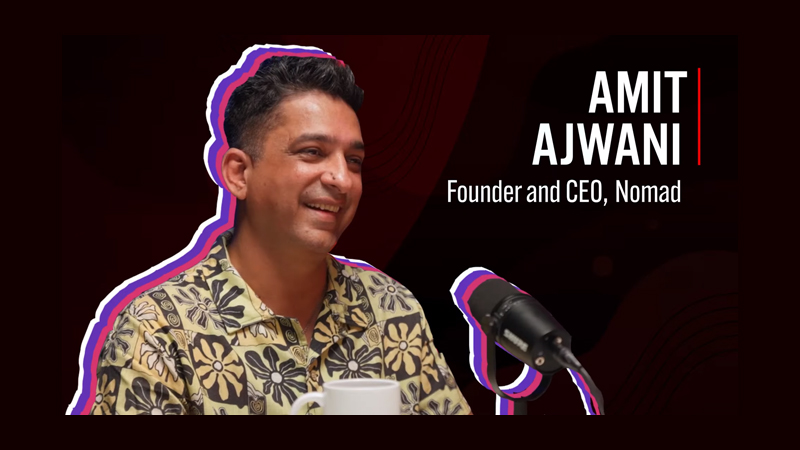
  • Nomad Pizza’s CEO Amit Ajwani reveals brand secrets on Zomato’s “Breaking Bread” podcast

    Nomad Pizza’s CEO Amit Ajwani reveals brand secrets on Zomato’s “Breaking Bread” podcast

    Mumbai: Nomad Pizza founder and CEO Amit Ajwani was recently featured in an engaging conversation with Zomato’s CEO, Deepinder Goyal in the podcast ‘Breaking Bread.’ Titled “How to Build a Brand for the Premium Market?”, the episode explores strategies and insights for creating and sustaining a premium brand in today’s competitive landscape.

    Amit Ajwani kicks off the conversation with the inspiring story of Nomad Pizza’s humble beginnings during the COVID-19 pandemic in Malviya Nagar, Delhi. Fast forward to today, Nomad Pizza has expanded to over 10 cities with five stylish dine-in outlets in Delhi, Mumbai, and Bengaluru. Ajwani reveals exciting plans for pan-India expansion and teases the introduction of mouth-watering burgers to their already beloved menu.

    In this fun and engaging episode, Ajwani delves into how Nomad Pizza has been a profit-making powerhouse since day one and its ambitious goal of becoming a 100 crore company. With a menu that boasts pizzas from around the globe, Ajwani proudly shares that their Naples Pizza reigns supreme, closely followed by fan-favorite New York-style pizzas.

    The podcast takes a delightful turn when Deepinder Goyal quizzes Ajwani on how Zomato can enhance its partnership with restaurants. Ajwani’s candid feedback and collaborative spirit promise an even brighter future for food lovers everywhere.

    The episode of “Breaking Bread” featuring Amit Ajwani is now available on YouTube, offering listeners a delightful blend of insights and inspiration on how to build a brand for the premium market.

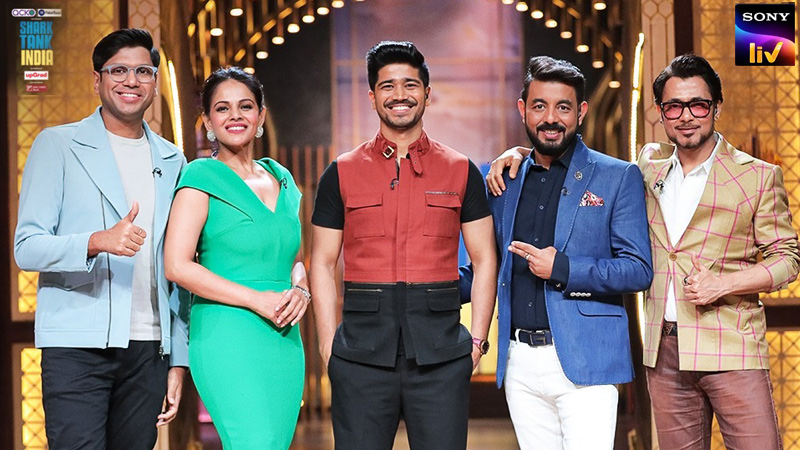
  • Inshorts co-founder & CEO Azhar Iqubal joins Shark Tank India 3

    Inshorts co-founder & CEO Azhar Iqubal joins Shark Tank India 3

    Mumbai: Building on the tremendous success of the past two seasons, Sony LIV is thrilled to announce the return of India’s beloved entrepreneurial reality show, Shark Tank India, for its highly anticipated third season. Adding to the roster of esteemed Sharks, after entrepreneurs like OYO Rooms founder and CEO Ritesh Agarwal and Zomato founder and CEO Deepinder Goyal is the remarkable Azhar Iqubal, co-founder and CEO of the groundbreaking news app, Inshorts.

    In addition to these new sharks, the panel will feature sharks from the previous seasons – Aman Gupta (co-founder and CMO of boAt), Amit Jain (CEO and co-founder of CarDekho Group, InsuranceDekho.com), Anupam Mittal (founder and CEO of Shaadi.com – People Group), Namita Thapar (executive director of Emcure Pharmaceuticals), Vineeta Singh (co-founder and CEO of SUGAR Cosmetics) and Peyush Bansal (founder and CEO of Lenskart.com).

    With the unparalleled expertise of these Sharks and the charismatic host Rahul Dua guiding the way, Shark Tank India 3 is poised to reach new heights. As budding entrepreneurs from across India prepare to dive into the Tank of dreams, once again, brace yourselves to witness the power of innovation, entrepreneurship, and unparalleled determination like never before.

    Stay tuned for more updates on Shark Tank India 3, streaming soon exclusively on Sony LIV.

  • Zomato to launch 10-minute food delivery with ‘Zomato Instant’

    Zomato to launch 10-minute food delivery with ‘Zomato Instant’

    Mumbai: The online food delivery space promises to heat up in the coming days with food aggregator and delivery platform Zomato planning to go the quick-commerce way. Zomato co-founder Deepinder Goyal on Tuesday announced a ‘10-minute food delivery’ service with ‘Zomato Instant.’

    Claiming to be the first to create this category globally of “delivering hot and fresh food in under 10 minutes at scale,” Goyal emphasised that “Innovating and leading from the front is the only way to survive (and therefore thrive) in the tech industry.”


    The food-tech platform plans to launch ‘Zomato Instant’ first in Gurugram April onwards with four stations. 

    Going into the nitty-gritty’s of how the food-tech plans to achieve the seemingly impossible while ensuring delivery partner safety and without compromising on the food quality, Goyal explained further in his blog. 

    The fulfilment of its quick delivery promise relies on a dense finishing stations’ network, which is located near high-demand customer neighbourhoods, according to Zomato. Sophisticated dish-level demand prediction algorithms, and future-ready in-station robotics will be employed to ensure that the food is sterile, fresh and hot at the time it is picked by the delivery partner, asserted Goyal in his blog. 

    On why the food-tech felt the need to get into quick commerce with food, Goyal further enlightened that it was the need of the hour as he started to feel the 30-minute average delivery time by Zomato is “too slow,” and will soon have to become obsolete. Customers are increasingly demanding quicker answers to their needs- They don’t want to plan, and they don’t want to wait, he wrote. Sorting restaurants by fastest delivery time is one of the most used features on the Zomato app, Goyal shared.

    The food aggregator will not penalise delivery partners for late deliveries and nor will the delivery partners be informed of the promised time of delivery, Goyal clarified. “Time optimisation does not happen on the road, and does not put any lives at risk.”

    Earlier last week, Zomato invested in the quick commerce space by acquiring online grocery firm Blinkit, formerly Grofers for around $700 million.

    In February, Zomato said it had set aside $400 million to invest in quick commerce stating that this category offers a “huge addressable market” and is synergistic with its food delivery business.

  • Zomato CEO Deepinder Goyal joins Unacademy’s board of directors

    Zomato CEO Deepinder Goyal joins Unacademy’s board of directors

    Mumbai: Homegrown learning platform Unacademy on Thursday announced the appointment of Zomato founder and CEO Deepinder Goyal on the company’s board of directors.

    “Deepinder has been an advisor for several years and it was only a matter of time before that association transformed into a formal partnership,” stated Unacademy Group co-founder and CEO Gaurav Munjal. “His experience with building and scaling a successful consumer technology company will help us tremendously as we build the country’s largest learning platform.”

    Goyal is an investor in Unacademy and participated in the company’s series H fundraise in August. “I am thrilled to join the Unacademy board. I think it’s one of the best product companies being made in India, and I am looking forward to learning from Gaurav and the team,” he said.

  • Zomato founder calls out ‘intolerance’ on social media after language row

    Zomato founder calls out ‘intolerance’ on social media after language row

    MUMBAI: Founder of online food delivery platform Zomato, Deepinder Goyal has called out the rise of ‘intolerance’ among the social media users, after the platform found itself in the eye of another Twitter storm early this week.

    “An ignorant mistake by someone in a support centre of a food delivery company became a national issue. The level of tolerance and chill in our country needs to be way higher than it is nowadays. Who’s to be blamed here?” Goyal tweeted.


    The issue arose after a customer from Tamil Nadu tweeted a screenshot of a chat he had with one of the customer care executives. The complaint was related to a missing food item in the order. According to the customer, the employee told him, that the amount cannot be refunded and apparently schooled him for not knowing Hindi while discussing the order detail. “Tagged me a liar as she didn’t know Tamil,” he further accused, tagging the app with the words, “Not the way you talk to a customer. @zomatocare”

    The incident soon spiralled into a trending topic on social media, with users tweeting #Reject_Zomato and criticising Zomato, for the employee’s reference to Hindi as “the national language of the country.” Some local politicians also joined in the company’s critique, leading to a knee-jerk reaction from Zomato.

    The company soon issued a public apology and announced the termination of the woman employee for “negligence towards our diverse culture”, highlighting that it understands that food and language are core to any culture and Zomato takes both of them seriously.

    However, the company reversed its decision a day later and reinstated the employee. “This alone is not something she should have been fired for. This is easily something she can learn and do better about going forward,” tweeted Goyal, adding that the call centre agents are young people, who are at the start of their learning curves and careers. “They are not experts on languages and regional sentiments. Nor am I, btw.”

    The Zomato founder also took the opportunity to express his concern over the rising intolerance on social media, and shared a word of advice to Twitterati: “Having said that, we should all tolerate each other’s imperfections. And appreciate each other’s language and regional sentiments.”, adding, “We are all the same, as much as we are different.”

    The case is part of a series of incidents in the recent past, wherein brands and advertising agencies have been targeted by overzealous social media in the country. Recently FabIndia came under fire for an ad it tweeted regarding its latest festive collection titled ‘Jashn-e-riwaaz’. The tweet was later taken down after a vitriolic campaign was run against the brand by some self-proclaimed groups for using Urdu words for a Diwali collection.

    Earlier fashion e-comm, Nykaa has also came under fire on social media for its online Navratri offers on condoms and lubes. Ed-tech platform Unacademy was also trolled recently for a skit that some social media users termed as “Anti-Hindu”. Not long before, ethnic wear brand Mohey came under attack on social media for a Wedding ad featuring its brand ambassador Alia Bhatt.