Tag: Deepak Shourie

  • New Discovery India chief joins office; verticals created under two VPs

    New Discovery India chief joins office; verticals created under two VPs

    NEW DELHI: Discovery Networks Asia Pacific, home to iconic brands like TLC, Animal Planet, ID, Discovery channel and Discovery Life, has effected a restructuring in its Indian operations, after its Indian head Rahul Johri quit earlier this year, by creating two verticals under two vice-presidents which will now report to the newly-appointed South Asia Senior Vice President & General Manager Karan Bajaj.

    Bajaj in turn  reports to Discovery Networks Asia Pacific president & managing director Arthur Bastings, who has been charged with the responsibility of scaling up the network’s operations in the region and steering it into the digital ecosystem.

    The Delhi-based heads of the two verticals under Discovery South Asia — Rajiv Bakshi and Richard Pembroke — female & family entertainment product and real world entertainment product, respectively — report to Bajaj who joined duties a couple of days ago. TLC, ID, Kids, and their HD and other language cousins fall under the female, & family entertainment product, while Discovery, Science, Turbo, Animal Planet, and their HD and language versions come under the Real World vertical.

    According to Discovery sources, the changes that came into effect in recent months are aimed at revitalising the Indian operations, which the Asian regional head office located in Singapore felt was necessary after a period of slow growth in Asia’s biggest market, India.

    Discovery, which broadcasts in English and several Indian languages aimed at increasing the reach beyond the English speaking areas, has also been increasing generation of local content for broadcast in South Asia and also on its global network.

    The sources, however, clarified that the changes are interim in nature and as Bajaj settles down in his new assignment more rejigs may be in the offing.

    Discovery, which launched its operations in India in the mid-1990s with former ISRO executive Kiran Karnik at the helm, has been witnessing churn since long-time executive Johri quit the organisation early 2016, which was also part of changes taking place in Discovery after Singapore-based Tom Keaveny, President and MD for Discovery Networks Asia-Pacific, was relocated to London in 2013 and Discovery bought over Eurosport subsequently.

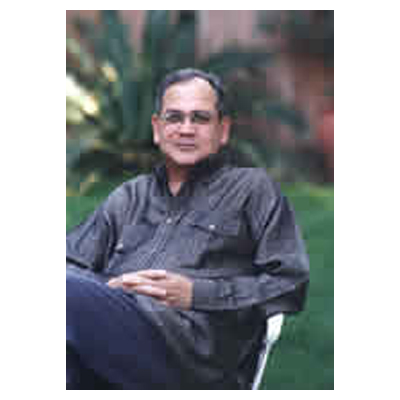
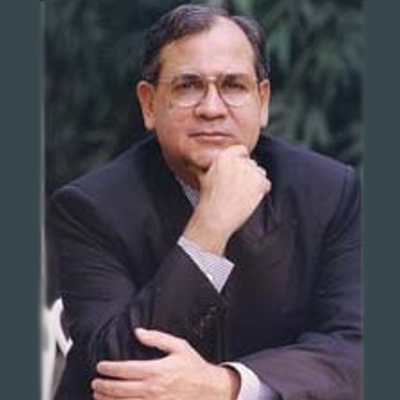
    Still, Indian broadcast industry observers said that Johri, a protégé of former India head Deepak Shourie (he was at the helm after Karnik departed in 2001), had navigated Discovery’s India operations quite ably during challenging times in the first decade of 2000.

    In recent times, the whole Discovery group has been focusing on initiatives to keep pace with the changing technological space, including recently announcing a U$100 million investment in a digital JV as a minority stakeholder in Group Nine Media.

    ALSO READ:

    Marketing wizkid Karan Bajaj to head Discovery India

    Discovery APAC EVP & GM – South Asia Rahul Johri quits
     

  • New Discovery India chief joins office; verticals created under two VPs

    New Discovery India chief joins office; verticals created under two VPs

    NEW DELHI: Discovery Networks Asia Pacific, home to iconic brands like TLC, Animal Planet, ID, Discovery channel and Discovery Life, has effected a restructuring in its Indian operations, after its Indian head Rahul Johri quit earlier this year, by creating two verticals under two vice-presidents which will now report to the newly-appointed South Asia Senior Vice President & General Manager Karan Bajaj.

    Bajaj in turn  reports to Discovery Networks Asia Pacific president & managing director Arthur Bastings, who has been charged with the responsibility of scaling up the network’s operations in the region and steering it into the digital ecosystem.

    The Delhi-based heads of the two verticals under Discovery South Asia — Rajiv Bakshi and Richard Pembroke — female & family entertainment product and real world entertainment product, respectively — report to Bajaj who joined duties a couple of days ago. TLC, ID, Kids, and their HD and other language cousins fall under the female, & family entertainment product, while Discovery, Science, Turbo, Animal Planet, and their HD and language versions come under the Real World vertical.

    According to Discovery sources, the changes that came into effect in recent months are aimed at revitalising the Indian operations, which the Asian regional head office located in Singapore felt was necessary after a period of slow growth in Asia’s biggest market, India.

    Discovery, which broadcasts in English and several Indian languages aimed at increasing the reach beyond the English speaking areas, has also been increasing generation of local content for broadcast in South Asia and also on its global network.

    The sources, however, clarified that the changes are interim in nature and as Bajaj settles down in his new assignment more rejigs may be in the offing.

    Discovery, which launched its operations in India in the mid-1990s with former ISRO executive Kiran Karnik at the helm, has been witnessing churn since long-time executive Johri quit the organisation early 2016, which was also part of changes taking place in Discovery after Singapore-based Tom Keaveny, President and MD for Discovery Networks Asia-Pacific, was relocated to London in 2013 and Discovery bought over Eurosport subsequently.

    Still, Indian broadcast industry observers said that Johri, a protégé of former India head Deepak Shourie (he was at the helm after Karnik departed in 2001), had navigated Discovery’s India operations quite ably during challenging times in the first decade of 2000.

    In recent times, the whole Discovery group has been focusing on initiatives to keep pace with the changing technological space, including recently announcing a U$100 million investment in a digital JV as a minority stakeholder in Group Nine Media.

    ALSO READ:

    Marketing wizkid Karan Bajaj to head Discovery India

    Discovery APAC EVP & GM – South Asia Rahul Johri quits
     

  • ‘We are keen on bringing in more channels’ : Deepak Shourie – Discovery Networks India MD

    ‘We are keen on bringing in more channels’ : Deepak Shourie – Discovery Networks India MD

    For Discovery Networks India, 2007 has been a year of growth. The company carried out a slew of local initiatives including celebrating 60 years of India’s Independence. It is also looking at airing more HD content from overseas, coming out with thematic week slots for Discovery Travel and Living, and doing local productions.


    In an interview with Indiantelevision.com’s Ashwin Pinto, Discovery Networks India MD Deepak Shourie talks about the company’s eagerness to bring in more channels, address different target segments, and prepare the ground for exploiting new media.


    Excerpts:

    Discovery globally has been undergoing major restructuring this year. Has India been impacted?
    There is more sharing of resources happening now. We see Discovery as one brand rather than saying, for instance, that what is happening in the UK is separate from other countries.


    India is an important part of this brand story. We take content from other parts of the world and what we produce in India travels abroad. With India today being the flavour of the world, this of course helps.

    As cable operators digitalise their networks, do you see this as an opportunity to bring in more channels from the Discovery stable?
    We are examining this possibility. We are keen on bringing in more channels even though we realise that there is no space on analogue cable networks and getting distribution is tough. Cable operators are in a position to demand higher carriage fees due to lack of space. Digitisation will not become a complete reality unless consolidation within the cable industry happens.

    Are you satisfied at the growth of digitisation in terms of Cas and DTH?
    With direct-to-home (DTH), we are happy to see Tata Sky and Dish TV spreading their reach. But with Cas (conditional access system), what we feared would happen has happened. We have been saying that Cas can’t be mandatory; it has to be voluntary. You can’t force it down people’s throats. That is why the uptake of set top boxes (STBs) in the Cas areas has been low.


    Broadcasters are suffering as they have no idea as to how many homes have taken their channels. The multi-system operators (MSOs) do not have a proper billing system in place.

    We are entering a phase when we will see the launch of more English channels. How do you view this scenario of fragmentation?
    We are happy to see more channels come in. Since Discovery is a well established brand, we are not worried about our share of viewership; we have grown to be the number one international channel in the country. We have achieved the aim of making Discovery mainstream as opposed to being niche. The new channels that come in will find it difficult to build viewership.

    Discovery has boosted its reach partly due to its Hindi feed. Are you looking at regional languages?
    No! We were evaluating this possibility. However, we decided that these two languages give us enough reach. In the South, English is well respected.

    For Discovery, we are seeing more male viewership. Discovery Travel and Living targets SEC A men and women. For Animal Planet, a global strategy is being worked out

    Has there been a change in terms of how viewers have consumed the channel over the last couple of years?
    For Discovery, we are seeing more male viewership. This is because of the kind of shows we air. We focus on things like engineering, science and cars which appeal more to men.


    Discovery Travel and Living targets SEC A men and women.


    For Animal Planet, a global strategy is being worked out. We are waiting for this.


    India is a young country with high aspirations. Over time we will see some movement away from entertainment television towards television that is informative. This is how growth will happen for us.

    One of Discovery’s major initiatives was celebrating 60 years of India’s independence. How has the experience been working with India’s scientific and technological community?
    Our aim was to showcase innovations at a grassroots level. It seemed a good way to show the progress India is making. We also want to encourage innovation. The technological community was very open and appreciative to what we did. Local shows play an important part in driving viewers to the channel.

    What has Discovery’s strategy been to lure in more viewership?
    Our main aim has been to ensure that the primetime is very strong. We start with the ‘Wild’ section, then move on to technology, trends and India hour.


    Our aim is to two-fold. Firstly during primetime, the content on our channel must be important and matter to our viewers. Our second aim is to ensure that viewers return to our channel even during non-primetime.

    What are the major properties coming up on the channel?ce?
    The biggest one is Atlas which will kick off towards the latter part of next month. This will look at different countries – India, Australia, Italy and South Africa. The show looks at different facets – be it culture, topography, etc. It has been filmed in high-definition. It looks to combine the quality of a blue-chip documentary with the detail and clarity of HD.


    Another property we are excited about is Into Alaska With Jeff Corwin. Alaska has America’s highest mountain; it has a great element of wilderness as well as fascinating animals. A population of less than that of New York City spreads out over an area three times the size of Texas. Jeff Corwin brings this wilderness to viewers.


    Race To Mars looks at the race to first reach the Red Planet by 2030. China is leading the way.


    Once again, America and its partners, including Canada, are thrust into a winner-take-all space race. Six individuals from Canada, the US, Russia, France and Japan are selected for this gruelling two-year mission. This crew sets out on humanity’s first expedition to another world; nothing can prepare them for the unexpected danger and staggering wonder of what they will experience.

    Abroad Discovery is focussing on the environment with its major eco green initiative. Are you looking to do something in India along these lines?
    We will air this in India. Discovery US has tied up with Leonardo DiCaprio for the eco green initiative. Once this content becomes available we will see what can be done in India to add value.

    Discovery Asia and Nokia teamed up for a filmmaker’s initiative. How has this worked out?
    It was a marketing relationship. This was for mobile filmmaking where the winner got the chance to work in Discovery Asia’s Singapore headquarters and learn about making documentaries. The initiative gave people the chance to innovate.

    How does Discovery Travel and Living reach its viewers?
    Viewers have found us. We have more SEC A viewers watching us than any other channel. Income levels are going up. Where will this money be spent? On lifestyle. That is why they will watch us for information and also entertainment.


    It is a difficult proposition for most channels to catch this audience. People in this segment do a lot of things during their leisure time.

    Has this helped you in roping in big advertisers?
    We have sold most of our inventory. Every lifestyle brand that launches a new product comes to Discovery Travel and Living. At the moment we are doing something for India Today Travel Plus. In the past we have done initiatives for companies like AmEx Platinum Card.


    Is the channel also looking at forging tie-ups with tourist resorts, tourist boards etc?
    In the past, we have done shows for states like Chattisgarh. We did a France Week recently and we did a press event at the French embassy. Sometimes, tourism boards advertise on our channel.

    Could you shed light on Discovery Travel and Living’s plans for the first quarter of next year?
    We have a couple of interesting shows lined up. There is a show called The Petra Nemcova Project; it is about this international supermodel who is grooming six other potential models. The show chronicles the real story of what it takes to be a model in New York City, without staged eliminations or contrived challenges.


    Six new models are brought to the biggest stage in modelling and viewers follow them from their first test shoot to the runways of New York Fashion Week.


    Nemcova serves as a mentor and friend to the prospective models, as they learn the trade of modelling and the business of fashion. Using her own life experiences, Petra advises the models on how to succeed and underscores the importance of having a well-rounded life.


    We will also premiere a show called Nigella Express. Nigella Lawson is a popular TV chef on our channel.


    She takes viewers on a quick and easy journey through the world of getting fabulous healthy food on the table fast. It is the sort of food viewers can cook fast around the clock, any day of the week, to fit whatever amount of time is available. Starting with everyone’s everyday nightmare of what to eat for dinner, to getting entire banquets on the table in less than 30 minutes, this is a series that will resonate with everyone struggling with hurried, time-squeezed, modern life.


    We are also looking at a couple of Indian productions.

    The channel is doing thematic weeks. Could you elaborate on this?
    These run from Monday to Friday at 9-10 pm. It allows us to showcase special programming for viewers. This also works for advertisers as they can sponsor a particular week’s programme. During this quarter, we are doing a lot of country-specific programmes, looking at the adventure spots and opportunities for tourism and travel.


    Abroad, Discovery has looked to expand through new media. What plans are there in India to tap into mobile and internet?
    Both of these are under review. Global strategies are being worked out for them. It will be a different ballgame as the mobile screen is small; it will complement traditional TV viewing as it is good for snippets of news, music and sports.

  • Ratings: Discovery maintains lead in infotainment

    Ratings: Discovery maintains lead in infotainment

    MUMBAI: Continuing with our review of how different genres have fared over the last six months we now cast our eye on the infotainment space.

    Tam data c&s 15+ all India shows that Discovery has a clear lead over archrival National Geographic Channel (NGC). It increased its share which was at 38 per cent from 15 September – 15 October 2006 to 42 per cent for the period 15 December 2006 – 13 January 2007. NGC’s share fell from 31 per cent in the 15 October – 15 November 2006 period to 25 per cent from 1 January to 13 January 2007.
    Speaking to Indiantelevision.com on this Discovery India executive VP and MD Deepak Shourie says that a robust consumer feedback mechanism and viewer-centric approach has allowed the broadcaster to present engaging and entertaining programmes which has led to this surge in viewership.

    “These programmes were aggressively promoted through innovative marketing and public relations strategies.” He gives the examples of the show Dragons: A Fantasy Made Real which did well as far as viewership is concerned.

    Meanwhile NGC VP marketing Rajesh Sheshadri points out to big properties like the second season of Mega Structures, Nat Geo Investigates: Terrorism which has helped boost viewer involvement. The plan is to have a major property come out at least once in two months. For instance this month it focusses on martial arts with Fists Of Fury. In the past it has done shows like Megastructures to build up the Thursday primetime slot and Air Crash Investigations on Mondays.

    When asked about the plan to bridge the ratings gap he adds, “As far as the infotainment genre is concerned, Nat Geo is the only true blue factual channel today. The others (including NGC’s sibling The History Channel) have moved in the entertainment space. However, we definitely need to keep the momentum going to push the ratings forward.” Of course since both Discovery and NGC air shows related to current events at times there is an overlap. A case in point was September when they both focussed on the theme of terror.

    Creating awareness: Shourie meanwhile points out that the marketing effort has been to highlight the diverse variety of programming that Discovery offers to its viewers.

    “Within this, we promoted a range of programmes from nature to engineering to science, and even India-centric programmes offering viewers a wholesome television experience and an alternate to soaps and movies.”

    In terms of marketing and promotional activities Sheshadri says, “We always endeavour to provide 360-degree experience to our viewers through innovative promotions linked with our programming, which also provide our advertising partners an ideal opportunity to reach out to the consumer.”

    A case in point was its tie up with McDonald’s for an in-store promotion for kids, the ‘Roboraptor Contest’. McDonald’s outlets across Mumbai, Pune, Ahmedabad, Vadodara, Bangalore and Hyderabad promoted the initiative, where kids could win toys from the animated series Dragonball Z with every happy meal.

    The Local Push: This is an area where all the channels have looked to take things to the next level. On the local front to encourage talent and build a closer connect NGC late last year announced a new initiative to recognise work in non fiction. It will present awards for excellence in non fiction film-making in India. It will take this activity forward in June as it does not want to clash with the cricket World Cup. It aired specials under the theme Emerging India last year.

    This looked at different topics from call centres in Mumbai to Delhi’s firefighters. Sheshadri says that localisation can be used as a marketing tool. For instance promos were cut with prominent people like the Police Commissioner expressing their appreciation on the terror initiative. Sheshadri adds that a lot of NGC’s viewers are those that watch news a lot. They often watch NGC as they are passionate about a certain topic that the channel has chosen to focus on.

    Last year Discovery increased the number of hours devoted to Indian shows. The Discover India block on Saturday night is now two hours instead of one hour.

    The media buyers take: OMS media director Madan Mohapatra feels that Discovery fares better on account of the wide range of shows it has. “It probably has a broader appeal among its audience which is why in terms of incremental reach offered in the media plan and affinity with its TG it fares better.” Starcom’s Rahul Panchal feels that Discovery in a lot of places will be on a better channel band. Also its awareness level is probably higher. Last year Discovery is estimated to have earned around Rs. 350 million while NGC would have made around Rs. 200 million.

    The other players: One surprise when one looks at the ratings is the fact that Animal Planet is faring a little better than The History Channel (THC). Why it is surprising is simply because THC had undergone a repositioning from an infotainment channel to an entertainment channel in May. Therefore its breadth of offerings is much wider compared to the other channel whose sole focus is on the animal kingdom.

    Animal Planet’s share is at 19 per cent compared to The History Channel which has a share of six per cent. Even Discovery Travel and Living has a slightly higher share at eight per cent for the period 1 January – 13 January 2007.

    Shourie says that Animal Planet due to the strength of the brand attracts high viewership from across age groups, genders and geographies. Last year in order to emphasise the channel’s diverse programming and attract appointment viewing, Animal Planet introduced a time-band strategy last year, segmenting the programmes under well-defined bands. To leverage this advantage and to draw higher consistency and control over viewership, the channel targetted specific and relevant viewers allowing it to build loyalty says Shourie.

    Mohaptra says that Animal Planet’s advantage is that kids love it. So dual viewership happens for the channel. “Parents often do not mind watching something they feel is good for their kids. That is why Cartoon Network has impressive numbers. THC does not have this factor going for it.”

    Panchal feels that one can approach Animal Planet in a more relaxed manner which works in its favour. With THC one has to concentrate more with their films and mini series. Also Animal Planet’s content one cannot find elsewhere.

    Shourie is also optimistic on the performance of DTL. “The emerging aspirations and attitudes in India, strongly endorsed by the fast-changing travel and consumption habits, reflected a demand for lifestyle-oriented television content in India and led to the launch of Discovery Travel and Living.”

    The channel he has been successful in redefining ‘lifestyle’ programming in India. He claims that DTL is available in 22 million homes around the country and attracts more than 120 advertisers from across product categories.

    Mohaptara feels that as far as DTL is concerned it helps that travel and tourism are two booming sectors. There is a clear interest among the upper class to travel more to exotic locations. This helps DTL leverage its brand proposition among the media fraternity although the numbers may not be that high. The perception is that the upper crust that travels abroad regularly and which is important for the lifestyle brands would be tuning into DTL to find out the hot locales and cool things to do.

    Panchal says that DTL has a small but loyal audience. So it is particularly attractive for tourism boards, airlines. DTL is estimated to have earned around Rs. 160 million last year. Due to the high quality of the audience it managed to get more than double what Animal Planet got which would be around Rs. 75 million. Growth in the infotainment sector is estimated at around eight per cent for this year.

    Meanwhile THC’s tagline is ‘Live The Story’. The new fare includes mini-series, re-enactments and also films. All have a historical connect. That is the basic criteria. The aim is to change the perception of history as being dull and boring to that where it is a vibrant topic and comes alive. As Sheshadri says, “We have focussed and build on the two franchises that we have established – Double F (Fridays at 9 pm) and Jumbo movies (Sat and Sun at 8 pm) like Hitler: Rise Of Evil.”

    The Double F meshes facts and fiction. So for instance you could see a biography of Jack The Ripper followed by a film on the serial killer with Michael Caine. In December to strengthen the weekday offerings THC launched the shows Sharpe with British actor Sean Bean, Sherlock Holmes and Kennedy at 9 pm on weekdays.

    Sheshadri says that at the same time the channel has constantly refreshed the factual content which is the bedrock of the channel. So one sees new shows coming up like Dogfights, Shootout, Engineering An Empire. These use extensive reenactments and computer graphics to enhancing the theme of history.

    On the local front THC came out with an online initiative called Save Your History. This is a community sharing site that allows Indians to share and collaborate on important historical happenings in their lives, which could be in the form of photos, precious documents and artifacts.

    For instance, a famous cricketer could put a photograph of his first bat or the first match that he played. The campaign aims at educating people on the importance of responsibility and commitment to saving one’s culture and heritage for the sake of posterity. This Sheshadri says is a good way to get a community involved with the brand.

    In terms of marketing one thing that THC did was a tie up with NGO, the Indian National Trust for Art and Cultural heritage (Intach). The organisation works towards promoting awareness of heritage and conservation. Both parties aim at making history more relevant.

    THC has screened shows like French Revolution, The Mughals, Rome and Crusades have been organised by Intach with its chapters, schools and colleges. In the first month, the activity reached 6000 students. This way THC hopes that children will not look at history as being dull and boring. THC is estimated to have earned around 170 million in ad revenue last year.

    Localisation is also something that DTL has gotten into. Last year it started airing locally commissioned shows on India like The Great Indian Wedding and Indian Rendezvous. The aim was to boost interest in the channel. The challenge Shourie says is to still maintain its international positioning.

  • Discovery to air a four part travelogue on ‘Chhattisgarh: The Tribal Planet’

    Discovery to air a four part travelogue on ‘Chhattisgarh: The Tribal Planet’

    MUMBAI: This year infotainment channel Discovery increased the number of hours devoted to India themed programming. Each week Discover India airs in a two hour block now instead of just one hour in the past.

    Now in its endeavour to present India’s cultural heritage and natural diversity, Discovery has produced a special four-part programme on Chhattisgarh. The travelogue Chhattisgarh: The Tribal Planet the channel says will present a journey of surprise and enchantment, uncovering the mystical, traditional place.An Indian commission, Chhattisgarh: The Tribal Planet will air on consecutive weekends (Saturday and Sunday), 9-10 December and 16-17 December at 10 pm.

    Discovery India executive VP, MD Deepak Shourie said, “Discovery Channel has showcased India’s diverse cultural and natural landscape through captivating programmes. Chhattisgarh: The Tribal Planet explores the state’s inimitable and unexplored attractions and will serve as a gateway for eco and ethno-tourists from across India.”

    The Honourable Chief Minister of Chhattisgarh, Dr Raman Singh said, “Chhattisgarh is endowed with a rich cultural heritage and attractive natural diversity offering an interesting blend of nature, ethnic, heritage, wild life and eco-tourism. The state is full of ancient monuments, rare wildlife, exquisitely carved temples, Buddhist sites, palaces, water falls, caves, rock paintings and hill plateaus.

    “Most of these sites are untouched and unexplored and offer an alternate experience to tourists. I am delighted that travellers across India will be able to explore the state’s unique attractions on Discovery Channel – an ideal partner in our endeavour to showcase Chhattisgarh’s tourism potential.”

    Honorable Minister of Tourism and Chairman of Chhattisgarh Tourism Board Brijmohan Agrawal said, “It is my firm belief that in the coming years Chhattisgarh will emerge as a leading tourist destination and will leave its mark on the international tourist map. I am confident that Discovery Channel’s programme Chhattisgarh: The Tribal Planet will help position the state as an attractive destination for both domestic and foreign tourists.”

    Presenting one of India’s least explored eco and ethno-tourist destinations, the show will take viewers through the state’s history, culture, architecture, wildlife and its varied tribes. Providing a holistic view of the state, the programme will cover Raipur, Kawardha, Bhoramdev, Kumhapura, Jagdalpur, Sirpur, Turturiya, Kanger National Park, Tirathgarh and Chitrakoot waterfalls, Bastar tribes, forests, tribal ‘Haats’ and villages and craft centers.

    Covering the Bastar region in southern Chhattisgarh, the first episode presents its large tribal population and abundant natural resources. Exploring the state’s traditions, this episode will take viewers through the weekly markets called ‘Haats’, local food, customs, dance and festivities. It will uncover the state’s handicrafts like terracotta at Nagarnar village through interactions with the artisans. The episode will also showcase the ancient temples at Barsur.

    The second episode highlights the heritage of the state in terms of its history and architecture – excavations at Sirpur, Laxman temple, Rajiv Lochan temple, Danteshwari temple, Bhoramdeo temple and Mainpat, a Tibetan settlement. The viewers can also witness Teejan Bai’s captivating performance at the Laxman Temple at Sirpur.

    The third segment is an ode to the artistic traditions of the state. It gives a glimpse into the crafts and costumes through interactions with tribals and artisans. Viewers will discover their culture, unique delicacies like the red ant chutney and interesting traditions like Ghotul. Viewers will also learn the rare craft of bell metal from master craftsman Jaidev Bhagel. Apart from the cultural aspect, the episode would also showcase the natural beauty of the state including the spectacular waterfalls at Chitrakoot.

    The final episode takes a look at the natural splendour of the state, showcasing its many national parks and flora and fauna. Viewers will get to see picture-postcard waterfalls at Tirathgarh and the verdant valley. They will get a taste of life in a jungle and a glimpse of its wildlife – leopard, deer and bison. Apart from the sanctuaries in Bharnawapara, Kanger and Udanti, viewers will also visit the megalithic rock site of Karkabhat with archaeologist A K Sharma.

  • Discovery Travel and Living sets up an ‘Indian Rendezvous’

    Discovery Travel and Living sets up an ‘Indian Rendezvous’

    MUMBAI: Earlier this year Discovery Travel and Living had unveiled its first local initiative The Great Indian Wedding. This takes a look at six different weddings. Now the channel will look at six Indian cities. The show airs every Sunday at 8:30 pm from 12 November.

    The cities covered are Mumbai, Delhi, Bangalore, Hyderabad, Kolkata and Chennai. What is unique is that each episode will be anchored by a well known personality from that city. So Konkana Sen Sharma will anchor the Kolkata episode, Sushma Reddy will anchor the first episode of the show which looks at Mumbai, Vasundhara Das will anchor the Bangalore episode, filmmaker Nagesh Kukunoor will anchor the episode on Hyderabad, Meera Vasudevan will anchor the episode on Chennai and Ayaan Ali khan will host the episode on Delhi.

    The episodes will inform viewers about the food, air, music, adventure and travel opportunities available in each city. The episodes will offer anecdotes on famous places, interactions with each city’s popular personalities, trivia and little known facts.

    Discovery India MD Deepak Shourie says, “Indian rendezvous promises viewers both in India and abroad an unparalleled journey into the heart of India’s biggest cities. It reflects the vibrand spirit and soul of modern India. We are confident that viewers will enjoy watching and rediscovering their cities.”

    Discovery Lifestyle Networks VP Aditya Tripathi says that the plan going forward is to have at least one local show each quarter. So in each year you will see between four to six local shows. Indian Rendezvous he says took eight months to complete. The Mumbai episode was shot a year back. The next show will kick off in February 2007. Vir Sanghvi will host a food based show. “This will give viewers an idea of different cuisines, their origins and how a cuisine defines a region. Most people know Vir as a journalist but his knowledge on the subject of food is phenomenal.

    “This month and in December we will be shooting several episodes of the Great Indian Wedding as it is the marriage season. Following the successful pilot we will air at least six episodes sometime in the middle of next year. There are also several other concepts that have gone into production. They include shows on hotels, homes, fashion, holiday destinations. Indian Rendezvous will also air on Discovery Travel and Living in the UK and in Asia.”

    Shourie adds that as DTH grows in India the network will look at bringing more channels into the country possibly next year. He however said that at this juncture it is too premature to say anything specific.

    Coming back to Indian Rendezvous. Reddy says, “Colourful, vibrant, energetic and friendly Mumbai is and will always be the gateway to India. Mumbai is a city of startling contradictions with stately Victorian architecture and flanking skyscrapers that stab the sky. It is the country’s financial hub and the Mecca of cinema. All this and more makes Mumbai one of India’s most exciting cities. Fast moving and full of life.”

    The Mumbai episode will among other things look at cricket and the episode visits the CCI where the champions trophy was played at the Brabourne Stadium, Wankhede Stadium and meets ex cricketer Ajit Wadhekar.

    It also visits the Taj Mahal Hotel where the discovery travel and living media meet took place this afternoon. The hotel even today retains an old world charm. It always visits the horse races at the Mahalaxmi race course. It also looks At the street food at Juhu Beach as well as Chor Bazaar as well as the small but passionate jazz scene. It talks to jazz musician Louis Banks who mentions that both Mumbai and Kolkatta have a history of jazz.

    DAs says, “Bangalore has attracted people from diverse ciltural and linguistic backgrounds. Being born and brought up in Bangalore and having had the opportunity to travel to other Indian cities I truly understand and love this city. In the past from being known as a pensioners paradise among many other things Bangalore has become a city for all age groups and profiles- students, young professionals, musicians, dancers and artists. Indian Rendezvous presents the city for all seasons in its totality and splendour”

    The Bangalore episode looks at the Infosys Campus which is a city within a city. It also examines fashion with expert Prasad Bidappa as well as looks at Bangalore’s pub culture. Bangalore is known as the pub city of India. The episode also looks at Cubbon Park, which is spread over 300 acres of urban tranquillity.The park is popular with daily joggers and nature lovers. The episode also looks at Soukhya a health clinic.

  • Government allays fears of media industry on Broadcast Bill

    Government allays fears of media industry on Broadcast Bill

    NEW DELHI: Fazed by strident criticism of certain provisions in a proposed Broadcast Bill, the government on Monday agreed to take industry’s concerns into consideration while drafting the legislation.
    Briefing reporters after a meeting with the industry representatives on the eve of India’s Independence Day, information and broadcasting secretary SK Arora said, “We have agreed to take into account the views of the industry when we draft a final Bill on the subject.”

    A Press Trust of India report said Arora also sought to assuage apprehensions of the industry on a provision dubbed “draconian” in certain sections of the media regarding the inspection, search and seizure of equipments.

    “These are just apprehensions and the government has no intention to encroach on the independence of the media,” PTI quoted Arora as saying.

    According to Arora, “This kind of criminal offences clause will be applicable only for three offences — unlicenced activity; telecasting anti-national content and something that may be sensitive from security perspective; and if certain directions of the Government on security and national integrity are not carried out.”

    However, Indiantelevision.com learns that what was billed as a big ticket industry-government interaction did not turn out so as quite a few captains of the industry kept away from the meeting and Delhi, which is reeling under heavy security due to threats of large scale terrorist activity.

    Interestingly, the meeting also got broken up into several smaller interactions with the minister and secretary briefing different people in different rooms.

    Dasmunsi is also said to have expressed his ignorance on TV channels being directed by his ministry to scroll a public apology for three days for breaching advertising code.

    Those who attended Monday’s meeting included Zee group’s Jawahar Goel, Discovery India head Deepak Shourie, India TV CEO Chintamani Rao, NDTV Profit head Vikram Chandra and Business Standard CEO and editor TN Ninan.

    Industry bodies representatives included those from Indian Media Group, Indian Broadcasting Foundation, Indian Newspaper Society and several other media companies.

  • Discovery Travel & Living unveils 1st local production The Great Indian Wedding

    Discovery Travel & Living unveils 1st local production The Great Indian Wedding

    UDAIPUR: Discovery Networks India’s first production The Great Indian Wedding to be aired on Discovery Travel & Living (DTL) was screened for a select media gathering last night. With this, the lifestyle channel has pioneered the lifestyle genre delivering style and luxury to the discerning upscale SEC AB audience of males, females and couples in the 18-45 years age group.

    Produced by Delhi based Blue Mango films, it debuts with the episode of Priya Sachdev and Vikram Chatwal’s wedding. It is a one of a kind series, allowing the viewer to experience the wedding as an insider. The focus clearly is on weddings with a difference and have a twist to them: opulence, glam quotient, location and theme. The pilot episode premiers on 20 August at 8 pm.

    The programme captures the glamorous theme parties extending from exotic locations like Jag Mandir in Udaipur to premium hotels in Delhi, the striking performances by Indian and international artists and the romantic and religious wedding ceremony.

    The host, Natasha Mago presents an insiders view, chatting up the bride, groom, guests, the challenges and frustrations of the wedding planner and the actual wedding ceremony.
    The regal Oberoi Udaivilas at Udaipur was the venue where Discovery Networks India executive vice president and managing director Deepak Shourie and the Lifestyle Networks VP Aditya Tripathi gave details on the commissioning of India centric series and spoke of the bouquet of locally produced shows to go on air from this month.

    Shourie in his brief welcome speech said that having successfully reinvented documentary and real world television, Discovery brings the same vision and experience to DTL’s locally produced series. He stated that India will be highlighted on the channel.

    “Discovery Travel and Living has created and established the lifestyle genre in Indian television. To further our growth goals and to satisfy the incessant demand from both Indian and foreign viewers for more India-centric content, we have commissioned programmes that capture the contemporary India through a variety of themes. These productions will be up to international standards and will be the next step in successfully establishing our lifestyle expertise,” Shourie said.

    On The Great Indian Wedding, Tripathi said, “When we decided on the wedding theme, it so happened that the Sachdev/Chatwal wedding was also being planned and we took it from there. During the ad break of this pilot episode, a banner will be streamed asking viewers if they know of similar weddings that can be featured . And, so based on the responses and our research, the 13 part series will be made. The remaining episodes will go into production in the 2006-2007 wedding season,” said Tripathi.

    The next series in India centric shows which is almost in its final stages of production is Indian Rendezvous where six hosts from 6 cities take the viewers on a journey of their native cities; famous spots, to do’s and must visits, besides revealing secret trails and hidden treasure troves in the city of their choice. The series has Sushma Reddy on Mumbai, Ayaan Ali Bangash on Delhi, Konkane Sen Sharma on Kolkatta, Meera Vasudevan on Chennai, Nagesh Kukonoor on Hyderabad and Vasundhara Das on Bangalore as hosts.

    Another show under production is Matter Of Taste, hosted by epicurean Vir Sanghvi. This is a journey around the Indian palate and takes a peek at origins of Indian food, tradition and culture and rare insights. Singhvi travels around the country for this show.

    Other series under production which cover hotels, fashion and style, interiors. “But, this the first of many and surely the first of a regular supply,”assures Tripathi.

    But the way forward for DTL, Tripathi stressed was that it was essentially an international channel and India productions will be a small but, significant part of the repertoire of programmes. Said he, “The Indian programming will never dominate the channel as we clearly make it with the intention of airing it in other parts of the world. So, maybe 10-15 per cent of the programming will be Indian.”

    Speaking to Indiantelevision.com on Discovery producing programs in India, Tripathi made it clear that it is not for Indian audiences. “The way the Discovery format is used, we make a program on one part of the world and we show it in other parts of the world. That is the nature of our programming and all the shows on the three channels Discovery, DTL and Animal Planet are on global interest. Similarly, we know our channel here is an international channel that provides high quality entertainment for a global audience.

    “India’s relevance on the world map is increasing, there are more people around the world interested in India, coming to India to work and travel so therefore DTL is producing programming on Indian audiences but this will go to our channels across the world. The programming will show India in a positive light and and in turn we get eyeballs from other regions who see these programs and maybe plan to visit India seeing it.”

    Since its launch in November 2004, DTL has striven to make its positioning distinct from that of factual channels. “Our strategy has been to offer varied non fictional content as it is our strength. But we don’t need to be factual, we can be factual as well as be in lifestyle group and our positioning in the lifestyle group is aspirational, yet attainable. It’s not enjoying life, it is about celebrating life. It is good looking entertainment, said Tripathi.

    Tripathi also spoke of how the concept of a lifestyle channel came about. He said, “Some years ago we took stock of the international TV landscape and we identified that a number genres across the world had international leaders like news had CNN, BBC and sports was ESPN, movies was HBO, factual will be Discovery and among all this we identified a niche in the lifestyle space. There was no global brand and given that we had some experience in lifestyle and travel genres, we felt that this was an area we could occupy and dominate in the years to come. And, hence India was the first country to launch lifestyle networks.”

    Currently available in 22 million homes across the country, DTL is also now available on the DTH platform. It attracts 120 advertisers from across product categories, further cementing the channel’s unique value proposition.

  • Broadcast Bill: Ficci to examine legal implications

    Broadcast Bill: Ficci to examine legal implications

    NEW DELHI: A meeting on the draft Broadcast Bill 2006, which has been tormenting the media industry over the draconian clauses it contains, has decided that a core committee should be formed to examine legal implications of the proposed legislation.

    Organised by the Federation of Indian Chambers of Commerce and Industry (Ficci) here today, representatives of media organizations were unanimous on one issue: the draft Bill should be opposed; either partially or fully. Indiantelevision.com learns after talking to various participants that Ficci would join issue with other apex media organizations to frame a representation to the government on issues bothering the media industry.

    For example, while a representative of one media organisation opined that instead of opposing the Bill in its entirety only certain sections should be opposed, others felt that the whole Bill ought to be junked.

    However, after sifting through various opinion it seems that participants were more worried over two issues — cross media restrictions and government’s powers to crack down on TV channels, including news, for reports that it thinks are ‘biased’ and ‘against’ national interest.

    Additionally, there were some discussions on the proposed mandating of 15 per cent of a week’s total programming to locally sourced content on TV channels and its merits and whether it makes sense for private broadcasters to air or fund a certain quantum of content categorized as public service broadcasting.

    In the absence of any official communication — the meeting was not open to general media reporters though the issues related to media in general — it is also learnt that some cable operators did support the Bill partially, pointing out that the Indian broadcasting industry cannot do without any regulation and legislation.

    Those who attended the meeting included Reliance’s Amit Khanna, Discovery India EVP and MD Deepak Shourie, Sony Entertainment Television India CEO Kunal Dasgupta, Zee Group’s Jawahar Goel, cable industry reps Rakesh Dutta and Roop Sharma, Moving Pictures’ chief Ramesh Sharma, a couple of media corporate lawyers and executives of ESPN Star Sports, Star India and the Times of India Group.