Tag: Deepak Netram

  • TV turning bold?

    TV turning bold?

    MUMBAI: Two years ago, the television premiere of Ekta Kapoor’s The Dirty Picture became a magnet for controversy, when at the nth hour the Information & Broadcasting Ministry banned Sony Entertainment Television from airing the film before 11pm, citing its adult content and sexual innuendo as reason.

    While the movie did eventually premiere on SET at 8pm, it was only after four months, and with as many as 56 cuts advised by the Censor Board for Film Certification (CBFC).

    In sharp contrast, the world television premiere of Sanjay Leela Bhansali’s Goliyon Ki Raasleela Ram-Leela on the same channel in February was a bit of a pushover.

    No reservations were raised by the government and the movie was aired during primetime and without any cuts. What’s more, the film garnered 8,900 TVTs and helped SET make it to the top four channels after struggling at the bottom for 20 weeks.

    One can see a similar trend with some of the current TV shows. Remember Ekta Kapoor’s show Bade Achche Lagte Hain? An intimate scene between the serial’s lead actors Sakshi Tanwar and Ram Kapoor was aired.

    So, is Indian television becoming bold or has the audience come of age to accept more and more of such content. We spoke to a cross-section of industry to find out.

    “It is not really so much about TV getting bolder as much as acceptance for this kind of content. The audience is becoming a lot more mature to accept it. It is not something you can say is limited only to GECs; it is across the board. It is largely media-driven than anything else. The awareness has gone up and there is so much international content that we are consuming that it doesn’t seem so odd,” said Lodestar UM vice-president Deepak Netram.

    “We consume the same kind of content in so many different places that it is really not alarming. At the same time, there is some amount of dissonance in the conservative mindset, which has always been there. I don’t think there is a dramatic shift; it is something that has been happening gradually over a period of time.”

    Unlike Netram, Sony Max EVP and business head Neeraj Vyas said he wouldn’t have gone ahead and aired the whole movie without cuts the way SET did. “A Ram-Leela kind of movie cannot be watched when you are with your family. When it comes to Max, I will ensure that I cut at least 10 minutes of the movie,” he said.

    Star India’s attitude has been completely different to that of SET. An upcoming episode of the celebrity chat show Koffee with Karan featuring Freida Pinto and Nargis Fakhri turned out so steamy that Star World decided to serve the ‘adults only’ brew at11pm instead of the usual 9pm slot.

    “Staying within the IBF guidelines, we didn’t want to air the episode before 11 pm. The alternative would have been to edit out a lot of the conversation, which we chose not to do. The episode is worth staying up late for,” said Star India content head, English GECs Rasika Tyagi.

    At the same time, Star Plus, another channel within the Star Network, remains unapologetic about airing an adult-themed show Ishq Kills every Sunday at 10pm. Interestingly, the very same channel telecast adult-themed shows such as Maryada – Aakhir Kab Tak and Kaali – Ek Agnipariksha during late primetime back in 2010.

    Meanwhile, a channel like Channel V, a lot of whose content tends to be edgy, maintains a fairly high standard of self regulation of censorship.

    “A lot of the content that we do tends to be edgy. If you look at Heroes or Gumraah, they are fairly edgy subjects. But a lot depends on how you actually create them and also on how you plan and execute. While Heroes by the nature of the subject is quite edgy, we feel it is a topic which needs to be discussed and spoken about. And the way we treat it does not really sensationalize it and does not make it difficult to watch with the family. Therefore, that is really the yardstick that we apply. The topics and subjects might be edgy, but we definitely don’t want to make them sensational,” said Channel V (designation) Channel V general manager and EVP Prem Kamath.

    “Everyone runs their own code of self regulation mechanisms and it depends on what the internal mechanism is allowing them to do. There is an overall body – the BCCCI, which puts down guidelines. If you speak about Channel V or even the Star network channels, we hold a fairly high standard of self regulation of censorship.”

    According to Kamath, there is a strong social responsibility. “If it’s a family viewing channel, there is a certain kind of content you can put out during the regular hours, and if we feel any content is pushing the envelope of boldness and is not suitable for general viewing, we push it to a time slot which is probably late night. Or a lot of times, we don’t air it at all. So, I don’t think there is one brush that paints all the channels, it’s different for different channels,” he said.

  • Making sense of the loss-making Bigg Boss

    Making sense of the loss-making Bigg Boss

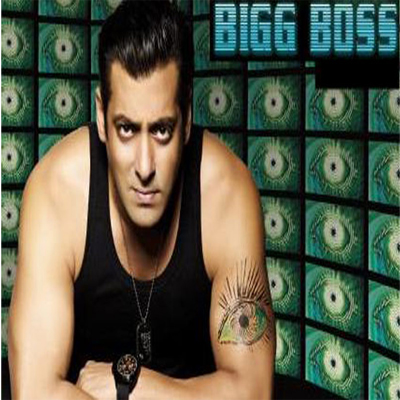
    MUMBAI: Love it or hate it but you just can’t ignore it! Which is what not just viewers but also television channels have been doing ever since Endemol India introduced Bigg Boss.


    First presented by Sony Entertainment Channel in 2006 with Arshad Warsi as the host, the ever popular reality show started off with a bang only to end with a whimper when the channel was forced to relinquish the loss-making show.


    Though that didn’t stop a five-year-old Colors from taking up where Sony had left, the channel continued to lose a lot of money over Bigg Boss even as the show became more and more popular.


    Intrigued by Colors’ determination to hold on to such a loss-making property, indiantelevision.com posed the question to CEO Raj Nayak in an earlier interview, to which he answered: “I do it because it is a cult show. People wait for it. Advertisers want it. If you speak to ‘Streax’, the owner told me two containers were bought in Afghanistan because of Bigg Boss. That is Bigg Boss for you.”


    He further said: “We generate PR worth Rs 15-20 crore when Bigg Boss is about to start. That’s the kind of cult image the show has – 100 days of non-stop entertainment during prime time, like an IPL match. We will not stop doing those things as the viewers want it. So, as long as it matches my bottom P&L, I am able to manage it, I am fine.”


    Indeed, one of the reasons to continue investing nearly Rs 120 to Rs 130 crore in Bigg Boss is the kind of buzz it generates well ahead of the launch. The contestants, their choice of clothes, their language and mannerisms, the controversies around them – constitutes fodder for endless discussion and hence, nothing to be unhappy about.


    Also according to Nayak, Bigg Boss gets the best advertisers by virtue of it getting the best ratings. Fact is while fiction is Colors’ staple food, advertisement rates for non-fiction shows are higher. Then again, walking the tightrope between fiction and non-fiction is of essence.


    Yet another reason for continuing with Bigg Boss is the rub-off it has on ‘Brand Colors’. “When you go to a restaurant, there will be many dishes (Chef’s specials) that will be expensive. They don’t make money on that but they keep it because some people keep coming for those dishes. And yet, these people eat other stuff as well,” explained Nayak.


    The show was high on viewership throughout the season; however it was its finale episode that added a cherry on the cake. It had all the makings of a ‘masaledaar’ blockbuster including power-packed performances by the contestants and the host Salman Khan himself.


    “The season seven has been the most watched, most buzzed and most trended season of all times,” believed Colors’ weekend programming head Manisha Sharma.


    Bigg Boss seven debuted with 7,711 TVTs on its opening day and continued to have a successful run for several of weeks.


    The spill-over effect of the popularity of Bigg Boss was felt on shows Colors airs before and after Big Boss. For example, in week 44 of TAM TV ratings, viewership of Madhubala rose to 4,441 TVTs from 4,305 TVTs a week earlier and that of Uttaran jumped to 4,299 TVTs from 3,722 TVTs.


    For Lodestar UM vice-president Deepak Netram, Bigg Boss is the kind of show which is an investment for the long term for the channel.


    A senior media planner said while Colors is seeing a 10 to 15 per cent year-on-year increase in the cost of producing Bigg Boss, the show continues to have a loyal set of viewers and continues to deliver on ratings.


    “It’s like you are making a product but not getting the right price for it. But does that mean you will stop making the product? Obviously, you will continue making the product. The problem you have is in terms of sales,” he said.


    Yet another planner opined the channel wouldn’t give up on the show. “If the show is making losses, it does not mean it won’t happen. Some other channel will pick it up and make it. So, they will sell it to their competitors. And the show has its audience; they will lose the viewers.


    So, to not lose those viewers, Colors will have to make the show. To get the right value, you’ve got to get sales active,” he rounded off.

  • High hopes for ‘Satyamev Jayate 2’

    High hopes for ‘Satyamev Jayate 2’

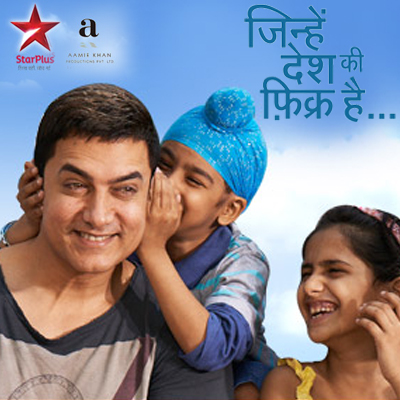
    MUMBAI: Aired two years ago, this television show hosted by Aamir Khan took the country by storm with its focus on social ills such as female foeticide, dowry, domestic violence, child abuse, rape, domestic violence and honour killings among others.


    Buoyed by the overwhelming response, the makers decided to take the franchise further. And so, starting 2 March, viewers can once again tune into Satyamev Jayate on Sundays at 11 am on Star Plus.


    With a tagline that reads: ‘Jinhe Desh Ki Fikar Hai’, season two promises hard-hitting content like before but the format will be different. Unlike the last time when all 13 episodes ran at a stretch, this time, the series has been broken up into three quarters with five episodes in March and the remaining eight episodes split into groups of four each.


    Airtel has been roped in as title sponsor while Axis Bank is the powered by sponsor this season. According to industry sources, the sticker price of the show is anywhere between Rs 3 crore and Rs 3.5 crore.


    Graphene Media CEO Sanjoy Chakrabarty

    Marketing and promotion


    Host Aamir Khan and Star Plus have come out with six different promos that are already doing the rounds on the network.


    One of them begins with Khan asking the question, ‘Pata hai apna show kaun dekhega?’ later shifting his gaze to the cars and autos on the road below. He sees some of them breaking the traffic rules and shakes his head: ‘Yeh nahin dekhega’. Moments later, he breaks into a smile on seeing one of the cars paying heed to the red signal. ‘Yeh dekhega,’ he signs off…


    The promo, which urges people to be responsible citizens, went on air on 25 January and has since garnered 552,000 views.


    Apart from the promo, the show itself has set social media aflutter. From 1.6 million likes last season on Facebook, season two has garnered nearly 2.7 million likes. From close to 93,000 followers on Twitter last season, this time, there are around 143,000 followers.


    While initial conversations around SMJ were triggered by Khan’s popularity, later conversations are more around the causes espoused by the actor on the show. Plus, the channel shares and tweets these conversations and uploads videos on a daily basis to keep up the buzz.


    Havas Media managing director Mohit Joshi

    Industry Speaks


    Ahead of the launch of season two, indiantelevision.com spoke to a cross-section of industry about the return of SMJ and how it would fare in their opinion…


    “For me, a show like SMJ doesn’t need any promotions. The fact that it is coming back says a lot about it and the impact it has had on people. In one of the promos where Aamir is talking about who will watch SMJ and who won’t speaks of responsible behavior. SMJ is beyond television, it is meaningful TV!” said Havas Media managing director Mohit Joshi.


    “The promos this time are a little tongue in cheek. They’re quite subtle. Even the timings are correct, with elections coming near and what is happening in Delhi, these things are tying in very relevantly. It’s really bang on to start conversations around it especially Aamir Khan in this style,” said Lodestar UM vice-president Deepak Netram.


    However, about the change in format, he said: “A show always works if you have continuity; appointment viewing builds up after a certain period of time certainly for GECs. Having gaps is not going to help, but I guess in the grain of what the show is I am sure it is possibly going to be an objective which will have people looking forward to the show.  The challenge will be to maintain the momentum and keep the excitement going, because there will be so much happening in between.”


    Lodestar UM vice-president Deepak Netram

    “The promos are more interesting than the previous season. If someone is watching it for the first time, they will be inquisitive about it. But for people who have already watched the previous season, they know the format of the show. This season the promos are much more focused, straight to the point and more subjective,” believes Graphene Media CEO Sanjoy Chakrabarty.


    Commenting on the break pattern Chakrabarty asserts: “Since the topics are relevant and very engaging, people will consume the content in dozes so break won’t affect the viewership.”

  • Colors to extend four weekday shows to Saturday from 1 Feb

    Colors to extend four weekday shows to Saturday from 1 Feb

    MUMBAI: The TV production community was agog with the news that leading Hindi general entertainment channel Star Plus is stretching its weekday fiction prime time programming lineup to Saturday. But no official announcement was a-coming from it. However, the other leading GEC Colors has gone ahead and announced that it is extending four of its weekday fiction shows to Saturdays. And promotions are already underway.


    Colors’ CEO Raj Nayak even went ahead and personally posted a promo on social networking sites – Facebook and Twitter – highlighting what was being planned.


    Come Saturday, 1 February viewers will get to engage with SanskaarSasural Simar KaBalika Vadhu and Madhubala between 7 pm and 9 pm.


    “We implemented six days a week last year; we took a break as we needed to give our production teams and artistes a breather. Having taken a short interval, we are coming back six days a week,” remarks Nayak,  adding that the experiment had worked well for the channel in 2013 and that is why it is being repeated.


    Two promos are hammering this message out to viewers across all the channels of the Network 18 group.


    The reason for choosing these particular shows is not their popularity but the time band they air in, says Nayak. Colors has two popular non-fiction properties – India’s Got Talent and Comedy Nights with Kapil – being telecast on the weekend at 9 pm and 10 pm respectively. However, the channel had nothing else to fill the slot prior to 9 pm. In the earlier weeks of January, it chose to telecast the summaries of two of its newly launched shows – Rangrasiya and Beintehaa, while last Saturday a special programme – Mirchi Top 20 – ran. 


    In fact, it is win-win situation for all parties associated. The production houses associated with these shows think that telecast of the shows on four extra days in a month gives the shows more visibility, also resulting in good GRPs. However, since the number of episodes per month are increasing, so is the pressure to deliver.


    “But we try to balance that out by introducing parallel tracks and planning episodes much in advance,” says Saurabh Tewari from Nautanki Films  that produces Madhubala, who also adds that the remuneration of almost everyone associated  has also increased for the extra work.


    Putting fiction shows on the weekend is also cheaper for Hindi GECs. New Hindi movies are becoming more and more expensive; big ticket non-fiction shows cost a bomb, thanks to the fat cheques dished out to film stars for becoming a part of them. Additionally, in the case of Colors, it is most likely going to put aside expensive properties on its second GEC Rishtey to build a connect with audiences. Hence, fiction shows, with a tab of Rs 7 lakh to 10 lakh and episode on an average are less of a drain on resources.


    Advertisers have welcomed the weekend fiction deluge, says Nayak, adding.  “they put their money where there is good content. All our advertisers who buy advertising on these shows will extend their buys to the weekend as well.”


    Lodestar UM vice-president Deepak Netram – while accepting that moolah will be made – however, is more circumspect and cautious from the viewer’s viewpoint. 
     

    He says: “I am not too sure if the regular weekday fare would work during the weekend. Since the number of male audiences are more, non-fiction or special programmes work better.”


    Netram opines that reason for Colors to extend its programming till Saturday could be because rival Star Plus is also walking the same path. He remarks: “The core audience of any GEC is the one which consumes fiction. Colors is probably wanting to retain its fiction show fans; and not lose them to a rival channel which is extending its fiction content to the weekend also,” he says.


    Colors has already announced the D-day for its new programming tack: 1 February. Star Plus has not; but the buzz is that the date might well be 8 February. The battle for eyeballs on the weekend has just begun.