Tag: Deepak Chaurasia

  • Truth goes prime time as Live Times tops charts in Bihar Jharkhand

    Truth goes prime time as Live Times tops charts in Bihar Jharkhand

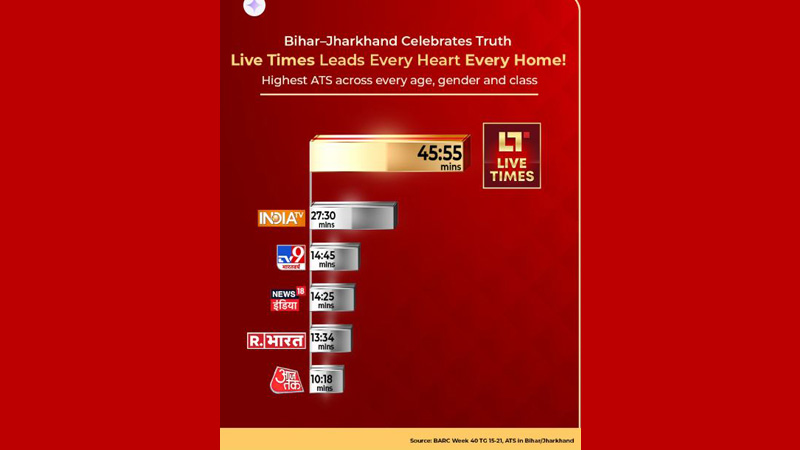
    MUMBAI: Looks like truth just found its prime slot. Live Times, India’s first Global Multicast News Channel, has emerged as the No.1 channel in Average Time Spent (ATS) across all age groups, genders, and social segments in the Bihar–Jharkhand market (Week 40), a feat that underscores its growing resonance with viewers hungry for credibility over chaos.

    This milestone is more than just a ratings triumph; it’s a reflection of viewer loyalty, trust, and engagement in a market where attention spans are fiercely contested. As audiences in Bihar and Jharkhand continue to tune in longer, Live Times’ people-first, truth-led journalism is clearly striking the right chord.

    The channel’s programming has been key to this surge. Its flagship show, ‘Live Election Special’, hosted by Deepak Chaurasia every day at 4:00 pm, and the hugely popular ‘Ka Hoi Bihar Ma’, anchored by Ajay from Monday to Sunday at 7:00 pm, have become appointment viewing. With sharp insights, regional focus, and a no-nonsense approach, these shows have built a loyal audience base across both states.

    “This success reinforces our core belief that truth connects people,” said Live Times founder & CEO Dilip Singh. “Viewers in Bihar and Jharkhand have shown their faith in authentic journalism. At Live Times, we remain committed to real news, meaningful conversations, and uncompromised integrity.”

    Founded as India’s first digital-first 24×7 satellite news channel, Live Times has been steadily carving a niche with its multicast model, which combines traditional broadcast depth with digital agility. Its blend of regional relevance, credible storytelling, and tech-driven engagement is setting new standards for how news is consumed and trusted.

    The channel’s growing dominance in ATS indicates that audiences aren’t just watching Live Times; they’re staying with it. That sustained attention in a scroll-happy world is perhaps the clearest endorsement of its promise: news that informs, not inflames.

    As Bihar and Jharkhand turn their eyes (and remotes) toward truthful journalism, one network seems to have cracked the code to connection. With its mix of fearless reportage and relatable storytelling, Live Times isn’t just making headlines, it’s making news matter again.


  • Rudy fires poll shot on Live Times’ Point Blank

    Rudy fires poll shot on Live Times’ Point Blank

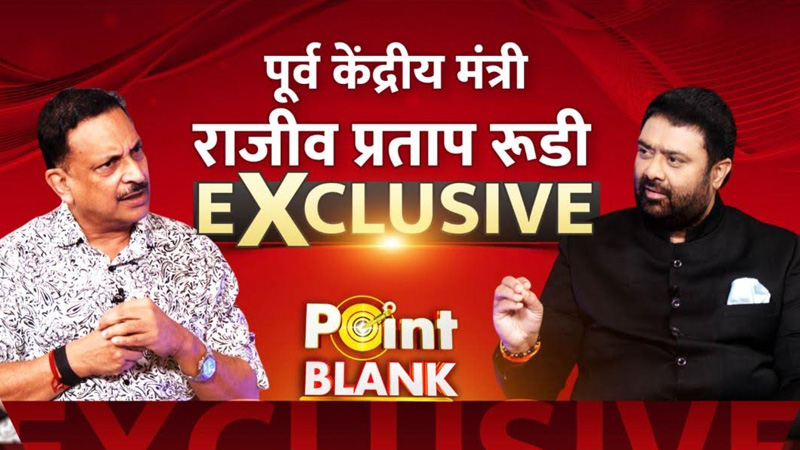
    MUMBAI: It was no political tea break on Point Blank, it was all straight talk. Senior BJP leader and former union minister Rajiv Pratap Rudy declared that the people of Bihar have already made up their minds in favour of the NDA, as he joined journalist Deepak Chaurasia for an exclusive interview on Live Times’ flagship prime-time show Point Blank.

    Confident and composed, Rudy claimed the alliance was poised for a comfortable victory in the upcoming state polls, adding that “the mood on the ground is clear and consistent.”

    Live Times founder Dilip Singh, said the episode aims to bring a “fresh and factual perspective” to the political narrative ahead of the Bihar elections. “Point Blank isn’t about sensationalism; it’s about hearing the truth directly from the source,” he noted.

    Viewers can catch the full interview on 5 October at 8 PM exclusively on Live Times, India’s first global multicast news hub, available on DD Free Dish (100), Tata Play (539), Airtel Digital TV (385), Dish TV (665), Sikka Cable (519), and Jio TV (359).

    The show can also be streamed live on the Live Times website and social platforms including Youtube, Facebook, Instagram, and X.

    Because when it comes to Bihar’s ballot buzz, Live Times promises exactly what it stands for: complete truth, whatever it takes.

  • Live Times launches Point Blank, Deepak Chaurasia’s no-holds-barred interview series

    Live Times launches Point Blank, Deepak Chaurasia’s no-holds-barred interview series

    MUMBAI: Live Times, India’s first global multicast news hub, has unveiled Point Blank, a hard-hitting interview series fronted by veteran journalist Deepak Chaurasia. The weekly programme promises unscripted, straight-to-the-point exchanges with newsmakers—dispensing with rehearsed answers and demanding clear, accountable responses.

    “In an era of predictable talking points, Point Blank is built to challenge every claim and cut through the noise,” said Live Times news director Deepak Chaurasia.  Founder Dilip Singh added that the show reflects the channel’s belief that “truth belongs to the people” and must be freed from spin and hidden agendas.

    Recent episodes have already delivered political candour. Chhattisgarh chief minister Vishnudeo Sai outlined a tough new anti-conversion law, claiming it would preserve social harmony and declaring the “backbone of Naxalism” broken. Union minister Chirag Paswan spoke openly about his ‘Bihar First, Bihari First’ vision, admitting past missteps and offering a rare, personal glimpse beyond his public image.

    With its blend of fearless questioning, rigorous fact-checking and zero tolerance for evasion, Point Blank aims to be one of Live Times’ defining programmes. The channel says it will continue to hold the powerful to account and ensure public discourse is driven by facts, not rhetoric.

    Point Blank airs exclusively on Live Times across DD Free Dish (100), Tata Play (539), Airtel Digital TV (385), Dish TV (665), Sikka Cable (519) and Jio TV (3069), and streams via Tata Play Mobile, Airtel Xstream, Dish TV Watcho, DD Waves and www.livetimes.news.

  • Deepak Chaurasia plugs into Live Times: The original of Hindi TV news joins as director news

    Deepak Chaurasia plugs into Live Times: The original of Hindi TV news joins as director news

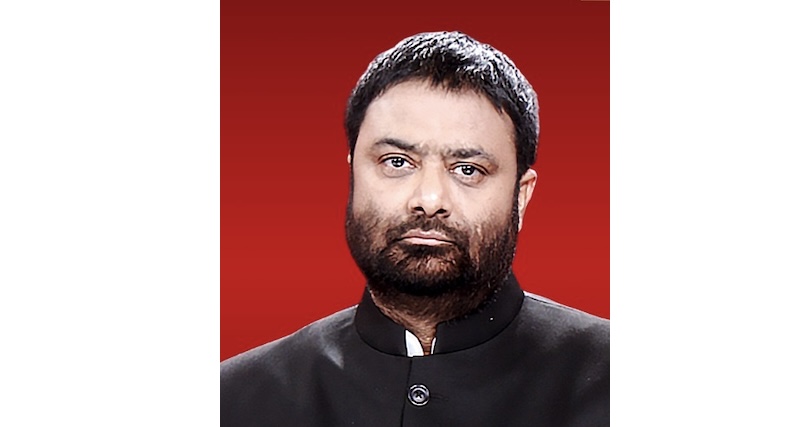
    MUMBAI:  In a move that’s making noise for all the right reasons, Live Times—the  “Global Multicast News Hub”—has roped in Hindi TV’s firebrand journo Deepak Chaurasia as director news. Known for his bulletproof journalism and gritty reportage over three decades, Chaurasia is set to add some serious muscle to the channel’s editorial engine.

    The man who’s covered everything from battlefields and bomb blasts to political fireworks and street protests is now bringing his fearless firepower to Live Times. With a career that spans war zones, natural disasters, the 26/11 terror attacks and the CAA storm, Chaurasia promises to turbocharge the channel’s motto of “Complete Truth, Whatever It Takes.”

    “Deepak becoming part of Live Times means more fire to Live Times’ core value of Satyam Shivam Sundaram. At a time when TRP has overtaken truth, and noise has overtaken news, Deepak with Live Times would contribute towards reversing the trend of TRP over truth and fakes over facts,” said Live Times founder, CEO and editor in chief Dilip Kumar Singh. “With Deepak’s journalistic gravitas and ground-level connect with the viewers and users, Live Times is not just building a newsroom but, building a movement for truth-first journalism.” 

    “I have always believed in journalism that serves people, not agendas,” said Deepak Chaurasia. He further added, “Live Times is that rare newsroom today that prioritizes authentic, verified reporting over virality. I am thrilled to be part of a mission that champions factual storytelling, asks uncomfortable questions, and puts viewers and users at the center of news & information.”

    In his new role, Chaurasia will helm a soon-to-launch primetime show that puts verified news and deep-dive investigations front and centre. Expect fewer shouting matches and more substance—with boots-on-the-ground reports, spine-straight journalism, and just enough spice to keep eyeballs glued.

    Reporting directly to Dilip Kumar Singh, Chaurasia’s arrival signals a sharp pivot for Live Times—one that blends tech, talent and truth to create content that travels across borders and platforms.

    From Bharat to beyond, Live Times wants to own the narrative. And with Chaurasia now in the front seat, the channel’s news caravan just got a serious upgrade.

  • Hindi news channels alter programming for Gujarat elections

    Hindi news channels alter programming for Gujarat elections

    MUMBAI: With the Gujarat elections on the horizon, the central government has made several populist moves including the cut in GST on many products and services. Hindi news channels have rearranged their programming line-up for the upcoming assembly elections, which will be held in two phases—9 December and 14 December 2017.

    The results will be announced on 18 December 2017. In the frenzy to cover this event, news channels are leaving no stone unturned to grab eyeballs.

    iTV Network, one of India’s media houses, has expanded further into the regional news space with the launch of a dedicated channel for Gujarat called India News Gujarat on 4 December 2017 with six regional channels in its bouquet. Being launched ahead of the highly-anticipated Gujarat Elections, 2017, the Gujarat Debate will be a programme to watch out for. 

    iTV editor-in-chief Deepak Chaurasia told Indiantelevision.com, “We are covering the elections from different aspects of it like debate, day-to-day updates, rallies, special interviews with around 40 senior correspondents. The new shows are Kissa Kursi Ka, a live debate show and at 8 and 10 pm everyday we have a special bulletin on elections.”

    ABP News has started Kaun Banega Mukhyamantri which will focus on the Himachal Pradesh and Gujarat elections from the audience’s perspective and a review of the political parties’ agenda. The show will be telecast twice a day at 5:30 pm and 6:30 pm. On 9 December 2017 the show will start from 6am and will go on till 2pm. In another show Poll Khol, the anchor will present the latest updates surrounding the upcoming elections in various regions of India. The show will run for 30 minutes from 7:30pm.

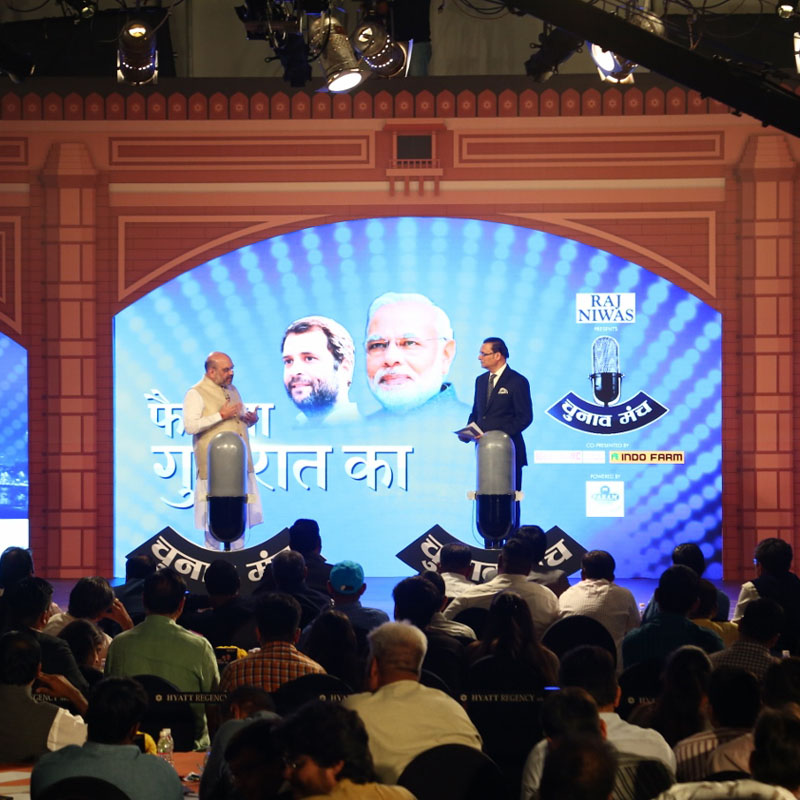
    India TV’s flagship election mega conclave Chunav Manch in its second edition at Ahmedabad saw an enviable line-up of participants both from the ruling as well as the opposition benches.

    In his welcome address, Rajat Sharma outlined the performance of the ruling regime, their pre-poll promises, people’s expectations, Prime Minister’s Modi’s undaunting image etc. He also highlighted the opposition’s charges ranging from rising unrest among the business class to unemployment issues to questioning the Gujarat model of development.

    India TV Managing Director Ritu Dhawan said, “We are happy because of the huge success of the initiative. But what makes us happier is that we were able to generate top-notch participation and we had a full-house throughout the day. This is especially when we were aware that our competition has been struggling to get in and keeping the audiences at their respective venues.”

    A few amongst those who participated in different sessions were, BJP President Amit Shah, Union Minister Ravi Shankar Prasad, Gujarat CM Vijay Rupani, Gujarat Deputy CM Nitin Patel, BJP National Spokesman Sambit Patra, BJP MP Kirit Solanki, BJP Leader Jitu Vaghani, Ex Gujarat CM Shankersinh Vaghela, PAAS Leader Hardik Patel, Leader of Opposition in Gujarat Assembly, Arjun Modhwadia, Congress Leaders Sanjay Nirupam and Randeep Singh Surjewala.

    Aaj Tak managing editor Supriya Prasad said, “For the elections, we are doing a debate show called Raj Tilak at 15 places. We have deputed around 24 reporters for the coverage of this elections.Gujarat ka Sardar Kaun is the show in which political experts discuss the Gujarat legislative assembly elections, and is aired everyday at4:30 pm.”

    NDTV India is very innovatively used the show’s tagline as ‘Abki Baar Kiski Sarkar’ which sheds light on political parties and the candidates vying for the top posts in the current election.

  • India News felicitates police officials across UP with ‘Shaurya Samman’

    India News felicitates police officials across UP with ‘Shaurya Samman’

    MUMBAI: In a glittering ceremony held at the Vivanta by Taj, the police force of Uttar Pradesh was felicitated by India News with Shaurya Samman, presented by Su-Kam,co–presented by Rajesh Masale and powered by Dreamz Infra Ventures with health partner Rama Medical College Hospital and Research Centre. Under this unique initiative, the brave police officials of the Uttar Pradesh Police force were recognized for their contribution to the society.

    The bravehearts who have contributed to the betterment of our society were felicitated across different categories by Akhilesh Yadav, Honourable Chief Minister of Uttar Pradesh, who graced the occasion as Chief Guest along with several other dignitaries, leaders and celebrities from Uttar Pradesh region.

    The winners’ selection was made through a stringent selection process and were further adjudged by an eminent jury panel of Jagmohan Yadav, DGP, Uttar Pradesh; Justice Vishnu Sahai,   Retired Judge of Allahabad High Court; Sandeep Pandey, Social Activist and Winner of Ramon Magsaysay Award for Emergent Leadership; Arvind Kumar Goel, Social Worker & Philanthropist and Deepak Chaurasia, Editor-in-Chief, India News.

    The winners in different categories are:

    . Outstanding Act of Bravery: Kapil Kumar, Constable, Moradabad

    Award for Bravery (posthumous):  Martyr Bhudev Singh, Constable, Gautam Budh Nagar

    Outstanding Contribution in Solving Case: Rakesh Kumar Jaiswal, Sub-Inspector, Mau

    .Outstanding Effort to Save Human Lives: Shiv Daras Prasad, FSO, Kanpur

    . Outstanding Effort in Traffic Management: Madhusudan Singh, Constable, Ghaziabad

    Outstanding Effort in Community Building: Harish Vardhan, Sub-Inspector, Mathura

    Outstanding Effort in Training & Research:  Ram Das Yadav, Major Hawaldar, Gorakhpur

    Outstanding Expert of Cyber-Crime Solutions: Sanjay Kumar Singh, Inspector, STF

    Lifetime Achievement Award: Avinash Chandra Mishra, Inspector, ATS

    Speaking on this initiative, Kartikeya Sharma, Managing Director, iTV Network said, “On behalf of India News, I extend my gratitude to all the winners of Shaurya Samman. It’s a moment of pride to honour the police officials for their remarkable duty towards ensuring peace and prosperity in society.” He further adds, “Shaurya Samman recognizes the officials of the police force who have exhibited exceptional bravery and valour while carrying out their duties. It is a privilege for us to felicitate awardees who have rendered distinguished service to the society.”

    Adding to that, Deepak Chaurasia, Editor-in-Chief, India News said, “Through Shaurya Samman awards we express our gratitude to the police force and share their exemplary acts of courage with millions of our viewers.”

  • Editors give thumbs up to branded content, if it doesn’t interfere with quality

    Editors give thumbs up to branded content, if it doesn’t interfere with quality

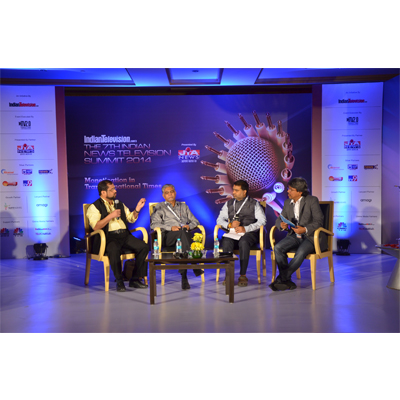
    MUMBAI: While the business heads and sales heads are worried about how to keep revenues growing, the editors are concerned about keeping them away from getting into their editorial decisions. Discussing exactly this was a panel at the 7th Indian News Television Summit that saw ITV Network editor in chief Deepak Chaurasia, senior columnist and veteran journalist QW Naqvi and Mi Marathi consultant and former IBN Lokmat chief editor Nikhil Wagle that was moderated by indiantelevision.com group founder, CEO and editor in chief Anil Wanvari.


    The discussion started off with Wanvari asking them how much would allow business heads to interfere with the editorial. Naqvi said that a business target should not influence editorial decision. Wagle said that he is aware that business is needed to run a channel but ‘without interference the channel can be profitable.’


    Chaurasiya was of the opinion that both need to be together for the business model to survive. “The company will go into loss if the model is wrong. The editorial should know the company’s profit and loss because it can’t be a loss  making business. However, sales and editorial should not have the authority to decide whether or not a story should be shown or the angle of the story be taken. If the marketing team will tell me that a particular party is giving money if we do this story and in this angle, then I would say I have surrendered myself to them,” he said.


    Wanvari said that political parties were different from brands, to which Wagle said that he isn’t against sponsored programmes, if they are disclosed. “If I was an editor, either I will stop such content or resign,” he said. Naqvi said that he is fine with integration where the quality, judgment and quantity isn’t compromised. “A programme shouldn’t be made just to make a brand happy despite not having any value,” he pointed out.


    Chaurasia however said that even a half an hour show with bad ratings will ruin his day’s average, so he hesitates while taking advertorial, despite the money. “Rather than think short term, I think its long term impact on my ad rates. 90 per cent advertisers want to make the show in their perspective,” he said. He was however worried about how with too many ads the time spent on the channel is decreasing.


    Times Now editor in chief Arnab Goswami is a brand in himself, which is being used by the channel, said Wanvari asking whether the three of them would allow that to happen to them. “TAM ratings only give numbers, not reactions. When that can be analysed, the real worth of a brand will be known,” he said.


    According to Chaurasia, with emergence of new channels and people shifting channels, it isn’t easy to keep brand loyalty. “Now-a-days people think that in four months, people will start asking for autographs while the first generation journalists have taken many years to prove their worth. They feel marketing will help them become this sooner,” he said.


    Moving on to the digital play in the future, Naqvi said that there is no doubt about digital being the priority for all. But when Wanvari asked if the editor would go with the marketing to an advertiser, Chaurasia said, “My work is to do content and make them understand the meaning. I have to get them ratings, revenue is a different department.”


    The regional space will see proliferation of digital in five years, according to Wagle, and long format journalism will be replaced by short form.


    Responding to Wanvari’s question about syndicating shows like how Al Jazeera or BBC does, Naqvi said that when the format will turn to digital, they could think of creating content that could sell because then the audience becomes global. “For this, we will need good internet connectivity till the remotest corner of the country,” he said. However, he also pointed out that not too many channels will survive digitally because people will not want to clutter their phones, but won’t mind seeing a long list of channels on TV.

  • Broadcast Editors’ Association elects 15 member editorial panel

    Broadcast Editors’ Association elects 15 member editorial panel

    MUMBAI: The Broadcast Editors’ Association (BEA), the apex body of editors of news TV channels, elected its office bearers recently. The election process took place at an AGM held in New Delhi. The BEA decided to retain the status quo and unanimously took the decision and re-elected Shazi Zaman (ABP News) as the president of the body while Arnab Goswami (Times Now) was re-elected as vice president.  Deepak Chaurasia from India News was elected as the vice-president of BEA .

    Live India’s editorial boss NK Singh  was elected general secretary. There was good news for the India Today Group as well with  Supriya Prasad of Aaj Tak  being  elected treasurer of BEA.

    The 15-member executive committee of the BEA comprises: Shazi Zaman (ABP News), NK Singh (Live India), Arnab Goswami (Times Now), Deepak Chaurasia (India News), Ashutosh (IBN7), Sonia Singh (NDTV), Ajit Anjum (News 24), Vinay Tewari (CNN-IBN), QW Naqwi (India TV), Shailesh Kumar (News Nation), Supriya Prasad (Aajtak), Vinod Kapri (News Express), Dibang (senior journalist), Satish K Singh (senior journalist), and Pranjal Sharma (senior journalist).

    The BEA also constituted a credentials committee for inducting new members as the news industry has been proliferating with channels seeking to become members . The committee consists of: :  Shailesh Kumar (News Nation), Sanjeev Paliwal (IBN7) and Supriya Prasad (Aajtak).

  • Prime time content on news channels needs to evolve

    Prime time content on news channels needs to evolve

    NEW DELHI: What would one expect when editorial heads from some of the premiere News Television channels in the country participate in a panel discussion? Riveting stuff is what comes to mind.


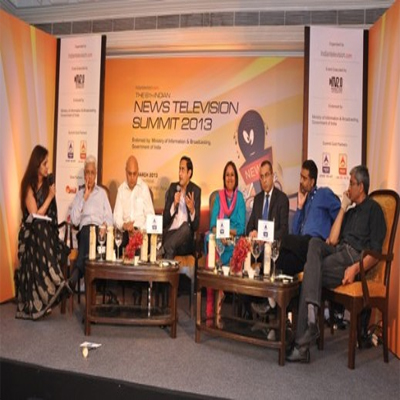
    And that’s what unfolded when Barkha Dutt, Karan Thapar, Vivek Law, Rahul Kanwal, Sanjeev Srivastava, Deepak Chaurasia, Ashutosh, all joined in to discuss the issue of, “Differentiating Prime Time News TV Shows/ Content” at the 6th Indian News Television Summit 2013.


    Session moderator BBC Global News COO India Preet Dhupar kick-started the session with a question to the panellists on prime time content and its impact on the ultimate stakeholders.
        

    CNN-IBN’s Karan Thapar said, “Content during prime time is in a confused mess. It is all about multiplicity of screeching heads. Anchors instigate people to quarrel on their shows and the ultimate product is unsatisfactory. When news is governed by ratings, it becomes an issue. What is really needed is a structure based discussion; focus on current affairs based debate and bifurcation between news and entertainment.”


    Doordarshan’s Sanjeev Srivastava while agreeing with Thapar, added that prime time content has become similar to edit pages of newspapers wherein the thoughts of the editor or the anchor are often reflected. But he also called for a ‘balance between forming opinions and proper dissemination of news.’


    Also agreeing with Thapar, Bloomberg TV India Editor Vivek Law said that the concept of talking heads of channels was not new and it was possible that organisations were revolving business model around it.


    NDTV Group Editor Barkha Dutt struck a cynical note by saying, “TV channels are stuck in a sluggish cycle. There is nothing interesting happening as channels have failed to tap appealing people who can talk sense. I don’t share too much optimism about prime time space.”


    Headlines Today Managing Editor Rahul Kanwal, had a diverse opinion. “Well, I am very proud of what I do and I must state that TV channels have played a stellar role in making politicians accountable and voicing the fact that no one is untouchable.”


    He also talked about the audiences’ demand for masala (adding juiciness) to news packaging.


    The debate between Hindi and English News channels was sparked by IBN 7 Managing Editor Ashutosh who said that English channels were elitist in their approach and embarked on intellectualism whereas Hindi channels had larger and “many layered” audiences to cater to.


    India News Editor-in-Chief Deepak Chaurasia observed, “News channels must understand that people have changed over the years. The environment and approach have also changed. One has to understand this to realise the confused state of affairs during the prime time slot.”


    Chaurasia also stressed on the fact that renowned faces were reluctant to come for interviews and discussions on Hindi channels as compared to English ones. Disagreeing with Chaurasia, Kanwal said that he had interviewed many politicians on his Hindi show.


    Other subjects that were touched upon in brief were budgetary cuts that production teams faced, the need for more reportage by anchors, whose reputations drew eyeballs to the show.


    All the panellists agreed that prime time content should focus more on news which would educate the masses.

  • Skewed  biz  model hampers electronic news media functioning

    Skewed biz model hampers electronic news media functioning

    MUMBAI: The electronic news industry is struggling against a business model of low subscription income, high carriage fees and commoditised content, experts said.

    “We are currently operating on a broken business model where subscription revenues are low and, thus, one has to depend heavily on advertising for revenues. The process of digitisation has started improving the scenario but we do have a long way to go,” said NDTV Ltd group CEO Vikram Chandra.

    Another challenge is that journalists as a breed are only just starting to adapt to new media. While there has been commoditisation of news, one must also realise that as technology is evolving journalists too need to upgrade. Instead of shirking or challenging new media, journalists can adopt means of using it to monetise news.

    Essel Group News Cluster Group CEO Dr Bhaskar Das said, “The goal should be to maintain objectivity of the news across platforms. We must remember that the consumer has become increasingly platform agnostic in news reception.”

    The silo mentality in the journalistic community is also a challenege that needs to be overcome. In an age where the consumer uses multiple forms of media, often simultaneously, journalists cannot afford to limit themselves to just one medium. They need to evolve and learn to be present and visible across mediums.

    “This is the reason why in our channels, we have made it mandatory for our reporters and journalists to be present across platforms and maintain blogs and Twitter accounts,” said Russia Today TV managing editor Prof Alexey Nikolov, while speaking at Ficci Frames.

    The session titled ‘Electronic News Media: Stock Taking and the Way Forward‘ discussed the challenges involved in running a news channel and explored ways to overcome these. The panel discussion was moderated by senior visiting fellow, national university of Singapore and author Dr Nalin Mehta.

    India News Editor-in-Chief Deepak Chaurasia threw light on the political arm-twisting that prevails and prevents news channels from reporting certain news. Another impediment faced by news channels is the monetary pressure applied by various multi-system operators (MSOs).

    “At the end of it, we are responsible for our own predicament. Many people with deep pockets have started news channels and have increased the carriage fees, which has affected all the other channels. There are no definite rules and this gives people with vested interests a chance to take advantage and pressurise channels,” he said.

    Nikolov also stressed that while social media has taken the front seat, the audience is now looking for credibility. So the trick now would be to sell trust, competency and different points of view rather than only news.

    Chandra added that in this case, trust can be built according to the niche that each channel wants to occupy. It depends on the ideology and the business model. In a country of India’s size and population, channels will find their own comfort zone and survive.

    On the topic of trust, Das said: “Trust is non-negotiable. What is worrisome is that trust has become subjective. Whose trust are we vying for today (as news channels)? Is it the viewers’ trust or the management’s trusts or the politicians’ trust or the advertisers’ trust? It is the audience’s trust that matters and today’s viewers are intelligent and astute enough to understand where the value of news lies. They can differentiate the trust worthy from that which is not and that’s why some news channels work, while others fail to attract the masses.”

    The silver lining, however, is that for the past one year the news channels, the government and other industry stakeholders have come together to discuss these matters. “It is a beginning. At least now we all agree that there is a shortcoming in the audience measurement system and process in the country. On the content side, there have been suggestions about framing a content code. In this case, the matter is too subjective and to reach a consensus is very difficult,” averred Chandra.

    The panel concluded that the need of the hour is to revamp the business model so that it is not heavily skewed towards one means of revenue, in this case advertising. Once that is resolved, the channels can take a stronger stand on content regulation.

    “The problems are complex and the fear of government interference plays a big role too. We have made a start and need to keep going as it is a long road ahead,” Das concluded.