Tag: Deccan Chronicle

  • iTV Network ups Varun Kohli as India News CEO

    iTV Network ups Varun Kohli as India News CEO

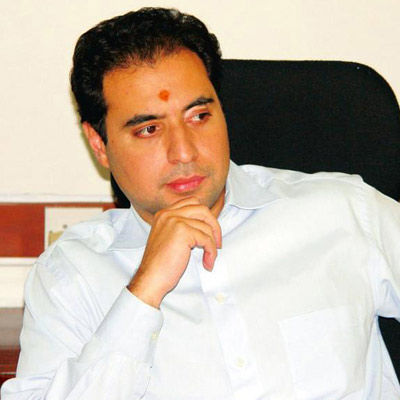
    MUMBAI: iTV Network has elevated Varun Kohli as CEO of its national Hindi news channel India News. Prior to this, he was India News COO and revenue head.

    Kohli will report to iTV Network group CRO and NewsX CEO Sanjay Dua.

    In his new role, Kohli will be responsible for leading the growth of the channel to next level.

    iTV Network managing director Kartikeya Sharma stated quite clearly:  “We are delighted to elevate Varun as the CEO of India News. This elevation is in line with our commitment to growth. His skills and wide experience  will surely help India news reach the next level of growth.”

    Dua added, “Over the course of time, Varun has played a more central role in the leadership of the company and with his elevation to CEO, India News; he will take on an even wider role. His strong track record of delivering growth and understanding of industry will help our continued success, moving forward.”

    “I’m humbled by the new role. iTV network is a young and dynamic organisation, which has witnessed tremendous growth in the recent years and I am privileged to be a part of this journey. My focus will be to lead India News to the next level of growth and tap newer opportunities in the ever expanding Hindi news space,” expressed a reticient Kohli.

    Prior to joining ITV network, he was head of sales for IBN7. With a professional experience spanning over 21 years, he has worked in media companies like Amar Ujala, Bennett, Coleman & Company Ltd., Deccan Chronicle, Dainik Bhaskar, Hindustan Times and Indian Express. All his experience will come to bear at the iTV Network which has ambitions to grow in the news television and related TV businesses going forward.

    Also Read:

    My World Revolves Around The Almighty


  • “I, nor my co-promoters, are wanting to exit KXIP”: Kings XI Punjab co-owner Mohit Burman

    “I, nor my co-promoters, are wanting to exit KXIP”: Kings XI Punjab co-owner Mohit Burman

     For Kings XI Punjab last year came to a good end with its dispute with the BCCI being amicably resolved. This means that it will finally break even this year according to Kings XI Punjab co-owner Mohit Burman. Next year is when it will start making profits.??Burman is also adamant about the fact that none of the co-owners are looking to exit. While the franchise will have sponsorship growth of 30 per cent there is still room for improvement says Burman given that the base is small. Indiantelevision.com’s Ashwin Pinto caught up with Burman to find out more about where the franchise is at and about the company’s plans.


    Excerpts:


    Q. What targets has Kings XI Punjab set for itself this year?

    A. We will break even this year. Next year is when we will start making profits. The legal cost, bank guarantee cost are not there this year. We will get more from central revenue.


    Q. Now that the issues have been resolved I assume that the co-owners are free to exit. Are you looking to do that?

    A. No! None of the co-owners are looking at selling a stake or exiting the team. I am not a seller at any price. In the past, too, there have been rumours of stake sale which turned out to be untrue.


    Q. What would be the valuation of an IPL franchise today?

    A. It is difficult to provide figures. However, a sort of benchmark has been set with the new franchisee Hyderabad Sunrisers.


    Q. Given that Sun TV is paying much more than what the Deccan Chronicle did, isn’t it surprising that stake sale deals have not happened?

    A. A lot of people say that a franchise’s valuation has gone down a lot from what Sahara had paid. I am not surprised that other deals have not been done. I don’t think that there are that many people in the market willing to pay these types of prices.For people who came in at the start, the Central pool revenue covered them even if local revenue took time to grow. That has not been the case for people who came in afterwards. You don’t get so much from Central revenue compared to what Sun TV is paying.


    ‘They (BCCI) should work more closely with franchises though. The franchises’ health is not always on the top of their agenda’


    Q. How do you see Sun TV faring?

    A. I don’t think that they will break even for at least three to four years. But I don’t think that they are expecting to. We are breaking even after six years. No business model allows you to break even so soon. Sun TV would have calculated their business model with a five to a 10 year vision.


    Q. Are there lessons to be learnt from Kochi’s failure?

    A. I don’t think that there are lessons to be learnt. When Kochi bought the team I told those guys that they would lose Rs 1 billion a year. If you project revenues that are not possible what is the lesson? It is a simple business model. Your franchise fee and player costs are fixed more or less. Your central revenue is fixed. The money you can make from ticket sales and local sponsorship can be calculated. It is not difficult to figure things out. Having done all that if you are still going to pay so much money ($333 million) you are not going to survive. It is not rocket science.


    Q. Is it fair to say that at one point a bubble was created?

    A. I would not say that. I would say that the people who originally came in paid sensible prices. But because of the hype that was built up the two new teams that came in – Sahara and Kochi paid prices that were unsustainable. Clearly the third new party that has just entered – Sun TV has come in at a more realistic price.


    Q. Does the BCCI need to work more closely with franchises and understand their needs so that they are more economically viable?

    A. The BCCI has done sponsorship deals at a higher price this year. Pepsi has come in as has Vodafone. The idea is that the BCCI is also trying to bring value for all the teams.

    They should work more closely with franchises though. The franchises’ health is not always on the top of their agenda but the BCCI also has the onus of doing a successful tournament.

    Obviously their premier objective is to make profits for themselves. We come a little bit below. I don’t think that it is understandable but it isn’t surprising.


    Q. Keeping costs under control is paramount in this regard. How do you do this?

    A. We are into the sixth season of the IPL and have an experienced management in place. The good thing is that we know how things work and what is required. We use our funds judiciously and in keeping with the standards that we have set for ourselves.


    Q. Could you shed light on the preparation that goes before the season starts?

    A. When it comes to preparing for an IPL season all activities related to aspects such as sales and marketing, ticketing, venue operations, cricket operations, branding etc start approximately five months in advance of the due date of the start of the season. The IPL is a five-month activity of planning for us. What you see during the 45 day season is the culmination of a lot of effort. The sales and marketing part includes sponsorship sales, associations and partnerships, ticketing plans, licensing and merchandising. Other aspects include creatives, photo shoots, the social media, website and app plans.

    In terms of venue operations we have to look at things like security, government licensing, hospitality, and stadium upkeep. From a logistics point of view one of this involves getting the best hotel and airline deals. We also prepare the season matrix.


    Q. From a cost control point of view are you in favour of player retention and the current auction cap?

    A. There are operational and player expenses. I think that the player costs are much higher than what they should be. I think that it should be a closed auction as then it would be fair to everyone. If it is a closed auction then the cap does not matter. In terms of player retention, if you are inviting new franchises then allowing player retention is not fair. At the same time as an existing franchise I want a certain amount of retention as teams to an extent are identified by key players. I would not want a completely new team next year. It is a catch 22 situation. But after the Sunrisers no new team will come in. So player retention is fine as nobody is at a disadvantage. If each team is allowed a few players it is not a problem.


    Q. Doesn’t player retention raise your costs substantially? 

    A. But the player cost will also go up through open bidding. If you want to get a certain player back you might pay more compared to having done it through retention. This is a call that you have to make.


    Q. This brings me to the issue that teams change frequently. Again next season the composition of all the teams will mostly change. Doesn‘t this create a challenge in terms of building team loyalty as there will again be confusion next year among fans as to who is playing for which franchise?

    A. In my opinion, cricket is a team game and is not led by an individual. Therefore, fans have greater loyalty towards the team then an individual player. However, players do have their own fan following but if a franchise has established connect with its fans then player movement does not make a significant impact.We shall take a call on team composition post the culmination of the coming season.


    Q. What is the revenue split between central and local?

    A. I would say that is 65:35 in favour of central revenue. Central will always be more. The amount that the BCCI can negotiate from central sponsors will be more than what we can do from selling inventory on our shirt and other things.


    Q. How has Kings XI Punjab fared in terms of sponsorship?

    A. We were targeting a 30 per cent revenue growth in terms of sponsorship this year. But the base is low. So there is a lot of room for improvement which will happen next year now that the uncertainly about whether we will take part in the IPL is not there.

    Having said that Mumbai, Delhi will always get more sponsorship revenue. Shah Rukh Khan’s team will also get more. We are a small catchment area. Also, due to factors beyond our control, like termination, companies were a little scared that we might not play. Now we are on a clear wicket. Next year we will get better amounts from sponsors.


    Q. How much of your local revenue comes from sponsorship?

    A. Almost 65 per cent of our local revenue comes from sponsorship. We got eight new partners this year in addition to the six existing partners which have renewed sponsorship deals.

    This year NVD Solar is the title sponsor. The other companies with us include Lux Cozi is Official Comfort Partner, ACC, Arise Inverters and Batteries, Raindrops Basmati, USL and McDowell’s no. 1 as Official Team Partners.


    Q. Did you approach sponsorship in a different manner this time around?

    A. We were not happy with the revenues we managed last year. We felt that there was scope for improvement. So we dealt directly with sponsors this year rather than going through agencies. We created a team that approached companies, which made a big difference. Half of the deals done were managed by directly talking to them.


    Q. Did it take a lot of convincing given the economic environment to get partners on board?

    A. Some deals took three weeks to close this year while others took a couple of months. Some deals are for a year while others are for three years.

    At the end of the day it is a question of sitting down with clients and understanding their business objectives. We have to match their objectives with our marketing parameters. We see if there is synergy in what we are doing and if a tie up is mutually beneficial. Different companies have different goals some want visibility, others want activation while some want to use our platform for better fan engagement.


    Q. Could you give me an example of this?

    A. NVD Solar came on-board as title partner since it is expanding its operations to North India. They are launching products using the franchises players as a platform. On the other hand, Lux Cozi does activation with their wholesale and retail people. They run gratification contests where people can see matches.


    Q. Have you approached ticketing and hospitality in a different way this time around? 

    A. We have set a benchmark for the services we offer at the stadium and very closely monitor feedback on ‘customer experience’ to try and make it even better every year.


    Q. The licensing and merchandising part has been slow for most franchises. How does Kings XI Punjab plan to grow this area with Miroma Entertainment?

    A. Licensing and merchandising (L&M) is an integral part of our campaign as it is a valuable tool to reach out and connect with our fans. To give our fans a chance to adorn their favourite team‘s merchandise, we ensure that we offer them a variety of merchandise and licensed goods. We have a good long-term deal with our L&M partner and are on the right path. From the revenue perspective too there shall be an increase in returns from our L&M programme.


    Q. What things do you do to keep the franchise alive during the off season?

    A. We have undertaken a number of activities in the catchment area with the intent to strengthen our bond with our fans and these have been very well received.


    We had organised The Kings XI Punjab Cup in the catchment area, which like every year saw huge participation and was a platform to promote cricketing talent at the grassroot level. We have also launched a mobile application for iPhone/iPad and android phones to keep our fans updated about information related to the players, live match data, music, photos, news and event updates, fixtures and the KXIP YouTube channel stream. Apart from this, a live in-app FanWall is available to allow the fans to engage with each other and the team by posting comments, likes and photos on Facebook and Twitter. For us, our fans are at the forefront of any activity that we undertake.


    Q. Is Kings XI Punjab also looking at playing matches in foreign locations against clubs of other countries?

    A. Yes! We are currently planning for such games overseas in ICC associate countries under the guidelines laid down by the BCCI.


    Q. What impact do you think twenty20 leagues in countries like Australia will have on international cricket?

    A. I don’t believe that globally so many leagues can work on one sport. The BCCI has stated that no Indian player can take part in any other league. So the other leagues are disadvantaged. Indian players are integral for a league to be successful.

    Secondly I don’t believe that there is a window where many leagues can take place with all the good players. The other leagues will have second tier players or they will be bad copies of the IPL.As far as the IPL’s impact on Indian cricket is concerned it gives youngsters a platform to show how good they are. They will not choose the IPL over the country. But they will use the IPL as a platform to play for their country.


    Q. The Champions Twenty20 League has not got the desirable viewership numbers. Where do you see it going from here?

    A. Unfortunately it has not managed to get the numbers. I don’t know if it will continue to be there. I have my doubts. But if it continues then it is good for the IPL teams.


    Q. What is the challenge that it faces?

    A. The challenge is that people get confused. Players can play either for their home team or their IPL team. So suddenly teams become disjointed. Key foreign players in an IPL franchise might play for their local franchise and vice versa. There is confusion on which team is from where. Maybe it needs more time.


  • ‘We look at the IPL as a business and a media investment’ : Hiren Pandit- GroupM ESP managing partner

    ‘We look at the IPL as a business and a media investment’ : Hiren Pandit- GroupM ESP managing partner

    Being a regional player in the media business, Deccan Chronicle saw an opportunity in IPL to grab the national platform in line with the company’s strategy to step into new markets. It bought the Hyderabad team franchise which was named as Deccan Chargers while GroupM ESP played the consultancy role.


    Indiantelevision.com’s Ashwin Pinto caught up with GroupM ESP managing partner Hiren Pandit to find out about the plans for IPL, its usefulness as a brand-building exercise and the progress that has been made so far.


    Excerpts:

    What progress has GroupM ESP made since launch?
    We work in the areas of entertainment, sports and partnerships. We have broken the entertainment business into two spaces – film and TV content. We have done over 250 hours of branded content programming on TV. One of them was for NGC’s Genius where we got in Lufthansa as a partner for that show.


    In the film space, we help with in-film placements and also with partnerships. We do 25-30 in-film placements and partnerships a year. We got Reebok involved with Goal. Reebok launched a range of Goal products in their stores.


    Another innovation was helping Virgin Mobile partner with Channel (V) for the first live movie shot. Richard Branson actually danced on stage. We also worked with the Johnny Walker Golf tournament. Now we are working on the IPL with our partner Deccan Chronicle. We act as a consultancy for them.

    What is the aim when you are providing solutions to clients?
    We look for long-term strategic solutions. It is about creating a consumer connect in an increasingly fragmented market. Consumers spend time on different things at the same time. The effectiveness of the 30-second spot is reducing. Spends are going towards non-traditional media. We need to be present in this space. We give clients solutions that are out of the box and go beyond conventional media buying. Media is anything that consumers relate with and our aim is to provide solutions to clients that consumers can relate to. The Goal deal was one such example.


    In the partnership space we have deals for content creation, sales. We partner companies with implementation capabilities. The thinking, planning is what we do. The implementation is sourced. We are looking at a partnership for the marketing of sporting events and sports products. We also work with production houses. We worked with Miditech for the NGC show. The client requirement is our priority. A partnership is driven by a client need.

    What role does the IPL play in the overall scheme of
    things?

    We look at the IPL as a business opportunity. The intention was to see if we could do something substantial in that space with a partner. Deccan Chronicle loved the idea. We helped them bid for the team, players, seating, corporate boxes. We believe that it is a team that we also own.


    There are two poles of thinking. Some feel that it will not work. We feel that it will work. It is already a $2 billion industry straight away. The industry has been created overnight. The way the top players come in shows that the boards back it strongly. IPL is about cricket first and then entertainment. You cannot let the two merge. If it does, then the event will not do well. The cricket element should not be touched. As long as the quality of that is high, everything will fall into place.

    How does IPL help Deccan Chronicle from a brand
    building perspective?

    It gives Deccan Chronicle a platform on the national stage. It has two editions – in Andhra Pradesh and Tamil Nadu. They are looking to launch in other markets. They are also looking at a business daily. The IPL gives them visibility across the nation.


    While Deccan Chargers is a separate business, it can be used as a platform to build awareness for Deccan Chronicle. Markets like Delhi and Jaipur will get to know of Deccan Chronicle through the IPL which otherwise would not have been possible. It makes it easier for them to enter new markets.


    At the same time they have put in a lot of money to get the team and we have to make sure they get their money back.

    What was the strategy you followed in bidding for
    Hyderabad and the players?

    Initially we wanted to launch two to three teams. However the IPL rules did not allow that. So we decided to have a franchise in either Hyderabad or Bangalore or Chennai. Hyderabad was our first priority. We did a lot of homework in terms of different revenue streams. We predicted the kind of revenue television would bring in. We also predicted local revenues.


    We were, thus, able to figure out the bidding range we should be at. There were other players like GMR who are Hyderabad-based and so we needed to ensure that we came out on top to keep them out of Hyderabad. We got what we wanted. As far as the team is concerned, it took us two weeks of work to form a strategy. We gave ourselves five options of teams each of which were unique by themselves. They took into account the IPL rules as well as the local talent available in Orissa, Hyderabad and Andhra Pradesh.


    There was $5 million available. $17 million was the total base bid price of all players. Since the total purse that could be spent was $40 million, $23 million was the possible variation. We listed what we believed players would be bought at. Some players were given at 25 per cent or 50 per cent or 80 per cent depending on their availability to play. So you had more money to play with. VVS Laxman was graceful enough not to take icon status so that we would have more money. We followed a batting order process to select players we wanted. Some players were got reasonably but we did not overprice ourselves with any player.


    We looked at it from a T20 perspective. We wanted players who can bat up and down the order like Afridi. Gibbs can also do the same. Gilchrist has a dual role of a batsman and wicketkeeper. Symonds is also a match winner.


    Ladbrokes has rated us as one of the top teams to win the IPL. The onus is for the players to make sure it happens. The job of delivering a good side has been done. It is now a question of on-field delivery.

    Could you talk about the team’s positioning?
    The name of the team is Deccan chargers. We are not a team of stars. We are a unit and this needs to come across. We are there to play hard and win. We do not want superstars. We want players who will operate as a team. We are a bunch of individuals playing as a team. Deccan Chargers are all about Deccan. Hyderabad Deccan is associated with royalty. The charging bull, red eye, gold colour all stand for certain attributes.

    What plans are there to attract women and children?
    We have certain plans. One of them is a school programme. In the stadium, we are looking to create a family enclosure so that women can come. We had thought about having a women’s only enclosure but that may be some time way. We are trying to create a family entertainment atmosphere. You need to make it pleasurable outing for the family. The venue has to be comfortable.


    We started communicating with people from the day that we got the Hyderabad franchise. We ran an ad asking what people would want the team to comprise of. The build up started from there. We are doing activities in malls and multiplexes in Hyderabad. We have made a huge bat so that people can sign wishing the team good luck.

    What about creating a fan base? How long will it take
    to create one like say a Manchester United following?

    It will take at least two to three years. This is our second task. We need to make sure that fans know that it is a privilege for us to be associated with them. This year time has been too short to start the process of building a fan base. The only fan following we have as of now is on our website where half the hits come from the US.


    They already want a T-Shirt and so build up is happening. We are looking at privileged dinners, special ticketing offers, T-shirts, player interaction as time goes by. People at the moment are not used to a city-based team that has players from different loyalties. That connection has to be built up by the franchisees. Today fans relate to cricket with the country but over time people will root for their city. They will believe that an Andrew Symonds can play with VVS Laxman in the same time. This is when fans will start to bond with teams.

    IPL gives Deccan Chronicle a platform on the national stage. It makes it easier for them to enter new markets

    How is the team doing in terms of sponsorships?
    We have structured our deals differently from other franchises. Everybody is selling logos on T-shirts – front and back.


    We will have a team partner. That partner will have ownership of the team. The logos on the team will go to the partner.


    The second partner is entertainment. Anything to do with entertainment from cheerleaders to fours and sixes hit goes to that party. The third partner is the performance partner. This is for things like man of the match, six sixes in an over etc. Then there is a partner for pre game entertainment. The fifth partner is the apparel partner. Each association is distinct and has clear value. We do not want to be like a F1 car.


    The entertainment partner has to be related to entertainment. The performance partner has to be known for performance. Otherwise you mix things and brands get associated with things that do not fit with what they stand for. We have structured our partnerships so that we leverage the value. We will announce deals in this regard next week, as that is when our players will be together.


    Since we are a newspaper we advertise in it. Other teams would have to buy ads. SRK uses the PR route and has also tied up with Telegraph locally. Our media costs come down since we are a media owner. We look at the IPL as a business and a media investment. If someone is losing money it could be that he is using it as an investment for his own benefit. In this case you need to look at it as a media investment and not as a revenue opportunity.


    If you treat it as a business you can make money in the first three years. In three years we expect to make money and it could be for our pocket and also for media investment opportunities.

    One of the challenges is to keep the brand alive after
    the event ends. What plans does Hyderabad have?

    It is not just about a fan base for us. It is also about giving back to cricket. Deccan Chronicle wants to be associated with cricket at the grassroots level. We will start coaching camps, academies. Our partners will also be involved here. This is the difference between just being a sponsor and being a partner.


    Our involvement with cricket is not just about IPL. We will tie up with the Hyderabad Cricket Association, Orissa Cricket Association to see how we can get involved with their tournaments and bring value. We are also looking to get involved with other sports.

    What about taking the team abroad for matches?
    That might be an option as long as the sanctity of the on field play is not compromised. If it is a charity game for instance, then it has to be clear.

    If a team fares poorly in the IPL and finishes eighth,
    will the franchise suffer?

    It depends on the quality of play. If the matches were close and hard fought, then fans will not mind. If, however, the team consistently played badly and failed to compete, then not only will the fans ask questions but so too will the sponsors. It will also be a challenge to fill up the stadium as you go forward. There will be a chain reaction.


    As far as players are concerned, if one plays badly then the news will travel and the player will be dropped. It is about delivery. A lot of money has exchanged hands on account of expectations. The effort needs to be put in.

    What on-air and mobile plans do you have?
    Our site is already up and running. There are lots of forums and debates. On the mobile we will look at it in terms of ticketing and SMS. But the real fun will come when 3G applications come in and they will impact how people view cricket. This will be in the form of streaming video.
    What about tying up with channels for content related
    to the Hyderabad team?

    We are in talks with channels that want to do off-cricket coverage of our team. We will do this in conjunction with our players.
    With the IPL trying to attract women and children, do you see this helping other forms of the game in expanding the viewer base?
    I don’t see it affecting test cricket. It might help ODIs after a period of time. T20 means a faster rate of scoring which will be transferred to ODIs. If you score six to seven an over in T20, you will see the same rate in ODIs. When a lot of action is going on in terms of high scoring, we have noticed that more women tune in.
     

    On the negative side the kind of stroke play that takes place should not deviate from what quality cricket is. Technique should not suffer due to T20.

    GroupM ESP also has a tie up with John Abraham. What
    is the nature of this deal?

    We have got into the celebrity endorsement and management space. We look after his sponsorships and endorsements. We are looking at other celebrities. The celebrity space has blown apart with Dhoni and Yuvraj and MGs (minimum guarantees) being the norm. We are not sure about taking that route.
     

    The celebrity management space is different in India. Abroad, companies manage this sphere. In India, though, individuals manage it. The Indian model must evolve. There is no valuation process in place to see if the return on investments are good. It has to be a win-win situation between the celebrity and the client. Right now, this is a cluttered space.


    The brands that John has endorsed like ESPN and Wrangler stand for values that fit John. You need to keep in mind the sentimental values of individuals. Many celebrities, though, endorse brands where there is no fit. The association is unreal and nobody believes it. Consumers are not dumb.

    How do cricket and Bollywood stack up against each
    other?

    Celebrities have to be careful about the brands they endorse. If they make a mistake, then they pull their own brand value down. Bollywood is less risky. If an actor has a flop, his value does not go down. If a cricketer, however, gets dropped from the national side, there is a huge difference. Brands that he is endorsing will not get full value. The young cricketers are coming in at scary price points. I am not sure how many brands can afford them. If he is not in the team six months later due to in injury, the
    brand is in trouble. The valuation equation should make sense.