Tag: DDB

  • DDB Mudra’s campaign for UBI lets the common man dream

    DDB Mudra’s campaign for UBI lets the common man dream

    MUMBAI: With exciting offers, flexible interest rates and additional returns in form of freebies or points, the private banks are giving public sector banks (PSU) banks in the country a run for their money. But Union Bank of India (UBI) has launched a new campaign to let everyone know that Union Bank of India’s products and services are not only at par with private banks but also surpasses them in many ways.

    The campaign conceptualised by DDB Mudra borrows stories from real life. Stories about a common man’s aspirations, dreams and the hurdles faced in order to achieve them as the bank’s baseline is “your dreams are not yours alone”.

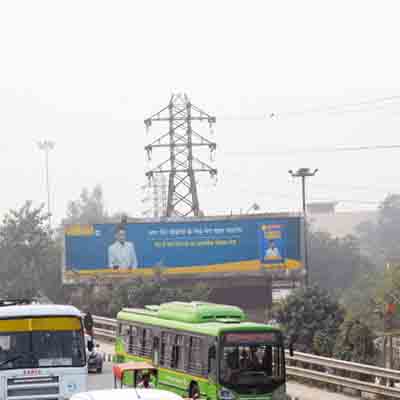
    In its last campaign, the bank brought on board the most dependable partners of renowned celebrities to bring alive the brand promise – Ajit Tendulkar, Aruna Anand, etc. Keeping with the tradition, this time it features actor Pankaj Kapoor.

    DDB Mudra Group chairman and CCO Sonal Dabral said, “Union Bank of India always puts people first. It is this thinking that gave birth to the now famous platform of ‘Your dreams are not yours alone’. DDB Mudra Group has already created two very successful brand campaigns on this platform and in this third installment, the line gets a product spin. In keeping with their vision, Union Bank has come out with many innovative offerings that put the consumer at the forefront, with technology becoming an enabler making life more convenient and relationships richer. We decided that the best way to communicate this was through simple human stories that could be happening everyday in any Indian household. All seen through the eyes of the same family. The biggest triumph of this campaign is the very real tonality and its perfect casting with Pankaj Kapoor lighting up the screen as the head of this ordinary Indian family. We are very excited with this latest campaign for Union Bank of India and I’m sure people will love these films as much as we do. Like our earlier campaigns for this brand, this too is less advertising more life.”

    The five-film campaign (out of which three will be out in January 2014), revolves around five members of a family, their dreams and the role played by UBI to turn them into reality.

    The agency’s group creative directors Aman Mannan and Ashish Phatak said, “The simple observation in life that kick-started the entire process was to acknowledge, that unlike west, our dreams do not feed on individual aspirations but collective energy of every family member. For example, to have your own home is a dream not owned by an individual but an entire family. The entire campaign is based on this simple understanding. We wanted people to believe that Union Bank of India is part of their everyday life. And hence, all the five stories revolve around ‘shared Indian dreams’ and the role played by Union Bank’s products and services to make them come true.”

  • DDB MudraMax OOH refreshes brand Star Sports

    DDB MudraMax OOH refreshes brand Star Sports

    MUMBAI: STAR India recently revamped the branding of the sports network and unveiled a new brand for Star Sports across six channels — Star Sports 1, 2, 3, 4, HD1 and HD2 and starsports.com.

    To create the awareness and buzz for the new brand identity and to communicate the new brand philosophy – Believe, Star Sports partnered with DDB MudraMax OOH.

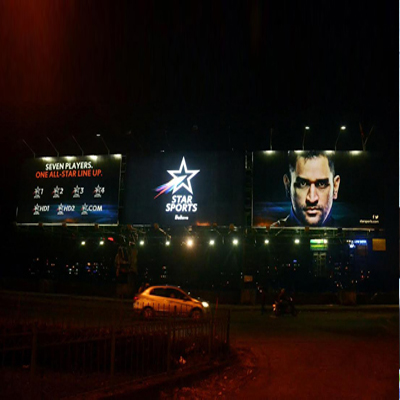
    The campaign was rolled out when India tuned in to watch Sachin Tendulkar play the last series of his sports career. The massive OOH campaign was executed in Mumbai, Delhi and Kolkata as well as across major cities in Gujarat and UP. The campaign used multiple visuals of Mahendra Singh Dhoni as well as the brand logo as part of the campaign creative.

    On the campaign, STAR India executive vice president marketing & communications Gayatri Yadav said, “The work done by DDB MudraMax OOH for the brand refresh campaign has been outstanding. The DNA and essence of the brand refresh was well understood and reflected in the manner in which the planning and media selection was done by the agency. Especially the Star Sports zone and roadblocks conceptualized and executed at Mumbai and Delhi airports are noteworthy and have created a great impact and buzz for the refresh. We are very impressed with the positive reviews received for the campaign. DDB MudraMax has delivered on our expectations yet again.”

    Commenting on this, DDB MudraMax OOH retail and experiential president Mandeep Malhotra said, “Sport is very close to my heart and when the opportunity to associate with a brand standing tall to the passion came up, was really thrilled to create magic. The team did a wonderful job on picking up unusual formats of advertising. Various touch points were exploited and the new identity made it to top of mind recall with a smooth transition.”

    DDB MudraMax OOH VP Spencer Noronha added, “Star Sports aimed at starting a revolution in sports broadcasting and the media strategy was to amplify this sports revolution through an occasion that is relevant to all and thus inspire every Indian sports fan. This soul of this campaign was “premium and classy” and hence it was crucial that the media selection had to be in line with that imagery. We selected the most impactful, most premium and the largest of available media vehicles in each of the target cities to create a statement in the OOH space. The quality of the selected media reflected class and helped the campaign to quickly get noticed and talked about. The eye catching creatives amplified the impact and recall manifold. It’s definitely one of the most memorable OOH campaigns in 2013”

    DDB MudraMax OOH DGM Anurudha Pawar said, “OOH is a communication platform where the brand is racing against time to grab attention and communicate with the TG while he zooms past the media within a few seconds. This makes it all the more important for the brand to use the right media mix and deploy an optimized communication tailor made for the medium. We exactly did this for the refresh campaign. The media vehicles were meticulously handpicked to project class; and the creatives were kept ultra outdoor friendly to specifically communicate the grandeur of the brand. We took the innovative branding route by creating the Star Sports Zone, Stadium visibility corridors and airport roadblocks, to ensure each and every person exposed to the communication carried a positive image of the brand with him in this mind. I am sure we have succeeded doing that.”

    A multimedia approach was used for the campaign. Large format A+ grade billboards and Unipoles, Backlit Bus Shelters, Backlit Pole Kiosks, 4 Sided Backlit Pillars, Large Backlit Glow signs, Drape, Prominent Mall Facades, Digital Screens at airports and Gantries were meticulously selected at key touch points in each city. The creatives were optimized for each of the media formats used. DDB MudraMax also brought in a couple of significant planning and media innovations to help portray the grandeur of the brand refresh and garner high recall value for the campaign. Visual domination was the key.

  • RAPP India appoints Kapil Bhatia as associate VP

    RAPP India appoints Kapil Bhatia as associate VP

    MUMBAI:  RAPP India has roped in Kapil Bhatia as AVP for the agency’s growing clientele in Mumbai.

    Kapil joins RAPP India from Squad Digital, Nairobi, where he was general manager overseeing the operations of the agency across digital strategy, creative solutions, media planning, social media marketing and mobile marketing.

    Before moving to Nairobi, Kapil worked with the DDB Mudra Group for four years and was primarily in-charge of client servicing for one of the agency’s largest clients, LIC.

    On joining RAPP India, Bhati said, “This is going to be an exciting opportunity to tap into my through the line communication understanding. I look forward to help RAPP with the building its multi-channel capabilities.”

    RAPP India and Tribal Worldwide India president Venkat Mallik said, “We are going through an interesting phase of transformation and growth at RAPP in India. Kapil joins RAPP at just the right time as we look to remodel the agency and introduce a set of new initiatives to strengthen  the multi-channel RAPP offering across Mass Media, E Commerce, Social Media, Email marketing & CRM. RAPP is one of the few agencies with the ability to offer genuinely integrated communication thinking and Kapil’s skills and experience complement this really well.”

    Commenting on this, Vice President, RAPP India vice president Bijoe George said, “As we go about building RAPP INDIA as a media agnostic, data-led agency we needed leaders who can champion this cause amongst clients. Kapil comes with the requisite experience and fits the bill perfectly”.

  • Brands, youth mindsets & Samyak Chakrabarty

    Brands, youth mindsets & Samyak Chakrabarty

    MUMBAI: “Who can know the heart of youth but youth itself?” wrote punk rocker Patti Smith in her memoir, Just Kids.

    Indeed, global brands have made it their business to figure out what the youth wants, often ending up classifying them into categories which they think define them – cool, sexy, social media presence and so on.

    This is however their biggest mistake, opines DDB Mudra chief youth marketer Samyak Chakrabarty. “Youth can’t be classified or boxed into traditional or conventional SECs. A certain 21-year-old may appear to be the consumer for a brand but this doesn’t mean he/she will actually purchase it. For instance, a youngster living in Dharavi may own an iPhone while someone in SoBo may have a Nokia Asha,” he says.

    Samyak is speaking from a position of knowledge; he and his agency have spent six months with 40 youth unraveling the complexity of a youth generation in the Indian metros which is more connected and aware than any other in the history of mankind, thanks to the spread of the internet, mobiles and the power that both have showered on them. The output is Youth Report 2013 which aims to provide some insights into those between 18-25 years of age.

    While many question whether it is right to paint a very disparate and fickle demographic grouping with a broad sweep of a brush, Samyak has indeed taken a shot at it in his Youth Report 2013, which is drawing some attention amongst advertisers and marketers.

    The basic premise of his report is “that those born post 1988 are extremely moody people. At one level they are very sure of what they want to do in the long run, but on another there is immense amount of confusion and parallel thought flow. Again it is the number of options available and continuous bombardment of information through new media to blame. 9 out 10 decisions are made based on the prevailing environment and frame of mind.  5 mindsets (read: mood) existing every Young Indian born post 1988 living in metro cities. Each gets triggered based on the type of decision and plays a critical role in influencing choice.”

    The five according to Samyak are:

    * The Passionista: Someone who transforms into a Passionista while making decisions would base judgment purely on feelings often also defying strong logic.

    * The Racehorse: It’s always about being the first in everything he/she does. Such as state of mind is active in people who are generally very motivated, aggressive and competitive in nature.

    * The Label: All decisions are completely based on the badge value of a product. Unlike someone who thinks likes a racehorse, here it’s not about being the first but rather being the ‘coolest’.

    * The Shiny Disco Ball: If someone thinks like a Shiny Disco Ball, He / She is an optimist and will be open to try different things just for the experience.

    * The Kite: Those in this state of mind prefer to follow others when it comes to buying decisions.

    And how do these mindsets come into play. Samyak explains that if the youngster has a racehorse mind or competitive and aggressive mindset, he/she will buy a certain product to be in a position of leadership and create talk value among others.

    If a youth has a kite mind where say five friends get together in a bar with four of them ordering a certain brand of beer, the fifth friend will display a kite mind and order what his four friends ordered. At this point, his/her mindset is to simply go with the flow. However, if the same person is in a passionista mindset, he/she will take charge and order what he/she likes instead of blindly following the others.

    “Today, youngsters are driven a lot by mindsets rather than economics. I think they are more inclined towards their passion, following their desires and finding ways and means to achieve them,” says the young in years, but old in experience Samyak. Irrespective of their economic background, they strive to achieve what they want and it doesn’t have anything to do with their ability or inability to buy the product. It has got more to do with what they want.”

    However, diversity (economic, social, geographic or religious) does influence choice and so. Say, a like on a facebook page does not always translate into the youngster buying the brand and that’s where mathematics fails, explains Chakrabarty.

    For a brand to understand the youth, it is necessary to tap the thinking process. “Tap it because it remains constant. If a brand has been able to understand the ingredients that contribute towards building an opinion or brand preference, it has cracked the code,” says Chakrabarty.

    He cautions against the use of jargon and quick fixes like celebrity endorsement, popular lingo and bright colours to attract the youth. Asked how the Youth Report would help brands understand youngsters, he says: “One must remember that most statistics expire even before they are put to print. For instance, a report may say that seven out of 10 people think this way and so end up buying a certain product. However, what influenced a person today may not influence him/her tomorrow depending on the influence of his/her peer group and other such.”

    While the Youth Report helps brands by offering this kind of a classification, Chakrabarty also points out that brands would do well to stick to their core values even if they reinvent themselves with time. He cites the example of Red Bull which at its core continues to be about energy and adrenaline however much it may revamp itself. Ditto for Nike and Kingfisher.

    “It’s suicidal for a brand to reinvent its core because then you lose the long term relationship with the TG. Young people don’t wake up thinking about brands. They don’t care. If brands want to be in the youth’s priority list, they need to connect emotionally with the youth or have the youth looking up to them for example Apple,” he elaborates.

    The other thing he talks about is how a 22-year-old will always have options B and C if he/she doesn’t get option A but the same 22-year-old will turn 50 at some point in future. So, it is for brands to decide if they want a long-term relationship with such a customer. In the event they do, the message has to be sustainable and not fluctuating.

    Chakrabarty is candid about the fact that media – both print and television (even the likes of MTV and Bindass) – has failed to capture the mind of the youth.

     “MTV was MTV because of the music. It picked up on various popular trends and kept changing according to time. But now, shows have become bigger than the channel. Take Roadies, for instance – if we take the show away from the channel and put it on any other, it will still work. The same can be said about Emotional Atyachar. There has to be a balance between content and the brand. That is why we tell our clients to focus on 10 per cent of people and not the remaining 90 per cent because you can’t please everyone. When a brand tries to be overly youthful, it has lost the plot. MTV made a big blunder by changing their core.”

    “Having said that, I also think we give undue importance to the youth. Yes, it is true that those born after 1988 and those before 1988 will behave differently. The main reason is of course the social influences around them – internet was not an integral part of life before 1988, facebook wasn’t around, there was no ‘e’ before commerce. Plus, as a society too, we are changing, parents are giving more freedom to their children. The problem lies in the fact that people think that today’s youth is special, which it is not. Yes, it is different and it is quantitatively more but there is nothing starkly unique about it,” he adds.

    However, wouldn’t he agree that social media, which has become an integral part of youth today, has changed the youth’s psyche? He disagrees: “The time has changed but the thinking hasn’t in a way. Earlier our parents used to tell us to beehave in a certain manner because of what the society will think. And now youngsters behave in a certain manner because they want to be seen like that on social media. However, social media doesn’t influence when it comes to brands. It might surprise you to know that a brand so popular on social media may not have so many consumers. Also, there isn’t too much of branded content on social media that will engage young people.”

    Chakrabarty points out that the Youth Report clearly highlights the power of off-line communication (word of mouth).

    If someone were to buy a Rs 30K phone, he/she is going to show off in front of his/her friends. He/she may read a few reviews but will talk to his/her tech-savvy friends before making the purchase. In this case, it’s not peer pressure but peer influence. According to Chakrabarty, this can be artificially regulated and the agency is working toward it.

    And what is the youth’s attitude toward money? “There is no answer to it. We are still trying to figure it out. At one level, there are a lot of young people exploring the merits of economical products and savings. Currently, whatever the youth earns, 75 per cent of it is spent on satisfying desires while the rest is spent on survival. They do try to achieve a balance between the two. However, my prediction is that looking at our future and the way the economy is youngsters too will become cautious about their finances. So, all the financial product companies shouldn’t ignore them. They might form only five to seven per cent of the TG of these companies at present but it is going to amplify into something much bigger,” says Chakrabarty.

    Apart from what the youth think and how brands can decode that, Chakrabarty, who started young, is simultaneously running a Blackdot campaign to motivate youngsters to step out and vote in Maximum City. He feels that this year, a lot of youngsters are going to take charge because they want a better future and know that they need to take a stance rather than being passive observers. Maybe, he does know their mind better than most others….

  • DDB Mudra releases Youth Report 2013

    DDB Mudra releases Youth Report 2013

    MUMBAI: DDB Mudra Group has released its maiden Youth Report themed on “Beauty Money Sex Love Faith Substance”, the six entities which most acutely influence the choices and aspirations of urban young Indians.


    “Our role has been to merely curate the content so as to ensure the insights are raw and relevant. We have further ensured the focus is on the core thought process that goes behind brand decisions which is more sustained so that the data can be of use to marketers while developing their communication” explains DDB Mudra Group chief operating officer Pratap Bose.


    The report, unlike any other, has been collated by a panel of 40 college students, who themselves are a part of the TG, across five major cities including Mumbai, New Delhi, Bangalore, Chennai and Kolkata.


    “This report also features our six mindset archetypes, a proprietary tool we use to cut through conventional SECs to better understand youth buying behavior given the diversity and continuous evolution of this TG,” adds the agency’s chief youth marketer Samyak Chakrabarty.

  • DDB Mudra south brightens up Peter England

    DDB Mudra south brightens up Peter England

    MUMBAI: Peter England, the apparel brand of Madura Fashion & Lifestyle has launched a new campaign which features Siddharth in colourful denims and smart young formals and is aimed at the late university youth and early jobbers.

    The campaign was mounted on the insight that today’s youth thinks formal wear stands for boring office clothing. Given this context Peter England wanted to tell them that office wear can also be exciting and expressive. So the campaign idea was simple – ‘Brighten up’ in office with the new line of young formals from Peter England.

    DDB Mudra south strategic planning VP Rajesh Sharma said “Youngsters these days do not want to conform to existing codes, even if they are early jobbers in workplaces. It’s not about ‘rebelling’ but about the belief in ‘expressing’ themselves. The young formals campaign is a celebration of this spirit. The idea on the PE jeans campaign is to tie up the product innovation to something deeper and meaningful about the youth of today. The campaign has been executed with appealing non-office colours and off-the-trodden-path ensembles.  The campaign was shot with Siddharth, who’s been Peter England’s brand ambassador for the past three years.”

    Peter England’s jeans business has taken different route in this segment with innovation in the product. The innovation story has been a recurring theme for the brand. The objective this season was to take the innovation story forward and to bring out the functional features of the product.

    Peter England chief operating officer Kedar Apshankar said, “Formals has always been considered to be ‘boring/conformist’ by the younger generation today. The challenge was to, catch their imagination by portraying “formals” in a new light. This campaign is a significant step in that direction. Denim has a very crowded brand landscape, with multitude of brands positioned across various platforms. PE Jeans, in this context is attempting to carve out its own niche by focusing its offering on meaningful consumer benefits and a communication which provides an inescapable focus on the merchandise and the much needed cut-through in the cluttered ad-space.”

    For both young formals and PE Jeans, print & OOH campaign have been created and released across all major markets in India.

    On the new segment, DDB Mudra south creative director Ajesh N said, “What one wears has a great influence on one’s mood and how one performs in office. Peter England’s young formals collection reflects the youthful spirit through vibrant colours and young cuts. Clothes make the work atmosphere lively and brightens you up.  That is precisely what we tried to capture in the campaign.”

    Added, the agency’s creative director Saurabh Doke said, “Simplicity and fashion always goes hand in hand. In today’s cluttered ‘wallpaper fashion advertising’ especially where every other denim brand uses the grunge look to showcase denim attitude, the new PE Denim campaign stands out. Perfect balance between product innovations and core brand values.”

  • DDB MudraMax launches OOH campaign for Pan Vilas

    DDB MudraMax launches OOH campaign for Pan Vilas

    MUMBAI: Godfrey Phillips India’s pan masala brand, Pan Vilas has launched an OOH campaign in tandem with radio and television spots. The campaign has been planned and executed by DDB MudraMax team and was launched across key markets of Gujarat UP, MP and Delhi.  

    The campaign aims to build upon the brand imagery of Pan Vilas and also communicate the message of the new price point of the product. The key challenge faced by DDB MudraMax in creating the campaign was to craft the communication that is eye-catching, helps maximise awareness levels and also add to the brand recall value.

    The creative that is endorsed by Manoj Bajpai is restricted to sites that have large display area and are situated in high footfall regions with heavy traffic coverage so as to maximise viewership numbers. The campaign will be run across cities for 45-60 days.

    Godfrey Philips general manager marketing Arnab Ghosh said, “The OOH campaign was mounted to build salience for Pan Vilas across key markets and to create a buzz prior to the intended price change on the brand. Initial indication on the acceptance of the new price point in most markets is positive. The entire 360 degree approach of which the OOH campaign was a key element seems to have worked in achieving the intended results, thus leaving the brand in a better state of health. DDB MudraMax as a partner has been instrumental in working to a brief of providing the most optimised OOH plan for the key markets, which in the current situation of budgetary constraints was the need of the hour.”

    DDB MudraMax , senior vice president Subhashish Sarkar added, “The Pan Vilas campaign has been taking steady and sure strides across a variety of media in recent years, to entrench itself as the most recalled in category with clear communication, memorable brand endorsement and strategic message locations. For OOH, DDB MudraMax has strived to work closely with the brand team in delivering mileage in tandem with the rest of the brand delivery in all markets. Selection of media, astute buying and a slew of eye-catching innovations gain the Pan Vilas campaign a foothold above budgetary allowances.  We take pride and pleasure in our association with the brand.”

    DDB Mudramax deputy general manager Jagriti Kohli further said, “Good work always happens when the client and agency work as partners, with a clear focus to turn the brand challenge into an advantage. Pan Vilas OOH campaign is testimony to this fact. The campaign in all cities stands out for its outdoor friendly creative as well as the large format, selected media. A thorough understanding of markets, strategic and relevant OOH media planning backed by flawless execution by a team which owns the brand completely has made the Pan Vilas campaign a visual delight across markets.”

  • DDB Mudra appoints Sambit Mohanty as creative head, North

    DDB Mudra appoints Sambit Mohanty as creative head, North

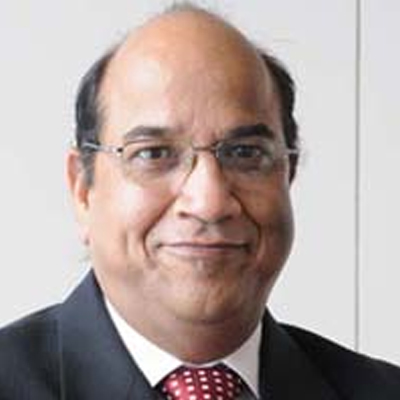
    MUMBAI: DDB Mudra has roped in Sambit Mohanty (fondly known as Sam) as creative head, North. Sambit will be based out of Delhi and will report in to DDB Mudra Group chairman and CCO Sonal Dabral.

    Sam joins DDB Mudra from McCann Erickson where he was executive creative director, New Delhi, instrumental in creating memorable work for Coca-Cola (Haan, Haan, Mein Crazy Hoon) and Aircel (Thoda Extra Milta Hai Toh Achcha Lagta Hai).

    With over 14 years in advertising and design, Sambit has worked with world-class brands in categories ranging from Telecom, Food & Beverage, Automotive, Retail, Media & Publications, Healthcare and Lifestyle. In his diverse career, Sam has been a part of well-known agencies including Leo Burnett, Publicis, Lowe and Elephant Design and worked on an envious list of clients such as Coca-Cola, GM, Nestle, HP, Pernod-Ricard, Virgin Mobile, Hitachi, Max Bupa, Godfrey Philips, The Indian Express, BBC World, Tanishq, Britannia, Reckitt-Benckiser and more.
    DDB Mudra Group chairman and CCO Sonal Dabral

    On joining DDB Mudra, Delhi, Sambit said: “It’s a privilege to be part of DDB’s creative culture that’s guided by play books not rule books. With Sonal’s help, I’m keen on creating a place where one looks forward to coming to work – even on a Monday morning. And also producing some glorious work along the way!

    An avid quizzer, Sambit is well-known on the Delhi quiz circuit. He has had the distinction of being a finalist in BBC Mastermind as well as a National winner of the Brand Equity Quiz.

    Sambit has won national and international awards including a Silver World Medal at New York Festivals. He has also been acknowledged by 4Ps business magazine as one of ‘India’s Gen-Next Creative Brains’.  
    DDB Mudra Delhi president Vandana Das

    DDB Mudra Group chairman and CCO Sonal Dabral said: “New Delhi is an extremely important market for us so I’m really happy that a talent like Sambit will lead our creative offering there. Sambit is among the rare breed of creative professionals in India who are equally comfortable with Hindi or English, with paper and pen or mouse and computer screen. I’m certain Sambit will play a big role in helping shape an exciting creative future for DDB Mudra Group.”
    DDB Mudra Delhi president Vandana Das added: “We have got to dot our “I”s in the creative business. I am looking at ushering, welcoming, embracing creative leadership in DDB Mudra Delhi through Sambit. He is a phenomenal talent and he has got the three Is – Inspiration, Imagination and Involvement. Many “I”s put together becomes “We” and I look forward to generating some more incredible work from our office.”

  • Close Arvind Sharma steps down from Leo Burnett, Saurabh Varma to take chargea

    Close Arvind Sharma steps down from Leo Burnett, Saurabh Varma to take chargea

    MUMBAI: Tom Bernardin, Chairman and CEO, Leo Burnett Worldwide announced today the new leadership of the India operations. Chairman and CEO of Indian subcontinent Arvind Sharma will be leaving the agency to pursue other business interests outside the industry after a successful stint of 30 years.

    The currently regional chief strategy officer of Leo Burnett Asia Pacific Saurabh Varma has now been appointed as the CEO Leo Burnett Group India.

    The appointment will be effective from 1November, 2013. In his new role as CEO for the India operations across Mumbai, New Delhi and Bangalore, Varma will report directly to Leo Burnett Asia Pacific President Jarek Ziebinski.

    As chief strategy officer of Leo Burnett Asia Pacific, Varma oversees all heads of strategy and planning directors in the region. His role also sees him playing a key role in the management of regional and global accounts. A post graduate in Communications from Mudra Institute of Communications Ahmedabad (MICA), Varma has 16 years of experience in the business. He has spent seven years with Leo Burnett based at Singapore. Some of the brands he has worked on include Indian Oil, Lakme (Unilever), Vicks (P&G), NIVEA, Fosters, Philips, HP, Blackberry, Samsung, Friesland Campina Asia Pacific (Dutch Lady/ Foremost/ Frisian Flag), MCYS and UOB Bank.

    Varma has spent the first nine years of his career in advertising in India. He began his career with DDB India and within four years of being in the business, he was made head of account management at TBWA India. In the last three years, Varma has won more than 50 awards including the Effie Gold, the Appies Gold, the Grand Prix for Direct Marketing, the most effective media campaign at Hall of Fame, 2 Gold Lions at Cannes, the Grand Prix at the ADFEST, the Viewers’ Choice Award (Mediacorp) and many more. In 2010, Varma was awarded the ‘Strategic Planner of the Year’ at the Hall of Fame Awards.

    His strength lies in being able to bring life into a strategic process, unearthing societal contexts and creating out of the box briefs.

    Commenting on his new role, Varma said, “India is home to me. This new role is coming full circle to where it all began. Over the years, I have always kept a keen eye on the developments in India and in some ways, I felt like I have never left. I look forward to coming back with a fresh perspective gained from my time away and bring the best learnings of Leo Burnett network to India. Being a part of the regional team for Asia Pacific has given me a unique perspective and experience of diverse markets across the region and I look forward to bringing this understanding to my new role. Together with the management team, most of whom I already know and have the privilege of working with, we will be focused on driving a positive change for the agency to take it to the next level.”

    Varma’s strength lies in being able to bring life into a strategic process, unearthing societal contexts and creating out of the box briefs

    Bernardin, who is in Mumbai today with the regional management team for the announcement said, “We would like to take this opportunity to express our deep gratitude and appreciation to Arvind Sharma. He has worked tirelessly over the past 30 years to build Leo Burnett into one of India’s leading creative agencies and laid down a solid foundation for the agency to progress to the next level. During his tenure, Arvind built a stellar client base that includes blue chip multinational and local clients and nurtured some of the brightest stars within the Indian advertising industry today. Though he remains available for his advice and counsel, we bid farewell to Arvind today, in his official capacity, with our very best wishes and as a dear friend.”

    Ziebinski added, “I’d like to thank Arvind for his contribution to our success and close collaboration over the past four years since I arrived in the region. I wish Arvind nothing but the best for his new future.”

    While bidding adieu, Sharma had some fond memories, as he said, “I had a very long and fruitful run as the leader of Leo Burnett in India Subcontinent. As I approached the company-defined age of 58, I would like to start something totally new. I look back at my 30 years at the agency and 21 years of leading it with a great deal of satisfaction.”

    The agency was awarded Global Agency of the Year by Leo Burnett Worldwide for 2003 and 2008. In partnerships with its clients, the agency has been recognised creatively across leading award shows globally including Cannes, Clios, D&AD, One Show and London International Awards. Work produced by Leo Burnett India has also run in multiple countries worldwide. Last year, the agency successfully completed the acquisition of digital agency, Indigo Consulting and integrated it into the Leo Burnett Group.

    Continued Bernardin, “We are fortunate to have a strong management team on ground in India and equally fortunate in having the bench strength in the region in naming Saurabh to this role. Saurabh’s talent and track record is well-recognised within the network. His combined experience and knowledge of having worked across creative, media and digital agencies is invaluable as we look to elevate the agency to its next stage of development in India, a key market for the network globally. He will have the full support of the global and regional management in his new role.”

  • DDB MudraMax lights up streets for Reebok One

    DDB MudraMax lights up streets for Reebok One

    MUMBAI: The sports brand Reebok has come up with a new running shoe – Reebok One – and to create visibility and awareness for it, the brand along with DDB MudraMax OOH team decided to cover malls and major traffic junctions of the various cities.

    “Reebok one is a high impact campaign designed to ensure that the consumer gets attracted towards the product and understands how the 3 zones can help a runner. This is being conveyed at every touch point be it retail or OOH. The consumer is introduced to this technology powered shoe in a compelling manner”, said Reebok brand director Somdev Basu.

    The campaign’s objective was to urge people to visit the showrooms and try the new Reebok One.

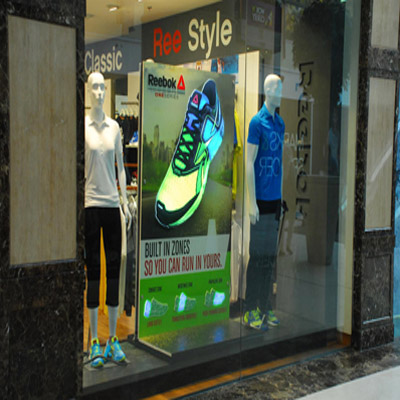
    To highlight the USP of the shoe the DDB MudraMax team came out with the idea of lighting the three parts/zones which help the person to land softly, transition smoothly and push forward quickly. The creative idea was to relate the foot movement with the zones in the shoe and the strategy was to take good clear hoardings and mall facades and highlight the 3 key functions of the shoe.

    Commenting on this, DDB MudraMax – Outdoor, retail and experiential president Mandeep Malhotra said, “Reebok is a brand which is very close to my heart. We were thrilled to welcome the three layered brief from them and the team did a fantastic job. We have been working hard on DDB MudraMax being the agency to tell a story on a single frame. This innovative campaign besides reaching out to prospective consumers brought the wow factor back in innovative lifestyle footwear campaigns.”