Tag: DDB Mudra Group

  • The HR role in a post-pandemic world

    The HR role in a post-pandemic world

    MUMBAI: As we look forward to a post-Covid2019 world, minus any lockdown restrictions and worries about the virus, how will companies deal with the scenario? Indeed, the world will never be the same again. How will then companies cope in such a changed world? The human resources (HR) personnel will have the cardinal duty of ensuring seamless business operations and employee welfare. Assessing the new requirements of the office as well as employees will be the immediate task.

    Indiantelevision.com spoke to media and advertising industry heads to understand how their HR heads are preparing for the post-Covid2019 world.

    Townhalls and virtual meet-ups are the common ways to ensure people feel connected to each other. DDB Mudra Group EVP and head-HR Rita Verma and Dentsu Aegis Network head HR business partner – south Asia Sunil Seth say that open and honest communication has been the way to tackle stress.

    “Everyone is juggling their own unique personal living situation, so offering people some flexibility in work schedules and encouraging them to take time off, if they feel overwhelmed, has been critical. We’ve offered physical fitness sessions, virtual meditation, tips to manage stress at work and home. The idea is to help people tackle whatever roadblock they may be facing in a given week,” says Verma.

    On the other hand, #ARM Worldwide co-founder and COO Abhishek Punia says that Covid2019 has taught the importance of mental health. “Psychologically, people will have fears in their mind and by providing them with a safe and clean environment, with all sanitisation and hygiene measures in place, we can instil confidence in their minds,” he says.

    To tackle stress, Logicserve Digital created an online chat room, virtual tea-time session where employees can share stories, dance sessions, pet meetup, meditation sessions and money management sessions.

    TheSmallBigIdea co-founder and CEO Harikrishnan Pillai says that there is a tendency to get deeply engrossed with work and forget that we are humans who are used to interacting with many individuals but now confined to the walls of our homes. “We have encouraged managers to keep speaking with the team members, especially ones staying away from the family or the ones who are new to the organisation,” he says.

    As green zones have slowly started resuming operations, companies will now have to deal with an increased focus on health and wellness and in some cases, paranoia. Companies agree that checks such as using sanitizers or washing hands frequently, thermal scanners, compulsory wearing of masks, reminders to maintain social distancing will have to be taken. Additionally, pre-sanitisation, as well as frequent cleaning, will need to be incorporated as new measures. Another requirement will be to maintain physical distance between employees when they work as well as in spaces like lounges or cafeterias.

    After health measures come flexibility, which most companies will now undertake if they haven’t yet already. The next step is to create batches of employees and divide them into shifts if they are called on the premises.

    Seth says that there will be no change in shifts. Verma adds that common work hours have been found to be fruitful. “Not everything is solved through a company policy alone, but largely through office culture and ours is seen in the continued good work our teams are doing,” she says.

    Godrej & Boyce Mfg has planned for business scenarios and rosters of employees who are required to come to work and which work could be carried out from home. It is also encouraging the use of personal vehicles.

    Logicserve Digital head – HR Anshuman Misra says that they are in no rush to bring the workforce back to the office since flexible policies are already in place. He is considering flexi-working and flexi-timing with a greater focus on results than efforts.

    While most companies are encouraging people to travel using their personal vehicles, if possible, The Visual House founder and CEO Deepmala says that carpools will be encouraged only after considering the health and safety of everyone involved. Similarly, TheSmallBigIdea is considering non-peak-hour travel to ensure minimal contact.

    AGENCY09 culture manager Archita Arekar says that they are mentally prepared for another six months and the HR team is working on a new policy post-Covid2019 that favours work flexibility and employee safety.

    Elderly people have to be extra cautious about the Covid2019 virus. Companies that employ older people need to take extra care. While DAN has a majority of millennials, elderly employees will be advised to continue to work from home until enough measures in the external environment allow them to travel to office with full safety. Same is the case with Logicserve; the company will also be cautious with those who have kids or senior citizens at home or those with health conditions.

    The HR department will play a prime role in ensuring the wellbeing of employees in the new era. This will include creating new policies, structures and measures. There will be a nuanced approach to employee health, safety and wellbeing.

    Verma says that HR will take a health-first approach with lesser crowds and more virtual engagement. Productivity matrix will also be a key focus. Different functions will be analysed and their ways of working will be looked into. Reskilling, restarting and realignment will be the newer approach, according to her. “But the lens through which we will continue to look at our policies will remain, i.e., empathy; to come out of this as healthy and strong as possible,” she adds.

    According to Seth, organisations, where HR practices were strong, will see no difference. However, the HR horizon will require to be widened from the perspective of the psychological and emotional needs of employees. “It will further need a strong configuration in terms of leadership and management. It may also require certain investments to offer in terms of coverage on health, emotional and financial benefits to the employees,” he says.

    As a consequence of the pandemic, companies have started focusing on intensive hygiene practices as a daily routine. Misra says, “Once the lockdown is lifted, HR’s role will be even more crucial and important as the personnel have to continually ensure the health safety and wellbeing of all employees while being aligned with the organisational goals.”

    On the other hand, Pillai says, “In times like these, our HR department has played a crucial role in keeping the teams connected, formulating policies and helping in smooth operations along with the admin team. HR teams will need to be on top of the game as we might be looking at a workforce that won’t meet every day but still need to be kept motivated.”

    HR heads have a lot on their plate right now and going forward, they will have to ensure strong measures that will enable their employees to be at their productive best.

  • Brands and their digital-first avatars

    Brands and their digital-first avatars

    NEW DELHI: We are the natives of a digital world. Most of the resources that were earlier physical for us have turned into pouches of kilobytes and megabytes; be it our photographs, watches, or music systems. Wrapped in a screen of five inches, a big part of our hobbies, our jobs, and our social communications are now soldered onto motherboards.

    Quick to react, the marketing industry shifted a big chunk of their annual spends to digital platforms. In India alone, the digital marketing industry is growing by more than 30 per cent annually. Not just advertising, a lot of brands have been investing in revamping their identities for a digital world.

    Last year, the industry noticed a lot of brands, including big names like Mastercard and Doritos, doing away with names in their logos and sticking to just their symbols. The brands argued that simpler logos appeal better to GenZ, who do not prefer over-the-top marketing and a loud brand presence.

    This year, brands like Volkswagen, Durex, and Cadbury started another trend, called flattening of their logos. They are getting rid of any 3D elements in their logo design and shifting to bolder, simpler typefaces. Again, the wish is to connect better with a younger audience.

    Madison BMB CEO and chief creative officer Raj Nair says: “There has been, particularly in the last five odd years, a multitude of companies going in for a revamp of their logo/identity. These include companies that owe their origins to the online world as well as traditional companies, which primarily conduct their business in the offline world.  So you have online natives like Google, Pinterest, Airbnb, Spotify and GoDaddy that have conducted this exercise as well as traditional giants like Cadbury, Durex and Volkswagen that have also undergone a change.”

    However, more than appealing to a younger audience, reshaping of logos make a great sense for the mobile-dominated world of today.

    DDB Mudra Group NCD Rahul Mathew explains: “Brands have to adapt to the world their consumers live in, and logos are a big part of every brand’s identity. As more and more of brand engagement, research and even purchase are moving from the physical world to the digital one, brands are also evaluating what they can or should carry with them. Their 3D logos are like massive four-poster beds that have looked beautiful where they have been living but are a pain to move.”

    He adds: “2D logos are much more flexible. The absence of shadows and gradients makes it easy to use them across platforms and formats. The minimalism also makes digital assets easier on the eye and more recognisable.”

    Google was, probably, one of the first brands to react to this need. It came with a revamped identity in the year 2015, bringing down the size of its digital logo from 14,000 bytes to only 305 bytes. Back then, in a blog post, the technology giant had revealed that the move was made to make the logo look good on small screens. According to experts, it also made easy to load on the devices of those living in remote locations, possibly with slow internet speeds.

    And, additionally, this restructuring of logos for a digital world can open up a plethora of opportunities for the martech companies.

    According to a machine learning engineer, it is easier for machines to identify 2D logos from a low-resolution image as compared to a 3D image, as the number of vectors is lesser in the former, not taking into account other external factors. This might allow martech companies to scan user images from online sources and create a better database for better-targeted marketing.

    Havas Group India chairman and chief creative officer Bobby Pawar elaborates: “Flat logos are simpler and generally more easily identifiable. They are easier to reproduce without losing anything across all touchpoints, platforms, and user interfaces. It, therefore, will (help in creating richer databases for marketing).”

    Brands and marketers are thinking digital-first these days, thus, creating a vast playfield for martech companies to innovate and come with solutions that can utilise these opportunities. On the other hand, it is equally important for platforms and governments to safeguard user data as the technology is making it easier to access by alien parties. However, whatever may be the individual discourse from here, the world is surely entering into an exciting data-dominated phase of unusual marketing opportunities, which will be a delight to observe. 

  • The United Nations Covid2019 Response Creative Content Hub selects two entries from 22feet Tribal Worldwide

    The United Nations Covid2019 Response Creative Content Hub selects two entries from 22feet Tribal Worldwide

    MUMBAI: The UN Covid2019 Response Creative Content Hub, a joint initiative of The United Nations (UN) and The World Health Organisation (WHO), has selected two entries from 22feet Tribal Worldwide, part of the DDB Mudra Group, to help stop the spread of Covid-19. The entries were submitted by the agency in response to UN’s open call out to creators across the world.

    The World Health Organisation (WHO), which leads and coordinates the global health response to coronavirus, invited creators/ artists across the globe to produce and submit artwork that will educate, uplift, and inspire individuals and communities through this global crisis. The creative brief was to create an impactful illustration, audio, video, concept etc. to convey one of the UN messages, such as personal hygiene, physical distancing, know the symptoms, kindness contagion, myth-busting and do more, donate.

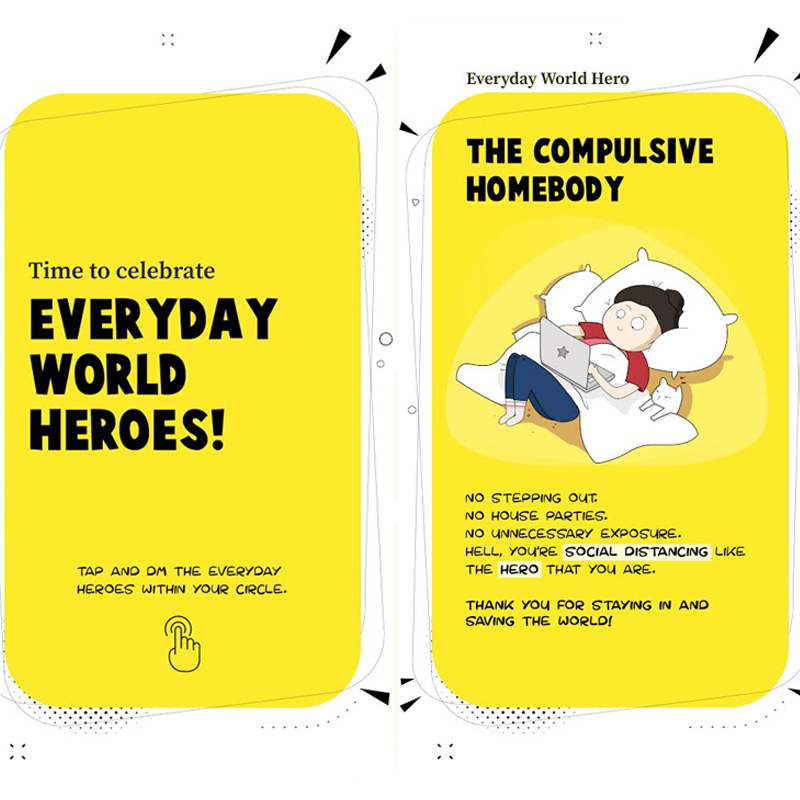
    An illustration talking about our ‘Everyday World Heroes’ and an 8-bit Game concept, ‘Saving Sumbo’, created by the team at 22feet Tribal Worldwide were some of the selected entries among a whopping 17,000 submissions from 143 countries in 20 different languages.

    22feet Tribal Worldwide NCD Debashish Ghosh said, “This is one of the reasons we came into the industry, to begin with, isn’t it? When the UN issued a call to arms and provided a tinderbox of tools, the challenge was inspiring – it tested our ingenuity to create something effective, accessible and shareable with a strong emotional tug. The fact that this was not tokenism fired us up even more. We are very proud to have contributed to this global effort.”

  • Until human crisis is sorted, nothing will make sense: DDB Mudra Group’s Aditya Kanthy

    Until human crisis is sorted, nothing will make sense: DDB Mudra Group’s Aditya Kanthy

    NEW DELHI: We are living in unprecedented times. The world order stands changed and the economy is reeling through a massive disruption. Everyone is gearing up for a ‘new normal’ but if DDB Mudra Group CEO and MD Aditya Kanthy is to be believed, the tomorrow will as much be our old habits as our new behaviours.

    In an exclusive conversation with Indiantelevision.com, he talked about how he is dealing with work-from-home, how the agency and the industry is coping up with the disruption, and what the future has in store for us. Kanthy quoted Bill Bernbach, one of the founding members of the agency he heads today, “It is fashionable to talk about changing man. A communicator must be concerned with unchanging man, with his obsessive drive to survive, to be admired, to succeed, to love, to take care of his own,” to put forth his vision for the future. 

    Edited excerpts from the conversation:

    How has the COVID-19 pandemic affected the team? How are they handling the situation?

    It’s a tough situation, no doubt, at every level, at home and at work. This is not a regular work-from-home experience, of course. It is not something that people have dealt with in the past. So there’s no rule book here. It is a massive crisis and there are all sorts of implications that we’re dealing with – economic, social and psychological. It’s all new and the only way to tackle it is to accept the scale and seriousness of it. And do what’s needed to get better at dealing with it one day at a time – together. It’s also a moment in history that ought to remind us of our sense of privilege and assess our priorities as people and communities.

    This is what we’re trying to do. And I’m so proud of the way our teams have responded to the challenge. It is a tribute to the culture they’ve fostered. I have seen the 850+ people on the team coming together, checking on one another, helping each other through this, coming through for our clients and doing their best for the community. 

    How are you maintaining a healthy work-life balance? 

    I’m not – is the honest answer. It’s all work right now. It is quite difficult as the lines between work and life blur. I’m still figuring it out but I think I am getting better at it each day like everybody else. Getting a routine going has helped. Taking the time to step away a few times every day and gather one’s thoughts and spirit.

    It is my tremendous fortune that I am surrounded by incredibly good and talented people at work; they're  a huge source of strength for me as well. So that helps. And at home, my family has been incredibly supportive.

    The advertising industry is being touted as the backbone for many businesses with media consumption rising. There might be a little more than expected on your plate these days, but with certain restrictions. How has the experience been for you when it comes to the volume of work? 

    Advertising reflects (and shapes) the economy and the culture. I don’t think it is right to say that advertising will continue to thrive unimpeded through this time. 

    Besides, while there may be more media consumption, is selling a priority right now? Surely not. This is what I meant earlier when I talked about a sense of perspective and privilege for us in these times. Resources and efforts are and must be directed in areas that need the most attention to deal with this humanitarian crisis. Everything else follows. 

    As far as businesses go, the situation is far from rosy. The demand side problems are obvious. Even in categories where there is demand, there are huge supply-side/ supply chain and distribution issues. Liquidity and credit is a challenge. Advertising is dependent on all of these factors. 

    The industry depends on marketers who have the appetite and the means to invest. That is compromised in the current market scenario. It cannot operate in isolation. 

    So yes, there is a lot of work. But its nature and form are different from business as usual. It is more consultative in the spirit of client partnership. We are working together to find answers to the hard questions that are emerging each day for their businesses and ours. It is important to acknowledge that change regardless of increased media consumption. 

    We recently had a virtual conference with marketers and agency leaders. One of the panellists mentioned that they might have more creative work to do but everything is not resulting in revenue.  How has it been for DDB Mudra? 

    Clients don’t produce work without the expectation of some sort of business outcome – long and/or short term; brand and/or buy. If we’re doing work, there is a return on it either now or in the future. So it’s like that with the work we’re doing too. It’s a different matter that it feels like a lot more work, but that’s because of the demanding circumstances in which work is being created and not a work-revenue relationship issue. I think the bigger question is whether or not there is a genuine need to do a certain thing at this time and working with clients to help them make that decision. And that answer varies from market-to-market and category-to-category. 

    What impact are you expecting on your cash registers? 

    We run a January-December fiscal year and ended Q1 better than planned. It is impossible to answer this question with complete honesty or certainty as we are only three weeks into the second quarter. Needless to say, we are definitely not expecting the kind of results that we had in the last five quarters. We’re not in denial about the economy. The next few months are going to be tough. We will have to acknowledge the situation and not pretend that everything is hunky-dory. Regardless of how quickly the lockdown is lifted, the problem isn’t going away in a hurry. 

    Until you sort out the human risk, nothing will make sense. 

    Yes, it is a human crisis and human resources are facing the wrath across industries. How is it going to be in the advertising industry? Are there going to be pay cuts, layoffs, or any other harsh measures?

    It is too early to answer this question. Until four weeks ago, we were closing our first quarter, and the situation was really different. These decisions are a function of how the economy responds through the quarter. As far as marketers are concerned, the stakes are high. They have factories and capital locked up. The numbers are much more daunting on that side. It’s inevitable that their decisions will have a bearing on our industry as well. 

    Once the medical and human side of this gets cleared, the situation will be quite different. That has to be everyone’s priority right now. I hope that the extent of this difficulty can be managed and we can make a phased recovery. And that in doing so, the human cost, both from the medical and economic point of view can be contained. 

    What are you expecting from the “new normal”? How are you prepared to deal with that? 

    I think the idea of the “new normal” is a little misleading. The situation, in India, is a few weeks in and at best a few months in other parts of the world. No one has a plan for the scenarios that we are seeing today. To suggest that we can be prepared for something, we should be able to visualise that something. 

    And right now, it is at best an imperfect picture. We have to be prepared to keep changing and refining our response as we go along. 

    Who knows what the “new normal” is. Will it change everything? 

    If there’s one thing human history teaches us it is that while change is inevitable, we are also very quick to go back to certain habits and act of certain fundamental instincts. It’s our job to work through both those forces to makes sense of things.

    As far as this moment in history is concerned, I certainly hope it draws our attention to the need to focus on the things that really matter. Our collective attentions as communities, businesses and citizen must be drawn to the huge inequalities and gaps in access to opportunity and means in society. We have to find a way to bring health, education, the environment and social infrastructure centerstage. That’s what the new normal ought to look like. Time will tell.

    We are prepared for change. It starts with the skills and capabilities. We have what it takes and a commitment to learn what we don’t know. As a group with talented people who are as comfortable with brands and creativity as they are with technology and design. I feel confident that we’re up for it. 

    The second important thing in dealing with change is the organisation’s culture and I couldn’t be more confident on that front.

    Finally, our deep and long-standing relationships with our clients. We’ve worked with many of them through thick and thin. We will do that again. The degree of partnership with clients is critical – being a part of the solution and shaping this future together.

  • Sony MAX kicks off celebrations for landmark 20 years of entertaining movie lovers

    Sony MAX kicks off celebrations for landmark 20 years of entertaining movie lovers

    MUMBAI: Sony MAX, India’s leading premiere Hindi movie channel from Sony Pictures Networks India (SPN), has created a benchmark by becoming the only channel across genres, to sustain a long-standing leadership stint for 148 weeks in a row. To mark this milestone and kick-start the celebration of 20 glorious years of entertaining movie lovers in India, Sony MAX has rolled out its latest TV campaign highlighting its brand essence ‘Deewana Bana De’. 

    The campaign – Yeh Hai Desh Ki Deewangi celebrates the spirit of millions of cinema fans whose passion and enthusiasm for movies make them special and larger than life. The TVC, which first aired at 20:20 on 20 July 2019, marks the launch of an elaborate marketing blitzkrieg across multiple touchpoints as a run-up to the special day in October 2019.

    The latest TVC, the first of many initiatives in a three-month integrated campaign, “Yeh Desh ki Deewangi” relives classic golden moments from some of the most memorable movies of the past two decades. India has grown up on a staple feed of filmy masala, culture curry and cinematic servings dished up by Sony MAX. Gullu Gulati, the central character of the campaign, is the personification of the deewanapan of Sony MAX. The film follows Gullu Gulati, charting a 20-year journey of ‘Deewangi’ as he lives his life unabashedly imitating iconic scenes from movies and his favorite stars like Raj Aryan from Mohabattein, Raj from Dilwale Dulhania Le Jayenge, Bahhubali and Sultan. 

    The TVCs are conceptualised by DDB Mudra Group and shot by Footloose Films. To promote the campaign, the channel is engaging in a massive television plan across news, kids and regional channels for three weeks. The marketing plan also consists of a huge digital leg.

    Sony SAB, PAL and Sony MAX movie cluster business head Neeraj Vyas said, “I am thrilled that Sony MAX which has been the undisputed leader, week on week for nearly three years, setting unparalleled standards in the industry, is celebrating its 20th anniversary this year. For two decades, our robust library of films, path-breaking concepts, trend-setting programming has made the channel a strong favorite. We take pride in our deep audience insights and our ability to keep abreast of the dynamic and evolving movie viewing patterns that have helped us stay ahead of the curve. On this truly momentous occasion, we reiterate our commitment to offering only best-in-class entertainment.”

    Sony SAB, PAL and Sony MAX movie cluster head, marketing and communications Vaishali Sharma commented, “As Sony MAX completes 20 years, we are extremely excited to present our viewers with the brand-new campaign that bring together our two memorable decades in ‘Yeh Hai Desh Ki Deewangi.’ Like Gullu Gulati, each one of us have grown up with the passion and madness for movies. He represents the heart of every Indian. With this milestone, we only promise to get better and bigger from here on while entertaining our audiences to their heart’s content.”

    DDB Mudra Group national creative director Rahul Mathew said, “Indians and Hindi cinema are inseparable and when it comes to movies, it’s Sony MAX. The clear brief given to us was to conceptualise a campaign for the channel which has been the epitome of Bollywood movies for past 2 decades now. To capture the essence of this stature we had to recreate the ‘Deewangi’ that represents the emotions of the entire nation. Hence, Gullu was born whose ‘Deewangi’ for movies and Sony MAX resonates with every movie lover in India.”

  • Hotstar releases new TVC for VIVO IPL 2019 campaign ‘#KoiYaarNahiFar’

    Hotstar releases new TVC for VIVO IPL 2019 campaign ‘#KoiYaarNahiFar’

    MUMBAI: Hotstar has released an entertaining new TVC for its VIVO IPL 2019 campaign, ‘#KoiYaarNahiFar’, conceptualised and created by the DDB Mudra Group.

    The film features a stereotypical Indian family whose twins are accidentally jinxed to ‘magnetically repulse’ each other. The family makes several failed attempts to bring the twins together. The VIVO IPL 2019 season adds to their woes when the twins lament the fact that cricket is more fun when watched together, something they sadly can’t. Until Hotstar comes to their rescue with its first-ever social cricket-watching experience, allowing the twins to watch the live matches together on a single platform.

    The ad film has been rolled out in three languages, Hindi, Tamil and Telegu, and is also available across Hotstar’s digital platforms. Since its release, the film has garnered over 134,276 views on YouTube alone.

    Commenting on the ad campaign, Hotstar spokesperson said, “The joy of watching cricket is multiplied manifold in the company of friends and family, something that’s becoming increasingly difficult to do today. We wanted to introduce something special to protect that ethos, and added the interactive, social layer to enhance the cricket watching experience. The TVC showcases this essence beautifully. We hope it will help our viewers connect to the idea and make them explore all the interesting features we’ve added to Hotstar this year for VIVO IPL 2019.”

    Talking about the TVC, DDB Mudra executive creative director Shagun Seda said, “The general belief is that screens divide and disconnect us from our loved ones. That’s not true if you’re watching IPL. It is best enjoyed with family and friends. But there are many things that could keep you away from watching the game along with your loved ones – work, responsibilities, travel, and in this film’s case, magnetic repulsion. It’s always a challenge to create work that stands out in the noise of IPL advertising. True to the brand’s tone of voice, this year’s Hotstar IPL campaign needed to be quirky, irreverent and entertaining. We wanted to create something that’s clutter-breaking. So we decided to start by breaking the laws of physics.”

  • Unbottle ‘apna swag’ with Clean & Clear

    Unbottle ‘apna swag’ with Clean & Clear

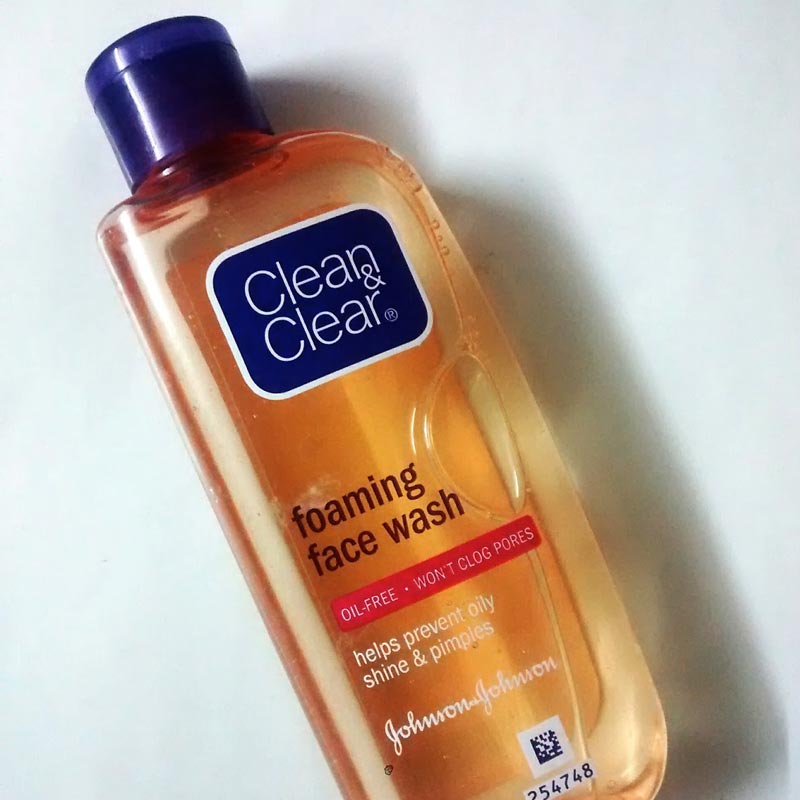
    MUMBAI: Clean & Clear foaming face wash is celebrating teenage girls’ varied personalities and encouraging them to ‘UnbottleApna Swag’ with its latest campaign.

    Conceptualised by DDB Mudra, the marketing campaign brings to life a few such personalities featured on the My Swag Bottles. Clean & Clear foaming face wash has introduced a funky and colourful limited edition My Swag Bottles featuring teen personalities –Fun, Bakbak, Bindaas, Foodie and Padhaku.

    Unbottle Apna Swag will engage with teenage girls across TV, digital, in-game and in-store advertising. Teenage girls can “Unbottle Their Swag” on TikTok with their own personality rap.  Or simply Show Apna Swag by sharing their proud personality stories and participate in a fun contest.

    Clearn & Clear GM marketing, beauty Sameer Lal said, “Clean & Clear believes that teenagers should express themselves proudly, whoever they are. With the Unbottle Apna Swag campaign, we want to enable teens to express their unique personalities and we want to give them every chance of doing so across platforms.

    Shagun Seda, DDB Mudra said, “We needed to find a powerful form of self – expression which would resonate with teens. And we believed rap best brought alive our idea, injecting the brand with attitude while leveraging its philosophy. The commercials have gone on air at the start of a wave of interest in the genre, aided by Bollywood's latest blockbusters, increasing the social capital of this campaign.

    The 6 weeks campaign goes live from February.

  • 7UP SAYS GOLDEN TIMES ARE HERE

    7UP SAYS GOLDEN TIMES ARE HERE

    MUMBAI: When your time is right, everything that you touch will turn to Gold. It is this timeless insight that 7Up, the clear lemon refreshing drink is building on as the key insight for its new campaign that says- ‘Golden Times are Here.’

    In true 7Up style, the brand’s new campaign Golden Times encourages consumers to be their authentic cool self, chilled out and confident, in the belief that when the time is right, all you need to do is chill and everything will fall into place. The brand brings this insight alive with its new ‘shelf to media’ program where consumers can win gold every hour by sipping 7UP and chilling out. This campaign will be brought alive with a powerful TVC and amplified across multiple media. The creative idea has been conceptualized by creative agency DDB Mudra Group. You can watch the TVC here.

    Over 2 months, consumers stand a chance to ‘WIN GOLD EVERY HOUR’ and all consumers can win a Rs 20 Amazon Pay Voucher that can be availed on www.amazon.in or on the Amazon shopping mobile application.  The mega prize is a gold coin of 10 gms of 22 carat every hour between 10 am and 8 pm every day from 1st December 2018 to 31st January 2019.

    Speaking on the campaign, Anuja Mishra, Associate Director-Flavours Marketing, PepsiCo India said, “7Up is a cool and young brand that encourages consumers to be their optimistic self. We’ve always stayed close to consumer trends & local cultural insights, and that’s how our new campaign of “ Golden Times” was envisaged. We spoke with consumers and identified that In this speed age, consumers are looking for quick and quirky ways to stand out. We’ve brought this insight to life, where consumers could win gold every hour, all they need to do is chill with a 7UP and SMS the code under the cap.”

    Vishnu Srivatsav, Creative Head, DDB Mudra Group, South & East said, “We really wanted to communicate a simple insight that when your time is right you could chill and still win. And we wanted to bring it alive in the most evocative and culturally impactful way possible. Whether it’s the signature swag or the father son relationship, we wanted the communication to truly reflect the relevant culture.”

    The special initiative is applicable on the entire PepsiCo India Beverage portfolio, be it 7UP, Pepsi, Mountain Dew, Mirinda or Tropicana Slice on 250 ml, 300 ml, 500 ml, 600 ml, 750 ml, 1.2 litre, 2 litre and 2.25 litre packs. All that consumers need to do is to purchase their favourite PepsiCo beverage, SMS the 8-digit unique code printed behind the label or under the crown to +91 9223492234.  Post sending the SMS, the participant will receive an SMS confirmation containing 17-digit code which would be counted as valid entry. For Tamil Nadu, the participant has to answer a question, while for other states, the consumer entries will be fed into a randomizer.

  • Stayfree India launches #ProjectFreePeriod

    Stayfree India launches #ProjectFreePeriod

    MUMBAI: While Stayfree is a feminine hygiene brand, it believes that its purpose is to help women and girls make each day count, as they move toward their dreams.

    Which is why the efforts of Stayfree is not just to normalise period days, but to encourage women to nurture their dreams of progress. No matter which section of the society she belongs to, whatever be her age or her community. And that brought into focus a community that had a completely different outlook toward their periods.

    https://www.facebook.com/StayfreeIndia/videos/1824183327601459/

    While almost every woman dreads her period days, there were women who looked forward to it. For whom their period was the only respite from the lives they were being forced to lead.

    These are the women of the sex trade. While the belief is that these women need to be rescued from this trade, the truth is that they will struggle to find other ways to sustain themselves. And so even the rescued ones often return and are plunged even deeper into this world of exploitation with their period days often being the only days of the month that they get for themselves. The DDB Mudra Group and Stayfree India thought this forced break could be a way to help these women cultivate their own #DreamsofProgress.

    And so was born #ProjectFreePeriod. Through collaborations with professional skill trainers, a vocational training programme was created to equip these women with skills that could help them sustain themselves outside of the sex trade. While finding relevant skills was the easy part, the challenge was to condense them into three-day training modules so that the three days of their periods could be turned into three days of learning.

    And finally, in January, with the help of Prerana, a local NGO, the first edition of #ProjectFreePeriod was launched in the red light district of Mumbai. In the workshops since, over 30 women have been a part of this programme and have been taught skills that range from candle-making, embroidery, henna-art, soft-toy making to a basic beautician course. There shall be stalls put up in flea markets and malls to display the products of their newly acquired skills; to create more awareness and support for this initiative.

    The project now runs through the month and has a consistently expanding curriculum of skills. So much so that the women are finding ways to make more time to learn and hone new skills. Through recruitment drives on social media, the initiative has also put together a database of volunteers to keep scaling up this project.

    The plan is now to take the training out of the classrooms, for both the women and the trainers; through simple instructional videos that can be shared through WhatsApp.

    As the initiative is spreading its wings, Stayfree India and the DDB Mudra Group are aiming to partner with other non-profit organisations to replicate this model and access a wider database of students.

    DDB Mudra Group national creative director Rahul Mathew says, “To go from normalising periods in the lives of women to using periods to normalise the lives of women in the sex trade; is a great example of the kind of power and influence brands can wield. Project Free Period turns the period from a pause to an opportunity, for these women to sustain a life outside of the trade.”

    Prerana project manager Mugdha Dandekar mentions, “This project brings a chance for the women in the red-light areas to step out of the exploitative lifecycle. Uneducated and with no income security, such an opportunity to learn an alternative vocation is crucial. Working in the red-light areas of Mumbai, we often see such initiatives in practice, but this considers the comfort and convenience of our women. The women have chosen the days they would like to come for the training, so that it doesn’t disrupt their lives. The change has to be gradual, not on weekly or monthly basis, and this project understands that. Therefore, we see a strong commitment from our women to hold onto this opportunity and give change a chance.”

  • DDB Mudra Group creates a new rally cry for team KKR

    DDB Mudra Group creates a new rally cry for team KKR

    MUMBAI: The Kolkata Knight Riders (KKR) is a franchise cricket team representing the city of Kolkata (West Bengal) in the Indian Premier League (IPL). The team, defined by its ‘Korbo, lorbo, jeetbo’ (Play, Fight, Win) spirit has won the championship trophy twice. At the IPL 2018, the team has already drawn first blood in its match against Royal Challenger Bangalore (RCB) and then against Delhi Daredevils (DD).

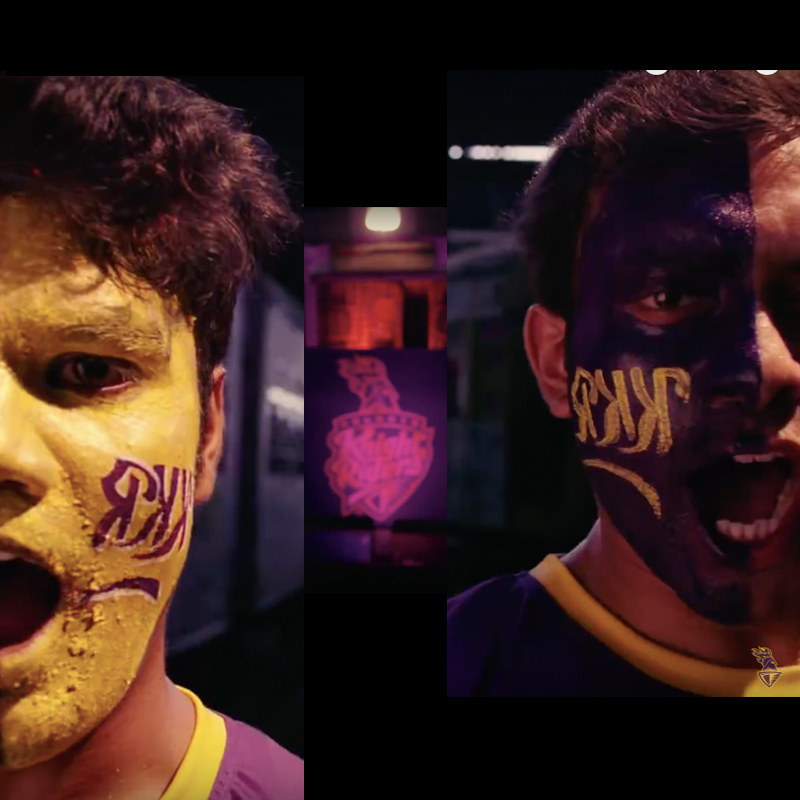
    Created by the DDB Mudra Group, KKR’s latest anthem #KKRHaiTaiyaar (KKR is ready) shows the city and its die-hard fans gearing up for the 2018 IPL season. Featuring Bollywood celebrity and team owner Shahrukh Khan, the anthem has been crafted to give KKR and its fan-base a distinct, symbolic action in the form of a fist pump, which has the potential to become a ritual during every KKR match. The lyrics give the team’s decade-long war cry – ‘Karbo, lorbo, jeetbo’ a new spin, resulting in an anthem that fans – both old and new, can connect with. 

    Kolkata Knight Riders MD and CEO Venky Mysore says, “Every year our marketing embarks on a research and insight-backed exercise that aims to find the pulse of our fans to arrive at a tagline that rings most true to KKR. This year, along with the creative team at the DDB Mudra Group, the team has come up with #KKRHaiTaiyaar; which truly signifies the mood at our camp.”

    The anthem boldly challenges KKR’s opponents to watch out as the team sets out to destroy every challenge in its path to becoming champions again. The visual representation and the music composition of the anthem captures the pride and passion that drives everyone associated with KKR  – right from the players, to the coaching staff, the groundskeeper, the bat-maker , etc., along with the millions of supporters that live and breathe for the team.

    DDB Mudra Group national creative director Rahul Mathew adds, “KKR has always prided itself on being more than just a team. KKR is an attitude. And you see this attitude in every aspect of their game; be it the auction, the training, the selection, the strategy, the execution of it, their victories and even their losses. Which is why, the KKR fan base spills far and wide outside of Kolkata. Because while Kolkata maybe in the name, the spirit of the Knight Riders is something everyone relates to. It’s this very spirit and attitude that we’ve captured in the work and in our call to arms #KKRHaiTaiyaar.”

    Backed by a strong media strategy, the campaign is being showcased across television channels, radio, digital and print. In the print campaign, the players are shown coming out of moulds, to emphasise their readiness. On the digital medium, the anthem has more than 1.9 million views and 21K shares on the brand’s Facebook page alone, since its launch on 6 April 2018.