Tag: DD

  • Twenty20 injects new life into sports broadcast

    Though it had cricket, Neo Sports also found the going tough. Its distribution deal with Star fell through. This cost it crores of rupees in terms of ad revenue not to mention the fact that the payments that were contractually due to Neo were delayed – or never arrived. It set up its own distribution team headed by Arun Poddar. But without branding in the market monies it got would have been affected.

    On the advertising front Neo Sports CEO Shashi Kalathil says that the fact that DD bid heavily to do its own marketing for the Pakistan series proved to be a boon. It added Rs. 180 million its kitty, claims Kalathil.

    Non Encryption: There is no respite for sports broadcasters on this issue. Sports feed to DD will not to be encrypted for four to five years. This will impact all the players, more so Neo Sports since it holds the India rights.

    In terms of other sports ESS is re-jigging its Premier Hockey League (PHL) initiative. ESPN had to be careful and innovate the strategy this year since there are a lesser number of teams – this being the Olympic selection year and most top international players being busy – and so the duration of the tourney is also shorter. The media fraternity though, feels that PHL is still to attain some sort of sizeable recognition even though ESS has been doing it for the past few years.

    Mallya brings home an F1 Team: The biggest non cricket event though was news that Vijay Mallya bought the Dutch F1 team Spyker Ferrari. It was then renamed Force 1 India. This news coupled with the fact that India will hold an F1 event a few years down the road is expected to give a boost to motor racing in the country in a big way.

    The Advertising Scene

    Information available with Indiantelevision.com indicates that the sports genre earned around Rs. 7.5 billion this year. ESS made around Rs. 2.2 billion. Ten Sports and Zee Sports combined made around Rs. 700 million. Sony made Rs 3 billion.

    Sinha says that the biggest learning is that everything depends on performance. “When India does well clients get a very healthy return. But when they do not it can be disastrous which is what happened with the World Cup. Hundreds of crores were lost by clients. T20 was a success more due to India’s performance in the form of the game as opposed to the format itself.”

    “Had India fared poorly in the T20 World Cup also the mood would have been very different. Some fringe clients who occasionally invest in cricket got out after the World Cup experience. India’s failure to quality for the Super Eight is something that will haunt some clients and media planners for a long while. The premiums paid were so high that it was impossible for anybody to prepare for what was to follow.”

    And what about talks of accountability? Sinha notes that it is practically difficult apart from maybe a couple of big clients to do this. Venkateish maintains that ESS did not fall into this trap. “After all clients who get involved know that there are ups and downs. If the ratings for a tournament are great we do not ask those who have already signed on to pay more. So why should we take less?”

    Set India executive VP Rohit Gupta adds that for clients like Pepsi it balances out in the long term. “The 2003 World Cup was a bonanza. Yes the 2007 World Cup was bad but then things turned for the better. Most clients who get involved understand this. They are in for the long haul. In addition for each category there are several companies vying for a spot. So in telecom if Reliance for instance pulls out of cricket there will always be an Idea or Vodafone to step in.”

    It is pertinent to note that clients who kept the faith and got in early for the England series and especially the T20 World Cup got a terrific bang for their buck. After all the net effect of the World Cup debacle was that clients were able to negotiate better rates for the events that immediately followed.

    In conclusion, what both IPL and ICL bring to the Twenty20 table is that it is all to the good for the stakeholders – because it derisks cricket.

  • ‘Cricket needs to evolve’

    ‘Cricket needs to evolve’

    If there was one person who brought about the biggest change in sports broadcasting in India in 2006, it was Nimbus chairman Harish Thawani. He took the big gamble by acquiring India cricket rights for a whopping $612.8 million and became a broadcaster.

    Thawani holds forth on sports broadcasting in terms of the changing landscape, Asia emerging as a major player and the importance of multiplicity of platforms and technologies.

    Traditionally the sports media industry has had 3 major segments: full service sports management/marketing agencies (such as IMG, Sport Five, Nimbus Sport) that manage/market rights, sponsorship sales, stage/manage events, provide sponsor services, advise on and/or manage L & M programs, represent athletes etc (many agencies specialize in a sub-set of these); sports television companies that focus on host broadcast production and/or sports program production and syndication (such as Sunset + Vine, TWI, HBS, Nimbus Sport) and sports broadcasters (such as ESPN, Fox Sports, Sky Sports, NEO Sports).

    Two trends seem to be emerging in the sports media sector. On one hand there appears to consolidation taking place in both the agency and broadcast sector (more of that later) and on the other hand the lines are getting blurred between the roles with agencies or their parent companies such as Nimbus entering the broadcast sector (with its recently launched NEO Sports) and broadcasters such as ESS pitching for rights on a global basis and consequently winding up acting as rights agencies in countries where they don’t broadcast.

    Consequently the future may see new role definitions, new competitive stances and strange alliances emerging; and quite possibly competitors in one region being partners in another.

    Trends close to home

    The importance of Asia is growing. In football it is now the world’s second most valuable rights territory. In cricket it is by far the most valuable. Japan, Korea, China and the ASEAN are fuelling unprecedented growth in rights values for basketball, golf, motor sport, tennis, even baseball.

    Pan Asian broadcast services are under threat and I think in 3 years will become unviable, as the regional broadcasters gain ground. The rise of the regional broadcasters and/or platform owned sports channels (from Al Jazeera in the Middle East to NEO Sports in South Asia to Astro’s Super Sports in Malaysia, to PCCW in Hong Kong and Starhub’s Super Sports in Singapore) have encouraged rights holders to stop doing pan Asian deals and opt for country wise deals. The success of the recent EPL auctions on a country wise basis was an example, where ESS lost a substantial portion of the valuable territories to regional broadcasters including China, Singapore, Hong Kong, Thailand and several others.

    Multiplicity of platforms and technologies will fetch sports broadcasters in Asia higher share of subscriber revenues. Sports and movies drive pay TV! In the Middle East we have three DTH platforms and three cable companies vying for premium sports channels. In India we have two DTH platforms with two more to come and a very large cable industry, Malaysia’s long standing monopoly of Astro will diminish with Telecom Malaysia’s massive IPTV foray. Hong Kong has two cable systems. Every major country is developing multiple platforms.

    Perhaps in 2-3 years time, we might see a consortium of regional broadcasters emerge, forming a pan Asian footprint but retaining regional autonomy, using the benefits of consortium buying of rights, collective platform negotiation ability, exchange of best practices and technology; and who knows perhaps even cross holdings into an Asian superstructure.

    Global management is now happy to work in Asia thereby giving Asian sports broadcasters the ability to merge local skills into global best practices, and compete with the global broadcasters such as ESPN and Newscorp (Fox, Sky, Star)…for e.g. NEO Sports has a Scottish COO, an Australian head of acquisitions, a Polish technology consultant and an Indian CEO!

    Cricket : The challenges and opportunities

    Cricket needs to evolve. The economic dominance of Asia powered largely by India represents both an opportunity and a threat to the globalization of the sport. Opportunity because the funds now at the disposal of cricket allow it to invest in development across the world. Threat because if the Indian economy slows down or the sports broadcast industry further consolidates, the revenues of the sport will decline. Cricket must reduce its excessive dependency on India. But that is easier said than done.

    The sport is essentially a 10 country sport with only 4-5 countries providing revenues worth the mention. The structure of the sport needs to emulate football and we need to dismantle the class system wherein only 10 countries get to play Tests and regular ODIs. In football even India plays internationals despite being ranked below 125! Cricket needs to allow all ICC member countries to play internationals. With the emergence of shorter formats (which itself are the way to the future of the game), like 20/20, it is easier for weaker teams to win against stronger teams occasionally because all that it takes is for 1-2 batsmen to fire for an hour or so!! Such results fuel fan following and the sports grows in new countries.

    Lastly cricket needs to understand that its obsessive focus only on revenues (read highest bidder wins!) is perhaps an expensive trade off as the interests of the highest bidder are not necessarily aligned to that of the sport. E.g. broadcasters that win global rights are not necessarily equipped or even wanting to encourage free TV broadcasts or multiple platform broadcasts for their interests lie in exclusivity and the subscription revenues that come with it. Fortunately many cricket boards have begun to understand that and now prefer to engage sports agencies (albeit with a revenue MG) to manage their rights with the mandate to increase revenues but also increase reach, improve branding, procure better sponsorships, develop new markets and assist in development programs through coaching videos etc.

    India : Road ahead is clear

    With economic growth beating the 8 per cent per annum mark and the next 10 years (if not much more) quite clearly a boom phase, there’s seldom been a better time to invest in India. Broadcast industry revenues are growing at 17-19 per cent per annum, spending on leisure including sport by Indians is on the rise, and the advent of addressable systems particularly DTH bodes well for premium pay TV services such as sports and movies.

    India : Cricket domination continues

    Having said that even the world’s largest markets don’t support more than 2-3 pay TV sports companies, which meant that my prediction of some months back that from a 6 player market we will see a 3 player market by 2007 has come true even before 2006 is out. DD and Sony are at least for the moment quite clearly out of the cricket rights acquisition market. Zee has taken control of Ten, so its essentially 3 companies now in sports broadcasting each with 2 channels (Neo Sports and Neo Sports Plus, ESPN and Star Sports, Zee Sports and Ten Sports); which should allow all three to operate profitably and given the amazing range of sports product available would give all three enough options to program their channels, except for one catch. The cricket catch.

    In a single sport country, this means that Neo Sports with its powerful cricket assets over the next five years, the depth of sports expertise of Nimbus behind it and powered by Star India’s distribution leadership will have a smooth side. As will ESS with its long standing experience, market franchise and reasonable cricket assets now strengthened by the ICC package. The challenge for ESS will be that in 2007 some if not all of their previous cricket assets start expiring and that means an uncertain path ahead. If renewals are hard to come by, they will have to wait for 2011 when the next World Cup is staged to make a strong come back.

    India: Domestic sport

    I had said in early 2006 that this would be the year of domestic sport in India. Hopefully the numbers bear me out. BCCI commenced 72 days a year of domestic cricket coverage and extensive re-branding and re-formatting. Even with the start-up phase distribution of NEO Sports it rocketed to the No 1 sports channel position in the TAM data in its first week itself with the broadcast of the domestic Challenger Series, with peak TVRs of 9.2 in one match! The Duleep Trophy final achieved peak TVRs of 2.7 on a weekday despite it being a 5 day match format! Zee Sports broadcast of Indian domestic football has also shown consistent results. I think by mid 2007 the ratings of domestic cricket will start rivaling Test match TVRs consistently and weekend One Day matches in the domestic Super League could be the killer app for NEO Sports!

    India: Other Sports

    Hockey is dead. It’s now official. It received a quiet and indecent burial at the recent Asian Games where India did not make it to the semis and no one shed tears.Tennis, golf and motor sport plough on their elitist path into Indian homes that would scarcely know the difference between a birdie and a break-point. I can hear howls of protest from the same elitist benches and to them I would say walk down (as I have) the streets of Jalgaon, Coimbatore, Ajmer or even Hyderabad and ask what a birdie is. The range of cute or crass answers might surprise you.

    That leaves football and to me the dark horse badminton as the 2 sports that India can and I think will develop a TV loyalty to. Football because it has a 3-4 state base, and the western and southern metros are beginning to take up to it (on TV I mean) and also quite simply because it is the true world game. Which is why at NEO Sports it already broadcasts live the Bundesliga and the Italian Serie A.

    And Badminton because it is India’s largest participation sport after cricket. It is extensively played in India and easily understood. It has never been adequately programmed on sports channels and not enough has been done to market it. NEO Sports plans to change both of that starting early 2007.

    India: Sports entertainment

    When Nimbus Sport did the Extraaa Innings production for Sony during the 2003 Cricket World Cup, only Nimbus Sport and Sony believed that merging sport with entertainment will lead to a serious opportunity to build a viewer franchise. It made the purists cringe (and rightfully so) but it raked in the TRPs and the revenues.

    Some months back I had announced that we see sports entertainment as the big hole in the market and NEO Sports Plus will launch a slew of sports entertainment shows by 1st quarter 2007. ESS was quick to follow with its own announcement and the good news is that they’ve already started 2 shows, both of which are showing very promising ratings.

    I think NEO Sports Plus will do 70+ GRPs a week by mid 2007 off the back of sports entertainment and its focus on football and badminton.

    Regulatory

    So now TV is in the PDS, controlled prices et al (sorry administered prices). Is it constitutional? Are world class premium channels to be sacrificed at the altar of populism? These and many other questions will get answered in the coming months. Personally I believe that price caps will not go for at least 6 months, but in the interim a multi tier price cap regime may emerge, with Rs 5 as cap for most channels, Rs 10 as cap for GE and movie channels and Rs 20 for sports channels.

    On anti-siphoning the Supreme Court of India has ruled in the Ten Sports case. Many believe that in India where cable is cheap and DTH is also cheap and covers all cable dark areas, there is no grounds for anti-siphoning regulations. Moreover cable reaches nearly 65 per cent of all TV homes now.

    But if anti-siphoning laws do get enacted, they need to consider some rather serious issues:

    1. Is DD a terrestrial broadcaster or cable/DTH? ODI matches can’t be shared with DD under the guise of it being a public free TV terrestrial broadcaster, and then DD merrily supplies the signal to cable and DTH killing the pay TV business!

    2. A use or lose policy with strict timelines and license fee rationale will need to be adhered to by DD as it is in many countries where antis-siphoning rules are in force.

    3. DD must encrypt its signals to their transmission towers. No where in the world does a free TV broadcaster send unencrypted signals via satellite.

    4. If the anti-siphoning rules are truly meant to for public service, DD must refrain from commercial exploitation of the feed and agree to carry the rights holders feed with commercials. And DD must not decline other sports the right to be broadcast on DD National, when events of global stature and/or Indian interest are being staged.
  • ‘An outlook towards the future of Television’

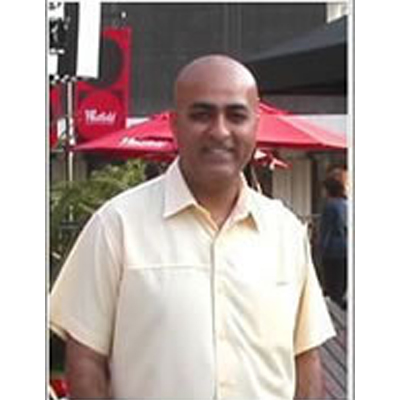
    In this article, penned for Indiantelevision.com, Media e2e chief evangelist Atul Phadnis is of the view that the media landscape is changing rapidly and new distribution technologies would alter business models.

    As 2006 comes to an end, some of us, who had embarked on a new journey of creating a new thought within our industry, feel vindicated. The key changes that we had envisaged, envisioned and expected are taking place rapidly within our media & entertainment (M&E) environment. These changes are in terms of distribution platforms, newer business models, interactivity, new content formats and experimentation. This piece looks at the change catalysts and an outlook on how things would continue to develop within our space.

    End of distribution platform insulation

    Before we look at the current and future, a quick glance at the past. The history of TVs popularity among consumers can be gauged from the amount of advertising on satellite TV chasing consumers. As veteran industry folk would recall, the early 90s was all about DD when only experimental advertising monies would come onto satellite channels. In the mid-90s substantial chunks of budgets were diverted into satellite channels. By the late 90s and early 2000s, the satellite TV environment had reached a level of stability and maturity. Here’s where the story takes an interesting u-turn. The legislation changed and allowed newer distribution technologies on the scene. These new technologies ended the technology insulation that persisted in India vis-?-vis other Asian markets like Hong Kong, Korea and Japan.

    Distribution: set to change the ground rules

    Globally, whenever distribution channels explode, it sets off a chain reaction in terms of market segmentation, newer revenue opportunities, newer pricing models. The hectic activities since early 2000 to present day on laying cables, dishes, optical fibre, upgrading cable facilities, are today creating competition among satellite TV platforms such as DTH, HITS, IPTV, CAS, and even traditional cable.


    Creating the ‘Long Tail’

    For those who have read Chris Anderson’s book The Long Tail: Why the Future of Business is Selling Less of More (2006) would immediately associate that phenomenon with what’s happening with our television today. The Long Tail phenomenon occurs when distribution platforms become very large helping the smaller products collectively gain market share rivaling that of market leaders!

    The TV business has been growing a long tail as niche content offerings are getting acceptance in small pockets. Take the example of television news. Already, the kids channels are going the same way as the news channels. Animated, non-animated, teens, tweens, pre-teens! The good news – each of the niche segments that have been launched has shown Viewership.

    If the current trend continues and if distribution platforms get more and more addressable, one can imagine channels aimed at extremely niche communities. Surgeon’s channel, lawyers channel, chartered accountants channel to weather news channel, celeb news channel to even a Mumbai traffic channel! Considering that some of these formats exist in other economies expecting that in our environment seems fairly reasonable.

    Specialization to Segmentation

    The specialization in this industry is already segmenting the market. Groups of consumers who are watching specialist programming are extending the long tail of content. The specialist content has an impact on TV programmers and the TV production houses as resistance to experimentation could lead to certain death or marginalization. This impact should mostly be felt immediately post the universe adjustments of the TV ratings panels to latest estimates.

    Applications, on-demand

    Our environment is also critically poised to propel demand for applications that satiate this new consumer thirst for content which is typically instant and on-demand. Considering that for a bulk of Indian consumers, TV-watching emerges in the Top-5 daily activities, it’s not impossible to imagine the lengths to which consumers could go to better that experience. Gadgets like Digital Video Recorders (DVRs), Video on Demand (VoD), Personal Video Recorders (PVRs) can do exactly this if the pricing gets it right.

    Content mobility, malleability

    The consumer need for on-demand content in other Asian markets has made content both mobile and malleable. Content mobility is to do with being able to record and transfer content off television onto your phone, laptop or desktop. The last few months I have been an amazed, animated user of Bluetooth and the possibilities that emerge from being able to transfer data, music, and video from one device to another. Content malleability is something that TV, music and film companies would have to learn else the consumer is going to teach them a thing or two!

    Newer contact points via localization

    The newspaper business in the last 3 years has been growing faster on ad revenues than television. It’s done so on the back of distribution changes and reform that has resulted into micro editions. That has in turn propelled localized advertising through a slew of first time advertisers on print. The same is bound to happen to television. The only question is the timeframe. Local pizza stores, restaurants, banks, grocery and electronic retail, multiplexes would all jump in if micro-reach was possible via TV. It’s not as if all that is not possible today via local cable and regional stations. It’s possible and it’s happening. But while regional channels still score, there are questions on quality and popularity of local cable advertising.

    Branded Entertainment : winds blow stronger

    The Branded Entertainment Awards 2006 held in Mumbai have demonstrated a new industry-wide vision in this space. The promise that this specialist stream holds is that in a perpetually fragmenting media scene, TV could be used via innovation, integration and multimedia support. Activation is the powerful new word in this area and it’s expected to be initiated by regional channels. Activation would derive tremendous strength either from channels promising micro-reach or distribution platforms undertaking sampling/ contact programs. One of my recent favorites is a DTH company distributing sample set-top boxes to school children preloaded with education channels!

    Distant possibilities

    What seems to be now distant in our market but is very prevalent in the West and some parts of Asia is CGM or Consumer Generated Media (such as Blogs, and home or personal videos). This is a current rage even in the US if one is to see the popularity of sites such as YouTube. Low penetration of capture devices in India would typically see this as fairly futuristic. Having said that we are seeing news channels in India currently test this through Viewer reported stories.
    Finally in conclusion – expect key changes in television that’s bound to affect all stakeholders. These changes are expected to alter business models, revenue models as well as content formats.

    And the creatures aren’t too far away from us now. Stop! I hear the door creaking open. Wait! I can hear them growl…

  • DD to run Ruskin Bond kids’ series

    DD to run Ruskin Bond kids’ series

    NEW DELHI: Starting the last Sunday of the year, Doordarshan will start airing the weekly series on India’s most loved kid’s writer Rusking Bond. The series, “Dehra Kids” will be shown on Sundays at 8.30 pm.

    The best part is, kids will be able to see their beloved Bond, who will appear for a short time at the beginning of each story, and talk about his life and the inspirations behind these stories.The stories have been adapted for television by Anasuya Vaidya, the executive producer, and directed by Ajay Shetty.

    The Dehra Kids are a group of children living in a small hill town, and comprise some of Ruskin Bond’s most enduring fictional characters – the cricket-loving Ranji, the all-knowing Koki, animal-lover Mukesh, Teju always up to mischief – and Chashmu, who observes everything around him.

    These stories are recreated in the magnificent Himalayan setting of ManaIi and its surroundings, a press statement from the national broadcaster says.

    Humour, adventure and a dash of the supernatural make “Dehra Kids” a complete fun-filled entertainment for children. Some of Ruskin Bond’s best short stories are part of the series, such as “Ranji’s Wonderful Bat”, “The Black Cat”; “The Great Train Journey”, “When the Guavas Are Ripe”, “Mukesh Starts a Zoo” etc.

    The talented child actors of Dehra Kids include Govind Marodia, Dhruv Shetty, Bhavya Mahajan, Nishant Gambhir, Mohit Arora and Nisa. Adult characters are played by veterans like Jalabala Vaidya.

    The curtain raiser of “Dehra Kids” will be telecast on Sunday, 24 December at 8.30 pm on DD Bharati.

  • Rs 405 million special package for AIR and DD

    Rs 405 million special package for AIR and DD

    MUMBAI: The Government has initiated a proposal to include North East Package for All India Radio (AIR) and Doordarshan (DD) in the Eleventh Plan.
    The amount sanctioned and utilised during the first phase is as follows:

    (Rs in millions)

    Sanctioned Utilised
    All India Radio
    24.80 17.56
    Doordarshan 380.55 98.33

    Total 405.35 115.89

    This Information was given by information and broadcasting minister PR Dasmunsi in written reply to a question in the Lok Sabha.

  • DD bags UN award for Aids serial

    DD bags UN award for Aids serial

    NEW DELHI: Doordarshan’s health campaign Kalyani has been awarded UNAIDS Civil Society Awards 2006 in recognition of outstanding commitment and support to the fight against HIV/AIDS.

    Doordarshan Director General LD Mandloi and Senior Director Usha Bhasin Development Communication Division, Doordarshan received this prestigious award during a special ceremony held at the National Stadium here on World AIDS day on 1st of December.

    Kalyani, DD’s in-house production with more than 3,752 episodes, remains the longest running health communication initiative in India.

    In a country where 70 per cent of HIV cases are not reported due to the stigma factor according to the report of National Council for Applied Economic Research, NACO and UNDP Kalyani has made an impact in breaking the silence on HIV/AIDS and in reducing stigma and discrimination against the victims, a press statement from DD said.

    Kalyani was earlier awarded Broadcast Engineering Society’s Best Public Service Broadcasting Award of the year 2006 for its impact on HIV/AIDS, and received nomination for the Rose d’ Or Award of Switzerland, one of the most coveted television entertainment award in the world.

    These are not the only two awards conferred on Kalyani. In 2004, Kalyani won Gates Malaria Award and in 2005 the RAPA (Radio and T.V Advertising Practitioner’s Association) Award.

    Kalyani is being telecast four times a week on 21 DD Kendras in nine most populous states of India at 6.30 pm.

  • Investors In Cricket joins forces with DD, Zee, Miditech for cricket based reality show

    Investors In Cricket joins forces with DD, Zee, Miditech for cricket based reality show

    MUMBAI: With new sports channels coming in it is inevitable that new formats will also come in. One such format is a cricket based reality show called Cricket Star.

    This is an initiative to find a budding cricket star who has been bypassed by the system. The idea is the brainchild of Investors In Cricket (IIC) a firm that looks at sports rights relevant to the Asian subcontinent. This will be in the form of a reality hunt and will air as a television event for 11 weeks from 14 January 2007 on DD and Zee. DD and Zee Sports will each week simulcast three episodes. Zee TV will air an episode each week.Miditech has been roped in to produce the show. Airtel and HLL are the presenting sponsors. Aspiring cricketers can apply by calling 5052727 from GSM mobiles, 1277777 from MTNL landlines or 1255527 from MTNL and BSNL. One can also send an SMS CSTAR to 7575.

    Eight selection centres are open and one has to showcase one’s skills there, whether it is batting, bowling or wicket keeping. From there the chosen ones go to a pre academy phase. Finally 23 contestants will go to the Academy. There will be a countdown and thus an elimination process to find the winner.

    The channel has roped in Kapil Dev and Saurav Ganguly as judges. The flamboyant Ajay Jadeja will be the expert analyst. IIC chairman Manoj Badale points out that after the event in India is finished it will travel abroad to the UK and Pakistan among other countries. “This marks the first time a cricket based reality show is launching in India. This marks the first time a reality show that has originated from India travels abroad. Normally it is the other way around.

    This idea has taken a while to put together. We wanted the best possible reach, which is why we approached DD and Zee. DD as the national broadcaster can reach the small towns. Zee with its multi lingual channels will also help get the message across.”

    The winner gets an all expenses paid contract with Leicestershire County Cricket Club and cash. The final 11 contestants will also get a chance to participate in the rollout of Cricket Star in the UK next Summer and in Pakistan. Also, Cricket Star aspirants will play a series of 20:20 matches.These will air on Zee Sports.

    When the 23 chosen contestants enter the cricket Star Academy each week the judges will nominate the four bottom performers out of whom two will be evicted by the participants., When it is down to the final 11 viewers will be able to vote by phone or through SMS. The final episode airs at the end of March 2007.

    Miditech CEO Nikhil Alva points out that the challenge begins from today as the lines are now open. Whether or not it is as big as Indian Idol will depend on the response. “We are confident that with our previous experience we will be able to handle the logistics of the event. There will certainly be drama as viewers get to know the human side of the candidates in addition to their cricketing abilities.

    Zee Sports business head Himanshu Mody says that this is the first time a format has brought cricket and television together in an entertaining manner. “We aim to find the hidden wonders in India’s villages and towns And showcase them to the country along with their travails and struggles. At Zee Sports it has always been about showcasing sports and sportspersons from India. As they say may the best man or woman win.”

    Jadeja says that more than just a show this will also be a coaching platform for aspirants. Kapil Dev and Ganguly will offer advice to aspirants on how to improve their skills.

    Ganguly sees this endeavour as a way to give back to the game for the opportunities it has given him. Dev says that every youngster who is passionate about the game should at least be given an opportunity. It should not be that a youngster feels that he/she could have made it but an opportunity was not given.

    Airtel marketing director Gopal Vittal says, “In India cricket and Bollywood share a passion that cuts across geographies, cultures and religions. Today every street, nukkad or galli in this country has an enthusiastic budding cricketer waiting for an opportunity to perform on a bigger stage. Cricket Star offers them an opportunity to perform at the highest level.”

    HLL is involved through its product Faior And Lovely Mens Active. HLL VP Skin Care Ashok Venkatramani says, ” Our product has already changed the story of male gooming in India. This association will catch the fancy of every male in India who aspires to get that opportunity to see themselves as the next Cricket Star.

    This is our contribution to Indian cricket and we are certain that this will help discover the Sachin’s Dhoni’s, Pathan’s Sehwags etc. Our support is a sure way of changing the story of Indian cricket and taking it to greater heights of glory.

  • DD to start mobile TV trials in tie-up with Nokia

    DD to start mobile TV trials in tie-up with Nokia

    MUMBAI: Nokia has announced its latest digital video broadcast-handheld (DVB-H) broadcast mobile TV pilot with national television broadcaster Doordarshan, using Nokia’s open standards based DVB-H solution.

    The Nokia Mobile Broadcast Solution will be delivered to Doordarshan via SHAF Broadcast in early 2007.

    During this pilot, Doordarshan will test the reception quality of the broadcast coverage, and explore the options of supporting different service schemes, such as advertising and interactive services. The pilot will also enable Doordarshan to gauge consumer expectations of the service going forward, informs an official release.

    The pilot will use DVB-H technology, a broadcast technology now used to support several field pilots globally, chosen based on its merit to support mobility, small screens, indoor coverage, optimised use of battery and in-built antenna that are specific to handheld devices such as mobile devices.

    Doordarshan director-general LD Mandloi said, “Doordashan has taken a lead in adopting DVB-H standards and this was a logical extension of our DVB-T services. DVB-H over IP based on open standards will provide a discerning mobile broadcast experience to Indian consumer and we are confident of its success in our country which has historically been on the leading edge of broadcast technology and content creation.”

    “India becomes one of the leading countries in Asia to deploy live broadcast mobile TV bringing Indian consumers a step closer to watching their favourite programmes on their mobile devices,” said Nokia Asia Pacific director multimedia Jawahar Kanjilal. “We are excited to collaborate with Doordarshan to enable their mobile TV services. This is a great opportunity for the vibrant content industry in India to take advantage of bringing television into the pockets of the Indian consumers.”

  • ICC Champions; AIR to broadcast ‘Live’ from 15 Oct., DD to show 9 matches

    ICC Champions; AIR to broadcast ‘Live’ from 15 Oct., DD to show 9 matches

    MUMBAI: All India Radio has acquired the radio broadcast rights from the Global Cricket Corporation (GCC), who holds the international rights for the ICC events. AIR will broadcast Live commentary on all the main league matches of the ongoing ICC Champions Trophy beginning Sunday, 15 October. The commentary will be broadcast in English and Hindi alternately.
    65 medium wave stations of All India Radio spread across the country and all FM Gold Channels of AIR will relay the commentary from 2.20 pm on all match days. AIR FM Rainbow will carry hourly updates about the matches and a special interactive studio based programme will be broadcast during the innings break.

    The ICC Champions Trophy on AIR is being marketed by the Prasar Bharati Marketing Division in Delhi. Several leading advertisers including Nokia, Hindustan Lever, Dabur, BSNL, Indian Oil have been roped in for sponsorship, informs an official release.

    In addition, Doordarshan will also telecast nine key matches of the ICC Champions Trophy, which include all – India matches, the semi finals and the final on its national network DD National.

    Doordarshan will also air a match analysis show ‘Fourth Umpire’ – before, during the lunch break and after the match. One hour highlights of the match will be shown the following day from 8 am to 9 am. The telecast of key matches on DD National will enable more than 45 million TV homes in India to tune into the ICC Champions Trophy.

    Doordarshan has a revenue share arrangement with GCC for broadcasting the matches on its terrestrial channel. Nimbus Sports is marketing the event.

    AIR will broadcast the following matches:

    15 Oct – India vs England Jaipur
    16 Oct – New Zealand vs South Afrcia Mumbai
    17 Oct – Pakistan vs WI / SL Jaipur
    18 Oct – Australia vs WI / SL Mumbai
    20 Oct – New Zealand vs WI / SL Mumbai
    21 Oct – Australia vs England Jaipur
    24 Oct – South Africa vs WI / SL Ahmedabad
    25 Oct – New Zealand vs Pakistan Mohali
    26 Oct – India vs WI / SL Ahmedabad
    27 Oct – Pakistan vs South Africa Mohali
    28 Oct – England vs WI / SL Ahmedabad
    29 Oct – Australia vs India Mohali
    1 Nov – First Semifinal Mohali
    2 Nov – Second Semifinal Jaipur
    5 Nov – Final Mumbai

    The broadcast schedule on DD National is as follows:

    15 Oct – India vs England Jaipur
    17 Oct – Pakistan vs WI / SL Jaipur
    21 Oct – Australia vs England Jaipur
    25 Oct – New Zealand vs Pakistan Mohali
    26 Oct – India vs WI / SL Ahmedabad
    29 Oct – Australia vs India Mohali
    1 Nov – First Semifinal Mohali
    2 Nov – Second Semifinal Jaipur
    5 Nov – Final Mumbai

  • DD’s new revenue mantra: big films

    DD’s new revenue mantra: big films

    NEW DELHI: Indian pubcaster Doordarshan has decided to attempt maximizing revenue through its film slots by showing as many blockbuster films as possible during the remaining part of the year.

    This assumes importance in view of the fact that DD does not have exclusive cricket telecast rights, which brought in sizeable revenue during the previous years.

    A high level committee headed by Prasar Bharati CEO Brijeshwar Singh has been formed to ensure smooth implementation of the rejuvenated film policy.
    The other members of the panel are Doordarshan DG L D Mandloi and Rajat Bhargava, additional DG (finance).
    DD has five film slots in a week — the Friday night feature film, Saturday night feature film, Retrospective of Sunday Afternoons, Bio-Scope serialized feature film slot and the slot on Hindi belt network.

    The films will be marketed by Prasar Bharati’s marketing divisions in Mumbai and Delhi and will be largely procured through National Films Development Corporation.
    Prasar Bharati has chosen films to be the revenue growth engines as ananalysis of revenue flow has shown that they have the maximum potential to deliver net revenue.

    For example, Friday feature film is a clear winner. Besides being the most watched feature film on television in all TV homes with ratings of 7 and above (as per TAM data), it also fetches net revenue in excess of Rs 8 million per film.

    The Saturday feature film is a close second with a net revenue realization of approximately Rs 7 million. Retrospective on Sundays, which saw films of eminent artistes, have a niche audience appeal, yet manages to draw sizeable revenue.

    Since last one and a half years, Doordarshan has been showing blockbuster films on its national network on a regular basis.

    Earlier, the frequency was once a month, which was interspersed with other new/ recent films. Gone are the days when DD scheduled only old movies.

    An internal analysis by Prasar Bharati, which manages DD, has also shown that whenever blockbuster films were scheduled, they not only managed to garner higher revenue, but also attracted a sizeable C&S home audience.

    Shah Rukh Khan starrer Swades and Akshay Kumar-Priyanka Chopra starrer Aitraz being some recent examples.

    The blockbusters offer DD another plus. They helped promote other serials and programmes of the national broadcaster, especially offering a sample to those C&S home visitors to DD.

    Last financial year ended 31 March 2006, Doordarshan earned revenue of Rs 9.6 billion. The present effort is to gear up the national broadcaster to meet the challenges and repeat its good performance this year too.

    Giving effect to the new film strategy, DD has scheduled following hit films in the forthcoming days: Munnabhai MBBS on 29 September 2006, Jism on 30 September, Hum Saath Saath Hain on 1 October on Hindi belt network and Swades on 2 October being a Dussehra / Gandhi Jayanti holiday.

    To mark the occasion of birth anniversary of Father of the Nation, DD will also be showing Gandhi Se Mahatma Tak as part of serialized film slot, Bio Scope, on Monday, Tuesday Wednesday (2-4 October).

    Koi Mil Gaya, Mujh Se Shaadi Karoge, Virudh are among other big films lined for October.