Tag: DD

  • ESPN to sell ad spots on DD for Indo-Pak series with Rs 220 mn minimum guarantee bid

    NEW DELHI: ESPN Star Sports will sell advertisement spots on Doordarshan for the upcoming India-Pakistan cricket series, having bid an amount of Rs 220 million as minimum guaranteed revenue.

    DD Director General Tripurari Sharan told indiantelevision.com that the public broadcaster had bid an amount of Rs 180 million.

    ESPN, which holds the telecast rights for the one-day international and twenty20 series, also agreed to provide Doordarshan match feed without any embedded advertisement for terrestrial transmission.

    Under the Sports Broadcasting Signals (Mandatory Sharing with Prasar Bharati) Act, 2007, ESPN will share 25 per cent of the revenues with Doordarshan.

    The deal covers both the Pakistan series and the one-day international and twenty20 series with England next month. The series with Pakistan starts next week.

    Sharan, in reply to a question, said no decision has been taken yet by the government on a plea by Prasar Bharati that its share should be more than 25 per cent.

    The bidding process was conducted after the Information and Broadcasting (I&B) Ministry officials intervened to settle Doordarshan‘s differences with ESPN and the BCCI over providing feed without embedded advertisements.

    Sharan said “ESPN had said there will be ‘digital commercial enhancement‘ of the feed coming from the BCCI.” This meant logos and other promotional material of the sponsors were to be part of the feed. Consequently, DD asked the Ministry to intervene, and the latter wrote to ESPN and BCCI saying that there would be no advertisements.

    According to the Act, it is mandatory for the rights holder of any sporting event of national importance to share the feed with the public broadcaster. Doordarshan, in turn, is required to share 75 per cent of the advertisement revenue with the rights holder.

    The party responsible for selling advertisements, called revenue management company, is decided through a bidding process. Doordarshan lost money on the India-Sri Lanka T20 series earlier this year when it bid Rs 200 million against ESPN‘s bid of Rs 20 million. Although it managed to earn the bid amount, it had to pay 75 per cent to ESPN and so lost revenue from the normal telecasts.

  • Prasar Bharati to move CCI against TAM

    NEW DELHI: Prasar Bharati, which had been asked by the Information and Broadcasting Ministry to consider action against TAM, is expected to file a petition before the Competition Commission of India within the next few days.

    Doordarshan Director General Tripurari Sharan told indiantelevision.com that the final draft was prepared yesterday and it would now be cleared by legal counsel before filing.

    Earlier, Prasar Bharati chief executive officer Jawhar Sircar had told indiantelevision.com that it was astonishing that TAM had been side-stepping Doordarshan, which has the largest reach terrestrially through local cable operators and around 20 per cent of the market through various DTH platforms.

    The Prasar Bharati Board had taken up the matter in its meeting on 6 August and given the go-ahead to DD to proceed with the matter.

    The Ministry had written a letter to TAM and its international partner Nielsen earlier, wanting to know the steps taken to improve the television rating measurement system and ordering for a third party audit to be conducted with an increased sample size. The Ministry has asked them to respond within 15 days on allegations of viewership manipulation.

    The Ministry had also written to the Telecom Regulatory Authority of India for suggestions on an accreditation mechanism for TV ratings in India to curb the monopoly and asked it to frame guidelines in context to cross holdings in companies that are involved in TV ratings system in India.

    Trai had on 19 August 2008 issued Recommendations on the Policy Guidelines and Operational issues for Television Audience Measurement Television Rating Points (TRPs) suggesting Broadcast Audience Research Council (BARC), a suggestion which was later endorsed by the Amit Mitra Committee.

    The action by Prasar Bharati comes close on the heels of the case filed by NDTV in a New York court against TAM, Nielsen, Kantar and WPP.
     

  • TAM proposals fail to enthuse broadcasters

    TAM proposals fail to enthuse broadcasters

    MUMBAI/New Delhi: Broadcasters have found nothing new in the six-point action plan proposed by TAM Media Research, saying there is no definite offer on plate except promises and fall far short of measures that are needed to address the ills plaguing the
     ‘monopoly‘ audience measurement system.

    Times Television Network MD & CEO Sunil Lulla has said the TAM action plan lacks “anything concrete”. “I am happy about the factthat TAM has at least admitted to failures in its ratings system,” he sarcastically pointed out.

    The CEO of another broadcaster, who did not want to be named, said the proposed action plan of TAM would not solve any of the problems as there is no provision to increase reach to the most parts of the country. “Why has TAM suddenly woken up to its deficiencies,” the broadcaster asked and felt the meeting TAM had with advertisers was clearly prompted by the audience research body to save itself.

    The six steps outlined by TAM include appointment of a security officer and a security agency, expansion in the number of peoplemeters in six top metros, an industry review of the research processes, independent audit of outlier homes, faster rotation of the peoplemeter homes and setting up of an internal audit team.

    Doordarshan Director General Tripurari Sharan said the TAM proposals are ridiculous as there is nothing mentioned about expanding the geographical coverage of the ratings measurement system. “It is astonishing that DD unquestionably had the largest reach in the country and yet did not figure in the TAM ratings.”

    The pubcaster has viewers in large numbers in small towns and villages, which are not covered by TAM ratings.

    Sharan said in his home state of Bihar, the cities and towns covered by TAM does not even touch double figures.

    Times Television‘s Lulla said, “There is nothing new that has been done and I don‘t know why there is so much euphoria about it. For broadcasters who have always been complaining about TAM‘s auditing, process and security, it‘s really disappointing.”

    A senior official with another broadcaster said the TAM proposals were a clear indication that TAM was concerned about the pressures building up against it from all sides after NDTV filed a lawsuit New York alleging that the subsidiary of Nielsen and Kantar were knowingly releasing fraudulent and misleading television viewership ratings. The government‘s threat of investigating TAM‘s functioning added to the pressure.

    Broadcasters said it was important for the Indian Broadcasting Foundation (IBF) and the Information and Broadcasting Ministry to work in tandem to ensure that the proposed Broadcasters Audience Research Council (BARC) commences its work.

    “The immediate step should be the quick and rapid roll out of BARC which would be an interfacing body between the industry and TAM,” Lulla remarked.

    AAAI & ISA come out with joint statement but some media agencies not excited

    The response from the advertising and media agencies has been mixed, with some of them pointing out that “there is nothing new in TAM‘s promised action plan”, while others have said that “there has been at least some forward movement by making TAM officially outline its immediate agenda.”

    Said Havas Media India & South Asia CEO Anita Nayyar, “These (TAM proposals) are not concrete steps and there is a lack of transparency. They seem to have merely outlined some action without specifying the details.”

    Nayyar feels that the announcement by AAAI and ISA is nothing but a ploy to pacify disgruntled broadcasters who are keen to pursue Barc, in which IBF, AAAI and ISA are stakeholders.

    “It could be seen as a ploy to pacify people who are complaining against TAM. These suggestions are nothing new and were submitted to TAM time and again in the past. Now they have just acknowledged and finally agreed to work on them,” Nayyar pointed out.

    AAAI president Arvind Sharma, who along with Indian Society of Advertisers Chairman Bharat Patel announced the action points in a
    statement after a meeting with TAM, was confident that the steps promised by TAM would be implemented.

    Sharma said the purpose of the meeting with TAM was to find ways and solutions to improve the reliability of data in the current design. The meeting restricted the discussions to the expansion of peoplemeters in the top six metros.

    “You see, the idea was to focus on how the current system can be improved. The sample size, coverage, representation and other issues will be addressed once BARC‘s new measurement system is in place,” he pointed out.

    He was also hopeful that BARC would be rolled out in the next few weeks, but did not give details. He said IBF, AAAI and ISA will soon set the dates for the next meeting to set in motion the process of setting up BARC.

    Zenith Optimedia CEO India Satyajit Sen has welcomed the move by TAM. He said, “I think it is the best and optimum step ahead that TAM has taken. It is at least saying that TAM is willing to take steps. I presume they intend to implement these things with immediate effect. I believe that the decision to expand the sample size in the top six metros has been taken to accommodate digitisation and that the expansion should take place by January 2013.”

  • DD gets board clearance to initiate steps for legal action against TAM

    DD gets board clearance to initiate steps for legal action against TAM

    NEW DELHI: TAM Media, the sole television ratings agency in India, is now under attack from the pubcaster. The Prasar Bharati board Monday formally gave approval to Doordarshan to finalise the parameters of legal action against TAM for generally overlooking the ratings of the state-owned network which has the largest reach in the country.

    Prasar Bharati chief executive officer Jawahar Sircar told indiantelevision.com that the board took cognizance of the grievances of Doordarshan in this regard.

    The board was apprised of the discussions held so far with the legal experts. The board would approach the Information and Broadcasting Ministry after getting the legal opinion.

    Doordarshan has the largest reach terrestrially through local cable operators and around 20 per cent of the market through various DTH platforms.

    The action by Prasar Bharati comes close on the heels of the case filed by NDTV in a New York court against The Nielsen Co, a global research and information firm, and Kantar Media Research, the owners of TAM Media. NDTV has sought $810 million as compensation for the loss in revenues it has suffered over the years and $580 million in penalty for negligence by Nielsen and Kantar officials.

    Doordarshan with a reach of 92 per cent in the country through 1415 transmitters has a terrestrial reach to around 25 million viewers, apart from those getting the feed through the DTH and other platforms. In fact, Sircar claimed that DD Direct Plus is reaching out to another ten million viewers, thus taking the direct reach to 35 million.

    Also read:

    Agencies feel need to speed up BARC

    NDTV lawsuit may trigger Govt action on BARC

    NDTV sues TAM, Nielsen for manipulation of data

    NDTV lawsuit: Govt may investigate TAM

    The ball is in the IBF court: AAAI prez Arvind Sharma

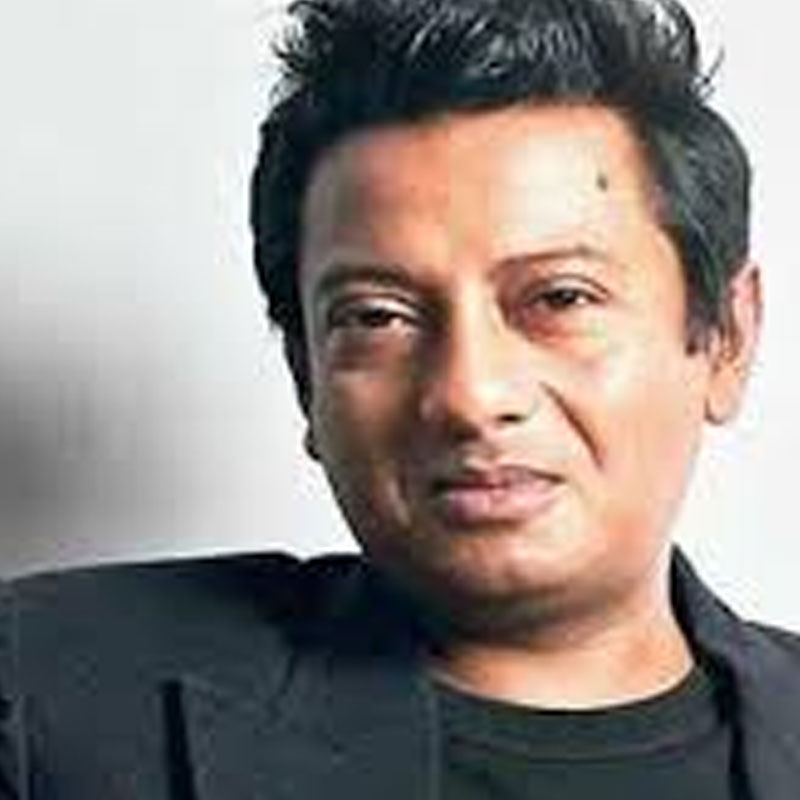
  • Onir displeased with DD for refusing to telecast I Am

    Onir displeased with DD for refusing to telecast I Am

    MUMBAI: Filmmaker Onir is upset that his national award-winning movie I Am has been refused a screening on Doordarshan.

    “Despite having cut seven minutes of the film and all abuses, we are refused whereas the same TV shows other much more adult stuff. I am dismayed at the double standards of the Censor board. While it‘s ok to show Satyamev Jayate on DD prime time, telecasting of my film is refused,” Onir tweeted.

    The film is divided into four stories dealing with issues like homosexuality, child abuse, Kashmir problem and sperm donation. 

    Trade analysts are of the view that I Am has been given a U/A certificate while it is necessary to be ‘U‘ certified for it to be telecast on DD. “Anyway it‘s a joke that Doordarshan needs a ‘U‘ certificate while all the other satellite channels are allowed U/A,” he said.

    Incidentally, I Am won the National Award for best Hindi film and best lyrics this year.

    The film, starring Rahul Bose, Manisha Koirala, Juhi Chawla and Sanjay Suri, has already been screened at various national and international film festivals.

  • The day the music died – Channel [V] GM Prem Kamath

    The day the music died – Channel [V] GM Prem Kamath

    One of the most frequent questions I am asked is why Channel [V] is abandoning music. It is probably a question that can be asked as equally of several other ‘music channels‘.

    On the face of it, it‘s a pretty relevant question – in large measure because channels like ours have built their reputation on playing music and a large part of our fan base tuned in to hear it. So if the average viewer is often left perplexed by why a music channel would suddenly start beaming a host of reality shows, their befuddlement is entirely understandable.

    A big part of the answer to that question lies in how music consumption itself has changed.

    Firstly, TV is no longer the primary medium for consuming music. Gone are the days when one would eagerly wait for the next episode of BPL Oye or Timex Timepass (for those of you old enough to remember these) to check out the latest in music. Today the newest track is a torrent away and the newest video, a youtube click. When one has such options of video-on-demand and personalised playlists, little reason why the classical music channel should be relevant anymore.

    Secondly, the dynamics on the Indian music industry are uniquely skewed against conventional music television. The Indian music scene is entirely dominated by Bollywood. This is at once a boon and a curse for the industry. On the plus side, Bollywood brings with it an almost unlimited demand for new music. All of it is pre-paid for and this minimises the risks for artists and musicians. However, on the flip side, it has become an 800-pound gorilla the might of whom few independent bands can stand up against. What this has led to is the commoditisation of content from a television perspective.

    As any television executive will tell you, the greatest monetisation in television comes from differentiation. The biggest limitation of the music television model has been that there is no scope whatsoever in differentiating the content of one channel from another. Every channel has access to the same pool of music and, hence, very little differentiates one channel from another.

    Finally, whether or not a channel restricts itself to music depends on what business they define themselves to be in. Channel [V] has always been iconic to the youth of this country. More than a music channel, we have always seen ourselves as a youth entertainment channel. Time was when music was the best way for a channel to connect with the youth of this country. That time has passed – probably for good.

    Youth entertainment tastes go well beyond music today and content has to follow suit. Testament is borne to this by the astounding success we have met with post our re-launch. Channel [V] has increased its share five-fold in a span of 12 months and today leads the youth entertainment genre. Over 80 per cent of our content today is non-music and we are much the richer for it. Music continues to be a not entirely insignificant 20 per cent still and will remain so as long as we believe that it is an integral youth hot-button. As we have often said, we are faithful to the viewer and not the genre. If youth entertainment tastes shift in this country, our content will shift along with it.Of course, to keep up with youth trends and remain a relevant and sought-after youth channel is easier said than done.

    Too much has been said about how India is a country of the young. Too little has been done about it.

    Few categories in the country have seen as much of a sea change as television has. A young and nascent industry by any standards, changes that took 50 years in the West have been compressed into just over a decade here. From DD to DTH, the changes have come in the form of newer technology, global exposure and exploding choice. And the young consumers of this country have been at the very epicenter of this whirl-wind. Whereas most marketers, including the TV industry, have ironically been on the outside looking in.

    The trouble with marketing to the young is that those doing the marketing are far from young. It‘s a problem that the gaming industry in the West recognised very early on – after all over 90 per cent of its sales were to people below 20 years of age. Their solution was to hire their prospective customers – as consultants, game-testers, designers and evangelists. They rightly believed that to create a game that truly captured the imagination of a 14-year-old, you need a 14-year-old to tell you how.

    But unlike gaming, the challenge of programming television for the young goes beyond just understanding their needs. Youth Television‘s challenge is a lot more fundamental – it is to stay relevant to a generation of digital natives who are increasingly gratifying their entertainment needs from a variety of sources outside TV.

    Television is no longer the young, sexy and alluring medium it once was. Sure, it‘s still the largest and most cost effective medium to reach out to any segment of the population including the young. And yes, in sheer numbers, the quantum of reach it offers is truly staggering. But it is in its role as an agent of change, as a definer of trends and as a lighthouse to the young that TV has been lagging of late.

    From being the only window that beamed in those wonderfully hypnotizing images from all around the world, it is now so ubiquitous and so ingrained into our lives as to be often taken for granted and overlooked. For the young who have grown up with television, it holds hardly any charm as a lifestyle medium – after all they haven‘t known or seen a world without it.

    Nor is TV the beacon of information it once was. That space has quickly and irrevocably been usurped by the Internet. Granted, the overall net penetration numbers in this country still remain abysmal. But among the young, the access rates are not only higher but also growing at a blistering pace. What‘s more, mobile phones are ensuring that the net is well and truly available to anyone who wishes to access it.

    TV once was the sole repository of everything cool and glamorous – from fashion to lifestyle to relationships. An entire generation of people looked up to it to tell them what to wear, how to look, how to speak and where to hang out. That‘s a position it has vacated over a period of time to various media – to a resurgent movie industry with its new-found urban acceptance, to one-for-every whim lifestyle magazines and even to newspapers in their dolled up page 3 avtaars.

    And finally to top it all, even in its most functional gratification, as a means for just killing time, the young are finding options that are newer, more alluring and certainly much cooler. Ask any teenager and he‘ll tell you how much more fun it is to while away at the mall than to be watching TV at home. Or how much cooler it is to be hanging out with friends at the local Barista than to be watching it on TV.

    So is TV doomed to exist as a once cool has been medium with as much relevance to youngsters as the blocky black telephone that still sits in the corner of some living rooms? Or is there really a way that TV can reinvent itself to once again be a central part of every teenagers and young adult‘s life?

    At Channel [V] we believe there is.

    The only way to counter change is paradoxically through change.

    When Apple decided to stray from its mainstay of computing and venture into the ultra competitive world of personal electronics, few gave them a chance against the might of giants like Sony. But the iPod has not only gone on to redefine the way people consume music, it has changed the very face of the music industry and its commerce for ever. It did so through some audacious imagination and some good, old-fashioned trend spotting.

    Exactly what television needs if it has to fire the imagination of the young again.

    The trends are all around us for anyone who cares to look.

    Today‘s youth are characterised by their ambition and their impatience. It‘s really an ‘AND‘ generation not an ‘OR‘ generation. It‘s career and personal life; it‘s work and fun, it‘s this and that. TV cannot buck this trend. We cannot expect people to choose between TV and hanging at the mall. We‘ll have to make both possible. It‘ll have to be TV at the mall, TV on the Internet, TV on the mobile and TV while driving. Thankfully, we have the technology today that makes this possible. What we now need is the mindset to see it through.

    This is also the ‘NOW‘ generation. When impatience is a virtue, attention spans can only be non-existent. Bollywood has recognised this and our movies are getting shorter. TV will need to reinvent its format too. Mobisodes have often been written about but not really been worked upon. If 30-minute episodes are the norm merely to aid commercial scheduling, I‘m afraid we‘ll get little sympathy from the viewer. We‘ll have to find ways of monetising formats that our consumer prefers rather than the other way round. Once again, streaming video on the net has been a step ahead of TV in this regard.

    Other signs and trends abound. The rise of user generated content, the voracious appetite for reality, the extreme need for self-expression and individuality, unbounded ambition, the increasingly transactional nature of relationships, friends being the new family, urban atomization – the list goes on.

    It is said that those in the midst of great change rarely recognise the momentous nature of it. India and its young are in the midst of exactly such a change. It is change that will leave very few things in its path untouched – including the way we buy, organise and consume our television. And there are untold spoils for those who recognise this and exploit it.

    To remain relevant and preferred, Youth TV will have to constantly reinvent and recharge itself.

    And oh, by the way, those who mourn the passing away of music channels would do well to not shed a tear. The music hasn‘t died. It has merely shifted screens.


  • ‘We are not a business model-oriented channel’ : Suneet Tandon – Lok Sabha TV CEO

    ‘We are not a business model-oriented channel’ : Suneet Tandon – Lok Sabha TV CEO

     ‘The no-confidence motion against the UPA government last month gave Lok Sabha TV’s ratings the much required boost as well as an opportunity to rake in money by sharing its feed with privately run satellite news channels.


    Indiantelevision.com’s Anushree Bhattacharyya caught up with Lok Sabha TV CEO Suneet Tandon to find out more on his plans for the channel. Interestingly, Tandon was elevated as CEO less than a week before the crucial vote. He was earlier the channel’s executive director-marketing.


    Excerpts:

    How has the channel fared in the two years of its existence? What are major changes that have taken place?
    The first year was devoted at consolidating the position of the channel. And in its second year, we established the channel’s presence. People now know who we are.


    There are channels that spend large amounts on advertising and marketing. We have not gone that route, yet we have carved out our very own position. All this has happened primarily due to the coverage of Lok Sabha sessions as well as other programmes like debates, discussion and documentaries.

    What is the composition of Lok Sabha TV? Apart from Somnath Chatterjee (whose brainchild the channel is), who are members of its governing body?
    The channel owes everything to the Speaker. But the channel is institutionalised under the overall power of the Lok Sabha. Under the Speaker, we are headed by the secretary general. In addition, there is also an advisory council to guide the functioning of the channel and is chaired by the Speaker. The vice chairman of the council is the deputy speaker of Lok Sabha. The council also consists of leaders from all the major parties in Parliament. So there is also that structure which has been set up to help offer the balance.

    How much investment has been made into Lok Sabha TV?
    Well, at this point of time, it is difficult to speak about the figures as I don’t have them with me right now.

    The channel has to depend on the audio-visual unit of the Lok Sabha secretariat for its expenses and infrastructure. Do you face any constraints in funding since you do not have a business model as such?
    We are not a business model-oriented channel. We are a public service channel for which funds are made available by the Parliament from Parliament’s own funds. Though there have been no constraints on our funds, it is our desire that we don’t want to become a burden on anyone. We need to do it in an economical and careful manner and are very conscious of that. We do not try to spend liberally just for the sake of spending.

    How many hours of feed were sold by Lok Sabha TV for the two days (during the Trust Vote)? How was the business on these two days for the channel?
    We did not sell any number of hours of feed as such. News channels picked up largely the important segments. We had earlier informed all the news channels about the rates. We had adopted Doordarshan’s practice of sharing feeds for important events in Parliament.


    We are using the same rates used by DD. Apart from charging Rs 1 mn beyond every five minutes of feed, there is also a provision for a one-time payment. For the one-time payment, a news channel has to pay Rs 3 mn in advance and can use the feed for any three important events, which makes it Rs 1 mn for every event.

    We also try to spread cultural awareness not in terms of entertainment but by spreading awareness for our classical heritage and folk heritage. We also air awardwinning films on our channel

    Since it’s all about garnering TRPs, how does a channel like Lok Sabha TV manage to catch the attention of viewers?
    By being a credible, sensible and balanced channel. We are not trying to attract the attention of viewers and TRPs by showing any sensational news. We like to deal with our viewers intelligently and try to reflect their concerns because this channel is meant for the thinking citizens of this country. We are very conscious that Lok Sabha TV has to reflect and balance all shades of political opinion. And I must say that there is a lot of feedback that we have got saying that people like watching our channel because we don’t sensationalise anything.

    Do you keep an eye on the ratings of Lok Sabha TV? Are the ratings satisfying enough?
    Yes, we do. We have subscribed to Tam (television audience measurement) every week. Considering the niche nature of the channel, it is very satisfying. Lok Sabha TV is neither a news channel and nor is it a GEC, yet our ratings have been consistently more than CNN and BBC. Also in metros like Delhi and Mumbai, our ratings have been better than many of the established news channels. It’s actually a good reason to be happy for a young channel which does not offer any traditional sensation to its viewers.

    The channel’s viewership soared on 21 and 22 July. Do you feel that Lok Sabha would have been able to garner more ratings if you had not shared the feeds?
    Of course. Those two days were extremely important for Indian democracy. And had we not shared the feed, we would have got as much viewership as that of all the channels put together… all those who took our feed and our viewership.

    Apart from covering the Lok Sabha, what else does the channel concentrate on?
    People have begun to look at us as in terms of quality discussions, debates and documentaries on socio-economic, constitutional and government issues. Moreover, we also try to spread cultural awareness not in terms of entertainment but by spreading awareness for our classical heritage and folk heritage. We also air awardwinning films on our channel.

    At any point of time, have any member of the Advisory Council or the Speaker shown an apprehension on maintaining balance while covering any session?
    No within the Parliament the balance is maintained by the Speaker himself or whosoever is in the chair at that time. And our duty is simply to cover what has happened. And as far as rest of the programmes are concerned, we have not yet faced any significant criticism. But if there are any observations, we take corrective actions.

    In terms of programming, what are the changes that you would like to bring about?
    Every television channel has constantly tweak its programming and look for new ideas to develop interesting programmes. I think we need to give a little more emphasis on fresh programming. And I would also like to see if we could have some more involvement from other states and cities. We also have phone-in programmes where we have toll-free numbers and people can call from anywhere in the country.

    Though there is a website dedicated to Lok Sabha, there is no online property for the channel. Any plans to develop a dedicated web portal for Lok Sabha TV?
    Well, that is something that we can certainly consider taking up. During the time of the debate, many people who had logged on to watch a simultaneous webcast had found that our server had reached its maximum capacity as people from all over the world had logged on it. The servers for loksabha.nic.in got jammed. So, yes, may be there is a need to set up a separate website and increase the bandwith.

    What lies ahead for Lok Sabha TV?
    Technically, we are already at power with any other channel. Our visual quality is as good as any other channel. Yes, we would definitely like to have more interesting programmes and would also like to increase our scope of operation.
  • Padm Shri for Barkha Dutt, Rajdeep Sardesai, Vinod Dua

    MUMBAI: The ‘Padm Shri’ award will be conferred to six media personalities this year.

    Among the winners of the ‘Padma Shri’ are CNN-IBN editor-in-chief Rajdeep Sardesai along with NDTV’s managing editor, Barkha Dutt and Vinod Dua from the news channels.

    Bollywood actor Madhuri Dixit, actor Tom Alter and Hollywood film maker Manoj Night Shyamalan are also on the list.

    Rajdeep Sardesai, who entered television journalism in 1994 as political editor of NDTV, was the host of the award-winning talk show The Big Fight, and was particularly appreciated for his coverage of the Gujarat riots. Sardesai has been bestowed with many prizes for journalism including ‘C H Mohammad Koya Journalism Award’ -2007 and ‘Ramnath Goenka Excellence in Journalism Awards’ for 2006-07.

    Barkha Dutt has won over 20 international and national awards, including the Commonwealth Broadcasters Award 2002, the ‘Global Leader of Tomorrow Award’ from the World Economic Forum in 2001, and the ‘Broadcast Journalist of the Year’ award from the Indian Express, in 2005.

    Vinod Dua has been a prominent face of television for over three decades, known for his distinctive style and informal manner. He has been a producer and anchor for a wide range of programmes, which covered election analysis, political commentaries, documentaries and features. Dua has earlier received the ‘B D Goenka award for excellence in journalism’.

    Madhuri Dixit is one of the biggest stars of the Indian film industry. Throughout the late 1980s and 1990s, she dominated Hindi cinema as a leading actress, appearing in many hit films like Tezaab in 1988 Ram Lakhan, Parinda and Tridev in 1989, Dil in 1990, Saajan in 1991, Beta in 1992, Khalnayak in 1993, Hum Aapke Hain Kaun in 1994 and Raja in 1995.

    Tom Alter is an Indian actor of American origin. He has worked for Satyajit Ray in Shatranj Ke Khiladi and Ismail Merchant. In Sardar, the 1993 film biography of Sardar Patel, Alter portrayed ‘Lord Mountbatten’. He has also played sadistic mob lord Keshav Kalsi in long running series Junoon on Doordarshan .

    M. Night Shyamalan is best known for his work on the movies The Sixth Sense, Unbreakable, Signs, and The Village.

    Meanwhile, the government has decided not to confer highest civilian award, Bharat Ratna to any politician this year.

    For the past six years, the award has not being given to anyone.

  • NDTV to telecast DD-supported documentaries

    NEW DELHI: Many channels owe their origins or at least their talent to Doordarshan. Prannoy Roy began his television innings in a weekly programme on Doordarshan. Now, NDTV headed by him is to become the first privately-owned channel to screen films made by the Prasar Bharati-supported Public Service Broadcasting Trust.

    The Trust (SSBT) and New Delhi Television (NDTV) have entered into a significant partnership for the promotion of documentary and reality films. PSBT’s films are already being telecast on Doordarshan every week and at numerous national and international fora. They will now be telecast each month on NDTV’s flagship channel NDTV 24×7 as part of the NDTV series ‘Documentary 24×7’, every Thursday at 21:30 hrs and repeated on Sundays at 0130 hrs. 

    According to a PSBT spokesperson, the partnership provides an ideal platform for the exploration of myriad issues that these documentaries deal with and for enhancing the viewership of powerful and insightful content. The effort will go a long way in creating and encouraging a public culture of documentary appreciation and engagement. 

    Renowned filmmaker and PSBT Chairperson Adoor Gopalakrishnan said: “We welcome exposure for the excellent films produced by PSBT on a private commercial channel. With the terrible decline in the standards of commercial television, this is a very praiseworthy effort by NDTV. Our films are produced by independent filmmakers, most of them young, partially funded by Doordarshan. The future for public broadcasting lies in efforts such as these that demonstrate the potential of public-private partnerships”.

    Two PSBT films have been telecast on NDTV over the last month: Spot the Difference by Vivek Mohan, which documents the everyday lived similarities of a Chinese and Tibetan family despite underlying political differences, and Sharira by Ein Lall which explores the life of Chandralekha, an extraordinary and celebrated dancer and the interconnections between body, movement, sexuality, sensuality and spirituality.

    PSBT is a non-profit trust that represents the confluence of energies to foster a shared public culture of broadcasting that is exciting and cutting edge. PSBT’s pioneering work revolves around the creation of independent films that are socially responsive and representative of democratic values. It seeks to situate a new vocabulary and activism at the very heart of broadcasting in India and this endeavour will open up new spaces for engagement with the form and content of documentary films in the mainstream public media.

  • TV hosts….a new breed enmerges

    TV hosts….a new breed enmerges

    Let’s go back a little in time. Hosting was all about propah quiz masters and news readers. A Siddarth Basu or a Luku Sanyal is still remembered very fondly by TV buffs. The closest one got to a host then was Tabassum on DD’s Phool Khile Hai Gulshan Gulshan. Tabassum gate crashed into a predominant male bastion and probably remained the lone female host for a long time on TV.
    Then and now

    Then it was more about the serious, intelligent, well-mannered and dressed in the mandatory suit kind of TV host. It was much later that hosting was redefined and got its current avatar. Now it is all about the Hinglish speaking, hip, yo, irreverent young guy. Being able to think on your feet and adding your own brand of cerebral content to a show is co-incidental.

    Hosting as a profession is still in its nascent stage in India. Celeb shows, reality shows, cookery shows, talk shows. The need for hosts is on an all-time high. So what is hosting all about? A pretty face, designer threads, a good bod, spiked hair? Or is it all this and dollops of talent and intelligence? What is the art of good hosting?

    As no corporate house or institution has yet thought of launching a course in hosting all our hosts are self-taught. “One should have a good education and be well-read. This should be a pre-requisite,” believes Mini Mathur one of the most popular hosts on TV today.

    Cyrus Broacha, Sajid Khan, Mini Mathur, Cyrus Sahukar, Mona Singh, Karan Johar, Roshan Abbas are also in the current top bracket. Not to mention the veejays on different music channels who sport fake accents, crack juvenile jokes and the female veejays dressed in almost nothing. And not to mention that all read from a script written by an equally amateur writer.


    When actors came calling
     

    Hosting came of age when Shekhar Suman charted a different route for himself as a talk show host. He began to host hard hitting satirical TV Talk shows on entertainment and news channels. He introduced his particular brand of humour which was a heady mix of obnoxiousness, irreverence, and simple observations.

    Movers and Shakers on the Sony Entertainment Network and Simply Shekhar on Zee Television were two of his much-watched shows. Modelled along the lines of The Tonight Show with Jay Leno, Suman did manage to carve a niche for himself via this show.


    When Amitabh Bachchan crossed over to the small screen with the game show, Kaun Banega Crorepati he not only helped the channel’s dipping fortunes but also helped himself get a new lease to life. The hugely popular show, characterised by Bachchan’s baritone and personality is remembered today for the host rather than the crores earned by the contestants.

    Though of course Bachchan was a household name, the show helped him widen his fan base and also helped him clean up the financial mess he was in.


    But when superstar Shah Rukh Khan replaced Amitabh Bachchan as host on KBC Shah Rukh Khan said, “I was pleasantly surprised when the channel offered me the show. I was a participant in season one of KBC… and little did I know one day I would be hosting it. It is a huge act to follow, that of Mr Bachchan…but it also excites me that I am getting an opportunity to reach out (and) talk and interact with my audience through a medium where I began my career as an actor years ago.”

    And full marks to Khan for having taken hosting to new heights. Having come from the world of theatre Khan knew all the trade secrets and perfected the art so well that he had viewers swooning. It was rumoured then that audiences watched the show only to get entertained by SRK. He chatted, he danced, he sang and he joked. Damn the GK questions. He did all that was required of a successful host. His style, his wit, his intelligence was unmatched. Though one must add that SRK is a better host on live shows than on the small screen. Nonetheless, his TV hosting did set a benchmark.


    Very recently actor Sunil Shetty crossed over to the small screen to host the Biggest loser jeetega on Sahara One. Unfortunately, the actor flopped in his new role. Veterans know that this is not an easy role to play.
     

    Money talk

    And that brings us to the most important takeaway of this profession- financial returns. Unlike in the earlier times when a host did TV shows for only a day or two in the month and supplemented his income with other jobs now for most of them it is their only job. Today it is a very lucrative career and hosts of all kinds are laughing all the way to the bank. And it is this moolah coupled with the thrill of becoming stars in their own right that more and more PYTs are attracted to this new job.

    So how much does a TV host earn? Inside sources inform that much depends on the length of a show and the status of the host. But on an average a start- up anchor takes home atleast Rs 5000 per episode and an A – list host makes anything between Rs 1 lakh to Rs 3 lakh per episode.

    “The business is good and so is the money,” Sajid informs. “I have never been out of work. Your demand is because of your popularity. Moreover I never discriminate between work.”
    Mini too has taken a conscious decision not to take up any acting assignments as she has good work on her plate. This also helps her focus on her job.

    Whether hosting is a well paying job, Abbas says, “It depends. It pays me very well but I can’t be sure of all other anchors. Actually, a lot depends on your popularity.”


    Pre-requisites

    “You don’t have to look like Brad Pitt to be a good host. In fact 90% of the hosts worldwide are not exceptionally good looking,” says Sajid Khan. “You need to talk well and this can’t be learnt.”

    Saiid who began hosting shows way back in 1994 (Main Bhi Detective) is still going strong. Ikke Pe Ikka his countdown show on Zee Cinema has done over 400 episodes and put him in the big league. Of the belief that hosting is an inborn art and that very few people are born with it, Sajid says, “Shah Rukh Khan, Shatrughan Sinha, Karan Johar are those blessed with it. As for Amitabh Bachchan he is a superstar and hence it is easier for him to host a show. He is being himself.”

    Karan Johar normally wears the director’s hat. And when he is not making films he hosts a talk show, Koffee with Karan. The show brings together celebrities who are interviewed in the show’s trademark informal style. The first season was a huge success, and the programme became the first English entertainment show to ever get a huge rating in India. Karan is himself on the show, chorus all those who know him. A veteran Karan very cleverly juxtaposes his teleprompter lines with his real lines. Having said that he is a delight to watch. In fact another super host Sajid Khan says, “I like Karan on the show. It comes naturally to him. I have known him since years and he has always held a captive audience be it when talking informally with friends or as a host. He doesn’t pretend and that is his USP.”
     

    And then there was Simi Garewal in her impeccable English accent hosting Rendezvous with Simi Garewal. A picture perfect in her designer outfits and chic appearance Simi hosted this very class-centric talk show. Simi who had been an actress but not a successful one had finally found her calling. The show spilled over into many seasons and Simi did her la- di- dah act to perfection.

    From small-time housie shows to countdown shows on TV, to prestigious award functions he has done them all. Armed with an abrasive sense of humour, Sajid Khan has done many a celeb in with the Sajid brand of wit and all this with his tongue firmly in the cheek.
     

    “Right since my childhood I was always standing with a mike and taking a show on the floor,” informs Sajid. “My USP is being able to connect with people. I’ve hosted shows for as varied an audience as the House of Commons, to the Maharashtra Shetkari Sangh. My strength lies in the fact that I don’t work on a script. I never use teleprompters and I don’t need writers. What people see is what they get. I think a successful host is one is who conducts a show without giving himself too much importance.”
     

    Mini Mathur who was a MTV host for 4 years has also hosted both the seasons of Indian Idol and is gearing up for the third is an MBA in Marketing and her stint with hosting goes way back to hosting India’s first game show, Tol Mol Ke Bol. She is of the firm belief that it is a very specialised field. Mini says, “Today everybody is a me-too. Unfortunately most over do it. I am in the business since 10 years. I haven’t burned out as I do less work. I have a family and am a happy person. And because of my life experiences I can put it better before the camera.”
     

    “An effective anchor needs to be quick witted, observant and adaptable to unforeseen situations,” says Roshan Abbas popularTV host. But when he took over from the oh-so natural Faroukh Shaikh to host the second season of Jeena Isika Naam Hain it was a tough act to follow. Shaikh had charmed viewers with his dignity, subtle wit and grace. Despite his experience, Abbas was unable to match Shaikh.
     

    As there are so many new shows mushrooming now on the small screen the hosts can cast a wide net. But what is important is the fact that the subject should not matter to a host. And hence it is only a well-read/intelligent host who can do justice to the work. Mini says that reality shows do not have a script. “It is made up of good moments. I like to work on a basic framework and then improvise. It is very reactive. Spontaneity and wit are the two essentials that make a successful host.”
     

    So does that mean that a Sanjeev Kapoor who has been hosting cookery shows should try his hand at a reality show? Talking of spontaneity, Ranvir Shorey and Vinay Pathak are the latest two entrants in the hosting arena and they are a delight to watch on their late night talk show, Ranvir -Vinay aur Kaun?


    Downside

    Well-written scripts are difficult to come by rue most hosts. Sajid therefore says he works without a script. “People hire me because they save on teleprompters,” Sajid ribs. “I can host the Oscars better than any of the hosts. I was the first to wear a tuxedo, sing a song, walk down from the stage and talk to the audience. I work for the viewer.”
     

    The genial Mini storms, “My angst is against the perception of TV presenters. They are not given due respect. They must be accorded the space of a TV serial. Sometimes people don’t even know our real names. “
     
    Abbas says, “It is unfortunate that good avenues for formal training in TV anchoring do not exist in our country. I’m trying to do my bit on this front through a series of workshops. Besides, nobody can deny that luck plays a crucial part in your success or failure over here.”
     

    The bottomline
     

    The good ones survive despite the onslaught of a hundred others who come to try their hand at the job. A Cyrus Broacha is saluted by not just his listeners but by his contemporaries. And he is no threat to any of them…as he is head and shoulders above the rest. And they know that. As VJ Ranvijay has said of him, “Thanks to him, all of us have careers today. VJing wouldn’t be a career if Cyrus Broacha wasn’t there.”
     

    One thinks it’s about time the Cyruses, the Minis, the Shaikhs, the Sajids opened a school for wannabe hosts. Its pay back time folks!