Tag: DD

  • AIR/DD engineers to inspect MSO set-ups for DAS; b’casters asked to stop signals to unlicensed MSOs

    AIR/DD engineers to inspect MSO set-ups for DAS; b’casters asked to stop signals to unlicensed MSOs

    NEW DELHI: Broadcasters have been asked to ensure that signals should not be made available to those multi-system operators (MSOs), who have not received registration from the Ministry of Information and Broadcasting (MIB) and who do not provide digital encrypted signals in Digital Addressable System (DAS) Phase III areas from the cut off date of 31 December.


    This was conveyed at a meeting convened by the MIB with over 120 MSOs, which was held prior to a meeting of the Task Force over the weekend for the third phase of DAS.


    The Ministry has deployed engineers from All India Radio and Doordarshan to inspect the technical set ups of MSOs.


    The status of digitisation and stock & supply position of set top boxes (STBs) was also reviewed and all stakeholders were requested to ensure that seeding of STBs is completed in Phase III areas by 31 December so that consumers do not face any difficulty due to stoppage of analogue signals.


    In the 12th Task Force meeting held over the weekend presided over by its chairman and Ministry Special Secretary J S Mathur and Joint Secretary (Broadcasting) R Jaya, broadcasters were advised to increase the frequency of publicity on cable TV digitisation and to ensure that it is carried by all the approved TV channels. 


    While a public awareness campaign is being carried by all stakeholders; the meeting was told that the multilingual Toll Free Helpline and 12 Regional Units are operational.


    The government has updated the list of urban areas to be covered in Phase III for 24 States & Union Territories after comments from State/UT Governments.


    In response to the concerns raised by some of the stakeholders about delay in signing of interconnection agreements between Broadcasters and some MSOs, it was decided that these MSOs may furnish the details of pending cases to the Telecom Regulatory Authority of India (TRAI) by the middle of this month for holding immediate meeting with Broadcasters.


    As was earlier reported by Indiantelevision.com, TRAI will hold a meeting with stakeholders on 18 December to iron out any problems in this regard.


    In the meeting with MSOs, it was emphasised that MSOs must carry public awareness campaign on cable TV digitisation on their local channels and by distribution of leaflets, holding meetings and putting kiosks etc.


    A demo of the MIS system, which has been deployed to collect seeding data of STBs online from all operators, was also made.


    MSOs who have not started feeding the seeding data in MIS were advised to start immediately and update it regularly.


    It was informed that multilingual Toll Free Telephone Number 1-800-180-4343 to answer queries of stakeholders, including consumers, for seamless transition to digitisation is already operational and they were advised to publicise it.


    As was reported earlier, all stakeholders were told categorically that there would be no extension of the deadline for Phase III and analogue signals should be switched off from 1 January, 2016 in all urban areas of the country. The final phase covering the rest of India will be completed by 31 December, 2016.


    TRAI had earlier asked all stakeholders to apprise it by 28 October of any problems arising out of finalising agreements amongst various stakeholders.

  • DD to telecast special programme on mental health problems & prejudices

    DD to telecast special programme on mental health problems & prejudices

    NEW DELHI: The Doordarshan flagship programme Aaj Savere will focus on issues relating to mental health awareness and public education.


    Consultant psychiatrist Dr Avdesh Sharma will discuss the work being done in public education by him during the programme at 7.30 am on 17 December. 


    The programme will be beamed on the national channel and will discuss the global scenario and India centric issues around mental health and its impact on health, relationships, society and the economy. The aim is also to reduce the stigma and discrimination towards persons with mental illnesses and their families.


    It will also highlight initiatives and innovations in Public Education & Awareness building initiatives led by Dr Sharma in the capital that are being planned by the World Psychiatric Association. 


    The discussion would also cover the role of various stakeholders in Mental Health including physicians, caregivers, NGOs, alternative therapists and spirituality.


  • No plans for new DD transmitters except some in border areas: Rathore

    No plans for new DD transmitters except some in border areas: Rathore

    NEW DELHI: The Government has no plans for new Doordarshan transmitters for expansion of terrestrial coverage except a few in border areas, the Parliament was told by Minister of State for Information and Broadcasting Rajyavardhan Rathore.


    Doordarshan has 67 kendras (studio centres) and 1,416 transmitters in the country and therefore there is no need for expansion in view of multi channel coverage having been provided to all the areas uncovered by terrestrial transmission (including those located in rural/ remote/ backward/tribal regions) along with rest of the country through DD’s free-to-air DTH service Freedish.


    Uttar Pradesh has the highest number of seven studios, followed by Jammu and Kashmir with four. Although other states have a maximum of two studios, each one of them widens its reach through high power transmitters, lower low power transmitters; very low power transmitters and transposers.


    Rathore also told the Parliament that all areas uncovered by terrestrial transmission along with the rest of the country have been provided with multi channel TV coverage through Freedish. DTH signals can be received anywhere in the country with the help of small sized dish receive units and require only a one-time payment for purchasing the units.


    The four new TV transmitter projects in Jammu and Kashmir presently under implementation are High Power Transmitters (HPTs), Rajouri (DD1 & DD News); HPT, Green Ridge; HPT, Himbotingla; and HPT Natha Top (Patnitop). The Timeline for transmitters at Rajouri is 2016 and for other locations is 2017.

  • DD spends 29% of annual expenditure on terrestrial distribution

    DD spends 29% of annual expenditure on terrestrial distribution

    NEW DELHI: Around 29 per cent of the total expenditure of Doordarshan is spent on terrestrial distribution annually, the Parliament was told today.


    However, Prasar Bharati says that the viewership data received at present still does not show the terrestrial viewership for rural viewers separately, Minister of State for Information and Broadcasting Rajyavardhan Rathore said.


    In January 2003, Doordarshan had set up four digital transmitters, one each at Delhi, Mumbai, Kolkata and Chennai on an experimental basis using Digital Video Broadcasting Transmission (DVB-T) System to gain experience in digital transmission technology.


    As part of the 11th Plan Scheme, four High Definition TV (HDTV) digital High Power Transmitters (HPTs) have been installed at Delhi, Mumbai, Kolkata and Chennai and are ready for commissioning.


    A total of 63 digital HPTs (40 in 11th Plan and 23 in 12th Plan) have also been approved as part of digitisation schemes. Out of 63 digital HPTs, 16 digital HPTs are ready for commissioning and another three digital HPTs are at advanced stage of completion. Action has been initiated for setting up of remaining 44 digital HPTs.


    Replying to a separate question, I&B Minister Arun Jaitley said against funds amounting to Rs 155 crore allocated in 2014-15 by the Prasar Bharati from the funds given by the Government for modernization schemes, Prasar Bharati had reported an expenditure of Rs 153.37 crore.


    He added that against funds amounting to Rs 237 crore allocated in 2015-16 to the pubcaster, an expenditure of Rs 41.46 crore had been incurred till October 2015.


    The Expert Committee for Prasar Bharati had recommended digitisation of Terrestrial TV operations based on commercial viability.


    However, Rathore said there is no time-line at present for Analogue Terrestrial TV switch off.


    The switch-off is currently happening only in the digital addressable systems (DAS), with the third phase being completed by this month end and the final phase slated for December 2016.

  • Farhan Akhtar helps DD series on women empowerment reach out on digital platforms

    Farhan Akhtar helps DD series on women empowerment reach out on digital platforms

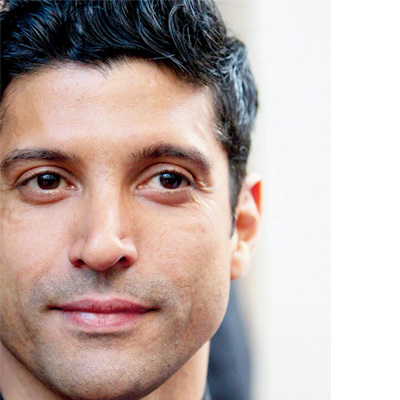
    NEW DELHI: Actor Farhan Akhtar, who is UN Women’s Goodwill Ambassador, has come on the Doordarshan seriesMain Kuchh Bhi Kar Sakti Hoon as the narrator to help address regressive practices such as sex selection, early marriage, early and repeated pregnancies, under-nutrition of girls, domestic violence and gender inequality prevalent in the country.


    The programme was conceptualised and initiated by the Population Foundation of India and is telecast every Saturday and Sunday at 7.30 pm on DD National.


    Starring actress Meinal Vaisnav in the lead role of Dr Sneha Mathur, the series has been written and directed by renowned theatre and film director Feroz Abbas Khan and is currently into its second season.


    Using a 360 degree communication approach, it has reached out to intended audiences through television, radio, mobile, social media and an intensive outreach strategy for Bihar and Madhya Pradesh to enhance knowledge, change perceptions and shift attitudes on these social issues, over the last two years.


    The initiative has innovatively used the digital medium to educate communities and initiate discussions. It has already been endorsed by numerous celebrities, eminent policymakers and corporate leaders.


    Every Media Technologies is helping the Population Foundation of India with the social media campaigns for this initiative. 


    Every Media Technologies CEO Gautam B. Thakker said, “The show is a pioneer in TV edutainment and our aim is to impact minds and bring about behavioural change. With fresh and creative campaign ideas, we have cut through the numerous conversations that happen online. It has been a great experience to be associated with a show like this and we thank PFI for the opportunity.”


    Foundation executive director Poonam Muttreja added, “The show aims to highlight and educate the audience about various dilemmas that women face on regular basis. The digital space today is the most effective way to educate and garner support for the causes the show highlights. The social media team has brilliantly translated the strong messages of the show for the online space, and the social media campaigns have managed to achieve the right effect.”


    Focussed on enhancing knowledge, changing perceptions and attitudes on women’s empowerment and the social determinants of maternal, reproductive and sexual health, Main Kuch Bhi Kar Sakti Hoon has been able to bring about a measurable impact on knowledge and perception of viewers on issues like age at marriage, importance of family planning, sex determination and domestic violence, among others.


    The most popular social media campaign was about age at marriage, which showcased a series of impactful posters in a bid to sensitise the audience, and reached 1,42,000 users on Twitter. Another campaign (#IPledgeNow) urging people to commit to fight evils like drug abuse, sexual harassment and domestic violence among others, attracted 7,100 Facebook users.


    Among the ongoing social media campaigns by the initiative (in partnership with MARD) is the campaign called Desh ko badalna hai toh mard ko badalna hoga (#AsliMard), which urges men to create a woman-friendly world. 

  • ISRO’s GSAT-15 launch on 11 November; DTH to benefit

    ISRO’s GSAT-15 launch on 11 November; DTH to benefit

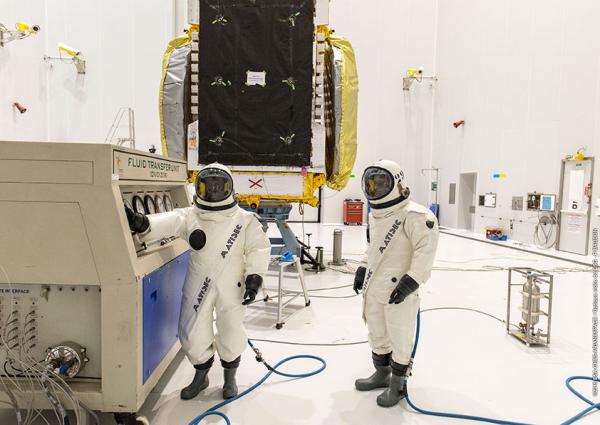
    NEW DELHI: Even as Indians are celebrating the festival of lights, a new bird  from the Indian Space Research Organisation (ISRO) is set to be blasted off into geostationary orbit come early 11 November from Kouro in French Guiana.  The satellite GSAT-15 – with its 24 Ku-band transponders – is going to provide a lifeline to India’s DTH television operators.


    It is currently waiting at the launch pad as a payload of an Ariane 5 Rocket  – launch firm Arianespace’s trusted launcher – in launch complex No 3 in Kouru. The satellite cost – including the launch fee – is at Rs 860 crore.


    The GSAT-15 will replace two older birds – INSAT-3A and INSAT-4B – both are which are at the fag end of their lives. INSAT 3A will expire in November while 4b will cease functioning later next year.


    Most of the transponder capacity on these two satellites is being utilized by Prasar Bharati’s DD and  DTH operators FreeDish and  Sun Direct, according to satellite TV tracker Lyngsat.


    GSAT-15 will thus see these services being shifted to its transponders, which will also serve the needs of VSAT operators who offer Digital satellite news gathering operations to India’s news channels. It will also be carrying as a GPS-Aided GEO Augmented Navigation (GAGAN) payload operating in L1 and L5 bands as  a backup service for airlines and other users of augmented GPS-based system.  According to ISRO, it has a design life of 12 years and its weight will be 3,164 kg at lift-off


    The Ariane-5 VA-227 launch vehicle, which will launch GSAT 15, will also carry Arabsat-6B for Arabsat, Saudi Arabia. Arabsat-6B, to be renamed BADR-7 once in orbit, will be the ninth satellite orbited by Arianespace for use by the operator Arabsat, based in Riyadh, Saudi Arabia. It is the initial sixth-generation satellite for Arabsat’s fleet, providing broadcast, broadband and telecommunications services over the Middle East, Africa and Central Asia.


    The Ariane 5 mission will have a total payload lift performance of 9,810 kg, Arianespace said. This includes the two satellites’ mass at liftoff – 5,798 kg for Arabsat-6B and 3,164 kg for GSAT-15 – along with launcher integration hardware and Ariane 5’s dual-passenger deployment system, it added.


    The launch is planned to take place during a launch window of 21:34 and 22:17 pm coordinated universal time (around 03:04 am IST).


    Interested viewers can watch it live on http://www.arianespace.tv.

  • DD eyes balance of role as entertainer & pubcaster; to launch 4 new shows

    DD eyes balance of role as entertainer & pubcaster; to launch 4 new shows

    NEW DELHI: Doordarshan is making headway in playing dual roles of being an entertainer and at the same time shouldering its responsibilities as a public service broadcaster.


    Senior Doordarshan (DD) executives indicate that they have to walk on the razor’s edge as they have take care of their public service broadcaster responsibilities even as they entertain audiences.


    As a step towards achieving this goal, the pubcaster will soon be launching four new shows in various genres. It may be recalled that in August too, DD had revamped its programming by launching five new shows. 


    DD director general C. Lalrosanga and deputy director general Deepa Chandra said that DD could not be complacent because it had the largest reach in the country. “Bringing a channel on television and then ensuring it gets good viewership is a major task in itself, particularly for a public service broadcaster,” Chandra said.


    Chandra added, “The slow and steady approach adopted by us to garner good viewership and ratings has started to show promising results. Keeping with that, our second stage of introducing fresh content in prime time band is beginning from 19 October.”


    The four new shows that will go on air this month include two crime shows – IPS Diary and Mashaal, a love saga titled Albeli – Kahaani Pyaar Ki and a musical reality show called Sur Sagar.


    Sur Sagar will, for the first time, see music bands competing against each other and not just singers or dancers. The weekend reality show will have three judges namely Leslie Lewis, Soham Chabraborty and Shilpa Rai. The show will go on air from 31 October and will be aired on Saturday and Sunday at 9 pm.


    The USP of the hourly show will lie in the fact that both bands and singers share a common platform, and 20 bands and 20 singers have been shortlisted to compete for the title in the show. Live auditions were held in six cities: Delhi, Amritsar, Lucknow, Kolkata, Hyderabad and Mumbai.


    The show will also be unique in that it will promote the original compositions of the singers and bands and not depend on film songs. The first season will have 52 episodes.


    Lewis said he had agreed to be on the show after seeing the massive change in content on DD National, adding that a good song appeals to all. Director Shonal Bose and music director Siddharth added that bands were being given recognition for the first time, despite the fact that all shows featuring singers or dances always had a musical accompaniment.


    The second show – IPS Diary, will see Kavita Chaudhary as the presenter and anchor. The show will be telecast from 19 October everyMonday and Tuesday at 10.30 pm.


    It may be recalled that Chaudhary had became a cult figure with her role of a woman police officer in Doordarshan’s Udaan series almost two decades earlier. In IPS Diary, she appears as a retired IPS officer relating the tale of some of the crimes solved by her.


    Chaudhary said that the aim of the show will not be to frighten people as crime shows on some other channels did, but to send out a positive signal that there were ways to fight the crime wave. At the same time, she said being a public service channel did not mean that DD should stop entertaining people. Producer Rajesh Beri, who is known for his crime shows on other channels said, “I do not want to sell the pains of others.”


    The third show is yet another crime show titled Mashaal, which will launch on 21 October and will be telecast on Wednesday and Thursdayat 10.30 pm. Actor director Rajiv Kumar said that this series was based on actual crime stories, which have been cleverly changed to avoid any controversies. The show’s aim was to tell the people how they could change the system.


    The fourth show titled Albeli will see actor Karan Trivedi, who had appeared as a child star in the Hamraahi many years earlier, as the show’s male lead. The series is the story of a poor girl marrying a rich boy, and will be telecast five days a week at 9.30 pm from 26 October.


    The show has been written by Harsha Jagdish. “Entertainment cannot be without a message and a soul. It is often said that the man and the woman in a relationship are like two wheels of a horse-pulled cart but I have attempted to show that there are times when either the husband or the wife have to take on the role of the ‘saarthi’ (driver) as well,” she said.


    In reply to a question, Chandra said that unlike the previous practice of some series being run only twice or once a week, DD was gradually moving to the five days a week pattern. However, she added that DD would make sure that no series went on endlessly.


    DD officials also said that they were aware that the channel’s largest audience was in the 15 to 40 age group and had therefore planned its programmes accordingly.

  • DD to telecast series on apprenticeship training

    DD to telecast series on apprenticeship training

    NEW DELHI: Doordarshan’s National Channel will be launching a new show called Hunnarbaaz, which is based on apprenticeship training programme.


    The 10-part series, which will launch on 18 October, will be telecast at 11:30 am every Sunday.


    Hunnarbaaz is a show that spotlights skills and innovations. The show will help millions of young Indians become aware of the various ways in which they can upgrade their skills, become employable and commercially utilise their inventive genius to provide for themselves. 


    The Skill Development and Entrepreneurship Ministry has amended the Apprentices Act 1961 to make it more responsive to industry as well as youth.


    Prime Minister Narendra Modi has called upon the youth to acquire the skills, which could contribute towards making India a modern country.


    Modi said he wanted to create a pool of young people who are able to create jobs and the ones who are not capable of creating jobs and do not have the opportunities must be in a position to face their counterparts in any corner of the world while keeping their heads high by virtue of their hard work and their dexterity of hands and win the hearts of people around the world through their skills. 

  • Bihar Elections: AIR & DD fix time schedules for poll broadcast

    Bihar Elections: AIR & DD fix time schedules for poll broadcast

    NEW DELHI: All India Radio (AIR) and Doordarshan (DD), which provide a platform for political parties to make poll broadcasts before every election, will also organise a maximum of two panel discussions and/or debates on the Kendras/Stations for the forthcoming elections to the state assembly of Bihar.


    The polling begins in five phases on 12 October with the last day of polling being 5 November.


    Each eligible party can nominate one representative to such a programme, but the Election Commission of India will approve the names of coordinators for such panel discussions and debates in consultation with the Prasar Bharati Corporation.


    The Commission has, as in previous years, worked out a schedule for the time to be given for poll broadcasts to different parties.


    The facilities of use of broadcast time and telecast time will be available only to ‘National Parties’ and ‘Recognised State Parties’ in Bihar.


    A base time of 45 minutes will be given to each National Party and recognised State Party (recognised in Bihar) uniformly on the regional Kendras of DD and AIR network in the State. The additional time to be allotted to the parties has been decided on the basis of the poll performance of the parties in the last assembly election.


    The facilities will be available from the Regional Kendra of AIR and DD in the states and then relayed by other stations within the state.


    In a single session of broadcast, no party will be allocated more than 15 minutes.


    The period of broadcast and telecast will be between the last date of filing the nominations and will end two days before the date of poll. However, there will be no telecast or broadcast during the 48 hours preceding the close of polls as per specific provisions of the Representation of People Act, 1951.


    Prasar Bharati, in consultation with the Commission, will decide the actual date and time for broadcast and telecast. This will be subject to the broad technical constraints governing the actual time of transmission available with the DD and AIR.


    The guidelines prescribed by the Commission for telecast and broadcast will be strictly followed. The parties will be required to submit transcripts and recording in advance. The parties can get this recorded at their own cost in studios, which meet the technical standards prescribed by Prasar Bharati or at the Doordarshan/All India Radio Kendras.


    They can, in the alternative, have these recorded in the studios of DD and AIR by advance requests. In such cases, the recordings may be done at the State Capital and at timings indicated by DD/AIR in advance.


    The broadcasts cannot have criticism of other countries; attack on religions or communities; anything obscene or defamatory; incitement of violence; anything amounting to contempt of court; aspersion against the integrity of the President and Judiciary; anything affecting the unity, sovereignty and integrity of the Nation and any criticism by name of any person.


    Time Vouchers will be available in the denomination of five minutes with one voucher having time allotment from one to four minutes and the parties will be free to combine them suitably.


    Introduced for the first time for the Lok Sabha elections in 1998, the scheme of free broadcasts was extended by the Commission to the State Assemblies held after 1998 and General Elections to the Lok Sabha from 1999 onwards.


    With the amendments to the Representation of People Act 1951 through “Election and Other Related Laws (Amendment) Act, 2003” and the rules notified thereunder, equitable time sharing for campaigning by recognized political parties on electronic media now has statutory basis.


    In exercise of the powers conferred by clause (a) of the Explanation below section 39A of the Representation of People Act, 1951, the Central Government has notified all such broadcasting media which are owned or controlled or financed wholly or substantially by funds provided to them by the Central Government as the electronic media for the purposes of that section. Therefore, the Commission has decided to extend the said scheme of equitable time sharing on electronic media through Prasar Bharati Corporation to the ensuing General Elections in Bihar.

  • Doordarshan turns 56: Time to celebrate or introspect?

    Doordarshan turns 56: Time to celebrate or introspect?

    NEW DELHI: 15 September, 2015 marks 56 years to the day when Indian public broadcaster Doordarshan (DD) was first launched with an experimental telecast starting in Delhi in 1959 with a small transmitter and a make shift studio.


    The regular daily transmission started in 1965 as a part of All India Radio (AIR) and that’s when DD too began a five-minute news bulletin. The television service was extended to Bombay (now Mumbai) and Amritsar in 1972. Up to 1975, only seven Indian cities had a television service and Doordarshan remained the sole provider of television in India. Krishi Darshan was the first program telecast on Doordarshan. It commenced on 26 January, 1967 and is one of the longest running programs on Indian television.


    Television services were separated from radio on 1 April, 1976. Each office of AIR and DD were placed under the management of two separate director generals (DG) in New Delhi.


    Finally, in 1982, DD came into being as a National Broadcaster. National telecasts were introduced in 1982. In the same year, colour TV was introduced in the Indian market with the live telecast of the Independence Day speech by the then Prime Minister Indira Gandhi on 15 August, 1982, followed by the 1982 Asian Games, which were held in Delhi.


    Since then, DD has seen growth in many ways. Today, DD broadcasts in 17 languages including DD Urdu, and has the country’s only free-to-air (FTA) sports channel. DD Bharati has kept alive the decades-old archives of broadcasting in the country, DD India reaches almost the entire world and is watched by the diaspora, and it also recently launched DD Kisan, which is a dedicated channel for farmers. In addition, DD News – barring a few aberrations – remains one of the most dependable news channels in the country.


    More than five decades down the line, while the numbers have changed with greater reach, little else has and the pubcaster is struggling for viewership. Though it is claimed that DD has the largest viewership in the country since it is a terrestrial network, the fact remains that viewers in the metros and the larger cities generally tend to stay away from Doordarshan, which despite the so-called autonomy is perceived a propagandist channel.


    Today, Doordarshan’s terrestrial coverage is estimated to be available to about 92 per cent of population spread over 81 per cent area of the country. There are 1416 TV transmitters of varying power in the country. However, by the government’s own admission, the percentage of rural viewers who are accessing Doordarshan through its terrestrial network is a mere seven – eight per cent of 170 million TV households.


    The areas uncovered by terrestrial transmitters along with rest of the country have been provided with multichannel TV coverage through Doordarshan’s free to air DTH service FreeDish. Pertinent to note here is that despite claims that its capacity would be raised to accommodate over 100 channels, FreeDish today has a total of 56 channels, of which a majority are DD’s own channels.


    As far as the clause for all platforms to mandatorily show DD channels in the prime band is concerned, very few are doing so and in any case viewers do not bother since they feel attracted to the juicer sagas that most channels put out.


    Even though it has been in the eye of constant criticism, DD has still not been able to ensure that private DTH players or even its own FreeDish carries the name of the programme and a basic summary – something which DTH players do for all the major private broadcasters.


    The British Broadcasting Corporation (BBC) – arguably having the most diverse, exciting and long history – keeps examining and re-examining its role as a pubcaster and independently takes its decisions about changes it wishes to make to reach out to more and more viewers in an era of increasing competition from private broadcasters.


    The BBC, which will be marking its centenary in 2022, has come out with a Green Paper, which examines whether it is failing audiences, whether it should be advertisement-funded or take licence fee as it has been doing, and even whether it should be putting on-air certain shows that have drawn the ire of the general public. Not only that, the document has been made public for viewers to react as it would help decide the pubcaster’s future course.


    In comparison, Doordarshan has failed to make any in-depth study into why it has failed to make a dent in the hearts of the viewers despite its largest geographical reach. Its own Audience Research Unit exists only in name, and with a sample of only 900 homes, TAM does not cover DD adequately. Now that BARC India and TAM have formed a JV to form a meter management company, what DD’s representation in that will be, remains to be seen.


    If BBC has issued a Green Paper, there have been endless reports before Doordarshan became part of the pubcaster Prasar Bharati through an act of Parliament of 1990, which was only half-heartedly notified in 1997. And it had taken the country around 20 years to – at least on paper – notify an autonomous body since the first report on such a body came in the form of the BG Verghese Committee report in 1978, the aftermath of the manner in which the electronic media was controlled by then Prime Minister Indira Gandhi during the National Emergency.


    Sadly, there has been just one report after the pubcaster was operationalised: the Sam Pitroda Committee Report.


    Unfortunately, this report came out with nothing new that was not already being done by the pubcaster or had not been said by the Parliamentary Standing Committee in report after report, year after year.


    The pubcaster’s real test would have been to implement the recommendations given by the Sam Pitroda Committee but that is not the case. This is because the biggest stumbling block to the pubcaster moving ahead is the government, which does not leave it free to move on its own and instead believes in the general principal of he who pays the piper plays the tune.


    If there has been any movement within Prasar Bharati – like the recent appointment of a large number of fresh talent to fill the huge number of vacancies – it has been due to the individual action of the different chief executive officers or chairmen of the Board at different times. 


    What Prasar Bharati needs to do is to take a serious look at the Sam Pitroda Committee recommendations to find out why these were not implemented when they were under consideration much before the Committee came on the scene, and also to radically examine the relationship of Prasar Bharati with the Government or the ruling party.


    However, that is easier said than done, since the pubcaster and particularly Doordarshan continues to be a valuable tool for the government in power.