Tag: DD

  • Producers question DD’s decision to call of prime time slot  auctions

    Producers question DD’s decision to call of prime time slot auctions

    MUMBAI: When Prasar Bharati had announced that it would auction its prime time slots between 7 pm to 11 pm on Doordarshan, the leading production houses in the country had received it with enthusiasm. Here was a chance for them to expand their audience base through DD’s terrestrial distribution network and reach the rural market that so many brands are vying to address. Some of the big name production houses did send in their bids including Balaji Telefilms, Keylight Productions, and Shakuntalam Telefilms. And it seemed that DD was going to get back in the ratings game after all.

    But then suddenly a couple of days later, the pubcaster once again announced that it was calling off the entire time slot privatization process after receiving applications for the bid scheduled on 17 and 18 July. DD’s move was met with much skepticism and disappointment.

    “The auction being called off was very unfortunate.  At the end of the day, these (channels under Prasar Bharati and its content) are all national assets that need to be taken care of in the best possible manner,” says one of the producers who had put in his bid. “If you initiate something like this, you would want the broadcaster to see it through its logical conclusion Though I am sure DD has had its reasons, and that the impact will be felt more on its part, I feel that it’s the nation’s loss.”

    The reason for nixing the auction that DD gave was because several applications did not meeting its eligibility criteria, and many defaulted on the application fee of Rs 5000 for the bid —  as reported by media. To this, many producers who had applied for the auction have raised their eyebrows.

    “I really can’t ascertain the reason. The fact that top producers wanted to bid to enter the auction and be a part of the DD story was reason enough to qualify them. There was no reason to disqualify them on technical grounds. What is the point of having made all the effort and getting disqualified over a Rs 5000 entry fee? I find this reason baseless,” expresses another disgruntled producer.

    It is to be noted that Prasar Bharati required eligible bidders to have logged a revenue of at least Rs 5 crore per annum in each of the past three financial years and to have  produced at least 300 hours of Hindi general entertainment programming in the past two calendar years.

    Undoubtedly, in a bid to ‘introduce fresh programming to get eyeballs back,’ DD had placed its bets high.

    But were the promised returns from the said deal as lucrative for the production houses?  “When I went through the request for proposals (RFP) document earlier, we found the proposal very unavailable at that point,” divulges a major contributor to India’s Hindi general entertainment channels who chose to opt out of the auctions after going through the particulars of the deal.

    “I had personally requested for certain changes in the RFP document, to which DD had answered saying that it can’t be done. DD must have had its own point of view on the matter and I am not denying them of it. Having said that I am not surprised it was  called off. The issue was more financial than creative, for that matter. We felt the producers should have been given more space on how to produce, what to produce and the terms of slot retention as well. Given the broadcaster’s parameters, it is best that DD maintained and ran its own prime time,” he further opines.   

    Seconding this opinion, another veteran producer  of the television world (who had been approached to bid but declined) explained why the idea was dubious from the start.

    “I knew that the entire process would be botched up right from the start,” he says. “The thinking in DD needs to change. When it is inviting private sector producers to produce content, then it needs to give them what private channels would do in exchange for air time barter deals. At one stage, DD could get by with its high demands from advertisers, and media agencies because it was the only player in the rural areas and had huge audiences. Now the scenario has changed and other broadcasters also have their share of the viewership.

    “DD’s processes are bureaucratic and antiquated and it is not responsive to market demands like the private channels are. For us, it didn’t make economic sense to invest in the time slots and produce content for the channel without any guarantee of returns on them. Moreover there is no clarity to DD’s marketing and promotional strategy for the shows. It doesn’t have a system in place for cross promotional marketing between its shows, something very important and inherent to the current broadcast business. Then there is the issue of dealing with DD’s inhouse producers who are too scared and go only by the rules and some of them also misuse the rules.”

    After this singular failure of the time slot auctions, observers wonder whether DD will be able to once again go down that street. And whether it will be able to gain the producers’ trust and confidence if it does make another try.

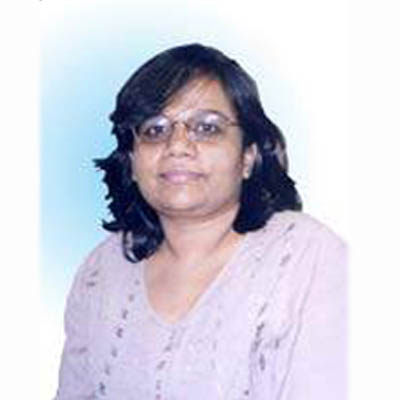
    The new DD director general Supriya Sahu has her task out and she has to decide on whether the broadcaster should take the commercial route or stick to its knitting of public service broadcasting and forget about generating revenues. If it is the latter, then she needs to simply ask for more government funds and improve the quality of public service programmes by retraining its pool of existing in-house talent.

    Industry is watching to see the path she chooses.

    DD officials spoke to indiantelevision.com off the record after the story was published. This is what they said: “Those who sent in names for bidding were disqualified on some ground or other as they failed to fulfil the rules and regulations for the auctions. The auctions have not been cancelled, but suspended for the present.The Prasar Bharati Board will meet on 26 July where it will take further decisions on the matter – this may include some changes in rules and regulations.”

    (Updated on 20 July 2016 3:26 pm)

  • TRAI issues paper on mobile TV, opening up DTT to pvt players; lists advantages over analog transmission

    TRAI issues paper on mobile TV, opening up DTT to pvt players; lists advantages over analog transmission

    NEW DELHI: Digital Terrestrial Transmission (DTT), which has until now remained a monopoly of the public broadcaster Doordarshan, is set for being opened up to private players in an effort to reach the largest audiences in the country.

    Similarly, the mobile TV, hanging fire for some years now in an on-off mode with policy-makers and regulators, too could become a reality.

    The Telecom Regulatory Authority of India (TRAI) today issued a consultation paper on DTT and mobile TV, asking stakeholders to respond by 22 July, 2016 with counter-comments by 5 August, 2016.

    Indiantelevision.com had earlier reported that the government was in the final stages of this exercise. Later, the website had also quoted Prasar Bharati Chief Executive Officer Jawhar Sircar as saying that the pubcaster was not afraid of possible entry of private players.

    DD, which presently has exclusive domain over terrestrial broadcasting, is ranked amongst the world’s largest terrestrial television networks. It has a network of 1,412 analog transmitters that provide TV services through two national channels namely, DD National and DD News.

    In addition to this, the DD network also broadcast several regional TV channels over the terrestrial network in a time sharing mode to meet the local and regional needs of people in different parts of the country. All TV channels provided by DD are free-to-air.

    India’s regulator, in its latest consultation paper, has sought feedback from stakeholders regarding DTT and mobile TV primarily on the following issues:

    Q.1 Do you perceive the need for introduction of DTT in presence of multiple broadcasting distribution platforms?

    Q.2 If yes, what should be the appropriate strategy for DTT implementation across the country?

    Q.3 Should DTT be opened for participation by the private players?

    Q.4 What should be the approach for implementing DTT network (MFN/SFN/Hybrid)?

    Q.5 What should be the criteria for arriving at optimum size of DTT multiplex at any location?

    Q.6 How many digital multiplex per DTT operator should be planned for metro, major cities, urban and rural areas and why?

    Q.7 What should be most appropriate frequency band as per National Frequency Allocation Plan 2011 for implementation of Digital 32 terrestrial transmission including mobile TV?

    Q.8 Should spectrum be exclusively earmarked for roll out of DTT services? If so, what should be the quantum considering the broadcasting sector requirement in totality?

    Q.9 What should be the roadmap for digitization of terrestrial TV network in the country?

    Q.10 What should be the analog switch off date(s) for the terrestrial TV channels in context with the suggested roadmap for DTT implementation?

    DTT for broadcasting TV programme services was first introduced in the UK in 1998 by deploying the first generation DVB-T standard developed by the European Digital Video Broadcasting (DVB) group.

    Since then, TRAI says, many new standards have evolved and at this juncture implementation of the second generation standards are underway. The DTT broadcasting spectrum has been harmonized with earlier analog spectrum allocation and therefore DTT makes use of similar analog channel allocations.

    Latest DTT technologies provide a number of advantages over analog terrestrial broadcasting technology. The main amongst them are the following:

    — Better quality TV reception

    — Efficient use of frequency (one DTT transmitter can broadcast multiple TV channels)

    —Possible frequency reuse

    — TV channels can also be received on mobile phones and handheld devices

    — The 7 or 8 MHz TV frequency band can accommodate 10-12 Standard Definition (SD) TV channels or it can be employed as a data pipe to deliver different type of services including radio services.

    — A DTT platform is flexible and content format agnostic as newer formats of TV channels such as HD TV, 3D TV, UHD TV, data and radio services, etc. can be delivered with reduced transmission power requirements.

    —Subsequent digitization also allows for government bodies to reclaim spectrum and repurpose it.

    Analog terrestrial broadcasting has several limitations including transmission being susceptible to Radio Frequency (RF) interference resulting in poorer reception quality; spectrally inefficient as more spectrums per TV channel is required and frequency reuse is limited, apart from other drawbacks.

    Quoting a recent global research report that studied DTT in 138 countries, including India, TRAI says in its paper the global digital TV penetration at the end of 2015 stands at 74.6 percent with 1170 million digital TV households in the world. There are 261.9 million analog terrestrial TV and 252 million DTT TV households. DTT households comprise 239.4 million FTA DTT and 12.6 million pay DTT households globally. Between 2010 and 2015, about 584 million digital TV homes were added, out of which 156 million came primarily from DTT, TRAI stated quoting the report.

    While admitting that many other countries have laid down clear roadmaps to switch-off analog terrestrial TV transmission with a transition to DTT, TRAI points out in India a clear roadmap is unavailable, though work for changeover from analog to digital terrestrial transmission by DD has already commenced.

    The full consultation paper of TRAI on this issue could be accessed at http://www.trai.gov.in/WriteReaddata/ConsultationPaper/Document/Consultation_Paper_24_june_2016.pdf.

  • TRAI issues paper on mobile TV, opening up DTT to pvt players; lists advantages over analog transmission

    TRAI issues paper on mobile TV, opening up DTT to pvt players; lists advantages over analog transmission

    NEW DELHI: Digital Terrestrial Transmission (DTT), which has until now remained a monopoly of the public broadcaster Doordarshan, is set for being opened up to private players in an effort to reach the largest audiences in the country.

    Similarly, the mobile TV, hanging fire for some years now in an on-off mode with policy-makers and regulators, too could become a reality.

    The Telecom Regulatory Authority of India (TRAI) today issued a consultation paper on DTT and mobile TV, asking stakeholders to respond by 22 July, 2016 with counter-comments by 5 August, 2016.

    Indiantelevision.com had earlier reported that the government was in the final stages of this exercise. Later, the website had also quoted Prasar Bharati Chief Executive Officer Jawhar Sircar as saying that the pubcaster was not afraid of possible entry of private players.

    DD, which presently has exclusive domain over terrestrial broadcasting, is ranked amongst the world’s largest terrestrial television networks. It has a network of 1,412 analog transmitters that provide TV services through two national channels namely, DD National and DD News.

    In addition to this, the DD network also broadcast several regional TV channels over the terrestrial network in a time sharing mode to meet the local and regional needs of people in different parts of the country. All TV channels provided by DD are free-to-air.

    India’s regulator, in its latest consultation paper, has sought feedback from stakeholders regarding DTT and mobile TV primarily on the following issues:

    Q.1 Do you perceive the need for introduction of DTT in presence of multiple broadcasting distribution platforms?

    Q.2 If yes, what should be the appropriate strategy for DTT implementation across the country?

    Q.3 Should DTT be opened for participation by the private players?

    Q.4 What should be the approach for implementing DTT network (MFN/SFN/Hybrid)?

    Q.5 What should be the criteria for arriving at optimum size of DTT multiplex at any location?

    Q.6 How many digital multiplex per DTT operator should be planned for metro, major cities, urban and rural areas and why?

    Q.7 What should be most appropriate frequency band as per National Frequency Allocation Plan 2011 for implementation of Digital 32 terrestrial transmission including mobile TV?

    Q.8 Should spectrum be exclusively earmarked for roll out of DTT services? If so, what should be the quantum considering the broadcasting sector requirement in totality?

    Q.9 What should be the roadmap for digitization of terrestrial TV network in the country?

    Q.10 What should be the analog switch off date(s) for the terrestrial TV channels in context with the suggested roadmap for DTT implementation?

    DTT for broadcasting TV programme services was first introduced in the UK in 1998 by deploying the first generation DVB-T standard developed by the European Digital Video Broadcasting (DVB) group.

    Since then, TRAI says, many new standards have evolved and at this juncture implementation of the second generation standards are underway. The DTT broadcasting spectrum has been harmonized with earlier analog spectrum allocation and therefore DTT makes use of similar analog channel allocations.

    Latest DTT technologies provide a number of advantages over analog terrestrial broadcasting technology. The main amongst them are the following:

    — Better quality TV reception

    — Efficient use of frequency (one DTT transmitter can broadcast multiple TV channels)

    —Possible frequency reuse

    — TV channels can also be received on mobile phones and handheld devices

    — The 7 or 8 MHz TV frequency band can accommodate 10-12 Standard Definition (SD) TV channels or it can be employed as a data pipe to deliver different type of services including radio services.

    — A DTT platform is flexible and content format agnostic as newer formats of TV channels such as HD TV, 3D TV, UHD TV, data and radio services, etc. can be delivered with reduced transmission power requirements.

    —Subsequent digitization also allows for government bodies to reclaim spectrum and repurpose it.

    Analog terrestrial broadcasting has several limitations including transmission being susceptible to Radio Frequency (RF) interference resulting in poorer reception quality; spectrally inefficient as more spectrums per TV channel is required and frequency reuse is limited, apart from other drawbacks.

    Quoting a recent global research report that studied DTT in 138 countries, including India, TRAI says in its paper the global digital TV penetration at the end of 2015 stands at 74.6 percent with 1170 million digital TV households in the world. There are 261.9 million analog terrestrial TV and 252 million DTT TV households. DTT households comprise 239.4 million FTA DTT and 12.6 million pay DTT households globally. Between 2010 and 2015, about 584 million digital TV homes were added, out of which 156 million came primarily from DTT, TRAI stated quoting the report.

    While admitting that many other countries have laid down clear roadmaps to switch-off analog terrestrial TV transmission with a transition to DTT, TRAI points out in India a clear roadmap is unavailable, though work for changeover from analog to digital terrestrial transmission by DD has already commenced.

    The full consultation paper of TRAI on this issue could be accessed at http://www.trai.gov.in/WriteReaddata/ConsultationPaper/Document/Consultation_Paper_24_june_2016.pdf.

  • DTT could be thrown open for pvt sector companies

    DTT could be thrown open for pvt sector companies

    NEW DELHI: The Indian government is exploring possibilities of throwing open the digital terrestrial transmission or DTT services for private sector participation.

    Broadcast carriage and telecoms regulator TRAI is poised to start a public consultation in this regard soon.

    Presently, terrestrial transmission, analogue or digital, is a monopoly game with India’s pubcaster Doordarshan being the only player.

    A senior level source in Ministry of Information & Broadcasting (MIB) admitted that in near future DTT could see involvement of private sector companies as seen in the area of cable and satellite broadcasting.

    The MIB source also pointed out that in this connection TRAI has already been consulted and the regulator is in the process of fine-tuning a background paper on DTT that will form part of the consultation with industry stakeholders.

    Some of the issues that could be put up for discussion include whether it’s correct in this age of fast-evolving technology to keep DTT a playing arena for only DD; whether DTT services with private sector involvement would be in an encrypted or unencrypted form and technologies to be used.

    Quite a few Asian countries like Hong Kong, Thailand and Singapore — considered more sophisticated media markets in terms of ARPUs in comparison to India — have private sector companies providing DTT services.

    According to ViaSat magazine, telco PCCW, for example, in Hong Kong recently announced launch of a new set-top box (STB) that will be an all-in-one, 4K-ready device providing IPTV, DTT and over-the-top (OTT) services to subscribers.

    However, it must be remembered that even if TRAI comes out with a consultation paper on DTT and finally recommends that private sector companies be allowed to provide DTT services, along with DD, the final say on the matter would be with MIB.

    In an earlier story Indiantelevision.com had reported that DD, one of the largest broadcasting organisations in the world in terms of the studios and transmitters, has commenced DTT services in 16 cities.

    DD move to also replace its analogue transmitters with digital transmitters will allow up to 8 channels to be carried from a single transmitter.

    Interestingly, while listing the many advantages of DTT services, Doordarshan on its website points out that “DTT secures greater plurality in Platform ownership, ensuring that no single platform owner is so powerful that they can exert undue influence on public opinion or political agendas.”

    ALSO READ:

    Doordarshan launches Mobile TV in India, needs no internet

    http://www.indiantelevision.com/television/tv-channels/terrestrial/doordarshan-launches-mobile-tv-in-india-needs-no-internet-160404

    DD moving to digitisation through Freedish and DTT: Rathore

    http://www.indiantelevision.com/regulators/i-and-b-ministry/dd-moving-to-digitisation-through-freedish-and-dtt-rathore-141202


  • DTT could be thrown open for pvt sector companies

    DTT could be thrown open for pvt sector companies

    NEW DELHI: The Indian government is exploring possibilities of throwing open the digital terrestrial transmission or DTT services for private sector participation.

    Broadcast carriage and telecoms regulator TRAI is poised to start a public consultation in this regard soon.

    Presently, terrestrial transmission, analogue or digital, is a monopoly game with India’s pubcaster Doordarshan being the only player.

    A senior level source in Ministry of Information & Broadcasting (MIB) admitted that in near future DTT could see involvement of private sector companies as seen in the area of cable and satellite broadcasting.

    The MIB source also pointed out that in this connection TRAI has already been consulted and the regulator is in the process of fine-tuning a background paper on DTT that will form part of the consultation with industry stakeholders.

    Some of the issues that could be put up for discussion include whether it’s correct in this age of fast-evolving technology to keep DTT a playing arena for only DD; whether DTT services with private sector involvement would be in an encrypted or unencrypted form and technologies to be used.

    Quite a few Asian countries like Hong Kong, Thailand and Singapore — considered more sophisticated media markets in terms of ARPUs in comparison to India — have private sector companies providing DTT services.

    According to ViaSat magazine, telco PCCW, for example, in Hong Kong recently announced launch of a new set-top box (STB) that will be an all-in-one, 4K-ready device providing IPTV, DTT and over-the-top (OTT) services to subscribers.

    However, it must be remembered that even if TRAI comes out with a consultation paper on DTT and finally recommends that private sector companies be allowed to provide DTT services, along with DD, the final say on the matter would be with MIB.

    In an earlier story Indiantelevision.com had reported that DD, one of the largest broadcasting organisations in the world in terms of the studios and transmitters, has commenced DTT services in 16 cities.

    DD move to also replace its analogue transmitters with digital transmitters will allow up to 8 channels to be carried from a single transmitter.

    Interestingly, while listing the many advantages of DTT services, Doordarshan on its website points out that “DTT secures greater plurality in Platform ownership, ensuring that no single platform owner is so powerful that they can exert undue influence on public opinion or political agendas.”

    ALSO READ:

    Doordarshan launches Mobile TV in India, needs no internet

    http://www.indiantelevision.com/television/tv-channels/terrestrial/doordarshan-launches-mobile-tv-in-india-needs-no-internet-160404

    DD moving to digitisation through Freedish and DTT: Rathore

    http://www.indiantelevision.com/regulators/i-and-b-ministry/dd-moving-to-digitisation-through-freedish-and-dtt-rathore-141202


  • Kisan Channel equipment yet to be acquired: Jaitley

    Kisan Channel equipment yet to be acquired: Jaitley

    NEW DELHI: The equipment required for a full fledged studio production for Kisan Channel under ccomponent is yet to be procured and is at various stages of procurement, , Information and Broadcasting minister Arun Jaitley said today.

    Although the question of roll out of Kisan Channel was mainly dependent on selection of suitable content and not technical equipment, interim technical facilities were set up at Central Production Centre (CPC), Delhi to meet the minimum functional requirement for launching the new channel as it was to be launched in a short time.

    The interim technical setup, broadly meeting the requirement of studio production, electronic news gathering (ENG) production, post-production and play-out was arranged from the existing technical facilities available at CPC Kendra as well as through diversion from other Kendras in the network. 

    DD Kisan Channel was launched on 25 May last year by prime minister Narendra Modi as the first programme taking place on the commencement of the second year of the National Democratic Alliance Government.

  • Kisan Channel equipment yet to be acquired: Jaitley

    Kisan Channel equipment yet to be acquired: Jaitley

    NEW DELHI: The equipment required for a full fledged studio production for Kisan Channel under ccomponent is yet to be procured and is at various stages of procurement, , Information and Broadcasting minister Arun Jaitley said today.

    Although the question of roll out of Kisan Channel was mainly dependent on selection of suitable content and not technical equipment, interim technical facilities were set up at Central Production Centre (CPC), Delhi to meet the minimum functional requirement for launching the new channel as it was to be launched in a short time.

    The interim technical setup, broadly meeting the requirement of studio production, electronic news gathering (ENG) production, post-production and play-out was arranged from the existing technical facilities available at CPC Kendra as well as through diversion from other Kendras in the network. 

    DD Kisan Channel was launched on 25 May last year by prime minister Narendra Modi as the first programme taking place on the commencement of the second year of the National Democratic Alliance Government.

  • DD’s programme acquisition spends over Rs 108 crore  for 2015-16

    DD’s programme acquisition spends over Rs 108 crore for 2015-16

    NEW DELHI: Doordarshan, which is now working on a plan to auction prim time slots, spent over Rs 108.5 crore in acquiring programmes in 2015-16. The pubcaster had spent just over Rs 71 crore in 2014-15 and a little above Rs 96.52 crore in 2013-14.

    Prasar Bharati sources told indiantelevision.com that its board had advised DD to proceed with an alternative policy by opening-up prime slots for sale in its 127th meeting on 17 June 2015.

    Doordarshan sources said it was anticipating higher side of revenues from sale of slots. Accordingly, DD proposed a slot sale policy, so that genuine external and creative professionals could mount their programmes on DD Channels through slot purchase. In this scheme DD would stop financing production through “Pay Out” modes and instead have revenue assurance in the form of a slot fee.

    The policy envisages that producers are made stake holders in the scheme. They would invest in the content and recover the same from the market through sale of associated commercial time. In such a situation, market forces would ensure that high quality standards were maintained for the content mounted.

    Sale of slots could provide a platform to DD to partner with the best content developers for improved viewership and financial health. 

  • DD’s programme acquisition spends over Rs 108 crore  for 2015-16

    DD’s programme acquisition spends over Rs 108 crore for 2015-16

    NEW DELHI: Doordarshan, which is now working on a plan to auction prim time slots, spent over Rs 108.5 crore in acquiring programmes in 2015-16. The pubcaster had spent just over Rs 71 crore in 2014-15 and a little above Rs 96.52 crore in 2013-14.

    Prasar Bharati sources told indiantelevision.com that its board had advised DD to proceed with an alternative policy by opening-up prime slots for sale in its 127th meeting on 17 June 2015.

    Doordarshan sources said it was anticipating higher side of revenues from sale of slots. Accordingly, DD proposed a slot sale policy, so that genuine external and creative professionals could mount their programmes on DD Channels through slot purchase. In this scheme DD would stop financing production through “Pay Out” modes and instead have revenue assurance in the form of a slot fee.

    The policy envisages that producers are made stake holders in the scheme. They would invest in the content and recover the same from the market through sale of associated commercial time. In such a situation, market forces would ensure that high quality standards were maintained for the content mounted.

    Sale of slots could provide a platform to DD to partner with the best content developers for improved viewership and financial health. 

  • DD modernisation cost over 3 years was Rs 383 crore

    DD modernisation cost over 3 years was Rs 383 crore

    NEW DELHI: A sum of Rs 382.88 crore has been spent by Doordarshan to digitize and modernize its infrastructure over the last three years.

    In 2013-14, Doordarshan spent Rs 159.81 crore though the sum allocated was Rs 156.01 crore, while in 2014-15, it spent Rs 153.37 crore out of the Rs 155 allocated. In 2015-16, DD spent a provisional Rs 69.7 crore out of the Rs 191.50 allocated.

    Modernization/upgradation of studios, transmitters and satellite broadcast equipment that are at various stages of implementation in under the 12th Plan are: Digitalization of transmitters and studios in Doordarshan network, including adoption of digital video broadcasting (DVB)-T2 technology; High definition television (HDTV); Modernization, augmentation and replacement of transmitter and studio equipment; Modernization, augmentation and replacement of satellite broadcast equipment.

    Giving details, DD sources said that all the 39 Studios have been made digital (except Camera chains). The purchase proposal for procurement of Camera chains has been submitted for financial sanction.

    Of the 53 digital transmitters, 16 digital transmitters (HPTs) have been commissioned in the first phase from 25 February and another 3 digital HPTs have been installed and are under testing. Action for setting up of remaining 44 digital transmitters in the next phase has been initiated and expected to be setup in about 2 years.

    All the four HDTV transmitters at four metro locations have been installed and ready for commissioning. The HD Studio at Delhi and Mumbai has been set up. Action for setting up HD Studio at Chennai and Kolkata has been initiated.

    Referring a question about multi camera mobile production facility in HDTV format, DD sources said two were supplied at Delhi and Mumbai. For the third, tenders received earlier have been cancelled on technical considerations and fresh notice inviting tenders is being issued.

    A total of 13 ageing HPTs have been replaced by new HPTs. At two other locations, installation of transmitter equipment has been completed and is under testing.

    All equipment envisaged as part of 11th Plan schemes have been provided, except Camera chains which are under procurement. Equipment envisaged as part of 12th Plan new schemes are at various stages of procurement.

    Out of 18 earth stations, one has been upgraded. At four locations, all earth station equipment except RF equipment (which has been ordered) have been installed and tested. At the remaining 13 locations, specifications of equipment are under finalization.

    New earth stations have been set up at four places. For the remaining one, tenders have been opened for part of the earth station equipment and under evaluation.