Tag: DD Freedish

  • Did govt pressure nudge ABS-2 to shutter Indian TV channels on FTA DTH service?

    Did govt pressure nudge ABS-2 to shutter Indian TV channels on FTA DTH service?

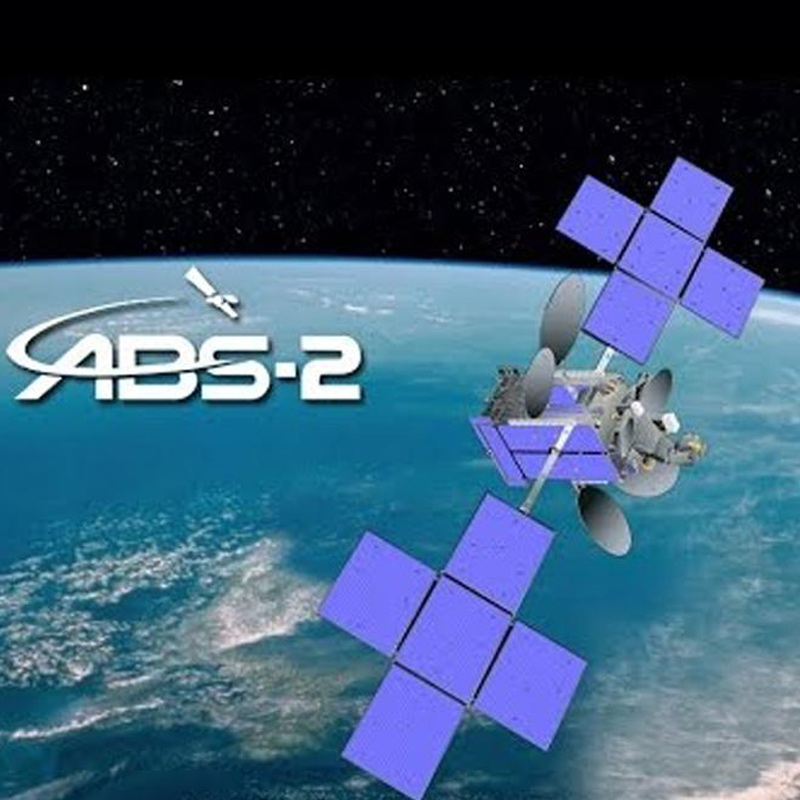
    NEW DELHI: ABS has closed the doors from 1 May 2018 on Indian TV channels that were using the ABS-2 satellite-beamed FTA Ku-band platform. Apparent reason: Indian government pressure on local TV channels to stop using the ‘unlicenced’ platform that discouraged payment of carriage fee to the satellite operator, which was the origin of the business.

    The Bermuda-registered satellite operator’s ABS-2 signals — hosting on its South Asian beam a Nepalese and a Bangladeshi DTH services licenced in their respective countries — have been spilling over into India and a mix of Indian, Nepalese and Bangladeshi TV channels were available to Indians as a FTA service that was accessed via some plain vanilla hardware (read set-top boxes and antennae) at a nominal cost.

    On being petitioned by Indian distribution platforms, Ministry of Information and Broadcasting (MIB) in 2017 had asked Department of Space (DoS) to block the “unauthorised” DTH or KU-band ABS-2 service on the grounds of possible threat to national security — an allegation that was refuted by ABS citing international laws of ITU.

    Finally, when ABS took the decision to shut the doors on the Indian TV channels, there were 90 of them, mostly beaming content in non-Hindi Indian languages. These channels were using the FTA Ku-band platform to reach not only Indian audiences in southern and eastern parts of India but, probably, also those in Nepal and Bangladesh for additional eyeballs. Eyeballs meant advertising revenue for these TV channels.

    ABS last year had refuted Indian government charges saying “natural spillover” of satellite signals into neighbouring countries, outside the service area of the countries offering licensed DTH services, but falling within the coverage area of the satellite, was in “full compliance” of ITU provisions.

    With ABS discontinuing the Indian TV channels, Reliance Big TV (sold by Anil Ambani’s Reliance Communications to new investors) FTA DTH service yet to fully bloom and Doordarshan’s FreeDish platform locked in a policy logjam, free to air platforms and low-cost television viewing for people in the Indian hinterland seem to have run into air turbulence.

    According to industry experts, Indian hardware companies had devised a way to have two LNBs (low-noise box) in one single DTH antenna that was capable of receiving both ABS-2 and DD FreeDish services, resulting in sizable popularity of these two platforms that were accessed via a low-cost hardware. This was unlike the full-fledged subscription-based DTH services made available by the likes of Tata Sky, Dish TV, Videocon d2h and Sun TV.

    Also Read :

    Block illegal DTH FTA, space dept told

    Could India blocking ABS’ FTA TV signals lead to breach of ITU norms?

    Boeing delivers ABS-2A to optimise video services, DTH

  • Tata Sky, Airtel DTH gain market share in 2017

    Tata Sky, Airtel DTH gain market share in 2017

    BENGALURU: Tata Sky and Airtel Digital TV (Airtel DTH) have reason to rejoice as they saw market share rise in calendar year 2017 as compared to a year ago. Both saw an increase by one per cent each at the end of December 2017 as compared to at the end of December 2016 according to Telecom Regulatory Authority of India (TRAI) data.

    Tata Sky had 24 per cent market share at the end of 2017 (CY-2017) as compared to 23 per cent at the end of 2016 (CY-2016), while Airtel DTH had 21 per cent share as compared to 23 per cent during the same period. Hence, the market share of Tata Sky and Dish TV, which lost one per cent market share in 2017, was the same. The other player that lost market share was Videocon d2h – its market share fell by a percentage point to 19 per cent in 2017 as compared to 20 per cent in 2016. 

    We had mentioned earlier that the share of the three major players whose numbers are available in the public  domain –(in order of number of subscribers – Dish TV, Airtel DTH and Videocon d2h) has been declining –  from about 65 per cent to 64 per cent in the Jun-Sep17 quarter to an even lower 63 per cent in the Oct- Dec 2017 quarter. 

    Please refer to the market shares of the six private DTH players at the end of 2017 and 2016 according to TRAI data:

    public://pic_1.jpg

    According to TRAI data, the overall private DTH active subscriber base grew by 4.19 million or 0.419 crore (7.8 per cent) in CY-2017 to 67.56 million or 6.756 crore from 62.65 million or 6.256 crore in CY- 2016. Comparatively, in 2016, the overall private DTH active subscriber base grew by 6.67 million or 0.667 crore (11.9 per cent) from 55.98 million or 5.598 crore in CY- 2015.

    As also mentioned by us earlier, quarterly data released by TRAI indicates that the industry added net 2.25 million or 0.225 crore subscribers for the quarter ended 31 December 2017 (Oct-Dec17 quarter), hence the final quarter of CY-2017 accounted for about 46 per cent of the net subscribers added during the year. The Oct-Dec17 quarter had the highest quarter-on-quarter pay-TV DTH subscriber growth in CY- 2017 at 3.45 per cent.

    We’d said that CY-2017 saw muted pay-TV DTH subscriber growth. Those numbers were based on the results declared by the above mentioned three private DTH players.

    It must also be mentioned that the government’s FreeDish DTH service is the largest DTH player by far in terms of subscribers with an estimated 22 million or 2.2 crore subscribers in 2016 as per the KPMG-FICCI Indian Media and Entertainment Industry Report 2017 (KPMG-FICCI M&E Report 2017) titled Media for the Masse: The Future Unfolds. It must however be noted that an exact number for registered or active subscribers is not available since this is a free DTH service. Also, the merger of Videocon d2h with Dish TV has created the largest private television carriage player in India and quite likely the second largest in the world, be it cable, internet television or DTH or any other.

  • Oct-Dec quarter sees highest pay TV DTH subscriber growth in 2017

    Oct-Dec quarter sees highest pay TV DTH subscriber growth in 2017

    BENGALURU: After the debacle created by demonetisation in November 2016 and then the implementation of the new Goods and Services Tax regime in July 2017, the fortunes of the pay TV direct-to-home (DTH) industry seem to be improving in terms of subscriber addition. Quarterly data released by the Telecom Regulatory Authority of India (TRAI) indicates that the industry added net 22.5 lakh (2.25 million) subscribers for the quarter ended 31 December 2017 (October to December17 quarter). Throughout the calendar year 2017 (CY-2017), the industry had added 49.1 lakh (4.91 million subscribers), hence the final quarter of CY-2017 accounted for about 46 percent of the net subscribers added during the year.The Oct-Dec17 quarter had the highest quarter-on-quarter pay-TV DTH subscriber growth in CY-2017 at 3.45 percent. The number of active pay-TV DTH subscribers in India as per TRAI data as on 31 December 2017 was 675.6 lakh or 67.56 million as compared to 653.1 lakh (65.31 million) in the Jun-Sep17 quarter.

    As mentioned by us earlier, CY-2017 saw muted pay-TV DTH subscriber growth. Those numbers were based on the results declared by three private DTH players whose numbers are available in the public domain. They are: Indian telecom major Bharti Airtel’s Airtel Digital TV (Airtel DTH), the Essel group’s Dish TV and Videocon d2h. The other three private pay-TV players during a part of CY-2017 were Tata Sky, the Sun TV Network’s Sun Direct and Reliance Big TV. It may be noted that Reliance Big TV has been acquired by Pantel Technologies and Veecon Media. Normal operations have to recommence as yet. A number of Big TV customers were acquired by other players and the true status of its operations and current subscriber numbers are still unclear at the time of writing of this paper. Furthermore, the merger of Videocon d2h into Dish TV has been recently concluded, and the combined entity has the second largest pay-TV subscriber base in the world.

    Be that as it may, the share of the three major players in the Oct-Dec17 quarter (in order of number of subscribers–Dish TV, Airtel DTH and Videocon d2h) has been declining from about 65 percent to 64 percent in the Jun-Sep17 quarter to an even lower 63 percent in the Oct-Dec17 quarter. It may be noted that Tata Sky subscriber base could be higher than Airtel’s subscriber base. Tata Sky data is not available in the public domain, and hence this cannot be verified or neglected.

    Besides the six private pay DTH players, Doordarshan’s (DD) FreeDish DTH service is a major player in terms of subscribers with an estimated 2.2 crore as per the numbers available in the public domain. It must, however, be noted that an exact number of registered or active subscribers is not available even with DD since this is a free DTH service.According to an E&Y report titled ‘India’s Free TV’ released in July 2017, among the DTH operators in India DD FreeDish has grown to become the largest with its estimated 2.2 crore subscribers which E&Y predicted could cross 4 crore over the next two to three years.

    Please refer to the figure below for the trends of pay-TV subscribers based on TRAI data and the numbers published by the three players in the public domain. Q-o-q growth for the Jan-Mar16 quarter cannot be compared with the Oct-Dec15 quarter since TRAI changed the way it measured active DTH subscribers in the Jan-Mar16 quarter.

    public://gr_0.jpg

    Also Read :

    DTH adds 14 lakh active subscribers in Q2-17 as per TRAI data

    DTH subscriber growth muted in CY-2017

    DTH subscriber growth down in second quarter

  • DTH subscriber growth muted in CY-2017

    DTH subscriber growth muted in CY-2017

    BENGALURU: DAS, especially phases 3 and 4, was supposed to be a great growth opportunity for television direct-to-home (DTH) service providers. Has that been the case? Not if one were to go by data released by the Telecom Regulatory of India (TRAI) and three of the six private DTH players in India.

    The status quo
         
    At present, there are six private pay-TV players (five active in the true sense of the word) and one government free-TV player DD FreeDish. The five players are: Airtel Digital TV or Airtel DTH, Dish TV, Sun Direct, TataSkyand Videocon DTH–the sixth player being Reliance Digital TV or Big TV.

    Reliance Big TV has been acquired by Pantel Technologies and Veecon Media. Normal operations have to recommence as yet. A number of Big TV customers were acquired by other players and the true status of its operations and current subscriber numbers are still unclear at the time of writing.

    Please refer to the figure below for subscriber share of the six private players at the end of 30 September 2017 (Q2-18 or Q2-2108).

    public://11_0.jpg

    DTH subscriber acquisition seems to have petered down in calendar year 2017 (CY2017, 1 January 2017 to 31 December 2017) as compared with CY 2016. Please refer to the chart below for active subscribers addedas per TRAI data until 30 September 2017 (Q2-2018) and data reported by the three private players – Airtel DTH, Dish TV and Videocon d2h until 31 December 2017. It may be noted that these three players had almost 63 percent share of subscribers according to the above-mentioned Dish TV investor presentation.

    The continuous blue curved line in the chart below represents the total number of net active subscribersaddedfor each quarter – this number has been obtained by deducting the number of active subscribers in a quarter from the number of subscribers in the previous quarter. The combined total number of the three subscribers has been obtained by addition of net subscribers added by each of the three players – Airtel DTH, Dish TV and Videocon d2h – as declared by them in their financial/other releases and presentations. Thesecombined subscriber additions are represented by the continuous maroon line in the figure. The broken grey line represents the percentage of the combined net subscriber additions by the three players of the total subscriber additions as per TRAI data.

    public://2_6.jpg

    The chart below indicates the subscriber base of the three players and all private DTH players as per quarterly data released by TRAI. TRAI data for the October-December 2017 quarter has not been released at the time of writing. Subscriber data for each of the three players mentioned below has been obtained from their respective financial releases and presentations. The numbers have been rounded off to the nearest lakh by the author.

    As is obvious, Dish TV is the biggest player in the country in terms of subscribers followed by Airtel DTH and Videocon d2h in that order. It may be noted that Tata Sky subscriber base could be higher than Airtel’s subscriber base. Tata Sky data is not available in the public domain, and hence this cannot be verified.

    public://3_2.jpg

    Overall, the players are faced with declining monthly average revenue per user (ARPU). In absence of complete ARPU data, the author has taken the liberty to calculate ARPUs of each of the three players by using quarterly operating revenue/subscription revenue of the players and dividing it by the subscriber base at the end of that quarter and then calculating the ARPU per month. Similarly, the quarterly operating/subscription revenues of the three players have been added and then divided by the combined subscriber base of the three players at the end of that quarter and then the average monthly average ARPU has been arrived at. In each case calculated ARPU numbers have been rounded off to the nearest rupee.

    The combined four quarter average monthly ARPU of the three players across four quarters of 2017 has declined by Rs 9 to Rs 183 from Rs 192 in CY-2016. Airtel DTH is the premium player – its four quarter average monthly ARPU in 2017 increased by Rs 2 to Rs 230 from Rs 228 in 2017. Dish TV is a value player, its average declined by Rs 18 in 2017 to Rs 143 from Rs 161 in 2016. Videocon d2h four quarter average monthly ARPU in 2017 declined by Rs 9 to Rs 186 from Rs 195 in 2017. It must be reiterated here that the ARPU numbers mentioned in this paper have been calculated by the author and may vary from the actual numbers. The numbers in the graph below are just indicative numbers.

    public://4_1.jpg

    Besides the six private pay DTH players, FreeDish is a major player in terms of subscribers with an estimated 2.2 crore as per the numbers available in the public domain. It must however be noted that an exact number for registered or active subscribers is not available even with DD, since this is a free DTH service. If and when the announced Dish TV Videocon d2h merger happens, the merged entity will probably be one of the largest DTH players in the world in terms of subscriber numbers.

    According to an E&Y report titled ‘India’s Free TV’ released in July 2017, among the DTH operators in India, FreeDish has grown to become the largest with its estimated 2.2 crore subscribers which E&Y predicted could cross 4 crore over the next two to three years.

    A number of reasons can be attributed to this dismal performance–two of the chief ones that have been touted over the recent past by most players in media and entertainment industry are demonetisation in November 2016 and the implementation of the new GST regime. Given that most of India faced a cash crunch for a few months post demonetisation, money spends for entertainment took the least priority for the common man.Subscriber acquisition seems to have picked up in the April-June 2017 quarter, only to be dampened in the July-September 2017 – the quarter in which the new GST regime was implemented. The glitches of the new GST are slowly being ironed out. In the absence of TRAI data for the October-December 2017 quarter, numbers reported by the three players seem to indicate that DTH subscriber acquisition should have improved. Despite this, it seems unlikely that the industry was able to surpass or even match subscriber growth of CY-2016.

    Another important reason could be that DTH is considered a premium service – by all the stakeholders in carriage ecosystem with the resulting perception that procurement as well as monthly subscription will be premium and hence a deterrent for the consumer. While some players such as Dish TV have been making attempts to come up with packages that it perceives should attract the masses, but, results as per TRAI data seem to indicate otherwise. Yes, Dish TV is the largest private player in the country that has come up with different pricing models under different brands, whether unwittingly or not, most of the other players present themselves as premium players and seem to have done little in that direction.

    Also Read :

    DTH’s year of consolidation

    Recalibrating India’s DTH sector after Airtel DTH-Warburg Pincus deal

    Veecon Media acquires Reliance Big TV

  • Sudhanshu Vats on Viacom18’s growth strategy and why data analytics is key

    Sudhanshu Vats on Viacom18’s growth strategy and why data analytics is key

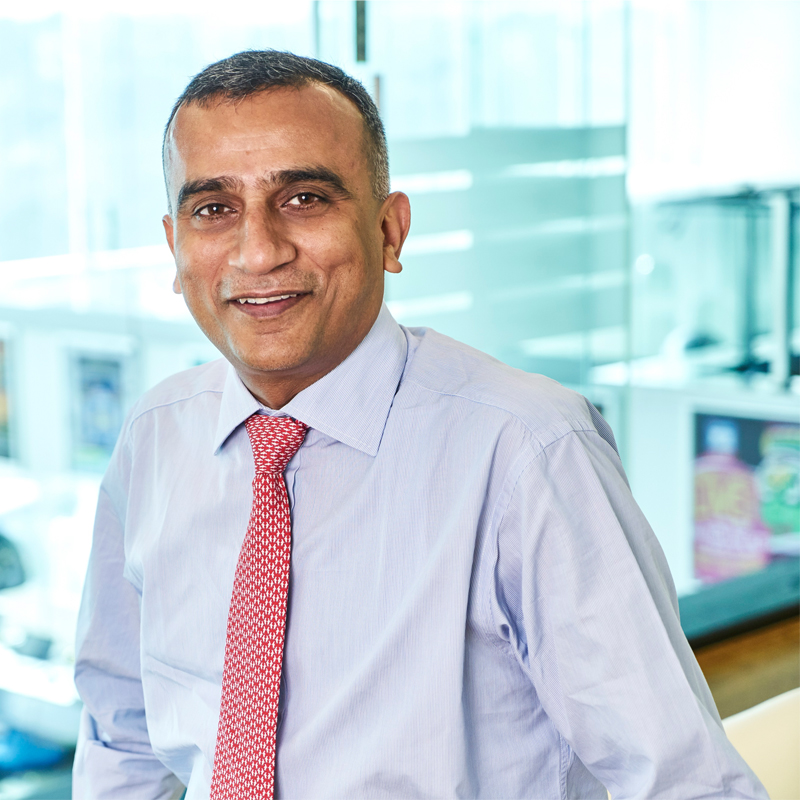
    He goes by many names. The Laundry Man and The Marathon Man being two of the more popular monikers. The second one is self-explanatory given his passion for running, especially marathons of many hues all over the globe. It’s the former one that makes people, sometimes, stop and give a quizzical look. Its origins, according to Unilever folklore, can be traced back to his days at the global FMCG company where he was at the helm of the laundry division in South Asia. But Sudhanshu Vats, group CEO of Viacom18, doesn’t mind the aliases; rather, he refers to them himself, at times—like he did in November at CASBAA Convention 2017 in Macau,where he was featured as a keynote speaker. At the time,Vats explained that running a marathon and running a company had lots in common as they taught one about the importance of planning and breaking down longer plans or goals into shorter milestones.

    Five and a half years into his new role in one of the top media companies of India that is an equal JV between US’ Viacom and Reliance Industries-controlled Network18, Vats is considered a thought-leader within the complex maze of the Indian media and entertainment industryand in government circles. His social media savviness makes him articulate on a range of subjects from media to women empowerment to an individual’s role in the Clean India campaignto the importance of health and fitness.

    In a free-wheeling chat with Indiantelevision.com’s consulting editor AnjanMitra and deputy managing editor Satyam Nagwekar, Vats speaks on a number of issues related to the M&E sector, including the necessity of regulation in India (he sometimes holds contrarian views to the general sectoral outlook of his peers) and why it’s important for a media company to be equally alive to data analytics to derivestrategies.

    Edited excerpts from an interview that took place when he was few days away from completing hisannual tenure as the chairman of BARC India, a joint industry body entrusted with collating audience data in a highly fragmented and, at times, quirky Indian broadcast sector, wherein competition is cut-throat:

    Q: What would be the three major changes in the industry that you have witnessed over the years in the complex M&E industry of India after your switch to the media sector from FMCG?

    A: The first significant development is the entire digitisation of the cable. While digitisation of the signal has happened, allowing (the pipe) to carry more content, addressability needs to improve. Overall cable digitisation has enabled the pipe to carry more content and to improve the viewer experience. The second development is the rise of OTT services; delivering content on demand in addition to the existing linear delivery of content. The third development would be the increasing importance of live and experiential entertainment. The advent of quality multiplexes has certainly made a difference in viewing experience in cinemas. Similarly, in the sphere of live entertainment, experimentation with modern technology has dialed up consumer experience. We have also experimented with theatricals. What happens is that as kids develop a relationship with characters, it allows you to bring those characters alive in different forms outside of television. One can take them outside of television into theatricals, into experiential zones and merchandising.

    I would add a fourth important development and that is the evolution of BARC India. I think the joint industry body that we formed to measure ‘what India watches’ is a significant development. It’s a unique feature that industry bodies have come together for audience measurement in India.

    Q:Are Hindi general entertainment channels (GECs) the largest contributors to the Viacom18 revenue pie?

    A: Yes, they are.

    “About 59-60 per cent of India communicates in regional languages, about 39-40 percent in Hindi, and the balance one per cent in English. This 59 per cent is still under-indexed in viewership. As the viewership catches up with actual consumption, so would monetisation opportunities.

    Q: Keeping in mind what you said, how do you see the market for Viacom18 going forward over the next couple of years?

    A: The GECs will remain an important block (from the point of view of revenues), but I am very bullish on the regional piece, too. I personally feel that regional businesses are gaining traction and will continue to get dialed up significantly in the future. The reason for that is that in television, and arguably in all mediums of television, digital and films, the regional languages have been under-indexed from the point of viewership and monetisation.

    In my opinion,the genesis of this lies in the fact that the erstwhile measurement system was a bit skewed towards the Hindi-speaking urban audiences; perhaps as it too developed along with the cable movement in India in the 1990s, which started with the Hindi-speaking regions. However, in the last decade, language programming in other parts of India, especially South India, has developed considerably. With BARC’s arrival, these markets are being better represented. As we go deeper into India, the regional language play will keep getting dialed up. About 59-60 per cent of India communicates in regional languages, about 39-40 percent in Hindi, and the balance one per cent in English. This 59 per cent is still under-indexed in viewership. As the viewership catches up with actual consumption, so would monetisation opportunities.

    Why do I say this? There is an intuitive understanding — not entirely always incorrect — that the English consuming audience has a higher propensity to spend and that amongst the other language markets, Hindi-speaking markets (HSM), perhaps, have the highest propensity to spend. Equally importantly, regional markets like Tamil Nadu, Karnataka, Andhra Pradesh/ Telengana, Kerala, Maharashtra and Gujarat have higher per capita income (compared to India average) and would therefore have a higher propensity to consume advertising and brands. My hypothesis is that the affinity to one’s mother tongue will remain and India will continue to remain a multi lingual country (most Indians speak at least two languages and in some cases three or more). All three clusters of English, Hindi and regional will grow with regional leading the rate of growth for viewership and monetisation.

    At Viacom18, we will continue to build our portfolio of services in all the three language-clusters mentioned above, while significantly dialing up our regional language clusters. To illustrate this, let me share how our dependence on our flagship Hindi channel Colors is systematically coming down. When I joined Viacom18, we used to get 80 per cent of our ad sales from Colors standard definition channel. That number now is 50 per cent or may be a little lower.

    About 59-60 per cent of India communicates in regional languages, about 39-40 percent in Hindi, and the balance one per cent in English. This 59 per cent is still under-indexed in viewership. As the viewership catches up with actual consumption, so would monetisation opportunities.

    Q: As Colors is the biggest revenue earner, a lot of strategising must be done forprogramming. How do you slice and dice programming for appointment viewing for different parts of India and the HSM?

    A: Not just Colors, but for all our content engines we marry insight to gut in the way we strategise and develop content. At Viacom18, we started an ambitious data science project called Project Pi with the objective to provide information and insights to the users and establish one single version of truth in the company.

    The second leg to this is a free-flowing discussion that we have recently started`Content PeCharcha’ (discussion over content), inspired by PM Modi’s now famous `Chai PeCharcha’ (discussion over tea), primarily with Raj (Nayak, COO, Viacom18), Manisha (Sharma, content head, Colors) and some more team members. These are open sessions where we have a qualitative and free-flowing discussion on both macro content trends and specific current and future programme story arcs.

    Let me give you a couple of examples of how this works. When I joined people said mythologicals/historical dramas don’t work on Colors. But our research suggested that competitors were successfully running them and it was a white space that hadn’t been explored properly at our end. We came up with Ashoka and proved the naysayers wrong. In one of our early meetings, we figured comedy was a white space for us and we should actively explore it. While our first attempt didn’t work, the next one (Comedy Nights with Kapil) created history as it was based on our learning. We then experimented with the crime genre with shows like Code Red and Dev. A Hindi GEC is like a `thali’ (an Indian plate with a variety of food offerings): it needs to have a spread of flavor and taste. Balance, however, is the key to how your audiences perceive the spread to be.

    Q: Has the rise of mythological and historical shows on Viacom18 channels, as well as on other TV channels, increased after 2014 or are we reading too much into it?

    A: I am a firm believer—and I am keep saying it often—that the richness of the Indian culture is reflected a lot in some of our mythological and historical stories. Brilliant evergreen tales like `Ramayan’ and `Mahabharat’ can be told over and over again but there are so many other stories that need to be taken to the audiences. If you look at some of our mythological stories, India has long been telling superhero stories—both of superwomen and supermen. But to answer your question, yes there has been a definite rise in these stories (on TV channels) post 2014.

    “My assumption is that over the next five years, India will follow China’s example and 10 per cent of all internet video consumers will move behind a pay wall. Once this happens, it will create both advertising and subscription economies at scale.

    Q: Hanuman probably was the first super hero and remains till day one. Agree?

    A: Precisely. I personally feel that these are stories that lend themselves well to a variety of interpretations. Moving forward, production quality can make our stories richer and give the consumers a better experience.

    Q. Is the digital venture VOOT making money?

    A: If you are asking if we are monetising VOOT, then yes we do have a fair number of advertising brands on VOOT. But having said that, I’d say we, like most consumer digital businesses, have substantial distance to cover in our monetisation journey. 

    The digital VoD space is one that requires an extended gestation period for investment. Today there are300 million Indians consuming video on the internet. That number is poised to touch 600-700 million in the next three to five years time.Further, my assumption is that over the next five years, India will follow China’s example and 10 per cent of all internet video consumers will move behind a pay wall. Once this happens, it will create both advertising and subscription economies at scale.

    Q: So, is VOOT targeting 10 per cent of subs behind a pay wall in, say, three years’ time?

    A: Absolutely. Maybe, even more. We are planning to launch the subscription service of VOOT early next fiscal.

    India is a price sensitive market and, unlike the West, we do not have the price arbitrage advantage between cable and VoD. In the US, Netflix disrupted the market with its offering at USD8-10 versus a monthly cable bill of USD80-100. In India, we still get 300 channels at Rs 200-250 making linear television the economical entertainment option. But having said that, I believe the right pricing for data and content will continue to drive VoD in India. I think, it is fair to assume that the range of pricing for subscription VoDin India lies between USD 1-3 to begin with.

    Q: So you are working on a price model that is between USD 1-3/sub/month in India?

    A: Yes. If you want to look at large numbers, you need to keep prices competitive in India.USD 3 is approximately Rs 200, but it will also depend on how many people you want at what price and that will be determined on the price volume elasticity study underway.

    public://Sudhanshu V1.jpg

    Q: Does it help for a content owner and producer like Viacom18 to also have a group company like Reliance Jio, which is a platform that is practically giving data free to consumers?

    A: There are clear synergies and we complement each other.

    Q: Have you ruled out sports altogether?

    A: The business of sports,particularly cricket,is a high-investment and long-gestation game. In our current scheme of things,such an investment can be better utilised in a host of other opportunities and, hence, we are not looking at sports as of now.

    Q: What are your views on the evolution of BARC India and that some of the audience data and methodology has been questioned by some industry players?

    A: BARC has made a promising start. The measurement is clearly more robust, transparent and objective. The sample size has already been dialed up to 32k (almost four times the size of the erstwhile measurement system). We plan to further grow the sample size to 40k by next year and even further in the years to come.

    The sample has also become broader,holistic and reflects more accurately what India watches. Even rural consumption and regional languages are getting represented in a better way. The fidelity of data has improved considerably and tent-pole events on television — from a big TV channel launch to a new program introduction and all the way to an important news break event in an hour — are captured and show up with a very prominent spike. The areas where more work needs to be done by all stakeholders are the measurement of niche channels by BARC and management of volatility as high fidelity brings high volatility.

    The initiatives like return path data and premium panel will help improve the measurement of niche channels.

    Q: When is BARC likely to rollout digital measurement?

    A: BARC is in the process of getting all stakeholders aligned for rollout of digital measurement. There are debates around all digital players being a part of the measurement, equitable methods/process used for data capturing from all players and the more holistic India stack/dmp for representation and publishing of the data. All the stakeholders at BARC are debating these issues and the timeframe of publishing digital data will depend on the speed of alignment and approach taken by the stakeholders. Until these issues are resolved, it would be premature to commit to a timeline.

    Q: What is your take on net neutrality?

    A: It is quite a nuanced subject. My broad take is that NN is essential and net should be as neutral as possible because that’s in the best interest of a functional democracy. Essential services, depending upon the evolution of our society, will need to be looked at differently. In years to come, the internet would be a basic requirement for day to day life and therefore net neutrality is an imperative to offer equal opportunity to everybody.

    Q: What about legal and illegal content as the latter results in revenue losses for content owners like Viacom18?

    A: The issue of piracy is entirely different, and another elaborate subject on its own. Illegal content is a big challenge for any content owner. Piracy is a complex topic where different stakeholders need to play a part. My view is clear: illegal content should not be made available, but then enforcement is not always that easy. Having said that, consumers too are not clear on legal and illegal content when it comes to the digital world, at times. In my view piracy should be tackled through a three-pronged approach of legislation, enforcement and consumer awareness. In addition, if content is made available to consumers at competitive price points, it would be a big deterrent to piracy and, business models permitting, arguably the most effective way to tackle this menace.

    “Technology is causing disruptions almost daily and resultantly the very definition of a media company is changing. For any regulator anywhere in the world or any government, it is a challenge to keep abreast or even keep pace with such changes. As we move forward, we will need to evolve a mechanism where there is greater participation from all stakeholders.

    Q. Do you think powerful lobbies like global video-streaming services can have a bearing on legislations relating to NN? How do you see that playing out?

    A: I would not like to specifically comment on this. But there are two fundamental considerations here. The first is that every player will have its point of view and arguments on the subject. Second is that considering the width and complexity of these arguments, the government is best placed to examine in detail and take an overarching view after wide-ranging discussions with every stakeholder.

    Q: You are head of the CII entertainment committee, part of the IBF board, associated with BARC and also head one of the largest media networks in the country. What are your views on the regulatory regime in India as it’s considered a challenging market?

    A: I think the tricky piece, or rather the interesting piece, is that media and entertainment as an industry, both in India and globally, is evolving at a rapid pace. Technology is causing disruptions almost daily and resultantly the very definition of a media company is changing. For any regulator anywhere in the world or any government, it is a challenge to keep abreast or even keep pace with such changes. As we move forward, we will need to evolve a mechanism where there is greater participation from all stakeholders. As one cannot operate in isolation, there is a need for some regulatory framework that is akin to the ground rules of a game, if one wishes the industry to flourish. So, yes, in my opinion, light touch regulation always works well.

    What are your views on FTA vs pay TV considering many popular TV channels are on DD’s free-to-air DTH service FreeDish, taking advantage of DD’s reach and making money on advertising?

    A: I am a firm believer that India is an ‘and’ market. So, I don’t think it’s an `and’ ‘or’ equation between FTA and pay TV. Both will continue to flourish as there is significant headroom for growth for both. Now, coming to DD FreeDish, you’re right in identifying it as a platform as it is a means to carry content to the consumer and represents a very affordable option. Admittedly, it is a rapidly growing platform where many private channels are also present. However, all other platforms are cognizant of the opportunity that a low priced FTA channel bouquet provides. It is quite likely that alternate platform options will emerge if DD FreeDish decides to bar privately owned channels.

    ALSO READ:

    Viacom18 celebrations: Mukesh Ambani sets the roadmap for next 10 years

    Viacom18’s Sudhanshu Vats: Indian media’s growth will be similar to China

    Viacom18 showcases strong women characters content: Ajit Andhare, buys Mithali biopic rights

    Viacom18 & govt announce anti-piracy partnership
  • Comment: Does Star stand to gain or lose by sharing IPL with DD?

    Comment: Does Star stand to gain or lose by sharing IPL with DD?

    MUMBAI: On a balmy September afternoon, while some reps from bidding companies blew smoke in the air (and the tensions, too, probably) at a five-star hotel in South Mumbai’s Colaba, some senior executives of Star India were lounging in a room in the same hotel-not as anxious as some of the smokers outside, a person familiar with the settings chirped. Soon, the Indian cricket board, BCCI, announced that Star had won the broadcast rights to the money-spinning IPl cricket tournament for five years for Rs 16,3475 million (Rs 16347.5 crore) or approximately $ 2.55 billion.  

    Cut to a fortnight or so earlier to New Delhi where the August summer was refusing to relent and the temperature fluctuated in a room in Supreme Court where the learned judges observed that India’s pubcaster Prasar Bharati cannot freely re-transmit TV signals of sports or cricketing events to other distribution platforms where the rights were held by a private broadcaster or a TV channel and was being shared with Doordarshan under a legislation of the country.

    In both the cases cited above the common factor was Star India (a subsidiary of Rupert Murdoch-controlled News Corp/21st Century Fox), probably the biggest broadcasting company in India in terms of revenues.

    Champagne should have been popped on both the occasions. Probably it was, but privately. And, the public reactions were cautious. Even in his interview to indiantelevision.com mid-September, Star India chairman and CEO Uday Shankar was cautiously optimistic about IPL win and India’s regulations relating to the media sector.

    Almost 70 days after winning the IPL rights — somewhere in between hectic consultations would have happened between Star India top leadership and company’s promoters — reports surfaced in media that Star India probably would have to share the IPL telecasts with pubcaster DD that will air the cricket matches on its terrestrial network and FTA DTH platform, DD FreeDish.

    What’s the gist of these reports in the media? IPL cricket matches would be telecast live on Star Sports channels and also a DD channel that would be available terrestrially and on DD FreeDish. This would be made possible — as and when the government formally issues a directive as both the law  and information & broadcasting ministries were being consulted — under a regulation called the Sports Broadcasting Signals (Mandatory Sharing with Prasar Bharati) Act, 2007. Some tweaks would have to be made and IPL categorized as a tournament of national importance at par with other sporting events like Olympics, Commonwealth Games and Wimbledon for the sharing to be mandated.

    Indiantelevision.com must admit, though, till the time of writing this piece everything’s in the realm of conjectures and possibilities. While Star and BCCI did not comment on emails on the issue sent to them by us, even the government sources quoted in the media as having articulated on the possible development were unnamed.

    It makes one thing clear: that nothing is clear as of now or set in stone. It’s also possible that as a trade-off for the Supreme Court directive barring  free re-transmission of shared TV signals of sporting events where rights were held by a private broadcaster, Star India could be mulling sharing IPL matches with DD — and also part of the advertising revenue.

    According to Financial Express newspaper, which quoted industry estimates, Sony Pictures Networks India (SPN), the official broadcaster (till 2017) of the T20 tournament since its inception, had crossed the Rs. 1,300 crore (Rs. 13,000 million)-mark in terms of ad revenue. The newspaper also stated that IPL’s season 10 garnered 1.25 billion impressions as per BARC data, gaining 24 per cent more viewership (compared to last year) on Sony channels.

    Writing a guest column in indiantelevision.com after Star won the IPL bid in September, senior business journalist and author of two books on IPL, Alam Srinivas, observed: “In 2009, when the IPL rights were renegotiated, Sony agreed to pay Rs 82,000 million for a nine-year period or Rs 9,111 million a year. At a simple inflation rate of 10 per cent, the figure will escalate to Rs 17,311 million over nine seasons. At a compounded rate of 10 per cent, the figure will be Rs 21,483 million. Star agreed to pay Rs 32,695 million per year, or a sizeable over 50 per cent higher than the 10 per cent compounded figure. This indicates that the IPL’s valuation has shot up, or at least the stakeholders think so.”

    Given this scenario, the following questions arise:

    Question No. 1: Is IPL that crucial (versus Test cricket, for example) to be designated as a sports of national importance to be shared with the pubcaster?

    Question No. 2: If that’s made possible, how will the technicalities of different TV feeds play out?

    Question No. 3: Will Star gain or lose financially having dished out $ 2.5 billion for a five -year rights?

    Question 4: Will sharing of the IPl matches with DD impede or affect Star’s usual high-octane marketing campaigns aimed at monetization of high-value events and will it set a precedent?

    The answers are not easy to frame as possible explanations are not forthcoming in the absence of any formal and official confirmations or denials.

    If we have to answer Q. 1, then prima facie, the answer would be ‘no’. IPL is a domestic cricket tournament having played out for 10 years with DD showing (officially) minimum interest. That IPL’s popularity has increased shouldn’t be reason for it to be shared with pubcaster, especially when the pubcaster has mostly shied away from airing Test cricket, which is a five-day affair over seven hours daily, and even when India featured in such matches.

    But then in an age of social media, when many games are played on the basis of perceptions, giving a huge swathe of Indian population easy and practically free access to IPL matches on DD could also mean scoring points with a big voting bank. After all, TV services or even entertainment are not categorized under essential services (like some utility services) that need not be subsidized by the government or access made free. Still in India, politics and sports have had a history of an intricate and, at times, incestuous interplay.

    Question 2 and 4 are easier to attempt. Simply because if Q1 and Q3 are sorted out — amicably — then these issues don’t matter much. TV feeds have been shared with DD and AIR by private broadcasters in the past on few occasions. What would be important is that DD adheres to the Supreme Court verdict and ensures that its free signals are not illegally carried by any unauthorized distribution platform(s) in the case of IPL matches.

     This brings us to Q.3 on which hinges Star’s fortunes despite being mandated by a regulation that can smack of strong-arm tactics by the government.

    However, it has to be admitted, again, that DD’s reach is tantalizing — at least theoretically. The FreeDish FTA DTH platform has an estimated 22 million subscribers, mostly in non-urban areas, while DD channels on the terrestrial network supposedly cover over 80 per cent of the approximate 1.26 billion Indian population.

    Given these numbers — clamour amongst private TV channels to be on the FTA DTH platform could be an indication — sharing of IPL matches with the pubcaster may not be such a big loss for Star.

    In an imagined world, Star could agree to share the IPl matches, forced under a regulation, but insist that it would retain the rights for marketing and ad sales of the matches  shown on DD channel too, sharing 25 per cent of the ad revenue— again as per stated law.

    This move could help Star not only increase the reach of IPL matches by at least 25 per cent, but also do some imaginative and aggressive ad sales with sponsors on digital and linear TV spaces. A marketing guru did admit in private that most FMCGs and big global spenders are now more looking at non-urban markets, which DD’s platform guarantees.

    In conclusion, we might say there are too many straws in the wind presently. A word of caution: this can set a precedent that may not always be healthy for the rightful rights owners. But then, as the boss, the government is always right, as the folklore goes.

    ALSO READ:  

    Guest Column: Star India’s IPL deal raises three crucial questions

    Star bids highest for BCCI’s IPL media & digital rights and is the winner

    IPL has come to the rightful home of cricket in India: Star’s Uday Shankar

    Star’s Uday Shankar on distribution challenges, IPL, FTA vs. pay TV, innovations, Made in India content…and much more

    With IPL rights, Uday Shankar gambles audaciously, must plan pragmatically


  • Star Bharat debut ratings and reach impressive

    Star Bharat debut ratings and reach impressive

    MUMBAI: Well, Star India seems to be on a roll these days. No sooner had the euphoria dimmed after it outwitted others with a masterstroke $ 2.56 billion global bid for India’s premier cricket league IPL, it’s now time to savour the success of  rebranded-cum-rechristened channel Star Bharat, which is rubbing shoulders with category leaders in terms of ratings and reach — and that too within a short period.

    On 28 August 2017, Life OK was revamped with a new name, logo, tag line and, of course, a lineup of fresh original shows. It debuted on free-to-air DTH platform DD FreeDish with its parent having successfully bid for a place after coughing up a shade over Rs. 160 million. That Star Bharat continues to be available on other cable and DTH platforms could be another masterstroke.

    Now sample the data collated by audience measurement organization BARC India. In week 36, Star Bharat took the second position in the GEC category garnering 669588 (000s) Impressions and 378234 (000s) Impressions, respectively, in the urban+rural and rural markets. The two-week old channel’s reach too had gone up by 15 per cent from week 35-36, while the ratings or impressions grew by 29 per cent.

    In contrast, in week 34 of BARC India, Life OK (the earlier avatar of Star Bharat) was placed at 10th spot in the urban+rural market with 328571 (000s) Impressions, while  in the urban market it did slightly better at sixth position with 213162 (000s) Impressions.

    Cometh week 35 of BARC India. After an overhaul in name and programming, Star Bharat in its first week of operation climbed to the fifth spot in urban+rural market with 519743 (000s) Impressions. It also made an entry in the rural market at the fourth spot with 278785 (000s) Impressions and in urban market occupied the sixth position with 240958 (000s) Impressions.

    An independent observer of the TV industry, having seen many a channel strategy gone awry, admitted that Star’s planning and research regarding distribution and programming does seem to be working. Primarily the FTA platform approach, though audience data provided to indiantelevison.com regarding Star Bharat doesn’t specify whether the viewership and reach is coming from DD FreeDish or elsewhere.

    TG: HSM, 2+
    Top 10 Channels pre re-branding and post:

    public://barc_3.jpg
    Top 10 Hindi GECs in week 36:

    public://barc1_3.jpg

    Here the equation becomes interesting. According to information collated by Indiantelevision.com, a 10-second ad rate for Star Bharat is presently estimated at around Rs 10,000, whereas Life OK commanded a higher price in the range of Rs 30,000-40000/10 seconds.According to the BARC India data, the four-week average for Life Ok (Week 31-34) was 345621 (‘000s) Impressions.However, the average for weeks 35-36 shows a growth of 72 per cent in the viewership of Star Bharat with figures of 594666 (‘000s) Impressions.

    “The (sponsorship) rates will pick up once the ratings come. At present, it is just two weeks data. If there is stability in the ratings over the future weeks, there is a possibility that Star Bharat may increase its ad rates. Right now the marketing buzz and hype is pushing the channel, but after a few weeks it will not only stop, but may even out too,” a senior media planner told Indiantelevision.com, adding that the channel, as also the advertising world, will have to wait for at least “four to six weeks” to fairly evaluate the viewership data.
    Old shows  such as ‘May I come in Madam’, `Sher-E-Punjab Ranjeet Singh’, ‘Ghulam’ and `Chandrakanta’ have been taken off the air by the channel management of Life OK/Star Bharat, though crime series ‘Savdhaan India’ continues on Star Bharat. The channel in its new avatar has unveiled a content line up that is aimed at living up to the brand’s philosophy of ‘Bhula ke darr, kuch alag kar’ (forget the fear of the unknown and do something different).

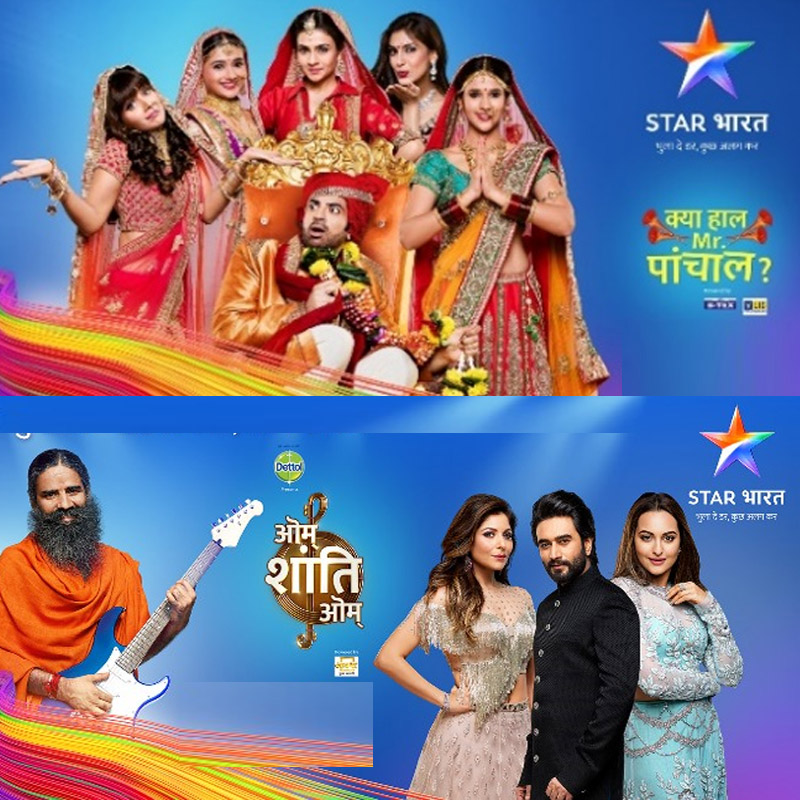
    So, Star Bharat now flaunts shows like `Om Shanti Om’, `Kya Haal Mr. Panchaal’, `Nimki Muhkiya’, `Saam Daam Dand Bhed’ and `Ayushman Bhav’.

    Reach ‘000s for week 35 and 36

    public://barc2_3.jpg

    Star has three other channels on the DD FreeDish platform including Star Utsav, Star Utsav Movies and Star Sports First. The last one, which debuted earlier this year, again is a new FTA offering of sorts that has been riding the kabaddi league wave.Indiantelevision.com tried to reach out to Star India for its comments, but could not elicit a response till the time of writing this report. However, if we get some comments on Star Bharat from the channel owner, it’d be updated.

    The big question is: will this rebranding and repositioning strategy work for Star Bharat? To use a cliché, only time will tell… oops, sorry, BARC India will tell.

    ALSO READ :

    Life OK rebranded as Star Bharat may start from 15 Aug

    Star Bharat to be available on DD FreeDish as b’caster’s fourth FTA offering

    TDSAT ‘no’ to stay Star Bharat launch, DPO payments subject to adjudication

  • DTH subscriber growth on upswing in first quarter?

    DTH subscriber growth on upswing in first quarter?

    BENGALURU: Is the DTH subscriber growth in the first quarter of fiscal 2017 (Q1-18, quarter ended 30 June 2017, current quarter) on an upswing?  Of the six private players in the Indian DTH ecosystem, three are publically listed and their numbers are available in the public domain. Two players, Airtel DTH and Dish TV, have indicated a quarter-on-quarter growth in number of subscriber additions. Telecom Regulatory Authority of India (TRAI) has yet to release subscription numbers for Q1-18.

    Airtel has indicated subscriber additions of 0.499 million for Q1-18 as compared to 0.228 million for the previous quarter (quarter ended 31 March 2017, Q4-17, previous quarter). Dish TV reported adding 0.186 million subscribers as compared to an estimated 0.165 million additions for the previous quarter.

    The third player – Videocon d2h reported adding 0.13 million subscribers in Q1-18 as compared to the slightly higher 0.14 million for Q4-17. It may be noted that subscriber numbers are generally rounded off by the players in their reports, in some case to an extent of 10,000. Also, the sum of the net subscriber additions per quarter may not be equal to the overall subscribers reported as added in a fiscal by the companies because of subscriber churn and rounding off.

    Please refer to the figure below:

    public://F1_18.jpg

    As reported by us earlier, despite the sunset date for DAS IV having passed, the DTH industry had not been able to leverage the opportunity that it presented. Financial results of  Airtel Digital TV (Airtel DTH), Dish TV, and Videocon DTH show poor subscriber adds in the quarter ended 31 March 2017 (fourth quarter, Q4-17). As a matter of fact, subscriber additions in Q4-17 was the lowest that the three Indian major operators reported in a quarter for the financial year ended 31 March 2017 (FY-17). The combined subscribers for all the three players grew 8.33 percent to 41.23 million in FY-17 from 38.06 million in FY-16. In FY-16, the three players had added about 65 percent more subscribers in absolute numbers at 4.93 million as compared to the 3.81 million added in FY-17.

    The DTH industry witnessed a slowdown in subscriber growth even in fiscal 2016. Combined subscriber additions of the three pay-direct to home operators in India for the annual period ended 31 March 2016 (FY-16) vis-à-vis the previous year (FY-15) grew by 14.8 percent.  This subscriber growth rate was however was much lower than the growth that these entities had in FY-15 at 24.7 percent as compared to FY-14.

    The current DTH scenario in India

    Dish TV is at present the largest private DTH player in the country in terms of number of subscribers. The three players – Airtel DTH, Dish TV and Videocon d2h represent about 60 to 65 percent marketshare of the pay-TV DTH industry subscribers. The other three players are Tata Sky, Sun Direct and Big TV. Please refer to the figure below for the estimated subscriber marketshare of the private pay-TV players.

    public://F2_9.jpg

    The government’s FreeDish DTH service is the largest DTH player by far in terms of subscribers with an estimated 22million or 2.2 crore subscribers in 2016 as per the KPMG-FICCI Indian Media and Entertainment Industry Report 2017 (KPMG-FICCI M&E Report 2017) titled Media for the Masse: The Future Unfolds. It must however be noted that an exact number for registered or active subscribers is not available since this is a free DTH service. Also, the proposed merger of Videocon d2h with Dish TV will create the largest private television carriage player in India and quite likely the second largest in the world, be it cable, internet television or DTH or any other.


  • TDSAT ‘no’ to stay Star Bharat launch, DPO payments subject to adjudication

    TDSAT ‘no’ to stay Star Bharat launch, DPO payments subject to adjudication

    NEW DELHI: Even as it declined to stay or restrain the launch of Life OK channel as Star Bharat, the Telecom Disputes Settlement and Appellate Tribunal (TDSAT) yesterday said the amounts paid to the distribution platform operators or DPOs will be subject to the final orders of the tribunal.

    The bench, comprising TDSAT chairman Shiva Keerti Singh and members B B Srivastava and A K Bhargava, observed that the agreements between broadcaster Star India and DPOs Dish TV and Videocon d2h (both entities in the process of merging) will continue to operate and the cost being offered by the broadcaster cannot be reduced unilaterally.

    While Star India was given four weeks to reply, the two DTH platforms were asked to file their counter-affidavits too. Thus, the next hearing may come up some time in October 2017.

    The tribunal said if it is proved that the presence of Star Bharat on Prasar Bharati’s free to air DTH platform FreeDish is tantamount to the channel’s conversion from pay to FTA, then both Dish TV and Videocon d2h will be entitled a refund from Star.

    Star India had contended that merely making a channel available on FreeDish platform does not tantamount to a conversion in the nature of the channel for which the DPOs are being charged.

    Dish TV and Videocon d2h had moved the tribunal earlier this week alleging that Star India was converting its pay channel Life OK into a FTA network by putting the rebranded channel (Star Bharat) on FreeDish platform without informing the Telecom Regulatory Authority of India (TRAI). In its defense before the court, Star India responded by saying that “we are only rebranding” and not “converting our pay channel” into FTA.

    Interestingly, this petition came just two days after Essel/Zee Group’s Dish TV had sent a letter to the Ministry of Information and Broadcasting, Indian cricket board BCCI, TRAI and monopoly watchdog Competition Commission of India. In the letter Dish MD Jawahar Goel had alleged that Star was trying to create a monopoly over cricket broadcast rights in the country, a move that would be detrimental for all stakeholders, including consumers who would ultimately dish out more subscription money to watch cricket on telly.

    To buttress his arrangements, Goel had contended that Star had even challenged rge sector regulator TRAI’s jurisdiction to fix tariff charges — a case that’s pending before the Madras High Court.

    ALSO READ:

    Dish TV moves TDSAT against Star Life OK name change & turning FTA

    Dish TV shoots off letter to IBF; alleges discrimination by b’casters, OTT platforms

    Jawahar Goel raises alarm of emerging Star cricket monopoly (updated)


  • Dish TV moves TDSAT against Star Life OK name change & turning FTA

    Dish TV moves TDSAT against Star Life OK name change & turning FTA

    NEW DELHI: After having raised an alarm a day back over an impending monopoly of Star India if it wins the broadcast and other rights to IPL cricket, Essel/Zee Group’s DTH platform Dish TV has moved broadcast and telecoms disputes tribunal seeking restraining order against Star Life OK’s rebranding process and turning free-to-air (FTA).

    In its interim prayer Dish TV has sought an order from disputes tribunal TDSAT to “restrain” Star India from converting Life OK from a pay channel to FTA by changing its name to Star Bharat and joining the Doordarshan FreeDish platform. Reason?

    According to the petition, reviewed by Indiantelevision.com, Star is making the changes “without informing” sector regulator TRAI as also without giving public notice about the change as “specified in clause 4-3 of the TRAI regulations.”

    Star India is in the process of renaming on-air GEC TV channel Life OK (a pay channel) into Star Bharat and put it on Doordarshan’s FTA DTH platform DD FreeDish. Though industry sources indicated that the change was to come into effect from sometime end of August 2017, sources in Prasar Bharati, owner and manager of DD, had said the pubcaster’s DTH platform was not yet technically capable of bringing on board more channels despite they winning slots to be part of the FTA KU-band service as an upgradation process was still not complete.

    The case at TDSAT is scheduled to for an initial hearing on 25 August 2017. Dish TV, along with its partner Videocon D2h, has appealed the tribunal for a restraint on Star India and any other further direction that it may “deem fit and proper” keeping in mind the facts placed before the court.

    Keep tuned in for more episodes on the new and unfolding corporate warfare in the Indian media and entertainment realm.

    ALSO READ:

    Jawahar Goel raises alarm of emerging Star cricket monopoly

    Star Bharat to be available on DD FreeDish as b’caster’s fourth FTA offering

    Life OK rebranded as Star Bharat