Tag: DD Free Dish

  • DD Free Dish e-auction for vacant MPEG4 slots on 27 March

    DD Free Dish e-auction for vacant MPEG4 slots on 27 March

    MUMBAI: Doordarshan will conduct the 39th e-auction for filling up of vacant MPEG-4 slots of its FTA DTH platform Free Dish w.e.f 27 March 2019. Only satellite channels licensed by the Ministry of I&B would be allowed to participate in the e-auction.

    Bidding in the e-auction of vacant unreserved MPEG-4 slots will be for an initial period open to all genre (language) channels at an invitation reserve price of Rs 5 lakh.

    International public broadcasters licensed/registered by the Ministry of I&B can also participate in e-auction.

    “We request all those channels that could not bid for MPEG2 slots for various reasons to consider bidding for the MPEG4 slots,” Prasar Bharati CEO Shashi Shekhar Vempati said.

    If required, Prasar Bharati/Doordarshan can extend e-auction to the next day or as the case may be.

    Recently the pubcaster sold 40 MPEG2 slots for Rs 395 crore.

    As shared by Prasar Bharati, the highest bid price in Bucket A+ was Rs 15.05 crore, while it was Rs 12.45 crore in Bucket A. Bucket B commanded a top bid of Rs10.95 crore. In Bucket C, which saw the toughest competition, the highest bid was Rs 8.95 crore. Bucket D saw a top bid of Rs 6.1 crore.

    After the e-auction, Vempati asserted that the language diversity on DD FreeDish has also seen an expansion with Marathi channels taking up slots.  He also added that nearly eight new channels have taken up space across various categories and genres in various languages.

  • DD Free Dish e-auction: Reserve price for MPEG4 slots fixed at Rs 5 lakh

    DD Free Dish e-auction: Reserve price for MPEG4 slots fixed at Rs 5 lakh

    MUMBAI: After recommencement of DD Free Dish e-auction, Prasar Bharati (PB) recently revealed the result where a total of 40 MPEG2 slots were successfully sold. Now, PB CEO Shashi Shekhar Vempati has revealed that the reserve price for MPEG4 slots e-auction is Rs 5 lakh. He also added that the first e-auction for MPEG4 slots will be notified in a couple of days.

    “The reserve price for these MPEG4 slots is at a low invitational amount of merely Rs 5 lakh. We request all those channels that could not bid for MPEG2 slots for various reasons to consider bidding for the MPEG4 slots,” Vempati said on Twitter.

    PB CEO disclosed the same while addressing the issues raised by religious channels. Various media reports floated recently that the public broadcaster has decided to keep away from religious and devotional channels for DD Free Dish slots.  

    The reports said spiritual channels, including that of Baba Ramdev, have been seeking slots in the auctioning for quite some time. As it could open a floodgate of applicants, the broadcaster has decide to keep a safe distance.

    Vempati has taken a defensive stance saying that they have taken note of several petitions received. “Free Dish is a public platform where placement of channels happens through an open transparent e-auction process. It is the preorgative of individual channels whether to participate or not. If you feel strongly that certain channels should be on Free Dish then please write to them,” he commented.

    The new policy guideline had kept five buckets for e-auction of MPEG2 slots There is no specified bucket for spiritual or regional channels under new guidelines.

    Earlier on 15 February, the Prasar Bharati Board gave the green signal to e-auctioning of DTH slots on DD Free Dish. The e-auctioning of slots on DD Free Dish was arbitrarily called off in October 2017. Earlier, DD Free Dish would conduct the e-auction every couple of months to award vacant channel slots to private broadcasters. The last e-auction was held In July 2017.

  • KBS World channel enters India with Prasar Bharati’s Free Dish

    KBS World channel enters India with Prasar Bharati’s Free Dish

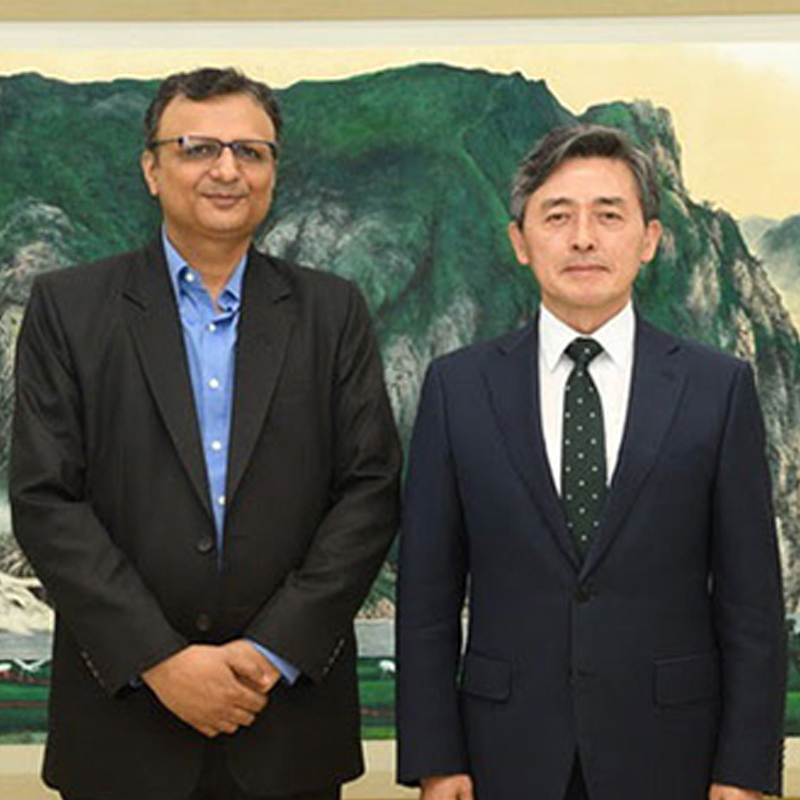
    MUMBAI: Korean Broadcasting System (KBS), the national public broadcaster of South Korea has signed an agreement with its counterpart Prasar Bharati to enter the Indian market with KBS World TV channel. 

    KBS World will be officially broadcasted through DD Free Dish, as soon as the approval process and trial delivery of the Indian government is completed in March. Meanwhile, DD India, the international broadcasting channel of Prasar Bharati, will be broadcasted in South Korea through MyK OTT platform. 

    Korean Cultural Center (KCC) India, which is dedicated to providing insights into the rich cultural heritage of Korea tweeted, “KBS World (English channel of KBS) will be aired through DD Free Dish soon! In return, DD India will available on MyK, OTT platform of KBS in Korea.”

    KBS president and CEO Yang Sung-dong said, “This KBS World TV’s entry into India will be a great bridgehead for spreading K-pop and Korean culture to India, which will become the world’s number one country in the world over the next few years.”

    This agreement is the first case in the domestic broadcasting industry, in which both public broadcasting companies representing both countries mutually support themselves as a local agency to exchange their own international broadcasting channels.

  • Delhi HC dismisses 9X Media, B4U Broadband, TV Vision petition challenging DD Free Dish e-auction

    Delhi HC dismisses 9X Media, B4U Broadband, TV Vision petition challenging DD Free Dish e-auction

    MUMBAI: The Delhi High Court has dismissed the petition filed by 9X Media, B4U and MASTiii against the DD Free Dish e-auction. Within a few days of the e-auction recommencement notice, the broadcasters approached the court as they felt the base prices are very high for small players.

    Senior lawyer Amit Sibal appearing for the petitioner 9XM argued that the music channels were free to air channels and they were not collecting any subscription amount. Hence, those channels could not be classified in the same bucket as general entertainment channels (GECs), and other channels.

    The revised guidelines of DD Free Dish auction says that differential pricing for genre (language) will be based on principle of higher reserve price for genre (language) with greater commercial potential. Sibal argued that the guiding norm has not been followed as the music channels have been placed in the same bucket as sports and GECs. He contended that the commercial potential of sports channels is greater than music channels.

    Sibal also argued that the commercial potential of music channels was much lower than news channels and yet the reserve price for news channels has been fixed at Rs 7 crore and music channels have been fixed at Rs 10 crore. He also referred to the financial statement of the petitioners to contend that they were loss making while the news channels were making profits.

    Earlier 9X Media mentioned in the petition that it is a loss-making entity with losses of Rs 7.81 crore and negative earnings per share and such a decision could adversely impact its business. Rajeev Sharma on behalf of Prasar Bharati pointed out the total revenue of 9XM for the financial year 2018 was around Rs 146.12 crore including Rs 138.71 crore as revenue from operations. He submitted that the reserve price of a slot was a very small fraction of the revenue. Sharma also added that the petitioners were already paying Rs 8 crore and the reserve price was only 25 per cent more than the existing price.

    Talking note of the argument, Justice Vibhu Bakhru said that the court does not agree to the argument that the reserve price fixed there under would amount to disabling an entrepreneur from carrying on the business of broadcasting a music channel. He also added that DD Free Dish is not the only platform to air the channels.

    Justice Bakhru also asserted that it will not be appropriate to enter into a controversy as to the assessment of the commercial potential of various genres or channels. The court also added that the question of fixing a reserve price is a matter of commercial discretion of the public broadcaster Prasar Bharati.

    “Prasar Bharti’s commercial decision to fix the prices is not amenable to judicial review under Article 226 of the Constitution of India, unless it is established that the same is so arbitrary or so unreasonable that no reasonable person could possibly take such a decision,” the judgement also said.

    Justice Bakhru also found Sibal’s contention that that petitioners are not challenging the policy but the implementation is unpersuasive as the petitioners are seeking to challenge the fixation of reserve price which itself is a matter of policy.

    The new policy guidelines has kept five buckets for e-auction of MPEG2 slots. Bucket A+ has been kept for Hindi GECs and teleshopping channels with a reserve price of Rs 15 crore, and Bucket A has been dedicated to Hindi movie channels with a reserve price of Rs 12 crore.

    Hindi music, sports, and Bhojpuri GEC and movie come under Bucket B which has a reserve price of Rs 10 crore. All news & current affairs (Hindi), news & current affairs (English) and news & current affairs (Punjabi) channels fall under the category of Bucket C which with a reserve price of Rs 7 crore. The Bucket D with lowest reserve price of Rs 6 crore will comprise of all other remaining genres/language channels.

  • Jawahar Goel expects 20% reduction in Dish TV’s content cost under new tariff regime

    Jawahar Goel expects 20% reduction in Dish TV’s content cost under new tariff regime

    MUMBAI: With the new tariff order being implemented from 1 February, India’s largest DTH operator Dish TV expects the overall content cost of the company to come down by at least 20 per cent. The DTH brand also thinks that the regulatory framework will help DTH operators to add more subscribers as many MSOs are not prepared for the implementation.

    Talking to analysts after Q3 earnings, Dish TV chairman and managing director Jawahar Goel said the company could not discuss the new payout to broadcasters because of the tariff order but which will start happening from this quarter. The new model will reset things and the veteran thinks overall content cost will reduce.

    “Currently, our pay channel cost is 35-38 per cent. In case for D2H it is roughly around 40 per cent. If we are paying Rs 2300 crore, we are expecting content cost on net basis will be around Rs 1800 crore,” he added further.

    When the management was asked about not having much impact on subscriber addition despite early undertaking of its strategy for tariff order unlike its biggest competitor Tata Sky, Dish TV India group CEO Anil Dua said it is a short term trend. He also added that the company firmly believes tariff order is good for the long run. Dua also mentioned about Mera Apna Pack on Dish TV and Mera Wala Pack on D2H which gave consumers scope to choose a channel on a-la-carte basis way before the tariff order was implemented. According to Goel, Dish TV had familiarised this new concept to almost 8 million subscribers.

    Goel also said that as customers tighten their purses, small broadcasters who don’t have price-worthy content will be forced out of the market.

    “You must have seen there are around 15-20 Hindi movie channels. They are surviving on connectivity as well as the capacity to buy content compared to lower established players. I think they will go out from the market. So, I think movie buying rights will get reset,” he added.

    The company is optimistic about subscriber addition despite the ongoing uncertainty in the last quarter. According to Goel, the lack of preparedness of MSOs will lead to channel switch offs on those platforms paving the way for DTH platforms to add more subscribers.

    Moreover, he also thinks Jio’s full entry into cable TV business may take at least another three to six months as both MSOs in which the telco giant acquired majority stakes are also prepping up for tariff order implementation. He also added that Jio has not been able to have any considerable effect on the business till now.

    However, despite being highly optimistic about the new regime, Goel is not happy with the revenue share with broadcasters. “We are not happy with this 20 per cent margin that is being given by the broadcaster. So, we are negotiating with them, talking to them. These things will start happening after the broadcaster gets first or second weekly report of their channel viewership. Thereafter the new discussion will start happening,” he commented.

    Goel also spoke on recommencement of DD Free Dish e-auction by mentioning that the most popular channels of four major broadcasters, such as Zee Pal and Star Bharat, will be withdrawn from the platform. “That is why you must have seen that in a-la-carte they are priced channels, they are no more free,” he added.

  • Placement of channels on DD Free Dish on 1 March

    Placement of channels on DD Free Dish on 1 March

    MUMBAI: A few days ago, Prasar Bharati had invited applications from private channels for participating in its 38th online e-auction for filling up of 54 vacant of MPEG-2 slots on its DD Free Dish DTH service. It has furnished details on the upcoming process which will see channel placements take place on 1 March.

    Interested private channels were requested to submit their applications along with requisite documents and demand drafts on or before 6 February 2019 by also mentioning the genre and language of the channel. Scrutiny of the application will be done from 6-8 February 2019. The e-auction will be held from 11 February 2019 onwards followed by the issuing of allotment letters by 20 February. All payments must be made by 28 February. International Public Broadcasters licensed by the MIB can also participate in e-auction for MPEG-2.

    Categorisation of TV channels in different buckets in accordance with genres/language of channel and their respective reserve price for allotment of slots on DD Free Dish through e-auction is as below:

    The starting price for e-auction for the next slot, if available in the same bucket shall be increased by minimum incremental amount of Rs 5 lakh from the starting price of e-auction of immediate previous slot of the same bucket.

  • Prasar Bharati fills up 4 vacant MPEG-2 slots on DD FreeDish

    Prasar Bharati fills up 4 vacant MPEG-2 slots on DD FreeDish

    MUMBAI: Prasar Bharati-led free direct-to-home (DTH) service DD FreeDish has allocated MPEG-2 slots to four channels. The four slots have been allocated to Aajtak Tej, Republic Bharat, Surya Samachar and Kushboo Bangla. The first three channels are from the news category with Republic Bharat to launch on 26 January, while the fourth is a Bengali GEC.

    “Based on the applications received for interim placement of channels on currently vacant MPEG-2 slots on DD FreeDish on pro-rata basis, 4 slots have been allocated to Aajtak Tej (news), Republic Bharat (news), Surya Samachar (news) and Kushboo Bangla (Bengali GEC),” Prasar Bharati informed on Twitter.

    The public broadcaster invited applications for interim placement of channels on currently vacant MPEG-2 slots on DD FreeDish on pro-rata basis for the period 26 January 2019 to 28 February 2019. Interested private satellite TV channels were requested to submit their applications along with all requite documents and demand drafts/fee on or before 24 January latest by 12 pm.

    “Good to see a Bengali GEC channel take up a slot on DD FreeDish. Gives us much hope that the upcoming eAuction next month will expand regional/language diversity on DD Free Dish taking it beyond the Hindi belt,” Prasar Bharati CEO Shashi Shekhar Vempati commented.

    Earlier this month, DD Free Dish e-auctions were resumed under a revised policy. Vempati said e-auctions will be based on a differential pricing to be determined by the genre or language of channels. He also said a key consideration of the new policy was to increase the diversity of content available on DD Free Dish and to expand its reach across India especially within the non-Hindi speaking states.

    The e-auction of slots  on DD Free Dish was arbitrarily called off in 2017 while the last e-auction of DD Free Dish took place in July 2017. Earlier, DD Free Dish used to hold e-auctions once every couple of months to award vacant channel slots to private broadcasters.

  • 38th DD Free Dish e-auction on 11 February: Key highlights of revised policy

    38th DD Free Dish e-auction on 11 February: Key highlights of revised policy

    MUMBAI: The 38th DD Free Dish e-auction for 54 vacant MPEG-2 slots will be held from 11 February. The Prasar Bharati Board on Tuesday gave a green signal to e-auctioning of DTH slots on DD Free Dish. The public broadcaster will resume the allocation of slots based on a revised policy, confirmed Prasar Bharati (PB) CEO Shashi Shekhar Vempati. He thanked the Board, MIB secretary Amit Khare and minister Rajyavardhan Singh Rathore for their support.

    The e-auctioning of slots on DD Free Dish was arbitrarily called off in October 2017. Earlier, DD Free Dish would conduct the e-auction every couple of months to award vacant channel slots to private broadcasters. The last e-auction was held In July 2017.

    With the pubcaster set to kick-start the much-awaited e-auctions, here are the key highlights of the revised policy:

    · The e-auctions will be based on a differential pricing to be determined by the genre (language) of channels. Private broadcasters desirous of carriage on DD Free Dish will have to declare the same to be eligible to bid in e-auctions.

    · To lower the entry barrier for genres (languages) that are currently under-represented on DD Free Dish the differential pricing for slots is split into five disparate buckets as opposed to the 2 buckets based on which e-auctions were previously held.

    · Different genres (languages) have been grouped within these five buckets with differential reserve pricing for slots in respective buckets.

    · To promote the new DD Free Dish authorized set top boxes, the new policy also envisages invitational pricing for channels to also take up MPEG4 slots in addition to the existing MPEG2 slots.

    · The new policy also makes it attractive for channels from a cash flow standpoint through better payment terms. This will ease the burden on channels while lowering the entry barrier for channels.

    According to the PB CEO, a key consideration factored in by the new policy was to increase the diversity of content available on DD Free Dish and to expand its reach across India especially within the non-Hindi speaking states.

    The government-owned DTH platform has had a good run since its launch and is now desired beyond rural areas as well. According to industry experts, the DTH platform now has close to 30 mn subscribers.

    While there are numerous advantages of Free Dish, some private broadcasters feel it offer a threat to distribution platform operators (DPOs).

  • MIB extends feedback deadline date on mandatory sports feed sharing norms till 15 Jan

    MIB extends feedback deadline date on mandatory sports feed sharing norms till 15 Jan

    MUMBAI: Ministry of Information and Broadcasting (MIB) has extended the deadline to give feedback on the draft sports broadcasting signals (Mandatory Sharing with Prasar Bharti) (Amendment) Bill, 2018 till 15 January 2019. The earlier deadline was 31 December 2018.

    In an earlier notification dated 17 October, it said that feedback must be given within a month to enable telecast of “Sporting events of national importance’ on mandatory channels of Doordarshan via cable/DTH/ IPTV operators.

    As per provisions of the Sports Act, the live feed received by Prasar Bharati from the content rights owners or holders is only for the purpose of re-transmission of the said signals on Doordarshan’s own terrestrial and DTH network (DD FreeDish) and not for cable operators or other distribution networks. The ad sales is also done by private companies after taking the pubcaster into confidence with the additional ad revenue shared between the rights holding TV channel and DD.

    Viewers, who do not have DD FreeDish [pubcaster Doordarshan’s FTA DTH platform] or Doordarshan’s terrestrial network, are either unable to watch these sporting events of national importance or are compelled to watch these sporting events on highly priced sports channels.

    Additonally, private DTH platforms and MSOs/LCOs were barred from showing DD's non-terrestrial channels that re-transmitted the shared feeds, after the August 2017 Supreme Court ruling, for the duration of that particular event and it was stressed upon also by Prasar Bharati fearing adverse reaction from the apex court.

    The extension notice reads: “Reference this Ministry’s earlier notice dated 17.10.2018 seeking feedback / comments on Draft Sports Broadcasting Signals (Mandatory Sharing with Prasar Bharti) (Amendment) Bill, 2018 and the notice dated 09.11.2018 to extend the deadline upto 31.12.2018 for receiving feedback/comments from General Public/Stakeholders on the said draft Bill, 2018. It is informed that the deadline for receiving feedback/comments from General Public/Stakeholders on the said draft Bill, 2018 to enable telecast of ‘Sporting events of National importance’ on mandatory channels of Doordashan via Cable / DTH / IPTV Operators has been further extended by this Ministry till 15.01.2019.”

  • The challenge of DD FreeDish and new tariff order for DPOs

    The challenge of DD FreeDish and new tariff order for DPOs

    GOA: With the emergence of a large number of OTT platforms and cord-cutting phenomenon globally, the future of pay-TV has often been questioned. The talk of the town seems to be about the how pay-TV industry will continue to thrive in such an environment. Moreover, the new tariff order (NTO) in India is also set to overhaul the entire value chain, leading to some uncertainty.

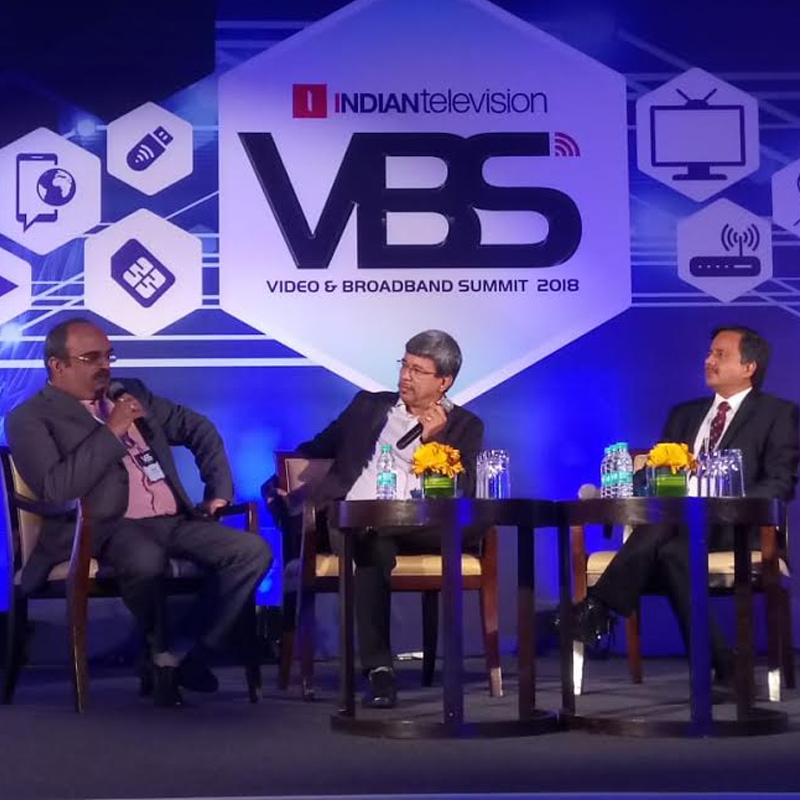
    Against this backdrop, Video and Broadband Summit 2018 held an intense discussion on the “future of pay TV in India”. Travelxp CEO Prashant Chothani and Doordarshan additional director general Sunil participated in the session which was moderated by Indiantelevision.com founder and CEO Anil Wanvari. The session had viewpoints from two entirely different players as Chothani provides a niche premium offering to viewers, while Sunil is responsible for public service which caters to the masses.

    Travelxp works on a B2B2C model despite having 100 per cent original content. Chothani, who is very passionate about linear TV, does not share his content with any OTT platform other than Netflix in North America. He thinks it is extremely crucial to protect linear business as much as possible.

    Chothani, talking about the NTO, said that DPOs are in existential crisis. He thinks DD FreeDish is the biggest challenge for distribution platform operators (DPOs) as the former offers over 100 free to air channels to consumers for free and the latter has to charge Rs 130 for the same as per the NTO.

    “FreeDish is your biggest competitor. Where do you think these 30 or 40 million homes have come from? They go to a large part of north India, UP, Bihar and lot many other markets, where the customer is not willing to pay even Rs 99. There comes the cord cutting in favour of DD FreeDish because this population is satisfied whatever channels come to them for free,” he commented.

    While there are already technological disruptors like Hotstar, Netflix, Amazon threatening linear TV’s growth, consumers, who don’t wish to pay for the channels, can turn to DD FreeDish, said Sunil endorsing Chothani’s view.  

    From the audience, Doordarshan director general Supriya Sahu added that DD FreeDish is not only used by a marginal section of the society but the service is quickly evolving as an alternative option which clearly indicates that it could be a potential threat for DPOs.

    When asked if DD FreeDish would partner with broadcasters, Sunil said he was open to the idea of collaboration. Rather than making money, the pubcaster’s aim is to let the system grow, he said.

    “We have to work on a business model on that front and it is very difficult to answer this question at this point of time because the call has to be taken by the government. But yes cable operators and broadcasters are a part of this system. They are always welcome to partner with us,” he added later.

    He also thinks NTO will be a big game changer as the difference in price between small LCOs and bigger ones has been taken away by TRAI regulations. He also believes that the future of pay-TV is threatened by TRAI regulations. Customers will watch what they want, where they want and when they want and will only pay for that purchase, he added.

    Chothani also added that India is a very price sensitive market. Even in Serbia where currency value is weaker than India’s, Coke is priced the same as in Germany but in India, it is offered at a much cheaper rate. This nature does not fade away when it comes to entertainment.

    “We content creators got greedy. We thought why would you pay 50-60 per cent money with DPOs and do B2B2C business why not B2C. If you see RIOs of some broadcasters, you will see their B2C offering subscription on their apps is cheaper than they are giving to LCOs or DPOs. Why? Because OTT apps are not regulated,” said Chothani.

    “So, this regulation is also going to take away a lot of customers from traditional DPOs unless they play smart. Broadcasters have been playing this game for too long and will keep on playing for times to come. But DPOs need to rethink now. This is a golden opportunity for them. So, they need to get behind and think how they can make consumers pay for content while DD FreeDish is offering so many channels for free,” he added.

    The experts believe that though the future of pay-TV has a few challenges, the NTO offers opportunities to restructure the industry and make the business profitable for all.