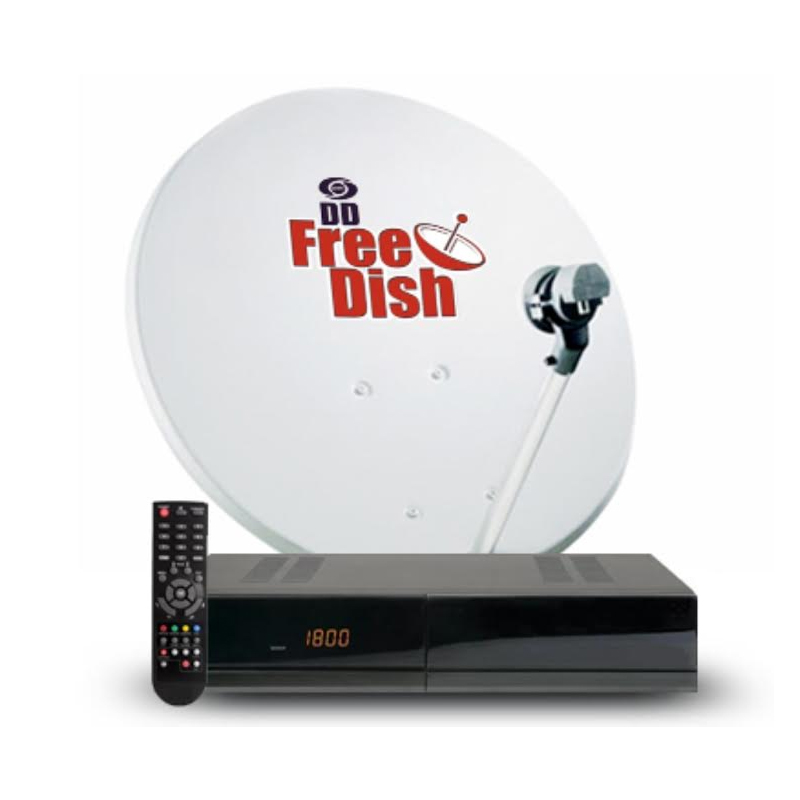
Tag: DD Free Dish

  • DD FreeDish annual e-auction of MPEG-2 slots on 19 February

    DD FreeDish annual e-auction of MPEG-2 slots on 19 February

    Mumbai: It’s FTA e-auction time once again. Pubcastr Prasar Bharati has invited applications for allotment of vacant MPEG-2 slots of DD Free Dish DTH Platform for the period from 1 April 2024 to 31 March 2025. The e-auction process is scheduled to be held on 19 February.

    The pubcaster has classified channels who are eligible to apply after following Indian government guidelines as follows: 

    S. No. Bucket Genre / Language
    1. Bucket A+ GEC (Hindi / Urdu) Channels
    2. Bucket A Movie (Hindi / Urdu) Channels
    3. Bucket B

    a. Music (Hindi / Urdu) Channels

    b. Sports (Hindi / Urdu) Channels

    c. All Channels of Bhojpuri Language

    d.  All other remaining Genre of Hindi / Urdu

    4. Bucket C News & Current Affairs (Hindi / Urdu) Channels
    5. Bucket D

    a. Devotional / Spiritual / Ayush

    b. All Genres of Marathi & Punjabi Channels

    c. News & Current Affairs (English) Channels

    6. Bucket RI This bucket is for all Channels in languages not covered above

    The reserve price for MPEG-2 slots has been defined as follows in round 1 of the auction as follows:

    Round No.
        

    Starting Reserve Price (in INR)

    Round I (Bucket A+)

    RS. 15.00.00.000/-

    Round I (Bucket A)

    RS. 12.00.00.000/-

    Round 1 (Bucket B)

    RS. 10.00.00.000/-

    Round I (Bucket C)

    RS. 7.00.00.000/-

    Round I (Bucket D)

    RS. 6.00.00.000/-

    Round I (Bucket RI)

    RS. 3.00.00.000/-

    The prices for the remaining rounds have been kept as follows

    Round No.

    Starting

    Reserve Price (in INR)

    Buckets

    Eligible to Bid

    Buckets

    Not Eligible to Bid

    Round 2 (Bucket A+)

    RS. 16.00.00.000/-

    A+. A.B.C.D.RI


    Round 3 (Bucket A)

    RS. 13.00.00.000/-

    A, B, C, D, RI


    Round 4 (Bucket B)

    RS. 11.00.00.000/-

    B. C. D. RI


    Round 5 (Bucket C)

    RS. 8.00.00.000/-


    A+. A. B.

    Round 6 (Bucket D)

    RS. 7.00.00.000/-


    A+. A. B. C.

    Round 7 (Bucket RI)

    RS. 4.00.00.000/-

    RI

    A+, A, B, C, D

  • Unencrypted channels on DD Free Dish suspected of promoting privacy: A growing concern

    Unencrypted channels on DD Free Dish suspected of promoting privacy: A growing concern

    Mumbai: Cable operators have alleged that unregistered local players are illegally taking unencrypted feed from DD Free Dish. Over the last few years there have been increasing discussions on the growing popularity of DD Free Dish, a free-to-air service being provided by Prasar Bharati. While consumers continue to enjoy the FTA service, cable operators are disturbed by the fact that DD Free Dish is providing unencrypted channels, which is “promoting piracy”.

    According to big cable operators, Prasar Bharati, which is selling DD Free Dish slots to broadcasters at huge prices, is allegedly not complying with TRAI’s Telecommunication (Broadcasting and Cable) Services Standards of Quality of Service and Consumer Protection (Addressable Systems) Regulations, 2017 (Quality of Service Regulations) which makes it mandatory to provide encrypted channels.

    The AIDCF recently moved the Telecom Disputes Settlement and Appellate Tribunal (TDSAT) against DD Free Dish for allegedly not abiding by TRAI’s regulation that requires the channels to be provided in an encrypted manner. TDSAT has issued notice to Prasar Bharati and other respondents in the matter which will now be heard next month.

    Industry experts say while all the multiple system operators (MSOs) have implemented DAS in phase wise manner from 2012 to 2016, thereby helping in curbing piracy, DD Free Dish is still providing its signals in non-encrypted mode.

    MSOs operate through their deployed cable network, wherein the consumer/subscriber is provided encrypted signals of television channels through a set-top box deployed at their premises. This, say experts, has also led to a non-level playing field for cable operators with DD Free Dish.

  • Prasar Bharati invites applications for the allotment of MPEG-4 slots on DD Free Dish

    Prasar Bharati invites applications for the allotment of MPEG-4 slots on DD Free Dish

    Mumbai: Prasar Bharati has invited applications for the allotment of MPEG-4 slots on DD Free Dish on a pro- Rata basis for the period from 18 July 2023 to 31 March 2024. The auction will be tentatively held on 11 July.

    The pubcaster has said the e-auction will be conducted in accordance with the e-auction methodology for allotment of DD Free Dish slots to private TV channels.

    Bidding in the e-auction of MPEG-4 slots will be open to all genre channels at a starting reserve price of Rs 1.24 crore.

  • DD Free Dish announces Sony Pal & Colors Rishtey to go live effective 1 December

    DD Free Dish announces Sony Pal & Colors Rishtey to go live effective 1 December

    Mumbai: Prasar Bharti’s free direct-to-home (DTH) platform announced the return of two general entertainment channels, Sony Pal and Colors Rishtey, effective from 1 December. The free-to-air platform has unveiled the comeback news of big media giants via a tweet shared on 21 November.


    Colors Rishtey and Sony Pal won the 63rd e-auction process, which was conducted on 18 November 2022.

    Recently, the public broadcaster has invited applications for allotment of vacant MPEG-2 and MPEG-4 slots of DD Free Dish platform on a pro-rata basis for the period from 1 December 2022 to 31 March 2023.

    In April 2022, four big broadcasters—Zee Entertainment Enterprises, Viacom18 Network, Sony Pictures Networks, and Disney Star India—withdrew their flagship channels from bouquets. The decision came in January 2020, when the Telecom Regulatory Authority of India (Trai) announced NTO 2.0, which capped a bouquet channel price at Rs 12 instead of Rs 19 (as per the first NTO).

    In order to increase their advertising revenue and gross rating points (GRPs), the broadcasters decided to rejoin the DD Free Dish platform, as it has a lesser number (176+) of TV channels to compete with than private DTH (500+) services.

    Earlier, when the big players decided to quit the platform, they were completely aware that they had taken on the risk of losing subscribers and ad revenue through that move. Broadcasters knew that if they did not bring back their channels on the platform, then they may have to shut down these channels, as at present, free users are shifting to DD Free Dish for free entertainment and paid DTHs are moving towards OTT streaming apps.

  • Hindi GEC Atrangi TV awarded MPEG-2 slot in 61 e-auction

    Hindi GEC Atrangi TV awarded MPEG-2 slot in 61 e-auction

    Mumbai: Hindi general entertainment channel Atrangi TV launched in June has been awarded a MPEG-2 slot on Prasar Bharati’s free direct-to-home (DTH) platform DD Free Dish.

    The slot was awarded during the 61st e-auction conducted by Prasar Bharati on Wednesday. The public broadcaster set the reserve price for Hindi GECs at Rs 9.78 crore.

    Backed by Vibhu Agarwal, founder of OTT app Ullu, Atrangi TV targets the Hindi-speaking market (HSM) with an expansive gamut of genres and limited series. The channel is distributed across leading DTH platforms including Tata Sky, Airtel, D2H, Dish and leading cable networks such as Hathway, Den and GTPL.

    With an estimated audience base of 50 million, DD Free Dish is the largest DTH platform in the country with a strong base in the HSM. The platform offers 164 free channels.

  • Prasar Bharati sets a higher reserve price for Hindi movies & devotional channels in its 61st e-auction

    Prasar Bharati sets a higher reserve price for Hindi movies & devotional channels in its 61st e-auction

    Mumbai: Public broadcaster Prasar Bharati has invited applications for allotment of vacant MPEG-2 slots of the DD Free Dish free direct-to-home (DTH) platform for the period 17 August 2022 to 31 March 2023. The 61st e-auction process will be tentatively held on 10 August.

    The public broadcaster has categorized the vacant MPEG-2 slots under six buckets including Bucket A for all Hindi movie channels, Bucket R1 for devotional channels, Bucket A+ for all Hindi general entertainment (GEC) channels, Bucket B for all Hindi music channels, Hindi sports channels, Bhojpuri GECs, Bhojpuri movies and Hindi teleshopping channels, Bucket C for Hindi, English and Punjabi news and current affairs channels and Bucket D for remaining genre language channels.

    The reserve price of the MPEG-2 slots is set as high as Rs 14.37 crore and as low as Rs 4.40 crore. Notably, the prices for Hindi movie channels and devotional channels are the highest while Hindi GECs and news and current affairs channels are low-priced in comparison.

    Prasar Bharati recently concluded its 60th e-auction where it allotted two MPEG-4 slots to the channels Swaraj Express SMBC and Sanskriti 24×7 for the period 5 July 2022 to 31 March 2023.

    In a recent interview, former Prasar Bharati CEO Shashi Shekhar Vempati revealed that the public broadcaster earned as much as ~Rs 750 crore from the sale of vacant DD Free Dish slots in 2021.

    With an estimated reach of 50 million viewers, DD Free Dish is the largest DTH platform in the country. The platform has 167 TV channels including 145 channels in standard definition (SD) MPEG-2, 21 channels in SD MPEG-4 and one channel in high-definition (HD) MPEG-4. The public broadcaster intends to expand its overall number of channels to 200.

    Also Read: Prasar Bharati has seen a big change in its revenue in the last five years, says former CEO Shashi Shekhar Vempati

  • Prasar Bharati has seen a big change in its revenue in the last five years, says former CEO Shashi Shekhar Vempati

    Prasar Bharati has seen a big change in its revenue in the last five years, says former CEO Shashi Shekhar Vempati

    Mumbai: Former Prasar Bharati CEO Shashi Shekhar Vempati joined broadcast journalist and host of ‘Media Dialogues’ on CNBCTV18 Anuradha Sengupta in conversation about his tenure at the public broadcaster recently.

    India’s public broadcaster Prasar Bharati is one of the largest broadcasting organisations in the world that runs a vast terrestrial network in addition to the satellite. During the interview, Vempati noted the changes brought during his tenure including phasing out obsolete technologies, figuring out the manpower roadmap for digital technology, and growing Prasar Bharati’s own media platforms like Free Dish and NewsOnAir app.

    The biggest change at Prasar Bharati

    Vempati highlighted that in the last five years the biggest change at the public broadcaster was the change in its revenue mix. In FY22, the public entity reported that commercial revenues were up by 13 per cent. Historically, the government was the primary source of revenue for the broadcaster via advertising & sponsored content. “What has changed in the last five years is how non-traditional sources of revenue have reduced dependence of government sources of revenue on DD and AIR,” said Vempati.

    “A big component of this reduced dependence is because of DD Free Dish. When I joined as CEO, Free Dish revenue used to be about Rs 270 crore and in the last financial year and this year it has crossed Rs 700 crore and touched Rs 750 crore,” he stated.

    Further adding, “There were hardly any digital revenues five years ago and now digital revenues amount to several crores and are growing fast at almost 30-40 per cent a year.”

    “We also have assets like TV towers that are leased out to private FM broadcasters and telecom operators which generates another Rs 100 crore in terms of revenue,” said Vempati.

    “The revenue growth that you’re seeing is largely contributed by these non-traditional sources of revenue. Interestingly, our radio revenues also saw recovery during Covid so that also contributed to overall growth,” he explained.

    Journey of DD Free Dish

    The public broadcaster’s free-to-air DTH (direct-to-home) platform reaches 43 million homes in India, as per EY (Ernst & Young) estimates and up to 50 million homes, as per Vempati’s personal views. This makes it the largest DTH service provider in the country, more than twice the size of any private DTH player in the country.

    Vempati praised the foresight of the late NDA government under Atal Bihari Vajpayee that they envisioned a platform of this nature. The cabinet gave its approval in 2003-04 with the stipulation that the platform should be self-sustaining and not be a recurring liability to the public broadcaster. It was important to bring private players onto the platform so that it pays for itself.  

    Initially, the placement of private channels happened through a committee process until 2010 when there was a need to make the process more transparent. A Telecom Disputes Settlement and Appellate Tribunal (TDSAT) ruling directed the public broadcaster in 2010 to frame a policy regarding terms and conditions for the broadcast of private channels via its DTH platform.

    The public broadcaster introduced an auction process where private channels had to bid for slots on the Free Dish platform. Over the years, the policy evolved from offering one base price for all broadcasters to offering a differentiated base price based on genre and language of the channel. This move resulted in immense value creation for Prasar Bharati and unlocked the potential of the DD Free Dish platform.

    Free Dish impact on private broadcasters

    There exists a love-hate relationship between private broadcasters and the free DTH platform as they gain access to immense reach, especially in the Hindi heartland, but the trade-off is the subscription revenues from this massive customer base.

    Vempati stated, “The DD Free Dish is only growing especially during the lockdown. The educational channels that were made available on the platform were a huge draw for audiences. The dealers who sell these set-top-boxes (STBs) also reported to us that it is impossible to keep up with the demand.”

    “Now, as we add more languages, the viewership of DD Free Dish is growing beyond the Hindi heartland. The promised 200 educational channels means that Free Dish still has an enormous headroom for growth,” claimed Vempati.

    Vempati observed that DD Free Dish has given rise to competitiveness in the TV broadcast industry where younger channels have been able to challenge the dominance of incumbents. He said, “If you see the Hindi genre, when I look at the ratings, there are several Free Dish channels in the top ten in terms of viewership. Ultimately, the public broadcasters’ purpose is to enable more choice to the consumer.”

    Vempati commented on private broadcasters pulling their flagship channels from DD Free Dish. He said, “This was a consequence of the new tariff order (NTO) regime which had an unintended impact on DD Free Dish. I see it as a transient phenomenon. The big players have other channels and have not completely exited the platform. It is a change that the media sector is going through and I’m hoping that we come out of it and get back on track.”

    Policy framework

    The trends in media consumption have shifted its dominance from traditional devices such as TV and radio to devices such as smartphones & smart TVs. While Vempati was not supportive of regulations in terms of pricing, he said regulations do have a role to play and supported the creation of a media regulatory framework not just for the broadcast sector but all media.

    During Vempati’s tenure, the public broadcaster signed a memorandum of understanding (MoU) with IIT Kanpur to develop direct-to-mobile broadcasting capabilities to reach more than 800 million mobile internet users in the country.

    He said, despite being the largest market for mobile phones, there’s very little standardisation in India. “Look at the emphasis China has put on creating standards. India is making an effort for the first time with 5Gi telecom technology standards. And with direct-to-mobile broadcasting, we have the opportunity to take a leadership position.”  

    Vempati’s run-in with TV ratings

    Another initiative taken by the public broadcaster was to air footage of Ramanand Sagar’s Ramayan on DD Free Dish during the lockdown.

    “When the lockdown was announced we debated on what to do, and I must compliment the PM and Prakash Javadekar (former union minister of information and broadcasting) to come up with the idea that we should air these epics,” recalls Vempati. “They insisted that it should be Ramayan that is aired first as it appeals to such a broad section of society.”

    The oddity was that Doordarshan’s popular shows were not the property of the public broadcaster but sponsored programmes. So, Prasar Bharati reached out to the Sagar family that owned the rights to the programme, the tapes were retrieved and special permission was granted to air the archival footage.

    “I feel this is the first time that the entirety of India has watched Ramayan because the first time it was aired only on the terrestrial network that was available only to a limited part of the country,” said Vempati. “All of India truly watched Ramayan during the lockdown which saw spectacular numbers and for the first time, Doordarshan’s rates were in the lakh plus range. When I look at global numbers apart from the finale of American sitcom M.A.S.H, Ramayan beat the charts!”

    Vempati was also part of the committee instituted by the ministry of information and broadcasting in 2020 tasked with looking into the rigging of TRPs and strengthening the overall ratings measurement system. Speaking about the TV ratings framework, Vempati noted that it was an interesting challenge for the committee and especially since the public broadcaster Prasar Bharati was also a client of Broadcast Audience Research Council (Barc). Addressing the lingering question of whether ratings are robust and credible, Vempati stated, “The important thing to remember is that Barc ratings are sample-based and not objective reality. When you start to infer viewership estimates by Barc as an objective reality that’s when you get into trouble.”

    While the committee made several recommendations to Barc on its corporate governance, technology and processes, ultimately Vempati believes that it is a question of business practices. “In a competitive environment, unless all players respect and adhere to certain business practices, you’ll always question the rating framework. Then it is a question of business culture and competition and ratings cannot solve that problem.”

    “The news genre has very erratic viewing patterns and there was a need to smoothen the fluctuations in the ratings which is why we rolled out the four-week rolling average,” said Vempati. “But business practices such as landing pages are beyond the ability of algorithms to solve. It is a business issue. My advice is that the industry should come to a consensus on how landing page data should be measured or there should be regulatory intervention. For example, a regulatory stipulation that only platform services can be on landing pages.”

    Vempati said that he was proud of being part of phasing out analogue terrestrial TV at the public broadcaster which he believes was one of the biggest reforms during his tenure. This freed up resources for digital and Free Dish and enabled Prasar Bharati to invest in the future.

    An outsider in the bureaucratic environment of Delhi, Vempati noted that his time at Prasar Bharati helped him understand the difficulty and complexity of the challenges in the public sector. He said, “The microcosm of small reforms that we tried to do gave me a sense of the complexity and challenges & better appreciate the job of the PM,” He concluded that the public sector would benefit greatly from having private-sector talent and professionals come in.

  • Uptake of free DTH has come down since major broadcasters left: Punit Goenka

    Uptake of free DTH has come down since major broadcasters left: Punit Goenka

    Mumbai: The uptake of free direct-to-home services has come down since the major broadcaster networks collectively left the platform on 1 April, stated Zee Entertainment Enterprises Limited managing director and chief executive officer Punit Goenka during an earnings call.

    The company reported its fourth quarter and yearly results for the financial year ended 31 March. Goenka said, “Cord-cutting has slowed down now that GECs (general entertainment channels) have come out of the Free Dish platform. So far, the decline in subscription revenues has been because we were losing subscribers. The good thing is we’re not losing subscribers to digital but rather subscribers are migrating from pay linear to free linear TV.”

    On merger with Sony Pictures

    Goenka also shared an update on the merger process between Zee and Sony Pictures Networks India. The two companies had signed a definitive agreement in December 2021 and submitted key documents with the stock exchanges for the necessary approval. Analysts queried Goenka whether the timeline for completion of the merger would remain at eight to nine months as the company was still awaiting approval from the exchanges.

    “My speculation is that because this is a large merger there have been a significant number of queries by the stock exchanges that we have been answering. It has been two weeks or ten days since we last got any query from the exchange and I am still positive towards the eight to nine months timeline,” replied Goenka.

    Zee is expected to be one of the major contenders for the Indian Premier League (IPL) media rights auction that is set to begin on 12 June. With the merger process still underway, analysts asked Goenka whether Zee was in a position to bid for the media rights without the capital infusion of $1.57 billion (~Rs 12,000 crore) from Sony.

    “We have a healthy balance sheet and we can participate (in the IPL media rights) on our own,” said Goenka. He also noted that the TV and digital rights package being sold separately “doesn’t preclude us from bidding for either part of all of the rights packages being sold.”

    Goenka stated that the company is still evaluating its strategy concerning IPL media rights.

    Zee expects its advertising revenues to face pressure in the coming quarter due to the inflationary situation that has impacted FMCG advertisers who account for up to 53 per cent of ad spend on the network.

    The company also expects to see a short-term impact on ad revenues after pulling its GECs from the Free Dish platform. “This will be a transitional impact and we expect to recover as intended benefits accrue on the pay side of the business,” remarked Zeel chief financial officer Rohit Gupta.

    He added, “In FY23 from a quarter-on-quarter progression perspective we expect the margins to improve as we progress through the year.

    The first quarter will have the most immediate impact in terms of inflationary dynamics. FTA drop, accelerated investments and seasonal expenses such as increments etc., will have an impact on revenues. As revenues scale up in subsequent quarters, we expect margins to start inching up in the later part of the year.”

    The embargo on NTO (New Tariff Order) 2.0 continues to impact the broadcast industry in terms of subscription revenues. However, the management of Zee expects to see a positive quantum in terms of revenue growth for FY23 now that the pandemic has subsided.

    Zee reiterated its commitment to scale investments in content, technology and product. The company is particularly increasing investments on OTT content with more regional content in the pipeline and partnering with global studios, independent creators and premium content production houses. Zee5 saw 31 per cent growth in revenues for FY22 and its global monthly active users (MAUs) stood at 104.8 million. Average watch time on the platform increased to 214 minutes.

    Following the success of “Kashmir Files” that grossed Rs 200 crore in the box office, Zee Studios is gearing up to release 20-25 movies this year.

    On the linear TV side, the company plans to increase investments in its Hindi, Marathi and Tamil portfolio of channels to grow market share.

    Linear TV market

    Zee’s linear TV market share declined to 17.1 per cent in Q4 2022. Zee has also considerably brought down its debt to Dish TV India from Rs 5.8 billion in March 2020 to Rs 2.4 billion in March 2022.

    The company reported operating revenue of Rs 8189.3 crore up by 14.1 per cent year-on-year. Its profit after tax increased by 31.7 per cent and stood at Rs 964.4 crore. Advertising revenue stood at Rs 4396.5 crore in FY22 up by 18 per cent year-on-year. Subscription revenue remained stable at Rs 3246.6 crore. The company’s expenditure for the year came up to Rs 6467.3 crore out of which operating expenses stood at Rs 4044.9 crore. The company’s programming and technology costs increased year-on-year driven by higher theatrical revenue, continued investments in Zee5 and new launches across the market.

  • Viacom18 announces the launch of Sports18 Khel on DD FreeDish

    Viacom18 announces the launch of Sports18 Khel on DD FreeDish

    Mumbai: Viacom18 on Monday announced the launch of Sports18 Khel – its free-to-air (FTA) Hindi channel, available on Prasar Bharati’s DTH service DD FreeDish. The announcement follows closely on the heels of the launch of its pay-TV channel Sports18.

    Sports18 Khel will allow fans to watch their favourite sports in Hindi, including the highlights of the 2021-22 NBA season, Abu Dhabi T10 League, Road Safety World Series, Santosh Trophy, glorious moments of Indian sports and other such offerings, said the statement.

    “Viacom18 secured a slot on DD FreeDish to make sports content easily accessible and expand the consumption of the genre across a wider audience,” says a Viacom18 Sports spokesperson. “Sports18 Khel will offer content relevant to the FTA subscribers across a range of sports in Hindi. This is also an opportunity to funnel a new audience to the pay-TV segment.”

    Effective 25 April, Sports18 Khel will be available on channel #25 on DD FreeDish. Meanwhile, Sports18 SD is available on channel #488 on Tata Play, channel #293 on Airtel Digital TV, on channel #262 on JioTV +, and Sports18 HD on channel #261 JioTV +. Viewers can continue to watch their preferred sports by downloading Viacom18’s premium video-on-demand platform Voot (iOS & Android) and JioTV (iOS & Android).

  • MIB to distribute 1.5 lakh Free Dish in remote areas of J&K

    MIB to distribute 1.5 lakh Free Dish in remote areas of J&K

    Mumbai: The government will distribute 1.5 lakh free dish in far-flung areas of Jammu and Kashmir, the ministry of information and broadcasting secretary Apurva Chandra said on Tuesday during a visit to Kangan Sub Division of J&K to assess the outreach of DD Free Dish in the area.

    The free dish services are proposed in the areas where cable services are unavailable, the government said. The government said that the tendering is under process and will be completed soon.

    The union secretary was accompanied by All India Radio principal director general (news) N. V. Reddy; Doordarshan director general Mayank Agarwal; Press Information Bureau Srinagar additional director general Rajinder Chaudhry, News DDK Srinagar deputy director Qazi Salman and the officers of the district administration.

    Chandra highlighted the importance of providing free-of-cost services to the masses. He said that the service is being distributed in remote areas of Kashmir and its ambit will be increased in the times to come. 

    Chandra also commended Doordarshan Kendra Srinagar for “aptly representing the local culture and traditions through its programmes reaching the people with authentic information.”

    The I&B Secretary also interacted with locals using DD Free Dish at Margund Kangan who shared their feedback about the programmes available on various channels, especially DD Kashir.

    “The scheme will help in keeping the people updated about different developmental initiatives and also inform them about the local as well as national events of importance,” stated a local Abdul Rashid Sheikh.

    DD Free Dish is owned and operated by public service broadcaster Prasar Bharati. It was launched in December 2003 and reaches 43 million households across the country.