Tag: D:CODE

  • The Advertising Club’s annual digital review D:CODE to be presented by Google returns for the fourth edition

    The Advertising Club’s annual digital review D:CODE to be presented by Google returns for the fourth edition

    Mumbai: Following the phenomenal success of the first three editions of Annual Digital Review D:CODE, The Advertising Club now announces the 2024 edition of D:CODE, Presented by Google. Scheduled to take place on 28 November in Gurgaon at Google’s India HQ, the fourth edition of D:CODE will witness industry stalwarts debate and deliberate on the theme – ‘D:CODE THE NOW: How AI is Revolutionizing Creative, Media, and the User Landscape in India’.

    The global marketing and advertising industry has continued to evolve in an accelerated manner since the advent of Artificial Intelligence (AI). Harnessing the power of AI has become increasingly important for brands and agencies in the digital world. D:CODE 2024 will bring together 9 industry experts, including a surprise speaker who will discuss how AI is impacting the marketing and user landscape. D:CODE 2024 will witness participation from tech giants, marketing wizards, market research agencies and advertisers and brands.

    The following 8 leaders in addition to a surprise speaker will get 10 minutes each to share insights, present their case, showcase their work and their industry inspirations at D:CODE 2024:

    1    Varun Mayya, CEO and Founder at AEOS
    2    Jaspreet Bindra, Founder at AI&Beyond and Tech Whisperer Ltd
    3    Manish Gupta, Director at Google DeepMind India
    4    Kavita Nair, Strategic Advisor at Skewb Analytics
    5    Soumya Mohanty, Managing Director and Chief Client Officer at Kantar
    6    Siddharth Srinivasan, Head of India at ElevenLabs
    7    Shubhranshu Singh, Chief Marketing Officer, CVBU at Tata Motors
    8    Azeez Gupta, Founder at Rocket Learning

    Speaking on bringing D:CODE back for its fourth edition, The Advertising Club president Rana Barua said, “The Advertising Club’s D:CODE was launched as an engaging knowledge platform that aims to inspire and inform the industry. As per market reports, over three quarter of CMOs are already using generative AI and over the next 3 years the adoption is inevitable. Therefore, it is imperative for us to plan for an AI ready marketing eco-system which is what D:Code aims to address in this chapter. We have curated the best minds who will be driving this narrative along with The Advertising Club for an AI positive future.”

    D:CODE chairperson Mansha Tandon said, “AI is driving innovation, increasing efficiency and helping brands and agencies to explore new ways of consumer engagement and communication. With AI as the central theme, D:CODE’s 2024 edition will turn the spotlight on how our industry is leveraging the power of AI, thus helping brands to shine and create clutter-breaking narratives. Collaboratively our 9 distinguished speakers will cover a wide spectrum of all things AI. We look forward to an evening filled with learning and knowledge sharing at D:CODE 2024.”
  • “Digital marketers need to lean into multi-format”: YouTube India head of consumer marketing Mansha Tandon

    “Digital marketers need to lean into multi-format”: YouTube India head of consumer marketing Mansha Tandon

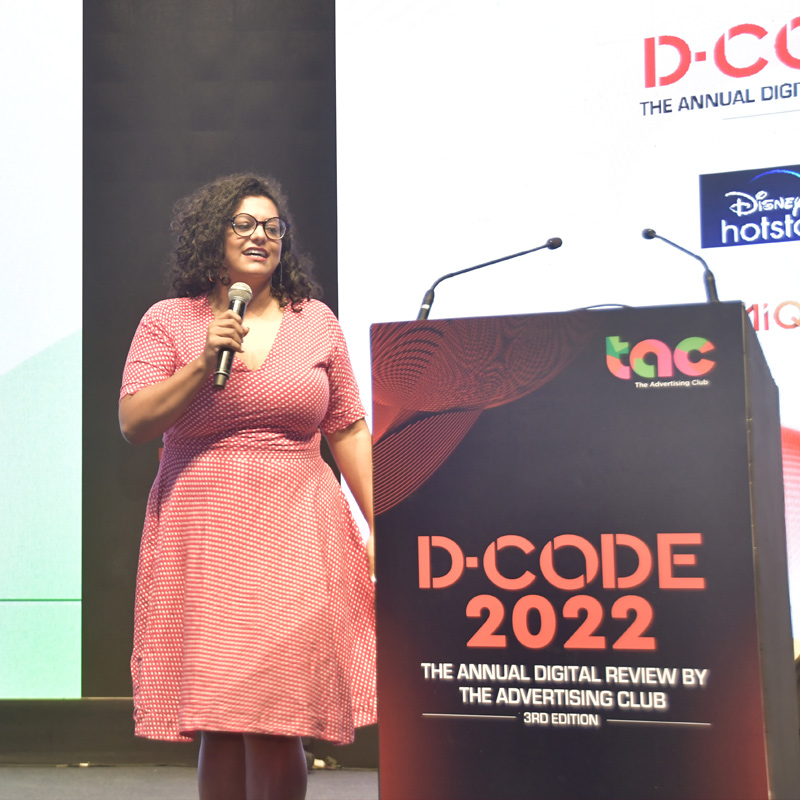
    Mumbai: At The Advertising Club’s third edition of D:CODE, YouTube India head of consumer marketing Mansha Tandon spoke about shaping creativity with culture and trends in the digital space. She added that leaning into multi-format is important, while offering tips and tricks for digital marketers. She mentioned, “Trends are born from creativity that is no longer restricted to one digital video format.”

    Tandon said that years ago, success on YouTube was about a viral video like ‘Charlie Bit My Finger.’ The video represented a monolithic pop culture moment, a one-to-many phenomenon. The video gained immense views in a very short period of time.

    Today, digital trends are continuous, interconnected, and cumulative. The latest trend, ‘Choti Bacchi Ho Kya,’ from the movie “Heropanti,” released back in 2014 starring Tiger Shroff, is now popular due to a mimicry artist on the platform. It became a remix song. It became a gaming video on YouTube Shorts. It became a promotional video for “Heropanti 2.”

    The monolithic pop culture has become personally relevant fragmented moments based on the user’s tastes and preferences. It is not about one viral video at present. It is about how those viral videos go into different formats.

    The second tip she shared is that digital marketers should capitalise on community creativity. Communities are groups of people united by the same interests and passions. What YouTube is seeing today is that one of the most powerful forms of this community is fandom. For instance, K-pop. Then there has been an increase in professional Marvel fans in India. The way they create content is through short-form videos, episode breakdowns, and deep dive podcasts. The fact is that it is not niche. Many of these channels have millions of subscribers. The lesson is that marketers should not only demographically and psychographically do digital campaigns. They should tap into the shared passions and sources of fandom of very young consumers.

    Her third and final point was that marketers should truly represent regional creativity in their digital work. Marketers should not underestimate the kind of creativity going on in areas across the country. Localising creativity in the language and culture is important. But there are other interesting ways in which this is happening. International trends with regional nuance are being followed. Apart from hyperlocal, global into local, there is something being seen that she called interlocal. It is about pan-India content. So something from the North finds a huge fan following in the South. When trends go national, regional creators find the inspiration to create magic. She gave the example of the Badshah’s Jugnu Challenge, seen last year. It spawned many versions across the country. An absolute evolution in entertainment and creativity is being seen.

    She further noted that without entrepreneurs, creators, and users, digital would not be where it is today. She gave the example of Olympic gold medallist Neeraj Chopra, who was on-boarded as a creator on YouTube. It was not enough to just make a film about his story. The aim was to connect the dots. Now he has 1,00,000 subscribers. A short challenge, ‘JavRun,’ was done for GenZ users. It was so successful that a question on the ‘JavRun’ challenge made it to KBC. This is an example of a digital campaign seeping through pop culture and bleeding into offline touchpoints.

    She also spoke about Nike. It was about NFT sneakers and other stuff that makes young people excited. She also gave an example of Alexa, which is Amazon’s voice assistance software. Alexa was inserted into a YouTube talk show among humans. It showed the human and conversational side of Alexa. It is a strong example of how brands and creators can collaborate.

  • Metaverse is an incredible opportunity infront of marketers currently: Meta India marketing director Avinash Pant

    Metaverse is an incredible opportunity infront of marketers currently: Meta India marketing director Avinash Pant

    Mumbai: Things are moving towards an immersive connection, which is being powered by technology. One can share an incredible amount of information with an incredible frequency. The metaverse will change our conception of the world’s businesses, industries, brands, and creators. Some devices can help you get there, but more technology will come.

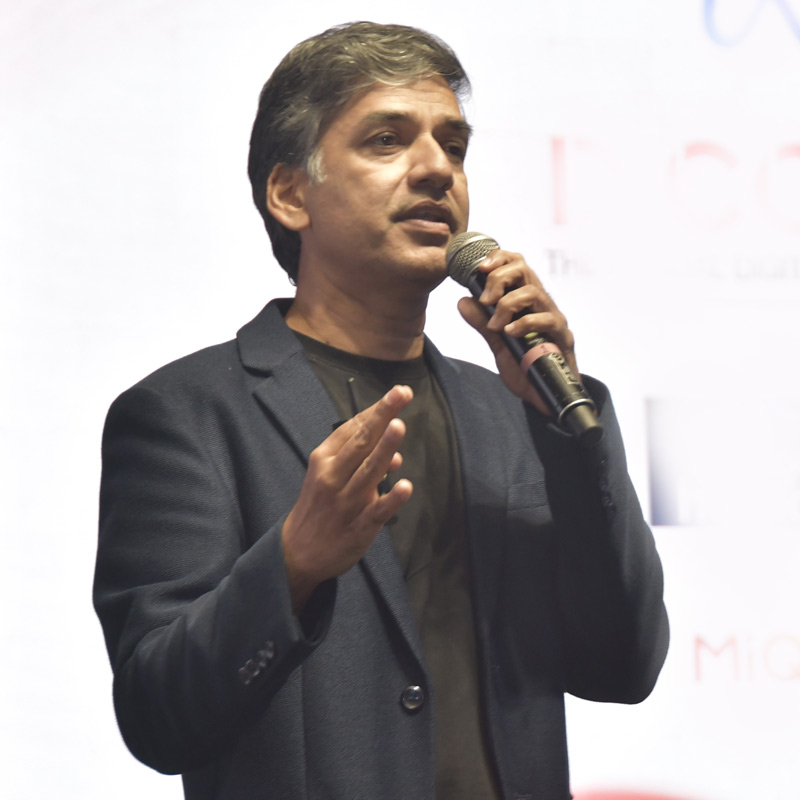
    At The Advertising Club’s third edition of D:CODE Meta India, marketing director Avinash Pant enlightened the audience about the evolution of social connections and the exponentially growing metaverse space, empowering meaningful experiences.

    He said, “Metaverse will take what we love about the internet today, which is about connecting with someone not present in the physical space, and take it to another new level. This is an incredible opportunity in front of marketers.”

    A “metaverse,” he added, is a set of interconnected digital experiences that are able to make you feel present. One can do this from any device, with anyone and anywhere. But the myth he burst is that it is a dystopian reality where people are engrossed in headsets and are completely removed from the real world. That is not the case.

    All technologies put together will make things real and present. There will be a virtual home or many homes. There will be many social experiences. One could work with colleagues in the metaverse. The metaverse does not have to be a representation in the virtual world of one’s physical world. It does not have to follow any of those rules of time, space, or physics. He continued, “The ability to create incredible experiences provides a fascinating opportunity in terms of creativity, storytelling, brand narrative, and commerce.”

    He expects avatars to be synonymous with our digital identity. One way to think about today is that the digital identity is the Instagram handle. Ten years ago, it was an email address. The expectation is that, in time, the avatar will become the digital identity. How do you make it lifelike and more representational? How can it help you present yourself in the digital world? These are things to be considered by digital marketers.

    Felt presence, he said, is one of the concepts of the metaverse. One can be with a friend at a concert through things like a hologram or VR. It will provide an incredible personal social feeling, but you can also share that experience. Even in a professional environment, you can do your dream job while sitting anywhere.

    He further noted that Meta has a workroom product. You feel present because you see someone’s body language, get an idea of their expressions, and how they react as well. The potential this has in commerce is huge. When a consumer can fully immerse himself in an experience, it becomes a powerful tool for a brand.

    But it’s not just about showing off a physical product. He explained that if consumers are living in that reality, then brands have to rethink the concept of who they are. What is the business the brand is in? There is much more significant potential. The metaverse is not predicated on 2D screens. A more immersive setup is possible.

    He gave the example of helping students understand concepts like the solar system better. Meta has done work with the CBSE in this regard regarding the curriculum. He feels that Meta has a fantastic foundation in terms of technology and the platforms that it has built. The work being done in communities, creators, and commerce puts it in a great position to leverage the metaverse. The idea of community itself is evolving. On the creator side, Meta is doing a lot of work to build the creator economy. Also, the idea of storytelling is evolving. People want to interact with content, play with it, not just consume it.

    He also gave the examples of Instagram Reels and AR. In terms of commerce, he said that there was a time when if one had to buy something, you would walk over to the market. Then you started searching online. Today, it has moved from search and buy to discover and buy. People discover brands and services on social media. This spells a massive opportunity when you connect the dots to the metaverse. As a brand, you have to think about it to power demand. Digital collectibles are being unlocked on Meta. All this is coming to bear at a super speed. The ecosystem will be revamped.

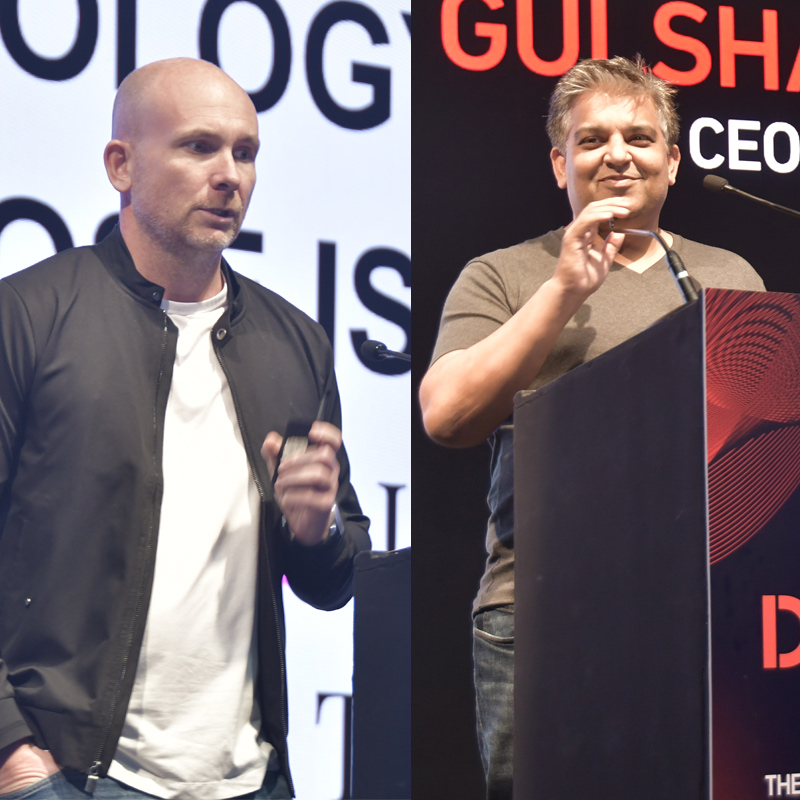
  • “Run separate creatives for demographic, behavioural campaigns”: Jio Ads CEO Gulshan Verma

    “Run separate creatives for demographic, behavioural campaigns”: Jio Ads CEO Gulshan Verma

    Mumbai: At The Advertising Club’s third edition of D: CODE, Jio Ads CEO Gulshan Verma shed light on the power of targeting the geolocation insights in campaigns. He enlightened the audience on the scale and solutions offered by Jio Ads.

    Offering advice for people using digital, he said that one should run separate creatives for demographic and behavioural campaigns. You have to know what you want to do differently given the tendency to feel that digital is everything. He does not believe in this view. He feels that customers are different, whether based on demographics or based on behaviour. People make the mistake of over-targeting and trying to be super efficient. “My point of view is that if you look at people who buy toys, 50 per cent are parents, 30 per cent are gifts, and 20 per cent are random. If you only focus on people who are willing to buy your product, then you will never build a new product.”

    Also, one must remember that omnichannel and geo-location insights offer the opportunity to understand consumers at scale. One should not only focus on online signals. One per cent of Indians have a pet. The key is to figure out who has visited a vet in the last six months. That is how you can find that one per cent. His advice is to not ignore geographical and real-world signals. Finally, brands must remember to put privacy first when they run digital campaigns and build a digital strategy. Why should consumers trust you with their information and give you their insights? How will you create value for them? One has to put privacy first.

    “We are the advertising arm of Jio. A year ago, the team was just the two of us. We are now 170 people. We are a platform that links consumers in multiple contexts.”

    He noted the billions of relationships that the company has with consumers who work with the company and carry its SIM cards. The company is also a content provider and aggregator. Jio, he said, also happens to be the country’s largest retailer. It works closely with companies like ONDC. The aim is to build an idea of how all three work for marketers digitally. 450 million consumers trust Jio with their identity, billing relationships, and what they watch. 13.47 million people have ordered fast food. 12.69 million people have bought mutual funds. Many of them are parents. There is a difference of opinion on how many are on EMI. Many watch OTT. The company brings all this data together and puts it out for advertisers. 

    The company worked with the mutual fund association, AMFI. What is interesting is that every ad goes after people deterministically. So, for instance, the ad can target someone who has an EMI with the message, why have an EMI? Mutual funds should be an investment. One ad was targeted at people who the company knows have bought mutual funds. Marketing effectiveness can be tracked to determine whether or not those individuals are still active in mutual funds. Is the campaign able to add more customers? What is interesting is that the mobile reflects both one’s online and real life. That is how the company is able to understand both the consumers’ lives.

    He also gave the Tata Sky campaign as an example of creative excellence. The message is that the DTH service provider watches you while you watch it. It can take the viewers’ emotions from that. A range of emotions were shown. It was not just a video. There were A.I. filters, influencers, different screen sizes, people watching on the train, in the bar together. This concept, he said, was super powerful. I executed fabulously well and took the interesting opportunity.

    Meanwhile, S4 Capital CEO – Asia Pacific Michel de Rijk presented the Tata Tea example done for Independence Day and emphasised how the integration of data and content with technology enables agencies to create high-quality content overnight in just their own studio. He said that media monks aim to make a positive impact by integrating data and content with technology at the heart of everything that the agency does. The aim is to make things real on digital screens. But technology with a purpose is useless, he warned. It needs real intention to create new digital worlds. One of the principles his agency follows is ensuring that there is a real impact on consumers. The unreal engine is used to deliver real business growth for the agency’s partners. Tata Tea had approached the agency two weeks before Independence Day.

    It wanted to connect with every state in the country. The aim was to spread the message that the company truly understands India and spread the pride of the nation on Independence Day. Another objective was CSR. The campaign was about iconic moments that happened since Independence and the impact that those moments still have today. It was filmed in a studio in Delhi. The agency did not visit any locations. It was shot in one day. It was about unleashing the power of hyper localisation through virtual production. Creating the experience in a cost-efficient digital way is the focus. He said that the unreal engine is a tool developed by Epic that not only significantly changed the gaming, cinema industry but now has moved into the ad industry. One can create high quality film content in a cost efficient manner.

    The other thing he noted is that it works in real time. One can create quick, snappy content for the digital environment on the different platforms that are out there. This is especially important for brands with different SKUs or localisation needs, which are very strong. The third thing is Meta. It is about creating avatars that are close to real environments, real identities. He said this is going to be a massive improvement from what it is today. It is about combining real and unreal worlds. The broad application of web3 will be important. On the real world side, he said that he believes that when tech supports art to create meaningful interactions for consumers, real business outcomes are achieved. This was seen in Tata Tea. Real cultural changes will happen. It is important to pioneer tech-driven creativity, which is what his agency focuses on.