Tag: DBS

  • Sportz Interactive plays a power shot with GenAI-first leadership revamp

    Sportz Interactive plays a power shot with GenAI-first leadership revamp

    MUMBAI: Sportz Interactive (SI) is changing its game plan and it’s going big on both people and pixels. In a strategic shake-up aimed at fuelling its global expansion and pivoting to a GenAI-first future, the sports tech specialist has unveiled a bolstered leadership line-up spanning product, technology, delivery, HR, and business functions.

    At the core of this formation is a three-pronged attack:

    . Sanket Sawkar, SI’s chief product & innovation officer and a 23-year company veteran, will steer the product vision and innovation strategy, designing fan engagement tools to meet the ever-shifting demands of sports organisations.

    . Monojit Banerjee, the new chief technology officer, arrives with stints at JP Morgan, Amazon, and Razorpay, tasked with building secure, scalable engineering platforms to underpin SI’s ambitious product roadmap.

    . Ravi Ranjan, chief delivery officer and Agile delivery specialist from Capgemini and Thoughtworks, will ensure SI’s projects cross the finish line on time and at peak performance.

    Adding people power to the playbook, Himanshu Kapadia joins as SI’s first chief human resources officer, bringing experience from Disney, HDFC, and DBS to foster a high-performance, people-first culture.

    CEO Siddharth Raman called the move a “pivotal moment”, highlighting SI’s strengthening foothold in the UK and Europe, backed by its track record with marquee sports organisations in India. The reshaped leadership, he said, “will help us lead with digital foresight, build for a GenAI-first world, and deliver transformative impact for our partners.”

    With its enhanced bench strength, SI looks set to turn its strategic vision into a winning season, one where innovation, agility, and AI are all playing for the same team.
     

  • Rupert Murdoch’s pay drops 5% in 2015 to $28 million; James’ down 19% at $15 million

    Rupert Murdoch’s pay drops 5% in 2015 to $28 million; James’ down 19% at $15 million

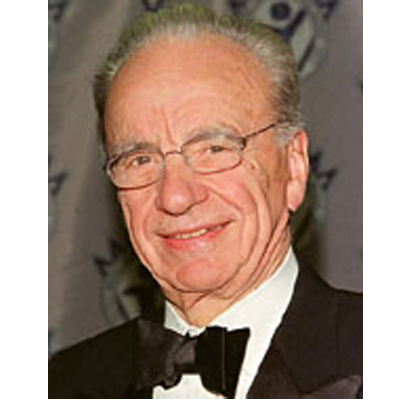
    MUMBAI: In his last year as CEO of 21st Century Fox, Rupert Murdoch took home five per cent less salary in 2015 as compared to 2014. The senior Murdoch was named executive co-chairman of the company in July this year. His pay in the fiscal year ended in June 2015 stood at $27.9 million as opposed to $29.24 million in 2014.


    While his base salary was steady at $7.1 million, his stock award fell 18 per cent to $5.15 million. On the other hand, his non-equity plan compensation fell four per cent to $9.77 million. The senior Murdoch also will be pocketing a bonus of $21 million for his contribution in growing the company’s brands and businesses domestically as well as his plans for future growth with continued investments in domestic cable networks and in international markets.


    Additionally, 21st Century Fox CEO James Murdoch’s total pay also saw a decline of almost 19 per cent at $15.05 million in 2015 as compared to $18.7 million in 2014. His salary continued to remain the same at $3 million, whereas his stock awards were down 18 per cent to $5.42 million. His non-equity incentive compensation too declined four per cent to $5.58 million.


    James Murdoch, who is slated to received a bonus of $12 million, played an important role during fiscal 2015 in developing the company’s key international businesses and investments. Moreover, the company said that he continues to champion the expansion of the company’s international sports portfolio, particularly with new rights acquisitions at Star Sports in India, positioning the company for greater profitability. Under his leadership, the company continues to expand its digital offerings of its library product and explores opportunities to obtain the digital rights to other key programming and to expand its digital advertising capabilities.


    In a proxy filing with the Securities and Exchange Commission (SEC) in 29 September, the company said that this was due to the decline in stock awards and non-equity incentive compensation.


    On the other hand, the company’s deputy chairman Chase Carey, who also served as the company’s COO with James until July, received compensation of $23.22 million for the year ended 30 June, 2015, which was down from $27.9 million in 2014. Carey’s salary remained the same at $4.05 million. Carey, who now serves as the 21st Century Fox’s executive vice chairman, will receive a bonus of $20 million for hisexceptional strategic leadership and management.


    21st Century Fox’s proxy filing also mentioned that the company’s annual meeting is scheduled on 12 November in Los Angeles, California.


    For the year ended 30 June, 21st Century Fox’s net income dropped 36 per cent to $4.51 billion, while revenues grew 15 per cent to $ 31.9 billion.


    21st Century Fox Business Highlights for 2015 are as follows:


    INDIA


    • The company continued its expansion of its international cable business, particularly at Star India. Star Sports’ broadcast of the ICC Cricket World Cup set an all-time viewership record, and the introduction of two new local sports leagues, Kabaddi and Indian Super League (soccer), provided strong ratings and present new opportunities.


    • Through Star India’s agreement to acquire the broadcast business of MAA Television Network Limited, the company initiated its expansion into the Telugu TV market.


    • The company expanded its non-linear advertising products and services through the launch of Hotstar, a digital video streaming platform in India.


    INTERNATIONAL


    • The company continued to grow its television and cable channel businesses through obtaining and increasing retransmission and affiliate compensation and securing key distribution agreements.


    • The company continued to strengthen its core domestic cable business with the growth of its national sports channel Fox Sports 1 by featuring additional sports events including the U.S. Open Golf Championship and Women’s World Cup events, and by growing its third branded FX channel, FXX, by featuring all episodes of The Simpsons and premiering an extensive slate of theatrical motion pictures.


    • The company’s filmed entertainment business continued to have leading worldwide box office sales while creating and growing new and existing film franchises such as The Maze Runner, Kingsman and Planet of the Apes.


    • The company created new hit series such as Empire and The Last Man on Earth and enhanced its key existing brands including The Simpsons, Family Guy, Modern Family and Homeland. In addition, the company is reinvigorating the broadcast network’s primetime line-up with the successful debuts of Gotham, Last Man on Earth and Empire, which was the number one new show and highest rated broadcast show in the 2014-2015 broadcast season.


    • The company expanded its non-linear advertising products and services through the acquisition of true[X], a leading engagement advertising company specializing in advertising formats for on-demand marketing campaigns in the U.S.


    • The company returned a significant amount of cash to stockholders through stock repurchases of approximately $5.9 billion during fiscal 2015, a 57 per cent increase over fiscal 2014 levels and through increasing the semi-annual dividend by 20 per cent to $0.15 per Class A and Class B share, resulting in an annual dividend for fiscal 2015 of $0.30 per share or approximately $610 million. In August 2015, the company announced that the Board approved an additional $5 billion authorization to the Company’s stock repurchase program intended to be completed by August 2016.


    • The company sold its direct broadcast satellite television (DBS) businesses, Sky Italia and its interest in Sky Deutschland AG (Sky Deutschland), to Sky plc (formerly known as British Sky Broadcasting Group plc) for approximately $8.8 billion, resulting in a gain of approximately $5 billion and creating a pan-European digital television leader.


    • The company and funds managed by affiliates of Apollo Global Management, LLC created Endemol Shine Group, a global multi-platform content provider bringing together the Shine Group, Endemol and Core Media Group.

  • FY-2015: Cable and Filmed Entertainment boost Fox op income 3.1%

    FY-2015: Cable and Filmed Entertainment boost Fox op income 3.1%

    BENGALURU: Rupert Murdoch’s Twenty-First Century Fox Inc. (Fox) reported a 3.1 per cent increase in adjusted annual total segment operating income before depreciation and amortisation (OIBDA) of $6488 million for the year ended 30 June, 2015 (FY-2015) as compared to the $6291 million last year due to higher contributions from the company’s Cable Network Programming and Filmed Entertainment segments.


    The company reported total revenues in FY-2015 of $28.99 billion, a $2.88 billion decrease from prior year revenues of $31.87 billion. Excluding the net revenues from the Direct Broadcast Satellite Television (DBS) businesses, Sky Italia and Sky Deutschland AG, which were sold in November 2014 to Sky plc (Sky), in both years, adjusted revenues increased $890 million, or 3.4 per cent, over the $26.06 billion of adjusted revenues in the prior year. This increase was primarily driven by double-digit revenue growth at the Cable Network Programming segment.


    Fox reported annual total segment operating income before depreciation and amortization (OIBDA) of $6.72 billion, which is equal to the amount reported in the prior year. Excluding the OIBDA contributions from the DBS businesses in both years, OIBDA increased $197 million, or the above mentioned 3.1 per cent, over the $6.29 billion of adjusted OIBDA in the prior year.


    Company Speak


    Fox executive chairman Rupert Murdoch said, “We made clear operational strides over the last year that will further position us to benefit from the strong and growing global demand for high quality video content. We delivered a solid financial performance, driven by sustained gains in affiliate fees, while we continued to invest in building our new channels Fox Sports 1, FXX and Star Sports. The appeal of our new sports rights resonated with consumers globally, whether it was Star Sports in India setting new records with hundreds of millions of viewers for the ICC Cricket World Cup, or the more than 25 million viewers who watched the Women’s World Cup Final on Fox. Our film studio achieved outstanding critical and box-office success with a truly diverse range of films and we are proud of the creative excellence that earned it the most Academy Awards in the industry. Our company is well positioned for this time of opportunity in our industry. We will balance the utilization of our strong balance sheet to drive growth. Today’s announcement of our new $5 billion buyback authorization reflects our ongoing program to provide direct shareholder returns.”


    Cable Network Programming


    Cable Network Programming annual segment OIBDA increased five per cent to $4.65 billion, driven by a 12 per cent revenue increase led by continued strong affiliate revenue growth and higher advertising revenues. The revenue improvement was partially offset by a 16 per cent increase in expenses, representing higher sports programming costs driven by the broadcasts of the ICC Cricket World Cup at Star Sports, increased Major League Baseball and NASCAR rights costs at Fox Sports 1 (FS1), and higher professional team rights costs at the regional sports networks (RSNs) as well as increased entertainment programming costs at FX Networks. The segment OIBDA growth was adversely impacted by five per cent from foreign exchange rate fluctuations, primarily in Latin America and Europe.


    Domestic affiliate revenue increased 17 per cent reflecting the combination of sustained growth at the regional sports networks (RSNs), Fox News Channel and FX Networks, increased contribution from FS1, and the consolidation of the Yankees Entertainment and Sports Network (the YES Network). International affiliate revenue increased three per cent driven by strong local currency growth at the Fox International Channels (FIC) and Star, partially offset by a 12 per cent adverse impact from the strengthened US dollar.


    Domestic advertising revenue grew four per cent over the prior year period led by double-digit growth at the sports channels, including the impact of the consolidation of the YES Network, as well as growth at Fox News and FX Networks. International advertising revenue increased 14 per cent due to strong local currency growth at Star and FIC, which was partially offset by a five per cent adverse impact from the strengthened US dollar.


    OIBDA from the domestic channels increased 12 per cent from the prior year, led by strong double-digit growth at the RSNs, which includes the impact of the consolidation of the YES Network, as well as higher contributions from Fox News Channel and National Geographic Channels. Annual OIBDA at the company’s international cable channels declined 16 per cent from the prior year as double digit local currency growth at the FIC channels and Star entertainment channels was more than offset by the impact of the ICC Cricket World Cup at Star Sports and the adverse impact from the strengthened US dollar, primarily in Latin America and Europe.


    Television


    Full year segment OIBDA of $718 million decreased $164 million or 19 per cent versus the prior year. The decline principally reflects the absence of advertising revenue and OIBDA generated from the broadcast of the Super Bowl in the prior year. Excluding the impact of the Super Bowl in the prior year, segment revenues were consistent with the year ago as strong retransmission consent revenue growth was counterbalanced by a 6 percent decline in advertising revenues reflecting overall lower general entertainment ratings at the Fox Broadcast Network.


    Filmed Entertainment


    Full year segment OIBDA of $1.45 billion increased $87 million, or six per cent, over prior year amounts reflecting higher film studio contributions partially offset by lower contributions from the television production businesses and the absence of full year contributions from Shine Group (Shine), which was contributed into the Endemol Shine Group joint venture in December 2014. The film studio’s growth was led by strong worldwide theatrical and home entertainment performance across a diverse set of releases, including Dawn of the Planet of the Apes, The Fault In Our Stars, Taken 3, Gone Girl, Kingsman: The Secret Service and The Maze Runner as well as the home entertainment performance of Rio 2. The film studio’s commercial and creative success was further highlighted by the all-time industry record it set of more than $5.5 billion in global box-office receipts for calendar 2014, as well as its industry leading eight Academy Awards for Fox Searchlight, including Best Picture for Birdman: Or (The Unexpected Virtue of Ignorance). Segment OIBDA growth was also adversely impacted by nine per cent from foreign exchange rate fluctuations.


    Total equity (losses) earnings of affiliates


    Annual equity earnings from affiliates were $904 million as compared with $622 million in the prior year. The increased contributions from affiliates reflects increased contributions from Sky primarily resulting from the Company’s share of Sky’s gains on the sale of its ownership stakes in National Geographic Channels International, Sky Betting & Gaming (Sky Bet) and its shares in ITV partially offset by purchase price amortization recorded by Sky related to its acquisition of the DBS businesses from the Company, as well as the absence of pre-tax gains related to the Company’s participation in Sky’s share repurchase program which ended last fiscal year. The higher Sky contributions were partially offset by the inclusion of equity losses of Endemol Shine Group, the absence of the YES Network contributions in the current year resulting from its consolidation in February 2014 and higher losses from Hulu.

  • Mindscapes One Ideas signs a joint venture agreement with DEFI

    Mindscapes One Ideas signs a joint venture agreement with DEFI

    MUMBAI: Mindscapes One Ideas has roped in DEFI group and have signed an exclusive agency JV agreement with equal share holding pattern and launching DEFI groups’ services in India as DEFI-Mindscapes.


    The statement issued said, “We would like to change the OOH skyline of India and bring in the international standards spectacular OOH signs in India and encourage more of corporate brand building than just product campaign , we will also be adding glitz to the product campaign through OOH with international communication and visual technologies. We will launching our first project in Mumbai and then slowly move to the other cities of India.”


    DEFI also pioneered in city architectural planning for OOH standardisation which helps the local municipal corporation to increase its advertising revenue without making the city look clutter and ugly and maintain the esthetic value.


    The company will be working hand on hand with all existing OOH media owners of each city along with the city planners and city councils and try to bring the city skyline to the international standards.


    “We also have the most advanced and the biggest corporate signage factory of our own under our sister concern DBS in Beijing and will initially produce all our signs over there and import it for installation but within an year we plan to open our 2nd state of the art factory in India which will mainly cater to our clients in India, Russia, Sri Lanka, Middle East, part of east Europe and African continent,” the statement continued.

  • SUS multi-channel video subscriber universe sees small growth in 2012: SNL Kagan

    SUS multi-channel video subscriber universe sees small growth in 2012: SNL Kagan

    MUMBAI: US multichannel subscribers grew slightly in both Q4 2012 and for the full year, reversing the negative quarterly trends of the earlier two quarters. The small gain that brought total multichannel subs to 100.4 million illustrates the continued popularity of multichannel video alongside evidence that alternative access is siphoning the segment‘s growth potential, according to SNL Kagan.

    Multichannel service providers in the US collectively added 51,000 new customers in fourth quarter 2012, according to company reports, private MSO surveys and SNL Kagan estimates for total subscribers served by cable, satellite and telco video packages. The gains for the full year hinged on fourth-quarter performance following declines in the seasonally weak second and third quarters that essentially erased the 2012 first-quarter bump.

    The three platforms collectively added 46,000 video customers year over year in 2012, finishing the year with more than 100.4 million. While the industry has never posted a full-year decline in video subscribers, growth has proven difficult above the 100 million-household mark. For the year, SNL Kagan estimates that U.S. cable subs declined to 56.4 million, DBS subs grew to 34.1 million and telco video subs grew to 9.9 million.

    External factors continue to hold a place in the discussion, including persistent high unemployment and other macroeconomic weights along with widespread disruption to East Coast systems from Hurricane Sandy.

    However, the modest fourth-quarter and full-year 2012 subscriber growth suggests the segment is not rebounding with the broader economy, and customer formation is lagging the rebounding housing market. According to the fourth-quarter 2012 figures from the US Census Bureau housing survey, occupied housing continued to ramp up, adding nearly half a million new units when including occupied, seasonal and occasional-use households.

    The year-over-year comparison, which benefits from a standard backward revision in the survey, offers a broader perspective that supports the same trend line. The metric points to an annual net gain of 974,000 occupied, seasonal and occasional-use households, more than 21x the increase in multichannel subscribers over the same period. The result is a persistent dip in the multichannel penetration of occupied households in the US.

    According to SNL Kagan‘s overlay, the three primary platforms accounted for 84.7 per cent of the occupied homes in the US, down both sequentially and annually and off of the high point of 87.3 per cent registered in first quarter 2010.

    The cable industry posted a net loss in fourth quarter 2012 that was a significant improvement over the previous two quarters, but outpaced the segment‘s performance in the year-ago quarter. SNL Kagan estimates the industry dropped 418,000 video subs, a 0.7 per cent sequential decline. The segment lost 1.66 million video customers in 2012, an improvement over the 1.8 million dip in 2011.

    The telcos are experiencing slowing growth as their penetrations rise. The industry was still the driving force in subscriber growth, with more than 1.4 million new video customers in 2012. However, the momentum is slowing, down from nearly 1.6 million in 2011.

    DBS providers built on their slice of the video segment, but with net adds of 288,000 in 2012 — down from the nearly half a million new subs added in 2011 — growth is becoming more difficult to come by.

  • MPG loses Rajagopal, gets Kari on board

    NEW DELHI: Media Planning Group‘s (MPG) outdoor arm, MPG Active has appointed Krishnamurthy Kari as its chief operating officer. Kari was earlier with Aircel as the head of Out-of-Home and activations.

    He has nearly 15 years of experience in the field. At MPG Active Kari will be responsible for acquiring the network business for MPG Active and enhancing the existing roster of MPG network accounts and deliver an integrated solution to the clients‘ needs.

    MPG Active has full service offices in Delhi, Mumbai, Bangalore, Kolkata, Punjab and Hyderabad, with a staff strength of more than 24 professionals. Some of its key clients are Capgemini, Hyundai, Skoda Motors, VLCC, Jabong.com, National Geographic, VIACOM 18, News 24, Cleartrip.com, fashinara.com, Quicker.com, BNP Paribas, Carlsberg, Smile Group, DBS, Fire Luxorand Puri Constructions.

    At MPG, its VP – investments (West) Gautam Rajagopal has quit. MPG CEO Mohit Joshi confirmed both the people movements to indiantelevision.com.

    Rajagopal had joined MPG in May 2011. Before this, he was with Beehive Communications as vice-president, media services for nearly four years.

    Rajagopal has more than 17 years of experience. He has worked with Contract Advertising, Madison, Mediavision and Carat Media Services. In 2003, Rajagopal joined Starcom MediaVest Group as group head, broadcast investment. After two years, he moved to Mudra (Optimum Media Solutions), where he worked for the next two years, before joining Beehive Communications.

    He has worked across various categories of brands such as HDFC Bank, Asian Paints, Parle, Bisleri, P&G, Heinz, Skoda, Bajaj and Cadbury.

  • Telecom innovation in the US being led by broadband deployment: FCC

    Telecom innovation in the US being led by broadband deployment: FCC

     MUMBAI: In a statemjent before the Senate Committee on Commerce, Science and Transportation, US media watchdog Federal Communications Commission (FCC) chairman Kevin Martin notes that almost all of today’s innovation is enabled by broadband deployment.

    “Broadband technology is a key driver of economic growth. The ability to share increasing amounts of information, at greater and greater speeds, increases productivity, facilitates interstate commerce, and helps drive innovation. But perhaps most important, broadband has the potential to affect almost every aspect of our lives.

    In 2005, the FCC created a deregulatory environment that fueled private sector investment. Since then, companies have begun racing to lay fiber to homes in the US. From March of 2005 to the end of last year, the number of homes passed by fiber increased from 1.6 million to 6.1 million, he notes.

    Just as significant for consumers, the average price of broadband has dropped in the past two years. The Pew Internet and American Life Project (Pew) found that, from February 2004 to December 2005, the average price for home broadband access fell from $39 per month to $36 per month. For DSL, monthly bills fell from $38 to $32 (almost 20 per cent), while cable modem users reported no change from $41 during the same period.

    The decline in price was accompanied by an increase in the number of Americans subscribing to high speed connections to the Internet. Such connections have grown by nearly 600 per cent since 2001. And according to the Commission’s most recent data, high-speed connections increased by 26 per cent in the first half of 2006 and by 52 per cent for the year ending 30 June, 2006.

    The FCC, he says, is making available as much spectrum as possible to put the next generation of advanced wireless devices into the hands and homes of consumers. In September the FCC closed its largest and most successful spectrum auction, raising almost $14 billion. The spectrum offered was the largest amount of spectrum suitable for deploying wireless broadband ever made available in a single FCC auction. “And we are currently preparing to auction 60 MHz in the 700 MHz band, spectrum that is also well-suited for the provision of wireless broadband” he adds

    Moreover, the number of consumers who receive their broadband connection through satellite or wireless will continue to increase, as new satellite services are launched, rural wireless Internet service providers continue to grow, and Wi-Fi hotspots continue to sprout up across the country. “Indeed, there are nearly 50,000 Wi-Fi hotspots throughout the US, more than three times the number of any other country”.

    Media: He notes that as has been the case with the telecom sector, consumers and companies are benefiting from technological developments and innovation in media. DVR’s, Vod and HD programming offer them more programming to watch at any given time then ever before. Thanks largely to new services like these, cable operators’ total revenue grew from $65.7 billion to approximately $73 billion last year.

    At the same time while consumers have enormous choice among channels, they have little control over how many channels they are able to buy. For those who want to receive 100 channels or more, today’s most popular cable packages may be a good value. But according to Nielson, most viewers watch fewer then two dozen channels. For them, the deal isn’t as good.

    The cost of basic cable services have gone up at a disproportionate rate – 38 per cent between 2000 and 2005 – when compared against other communications sectors. The average price of the expanded basic cable package, the standard cable package, almost doubled between 1995 and 2005, increasing by 93 per cent.

    Martin notes that the increase in cable prices appears even more dramatic when viewed relative to the prices for a number of other communications services: prices for long distance, international, and wireless telephone service have all decreased dramatically during this same timeframe.

    Progress in satellite: 10 years ago the satellite industry was nascent. Today, Direct Broadcast Satellite (DBS) provides consumers an important competitive choice. And satellite offerings are sometimes the only multi-channel video option for rural Americans. Between 2000 and 2006, DBS subscribership grew 100 per centand average revenue per user grew 32 per cent. Like DBS, satellite radio also has experienced significant growth. Subscriptions have increased from 1.6 million in 2003 to 13.6 million subscribers in 2006.

    “The transition from analog to digital technology poses both opportunities and challenges for the broadcast sector. The new and better services that digital technology enables are great for consumers, who will have access to more free news, information and entertainment.

    The way forward: Martin notes that there are four areas that deserve particular attention.

    “First, we must continue to increase access to communications services. I will continue to make broadband deployment the Commission’s top priority.

    “As wireless technologies become an increasingly important platform for broadband access, it is critical to ensure that there is adequate spectrum available for providing broadband service.

    “Second, we must continue to promote real choice for consumers. Competition and choice in the video services market will benefit the consumer by resulting in lower prices, higher quality of services, and generally enhancing the consumers’ experience by giving them greater control over the purchased video programming.

    “We need to continue our efforts to create a regulatory environment that encourages entry into this market and more choice for consumers. This includes making sure that competitive providers have access to “must-have” programming that is vertically integrated with a cable operator.”

    Martin says that the FCC also needs to ensure that existing service providers are not standing in the way of the innovations currently occurring in the consumer electronics space. Consumers want to be able to walk into a store, buy a new television set or Tivo, take it home, and plug it in as easily as they do with a telephone.

    Third, he says that the FCC must continue to protect consumers. “We must always be on alert for companies intentionally or unintentionally harming consumers.

    Martin says that perhaps no other issue before the Commission garners more public interest then its quadrennial review of media ownership rules. This attention according to him is understandable given that the media touches almost every aspect of American lives. “We must make sure that consumers have the benefit of a competitive and diverse media marketplace. At our public hearings, the Commission has heard a consistent concern that there are too few local and diverse voices in the community. Certainly, we need to protect localism and diversity in the media. We must balance concerns about too much consolidation and too little choice, however, with appropriate consideration of the changes and innovation that are taking place in the media marketplace.”

    Fourth and finally he notes that the FCC must work towards enhancing public safety.

  • Space Systems/Loral wins contract to build satellites for Echostar & Intelsat

    Space Systems/Loral wins contract to build satellites for Echostar & Intelsat

    MUMBAI: Space Systems/Loral (SS/L), a subsidiary of Loral Space and Communications and provider of high-power commercial satellites, has announced that it has been awarded a contract to manufacture a new direct broadcast satellite (DBS) for EchoStar Orbital Corporation II, a subsidiary of EchoStar Communications Corporation. EchoStar XIV will provide expanded services and flexibility for Dish Network’s more than 13 million direct-to-home (DTH) television subscribers.

    “Our long-term relationship with EchoStar is an endorsement of the performance, reliability and service that our company provides,” said Space Systems/Loral president John Celli. “With an ever-increasing amount of programming options, it is an exciting time for the DTH industry and Space Systems/Loral is well positioned to help EchoStar meet its growing demand for advanced services.”

    There are currently three SS/L-built satellites on orbit in the EchoStar fleet.

    “As the fastest-growing pay-TV provider in the nation and an innovator in advanced services such as HDTV, we need the power and capacity that a satellite from Space Systems/Loral can provide,” said EchoStar vice president of Space Programs Rohan Zaveri.

    In addition, the company has also recently announced that Intelsat Corporation has awarded SS/L a contract to manufacture Intelsat 14, a new, high-power C- and Ku-band fixed satellite service (FSS) satellite.

    “This contract underscores our long-standing relationship with Intelsat,” said Celli. “This new project provides SS/L the opportunity to demonstrate our success in combining heritage, space-proven satellite technology with new innovation. We are pleased to be awarded the contract for this important new member of Intelsat’s global fleet.”

    Intelsat 14, to be located at 45 degrees West longitude, will be the 44th Space Systems/Loral satellite built over the past four decades for Intelsat, the world’s largest fixed satellite services operator. The satellite will carry 40 C-band and 22 Ku-band transponders across four different beams, covering the Americas, Europe and Africa, informs an official release.

    Intelsat 14 will have a design life of 15 years and will replace the PAS-1R satellite when the new satellite is delivered in 2009. Intelsat 14 is the first satellite awarded to SS/L in 2007. The company received seven satellite awards in 2006 from a wide variety of customers, including FSS operators, direct-to-home and satellite radio service providers.

  • India not on EchoStar radar ‘in the near term’

    India not on EchoStar radar ‘in the near term’

    HONG KONG: Regulatory blips and other on-ground problems notwithstanding, India is too big a market to be ignored for long by investors, says Scott Zimmer, senior advisor to EchoStar chairman Charlie Ergen.

    “Both India and Vietnam are big markets… (however) it also means bigger opportunities, bigger challenges and bigger hurdles,” Zimmer says.

    Headquartered in Colorado in the US, EchoStar Communications Corporation is a public company with approximately 21,000 employees. The company and its subsidiaries deliver direct broadcast satellite (DBS) television products and services to customers worldwide, apart from recent interests in mobile television.

    “We are always looking for opportunities in various parts of the world and India is no exception,” Zimmer told Indiantelevision.com here today on the sidelines of the annual convention of Cable and Satellite Broadcasting Association of Asia (Casbaa).

    However, he added that there are no immediate plans from EchoStar to invest in India, though Zimmer spent a few days recently in Mumbai to have first-hand information on Asia’s largest market after China.

    In the short to medium term I don’t see ourselves making any commitment in India. But it’s too big a market to be ignored for too long by anybody,” Zimmer said.

    According to him, whenever EchoStar gets into India it would be with a local partner and it’s “important to find the right partner.”

    “India does have some DBS services (read DTH platforms) and I expect some more players to come,” Zimmer said, adding that the Zee group should have its work cut out to take on a “gorilla” like Tata Sky.

    While Tata Sky, India’s second pay DTH platform, is a joint venture between the Tatas and News Corp, the Subhash Chandra-controlled Dish TV is chugging along without a foreign partner.

    Indian media norms allow foreign direct investment of up to 20 per cent in a DTH venture and it is a subject of much debate within the industry whether this percentage should be increased or not.

    Zimmer, however, refused to make any comment when asked whether he had held exploratory talks with the Essel/Zee group during his last visit to Mumbai.

    “It would be improper on my part to make any sort of comment … (but) both the Zee Group and EchoStar share same sort of heritage in the sense that both grew from scratch,” Zimmer said.

    Still, the man advising the legendary Ergen points out that while EchoStar’s competitor’s during the early stages were also growing in the US, the Zee group in contrast has a “gorilla like the Tatas” competing with it.

    Zimmer also feels that what could be shying away some foreign investors from India is the presence of “strong and dominant” Indian companies like the Tatas and Reliance.

    As per EchoStar’s website, the company story began in 1980 when chairman and CEO Charlie Ergen entered the satellite television industry as a distributor of C-band TV systems. Joined by his wife, Candy, and friend, James DeFranco, 
    EchoStar Communications Corporation was formed.

    In 1987, EchoStar filed for a DBS license with the Federal Communications Commission and was granted access to orbital slot 119° West Longitude in 1992. The company started its own DBS service on 28 December, 1995 with the launch of EchoStar I satellite.

    That same year, EchoStar established the Dish Network brand name. EchoStar II, launched on September 10, 1996, and expanded Dish Network’s capacity. Presently, the 14 owned or leased satellites that make up the EchoStar fleet have the capacity to provide thousands of channels of digital video, audio and data services via Dish Network service to homes, businesses and schools throughout the United States.

  • Baby TV to launch in Indonesia next month

    Baby TV to launch in Indonesia next month

    MUMBAI: Baby TV and Dori Media International have signed an agreement with Indovision, Indonesia’s first Direct Broadcast Satellite (DBS) provider, to launch Baby TV, the television channel dedicated to infants and toddlers.

    Baby TV is the first television channel designed especially for children under 3 years old. Broadcasting 24 hours and free of commercials or ads, Baby TV is geared towards learning, activity, fun and parent-child interaction. The channel is produced in collaboration with leading child psychologists and infant development experts and is a unique service for parents and grandparents.

    Baby TV is already available on over 25 different platforms in 15 countries across Europe, the Middle East and Africa and is expected to be launched in Indonesia in Bahasa Indonesia language in May 2006.

    The agreement is for a period of 10 years during which, Indovision will pay Baby TV and DMI a consideration from any income derived from the channel.

    DMG president and CEO Nadav Palti says, “Although our business continues to be focused on Telenovela, our relationship with Indovision, the largest DTH operator in Indonesia, following the successful launch of our TV channel Televiva Vision 2 has given us a unique position to partner with other channels looking to enter the Asian market. Baby TV is a successful channel which is quickly establishing itself in the global market and Indovision, being the largest DTH operator in Indonesia is the natural partner. Baby TV offers a very unique service and we believe it will be very popular with parents and families in Indonesia.”

    Dori Media Group is an international entertainment group active in the production, distribution and broadcasting of Telenovela. The group owns and sells high-loyalty TV content and branded merchandise attracting a wide variety of audiences in over 45 countries. In Israel, Dori Media Group owns and operates the Viva dedicated TV channels and Darset Productions production company.