Tag: DAVP

  • Govt denies any plans to reduce DAVP allocations

    Govt denies any plans to reduce DAVP allocations

    NEW DELHI: The Government has denied that there is any move to drastically cut the budget of the Directorate of Advertising and Visual Publicity (DAVP).

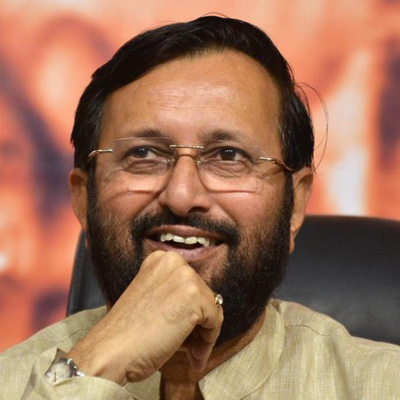
    In fact, Information and Broadcasting Minister Prakash Javadekar has said that the publicity budget of DAVP has shown an increasing trend since 2009-10 onwards.

    While the actual plan and non-plan DAVP expenditure for 2010-11 was Rs 90.92 crore, it was Rs 127.72 crore in 2011-12, Rs 139.75 crore in 2012-13, and Rs 222.47 crore for 2013-14.  

    The allocation of budget for advertisement and publicity of the schemes/programmes of an individual Ministry/Department is allotted by Planning Commission and Ministry of Finance, the Minister told Parliament.

    Therefore, Javadekar said this Ministry cannot put any embargo on Ministries / Departments /Autonomous Bodies / Constitutional Bodies, etc. resorting to advertising. 

    In response to another question, the Minister said the money spent on electronic media and print media during 2013-14 was Rs 500.35 crore and Rs 446.68 crore, respectively. During 2012-13, the money spent on electronic media and print media was Rs 198.30 crore and Rs 404.38 crore, respectively.

  • TDSAT-TRAI ad cap: NBA finishes rejoinder

    TDSAT-TRAI ad cap: NBA finishes rejoinder

    MUMBAI: It was day two of the News Broadcasters Association (NBA) submission of its rejoinders in the hearings on the proposed Telecom Regulatory Authority of India (TRAI) ad cap regulation. NBA counsel Anup Bhambhani clarified that it was untrue that channels had tried to suppress documents, as everything related to teleport licence is in the public domain and hence easily accessible to the regulator. Channels had individual teleport licences while others were uplinking through Bharti Airtel or Essel Shyam which made them the licensees and not the channels.


    The counsel also pointed out that the TRAI had not informed the TDSAT that ads are of three types- commercial, social and programme promos. Not every ad is a paid ad and DAVP ad rates are also low.And the number of minutes of advertising does not take into consideration any of these facts; and hence is not reflected in these categories. He stated that the TRAI had gone overboard in describing the type, length and look of the adverts, in a consultation paper issued in 2012. And even though it was later dropped, it never had any mention of section 7 (11 )of the Cable TV Networks Regulation (CTN) act. Also, the proposed 10+2 regulation finally did not mention that TRAI was using section 11 of the TRAI act in order to enforce section 7 (11) of the CTN act.


    According to the NBA counsel, the 7 (11) argument was very ingenious in order to defend the TRAI regulation which was previously never mentioned. Assuming TRAI can regulate, the intention while framing was not keeping in mind this regulation. He pointed out that the ministry of information and broadcasting (MIB) is the authority for the news channels and not the TRAI.


    The NBA lawyer also clarified that the Bengal Cricket Association vs MIB and Doordarshan judgement does not apply to private broadcasters as is stated in para 79 of the case. Although the case was read against the channels, it claims that the argument that ‘airways are public property’ only applies when you are seeking a teleport licence for setting up a TV station. While thinking of granting a licence, Article 19 (1) of the Constitution that speaks about freedom of speech and expression, can be thought of but not after it has been granted.


    Mentioning the Sakaal papers case, the NBA counsel said that that case was contended because page numbers were restricted and similarly in the case of TV channels also ad duration is being controlled. It also stated that there is no need to prove a loss because even if there is a prospect that there may be a shutdown due to the restriction then it is a violation of Article 19.


    Another point argued was that when TRAI says it is laying down standards of quality under section 11 of the TRAI act, as per precedents it had itself set, it can only include technical aspects such as tariff regulation and never content. According to the NBA, duration is content.


    Addressing the point that the amicus curiae had made, the NBA counsel presented data supporting the fact that channels’ ad rates would need nearly 50 to 100 per cent increases, if losses due to lower air time are to be covered. To support the contention that TRAI only has recommendatory authority, the NBA lawyers pulled up SO 44 and 45 from the TRAI notifications which said “Broadcasting and cable services to be telecommunication services and showed that it is mentioned in it by the central government that TRAI only has a recommendatory function regarding duration of commercials.”


    SO 45E 1 b states “Without prejudice to the provisions contained in clause (a) of sub-section (1) of section 11 of the Act, to make recommendation regarding (b) the parameters for regulating maximum time for advertisements in pay channels as well as other channels”.


    Even though broadcasting has no correct definition, the NBA read from the TRAI explanatory memorandum 2012 where it mentioned broadcasting services to be ‘dissemination of signals.’


    Another argument was that TRAI couldn’t change a statutory law by changing ‘per hour’ to ‘clock hour’ and reporting authority as TRAI. Before coming up with the regulation TRAI didn’t even bother to serve a notice to broadcasters.


    TRAI’s argument that it was for the benefit of consumers that the regulation is being framed was countered by the NBA saying that viewers need choice. If they wanted channels free of ads they should be ready to pay more for the service or else they have an option to switch channels. The channels said they are happy to consider it post DAS is implemented which according to a KMPG report will make subscription and advertisements a 50:50 affair.


    A major point raised was the discrimination towards pay channels and bias towards the pubcaster Doordarshan which according to the NBA was also violating the regulation.


    Tomorrow the music channels are expected to give their rejoinders.
  • Delhi Lokayukta wants DAVP panel to certify circulation figures before giving govt. ads

    Delhi Lokayukta wants DAVP panel to certify circulation figures before giving govt. ads

    NEW DELHI: Delhi Lokayukta Justice Manmohan Sarin has favoured setting up of a panel of Directorate of Advertising and Visual Publicity for empanelment as well as granting of government advertisements.


    The order by the Lokayukta came following a complaint that a local newspaper misrepresented facts about circulation figure in getting advertisement from government agencies and departments in Delhi.


    In his order, Justice Sarin particularly sought a thorough verification of circulation figures of newspapers, journals and magazines owned, edited and published by “public functionaries”.


    “Whenever a public functionary is the owner, editor, printer or publisher or otherwise has a substantial interest in the newspaper, journal, magazine, then the verification of circulation be made compulsory,” he said.


    “A committee of officers of DAVP be constituted for grant of empanelment subject to verification of circulation by Registrar of Newspapers for India (RNI),” the Lokayukta said in the order.


    The complainant had alleged that a local newspaper has printed a few copies with a view to obtain advertisements from government departments.

  • Time bands for govt ads on TV news and business channels amended

    Time bands for govt ads on TV news and business channels amended

    NEW DELHI: The government has amended the time bands for its advertisements on news and business television channels announced by it earlier in September 2012.

    In a modification to the policy Guidelines for Empanelment of Private Cable and Satellite TV channels, the Information and Broadcasting Ministry has said that the three time bands will be 06.00 hrs to 11.59 hrs instead of 07.00 hrs to 11.59 hrs; 12.00 hrs to 16:59 hrs instead of 17.59 hrs, and 17.00 hrs to 22.59 hrs instead of 18.00 hrs to 22.00 hrs.

    This will apply to English, Hindi, and regional news and business channels and will be applicable from 9 May this year.

    All the spots on the channels may be displayed on dispersion basis of one third spots on each time band.

    At least three spots may be displayed in 8, 9, and 10 pm time bands.

    The rates of September 2012 offered by DAVP will apply for all audio visual spots.

    The government had earlier issued modifications on 14 May and 5 September 2012.

    In September 2012, six time bands had been laid for general entertainment channels: 7 am to 9 am, 9 am to 12 noon, 12 noon to 7 pm, 7 pm to 8 pm, 8 pm to 10 pm, and 10 pm to 11 pm.

  • News channels urge government to keep Trai’s ad regulation in abeyance

    News channels urge government to keep Trai’s ad regulation in abeyance

    NEW DELHI: Fearing a huge impact on their revenue models, TV news broadcasters have urged the government not to implement the ad time regulation notified by the Telecom ReguIatory Authority of India (Trai) till digitisation is implemented across the country.


    News channels feel that high carriage fees and low subscription revenues due to constraint of bandwidth on analogue cable networks are issues that need to be sorted out first. Any current regulation that would harm their advertising revenue, which amounts to more than 90 per cent of their total income, can only be “ill-timed”. Advertising has been “slow” and the economic slowdown of 2008 “has not been corrected yet”.


    According to the Trai notification, news and current affairs channels will have to limit their commercial time to 12 minutes per clock hour.

        
    Expressing “deep shock” over the new notification, the News Broadcasters Association (NBA) today said it was “appalled that by way of advertisement regulations, the Trai has issued the most sweeping and intrusive controls, and not just regulations, in relation to advertising that may be carried on TV channels.”


    NBA urged the government to keep the notification in abeyance till such time digitisation is fully implemented in the country (with consequential benefits of no or low carriage fees and credible subscription revenue) and DAVP recommences advertising on news channels at rates which are fair and acceptable.


    Despite Phase-1 of digitisation being implemented from 1 November last year, the benefits have not yet accrued to broadcasters, particularly news broadcasters. Carriage fees continue to be high and most news broadcasters do not get subscription revenues. Over the last year or so, news organisations have not received any advertising from DAVP, which has cut rates to levels 75 per cent lower than they were even five years ago. All of these factors have ensured that most news channel companies face losses on an annual basis.


    The NBA said it believed that in the garb of “regulation of advertisements”, Trai has imposed severe restrictions which amount to “control of content” which is “anathema to our constitutional scheme”. The ad regulations are in violation of Article 19(1)(g) of the Constitution, which entitles a citizen to carry-on any trade or business, NBA stated.


    The NBA notes that the recent regulations reveal a clear lack of understanding of the actual problems on the ground and the environment that the industry operates in. “The regulations, if implemented, will force many news organisations to shut down, taking away our democratic right to inform and educate and to do it independent of Government. With the general elections looming ahead, it would appear that this is an attempt to muzzle the media by taking away its ability to operate independently,” NBA said.

  • Forty per cent DAVP ads for Hindi newspapers during 2011-12

    NEW DELHI: Around 40 per cent of the advertisements released during 2011-12 by the Directorate of Advertising and Visual Publicity (DAVP) were earmarked for Hindi newspapers.

    This was despite the fact that ten states/union territories including the southern states and Odisha did not have a single Hindi daily newspaper.

    The DAVP spent just over Rs 1.25 billion on Hindi newspapers and Rs 1.43 billion on English advertisements during 2011-12.

    A total of Rs 595.635 million was spent on Hindi advertisements till 30 November during 2012-13, as against Rs 660.623 million on English language advertisements.

    The expenditure on advertisements in 30 other languages and dialects during 2012-13 till 30 November varied between Rs 16,000 to Rs 73.696 million.

    During 2011-12, this amount had varied between Rs 5,000 and Rs 156.64 million.

  • Zee News Ltd Q3 ad rev strong, no big fall in carriage fee

    Zee News Ltd Q3 ad rev strong, no big fall in carriage fee

    MUMBAI: A double-digit ad revenue growth has helped Zee News Ltd (ZNL) put up a performance better than the market expectations in the festive quarter but a top executive of the company cautioned that a significant turnaround in spending by advertisers is yet to be visible.


    The carriage payout to cable networks has only marginally dropped in the digitised markets and subscription growth has been subdued.


    ZNL’s ad revenue rose 14.8 per cent to Rs 595.6 million in the fiscal-third quarter from Rs 518.8 million a year earlier, despite a ‘significant opportunity’ loss in terms of advertising revenues from the government.


    “There was a better utilisation of ad inventory during the festival season and we also offered branding and event-based solutions to advertisers. But this is not to say that the ad slowdown has lifted and there is a big turnaround. We will outperform the market which is growing in single digit,” ZNL chief executive officer Alok Agrawal told Indiantelevision.com.


    ZNL’s ad revenue growth for the full-fiscal will be in single digit. TV news broadcasters have been fighting the government on ad rates and are not accepting DAVP (Directorate of Audio Visual Publication) advertising. “The standoff continues and NBA (News Broadcasters Association) members are not carrying DAVP ads,” said Agrawal.


    ZNL posted a 14.2 per cent growth in net profit to Rs 185.5 million in the third quarter ended 31 December from Rs 162.5 million a year earlier.Its operating profit (Ebidta) in the third quarter stood at Rs 196.7 million against Rs 189.7 million in the corresponding period of the previous fiscal.


    The news broadcaster, which has seven channels in its portfolio, reported consolidated revenues of Rs 858.4 million in the third quarter, an increase of 10.1 per cent from Rs 779.7 million a year ago.


    Subscription revenue stood at Rs 222 million, down 0.3 per cent from the previous quarter, and up 15.2 per cent from the earlier-year period.


    Operating expenditure jumped 12.2 per cent to Rs 661.7 million due to increase in employee costs and other expenses.


    Carriage fee has only fallen marginally in the digitised markets. “There has been no significant reduction in carriage fee in the completely digitised markets of Delhi and Mumbai. It has not definitely gone as per the plans of the news broadcasters,” said Agrawal.

  • Failure of Govt to fix rates forces DAVP to extend dates for empanelment of FM radio

    NEW DELHI: The Directorate of Advertising and Visual Publicity (DAVP) has extended by three months up to 31 March 2013 the empanelment of FM radio channels.

    This follows the failure of the Information and Broadcasting Ministry to announce the guidelines for empanelment and rate of FM Radio channels.

    The current deadline was to expire on 31 December and it is understood that the Ministry is trying to iron out some thorny issues so that it can also clear the path for ascending e-auction of the FM Radio Phase III.

    Meanwhile, the DAVP has said that empanelment of certain television channels for the period 2012-15 has expired as they failed to apply for fresh empanelment before the last date, 15 December.

    These include the Lok Sabha TV, two channels of Disney, Hungama TV, Music India, and 17 regional channels.

    It has said that regional channels may apply for the empanelment from the first to the seventh day of every month through the online form.

  • Empanelment with DAVP of 22 TV channels expires

    NEW DELHI: The Directorate of Advertising and Visual Publicity (DAVP) has said that empanelment of certain television channels for the period 2012-15 has expired as they failed to apply for fresh empanelment before the last date, 15 December.

    These include the Lok Sabha TV, two channels of Disney, Hungama TV, Music India, and 17 regional channels.

    It has said that regional channels may apply for the empanelment from the first to the seventh day of every month through the online form.

    Meanwhile, DAVP has extended by three months up to 31 March 2013 the empanelment of FM radio channels.

    This follows the failure of the Information and Broadcasting Ministry to announce the guidelines for empanelment and rate of FM Radio channels.

    The current deadline was to expire on 31 December and it is understood that the Ministry is trying to iron out some thorny issues so that it can also clear the path for ascending e-auction of the FM Radio Phase III.

  • DAVP gets Golden Icon Web Ratna Award

    DAVP gets Golden Icon Web Ratna Award

    NEW DELHI: The Directorate of Advertising and Visual Publicity (DAVP) has been conferred the prestigious Web Ratna 2012 Golden Icon Award for Innovative use of Technology.

    The award was received by DAVP director general A P Frank Noronha from Communication and Information Technology Minister Kapil Sibal at a function in New Delhi.

    Under a project headed by Noronha, the DAVP Website (http:/davp.nic.in/) has enabled a complete change from the manual mode to the online mode where the media plans are made and released for the end users. The website with several user friendly features is the only advertising agency in the country which releases its designs, Release orders, and payments online.

    The site has added a great deal of transparency to the entire system in its billing as well as other procedures which have not only helped the organisation but also its stakeholders. DAVP also keeps as much information as possible on the website for public scrutiny and information.

    The entire chain has contributed a great deal of efficiency to the DAVP’s operation and vastly improved the satisfaction levels of the client ministries as well as newspapers, channels and other agencies.

    The Web Ratna awards, constituted by the Communication and Information Technology Ministry, acknowledge exemplary initiatives/practices in the realm of e-governance. In order to promote more innovative e-governance initiatives, the Web Ratna Awards have been instituted under the ambit of the National Portal of India.