Tag: David Weiland

  • BBC Earth will help grow nascent factual entertainment space in India, feels Beebs

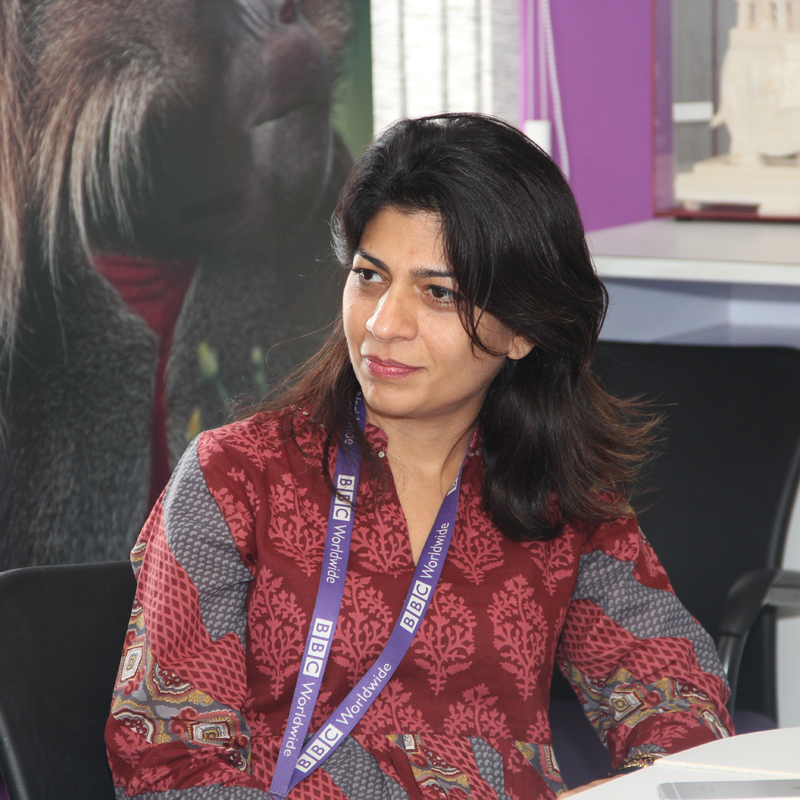
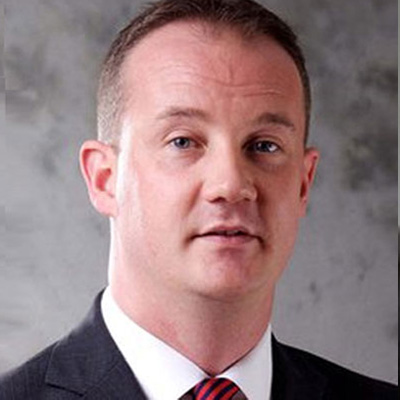
    With over 20+ years of experience across the media business in multiple countries and functions, BBC Worldwide SVP and GM SE and South Asia Myleeta Aga is the mastermind behind driving content, format and digital sales of the commercial arm. David Weiland, as EVP, BBC Worldwide Asia, is responsible for all of BBC’s businesses in Asia, stretching from India to Japan and China to Indonesia. Together, the duo is responsible for all the various businesses of BBC Worldwide in Asia.

    Soon after the launch of its BBC Earth channel in India in partnership with Sony Pictures Networks India, the two Beebs execs, in a tete-a-tete with Indiantelevision.com’s Megha Parmar in Mumbai, discussed at length the future strategies of BBC Worldwide in Asia, Sony BBC Earth channel, infotainment genre and the digital eco-system in India, apart from other aspects of the business. Edited excerpts from the interview:

    As SVP and GM SE and South Asia at BBC Worldwide, what are the various challenges in these diverse markets, Myleeta?

    It’s a great opportunity. BBC Worldwide is a content company and we look for different ways to share our content based on what our market and the consumers within it want. So, in this market, our primary business happens in production, in content sales and, of course, the JV with Sony Pictures Networks India (SPNI). But, in South-East Asia (SEA), our primary business is in our linear channels and the BBC Player. These are both new areas for me. I am looking at some of the channels but not all across the markets. At the moment, I know some of the markets but about others I am still learning. So, there is a good mix of things that I have not done and am familiar with. However, I feel, I can hit the ground running. Every market in SEA is also different and unique.

    What is BBC Worldwide strategy for India and Asia?

    Myleeta: We have always taken a content approach in whatever we do. We have some iconic TV content that we sell to platforms and are increasingly selling more to digital OTT platforms. I am very much looking at that and building fan bases, maintaining them for our key program brands like `Doctor Who’ and `Sherlock’. Our production side too is doing very well. We have a full raft of productions in progress over the next one year. We are doing fiction, non-fiction, digital and branded content. So, we are working on building a full circuit production house and all of it is through a team that is built within the company. We are producing fiction, non-fiction, drama, etc and I think we have an expertise in all these genres now. Our production is very stable.

    David: We have made a change in the SEA market in the last 18 months where we launched BBC Earth, which effectively added to our portfolio. In terms of linear channels, we have BBC News, CBeebies, BBC Sport and we shut down BBC Entertainment. Certainly, in SEA we have launched a drama channel BBC First and a factual entertainment channel BBC Brit Digital. We have also launched BBC Player. I am a strong believer of linear channels. They are going to stay here and India is a proof of that. In this market you have linear channel launches all the time and there is still lot of space for growth. We want to continue in that way and also have a digital service that compliments and adds to it.

    As you have launched BBC Earth in India, what do you think about the infotainment genre here and what will the likely response to such a product?

    Myleeta: Unless we had seen a big opportunity for BBC earth, we would have not entered into a partnership with Sony. I think the factual entertainment genre has been very stagnant. I have seen Discovery’s growth 20 years ago from now when I was a part of it and there has been nothing disruptive, distinctive in the factual space for a really long time. So, I think BBC Earth will be welcomed by the audiences in India. The content is spectacular. The factual entertainment space in India is very nascent and there is a lot of room for it to grow.

    But, is it profitable in India? Do you see there is space for more players in the factual entertainment genre in India and how will BBC Earth differentiate itself from others?

    Myleeta: Yes, I think so. The genre is profitable in India. I am sure Sony will do a brilliant job in making our channel to profitability. There is still place for few more players in the space. Quality of storytelling is our biggest strength.

    David: We have launched this brand in a number of other markets and what we have observed is that the infotainment genre describes it quite well. What I think is that people are migrating towards reality-type genre and the premium factual entertainment space is being left behind a bit. I think we are filling that. And, when we look at the new type of technology that we are bringing into the genre, accompanied with new types of storytelling, it is really interesting. The other thing, particularly about young people, is that they are becoming more urban citizens obsessed with technology and have lost touch with what is happening here. Interestingly, the millennials are concerned about the Earth, state of the planet, science, and actually want to find a place where they can understand or connect emotionally with everything— but in a different way. BBC Earth’s content will be positive, young and will build an emotional connect to open people’s eyes.

    How is the channel fairing in 39 other markets?

    David: We have BBC Earth channels in South-East and North Asia. We launched it a year ago. We have been number one in four of the 12 months and in the other months we have been number two or three. The day we launched the channel was when we articulated our desire to be in the top three in the factual set and we are certainly doing it around the world. I think we have found that the brand and the content connect with the viewers.

    What’s the next launch about and when?

    David: We don’t have any concrete plans in the short term, but we are always looking at opportunities. Having this partnership in India will make us talk with Sony and others to figure out if there is anything else we need to do. We are quite agnostic in terms of our route to a market. It could be through licensing our content to one company or launching our own services or creating our services in partnerships. We look at all those opportunities, while remaining focused on our key brands. We have leadership abilities in three or four genres — premium factual, premium drama to some degree, pre-school kids and mass scale factual entertainment. We are focused and I think one should be in this global media environment.

    Content is crucial for any platform or channel’s success. Do you think that broadcasters in India are too content-driven?

    Myleeta: Yes, I do. I think the interpretations of content and perhaps the way they look at it maybe is different. They are all looking to win audiences through their content mix. I don’t think it’s a market where, for example, a brand like Star Plus will be able to attract audience, if they don’t have a hit show running.

    What do you think about the digital eco-system in India? How different is it in the global market?

    David: Digital space in India is certainly evolving. It is a challenge in terms of making money in SVoD service because you have to look at people’s desire and willingness to pay, apart from other issues like the level of piracy, price points in the Indian market and the fact that consumers are habitual to a single service that is not comprehensive. What might happen is that the market will get to the level where pay TV is today wherein you pay one bill and get a range of channels in the linear space. Why can’t it happen in the digital space? You pay one person and get a variety of apps. There are some interesting developments going on in this space. The model of Amazon channels in the US is worth looking at. On top of your (Amazon) Prime membership, you can add on additional services.

    Does BBC plan to launch an OTT platform in India?

    David: In the short term, no. But we don’t want to rule out anything. We have launched BBC Player in SEA. It is an authenticated on-demand service, which we have launched with our pay TV partners in Singapore and now in Malaysia. It offers linear channels and is downloadable for 30 days. We have also launched several other brands on the service. BBC First and Brit are now available on digital only. In the US, we have partnered with ITV to launch a British-focused SVoD OTT service called BritBox. In the UK, we have the BBC iPlayer, which is the longest catch-up service and is constantly being developed. There are many more markets in the world where we can completely run a payment-led OTT direct consumer service.

    I think there are opportunities where we can partner with telcos or platforms and we are open to that. India is a market we are looking at and studying, but don’t think we will ever launch a pure direct to consumer OTT in India due to several reasons. There are not many who have done it in India. There are technological issues — broadband roll-out is not that advanced and mobile network is not strong enough. Video and downloading content is a challenge except in certain metros. Still, BBC will be much more interested in doing a partnership with someone.

    As a production house, what is a more profitable business — pushing your content through different platforms or starting something of your own and put all the content there?

    Myleeta: We do both in SEA. We have content on our Player in Malaysia and Singapore but that does not mean we are not selling it to other digital OTT platforms.

    David: In some markets, it’s more profitable to do business to business deals, while in some others, it’s more profitable to license content to third parties. We are a content company with a difference — different from some of our global and US competitors. For them it becomes more challenging to think in a different way. We have always been a diversified business. We have different teams. The TV licensing team says `I must sell the show to a third party platform’. But, I have my BBC Player too. That team says `No, I want to put the show on the service too’. Now, I have to decide which one makes more sense. It’s good to have such choices.

    How important is audience measurement data for BBC?

    Myleeta: A small group of broad audience entertainment channels anywhere in the world are driven by numbers. That is because of the advertising revenue they depend on, which in return is dependent on eyeballs. As you get into more specialist areas, the brand becomes important as well. It’s not that you don’t need the numbers. But you can also look at the new segment of audience you are serving and how the brand resonates with that segment to attract advertisers that want a slice of that specific segment. I think our brand does resonate with advertisers of premium categories. So, I think the BARC numbers will be important for us, but won’t be everything.

    Digital rollout of Indian cable TV services is scheduled to be completed this March-end. Do you think this will boost the TV business in India?

    Myleeta: It will deliver more addressability. We are talking about being able to measure and recover revenues that get lost in the eco-system. So, will it suddenly change the ratings structure? No. But, will it increase revenue for platforms, which in turn will ease the burden of carriage fees on broadcasters? Yes.

    David: It’s a unique market and this (digital addressable services) serves it very well. There is nowhere TV is more entrenched than in India. Businesses here have liked it (digitization). But, I think, overtime it is going to get more in line with the rest of the world.

    BBC is like an old warhorse. What, according to you, does audience in India perceive BBC as?

    Myleeta: BBC Worldwide is the commercial arm of the BBC, a public service organization. The news channels and the journalistic organizations within the news channels are totally independent. BBC Worldwide only commercializes the channels, which is sales and distribution functions for the channel. But the channel is run independently. When we see BBC in this market and outside of the UK, one of the markets where the BBC brand resonates most is India. I think we all remember listening to World Service radio. So, we have been around for a long time. When people think of BBC, they think of news, both radio and TV. BBC Worldwide operates much more on the commercial side.

  • Myleeta Aga to also lead BBC Worldwide SEA Biz

    Myleeta Aga to also lead BBC Worldwide SEA Biz

    MUMBAI: As 2016 comes to a wrap, the new year brings good news and some new challenging responsibilities for BBC Worldwide India SVP and GM Myleeta Aga.

    Aga, who is also the content lead, Asia, has now been tasked with the additional role of heading South East Asia business, effective January 2017. She will report to BBC Worldwide Asia EVP David Weiland.

    This elevation makes Aga responsible for driving content, format and digital sales. Along with that she will also oversee business development of the well-established channels and BBC Player services. Looking after BBC World News distribution interests in the region will also come under her purview.

    Speaking exclusively to indiantelevision.com, Aga shared, “I look forward to the challenge of adding SEA to my India responsibilities. We have a great mix of businesses, and I am sure working across markets will create exciting new opportunities for BBC in Asia.”

    Given the hands-on involvement required for the new role, as of January, Aga will work out of BBC’s offices in Mumbai and Singapore.

  • Myleeta Aga to also lead BBC Worldwide SEA Biz

    Myleeta Aga to also lead BBC Worldwide SEA Biz

    MUMBAI: As 2016 comes to a wrap, the new year brings good news and some new challenging responsibilities for BBC Worldwide India SVP and GM Myleeta Aga.

    Aga, who is also the content lead, Asia, has now been tasked with the additional role of heading South East Asia business, effective January 2017. She will report to BBC Worldwide Asia EVP David Weiland.

    This elevation makes Aga responsible for driving content, format and digital sales. Along with that she will also oversee business development of the well-established channels and BBC Player services. Looking after BBC World News distribution interests in the region will also come under her purview.

    Speaking exclusively to indiantelevision.com, Aga shared, “I look forward to the challenge of adding SEA to my India responsibilities. We have a great mix of businesses, and I am sure working across markets will create exciting new opportunities for BBC in Asia.”

    Given the hands-on involvement required for the new role, as of January, Aga will work out of BBC’s offices in Mumbai and Singapore.

  • BBC Worldwide appoints Kelvin Yau as general manager, Greater China

    BBC Worldwide appoints Kelvin Yau as general manager, Greater China

    MUMBAI: BBC Worldwide has appointed Kelvin Yau as general manager, Greater China with effect from 17 August, 2015.


    In his new role, Yau will oversee BBC Worldwide’s channel and content distribution, local production, affiliate distribution and brand development activities across Greater China including Hong Kong, Taiwan and China.


    He will also be responsible for BBC Worldwide’s format and brand licensing in these territories.


    BBC Worldwide Asia EVP David Weiland said, “We are very excited to have someone of Kelvin’s caliber to join BBC Worldwide. He brings with him an excellent track record in business development to the team. Kelvin’s vast experience will also serve as a catalyst for BBC’s continual growth in the highly dynamic Greater China market.”


    Yau joins BBC Worldwide from The Economist Group where he was managing director, China and Taiwan. Prior to The Economist Group, Yau held positions at Euromoney Publications and IR-VONline.com.


    Yau said, “BBC Worldwide has accomplished tremendous success in building the reach and reputation of BBC overseas. As an avid admirer of the British creativity advocated by BBC, I am looking forward to joining BBC Worldwide and helping promote its quality content across Greater China.”


    Yau will be based in Beijing. He joins BBC Worldwide SVP & GM – Southeast Asia Monty Ghai, SVP & GM – India Myleeta Aga and GM (Northeast Asia) Soojin Chung, reporting to Weiland.

  • BBC Earth to launch in Asia in October

    BBC Earth to launch in Asia in October

    MUMBAI: BBC Worldwide will be launching its new premium factual channel, BBC Earth, in Asia.


    BBC Earth will inspire audiences by sharing the incredible wonders of our universe. The channel will showcase the work of the world’s foremost factual film makers as it takes audiences on a journey of discovery. From the smallest creature under the microscope to the limitless expanses of space, BBC Earth will bring viewers face to face with heart pounding action, mind blowing ideas and the wonders of being human.


    The channel, a rebrand of BBC Knowledge, will launch on 3 October. In Asia, BBC Earth will be available in Cambodia, Indonesia, Malaysia, Mongolia, Singapore, South Korea, Taiwan, Thailand and Vietnam. There is also a BBC Earth block in Japan on Wowow.


    BBC Earth is part of a global strategy created and shaped by research into audience demand. It is BBC Worldwide’s brand for premium factual content, from natural history and the human world to outer space and science.


    BBC Worldwide Asia EVP David Weiland said, “The premiere of BBC Earth in Asia is an important step in BBC Worldwide’s strategy to inspire audiences with intelligent, distinctive content. With BBC Earth, we will now have a compelling way to share premium BBC factual content with audiences in Asia and around the world. With an increased investment into new and premiere content, we are confident that BBC Earth will strike a chord with viewers in Asia.”


    On 4 October, BBC Earth will premiere Shark – the definitive series of shark natural history, made on a scale never attempted before and revelatory in both content and photography. This series features over 30 species of sharks and rays, including one that walks on land. The series was filmed in dozens of locations worldwide, ranging from under the polar ice to mangrove swamps, shipwrecks and coral reefs.


    The new channel will also see the Asia premiere of The Hunt, less than 24 hours after the UK telecast. The blue chip landmark series, narrated by Sir David Attenborough and executive produced by award-winning producer, Alistair Fothergill, explores the dramatic world of predation as never before, taking an intimate look at the remarkable strategies of hunters and the hunted, exploring the challenges animals face and the tactics they employ.


    Other programmes that will premiere later in the year after The Hunt include:


    Lands of the Monsoon – A series exploring how life around southern Asia both endures and depends on the tumultuous weather that annually transforms the land – the mighty monsoon. All life is dominated by this rampaging weather system. From Tibet to northern Australia, this series makes an exhilarating journey through the lands of the monsoon.


    Life Below Zero (series three) – The icy adventures continue for Life Below Zero’s hardy characters, racing to prepare for their survival as the oncoming winter freeze begins to take hold in Alaska. This ratings-winning series continues to grip audiences as it follows the stories of hard-working people living off the grid miles from the nearest road.


    Infested – Dr Michael Mosley explores the bizarre and fascinating world of parasites by turning his body into a living laboratory and deliberately infesting himself with them. He travels to Kenya to give himself a tapeworm – a parasite that can grow to many metres inside the human gut. He also encounters lice, leeches and deadly malaria parasites, before swallowing a pill-camera to reveal what is growing within him. By the end of his infestation, Mosley learns a new-found respect for these extraordinary creatures, which can live off and even take control of their hosts for their own survival.

  • ‘India is the only market where we pay carriage fees for our channels’ : BBC Worldwide Channels, Asia senior VP, GM, Mark Whitehead

    ‘India is the only market where we pay carriage fees for our channels’ : BBC Worldwide Channels, Asia senior VP, GM, Mark Whitehead

    BBC Worldwide, the commercial arm of BBC, has decided to shut its two channels in India. This will mark the closure of BBC Entertainment and CBeebies from 1 December and reflects the difficulties that niche channels have in growing their business in an analogue cable TV driven market.


    In an interview with Indiantelevision.com‘s Ashwin Pinto, BBC Worldwide Channels, Asia senior VP, GM, Mark Whitehead explains why.


    Excerpts:


    BBC Entertainment was refreshed last year. What went wrong?
    The nature of the Indian market for pay-TV channels make the economics of running channels very challenging at this time. We have reluctantly concluded that we need to close our channels.


    Could you talk about the carriage costs that had to be incurred versus revenues that were earned?
    India is the only market where we pay carriage fees for our channels. We can’t go into commercially sensitive detail on our revenues.


    BBC Worldwide was talking to platforms like the One Alliance. Why did talks fall through?
    We did not choose to comment on speculation at the time and I’m sure you will understand that we won’t be doing that now.


    Was the decision to exit part of the overall cost re-structuring exercise that is going on?
    This decision has nothing to do with the overall restructuring of BBC Worldwide. We took the difficult decision to close the channels for commercial reasons.


    Some of the reasons included the uniquely challenging pay TV market in India and the delays to digitisation.


    ‘India is a uniquely challenging market and decision to withdraw CBeebies and Entertainment is not part of an Asia-wide view

    Didn‘t BBC Entertainment have an edge over competition as it covered three genres – entertainment, factual and lifestyle?
    Both channels – BBC Entertainment and CBeebies – have been exceptionally well received by the Indian audience. However the uniquely challenging pay TV market in India made the economics of running them very difficult at this time.


    CBeebies was ad free. Is running an ad free channel in India unviable at the moment?
    Advertising is currently a major source of revenue for pay TV channels in India. Without that revenue we found it unviable to run CBeebies in India at this time.


    Having said that isn‘t this the wrong time to exit given that the digitisation process has just started with Mumbai, Delhi already switching off analogue signals?
    Digitisation has been slow and the long term impact on the economics of running a channel is unclear at this stage. If those economics improve with digitisation, we will reconsider launching the channels.


    Is BBC Worldwide Channels looking more carefully at the cost structure across Asia and are you exiting other markets to an extent?
    India is a uniquely challenging market and our commercial decision to withdraw the CBeebies and Entertainment was not part of an Asia-wide review. We have no plans to close channels in any other markets at this time.


    There have been a lot of changes in the BBC such as a new DG and COO. How will this affect the functioning of the channels business?
    The international Channels business is part of BBC Worldwide, the commercial arm of the BBC.


    BBC Worldwide has a strong focus on international markets, and our channels business remains an important part of that strategy for growth. We have a clear leadership structure running the channels business with David Weiland as acting Managing Director of Channels and I (Whitehead) running the Asia business.


    Is there the chance that BBC might re-enter India in 2015 when digitisation is complete?
    We believe India is an exciting market and in the event of changes in the options available to us, we would certainly consider re-launching our non-News channels in the market.


    BBC Worldwide remains committed to India, where BBC World News – the BBC’s international news and current affairs television channel – continues to be available across the market, along with the bbc.com and bbchindi.com websites, BBC Hindi radio and Global India, a new primetime programme produced by BBC Hindi TV which launched on five ETV channels this month.


    In addition, BBC Worldwide operates a TV production business, a content syndication business and Lonely Planet in India. BBC Worldwide is also evaluating the potential for a number of digital initiatives which have been successfully developed in other markets. BBC Entertainment programmes will also continue to be available on other channels in India – both terrestrial and cable, as well as digitally on our YouTube channel.