Tag: David Clementi

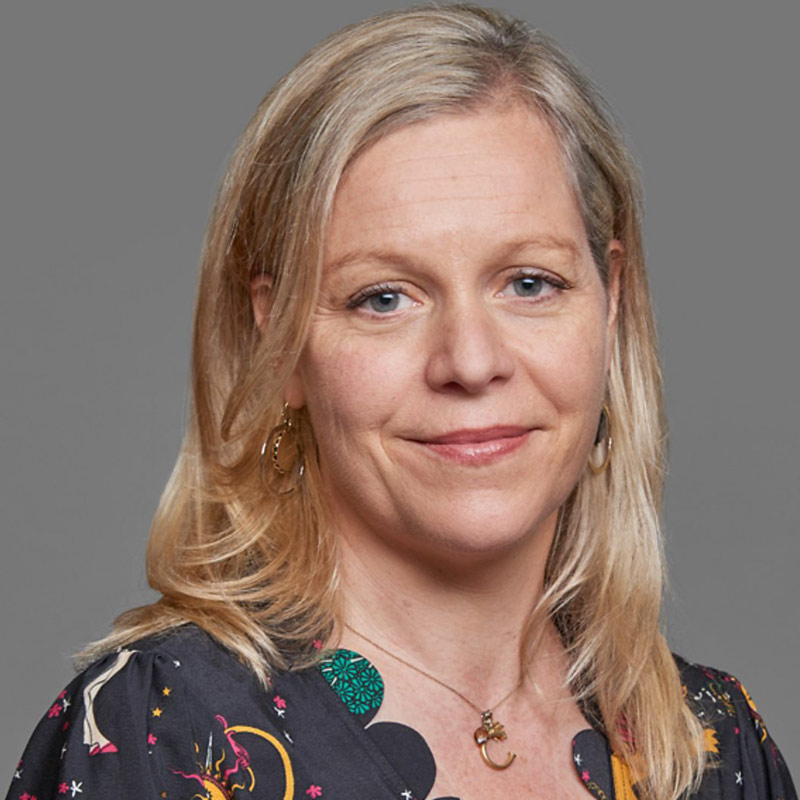
  • BBC elevates Charlotte Moore as chief content officer

    BBC elevates Charlotte Moore as chief content officer

    In her new role, Moore will be the senior leader for BBC content and audiences across all genres and platforms, with the exception of news and nations and regions. Her responsibilities include television commissioning for all BBC network TV channels and BBC iPlayer, radio commissioning and production for all ten national radio networks and BBC Sounds, multiplatform commissioning and production for all children’s and education content, and BBC Proms and Orchestras.

    BBC chairman Sir David Clementi said: “It is a great pleasure to welcome Charlotte Moore to the BBC Board. Charlotte has made a huge success of bringing audiences to our television portfolio—resulting in record-breaking figures for iPlayer and ensuring the BBC can reach audiences beyond the critical linear channels. She will do a brilliant job as Chief Content Officer and be an important asset to the BBC Board.”

    Moore joined the BBC in 2006 as commissioning executive for documentaries. She has held such roles as acting controller of BBC Daytime Television, controller of BBC One and controller of TV channels and iPlayer. Since 2009, she was the commissioning editor for documentaries where she was responsible for strategy and commissioning for in-house and independents across all four channels. Charlotte transformed the genre to produce a huge breadth of original programming, seeking out the best talent to bring the most compelling and inspiring documentary content to a broad audience. From Bafta-winning titles Protecting Our Children, 7/7 One Day In London, Between Life and Death, The Great British Bake Off, Terry Pratchett’s Choosing To Die, The Choir and Welcome To Lagos to hit series like Inside Claridges, The Call Centre, Lambing Live and The Tube.

    In January 2016, she was appointed as controller of TV channels and iPlayer, where she was the creative, editorial and strategic lead for BBC One, BBC Two, BBC Four and BBC iPlayer, ensuring the channels work in a complementary way while enhancing their distinctive positioning. In July 2016, Moore was elevated as the director of BBC content and controller of BBC One. She was responsible for the creative vision across the portfolio of channels, BBC iPlayer and genres and took on oversight of BBC Sport.

    Prior to joining the BBC, Charlotte was director of contemporary factual at IWC Media focusing on high-profile contemporary narrative documentaries and series for all major UK channels, including BBC Two’s landmark series Stephen Fry: The Secret Life Of A Manic Depressive.  

  • BBC Four intends to become global subscription service

    BBC Four intends to become global subscription service

    MUMBAI: The BBC is mulling over transforming BBC Four into a global subscription service in view of the ongoing economic adversity caused by the Covid2019 pandemic.

    “Outside the UK, we are exploring potential commercial opportunities for BBC Four to become a new global subscription service that takes our strengths in specialist factual to the world stage,” says the 76-page BBC annual plan 2020/21 released on Wednesday.

    Signed by chairman David Clementi and director-general Tony Hall, the document says that BBC Four will focus on bringing together collections of the most distinctive content from the BBC’s rich archive. “Arts will continue to be a centrepiece of Four as we carry on showcasing Culture in Quarantine through this period.”

    BBC Four intends to broadcast at least 60 hours of factual originated programmes (subject to the impact of Covid2019 on production delivery).

    Generational shift

    In news, BBC is making a generational shift in what news it covers and how it covers it by putting the audience at the heart of decisions. Its last major transformation in news was 25 years ago when the broadcaster introduced 24-hour rolling news and took the first steps in online news.

    “Today, audiences watch less broadcast news and rely more on online services, particularly on mobile. Reflecting this shift, we will move to a ‘story-led’ approach in news – putting the audience at the heart of decisions on what stories we cover and how we cover them. We will select stories not according to what is required for a specific programme, channel or platform, but instead with the needs of all our audiences and platforms in mind,” says the document.

    The idea is to maximise the value of the BBC’s news output by using the power of its portfolio to its fullest. “We want to serve audiences with compelling journalism that is engaging, useful and at a time and in a format of their choosing.”

    It stresses the need to discover new ways of “storytelling across our digital platforms, including iPlayer and Sounds, to connect with all audiences that use BBC content. We want our best journalism to travel further so that the quality, breadth and accuracy of BBC News can reach more people, more regularly, in more ways.”

    The document says that BBC’s new approach to digital storytelling will power the modernisation of the BBC News online offer and news app. Later this year the app will be completely refreshed and rebuilt from the ground up. This will focus on making it more useful and more used, aimed at the mobile generation under 35. “We build on our existing highly successful news app, but made better for a new generation with new ways of navigating in a mobile and always connected world. In an endless sea of mobile offers and user-friendly aggregators like Apple News and Facebook News, BBC News needs to be as intuitive and easy to use than other news providers, and to have a better editorial offer than anybody else. We want the app to be the best place to consume BBC news.”